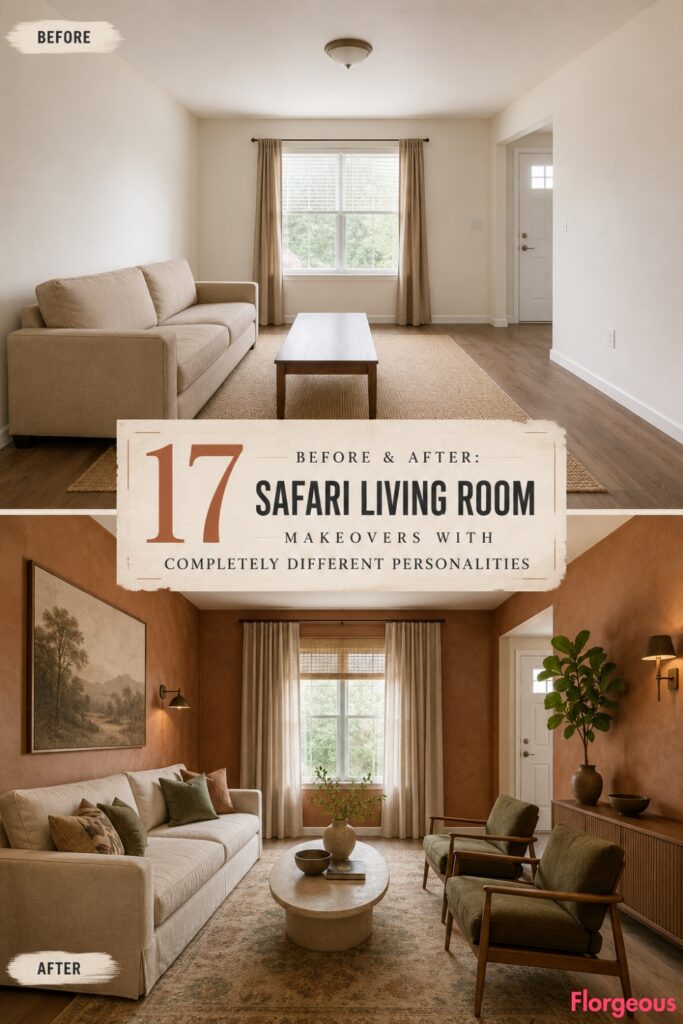
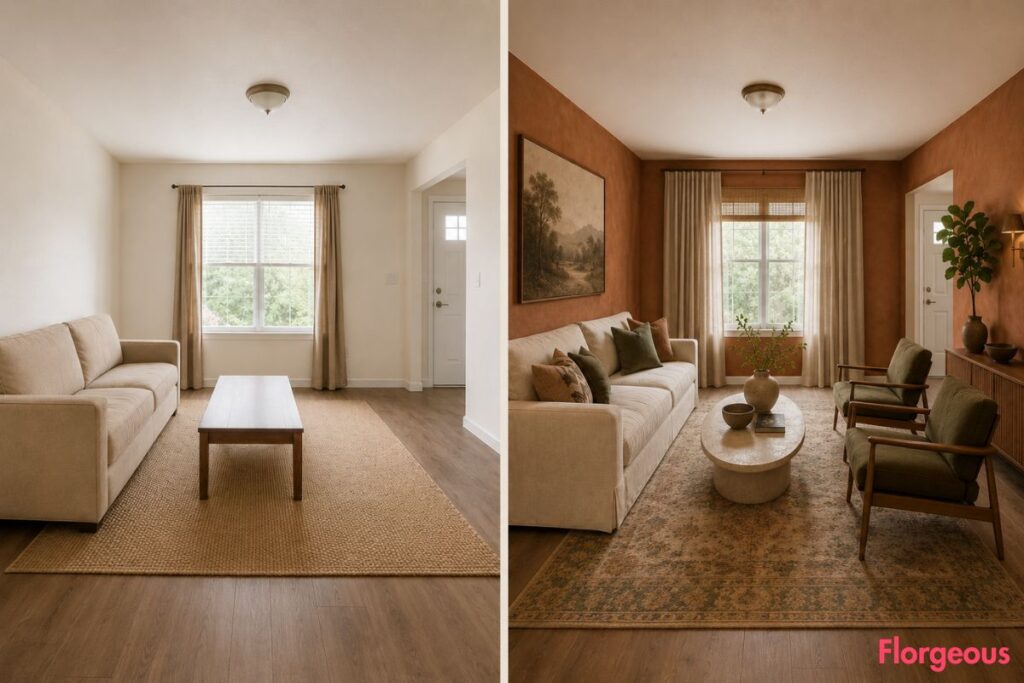
The starting point could hardly be more ordinary: warm off-white walls, a basic beige sofa, a bare rectangular coffee table, a simple neutral rug, short curtains, a builder-grade ceiling light, and almost nothing on the walls. It is clean and usable, but it has no real focal point or personality.
For these makeovers, the architecture never changes. The doorway, window, floor, ceiling height, wall proportions, camera position, and circulation all stay exactly the same. Only the decorating changes.
What makes a sophisticated Safari Living Room interesting is that it does not need animal statues, trophy decor, or piles of leopard print. Warm woods, tactile linen, leather, woven fibers, mineral colors, stone, aged metal, greenery, and atmospheric artwork can create a much more convincing sense of adventure.
These 17 versions take that same plain room in completely different directions, from pale limestone and flax to tobacco brown, terracotta, olive, forest green, blackened wood, and even dusty blue-gray.
1. Limestone, Flax, and Walnut: The Quiet Safari
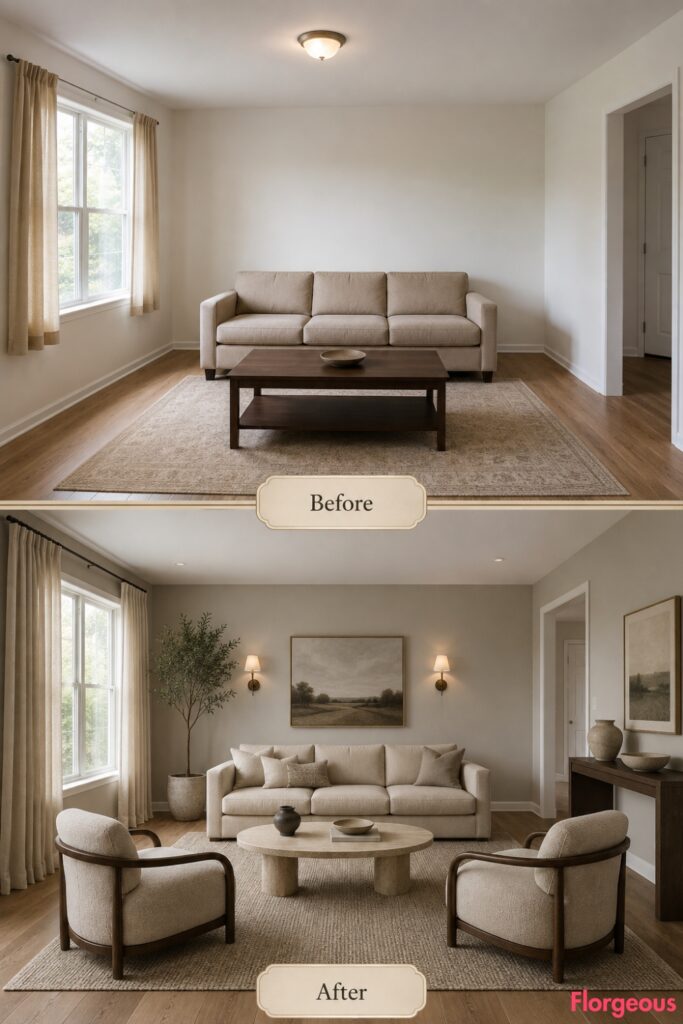
This is the gentlest makeover in the collection. Limestone-gray walls calm the room, while a flax sofa and medium-walnut chairs provide enough warmth to stop the palette feeling flat.
Before: The standard warm off-white builder-grade room with beige sofa, bare coffee table, simple rug, short curtains, basic ceiling light, and empty walls.
After: Add two rounded walnut chairs in oatmeal fabric opposite the sofa, an oval travertine table, a sand-and-ivory wool rug, full flax curtains, aged-brass sconces, one large leafy plant, and a restrained landscape.
Designer Tip: Pale stone colors become much richer when paired with medium or dark wood rather than more beige.
2. Terracotta Takes Over the Builder-Grade Beige
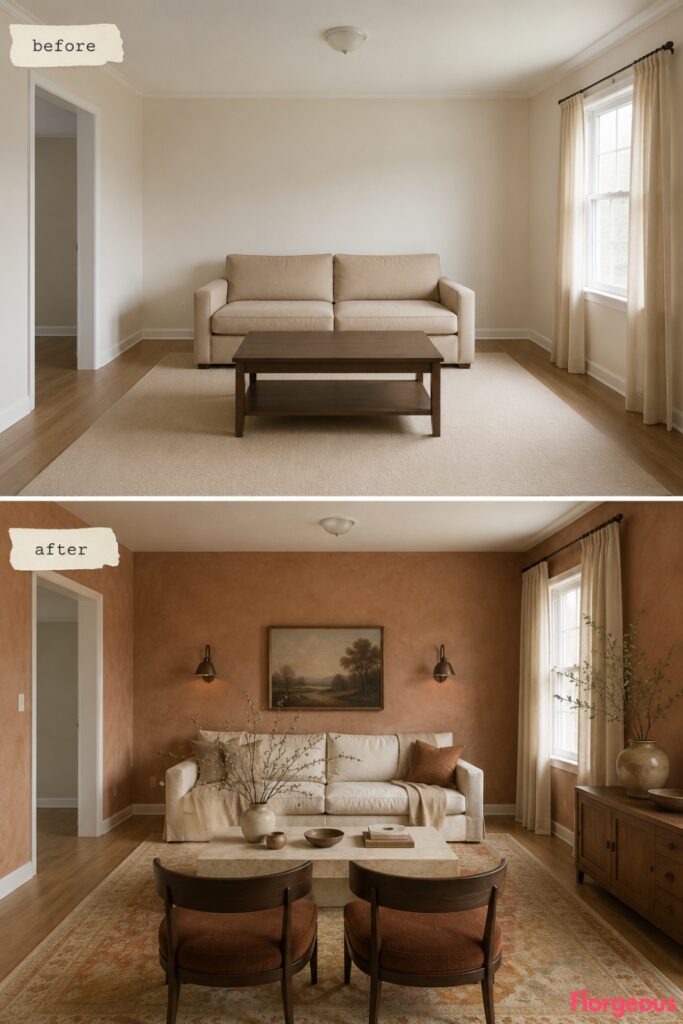
Muted terracotta creates warmth without pushing the room into themed territory. The trick is to keep the furniture quieter than the walls.
A parchment linen sofa, two dark-walnut chairs in rust-brown wool, and a chunky pale-limestone coffee table balance the clay-toned background. A faded ochre rug makes the whole scheme feel sun washed rather than overly polished.
Budget Version: Use matte mineral-effect paint instead of professionally applied Roman plaster.
3. The Olive and Tobacco Color Story
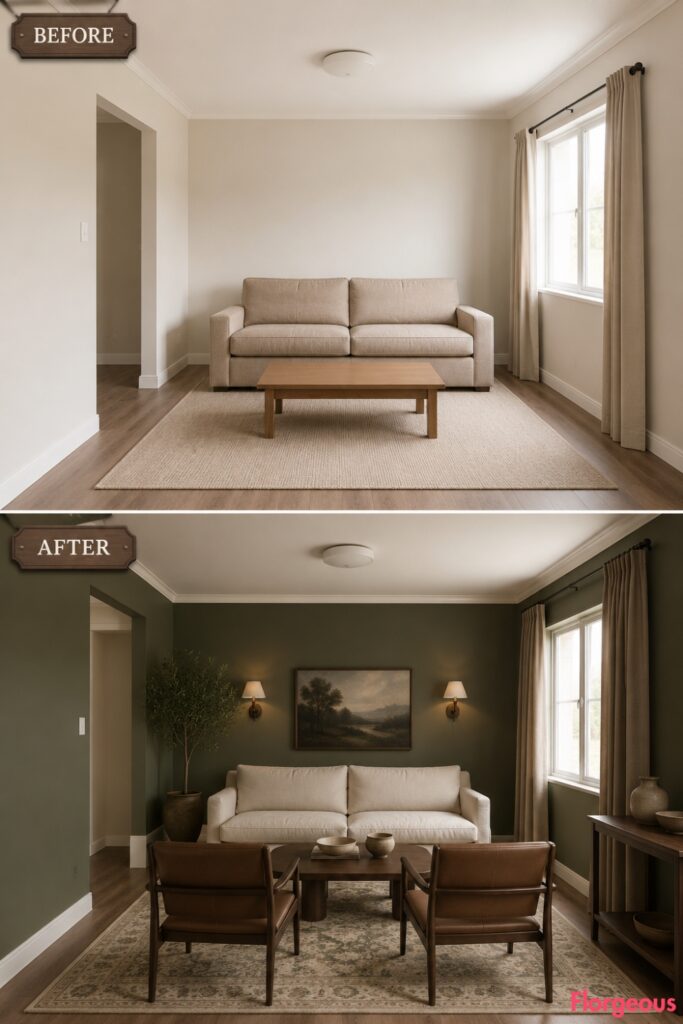
Deep olive gives the same room an instant sense of depth.
A warm cream sofa provides contrast, while tobacco leather chairs and dark walnut introduce the earthy notes that make the design feel collected. Instead of adding themed objects, bring in one large atmospheric landscape and a tall plant.
Why It Works: Olive, tobacco, and walnut share warm undertones, so they layer naturally without looking like a matched furniture collection.
4. What If Safari Style Felt Light and Botanical?
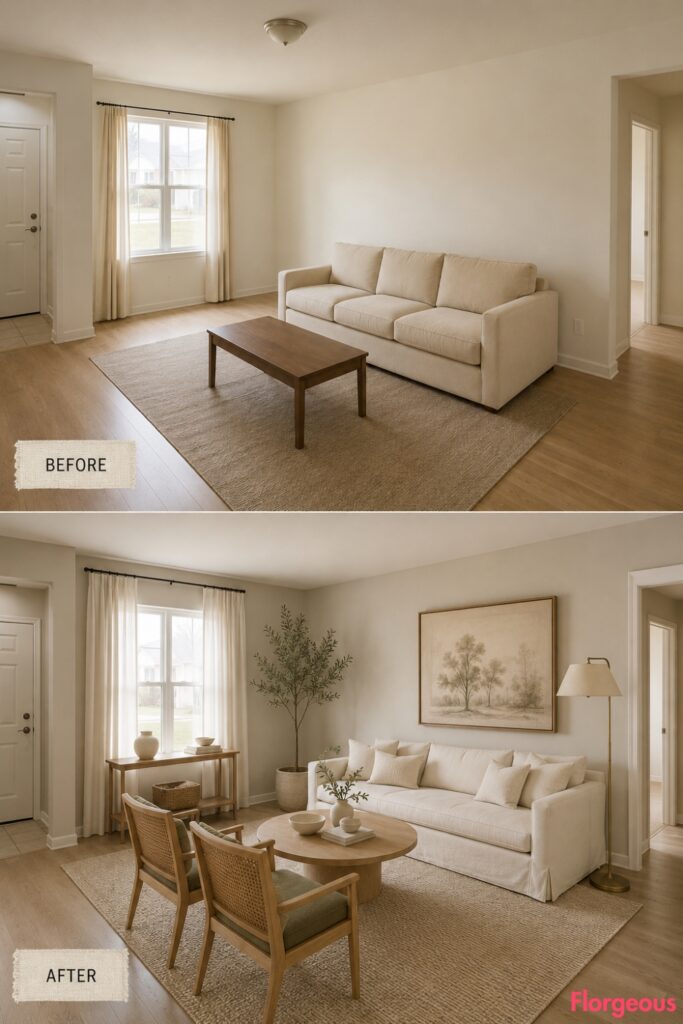
Not every earthy interior needs to be brown, rust, or dark green.
Here, pale warm-gray walls, ivory upholstery, blond oak, woven cane, and soft botanical green make the room feel almost weightless. One substantial leafy plant provides more impact than a collection of tiny pots.
The cane-backed chairs also help preserve sightlines in a smaller room.
5. Charcoal After Dark With Camel and Blackened Ash
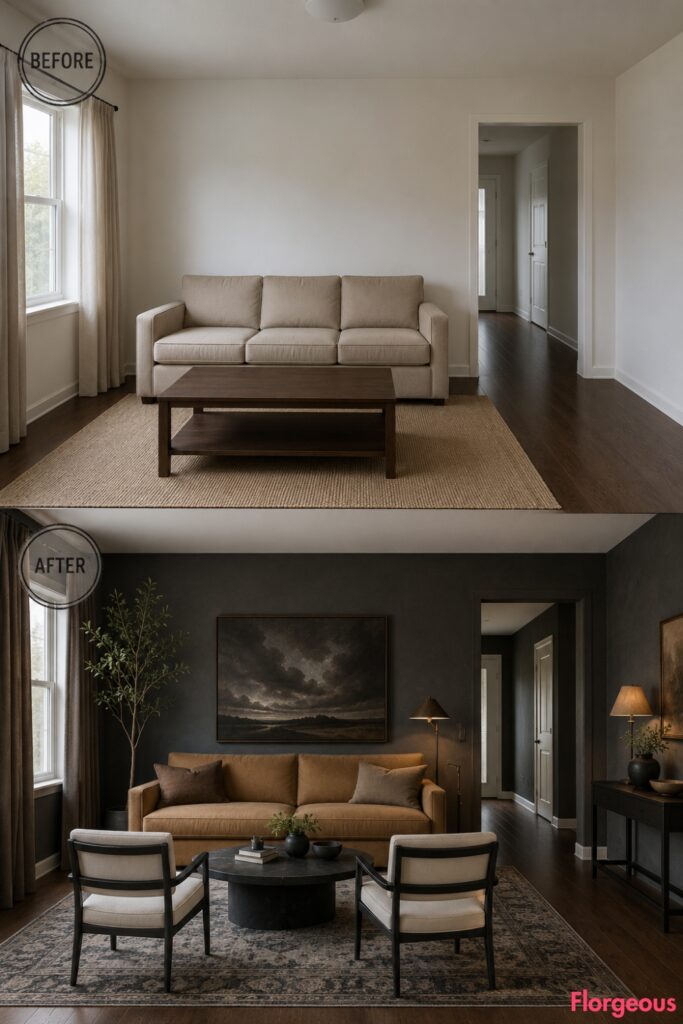
For a moodier result, cover the plain walls in charcoal mineral paint and let camel upholstery become the warm focal point.
Blackened-ash accent chairs and a dark soapstone table deepen the scheme, while parchment fabric on the chairs and full tobacco-gray curtains keep it from becoming severe.
Common Mistake: Avoid making every large piece dark. One warm or pale upholstered anchor is essential.
6. A Modern Safari Living Room Built Around Organic Shapes
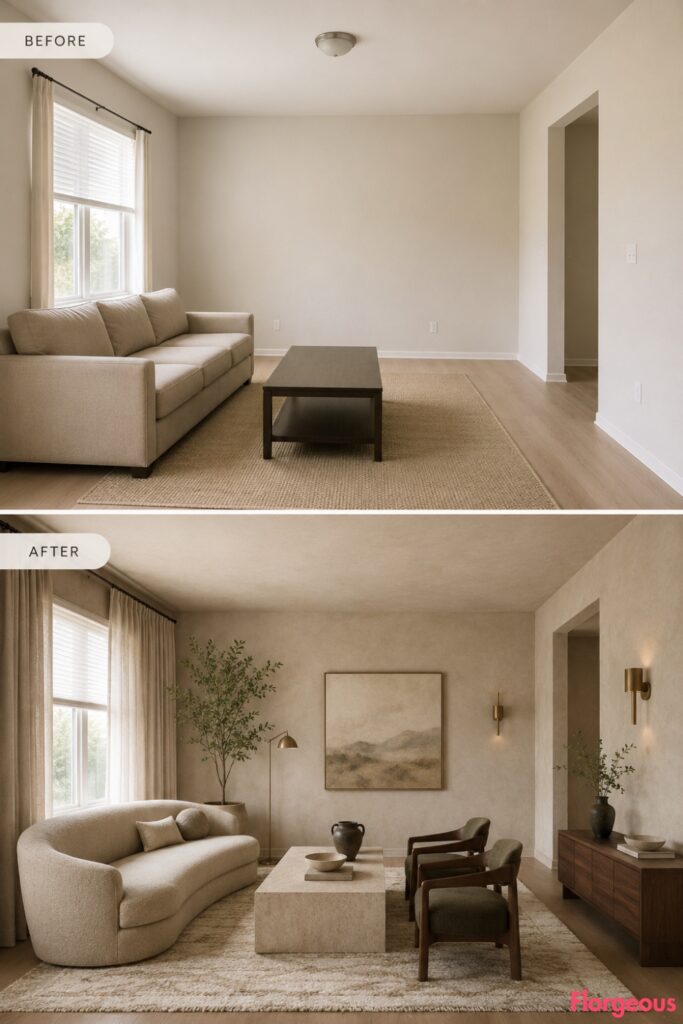
This version trades rustic references for curved silhouettes and strong natural materials.
Mushroom limewash wraps the room softly. An oatmeal curved sofa, sculptural walnut chairs, a monolithic travertine table, and a subtle loden-and-cream rug provide safari character through texture and landscape-inspired color.
Keep accessories sparse so the furniture shapes remain the focus.
7. Sun-Baked Sand and Ochre for a Desert Mood
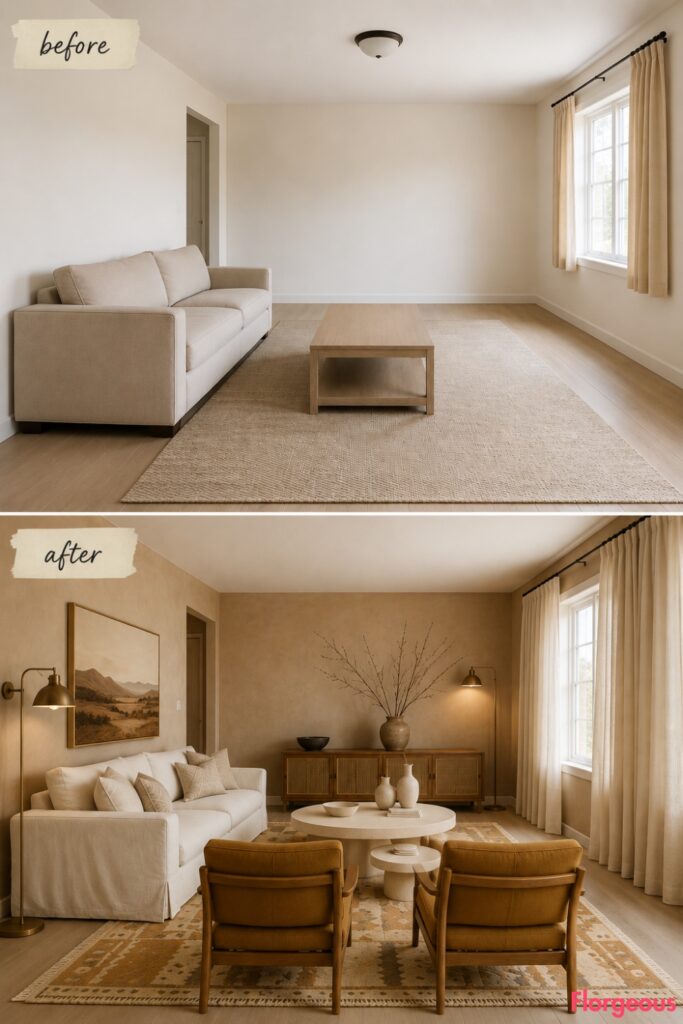
Warm sand walls create a softer desert-inspired backdrop that works especially well with parchment, oak, limestone, and ochre.
The look stays relaxed by using a faded geometric rug instead of a bold motif. Woven rush storage adds another natural surface without crowding the room.
8. Clean Lines Meet Earthy Safari Texture
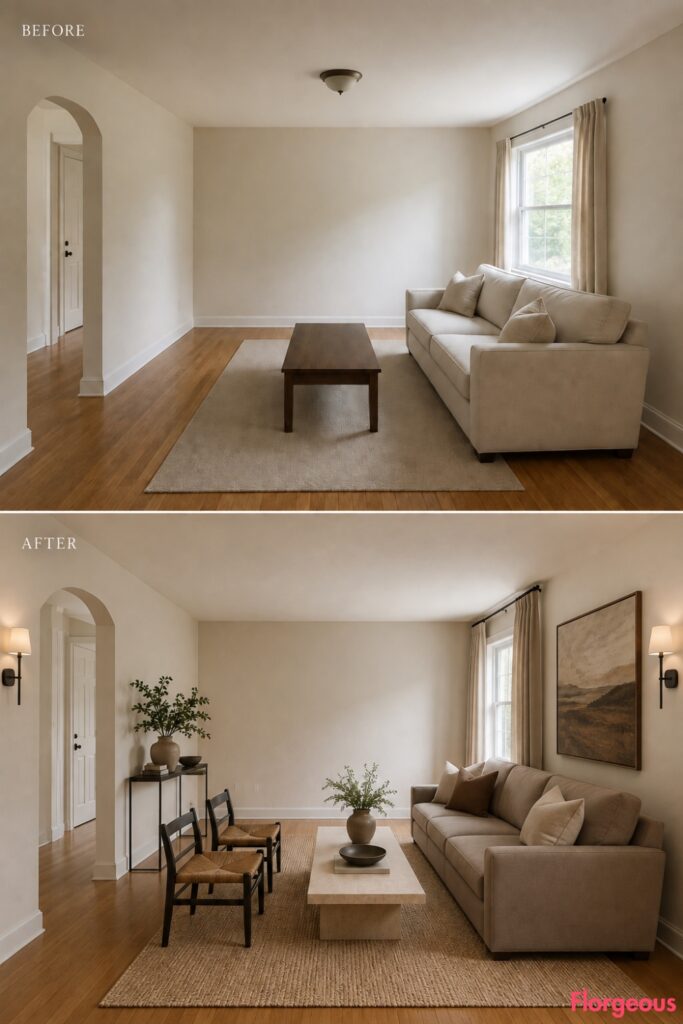
A contemporary interpretation can be much sharper.
Keep the walls warm ivory, then introduce a tailored taupe sofa, slim blackened-oak chairs with woven seats, a low rectangular travertine table, and blackened-metal lighting.
The sisal-style rug adds texture while the cleaner furniture silhouettes prevent the room from drifting into lodge territory.
9. Old-World Mahogany Without the Explorer Clichés
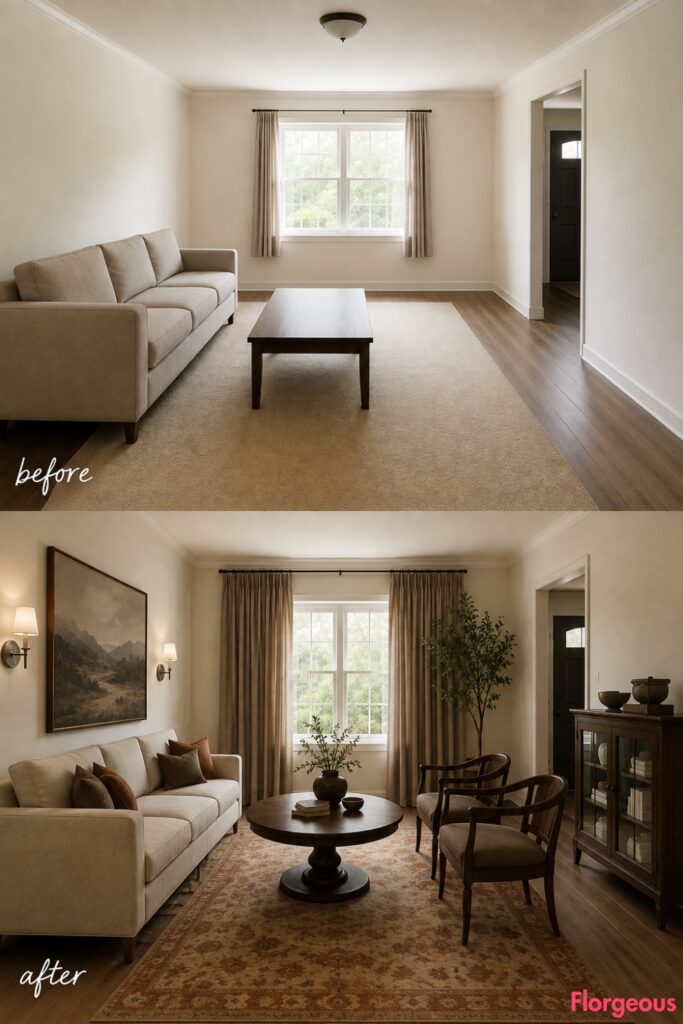
Vintage character works best when it comes from furniture and patina rather than props.
Soft parchment walls, a flax sofa, polished mahogany chairs, antique-nickel lights, and a faded rust rug make the room feel collected over time. A shallow glass-front cabinet provides storage without becoming bulky.
Style Note: Skip fake trunks, helmets, binoculars, old maps, and staged travel accessories.
10. Less Decor, More Texture
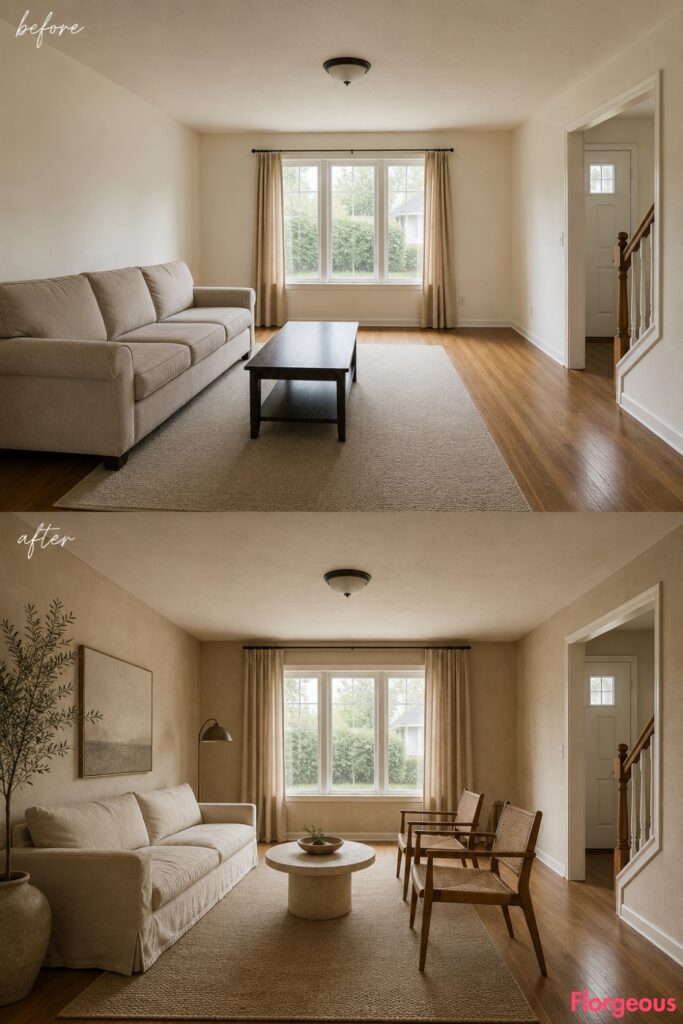
This earthy minimalist scheme proves that safari-inspired design does not need lots of accessories.
Soft clay-beige walls, an oat linen sofa, simple teak-toned chairs, a limestone pedestal table, and a parchment-khaki flatweave provide all the material interest the room needs.
Finish with one plant, one ceramic vessel, and one large landscape.
11. Forest Green Goes Lush and Collected
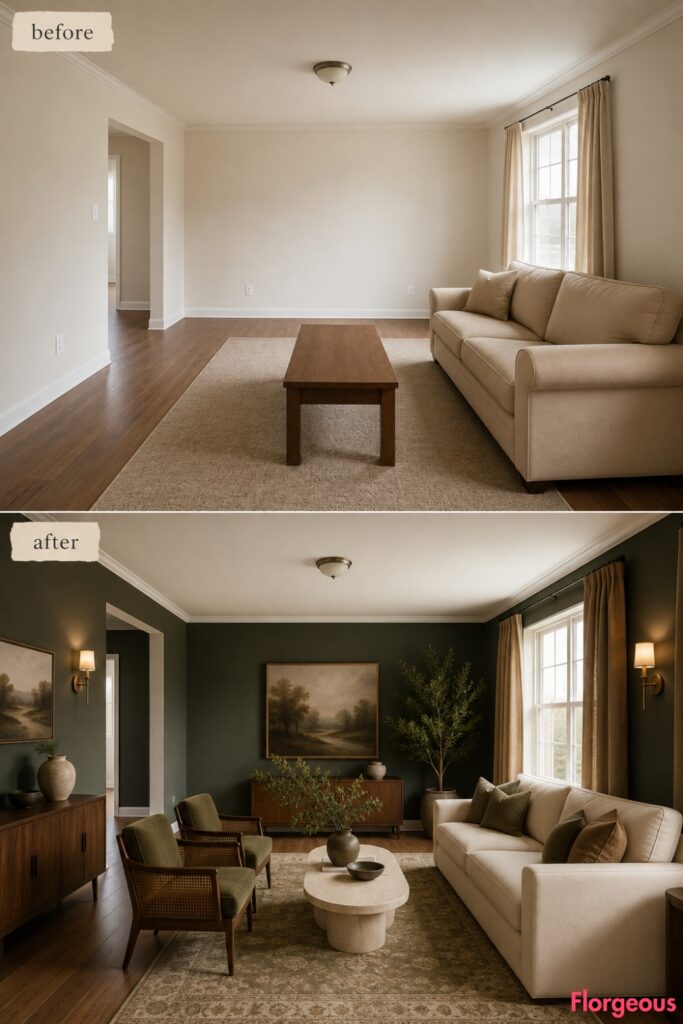
Deep forest walls make the biggest color statement in the roundup.
A parchment sofa keeps the center of the room light, while walnut cane chairs, an oval limestone table, and tobacco-toned curtains add warmth. Two substantial plants create a lush effect without turning every surface into a greenhouse.
12. Black and Sand Create the Sharpest Makeover Yet
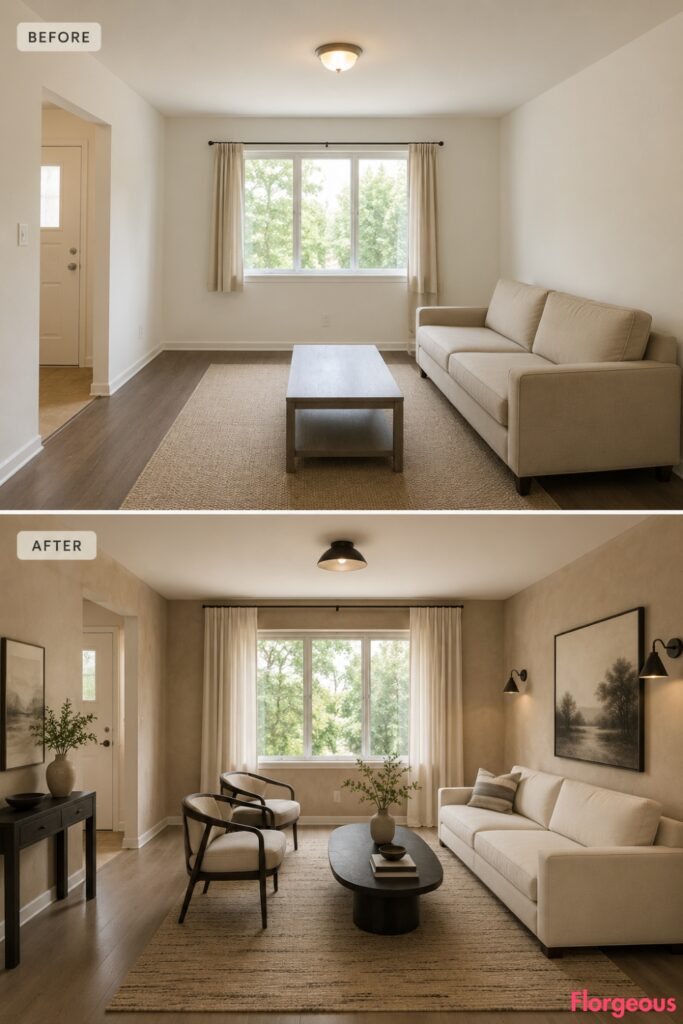
Warm sand plaster and blackened wood give this room graphic contrast without making it cold.
The sofa stays ivory, while blackened-ash chairs and a low black stone table define the seating area. A single irregular striped cushion is enough to introduce an animal-inspired note.
Stop there.
13. The Unexpected Palette: Dusty Blue-Gray and Cognac
Dusty blue-gray might seem surprising, but paired with cognac and walnut it feels atmospheric rather than coastal.
Think hazy skies, dry grasses, warm leather, and weathered stone. A gray-travertine table and faded blue-parchment rug connect the cool and warm sides of the palette.
Color Story: Keep the blue gray muted and mineral. Bright blue would change the character completely.
14. Renter-Friendly Safari Style With No Renovation Required
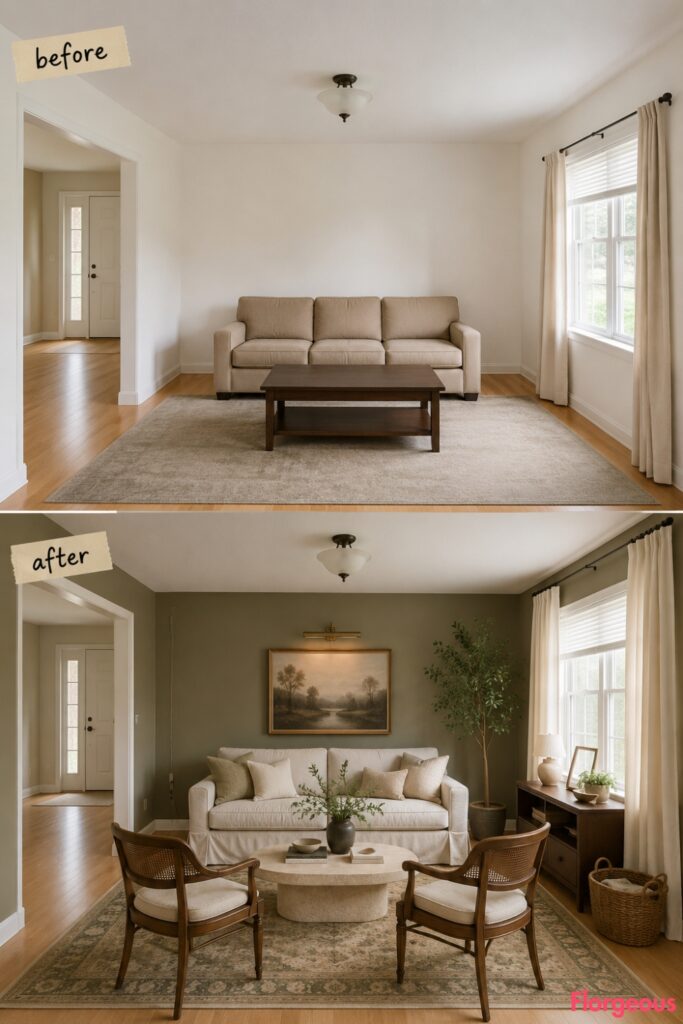
This makeover proves that the architecture does not need to change at all.
Use removable muted-olive wall treatment, an oatmeal sofa slipcover, secondhand walnut chairs, ready-made ivory curtains, and plug-in aged-brass picture lights. A stone-look coffee table gives the appearance of a heavier investment without the weight or price.
Budget Version: Start with the rug, curtains, and chairs. Those three changes can shift the room before you buy any small decor.
15. Small Room, Full Safari Character
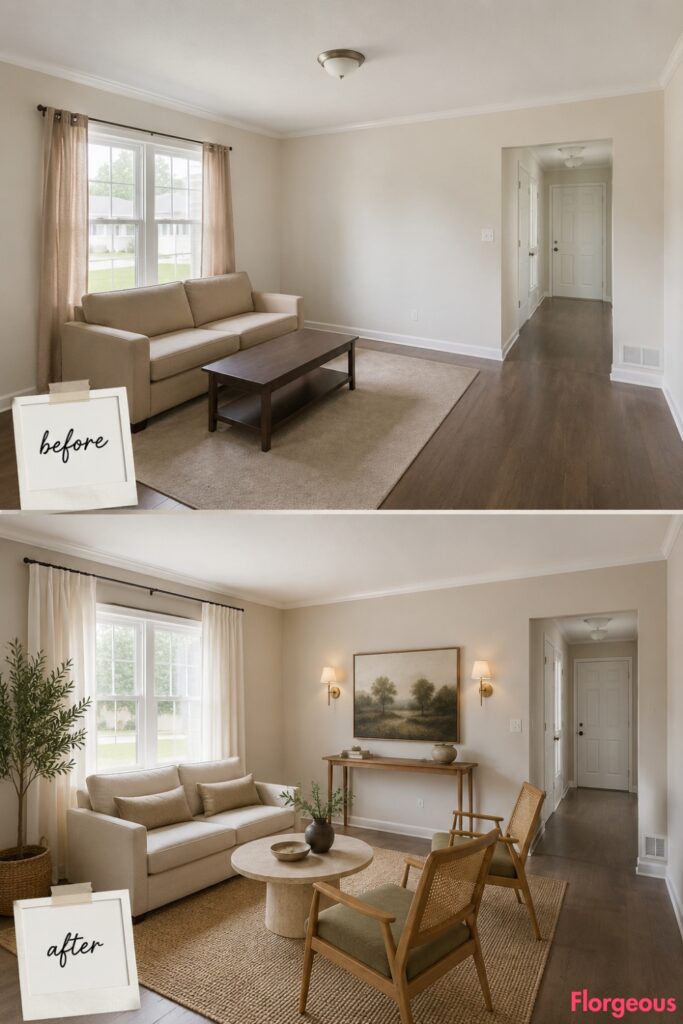
In a compact space, furniture scale matters more than the number of design ideas.
Use a compact flax loveseat, two narrow cane-backed oak chairs, and a small round travertine table. All three pieces leave visible floor around them, so the room feels lighter.
A narrow console provides display space without stealing the walkway.
Small Space Tip: Chairs with open backs and visible legs add texture without forming a visual wall.
16. A Family-Friendly Version Built for Real Life
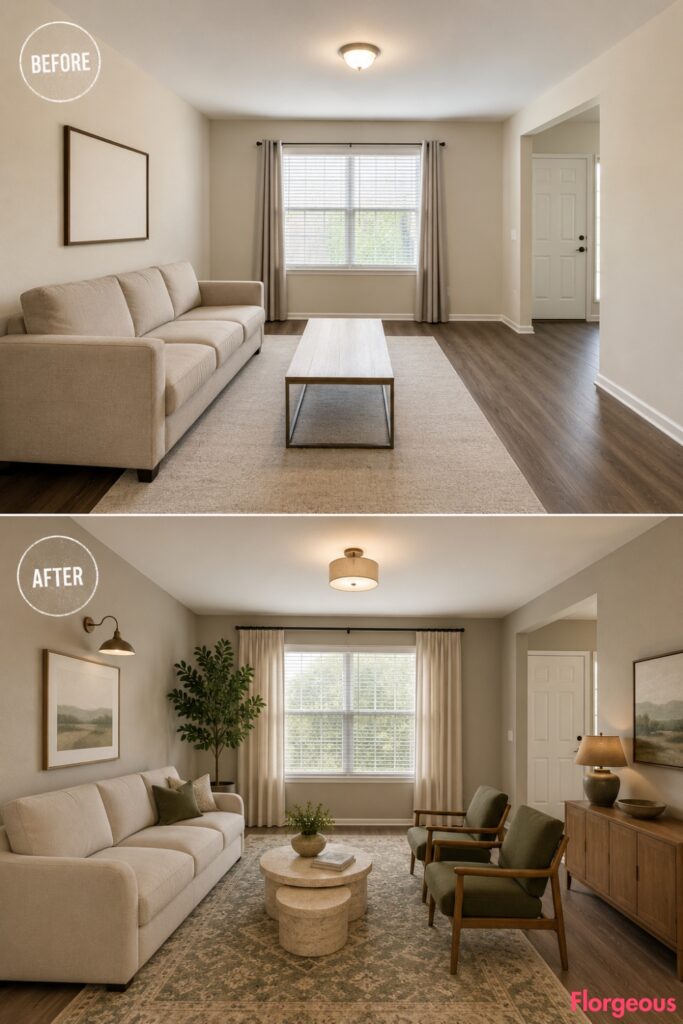
The most practical makeover uses performance fabrics, closed storage, rounded tables, and a washable rug.
Warm greige walls create a forgiving backdrop. The sofa is oatmeal performance fabric, while the two oak chairs use durable muted-olive upholstery. Rounded travertine nesting tables are easier to circulate around than a large sharp-edged block.
17. The Dramatic Finale: Tobacco Walls and Pale Limestone
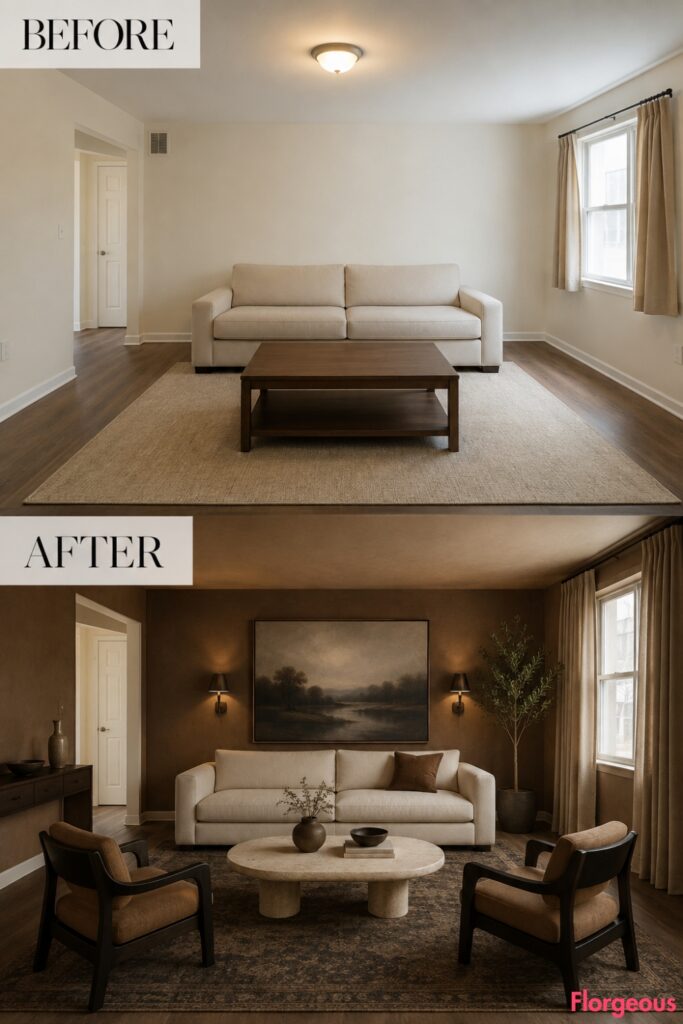
The last makeover is the most cinematic.
Tobacco-brown mineral walls surround a pale parchment sofa, blackened-walnut chairs, and a creamy limestone table. A large atmospheric landscape dominates the wall, while everything beneath it remains edited and low.
The result feels adventurous because of scale, color, and material rather than themed objects.
How to Choose the Right Safari-Inspired Look for Your Living Room
The most convincing rooms here all follow a similar principle: begin with natural material and color, then add one or two memorable layers instead of trying to communicate the theme with objects.
For your own Safari Living Room, look first at the things that are expensive or inconvenient to replace. Your flooring, sofa, natural light, and room size should help determine which palette makes sense.
A beige sofa could move easily toward olive and tobacco, pale limestone, terracotta, dusty blue-gray, or black and sand. A darker sofa may work better with parchment walls, lighter rugs, and pale stone.
Once you choose a direction, identify the three biggest visual changes in that makeover. Usually they are the wall treatment, rug, and major furniture or curtain color. Deal with those first.
Only then add lighting, artwork, plants, ceramics, baskets, or a restrained pattern. If the room already has beautiful wood, woven texture, stone, greenery, and atmospheric art, adding another obvious safari reference may actually make it less convincing.