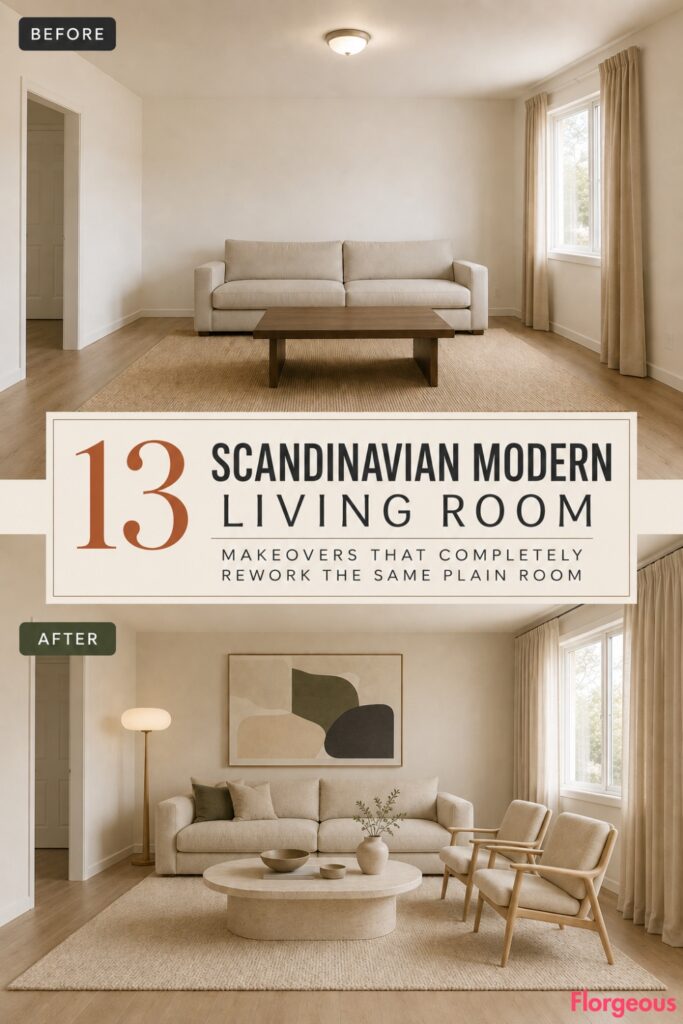
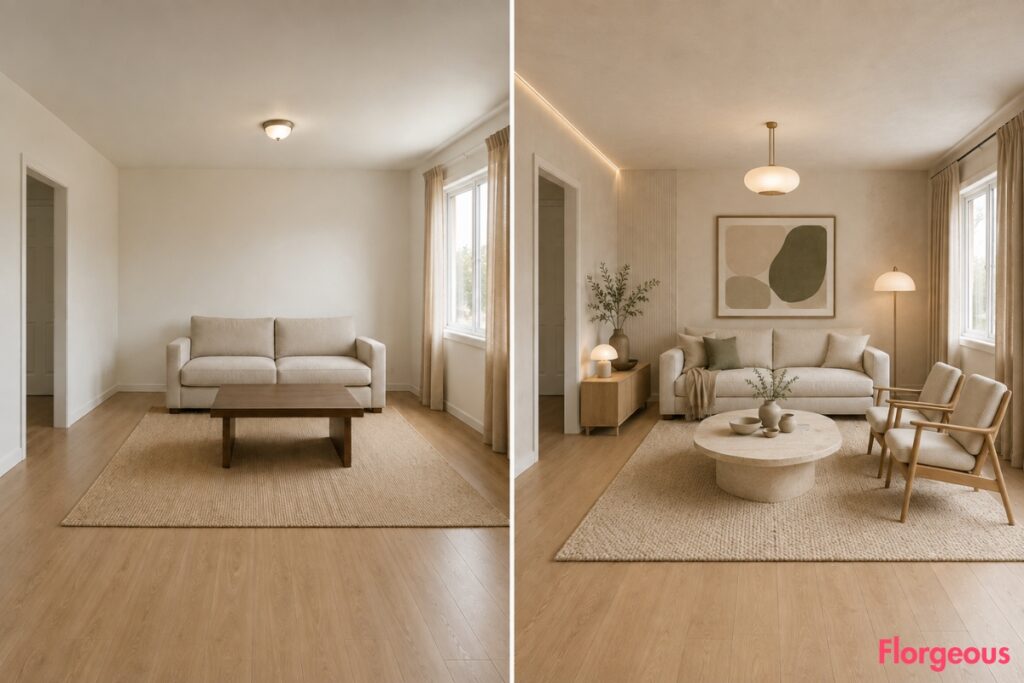
The starting point could hardly be more ordinary: warm off-white walls, a basic beige sofa, a bare rectangular coffee table, short curtains, a neutral rug, and one standard ceiling light. Nothing is technically wrong with the room, but nothing gives it much identity either.
For this experiment, the architecture never moves. The doorway stays open, the window remains exactly where it is, the flooring footprint is unchanged, and every makeover is viewed from the same fixed camera position.
What changes is the design language. These 13 Scandinavian Modern Living Room transformations explore pale timber, moody walls, muted color, tactile wool, practical storage, vintage Nordic pieces, sculptural lighting, and quieter layouts without turning the room into a cold minimalist showroom.
The interesting part is how different the same shell can feel once proportion, material, light, and color begin doing the work.
1. From Builder-Grade Beige to Warm Ivory and Pale Oak
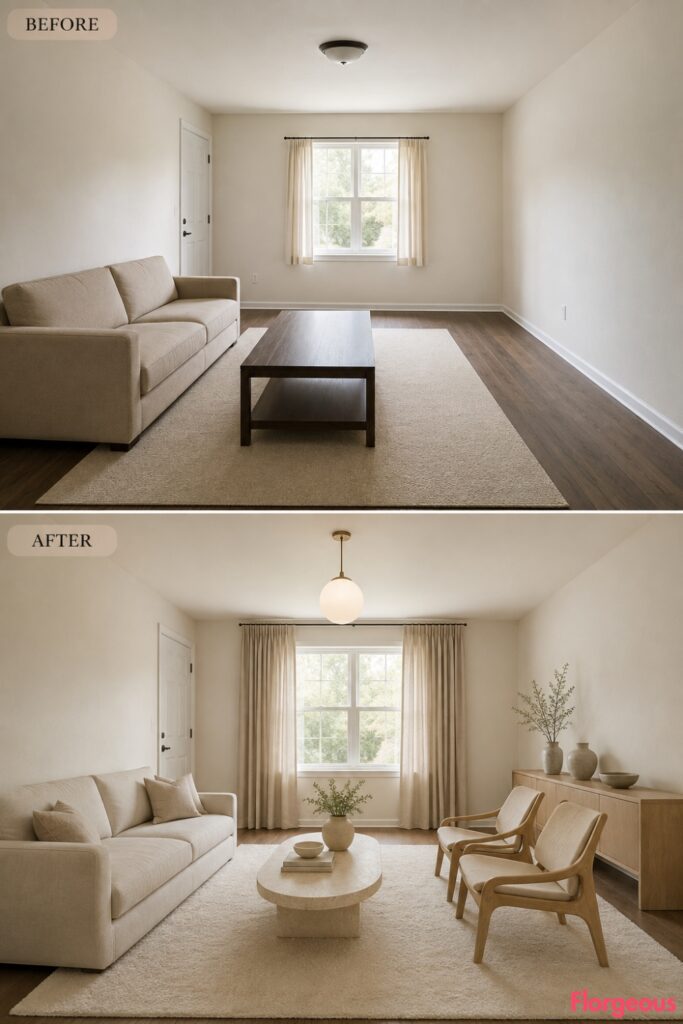
This is the most approachable makeover in the collection, but it still creates a dramatic visual shift. The palette stays pale while every surface becomes warmer and more intentional.
Before: The fixed room has warm off-white walls, a straight beige sofa, bare rectangular coffee table, neutral rug, short curtains, basic ceiling light, empty walls, and soft daylight.
After: Warm ivory walls frame an oatmeal linen sofa and two sculptural pale-oak lounge chairs placed together opposite it. An oval honed limestone table, generous ivory wool rug, floor-length flax curtains, a low white-oak console, and an opaline pendant add quiet structure.
Designer Tip: Match pale woods by undertone rather than searching for identical finishes. Slight variation between oak, ash, and birch often looks more natural.
2. What Dusty Blue Does to a Flat Neutral Room
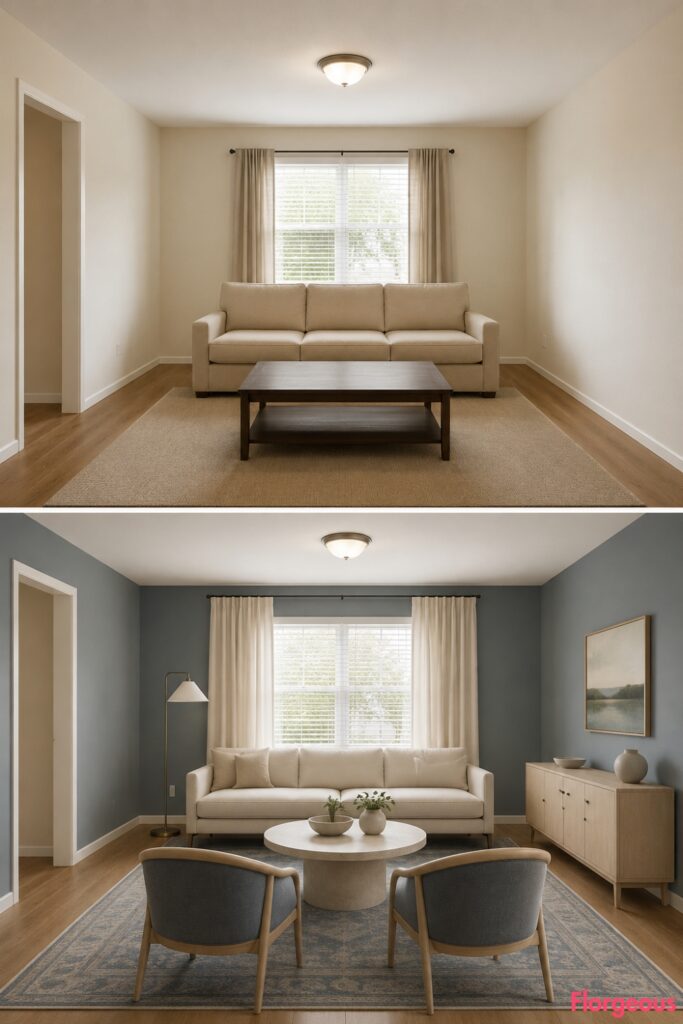
Instead of relying on beige, this version uses a muted blue-gray that changes subtly from morning to evening. Blond birch keeps the room fresh rather than formal.
Before: The identical builder-grade room remains untouched, including the beige sofa, short curtains, bare table, and standard ceiling light.
After: Dusty blue-gray walls meet a parchment slim sofa, blond-birch curved-back chairs upholstered in soft slate-blue wool, and a round pale-marble pedestal table. A faded blue-and-flax rug, cream curtains, antique-nickel floor lamp, and shallow birch cabinet complete the cooler Nordic palette.
Color Story: Blue-gray works best here because it is chalky and muted, not icy or saturated.
3. A Forest Green Room That Still Feels Light
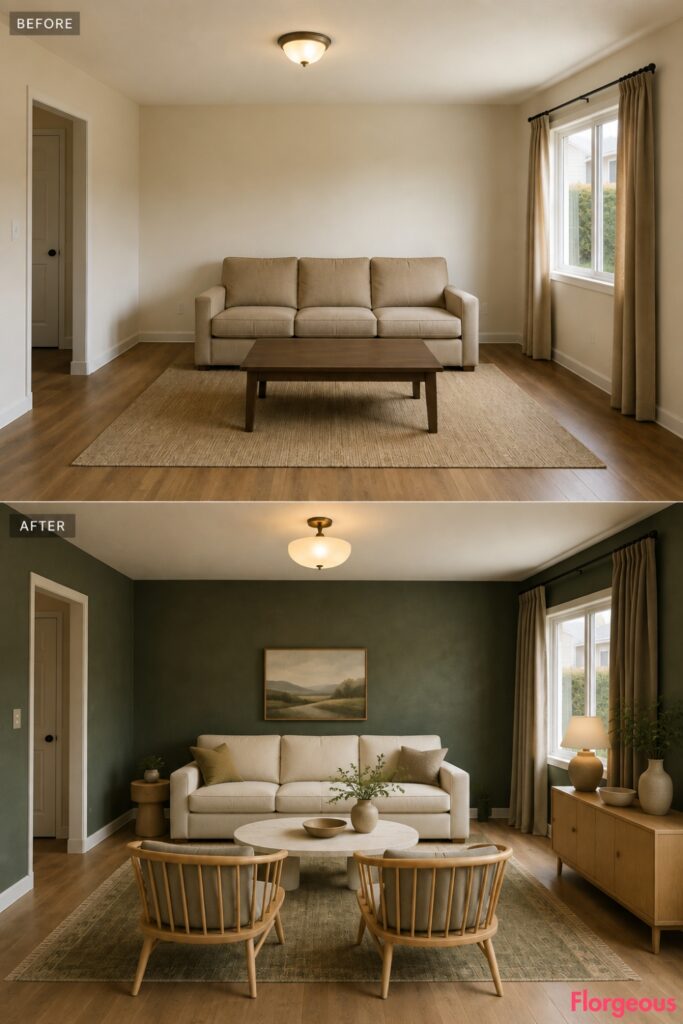
A dark Scandinavian room does not need to feel heavy. The trick is balancing the deeper wall color with pale upholstery and visibly light timber.
Before: The same warm off-white builder-grade room feels bright but visually weightless.
After: Deep forest-green mineral walls become the envelope for a parchment upholstered sofa, two light natural-oak spindle-back lounge chairs, and a cream limestone oval table. Mushroom curtains, an olive-parchment rug, a compact oak side table, and warm opaline lighting keep the mood soft.
Why It Works: The wall color is dark, but the biggest furniture pieces remain light.
4. Clay Walls + Walnut: The Earthier Nordic Turn
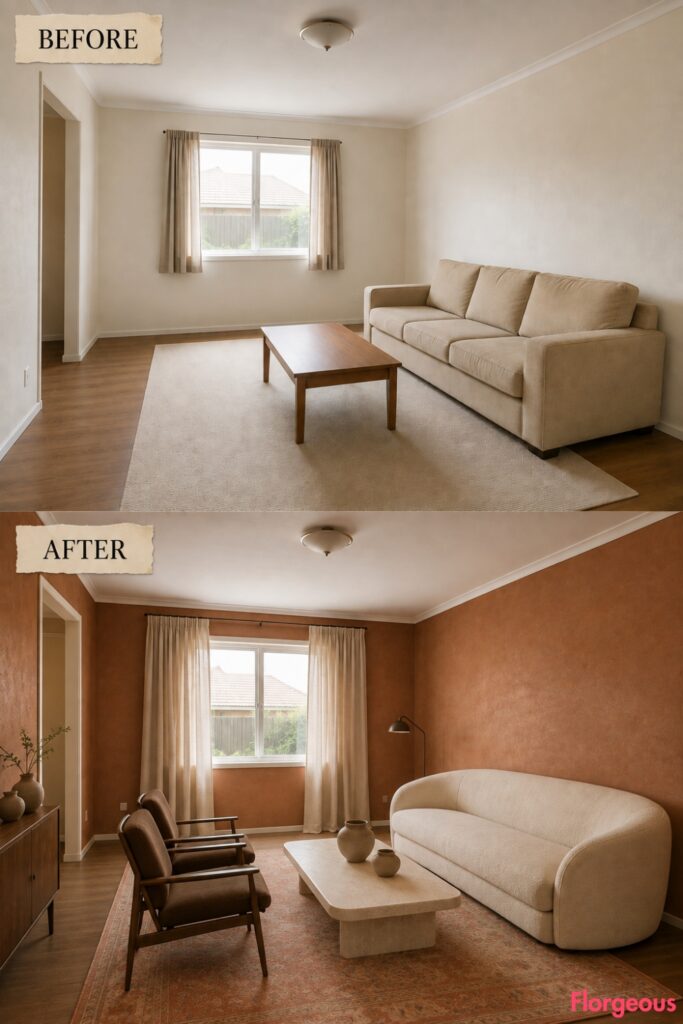
This interpretation brings in stronger color without slipping into bohemian territory. The palette remains edited, with clay, cream, walnut, and tobacco doing nearly all the visual work.
Before: The original room remains neutral, flat, and lightly unfinished.
After: Muted terracotta mineral plaster surrounds a softly curved cream linen sofa. Two slim walnut lounge chairs in tobacco wool face it across a low rectangular limestone table. The rug mixes rust, parchment, and faded brown, while aged-bronze task lighting provides a darker counterpoint.
5. Dark Walls, Blond Wood: A Sharper Nordic Contrast
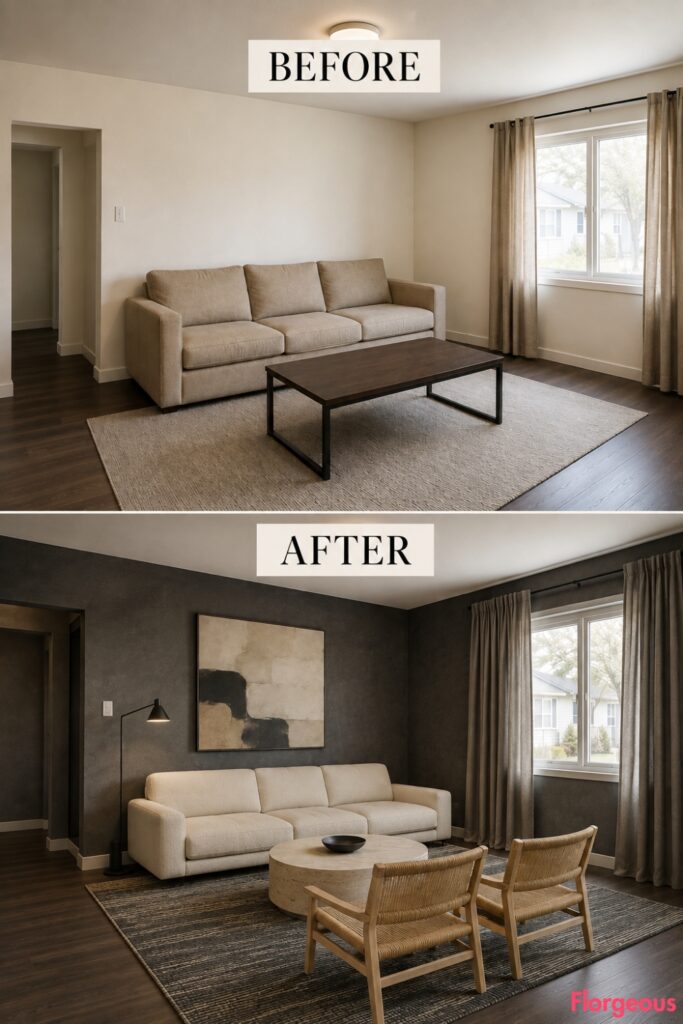
This makeover is graphic without being harsh. Charcoal replaces the pale backdrop, but blond ash and warm cream prevent the room from drifting toward an industrial look.
Before: The same beige seating and off-white walls have little depth.
After: Soft charcoal mineral plaster frames a low warm-cream sofa and two blond-ash armchairs with woven seats. A pale travertine drum table, charcoal-and-sand flatweave rug, warm-gray curtains, and a slender blackened-metal floor lamp create controlled contrast.
Common Mistake: Too many black details can make Scandinavian interiors feel severe. Let the charcoal wall provide most of the darkness.
6. The Family Room Version: Practical, Soft, and Durable
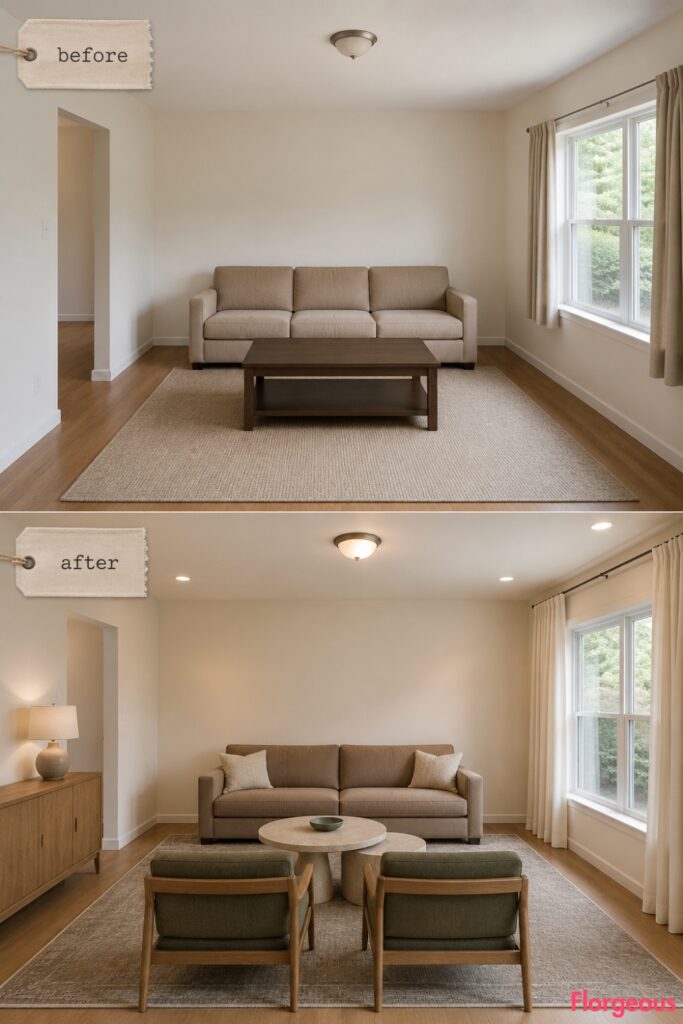
Scandinavian design is especially convincing when functionality shapes the aesthetic. Here, almost every material earns its place by being easy to live with.
Before: The original room has almost no useful storage and a single central table with hard corners.
After: A taupe performance-fabric sofa is paired with medium-oak chairs upholstered in washable olive wool-look fabric. Rounded stone-look nesting tables replace the rectangular table, while a large low-pile rug and closed oak media cabinet handle everyday family use.
Budget Version: Use a stone-look composite table rather than real travertine, then spend more on the rug or sofa fabric.
7. No Renovation Required: A Renter-Friendly Nordic Reset
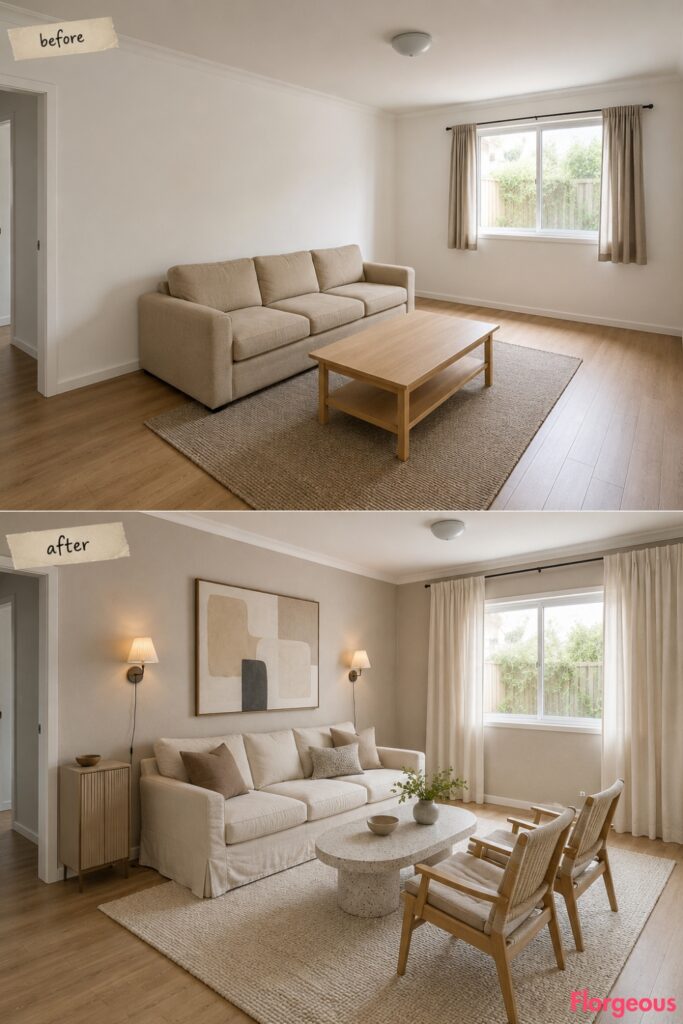
This room changes almost entirely through reversible layers. Nothing depends on millwork, new wiring, or permanent architectural changes.
Before: The fixed builder-grade room has basic finishes and short curtains.
After: Removable soft-greige wall treatment, an oatmeal slipcovered sofa, freestanding beech lounge chairs, ready-made full-height curtains, a portable terrazzo-look oval table, plug-in shaded sconces, and removable framed abstract art provide the makeover.
8. For Tight Rooms: Floaty Furniture, Clear Floor, Better Flow
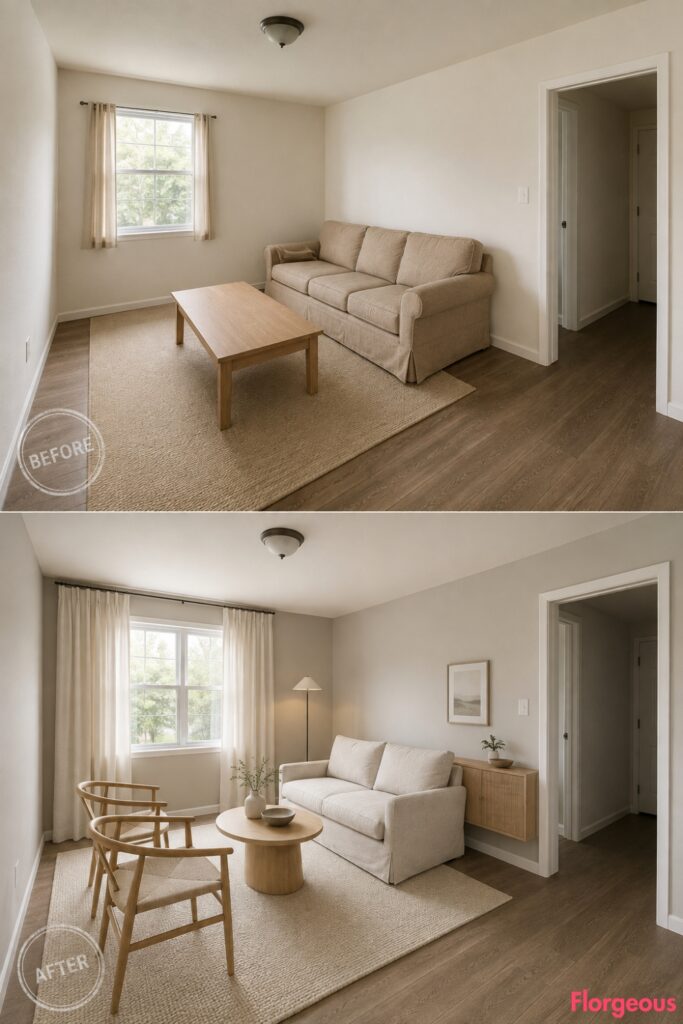
Instead of decorating a small living room more heavily, this version removes visual weight.
Before: The same basic furniture makes the room feel more crowded than its dimensions require.
After: A slim flax loveseat sits with two open-frame curved oak chairs, a compact round pedestal table, and a shallow wall-hugging cabinet. Raised legs reveal more flooring, and full-height curtains exaggerate the room’s vertical dimension.
Small Space Tip: Visible floor around furniture often improves perceived spaciousness more effectively than choosing undersized furniture.
9. The Gallery-Led Makeover: Let Art Set the Rhythm
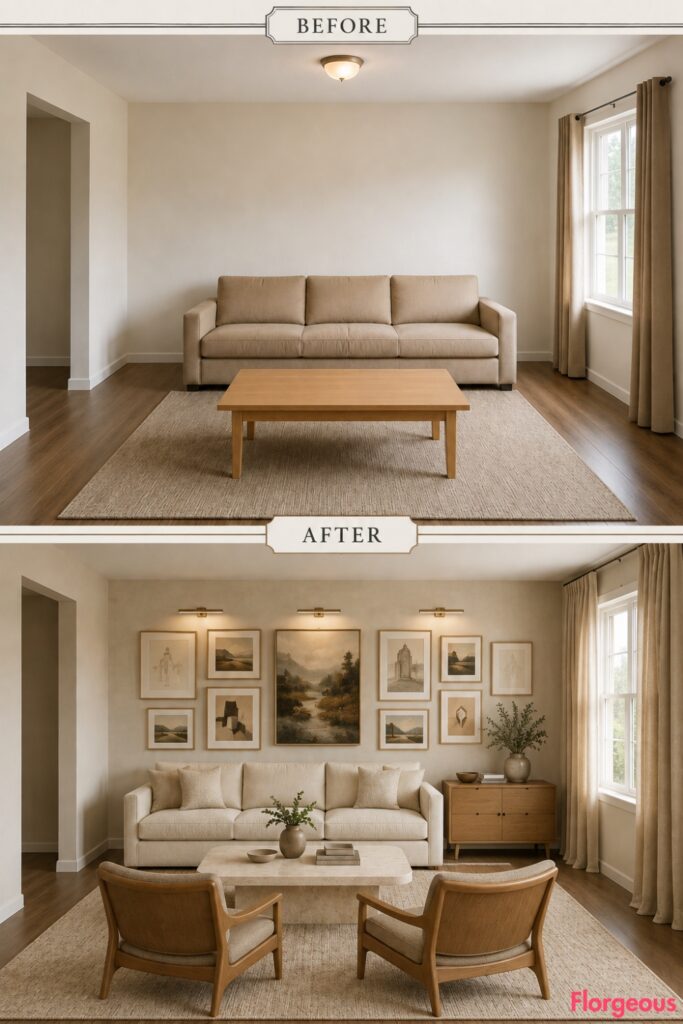
Here, the wall becomes the focal point, but the furniture stays deliberately quiet so the room does not turn maximalist.
Before: Empty walls make the plain room feel particularly unfinished.
After: Warm stone walls hold a carefully spaced gallery of abstract landscapes, architectural studies, and nature-inspired shapes. A tailored oatmeal sofa, medium-oak chairs, pale stone table, and low oak console provide a simple foundation.
10. Texture Over Color: Limewash, Wool, and Travertine
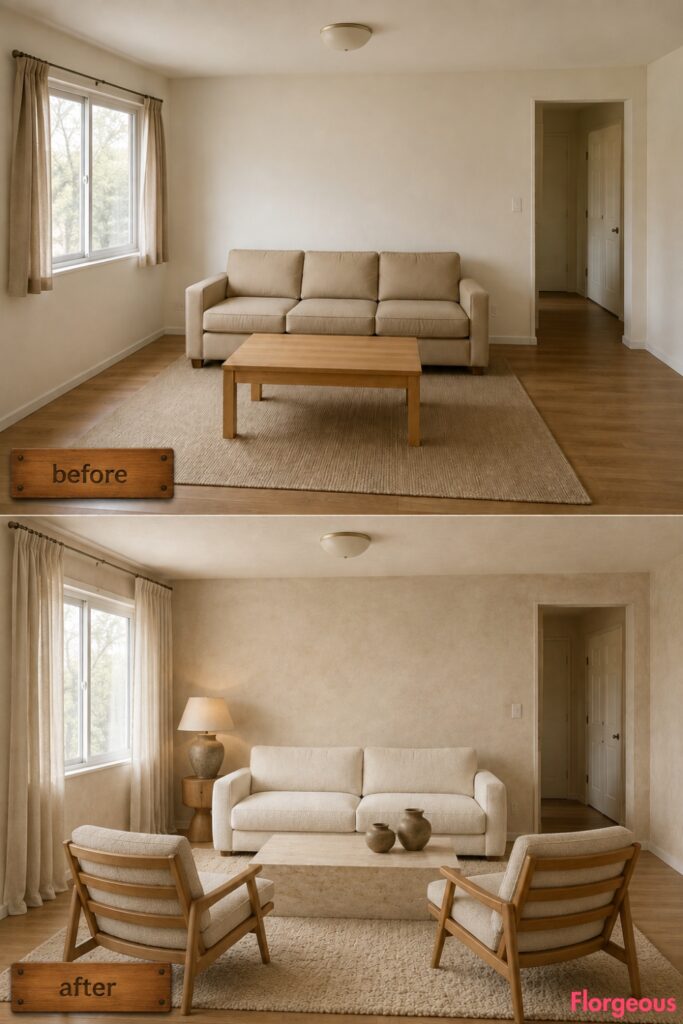
This version proves a quiet palette does not have to look flat. Almost all the interest comes from how the materials catch light.
Before: Flat paint, generic upholstery, and smooth surfaces give the starting room little tactile character.
After: Chalky limestone limewash meets a cream wool sofa, natural-oak upholstered chairs, a chunky monolithic travertine table, a thick tonal rug, and relaxed linen curtains. A single hand-thrown ceramic lamp provides the only decorative flourish.
11. One Light, One Focal Point: The Opaline Pendant Room
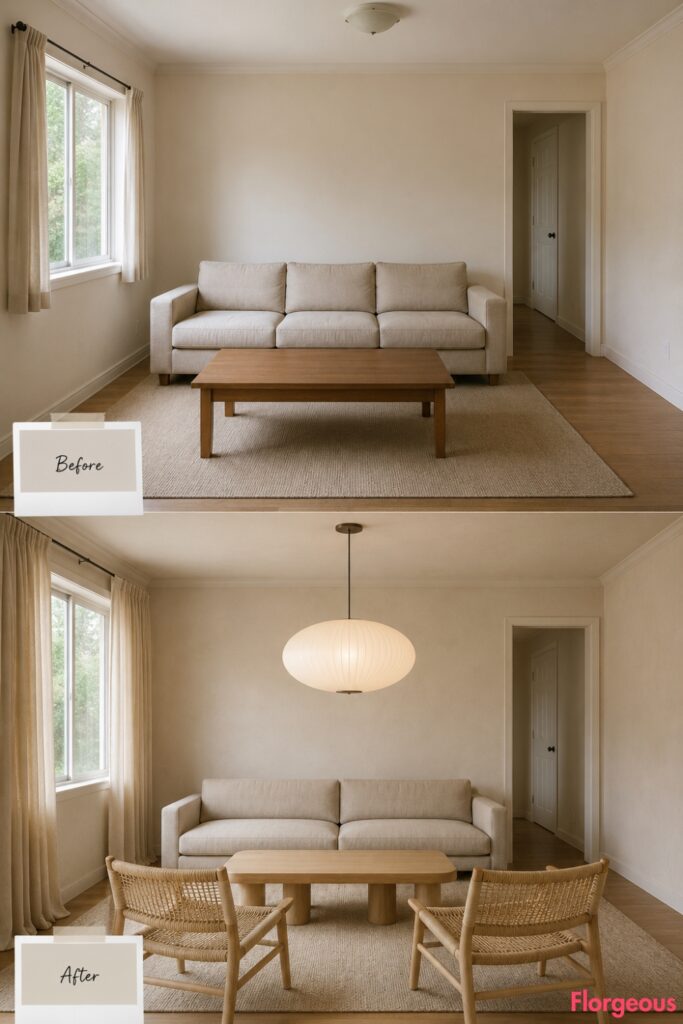
Rather than filling the room with accessories, this scheme gives one object the visual spotlight.
Before: The standard ceiling fixture illuminates the room but contributes almost nothing to its character.
After: A generous opaline pendant hangs above a softly rectangular beech coffee table. Pale parchment walls, a low flax sofa, paper-cord beech chairs, and a muted oatmeal rug stay deliberately understated.
12. Collected, Not Retro: A Vintage Nordic Mix
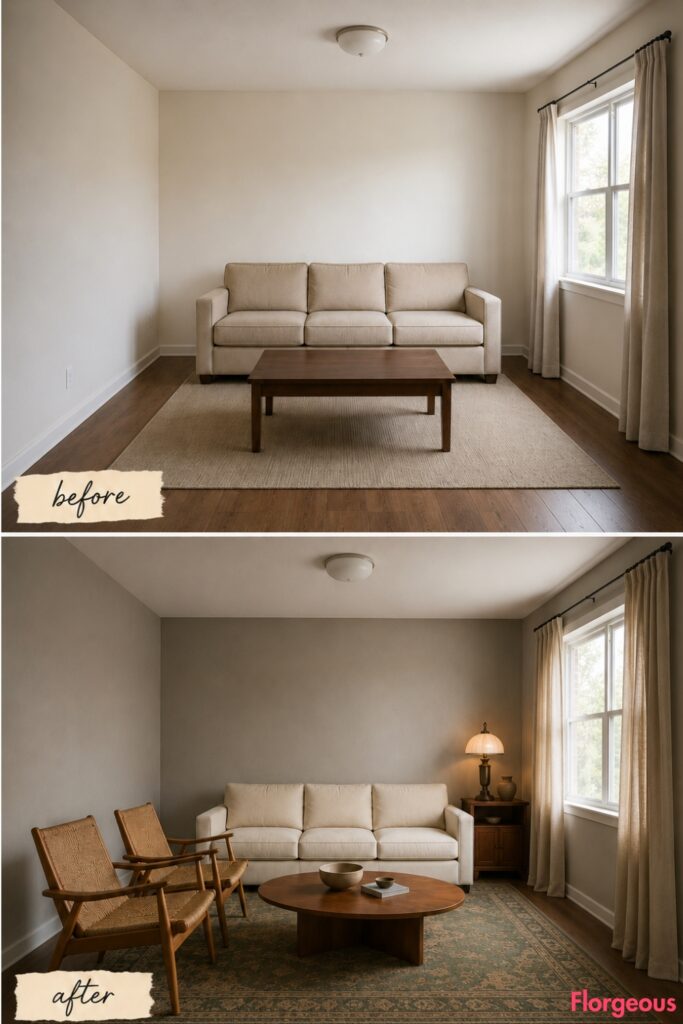
A Scandinavian room can feel more personal when every furniture piece does not appear to have been purchased together.
Before: The original furniture looks generic and lacks a sense of history.
After: Soft stone-gray walls hold a cream sofa, a pair of complementary vintage-inspired teak lounge chairs, an aged walnut side cabinet, an oval teak veneer table, a faded moss-and-brown wool rug, and a vintage-style frosted-glass lamp.
The result feels collected rather than themed because the palette stays restrained and the vintage references are limited to a few substantial pieces.
13. After Dark: Deep Blue-Gray and Low Warm Light
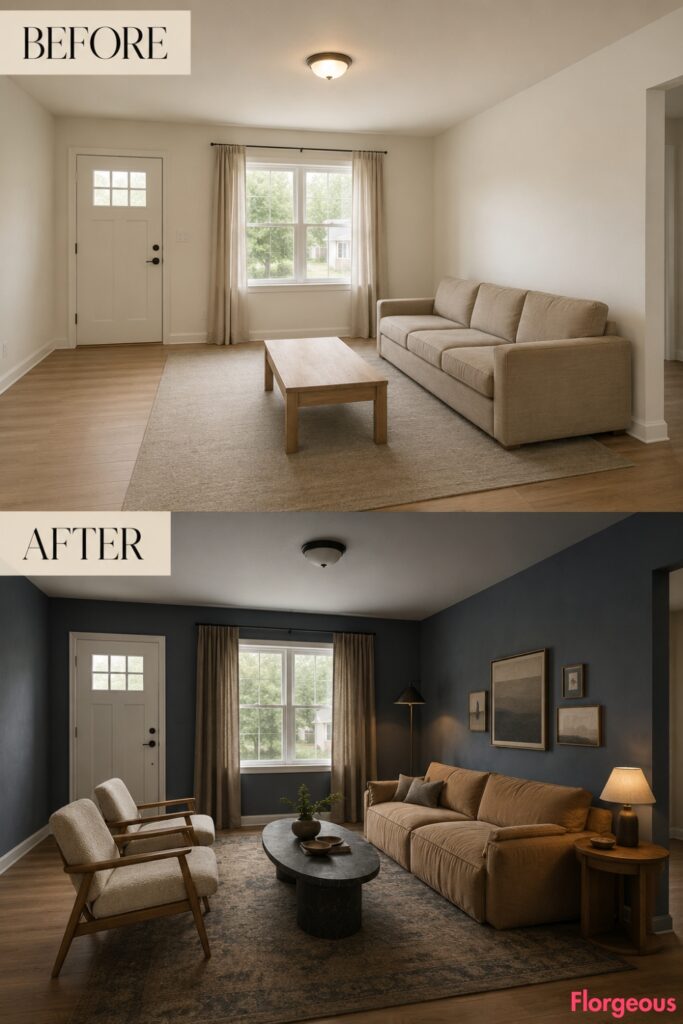
The final transformation is built around nighttime atmosphere rather than daylight. It is moodier than the others, but still recognizably Nordic because the room stays edited and functional.
Before: The same builder-grade room depends almost entirely on soft daylight and one ceiling fixture.
After: Deep muted blue-gray walls surround a camel-colored low sofa and two medium-oak lounge chairs upholstered in parchment wool. A dark soapstone oval table anchors the seating area, while mushroom curtains, a muted tobacco-and-slate rug, and several low pools of warm light create an intimate evening setting.
Style Note: For a darker room, use lamps at several heights rather than making one ceiling fixture brighter.
How to Pick the Scandinavian Direction That Fits Your Room
The most useful lesson from these 13 transformations is that Scandinavian design is not a single pale-beige formula. The same builder-grade room can support forest green, terracotta, blue-gray, charcoal, stone, cream, and deeper evening palettes while still feeling distinctly Nordic.
For your own Scandinavian Modern Living Room, choose the atmosphere before shopping for accessories. Decide whether the room should feel bright, colorful, tactile, practical, collected, or moody. Then select one dominant wood tone and one material that carries most of the texture.
A pale room might use oak and wool. A darker room can combine blond ash with stone. A vintage version might make teak the hero, while a family room can rely on medium oak and performance fabric.
Check circulation before adding anything else. Keep chairs proportionate, let the rug connect the seating group, hang curtains high and wide, and avoid covering every surface with small decor. If the big pieces establish the right balance of wood, textile, stone, and light, the room will already feel finished.