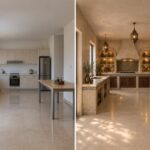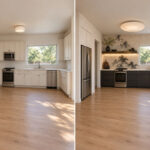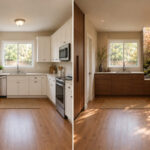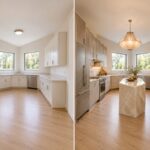

The starting bedroom is intentionally ordinary. It has warm off-white walls, a basic rectangular bed centered on the solid far wall, simple cream bedding, two bare nightstands, one medium window centered on the right-hand wall with short plain curtains, a doorway on the left side of the entry wall, plain light flooring, a generic central ceiling light, and almost no styling.
That exact room shell stays consistent throughout all 25 makeovers. The architecture, doorway, window, floor footprint, and basic BEFORE furniture arrangement do not change. What does change between concepts is the camera position, so the gallery does not feel like the same photograph repeated 25 times.
The AFTER rooms go much further. These Tropical Bedroom ideas explore breezy island calm, saturated rainforest drama, vintage tropical glamour, colorful Caribbean energy, monsoon coolness, artistic interiors, dry-season warmth, botanical styling, pattern, craft, and contemporary tropical design. Each transformation has its own layout, palette, focal point, lighting approach, and personality.
1. Open the Room Up Like a Breezy Island Cabana

A cabana-inspired bedroom should feel as though air can move through it.
Before: The same plain bedroom has the bed centered on the far wall, matching bare nightstands, short curtains on the right-side window, and plenty of unused floor around the furniture.
After: Shift a whitewashed timber bed toward the left side of the far wall, leaving a broad open lane on the window side. Sky-blue linen, crisp white cotton, striped canvas, and pale straw accents create an airy resort personality. A slim folding luggage bench sits at the foot without crowding the walkway.
Why it works: The open floor matters as much as the pale palette.
2. Turn the Bedroom Into a Rainforest Jewel Box

This version is deep, saturated, and deliberately intimate.
Before: The neutral room feels bright but visually flat.
After: Move a plum upholstered bed slightly toward the rear-right and wrap the walls in deep bottle green. A burgundy lacquer chest sits on the opposite side, joined by a citron stool, black woven floor textile, and glossy aubergine ceramics.
Low amber lamps create separate pools of evening light instead of illuminating the entire room.
3. Go Bright With a Caribbean Color Clash

Tropical bedrooms do not have to coordinate every color.
Before: Cream, beige, and plain timber make the base room feel cautious.
After: A turquoise-painted bed sits left of center, while a guava-red chest occupies the opposite wall. Full-height saffron curtains replace the short BEFORE curtains, with tomato-red cushions and small cobalt details completing the palette.
Designer Tip: Keep the large wall areas warm white so several saturated colors can breathe.
4. Make Tropical Style Sharp and Graphic

This one leaves natural-fiber clichés behind.
Before: The plain room has no geometry or strong focal point.
After: Divide the far wall into oversized cobalt, papaya, and warm-white fields. A low ivory bed sits off-center against one block, paired with a black pedestal and lemon-yellow tubular stool.
There are no leaf prints or decorative plants. Tropical personality comes through heat, color, and confident contrast.
5. Add a Tailored Tropical Writing Corner

This makeover changes how the room is used.
Before: The window-side corner is empty and the room revolves entirely around the bed.
After: Keep a dark hardwood bed toward the rear, then create a compact writing zone near the right-side window using a slim tobacco-leather desk and saddle stool. Cream cotton, faded olive, and aged brass give the room an old tropical-club mood.
A focused brass task lamp lights only the desk.
6. Cool the Room Down With a Monsoon Palette

Not every tropical room needs golden warmth.
Before: The original bedroom feels dry and static.
After: Misty blue-gray walls, eucalyptus bedding, dark satin timber, and pale stone accents create a cool after-rain mood. Shift the bed slightly toward the window side and place a shallow drawer unit on the opposite wall.
A broad frosted fixture provides soft diffuse illumination.
7. Turn Half the Bedroom Into a Tropical Artist Studio

Before: The empty floor makes the room feel unfinished rather than creative.
After: Move a simple bed along the left wall, keeping it clear of the doorway, and dedicate the opposite half to a slim artist table, woven stool, blank canvases, pigment jars, and handmade ceramics.
Mango yellow, ultramarine, coral, and chalk white create a much more expressive personality.
8. Make the Floor Feel Like a Volcanic Island

Here the focal point sits below eye level.
Before: Plain flooring contributes almost nothing to the room.
After: Charcoal volcanic-stone flooring gives the entire room visual weight. A rust upholstered bed sits against the far wall, while pale pumice plaster and one heavy dark dresser keep the upper half relatively restrained.
A single turquoise ceramic object provides a crisp cool counterpoint.
9. Revisit a Playful 1960s Poolside Mood

Before: The room has no era or distinct attitude.
After: Place a pale-aqua rounded bed toward the rear-right, paired with a glossy persimmon dresser and cream boucle stool. Lemon-yellow accents and a terrazzo-inspired floor textile make the room feel sunny, polished, and retro.
10. Give One Side of the Bedroom to a Botanical Conservatory

This is the one concept where plants intentionally dominate.
Before: The right-side window is visually disconnected from the rest of the room.
After: Group three large architectural plants beside the window as one controlled planting zone. Move the bed toward the left half of the far wall to leave a generous buffer around the foliage.
Aubergine bedding, black furniture, and warm-white plaster keep the room from becoming an all-green jungle.
11. Create a Crisp Black, Ivory, and Apricot Tropical Hotel

Before: The base room is minimal because it lacks design, not because it is intentionally edited.
After: Black-stained furniture establishes a strong framework around crisp ivory bedding. An oversized apricot chair sits deep in the far-left corner, while a narrow jade side table introduces one cooler note.
Generous negative space makes the result feel more luxurious.
12. Interpret the Dry Tropics Instead of the Lush Ones

Before: The pale room has no sense of climate or landscape.
After: Position a pale fruitwood bed toward the rear-left and place a broad low bench along the opposite wall. Dry ochre plaster, tamarind cotton, straw fibers, and brick-red accents create a sun-baked tropical atmosphere without a single visible plant.
13. Make Pacific Textile Art the Main Attraction

Before: The walls are blank and visually underscaled.
After: Shift a simple dark bed toward the left side, leaving the right half of the far wall free for one oversized Pacific barkcloth-inspired textile panel. Black, rust, ochre, and cream geometry becomes the unmistakable focal point.
A narrow pedestal below holds only one ceramic vessel.
14. Create an Island Dressing Salon

Before: The room provides no dedicated place to dress.
After: Push the bed deeper against the far wall and clear the left side for a freestanding mirror, compact upholstered stool, and shallow tray table. Coral, jade, cream, and dark mahogany create a polished dressing-room mood without blocking the entry route.
15. Go Playful With Tropical Memphis Color

Before: Neutral symmetry keeps everything visually cautious.
After: Use a lilac bed, tomato-red pedestal, mint storage cube, lemon-yellow accent object, and one black-and-white striped textile. Arrange the pieces asymmetrically and leave large areas of clear floor between them.
Why it works: Strong negative space stops the color from becoming chaotic.
16. Make an Almost All-White Tropical Breeze Room

Before: Cream and beige feel dull because every material has the same visual weight.
After: Keep the palette almost entirely white but change the texture everywhere: chalky limewash, crinkled cotton, translucent pineapple-fiber-inspired curtains, bleached timber, pale woven flooring, and matte ceramics.
Move the bed just off-center to keep the composition relaxed.
17. Turn Mango Yellow and Magenta Into a Festival Room

Before: The plain bedroom contains almost no color.
After: A mango-yellow bed anchors the room, layered with magenta bedding and cobalt curtains. A dark chocolate floor textile controls the saturation, while one teal ceramic lamp brings in a smaller fourth color.
Keep the furniture count intentionally low.
18. Add a Proper Tropical Reading Corner

Before: The bed is the only comfortable place to sit.
After: Shift the bed toward the left half of the room and create a compact reading zone in the far-right corner using an upright woven chair and tiny round table. Celadon bedding, burnt orange, cream, and dark timber make this calmer than the festival room before it.
19. Take Tropical Design After Dark

Before: The neutral bedroom loses almost all personality in the evening.
After: Ink-blue walls surround a scarlet upholstered bed, with glossy black storage and hot-pink accents creating a nightlife mood. A small mirrored pedestal adds controlled reflection without pushing the room into generic glamour.
Two colored-glass table lamps provide all the evening light.
20. Make Handcraft Feel Raw and Sun-Worn

Before: Factory furniture hides every sign of how it was made.
After: Place a compact hand-shaped fruitwood bed toward the left side, then loosely distribute a few handmade pieces rather than forming a matching suite. Coarse cotton, unglazed clay, banana fiber, turmeric, charcoal, and rusty orange create a raw craft-led room.
21. Style It Like a Tropical Fashion Editorial

Before: Matching neutral furniture creates a predictable suite.
After: A raspberry upholstered bed, tall cobalt floor mirror, pale peach cabinet, oxblood stool, and saffron-striped throw are treated like individual fashion pieces rather than a matching set.
Leave plenty of empty wall around each object so every silhouette reads clearly.
22. Create a Soft Pastel Island Bedroom

Before: Neutral beige looks subdued without feeling especially fresh.
After: Place a pistachio upholstered bed toward the rear-right with a shell-pink chest farther across the room. Powder-blue bedding, pale butter accents, warm-white walls, and pale timber keep the whole room light.
No dark wood is used.
23. Wrap the Room With a Rain-Dark Tile Edge

Before: The transition between the plain walls and floor has no visual purpose.
After: Glossy blue-black ceramic skirting runs around the room at low level, resembling surfaces darkened by tropical rain. Dusty-pink matte plaster rises above it, balanced by an olive bed and pearl-gray bedding.
24. Layer Tropical Pattern Without Using Palm Leaves

Before: The room is visually safe because almost every surface is plain.
After: Use a dark-blue bed and saffron dresser as large solid anchors. Across the textiles, mix one broad stripe, one medium check, tiny dots, and abstract tropical-fruit geometry.
The walls remain warm white so the patterns can breathe.
Common Mistake: Several prints of the same scale will look much busier than a deliberate mix of large, medium, and fine pattern.
25. Finish With a Tropical Bio-Material Future

The final room leaves nostalgic resort references behind.
Before: The same bedroom still has conventional furniture, neutral walls, and generic finishes.
After: Use a clean pale bed with compressed plant-fiber composite furniture, translucent amber bio-resin accessories, cobalt recycled-textile flooring, and one narrow acid-green upholstery detail.
The forms stay clean and the central floor remains almost completely open.
How to Choose the Right Tropical Personality for Your Bedroom
The easiest way to make tropical design repetitive is to begin by shopping for “tropical decor.” That usually leads to the same baskets, beige rattan, palm prints, linen, and potted greenery.
Start with personality instead.
A cabana bedroom needs openness and airflow. A rainforest jewel box needs deep pigment and intimate light. A tropical artist studio needs an actual work zone. A dressing salon should reorganize one side of the room around getting ready. A volcanic bedroom can make the floor more important than the headboard, while a pattern-rich bedroom can avoid botanical imagery altogether.
Next, decide which element should control the room visually. It might be furniture placement, color, plants, flooring, craft, artwork, pattern, or lighting. Let one of those lead rather than asking every surface to compete.
Finally, preserve the practical room underneath the makeover. Keep the doorway clear, maintain comfortable access around the bed, avoid blocking the window, and give storage enough space to open properly.
A successful Tropical Bedroom does not need every familiar tropical motif. It needs a clear personality, a coherent palette, believable materials, and enough restraint for the strongest idea to stand out.