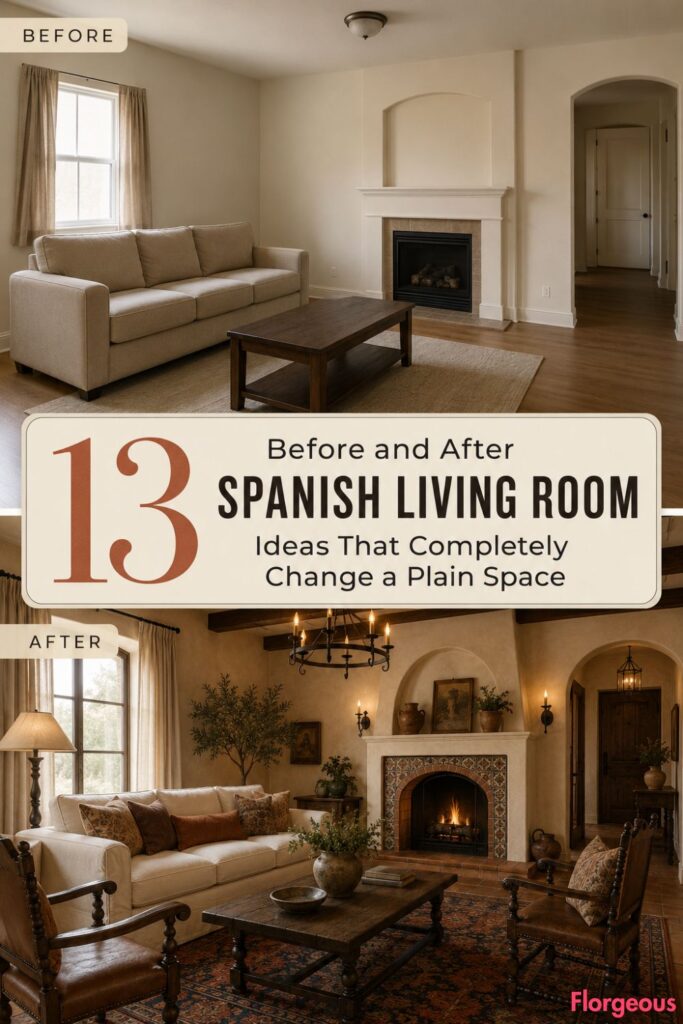
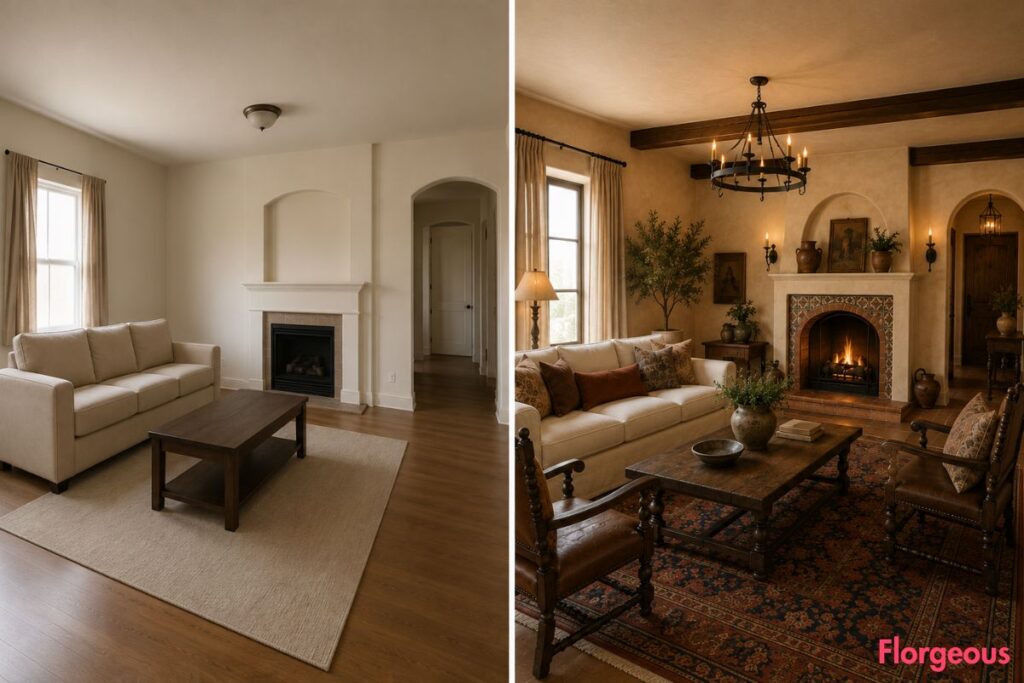
The room begins as a familiar builder-grade blank canvas. Warm off-white walls, a basic beige sofa, short curtains, and a bare coffee table make it functional, but there is no architectural character or memorable focal point.
A Spanish Living Room can feel rustic, coastal, historic, minimal, or richly decorative. What connects these styles is not themed accessories, but an honest use of plaster, tile, timber, stone, iron, leather, linen, and sun-warmed color.
Each makeover below starts with the exact same plain room. The architecture, windows, doors, flooring footprint, camera angle, and circulation routes never change. Only the after design is different, making it easier to compare 13 completely distinct Spanish-inspired directions.
1. Turn a Plain Room Into a Classic Spanish Revival Retreat
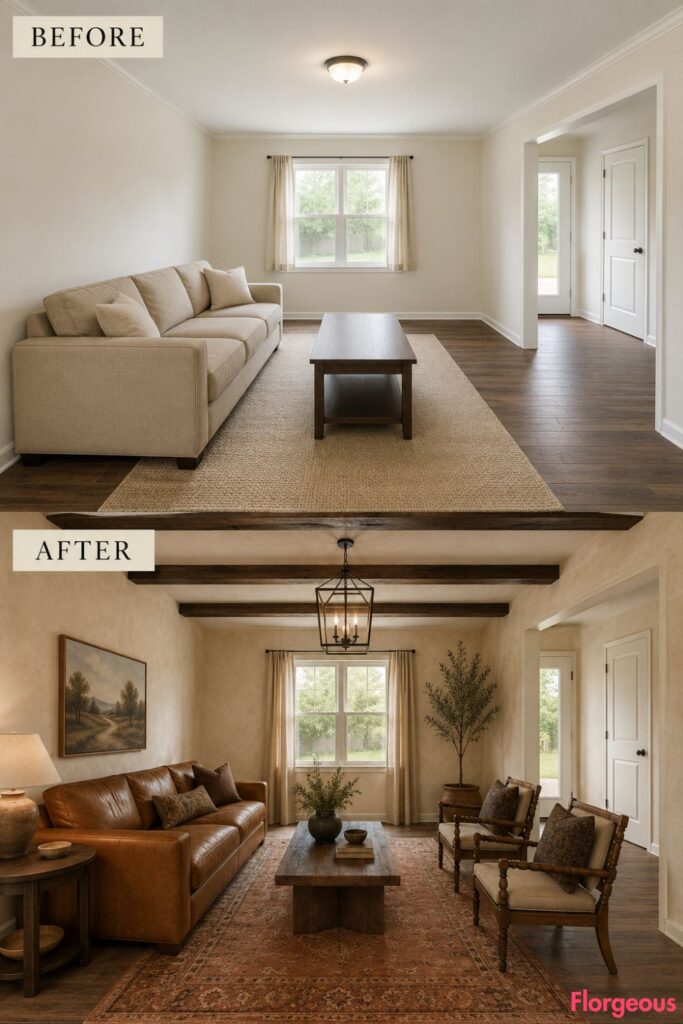
This makeover introduces the strongest hallmarks of Spanish Revival design while keeping the furniture comfortable enough for everyday life.
Before: The unchanged builder-grade room has warm off-white walls, a straight beige sofa, a bare table, a neutral rug, short curtains, and ordinary lighting.
After: Creamy textured plaster gives the walls depth, while decorative dark timber beams draw attention upward. A camel leather sofa, carved walnut chairs, a faded terracotta rug, and a blackened-iron lantern bring warmth and structure.
The room feels architectural without relying on too many decorative objects.
Designer Tip: Use one substantial carved-wood piece rather than filling the room with matching ornate furniture.
2. Give the Room the Relaxed Beauty of an Andalusian Country Home
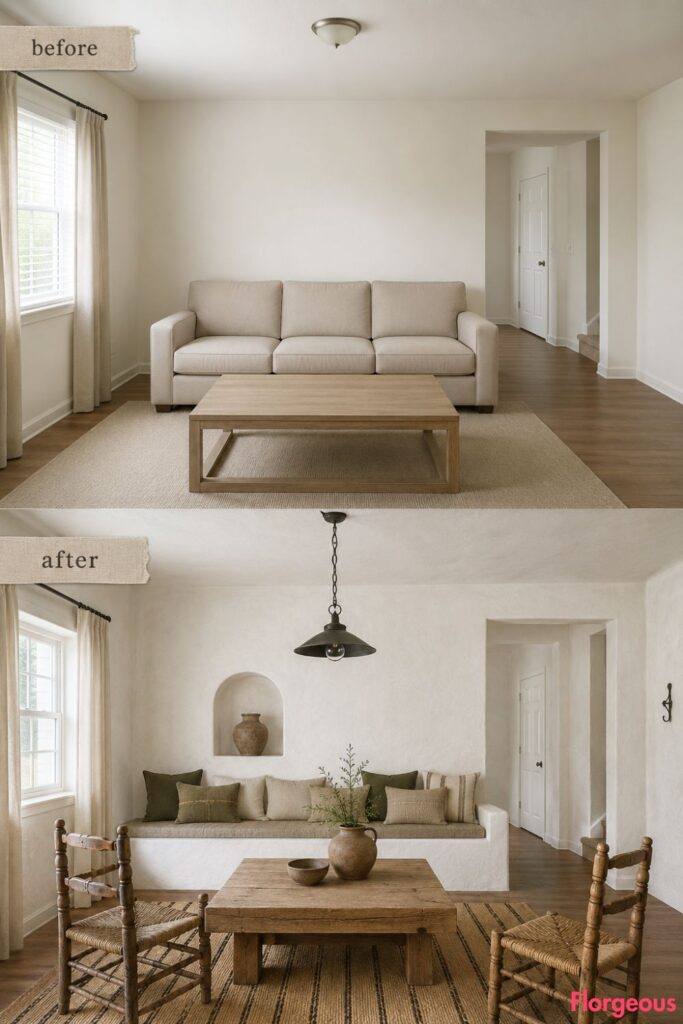
An Andalusian-inspired room feels informal, sun-faded, and collected slowly rather than decorated all at once.
The basic sofa is replaced with a built-in whitewashed bench topped with olive and flax cushions. Two woven rush chairs face a scrubbed oak table, while striped textiles, simple iron lighting, and oversized earthenware add handmade character.
The palette stays quiet, but irregular surfaces and natural materials prevent it from feeling empty.
Why It Works: Low furniture, chalky finishes, and imperfect textures create a natural sense of age.
3. Add the Honest Craftsmanship of Mission Revival
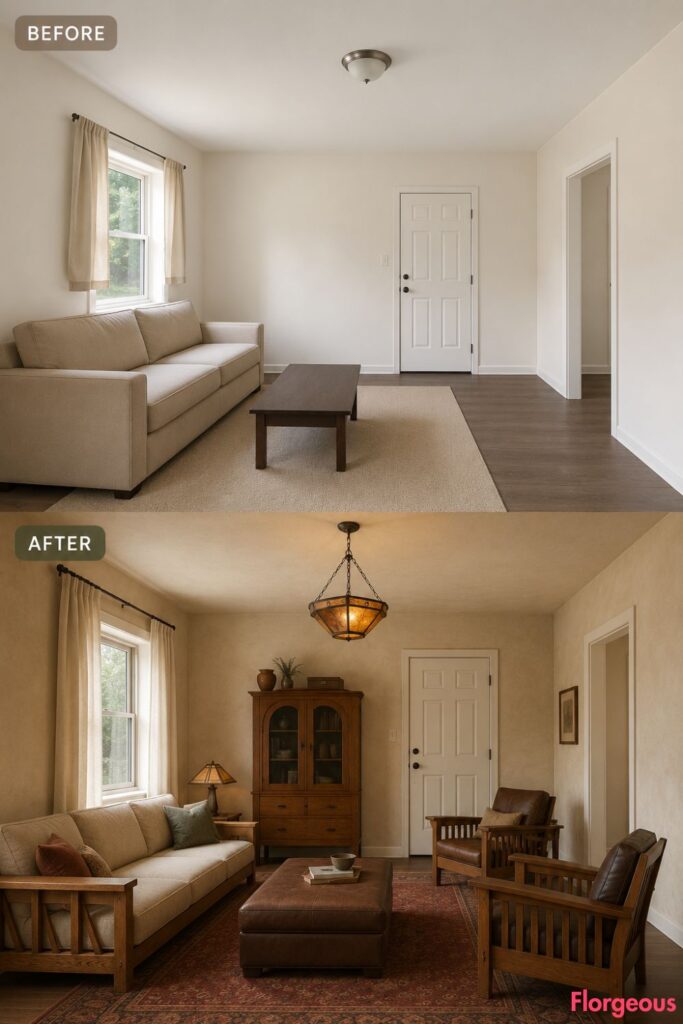
Mission Revival design gives the room weight through straightforward forms, sturdy oak, and warm geometric details.
Before: The plain walls and lightweight furniture have no relationship to the architecture.
After: A low oak-framed sofa and two slatted armchairs establish a handcrafted foundation. An arched oak cabinet, leather ottoman, muted red wool rug, and amber mica ceiling light add warmth without unnecessary ornament.
The result feels grounded and practical, particularly in a home with simple rectangular rooms.
Budget Version: Replace one generic side table with a secondhand oak piece finished in dark wax.
4. Build a Warm Hacienda Conversation Room
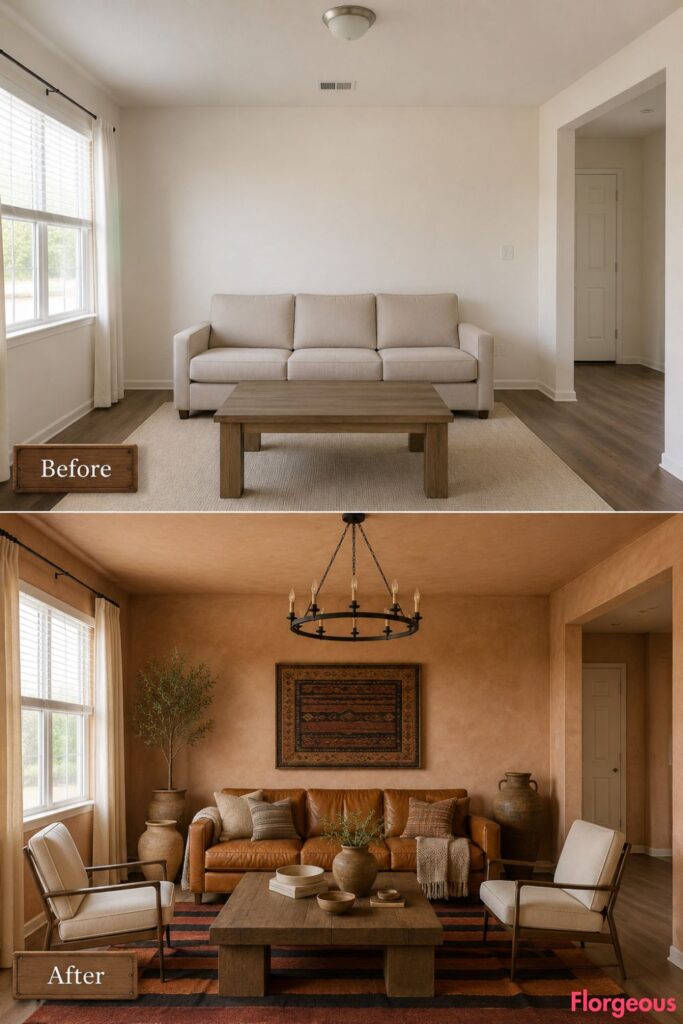
This version changes the room from a sofa-facing-wall layout into a comfortable gathering space.
Clay-colored plaster surrounds a saddle-leather sofa and two cream linen lounge chairs arranged around a heavy square timber table. A striped rust-and-black rug defines the conversation zone, while large pottery vessels and an iron chandelier add scale.
The furniture remains clear of every doorway, and the center arrangement feels sociable rather than formal.
Common Mistake: Do not combine heavy leather, dark wood, and dark walls without balancing them with pale upholstery or curtains.
5. Introduce Moorish-Spanish Character Through One Sculpted Alcove
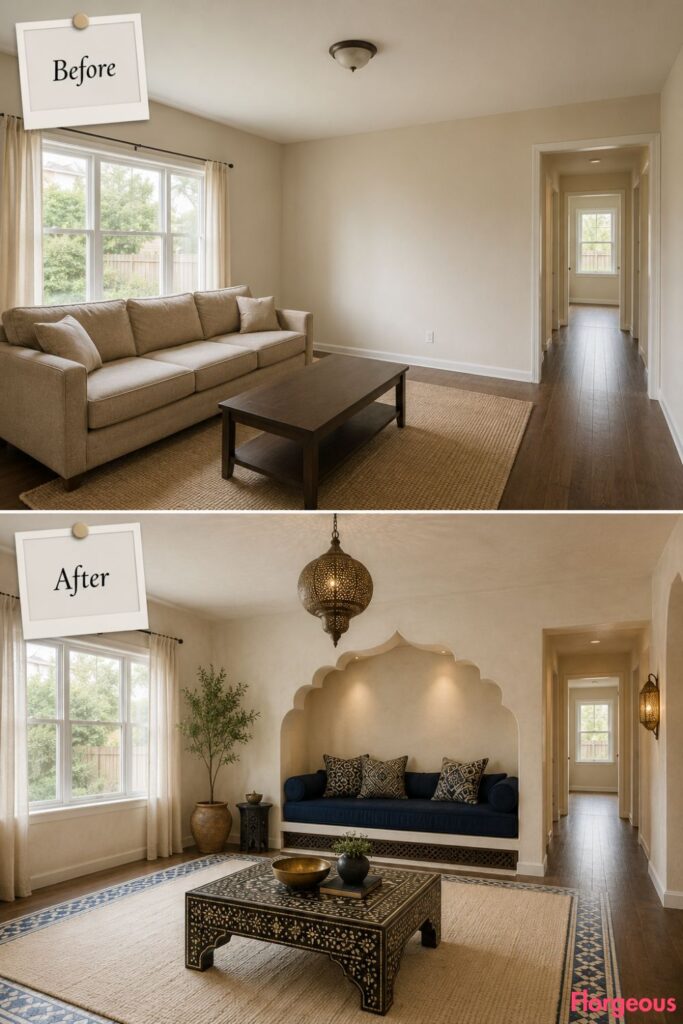
The Moorish influence within historic Spanish architecture can be referenced subtly through shape, shadow, and geometry.
After: A single scalloped plaster alcove becomes the focal point, framing an indigo upholstered daybed. A dark inlaid table, an ivory flatweave rug, a restrained geometric tile border, and a pierced-metal pendant add pattern without overwhelming the room.
Keeping the remaining walls simple allows the alcove to feel special rather than theatrical.
Try this: Create a temporary arched effect with painted geometry or shallow MDF trim before altering the wall.
6. Bring in the Brightness of a Coastal Spanish Home
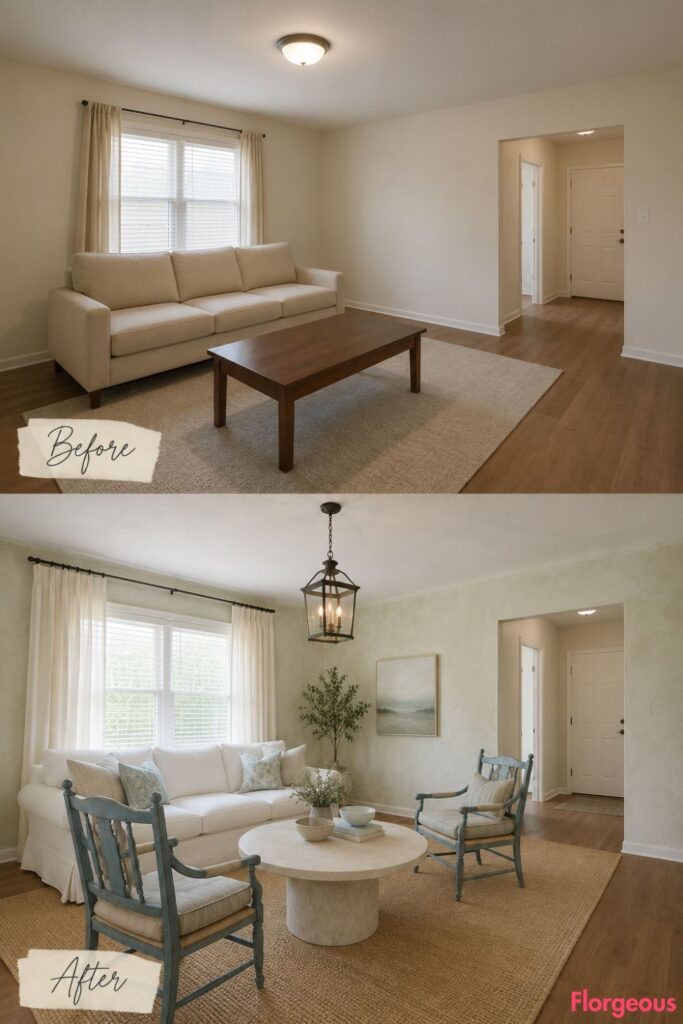
Coastal Spanish interiors are light and practical, with color that looks softened by sun and sea air.
Crisp limewashed walls replace the flat off-white paint. A white slipcovered sofa, faded blue timber chairs, a round pale-stone table, airy full-length curtains, and a woven sand-colored rug brighten the room without making it nautical.
A simple bronze lantern adds definition against the pale surfaces.
Color Story: Use blue in weathered, muted shades rather than bright navy to keep the palette relaxed.
7. Reimagine the Room as a Sculptural Balearic Retreat
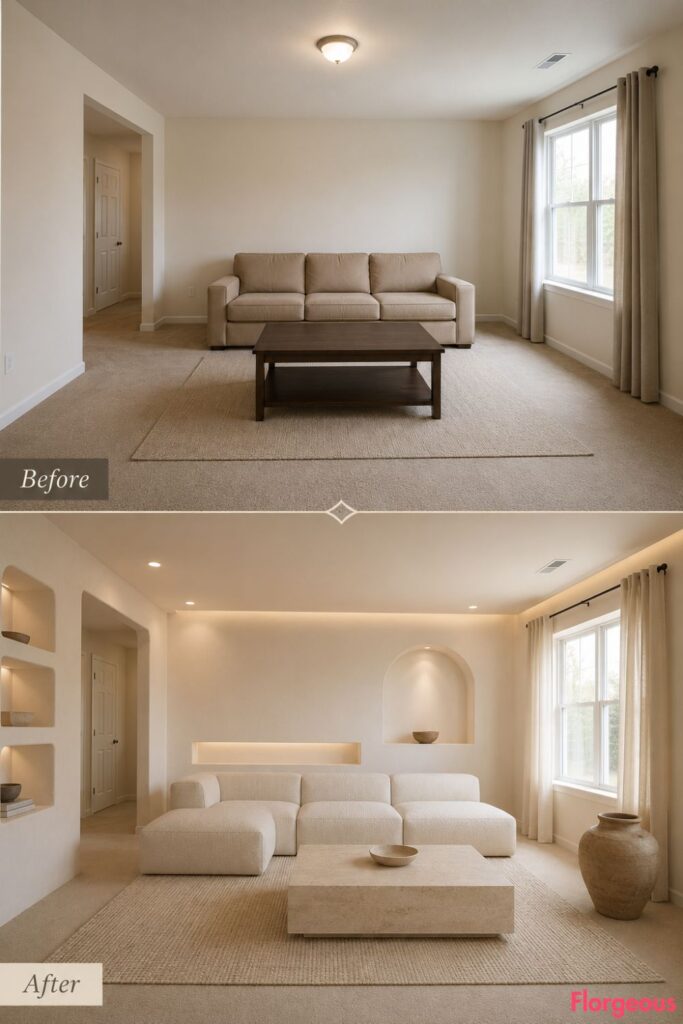
This interpretation removes most decorative detail and lets rounded architecture, stone, and soft upholstery carry the design.
Before: Straight furniture and flat walls make the room feel ordinary.
After: Seamless white plaster wraps around shallow curved built-ins. A low ivory modular sofa, a monolithic limestone coffee table, a pale woven rug, and one oversized clay vessel create an uncluttered but tactile room.
Recessed warm lighting replaces the builder-grade fixture, keeping the ceiling quiet.
8. Wrap the Room in Earthy Adobe Color
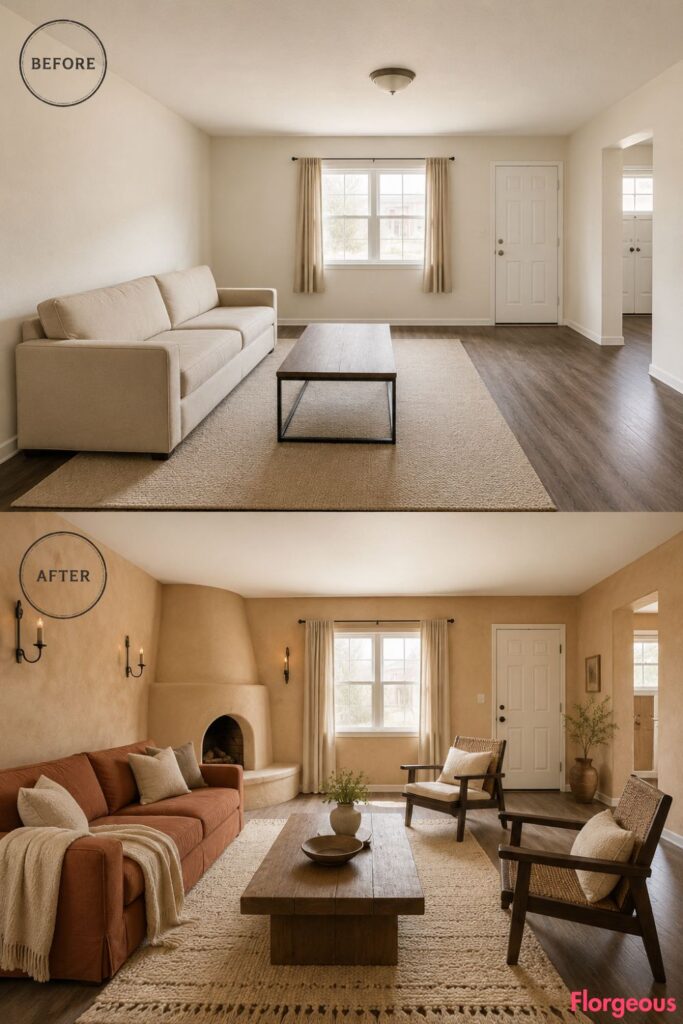
An adobe-inspired interior feels softer and more enclosed than the lighter Spanish styles.
Warm earthen plaster covers the walls, while a rounded cream fireplace creates a gentle focal point. A rust linen sofa, two dark pine chairs, a raw wood table, woven cream textiles, and black iron sconces give the room a grounded palette.
The contrast between the rounded fireplace and angular furniture keeps the room visually balanced.
Designer Tip: Test clay paint on several walls because it can appear orange in direct sun and brown in shadow.
9. Turn the Empty Wall Into a Dark Spanish Heritage Library
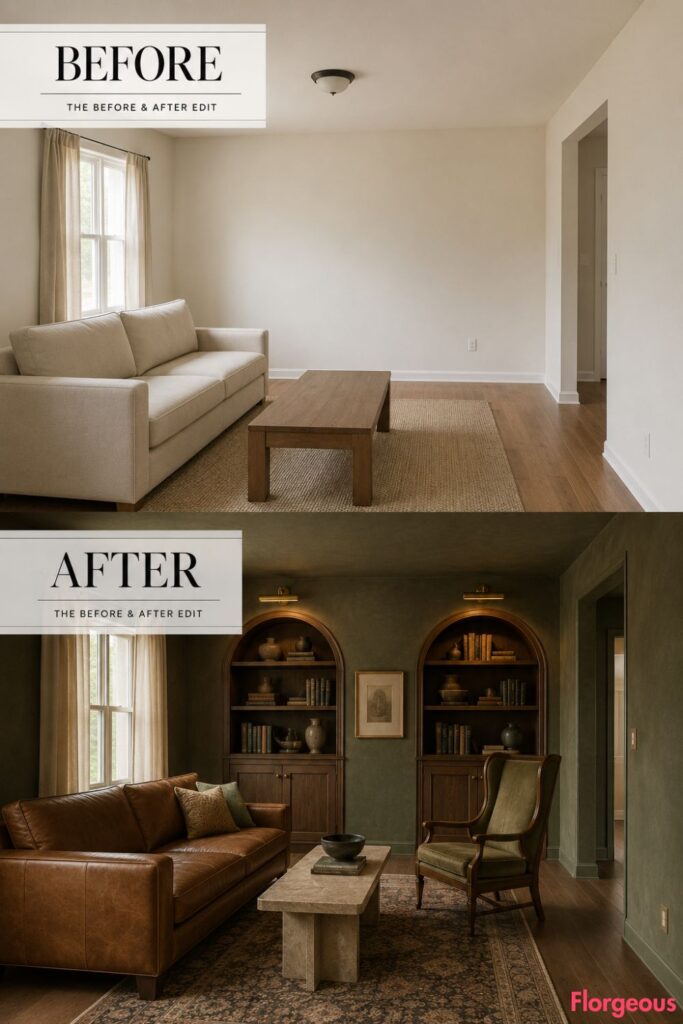
This makeover gives the living room a clear purpose by making reading and storage the central features.
After: Deep olive plaster surrounds arched walnut bookcases with closed lower cabinets. A compact tobacco leather sofa, one high-backed reading chair, a narrow stone table, and discreet brass picture lights create an intimate, collected atmosphere.
The cabinetry stops well before the doorway, preserving a comfortable entry route.
Dark walls work here because the warm wood, brass, and focused lighting prevent the room from feeling flat.
10. Borrow the Feeling of an Interior Spanish Courtyard
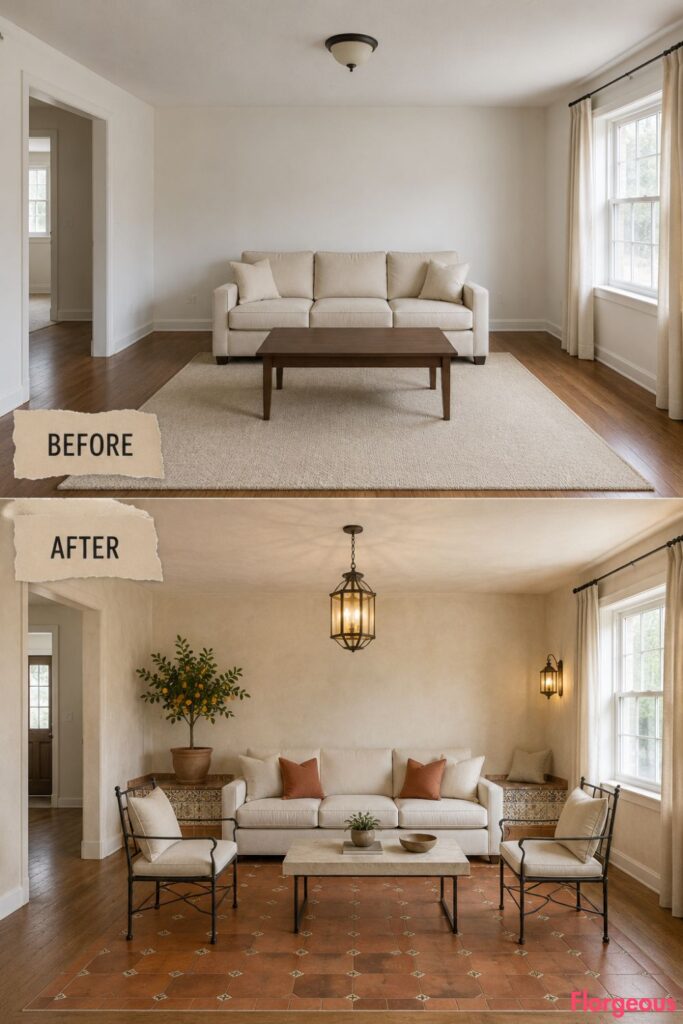
A courtyard-inspired living room brings garden materials and a more social arrangement indoors.
A terracotta tile inset marks the seating zone without replacing the entire floor. A cream settee and two slim iron-framed chairs gather around a narrow stone table, while tiled bench ends and one indoor citrus tree create the impression of an enclosed patio.
The greenery is concentrated in one corner so it does not interfere with the window or walking path.
11. Give Traditional Spanish Materials a Contemporary Luxury Finish
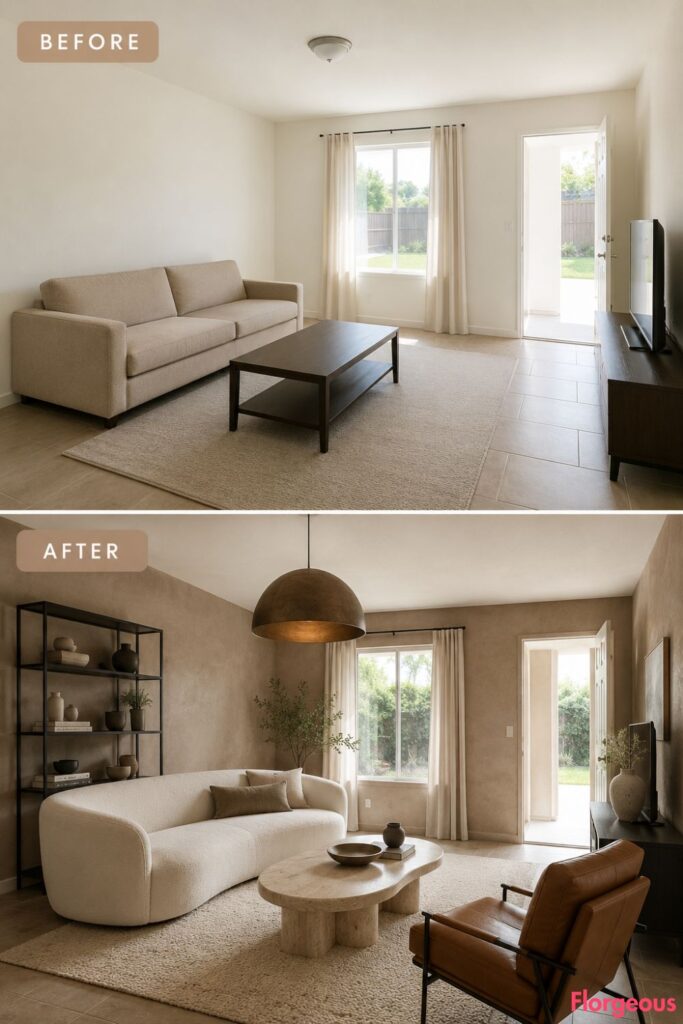
This room uses plaster, leather, stone, and metal in cleaner, more sculptural forms.
After: Taupe microcement walls form a quiet background for a curved cream sofa, caramel leather lounge chair, travertine table, blackened-steel shelves, and an oversized bronze pendant.
There are no obvious historical motifs. The Spanish influence comes from the material palette and the warm relationship between stone, plaster, leather, and aged metal.
The design feels polished, but the furniture remains relaxed and usable.
12. Create a Renter-Friendly Spanish Makeover Without Construction
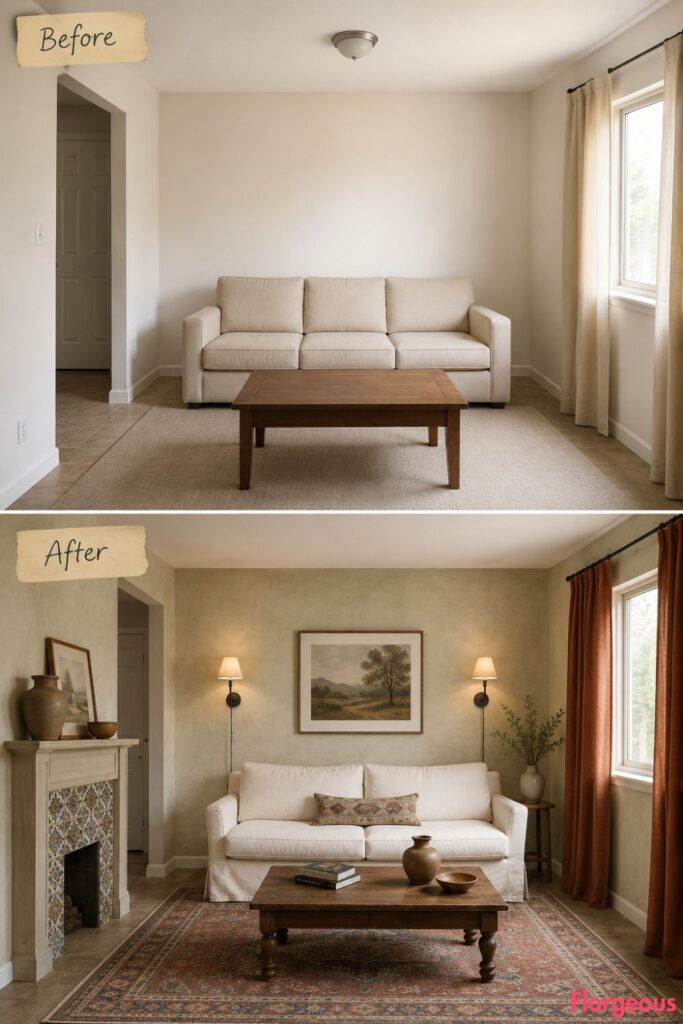
Permanent arches, plaster, beams, and handmade tile are not required to create a convincing Spanish-inspired atmosphere.
Removable limewash-effect wallpaper changes the walls, while a cream sofa slipcover softens the existing seating. Peel-and-stick ceramic-style tile panels frame a portable mantel, and ready-made rust curtains, a vintage-look rug, and plug-in iron sconces complete the transformation.
Every feature can be removed when the lease ends.
Budget Version: Frame several decorative tile samples as a wall panel instead of covering a large surface.
13. Finish With a Bold Hand-Painted Tile Salon
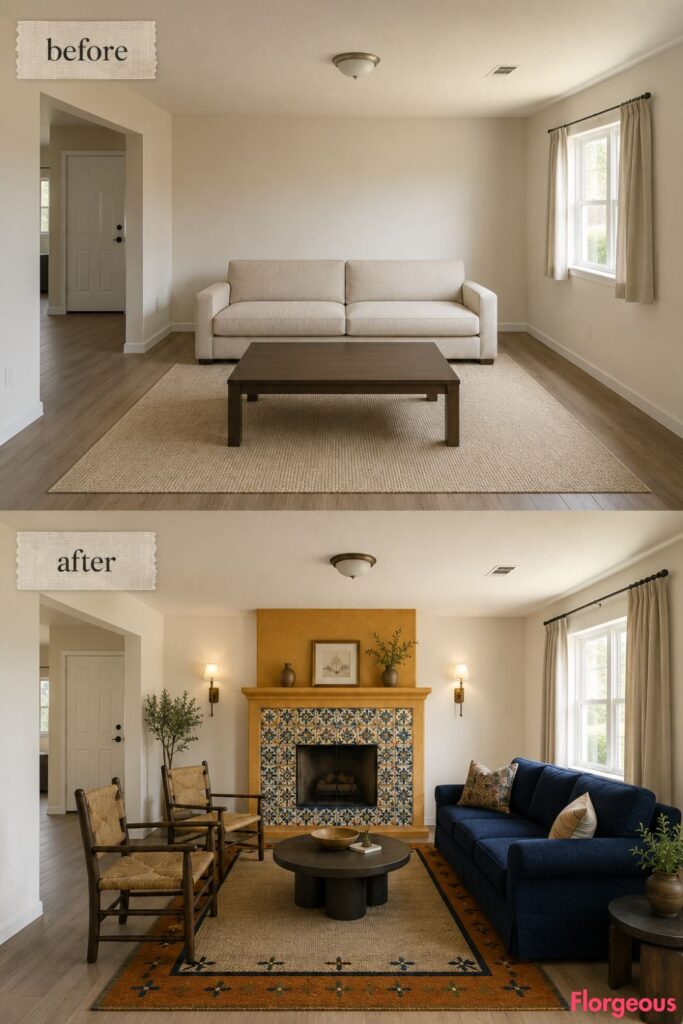
The final makeover uses the most colorful palette in the collection, but keeps every color connected to one focal material.
Before: The empty wall and neutral furniture have no visual anchor.
After: A saffron fireplace surround is inset with cobalt, green, cream, and dusty-red ceramic tile. A deep indigo sofa, two natural rush chairs, a dark round table, and an ochre-bordered rug repeat those colors in controlled amounts.
White plaster keeps the room bright, while small brass sconces add warmth without competing with the tile.
Try this: Select upholstery and rugs from colors already present in the tile pattern.
How to Choose the Right Spanish-Inspired Look for Your Living Room
Begin by deciding which single feature should lead the design. It could be a tiled fireplace, an arched cabinet, a plaster wall treatment, dark timber, or a sculptural light fixture. One clear focal point will produce a stronger room than several unrelated Spanish-style details.
Next, create a small material palette before buying furniture. Place paint, tile, wood, metal, and fabric samples together in the room during both daylight and evening light. This helps reveal whether the clay color is too orange, the wood is too heavy, or the tile pattern is too busy.
A successful Spanish Living Room should still support everyday life. Keep doors and windows open, protect the main walking route, choose genuinely comfortable seating, and test permanent ideas with removable finishes whenever possible.