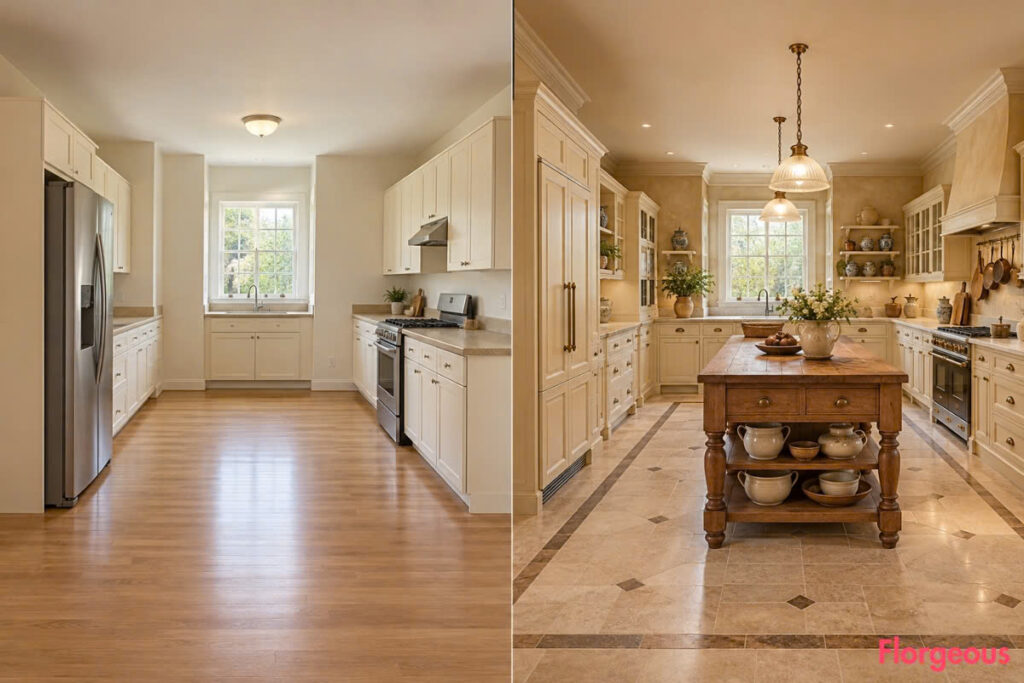
What if the most memorable feature in your kitchen was not an expensive appliance or a dramatic stone wall, but a beautifully crafted piece of working furniture?
An ordinary kitchen might have cream cabinets, basic countertops, and sufficient storage, yet still lack the warmth and individuality that make older homes so appealing. Its layout works, but its design tells no story.
Victorian Kitchen inspiration offers a wonderful alternative. Painted pine cupboards, colorful domestic ceramics, traditional food-storage furniture, decorative wallpaper, and thoughtfully arranged working stations can create rooms that feel both artistic and welcoming.
These 23 before-and-after makeovers reimagine the same builder-grade kitchen through different aspects of Victorian domestic life. Every transformation has its own furniture arrangement, material character, and visual centerpiece, while preserving the original architecture and modern kitchen functions.
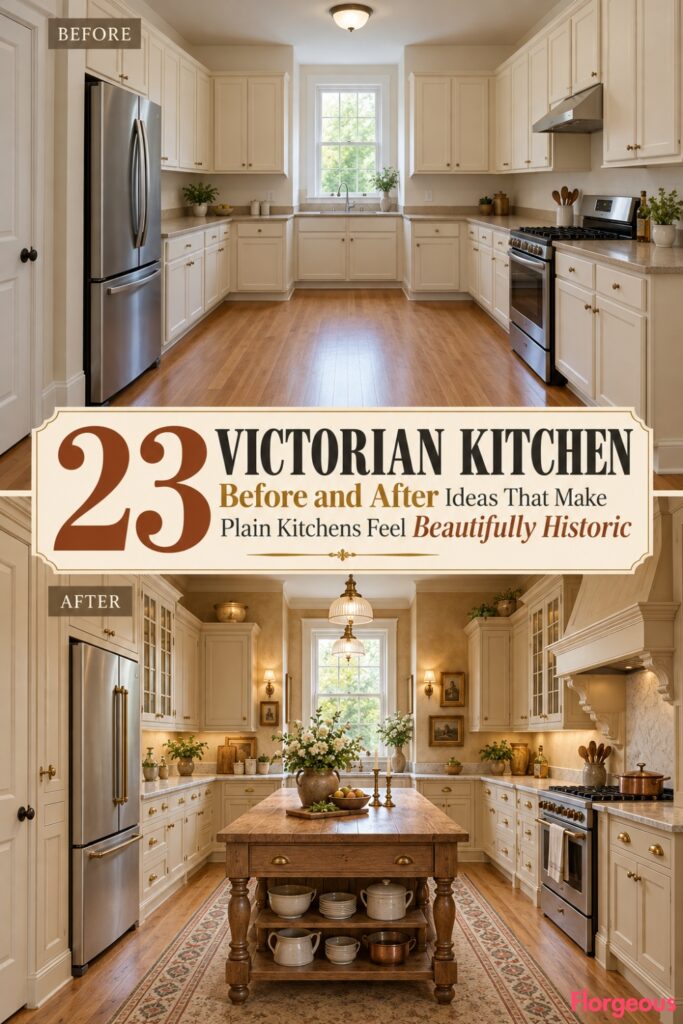
1. Create a Victorian Kitchen With a Double-Ended Potboard Workstation
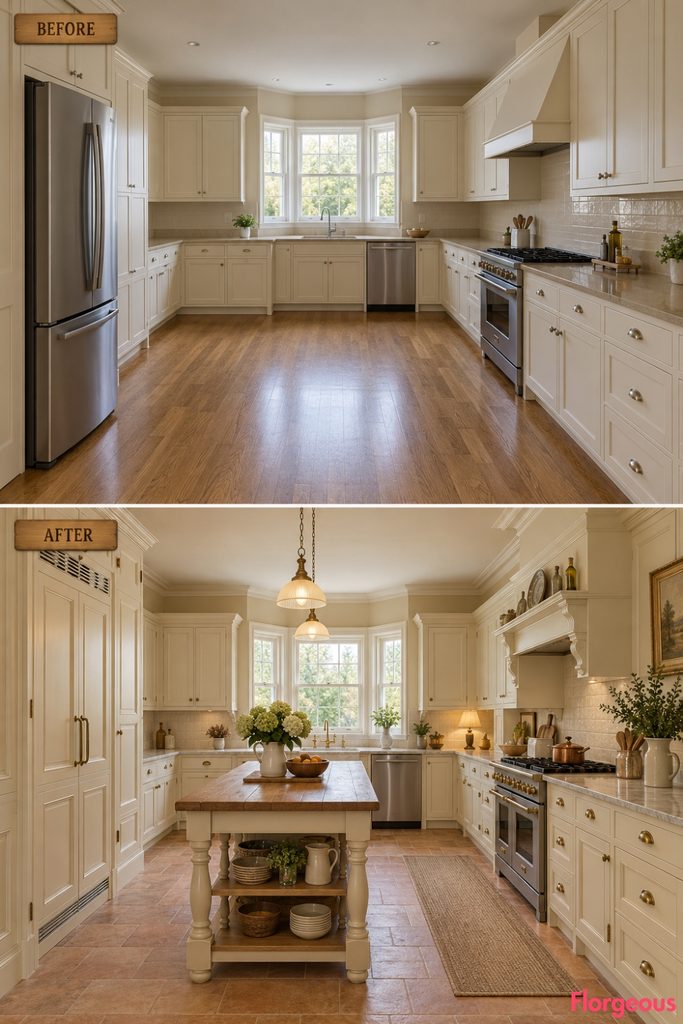
Traditional kitchen furniture becomes the foundation of this generously proportioned makeover.
Before: The broad central floor is empty, with plain fitted cabinets lining the working walls.
After: A substantial double-ended potboard workstation occupies the center. Two open shelves beneath the pale timber top hold useful crockery, while turned legs and narrow end drawers give the table a handcrafted appearance. Warm cream cabinetry and a muted apricot floor establish a cheerful Victorian working-room atmosphere.
The refrigerator is concealed behind matching cream-painted pantry panels.
Why it works: The open-shelved workstation creates a strong horizontal furniture centerpiece without the solid bulk of a conventional kitchen island.
Try this: Use the lower shelves for durable everyday items and preserve comfortable walking clearance around the table.
2. Introduce a Linen-Skirted Victorian Country Pantry
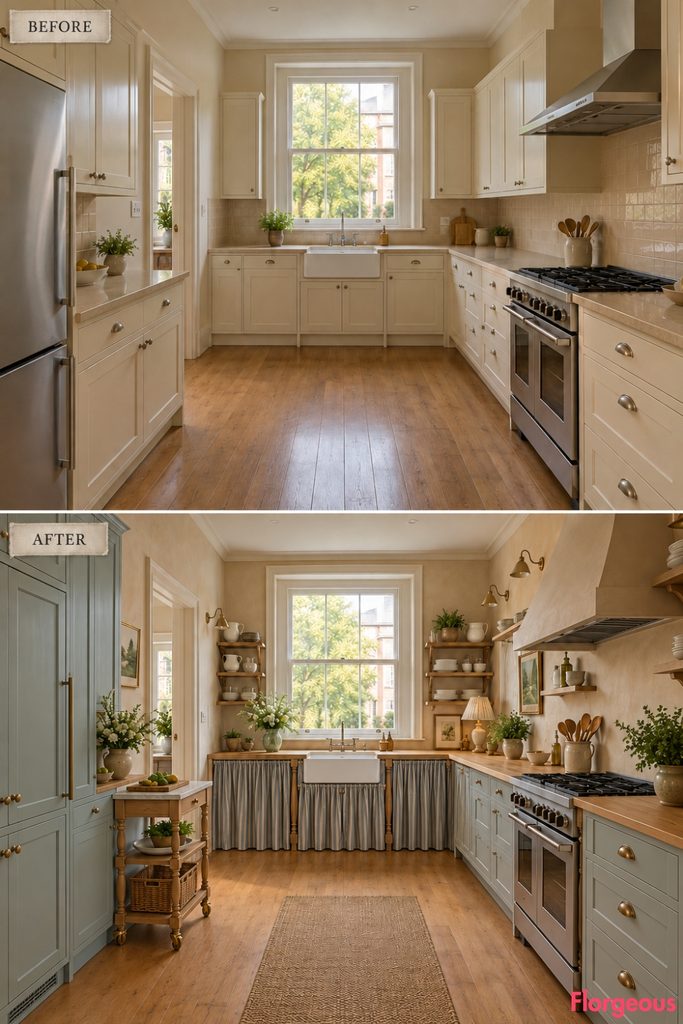
Soft furnishings can transform the appearance of a working kitchen without making it impractical.
Before: Ordinary cabinet doors give the perimeter a rigid and repetitive look.
After: Long timber worktops sit above deep storage compartments concealed by tailored striped linen curtains. Painted pine support posts and open shelving create a coordinated furniture arrangement, while a narrow rolling food-preparation trolley provides flexible additional workspace.
Soft duck-egg blue, cream, and natural flax create a welcoming palette. The refrigerator is incorporated into solid painted cabinetry with matching trim.
Why it works: The kitchen gains a completely different furniture rhythm, balancing soft textiles with practical timber construction.
3. Turn Basic Storage Into a Victorian Pie-Safe Pantry Wall
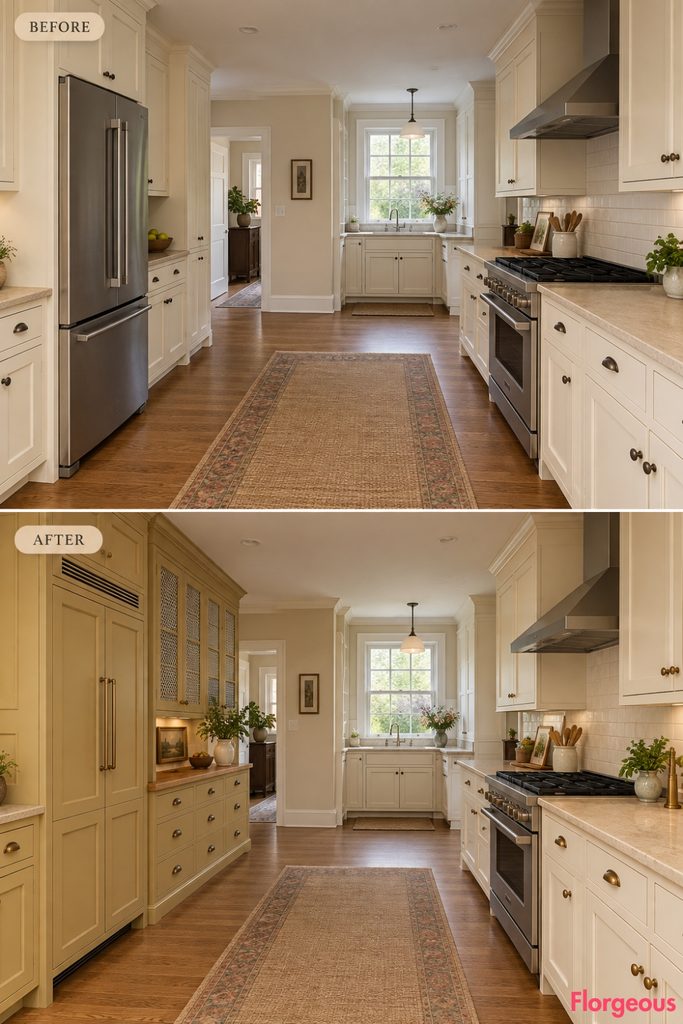
The practical construction of traditional food cabinets becomes this room’s defining feature.
Before: Tall generic cupboards and an exposed refrigerator provide storage without much personality.
After: A substantial pantry wall features warm painted timber frames and punched-tin cabinet inserts with fine repeating ventilation patterns. Wide lower drawers provide enclosed food storage, while a shallow preparation counter runs alongside the pantry.
The palette combines pale mustard, cream, and scrubbed oak. The refrigerator disappears behind matching solid painted cabinet doors.
Why it works: The contrast between solid painted doors and perforated metal creates a striking, practical storage composition.
4. Create a Victorian Kitchen With a Warm Honey-Glazed Cooking Wall
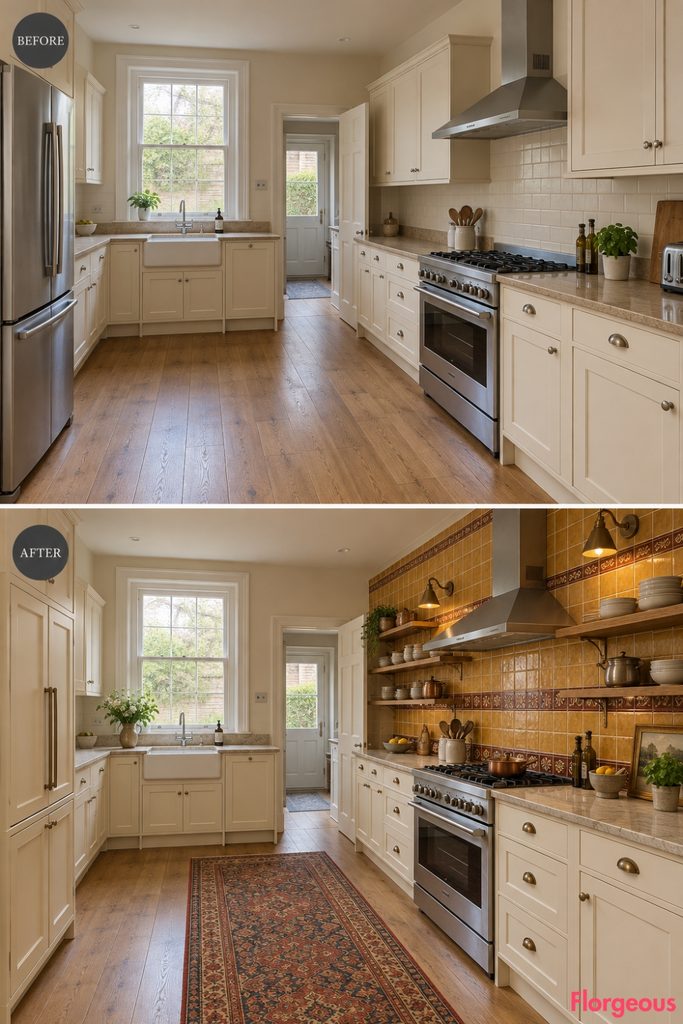
Rich ceramic color gives this makeover its artistic identity.
Before: Plain cream cabinets and a neutral backsplash surround the existing range.
After: A continuous composition of honey-amber glazed tiles surrounds the cooking zone, with narrow decorative borders and carefully proportioned cream-painted cupboards. The right wall becomes a long, practical working surface rather than a heavy architectural range surround.
Soft brown stone countertops and warm oak shelf details complement the glossy ceramics. The refrigerator sits behind cream-paneled cabinetry with matching amber hardware.
Why it works: The room’s focal point comes from warm ceramic craftsmanship and a clearly organized cooking elevation.
5. Create a Victorian Kitchen With a Beautiful Pulley Airer Gallery
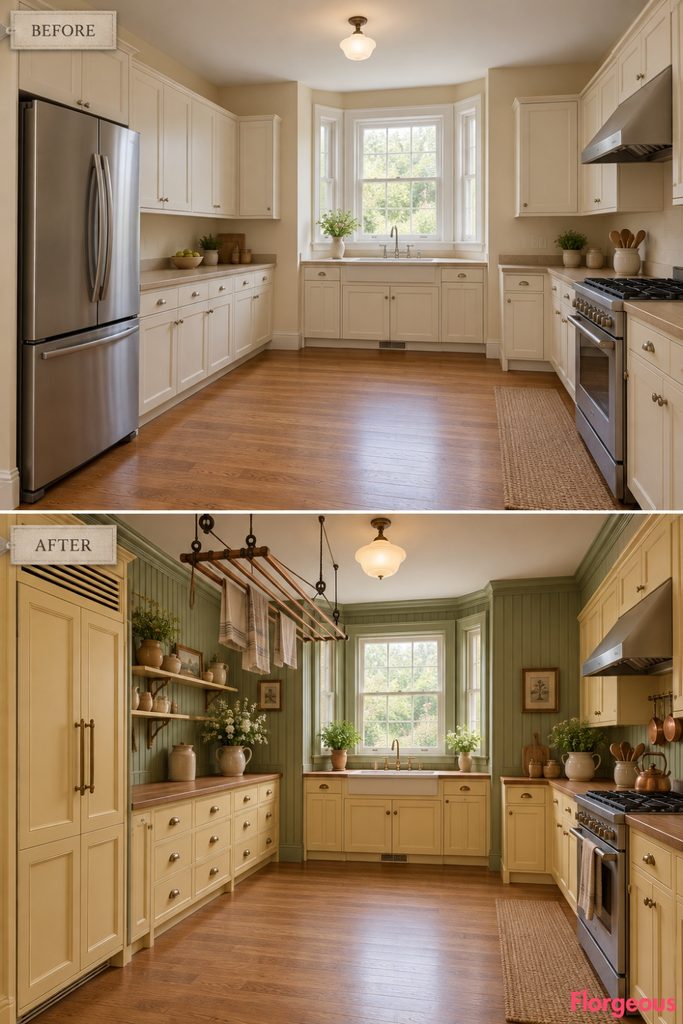
A traditional overhead drying rack brings an unexpected sculptural element into this charming Victorian kitchen.
Before: Basic cupboards and plain ceiling lighting make the room feel ordinary.
After: A beautifully crafted oak-slat pulley airer hangs above a dedicated left-wall utility counter, with traditional rope fittings, shallow linen drawers, and cream ceramic storage. Butter-yellow cabinetry, sage beadboard, and warm timber create a welcoming domestic atmosphere. The refrigerator is concealed behind matching butter-yellow panels.
Why it works: The suspended rack introduces a distinctive overhead composition while the working counter creates a practical household utility zone.
6. Create a Victorian Kitchen With a Dedicated Household Service Cabinet
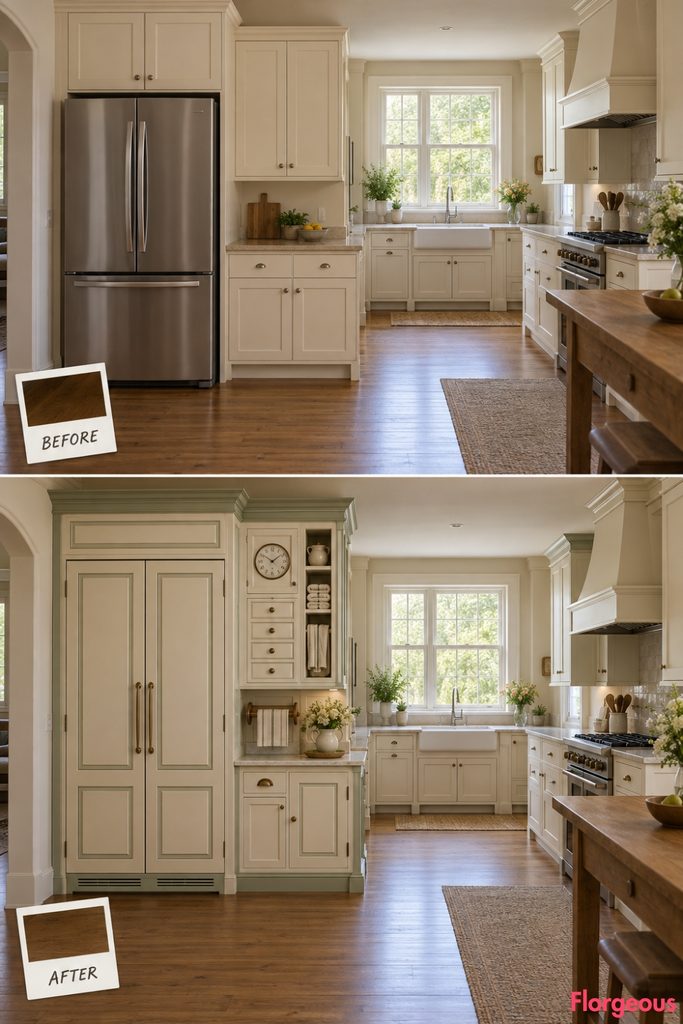
A beautifully organized service cabinet can give a domestic kitchen a distinctive period identity.
Before: The front-left storage area contains generic cupboards with no particular organization.
After: A furniture-scale painted cabinet combines a prominent traditional clock, shallow household drawers, linen storage, a towel roller, and carefully arranged small compartments. A low utility counter sits beside it, while the main cooking area remains uncluttered.
Ivory paint, soft green detailing, and simple brass fittings create a refined working-household atmosphere. The refrigerator is hidden within matching cabinetry.
Why it works: The storage wall becomes a purposeful household organization center rather than another decorative pantry.
7. Turn an Ordinary Kitchen Into a Victorian Butter-Making Room
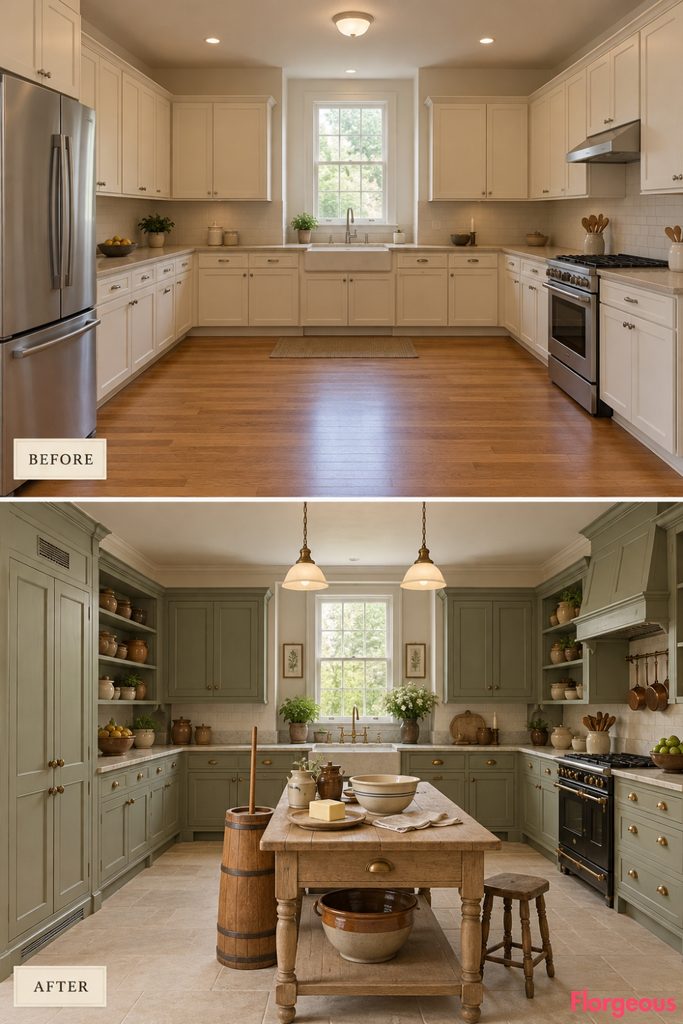
Traditional dairy craftsmanship inspires a bright, beautifully organized food-preparation kitchen.
Before: Basic cabinetry and ordinary counters provide no specialized preparation area.
After: A pale-oak butter-making table becomes the focal point, featuring a traditional upright wooden churn, cream stone working surface, shallow mold drawers, and coordinated ceramic storage. Soft celadon cupboards, ivory plaster, and pale limestone flooring create a refined dairy-house atmosphere. The refrigerator is concealed behind matching celadon-painted cabinetry.
Why it works: The dedicated butter-making station gives the kitchen a distinctive sculptural centerpiece and a completely different working arrangement.
8. Create a Victorian Sash-Window Kitchen With Fold-Out Draining Wings
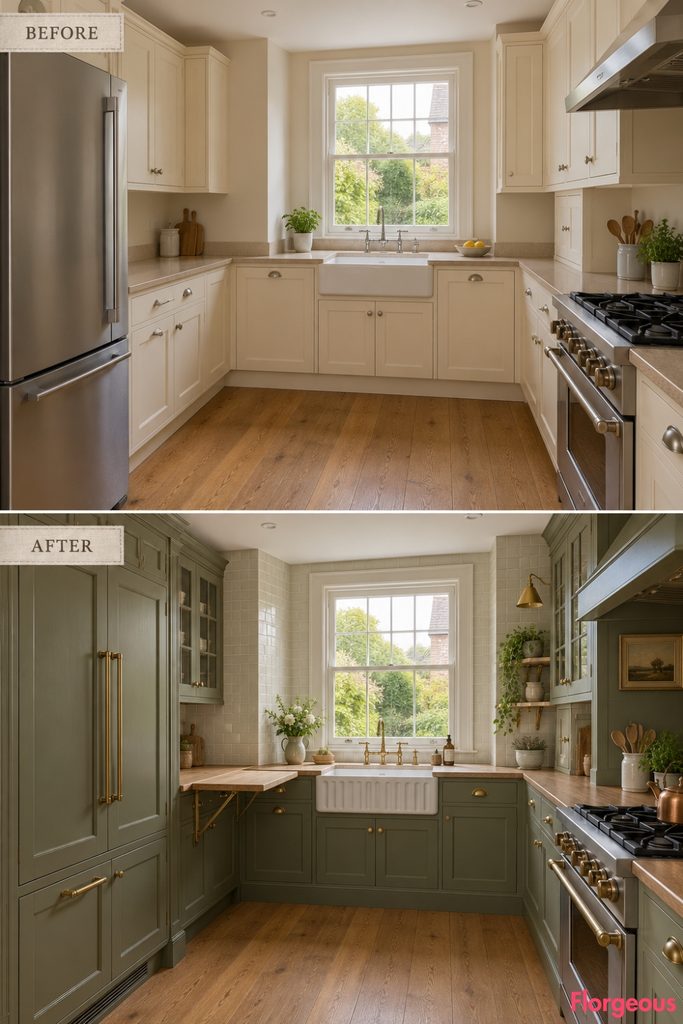
The original window bay becomes a clever and visually memorable washing station.
Before: The sink sits beneath the window, surrounded by plain counters and cupboards.
After: Two hinged timber draining wings extend from carefully designed side cabinets within the existing sink bay. When opened, they create a broad working surface; when folded, the bay feels spacious. Pale ceramic wall tiles, soft green cabinetry, and practical oak trim establish a light historical character.
The refrigerator receives matching green-painted panels.
Why it works: The transformation uses traditional furniture mechanisms to change the working arrangement without altering plumbing or architecture.
9. Create a Victorian Kitchen With Painted Pantry Shutters
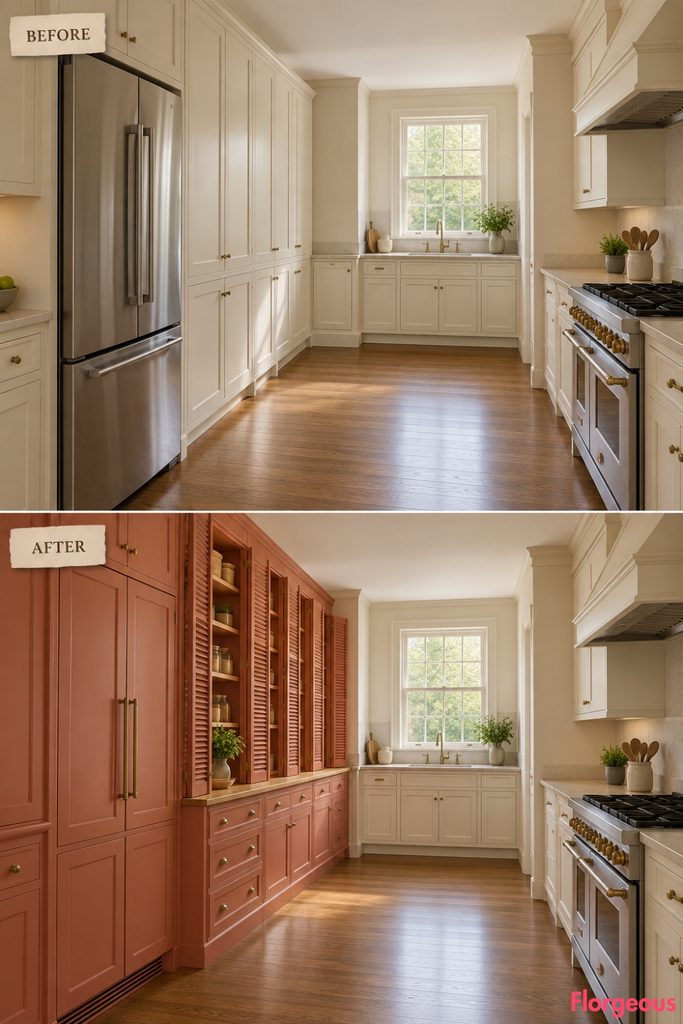
Shuttered furniture gives this kitchen a distinctive domestic character.
Before: Standard cabinet doors create a monotonous fitted storage wall.
After: A wide pantry installation uses slim painted timber shutters that fold back to reveal organized working shelves. Below, large storage drawers and a broad timber counter create a beautifully proportioned pantry composition.
Soft coral, cream, and warm oak give the space a welcoming palette. The refrigerator is fully integrated behind coordinated coral-painted doors.
Why it works: The repetition of narrow shutter panels creates an entirely different visual rhythm from ordinary cupboard doors.
10. Create a Victorian Kitchen With an Ironstone Serving Island
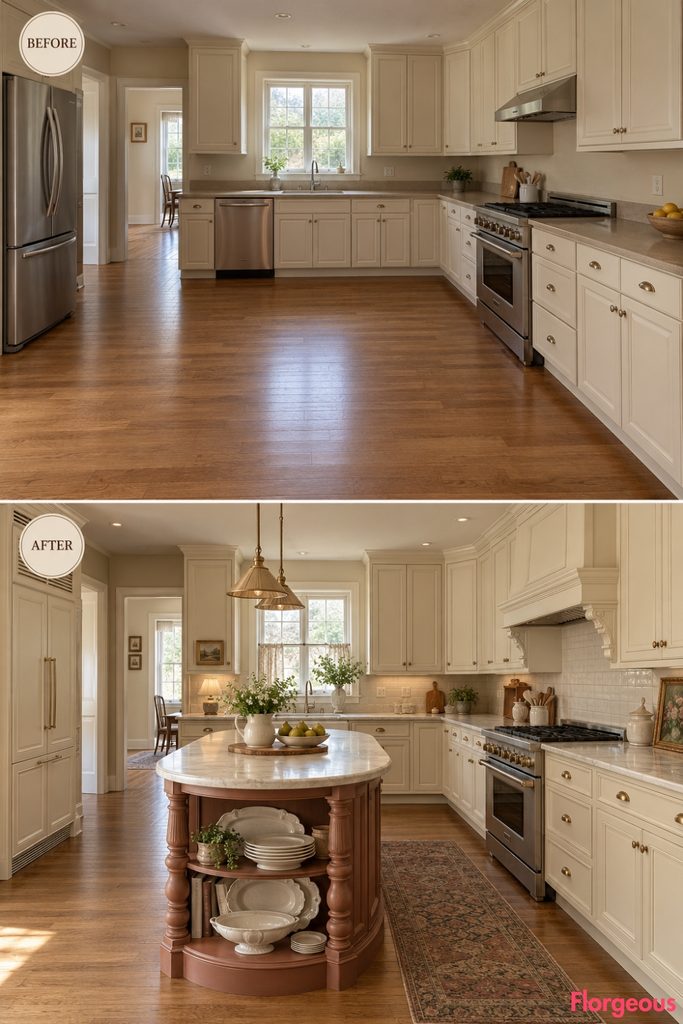
White ironstone ceramics provide an elegant focal point for a light, practical kitchen.
Before: The center of the room is largely empty, and ordinary cupboards dominate the perimeter.
After: A compact rounded serving island incorporates a pale stone top and a distinctive open arrangement of shallow shelves displaying carefully selected white ironstone bowls and platters. Cream-painted legs and a soft terracotta base give the furniture a substantial but welcoming appearance.
Coordinating cream storage replaces generic cabinetry, with the refrigerator hidden behind matching panels.
Why it works: The island becomes a beautiful serving and display piece rather than a conventional closed cabinet block.
11. Create a Victorian Kitchen With a Practical Plate-Warming Station
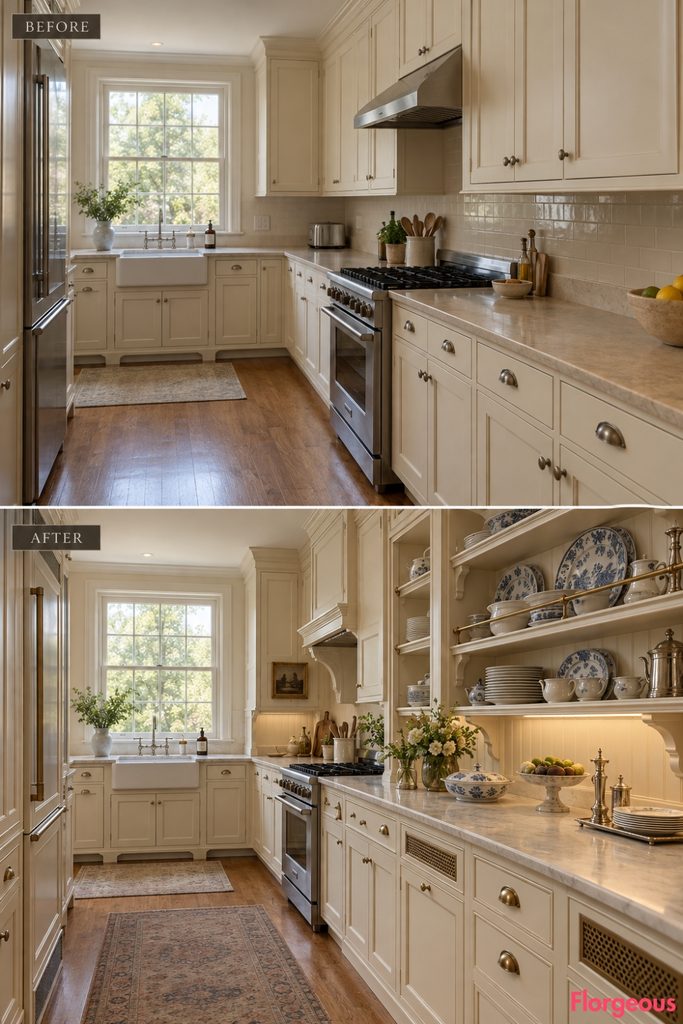
Historic serving functions inspire a distinctive preparation area beside the existing cooking zone.
Before: Ordinary drawers and cupboards offer no specialized place for warming dishes before serving.
After: A purpose-built low warming station sits along the appropriate section of the right working wall, beneath a substantial stone serving surface. Neatly divided drawers, ceramic shelves, and warm ivory cabinetry create a refined furniture composition.
The warming function uses modern, properly rated equipment concealed behind period-style cupboard fronts. The refrigerator is finished in matching ivory panels.
Why it works: The layout becomes more purposeful, with a specialized serving task determining the furniture arrangement.
12. Create a Victorian Kitchen With a Panoramic Floral Wallpaper Gallery
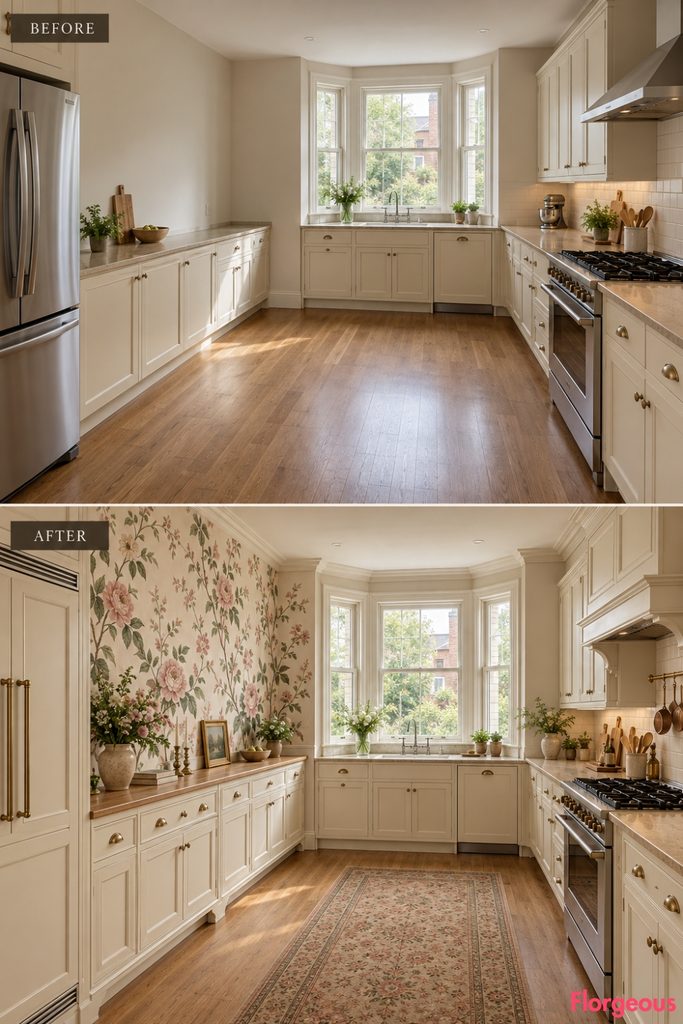
Printed wallcoverings offer an expressive alternative to Gothic stonework and elaborate wooden ornament.
Before: Plain off-white walls make the room feel visually unfinished.
After: A large-scale Victorian floral wallpaper composition stretches across the principal dry wall, featuring loose flowering branches, soft green leaves, and warm pink blossoms. Painted ivory cabinets and natural timber counters create a calm supporting palette.
A long low serving cupboard runs beneath the decorated wall, while the refrigerator disappears behind matching ivory panels.
Why it works: The wallpaper establishes a strong artistic focal point that remains light, domestic, and distinctly decorative.
13. Create a Victorian Kitchen With a Built-In Biscuit-Tin Display
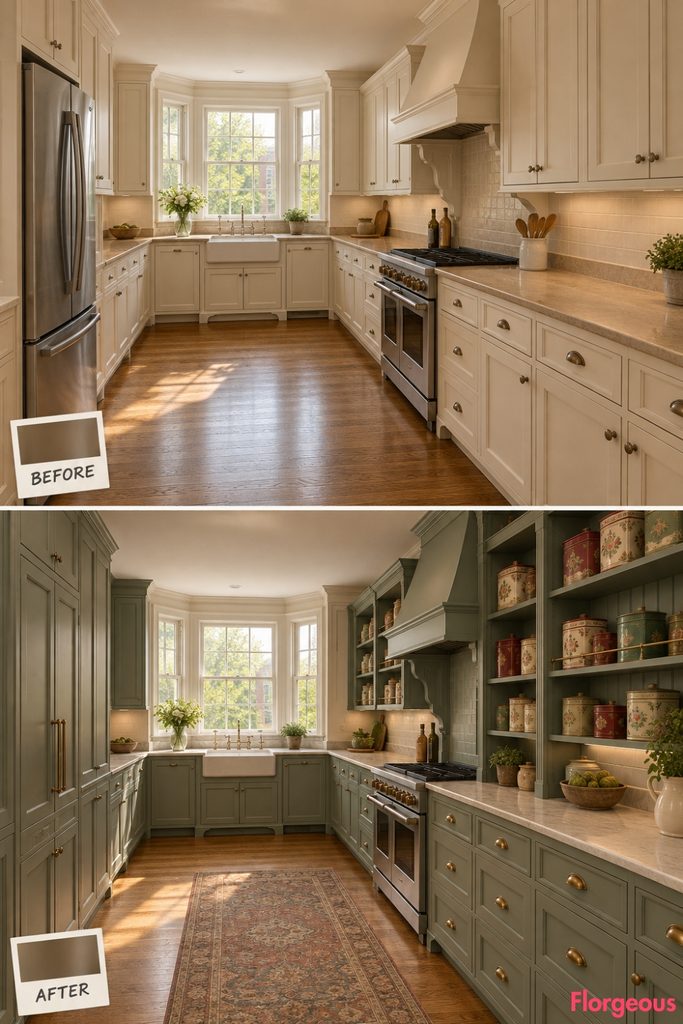
Everyday food packaging can inspire a charming historic kitchen arrangement.
Before: Plain upper cupboards lack distinctive storage and display.
After: An extensive shelving composition holds neatly arranged reproduction Victorian-style biscuit tins in muted red, cream, and sage. Slender painted dividers, lower food-storage drawers, and a continuous pale stone counter create an organized working wall.
Decorative tin shapes establish a repeating pattern without requiring ornate cabinetry. Matching sage-painted doors conceal the refrigerator.
Why it works: A practical collection becomes an unexpectedly graphic focal point when organized within consistent cabinetry.
14. Create a Late-Victorian Japanned Tea Cabinet With Mother-of-Pearl Details
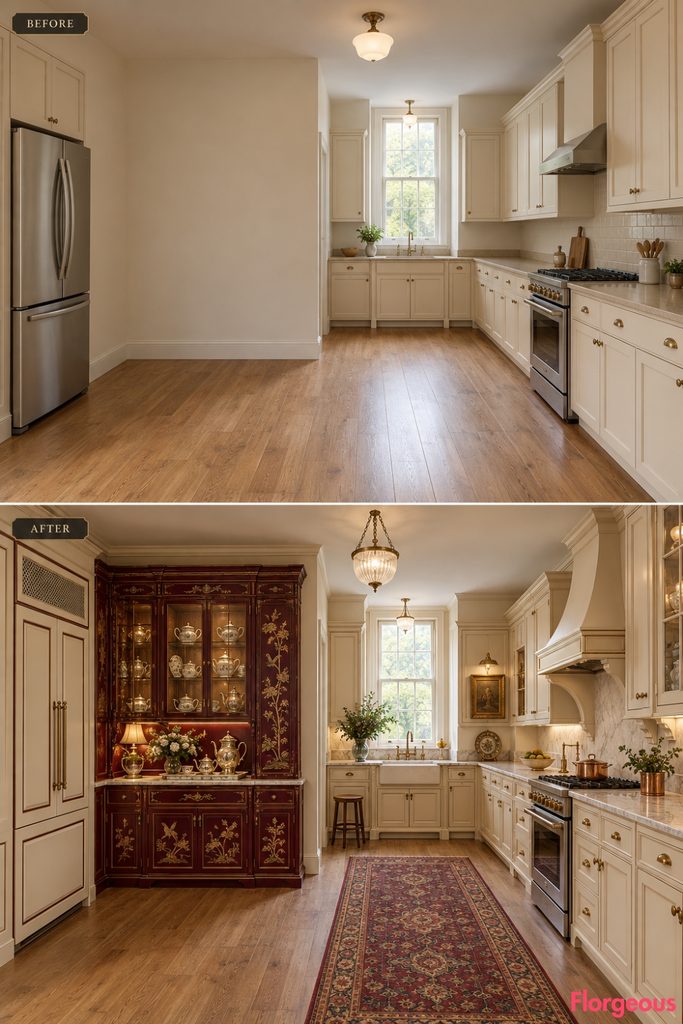
Decorative Victorian furniture craftsmanship transforms a simple tea-preparation area into an extraordinary artistic feature.
Before: Plain cabinets offer little visual interest or dedicated serving storage.
After: A magnificent oxblood-lacquered tea cabinet features delicate gold botanical painting, mother-of-pearl-inspired inlay, glazed side compartments, and a central marble tea-preparation shelf. Warm ivory cabinetry and pale limestone counters provide an elegant contrast. The refrigerator disappears behind matching ivory panels with subtle oxblood trim.
Why it works: The richly decorated tea cabinet becomes a jewel-like focal point without overwhelming the practical kitchen.
15. Create a Victorian Kitchen With White-and-Sage Enamel Storage
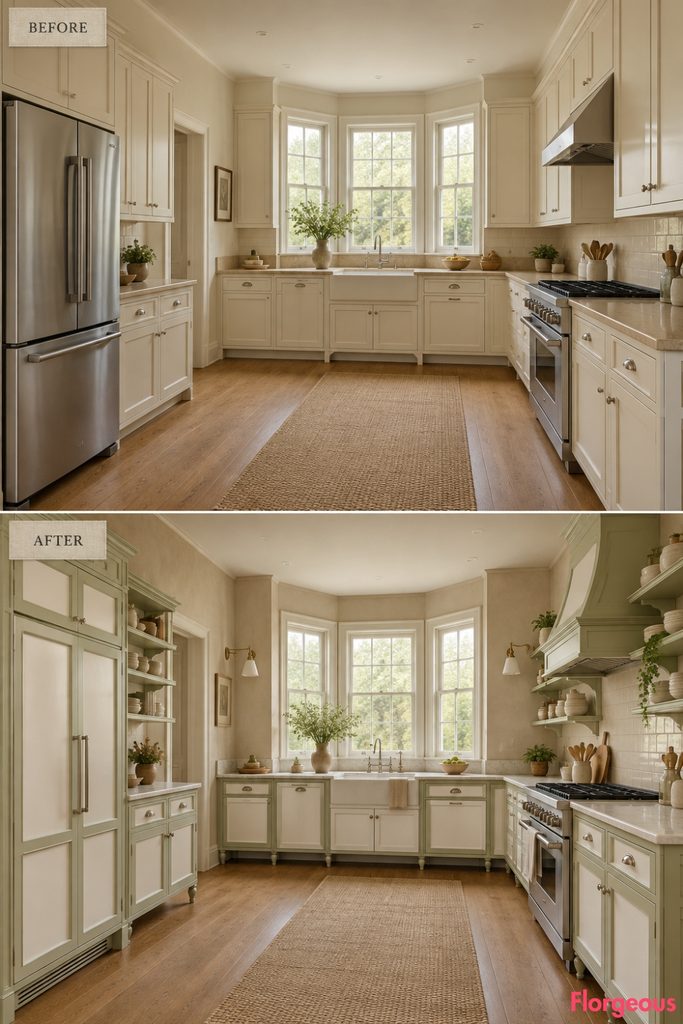
Hardworking enamel finishes give this design a bright, precise character.
Before: Cream cupboards and beige counters provide a plain but undistinguished working area.
After: Carefully proportioned sage-framed enamel cupboards stand on visible short feet, accompanied by white ceramic counters and slender open shelves. The lower room has a lighter, furniture-like appearance, while a simple wall-mounted utensil rack provides useful organization.
The refrigerator is incorporated into matching sage-and-white paneled cabinetry.
Why it works: Exposed cabinet supports and crisp washable finishes create a distinct kitchen identity without heavy historical ornament.
16. Create a Victorian Kitchen With a Floor-to-Ceiling Household Linen Cabinet
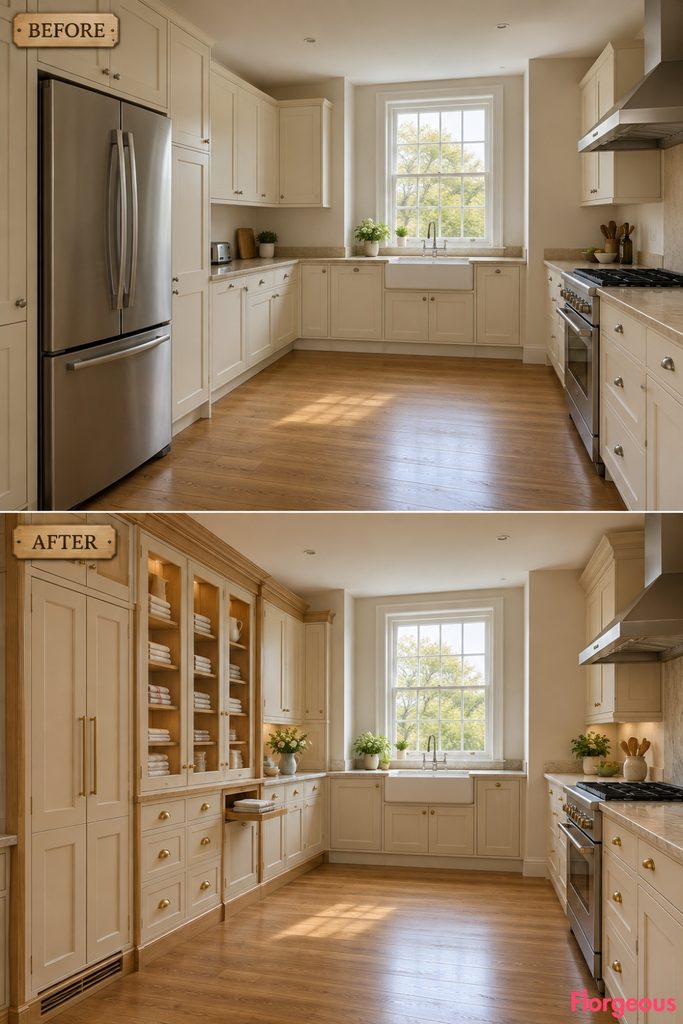
Beautifully organized kitchen textiles give this concept a softer form of Victorian craftsmanship.
Before: Ordinary storage cupboards offer no dedicated organization for table linens and kitchen towels.
After: A substantial full-height cupboard includes glazed upper doors revealing carefully stacked folded linens, central drawers, and a low pull-out shelf for sorting. Pale natural oak and cream paint establish a quiet furniture composition, balanced by simple surrounding worktops.
The refrigerator is integrated into matching cream-and-oak cabinet panels.
Why it works: Dedicated textile storage introduces different cabinet proportions and a distinct domestic function.
17. Create a Victorian Kitchen With a Carefully Framed Bottle-Drying Gallery
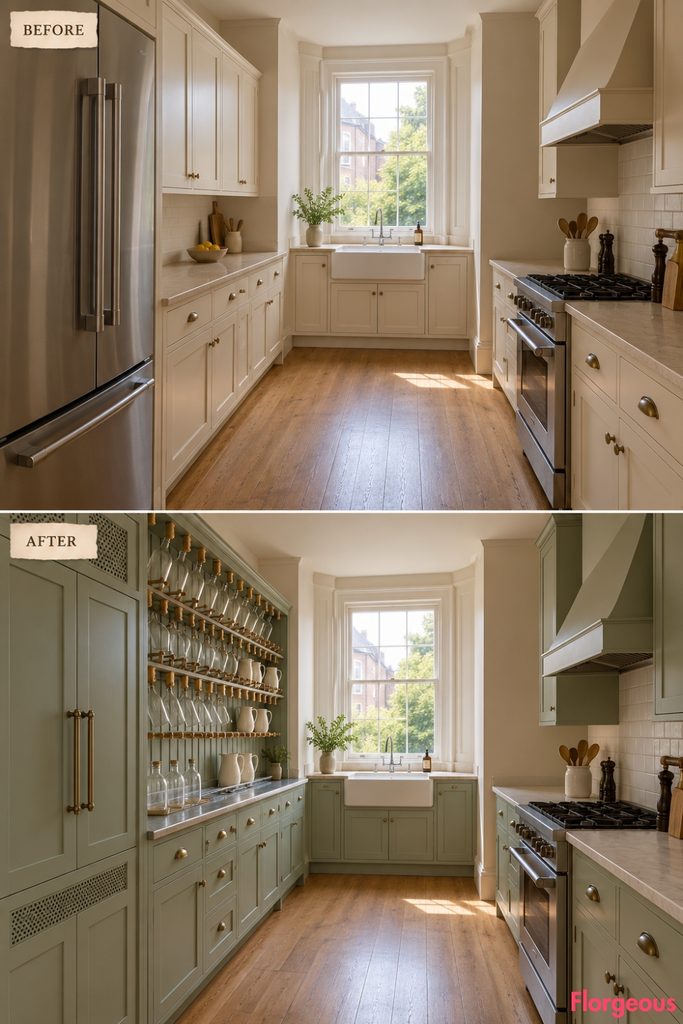
This makeover transforms functional washing accessories into a distinctive decorative composition.
Before: Plain wall cupboards and a simple sink counter offer little specialized drying storage.
After: A long panel of turned timber pegs supports a precise arrangement of glass bottles and ceramic pitchers near the rear working area. Shallow storage drawers, a zinc-lined draining shelf, and soft pale-green cupboard fronts create a beautiful but useful setup.
The refrigerator blends into matching pale-green storage cabinetry.
Why it works: Repetition of slender pegs and transparent glass gives the working wall a light, sculptural rhythm.
Try this: Keep the drying fixtures removable and position them where splashes and drips can be managed safely.
18. Create a Victorian Kitchen With a Rose-and-Cream Hand-Grained Cabinet Finish
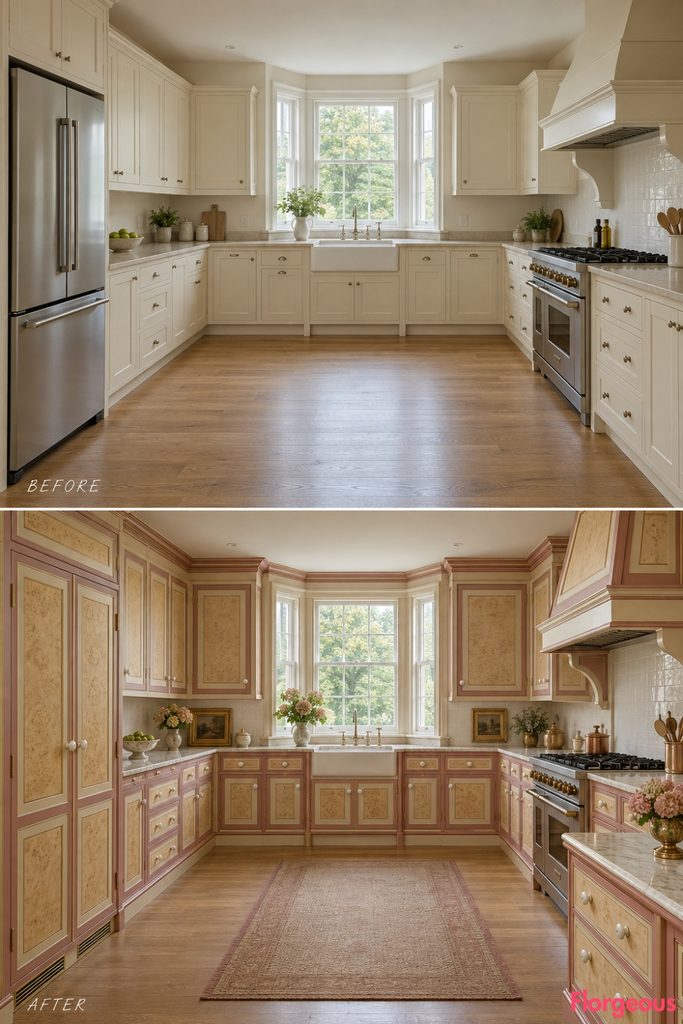
Traditional decorative painting brings elaborate craftsmanship into the room without heavy carving.
Before: Basic factory-painted cupboards look uniform and impersonal.
After: Selected cabinet faces receive delicate faux bird’s-eye maple graining framed by dusty rose borders. Cream panels, fine hand-painted pinstripes, and small porcelain knobs establish a rich but light furniture style.
Cabinet volumes vary between tall storage, low preparation drawers, and a compact serving chest. The refrigerator is concealed behind matching hand-grained painted panels.
Why it works: The transformation changes both the furniture arrangement and surface craftsmanship, producing a deeply personalized Victorian appearance.
19. Create a Victorian Kitchen With a Dedicated Coffee-Grinding Station
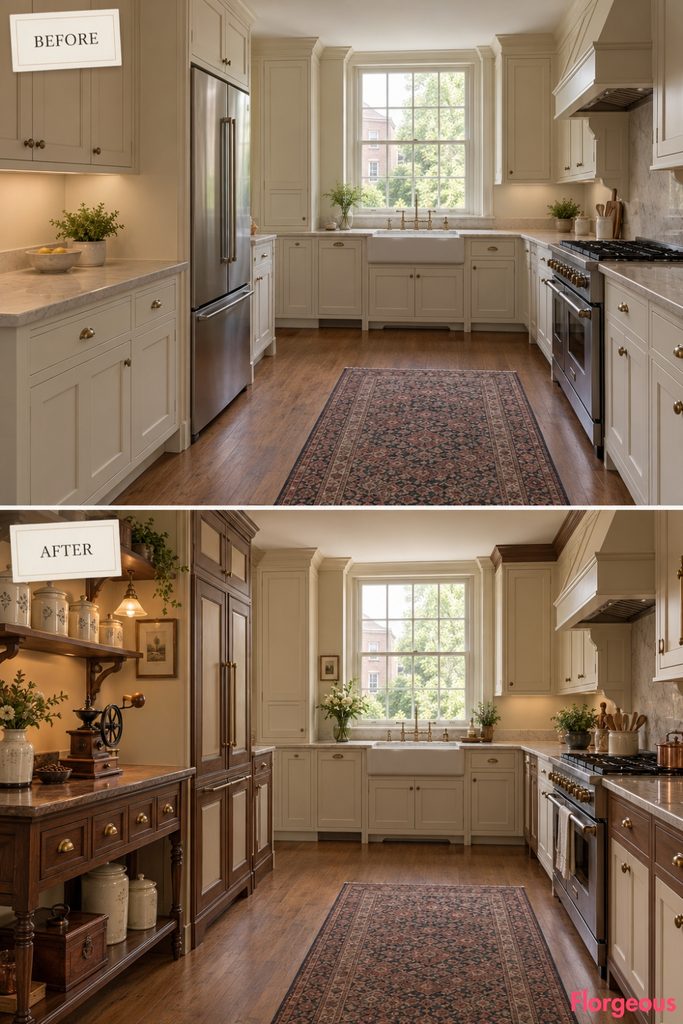
A compact specialized workstation adds a surprising period detail.
Before: The left preparation area consists of standard drawers and a basic countertop.
After: A distinctive timber coffee-grinding console occupies the dry side of the kitchen. A reproduction hand-cranked mill sits on a dedicated wooden base, surrounded by shallow drawers for beans and utensils, fitted ceramic storage, and a low serving shelf.
Warm walnut, cream paint, and a patterned runner-like floor inset complete the composition. The refrigerator is integrated into matching cabinetry.
Why it works: The workstation gives the room a highly specific function and a strong furniture focal point.
20. Create a Victorian Kitchen With a Low Dish-Display Divider
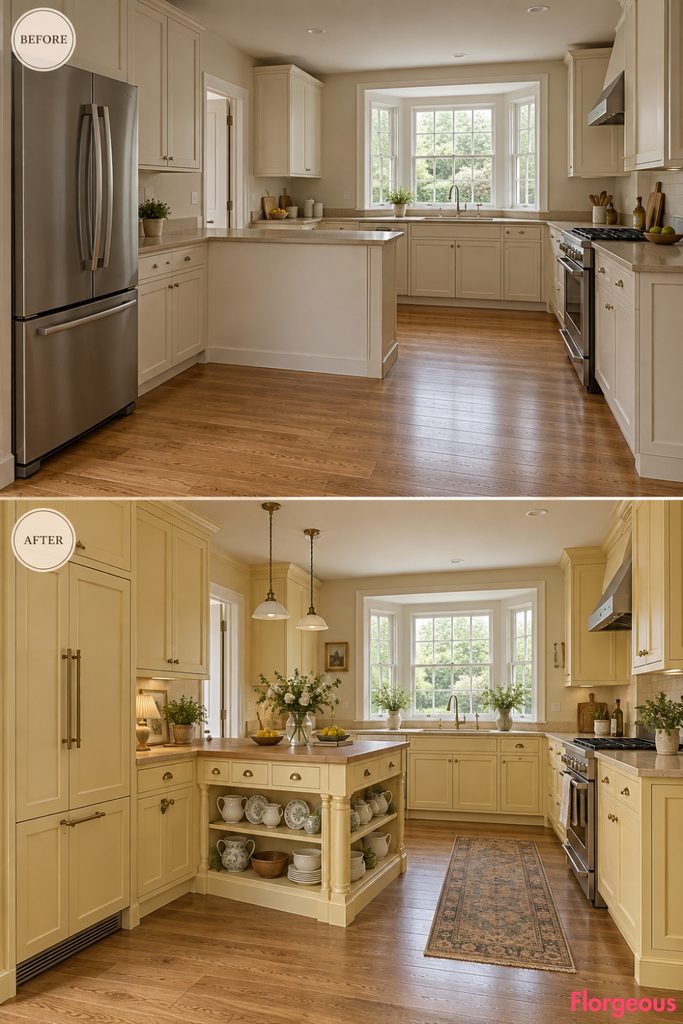
An open furniture divider helps organize the room without changing any walls.
Before: The broad main floor lacks separation between preparation and serving.
After: A low double-sided dish-display cabinet sits perpendicular to a safe portion of the left cabinetry. Its open shelves display everyday plates, while drawers on the working side organize utensils. The upper section remains open, allowing views across the room.
Soft butter-yellow paint and pale oak worktops establish a warm country-house character. The refrigerator disappears into matching yellow cabinetry.
Why it works: The low furniture divider creates two recognizable zones without blocking daylight or circulation.
21. Create a Victorian Kitchen With a Pressed-Floral Ceiling Border
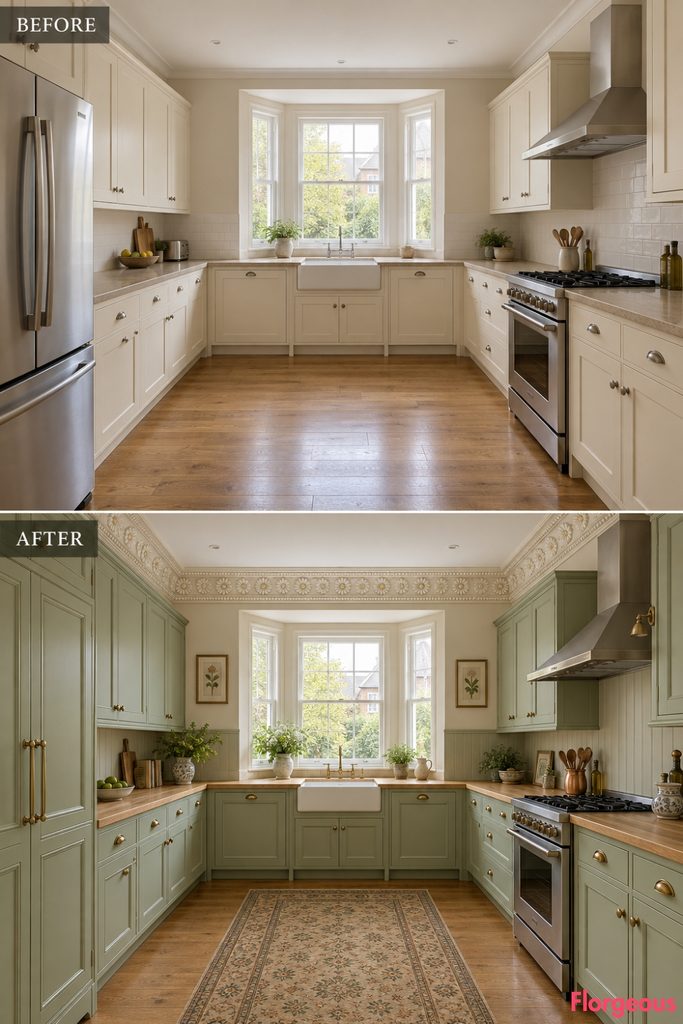
Subtle ornamental ceiling decoration gives this kitchen an artistic identity without changing its structure.
Before: The high flat white ceiling feels empty above the plain cabinetry.
After: A beautifully detailed floral border follows the ceiling perimeter, with raised daisy motifs, fine beaded lines, and softly painted cream relief. Pale pistachio cabinets, simple porcelain fittings, and light timber worktops keep the rest of the room airy.
The refrigerator is hidden behind matching pistachio-painted cabinet panels.
Why it works: The design uses the room’s existing height to introduce historical ornament while keeping the working layout practical.
22. Create a Victorian Kitchen With a Colorful Slipware Pottery Wall
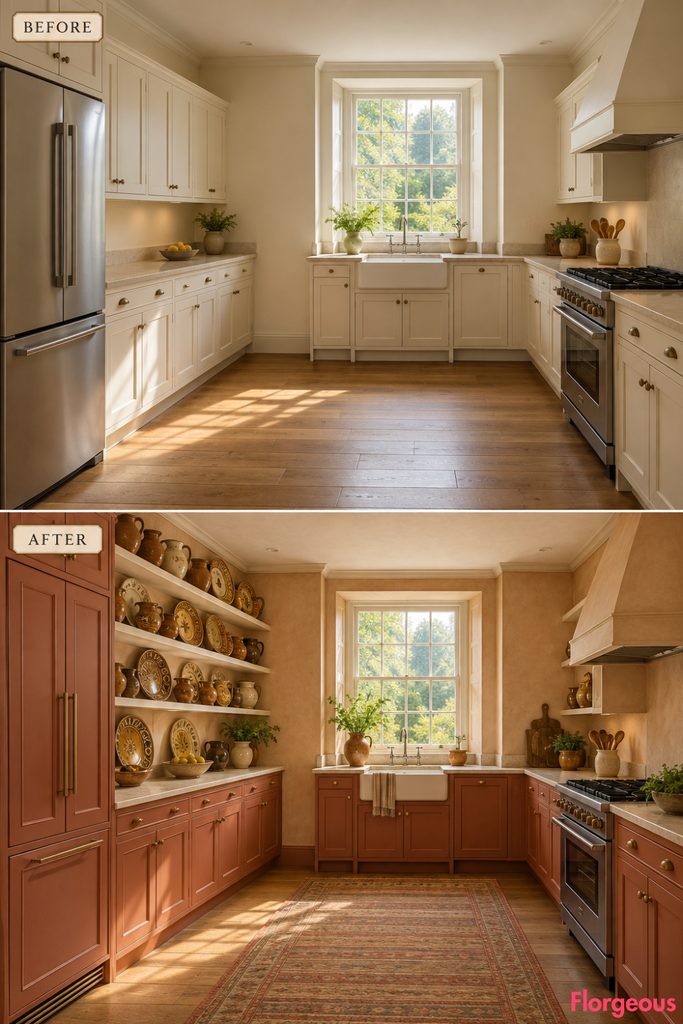
Handmade pottery gives the kitchen an expressive, warm, and deeply domestic character.
Before: Plain wall cupboards hide serving pieces and create an ordinary visual background.
After: A large composition of open painted shelves displays slip-decorated plates, bowls, and jugs in warm brown, yellow, and cream. A terracotta-colored cabinet base and pale stone serving counter support the pottery display.
The refrigerator blends into matching terracotta-painted pantry cabinetry.
Why it works: The colorful handmade ceramics create a vibrant artistic rhythm that differs from polished metal, glass displays, or carved woodwork.
23. Create a Grand Victorian Domestic Kitchen With a Painted Service Gallery
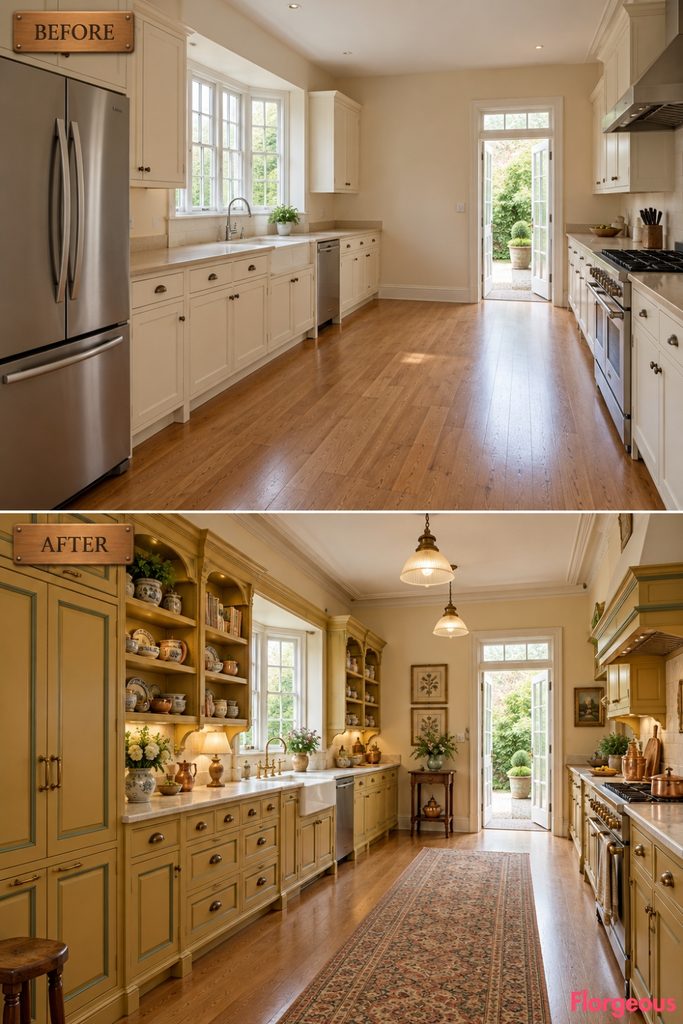
The final transformation celebrates the kind of organized working furniture that made Victorian households distinctive.
Before: Ordinary cabinetry surrounds the sink, range, and refrigerator without a clear relationship between preparation, storage, and serving.
After: A long painted service gallery occupies the main left wall, combining upper shelves, practical linen drawers, a narrow serving counter, and carefully arranged kitchen utensils. The rear sink bay receives simple cream glazed finishes, while the right cooking wall has low painted cupboards and pale stone surfaces.
Warm ochre and ivory paint, delicate green trim, and modest traditional detailing create a rich yet unmistakably domestic atmosphere. The refrigerator is seamlessly concealed within the service cabinetry.
Why it works: The entire kitchen is reorganized around one coherent service system rather than a single decorative feature.
How to Choose a Victorian Kitchen Design That Works in Your Home
The most successful Victorian-inspired kitchens begin with an understanding of how the room is used. Washing, preparation, food storage, serving, and informal family meals each suggest different furniture and working arrangements.
A large potboard table suits a household that enjoys preparing meals together. A folding draining surface can make the sink area more flexible, while a specialized pantry can improve food storage without filling the center of the room.
Materials also influence the atmosphere. Painted pine and linen create a relaxed country-house character, while warm ceramic tiles, decorative wallpaper, and colorful pottery provide more expressive artistic focal points.
Before renovating, measure the room carefully and identify the architectural elements and services that must remain fixed. Keep the main routes between the sink, range, refrigerator, and entry open. Make sure any additional furniture has realistic dimensions and does not block appliance doors.
For a cohesive Victorian Kitchen, coordinate your modern appliances with the surrounding cabinetry. Properly specified panel-ready refrigerator doors can provide the period appearance without compromising ventilation or everyday access.
Choose the layout that best suits your cooking routine first. Then decide which one defining feature deserves the strongest artistic treatment, whether that is a beautiful working table, a distinctive storage wall, or an extraordinary decorative finish.