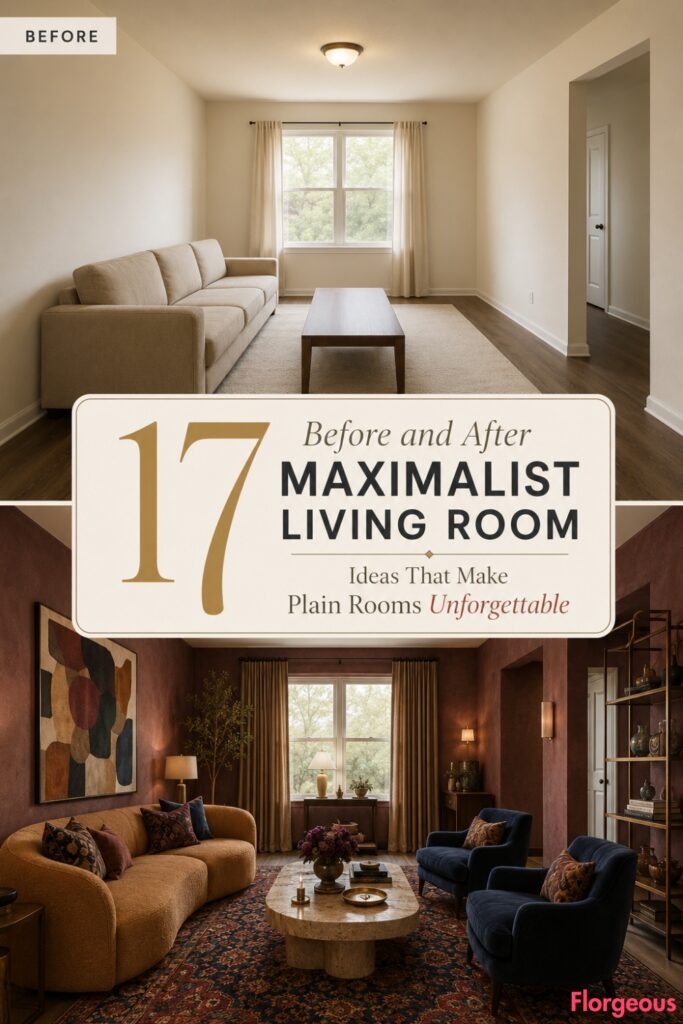
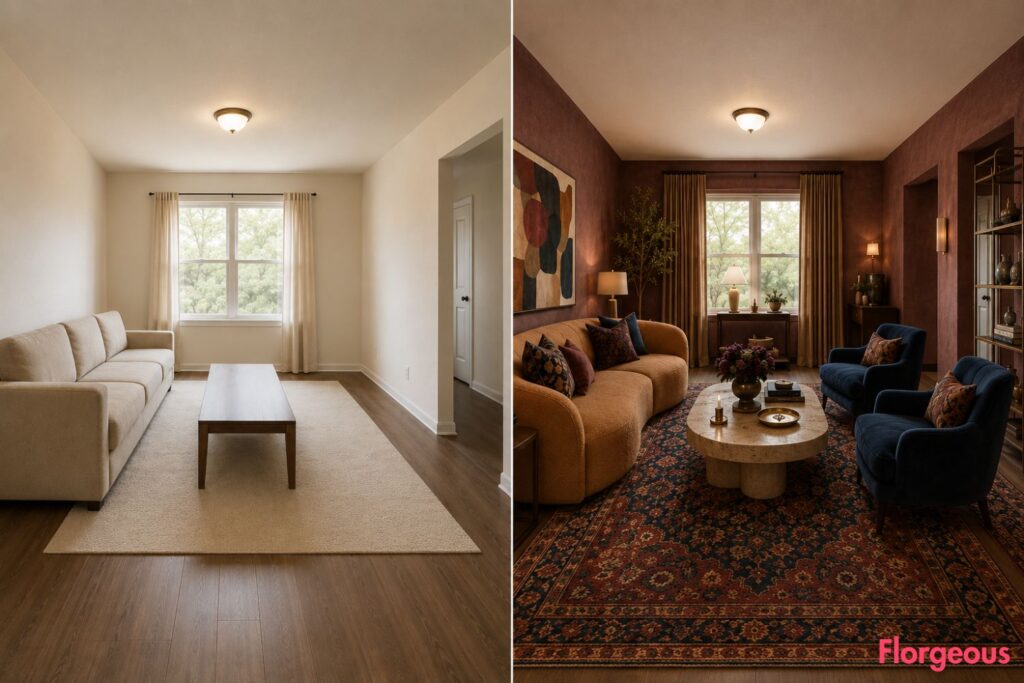
A plain builder-grade living room can be perfectly functional and still feel completely forgettable. Warm off-white walls, a beige sofa, a basic rug, and empty surfaces provide a useful starting point, but they do not express much personality.
These before-and-after ideas show how the exact same room can become 17 dramatically different interiors. Each makeover uses its own color story, furniture shapes, pattern family, materials, lighting, and focal point, proving that a Maximalist Living Room can feel expressive without becoming chaotic.
Keep scrolling to see jewel-box color, traditional pattern mixing, botanical layers, dramatic dark rooms, renter-friendly ideas, and polished contemporary luxury. The architecture never changes, so every result comes from thoughtful decorating rather than structural renovation.
1. Create a Color-Drenched Jewel-Box Salon
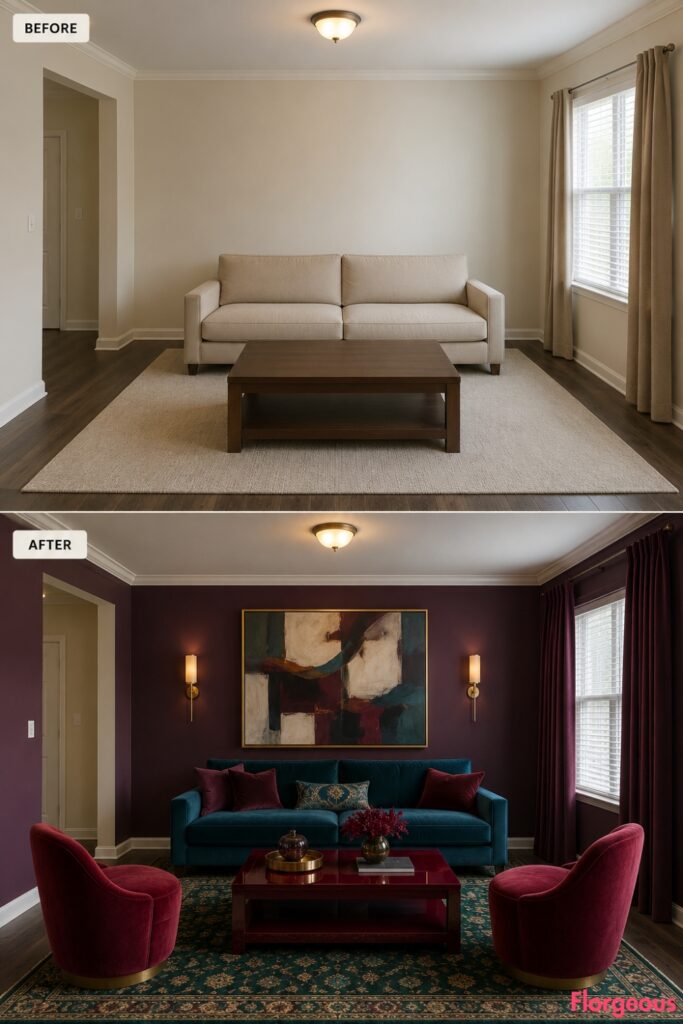
The first makeover surrounds the room with saturated color. Deep aubergine walls provide an enveloping background for a peacock-blue sofa, ruby-red chairs, and flashes of aged brass.
Before: Warm off-white walls, a straight beige sofa, a bare rectangular coffee table, a simple neutral rug, short plain curtains, and empty walls.
After: Aubergine paint wraps the room, while a peacock-blue sofa anchors the longest wall. Two compact ruby slipper chairs face it across an emerald patterned rug. Burgundy lacquer tables, silk curtains, brass sconces, and one oversized abstract artwork complete the jewel-box effect.
Why it works: Large areas of solid color balance the smaller patterns and reflective details.
Designer Tip: Choose one dominant color, two supporting shades, and one metal finish before adding accessories.
2. Layer an English Country Pattern-Mixed Room
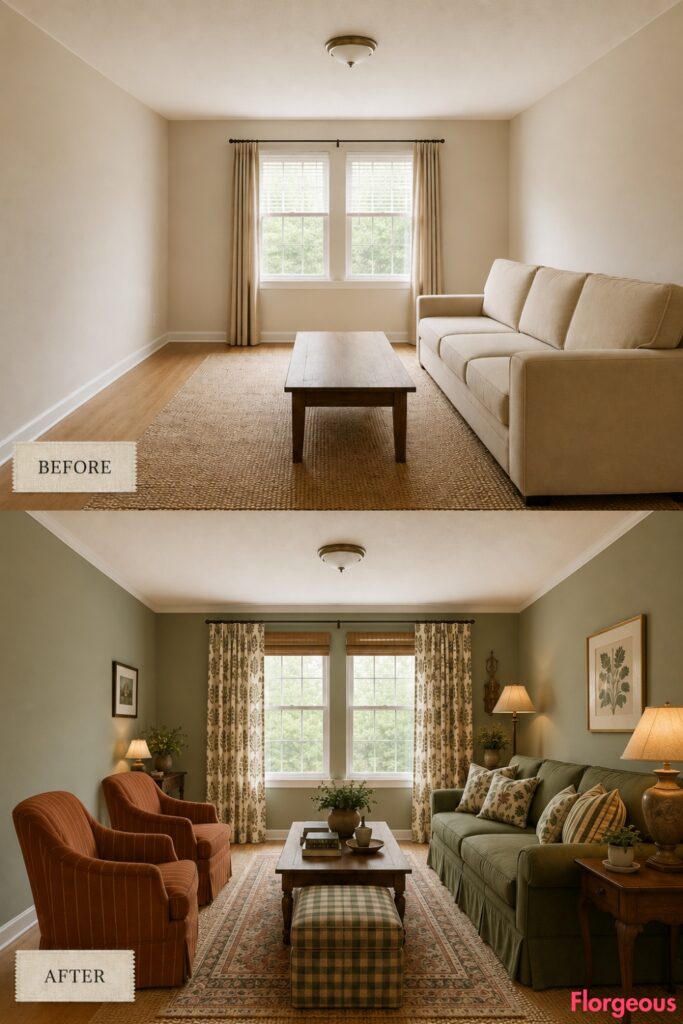
English country maximalism feels comfortable because its patterns look collected gradually. Florals, checks, stripes, and botanical prints work together through a restrained palette of moss, russet, faded rose, and cream.
Before: The same plain living room feels clean but flat, with basic furniture and no meaningful focal point.
After: Sage-green walls support a moss skirted sofa and two russet armchairs positioned opposite it. Block-print curtains, striped upholstery, a checked ottoman, antique oak tables, and botanical cushions create a warm, lived-in composition.
The room feels full, but the center walkway remains open and the largest furniture pieces use relatively quiet fabrics.
Try this: Mix one large pattern, one medium pattern, and one small pattern instead of repeating prints of the same scale.
3. Turn the Room Into a Parisian Art Collector’s Salon
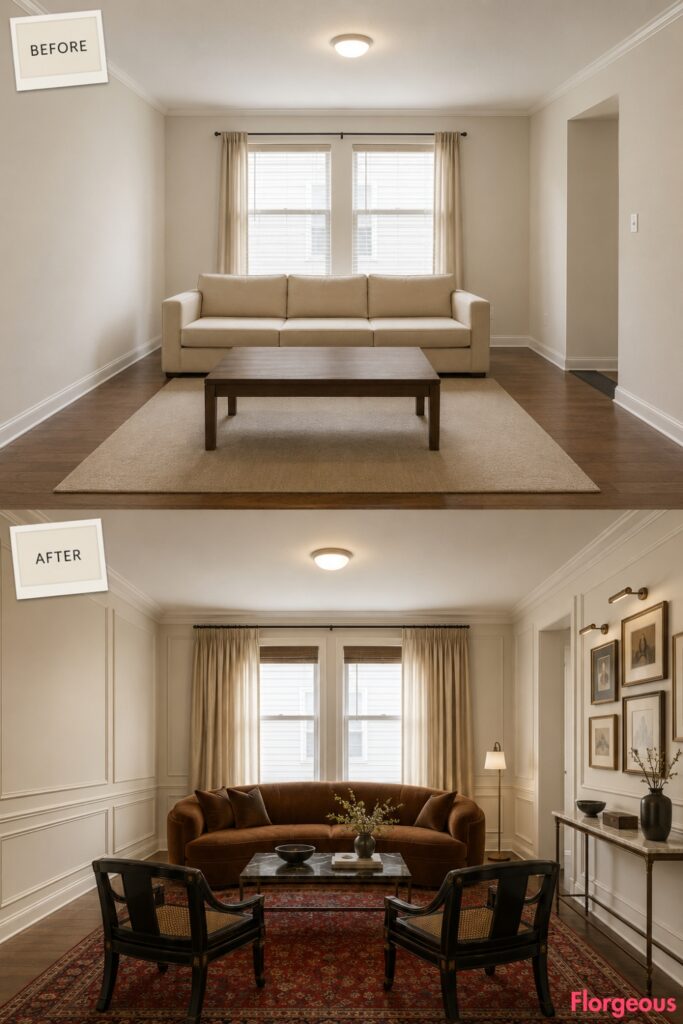
This makeover uses scale and curation rather than filling every surface. Warm ivory walls, decorative molding, sculptural furniture, and a carefully composed art display give the room an established Parisian character.
Before: Beige furnishings and blank walls leave the room without contrast or visual focus.
After: A curved tobacco mohair sofa faces two black lacquer chairs. A red vintage rug grounds the seating area, while paintings and drawings in varied frames rise above a slim marble console. Bronze picture lights create a gallery-like glow after dark.
Style Note: The art arrangement should include breathing room around its outer edges, even when the frames are closely grouped.
4. Build a Globally Collected Traveler’s Lounge
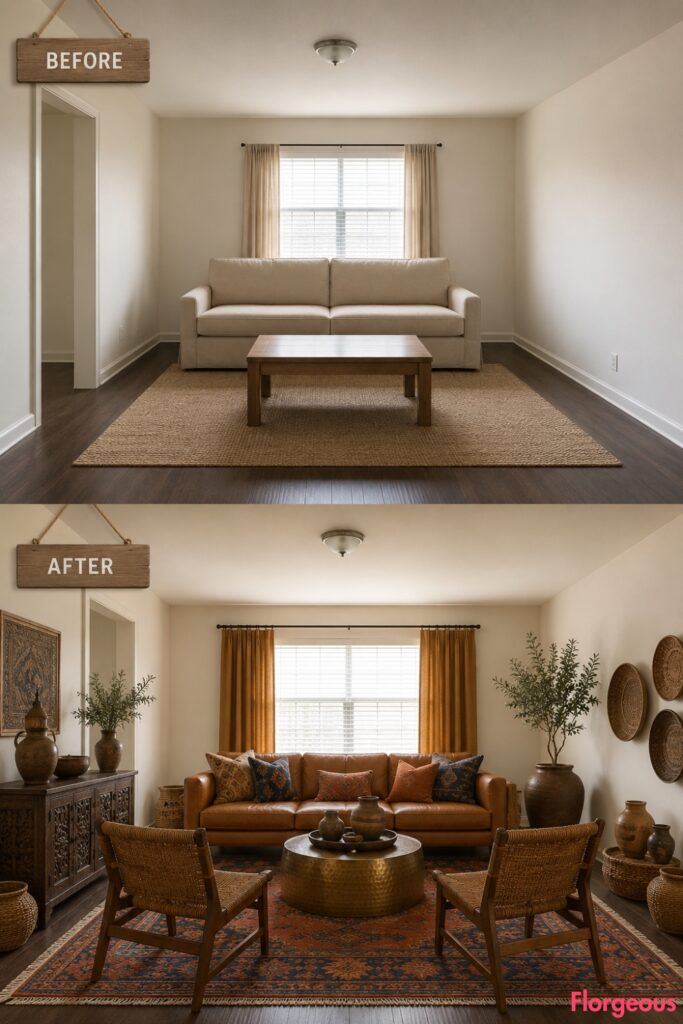
A globally inspired room works best when materials connect the pieces. Carved wood, handwoven fabric, aged leather, glazed pottery, and hammered metal create richness without making the room resemble a themed display.
Before: The neutral room has functional furniture but little texture or personal history.
After: A camel leather sofa sits opposite two woven timber lounge chairs. A rust, indigo, and ochre flat-weave rug introduces color beneath a hammered brass table. A carved dark-wood cabinet provides concealed storage, while a few substantial ceramics and baskets remain visible.
Try this: Group decorative objects by color or material rather than by geographical origin.
5. Add Art Deco Drama With Emerald, Black, and Brass
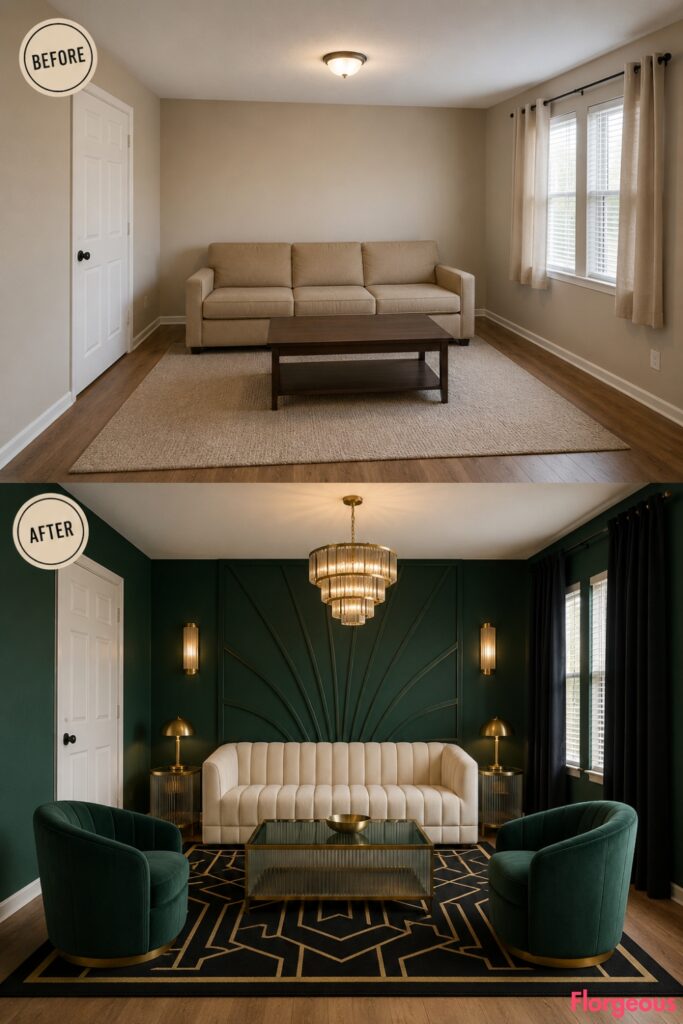
Art Deco maximalism relies on geometry, sheen, and strong contrast. Emerald walls, black lacquer, ribbed glass, and polished brass create glamour without requiring dozens of decorative objects.
Before: Flat lighting and generic neutral finishes make the room feel ordinary.
After: A cream channel-tufted sofa sits opposite two emerald club chairs. A black-and-gold geometric rug defines the conversation area, while ribbed-glass tables, fan-shaped wall panels, and a stepped brass chandelier establish an elegant rhythm.
Why it works: The repeated curves and stepped forms make the room cohesive even though the surfaces are visually bold.
6. Grow a Tropical Botanical Retreat Indoors
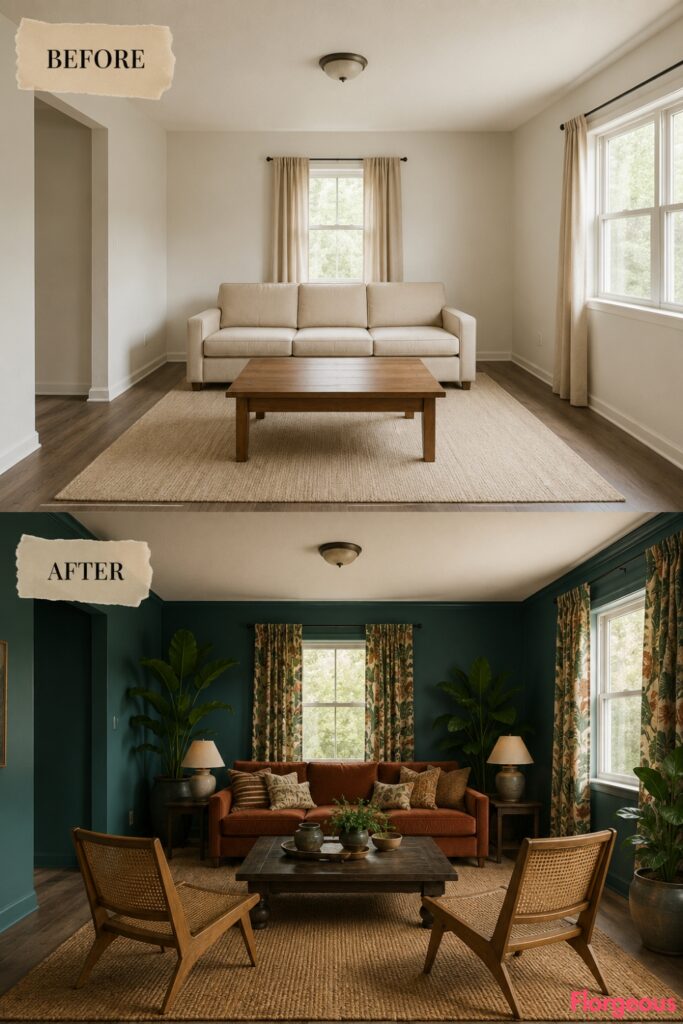
Botanical maximalism feels more architectural when greenery appears in a few large gestures. Substantial plants, leafy textiles, woven fibers, and deep color create a lush room without covering every shelf with tiny pots.
Before: Empty walls and short curtains make the original room feel exposed and unfinished.
After: Deep teal walls surround a rust-colored sofa and two cane lounge chairs. A jute rug softens the floor, while full-length botanical curtains bring pattern to the window wall. Large plants frame the room without blocking daylight or the doorway.
Budget Version: Use one oversized plant, removable botanical wallpaper, and inexpensive woven side tables to create the mood.
7. Turn Empty Walls Into a Moody Maximalist Library
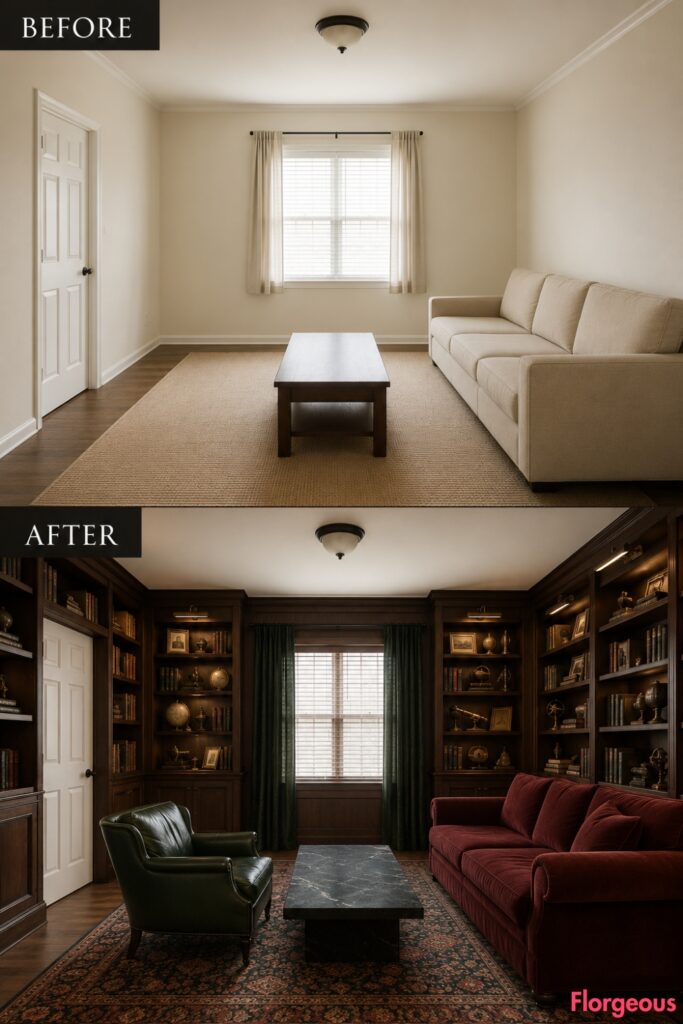
A library-style living room gains richness from books, timber, upholstery, and layered task lighting. Keeping the shelving on one controlled wall prevents the room from feeling cramped.
Before: The base room has bare walls, generic seating, and almost no useful storage.
After: Floor-to-ceiling walnut shelving stops before every doorway and window. An oxblood wool sofa anchors the room, while one deep-green leather reading chair turns slightly toward it. A faded patterned rug, black-stone table, and brass picture lights create an intimate evening atmosphere.
Try this: Leave some shelf sections partially empty so larger objects and book groupings can breathe.
8. Embrace a Playful 1970s Pattern Clash
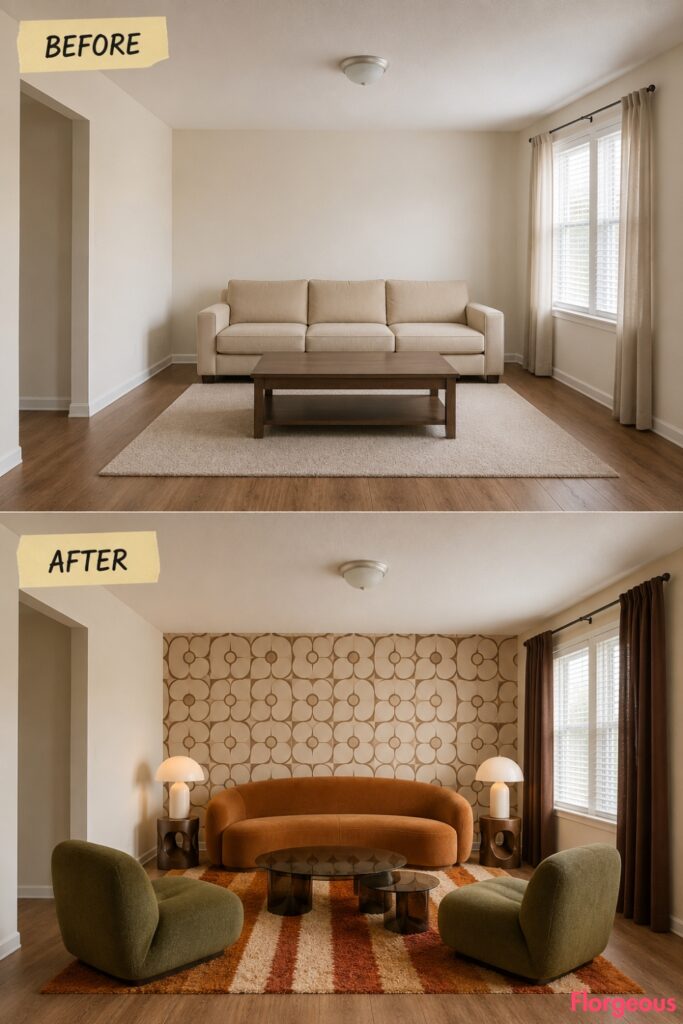
This makeover combines rounded furniture, warm retro colors, and bold geometric pattern. Burnt orange, avocado green, cream, and chocolate brown produce a nostalgic room that still feels usable.
Before: Rectangular furniture and beige finishes create a stiff, predictable arrangement.
After: A curved caramel sofa faces two low avocado chairs. Oversized circular wallpaper provides the largest pattern, while a striped shag rug introduces a narrower repeat. Smoked-glass tables, chocolate curtains, and mushroom lamps complete the retro composition.
Common Mistake: Avoid repeating the same oversized motif on walls, rugs, and curtains. Pattern scale should change from surface to surface.
9. Create a Sun-Washed Mediterranean Tile-and-Plaster Lounge
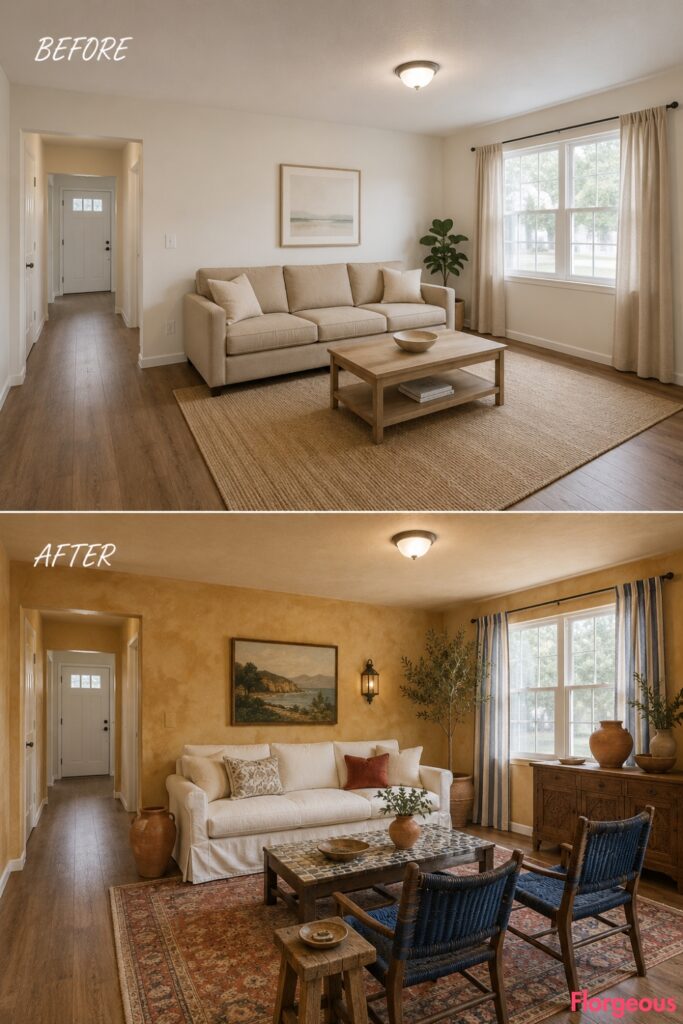
Mediterranean maximalism feels layered through texture rather than crowded decoration. Limewash, patterned tile, striped linen, aged timber, and terracotta create a relaxed sense of history.
Before: The neutral room lacks texture, warmth, and architectural emphasis.
After: Sun-washed ochre plaster surrounds a cream slipcovered sofa and two blue woven chairs. A low tiled coffee table becomes the main focal point, supported by a faded red rug, blue-striped curtains, carved storage, and hand-thrown pottery.
Try this: Introduce decorative tile on a movable table before committing to a permanent tiled wall or floor.
10. Use Blue and White for Porcelain-Inspired Maximalism
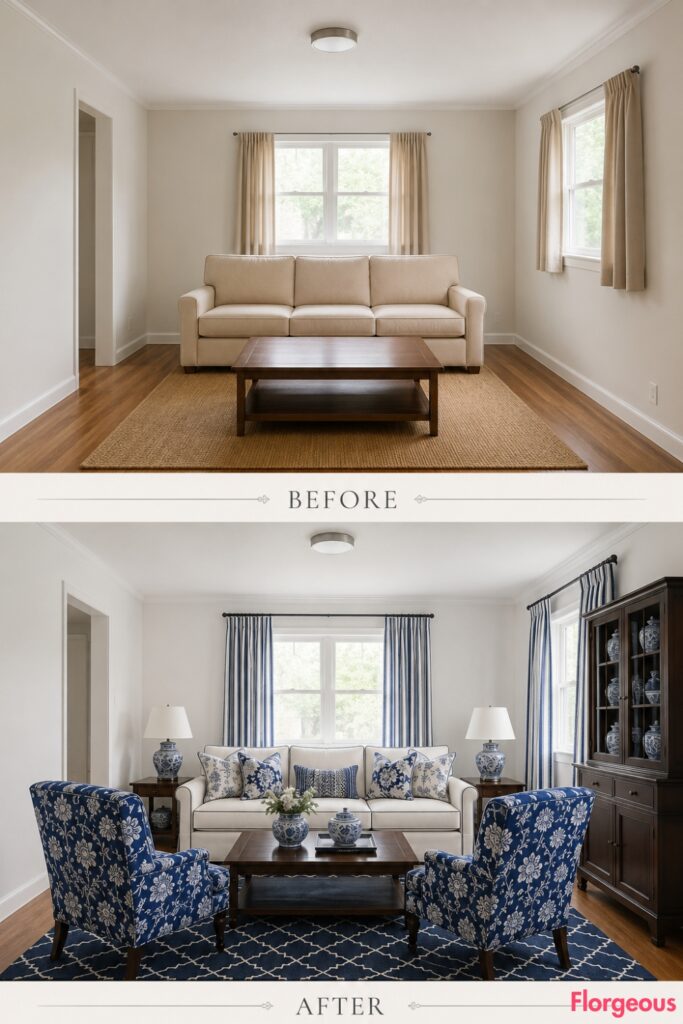
A limited palette can still feel richly maximalist when it appears through several patterns and materials. Indigo, cobalt, chalk white, and dark wood create variety while maintaining a crisp visual structure.
Before: The beige sofa and neutral rug blend together without contrast.
After: A chalk-white sofa with indigo piping sits opposite two cobalt patterned chairs. A navy lattice rug, dark timber cabinet, striped curtains, and porcelain-inspired lamps introduce multiple layers within one controlled color family.
Color Story: Include several blue values, from faded denim to deep navy, so the room does not look flat or overly matched.
11. Add Romantic Rococo Florals in Powdery Colors
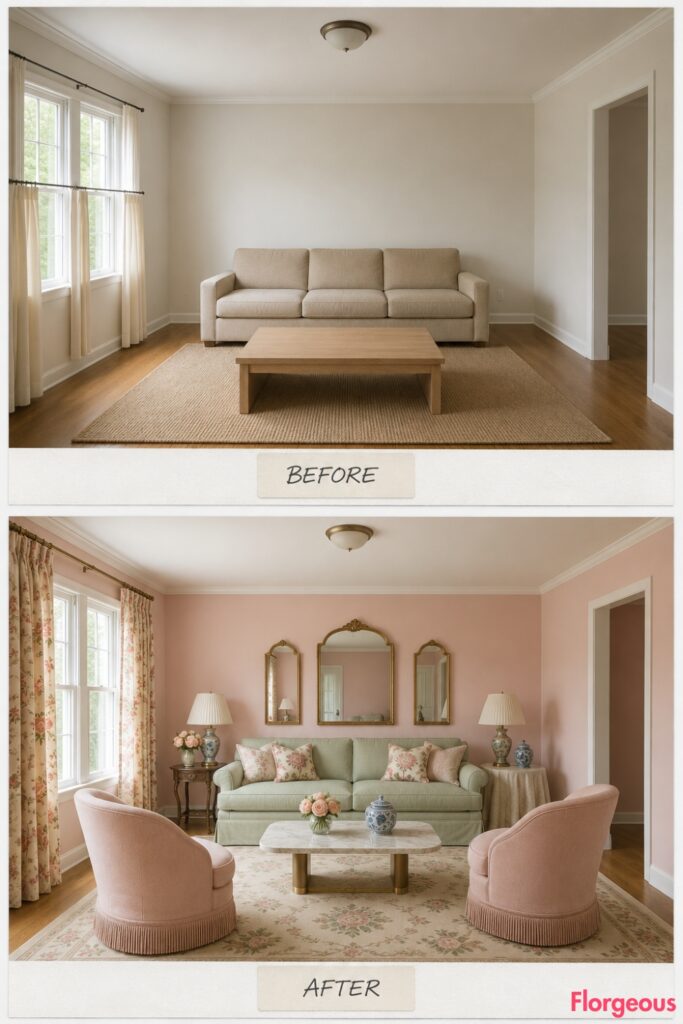
Rococo-inspired maximalism can feel soft and residential when ornate details are balanced with comfortable furniture. Powder pink, pale pistachio, cream, and antique gold produce a romantic room without making it feel formal.
Before: The undecorated neutral room has little softness beyond the beige sofa.
After: A pale pistachio sofa faces two blush barrel chairs. Oversized floral curtains provide the main pattern, while an Aubusson-style rug, curved gilded mirrors, pleated lamps, and small marble tables add graceful detail.
Try this: Start with one ornate mirror and one floral textile, then keep the largest furniture pieces relatively simple.
12. Build a Dark Gothic Room With Wine and Charcoal
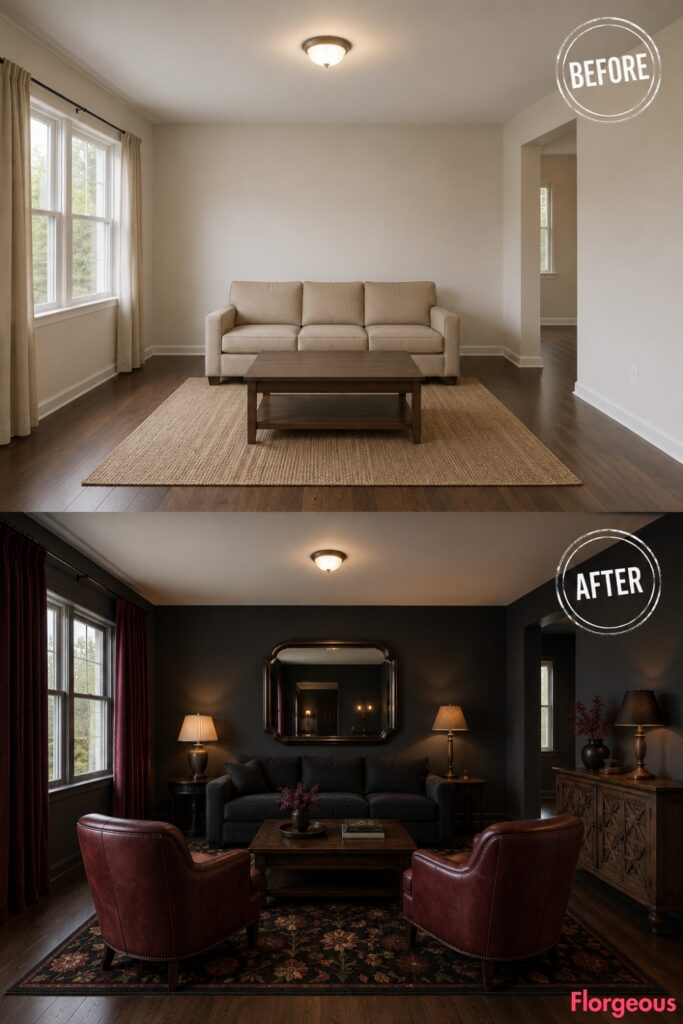
Dark maximalism becomes inviting when matte walls are balanced by tactile fabrics, carved timber, reflective glass, and several warm light sources.
Before: The pale neutral room feels visually thin and lacks atmosphere.
After: Matte charcoal walls surround a charcoal wool sofa and two wine-colored leather chairs. A dark botanical rug, carved walnut cabinet, smoked mirror, burgundy curtains, and shaded lamps create a layered nighttime mood.
The design feels dramatic but not theatrical because the furniture remains comfortable, practical, and residential.
Common Mistake: Do not depend on one central ceiling fixture. Use table lamps, floor lamps, and wall lights at different heights.
13. Fill the Room With Handmade Folk-Art Character
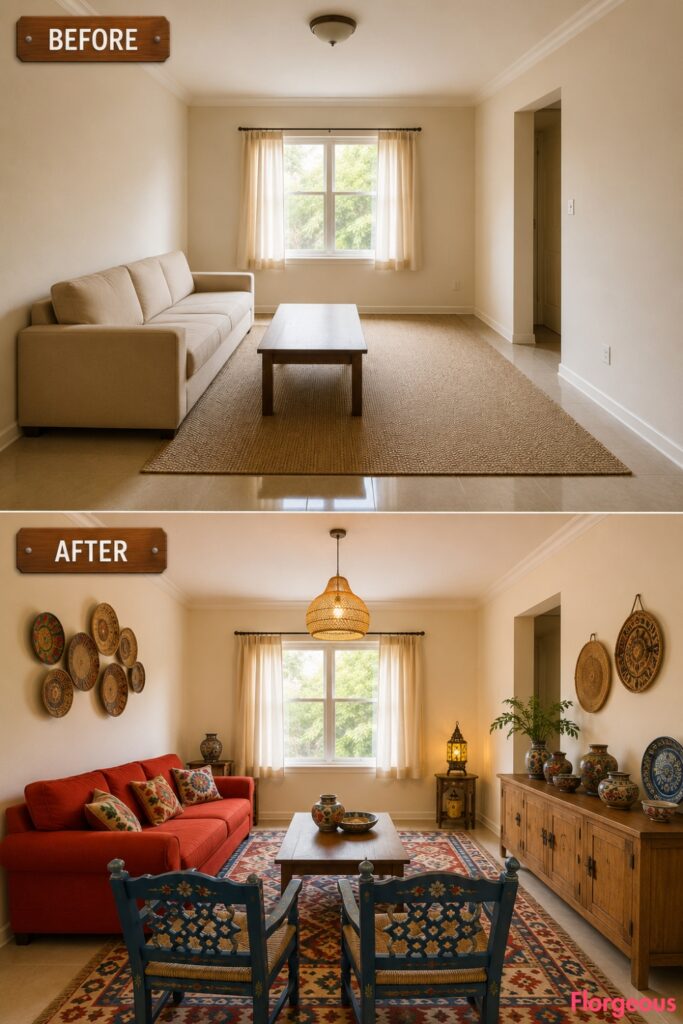
This room celebrates visible craftsmanship rather than polished uniformity. Painted furniture, embroidered textiles, woven wall pieces, and glazed ceramics give the space a cheerful, personal quality.
Before: Machine-made neutral furnishings make the base room feel generic and showroom-like.
After: Warm cream walls support a tomato-red sofa and two hand-painted blue chairs. A multicolor flat-weave rug connects the palette, while a long natural timber cabinet organizes ceramics, baskets, and smaller handmade objects.
Try this: Connect handmade pieces through repeated colors rather than forcing every object to share the same cultural or decorative style.
14. Use Graphic Color Blocking for Modern Maximalism
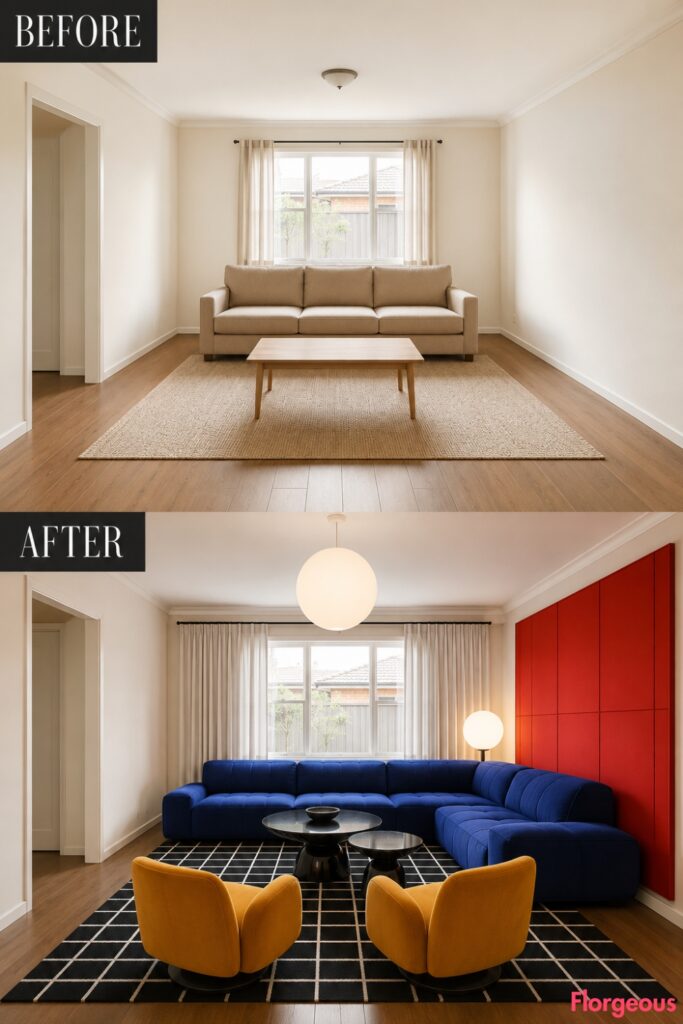
This contemporary approach replaces tiny prints with broad geometric fields of color. Cobalt, saffron, tomato red, black, and cream create energy through scale rather than decorative clutter.
Before: The room has no strong contrast, visual rhythm, or memorable focal point.
After: A cobalt sectional faces two saffron lounge chairs. A removable tomato-red wall panel creates a sharp backdrop, while a black-and-white grid rug, glossy pedestal tables, and oversized globe lights complete the graphic composition.
Why it works: Bold colors appear in large, clearly defined areas, leaving enough quiet space around them.
15. Create a Compact Renter-Friendly Maximalist Room
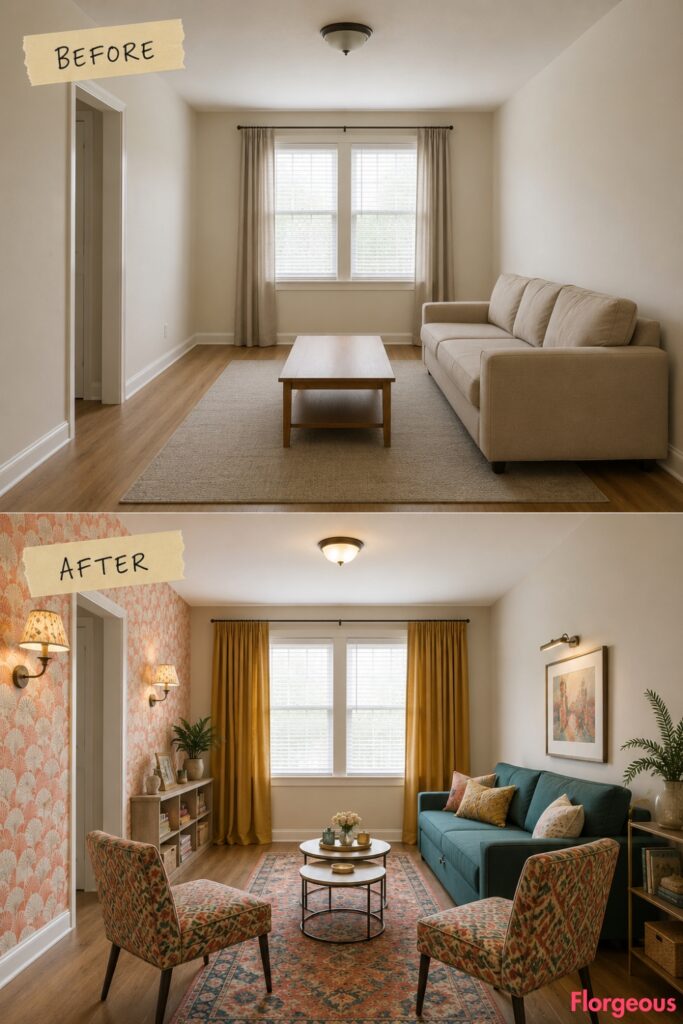
A small rental can support bold decorating when the furniture remains lightweight and reversible. This makeover combines removable surfaces, vertical storage, and flexible pieces without altering the architecture.
Before: The same plain living room feels underused, with generic furniture and very little storage.
After: A compact teal storage sofa sits opposite two slim armless chairs. Removable coral-and-cream wallpaper covers one wall, while nesting tables, shallow shelving, plug-in sconces, and ceiling-height mustard curtains draw attention upward.
Small Space Tip: Keep visible floor area around furniture legs and avoid placing tall storage beside narrow circulation routes.
16. Build a Sustainable Room From Thrifted and Upcycled Pieces
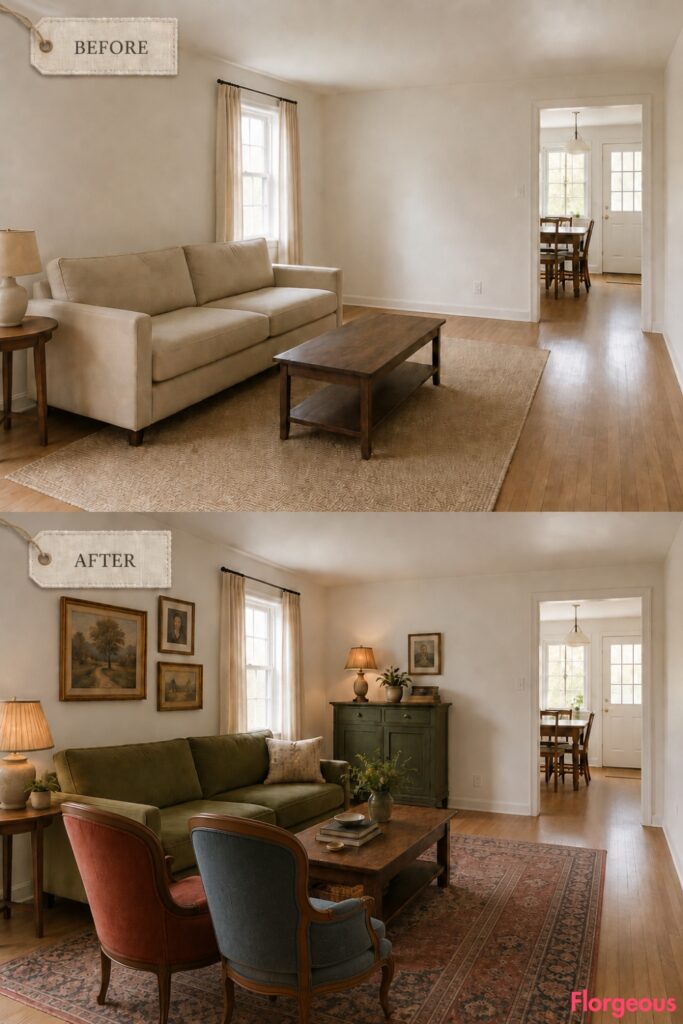
A thrifted maximalist interior feels intentional when mismatched pieces share a controlled palette. Olive, brick red, faded blue, natural wood, and aged brass connect furniture from different periods.
Before: The original room is functional but has little texture, craftsmanship, or personal history.
After: A reupholstered olive sofa faces two mismatched vintage chairs covered in coordinating brick-red and faded-blue fabrics. A repaired timber table, overdyed rug, repainted storage cabinet, secondhand art, and reused lamps add character without requiring new matching furniture.
Designer Tip: Repeat one wood tone and one metal finish to connect pieces from several decades.
17. Finish With Refined Contemporary Maximalist Luxury
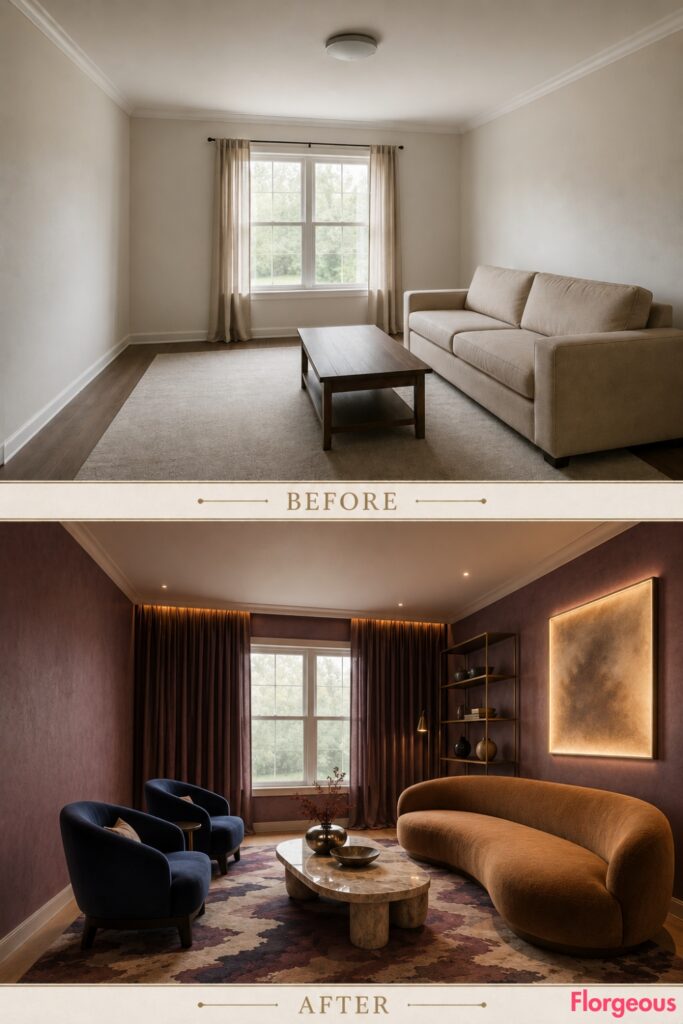
The final makeover shows how maximalism can feel polished and architectural. Rich materials, large-scale furniture, and carefully edited art replace the need for numerous small accessories.
Before: The same neutral living room feels clean but unfinished and visually forgettable.
After: Smoky plum plaster surrounds a curved camel mohair sofa and two deep-blue lounge chairs. A hand-knotted abstract rug, sculptural stone coffee table, bronze shelving, silk curtains, and one large illuminated artwork create a sophisticated final transformation.
Each object has visual presence, but the room still includes open wall areas, clear tabletop space, and an unobstructed central walkway.
Try this: Invest in fewer pieces with strong silhouettes rather than filling the room with small decorative objects.
How to Choose the Right Maximalist Direction
Successful maximalist rooms are not filled randomly. They begin with a defined color story, one primary focal point, and a furniture arrangement that supports everyday life.
Start by deciding how you want the room to feel. A dark library supports quiet evenings, a tropical room feels relaxed and lively, while a graphic color-block scheme creates a sharper contemporary mood.
Choose one high-impact starting layer, such as wall color, curtains, a large rug, or oversized art. Add supporting patterns in different scales, repeat the main colors across the room, and leave a few surfaces intentionally open.
Before purchasing more decor, check the walkways, door swings, sightlines, and storage. A Maximalist Living Room feels most convincing when its layers support the people using it rather than competing for every available surface.