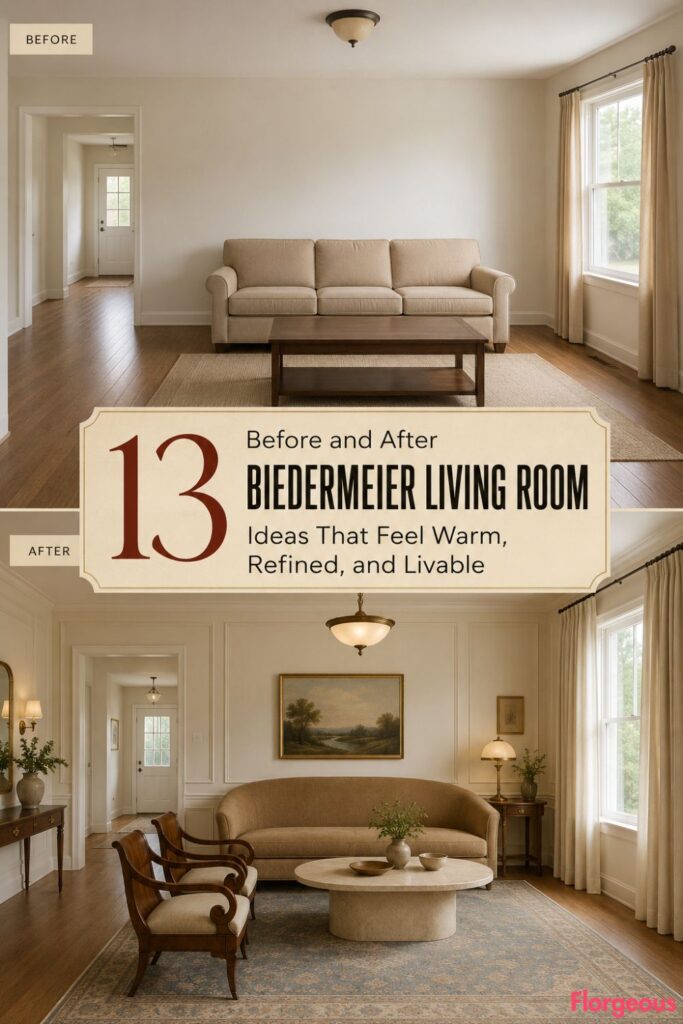
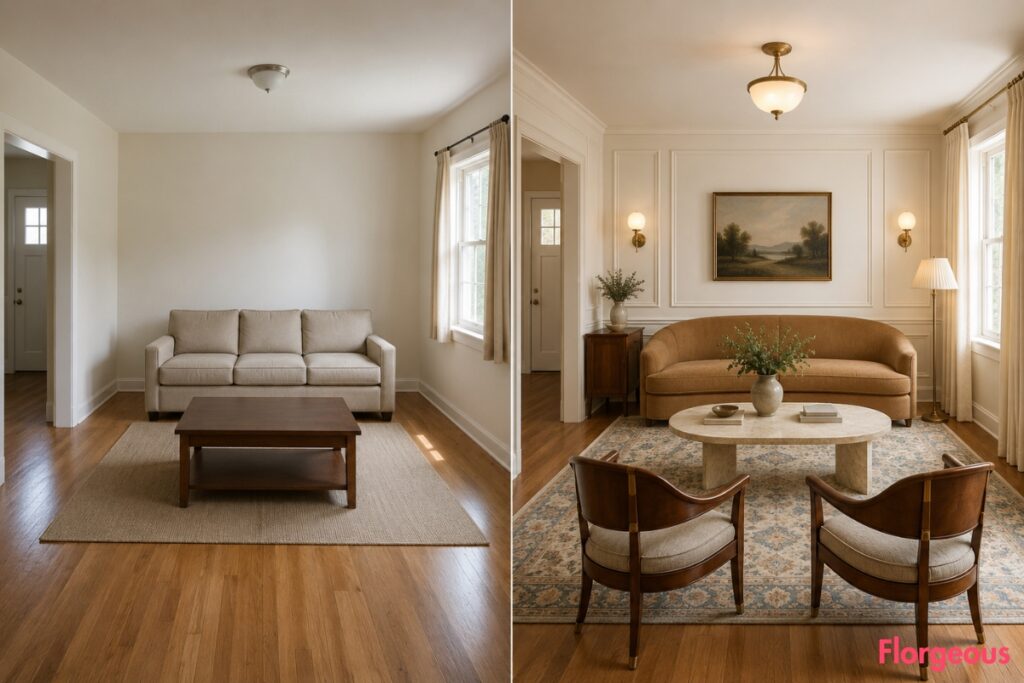
A plain builder-grade living room can feel especially anonymous when every surface is neutral, the furniture is generic, and nothing gives the eye a reason to linger. Our starting room is exactly that: warm off-white walls, a straight beige sofa, a bare rectangular coffee table, a simple neutral rug, short curtains, basic lighting, empty walls, and soft daylight.
For these Biedermeier Living Room makeovers, the architecture never changes. The doorway, window, flooring footprint, ceiling height, proportions, fixed camera angle, and open circulation route remain identical in every version.
What changes is the personality. One makeover leans into pale birch and dusty blue, another becomes a walnut reading room, another uses soft rose and pearwood, while darker versions explore tobacco, forest green, ebonized accents, and burgundy. The common thread is Biedermeier’s domestic refinement: graceful curves, practical furniture, beautiful wood grain, restrained classical structure, and comfort without palace-like excess.
1. Cherrywood, Parchment, and the Classic Biedermeier Starting Point
This first makeover embraces the style’s most recognizable qualities, then edits them carefully enough to feel residential rather than historical.
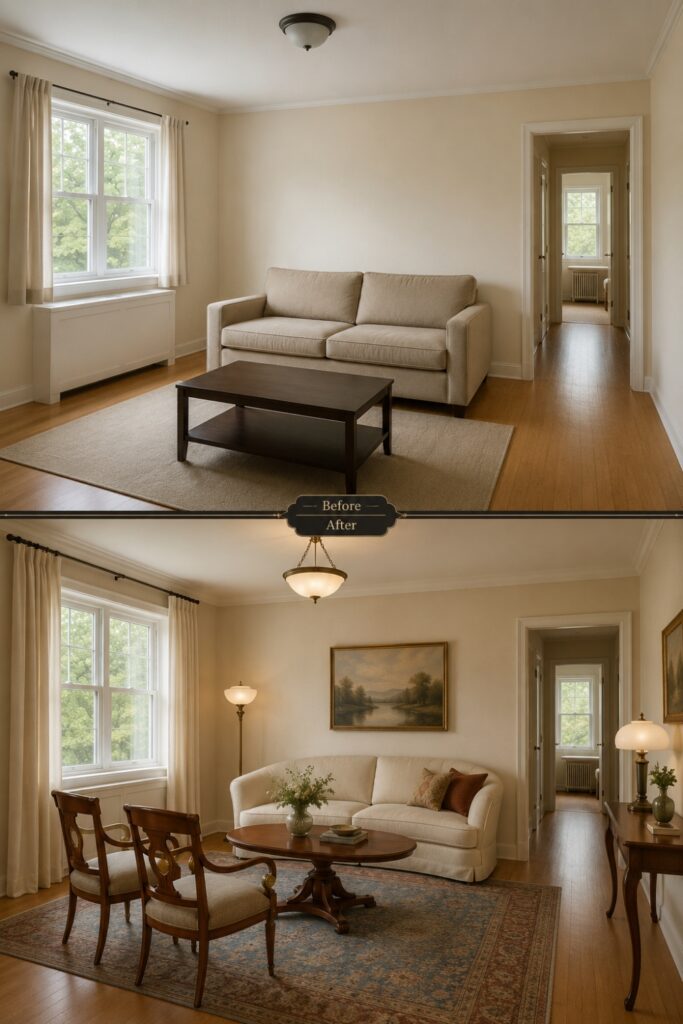
Before: The same plain builder-grade living room with warm off-white walls, straight beige sofa, bare rectangular coffee table, neutral rug, short curtains, basic ceiling light, empty walls, and minimal styling.
After: Parchment walls frame an oatmeal sofa with a gently curved back. Two polished cherrywood saber-leg chairs sit together opposite the sofa, centered around an oval book-matched cherry veneer table. A faded blue and rust wool rug, full ivory curtains, opaline lamps, and one restrained landscape complete the room.
Why it works: The polished wood supplies visual richness, while simple upholstery prevents the room from resembling an antique showroom.
Designer Tip: Let one timber species dominate. Too many equally strong wood finishes can make a small room feel fragmented.
2. Pale Birch and Dusty Blue for a Light Viennese Mood
Biedermeier can feel remarkably airy when dark timber is replaced with blond birch.
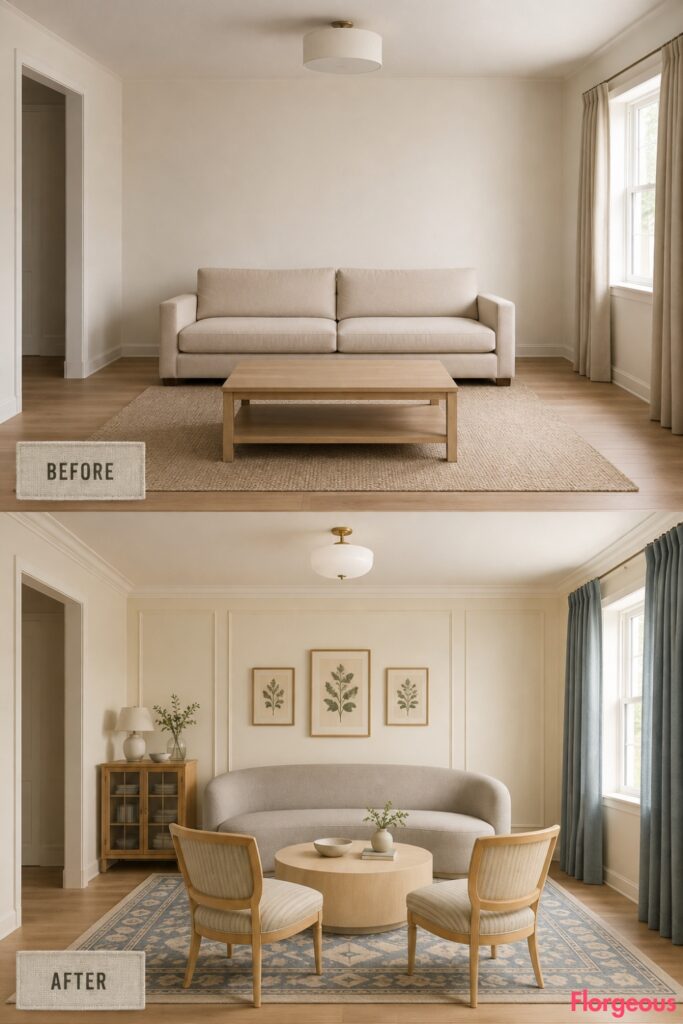
Before: The identical neutral builder-grade room with beige sofa, bare table, simple rug, short curtains, and minimal decor.
After: Soft buttercream walls sit behind a pale stone-gray sofa and two blond birch chairs with gently curved backs. A round birch drum table keeps the center compact, while dusty-blue curtains and a parchment-blue geometric wool rug introduce quiet color. A shallow glass-front birch cabinet adds storage without visual weight.
Color Story: Buttercream, dusty blue, cream, and honeyed birch create a lighter historical palette that works especially well in rooms with modest natural light.
3. Walnut and Olive for a Quiet Reading-Room Feel
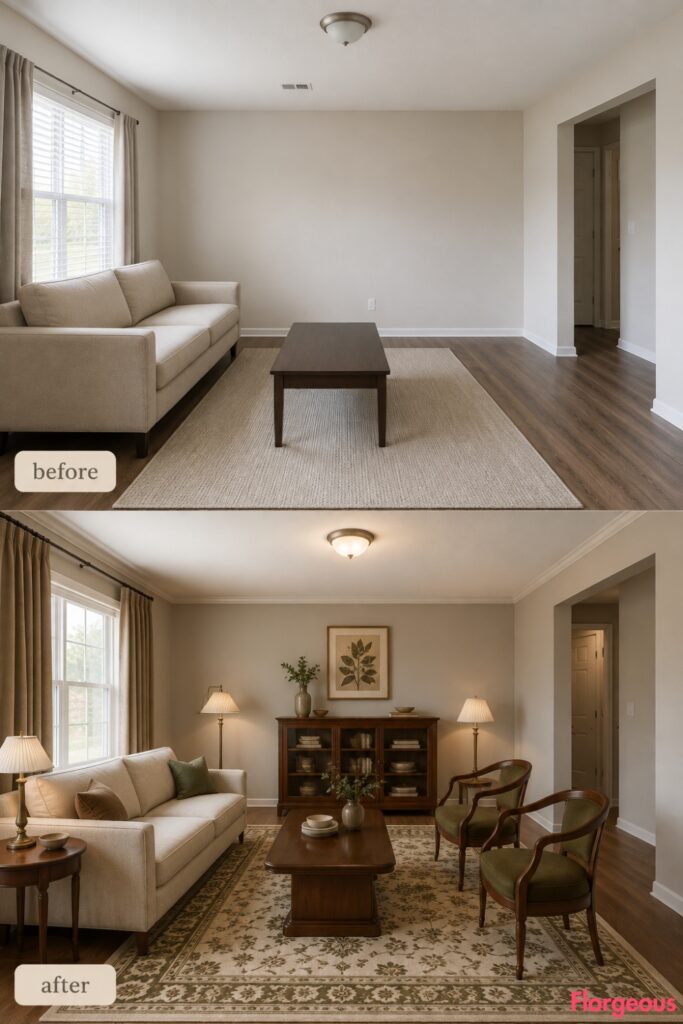
This version shifts the room from pale and pretty to grounded and bookish without becoming dark or club-like.
Before: The same plain warm off-white room with generic beige seating and bare walls.
After: Warm limestone-gray walls pair with a flax sofa, two walnut curved-back chairs upholstered in olive wool, and a low walnut veneer table with softened corners. Mushroom curtains, a cream and olive rug, aged-brass shaded lamps, and a narrow walnut bookcase make the room feel collected and settled.
Try this: If a full walnut furniture set feels too expensive, start with a pair of vintage chairs and keep the largest upholstered piece simple.
4. Celadon, Maple, and a Compact Apartment Layout
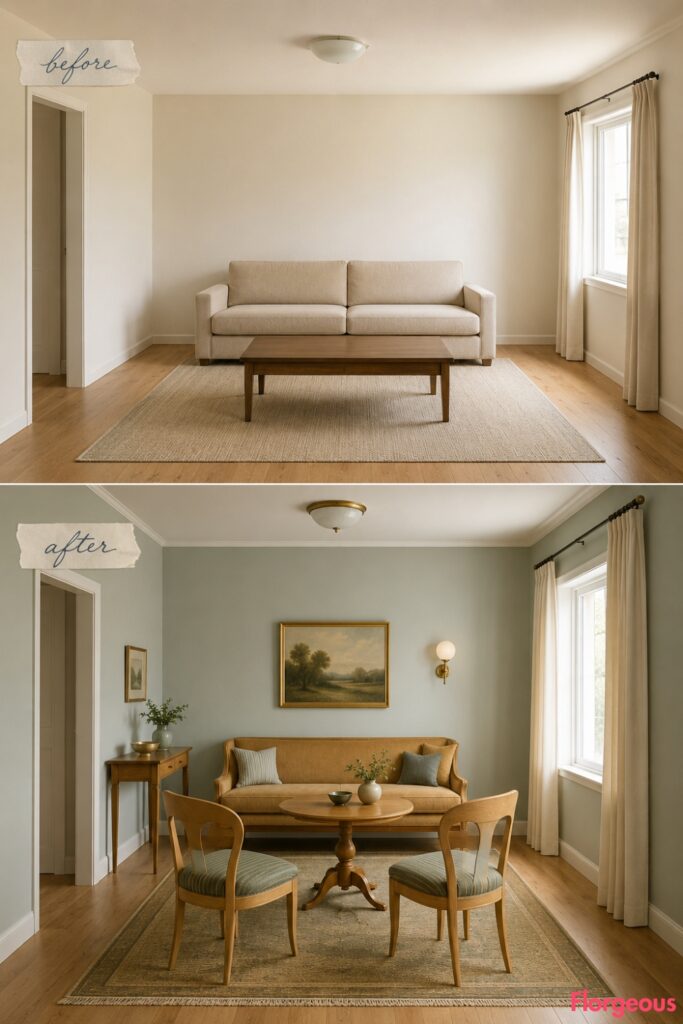
Small rooms benefit from Biedermeier furniture because the best pieces often have graceful silhouettes without oversized proportions.
Before: The same beige builder-grade living room with flat styling and no focal point.
After: Pale celadon walls, a slim camel settee, two compact maple chairs, and a narrow oval pedestal table form a tight but comfortable conversation group. A shallow maple console replaces bulky storage, while cream curtains hung close to the ceiling make the room appear taller.
Small Space Tip: Rounded table edges are especially useful when circulation passes between seating and the doorway.
5. Pearwood and Dusty Rose for a Softer Interpretation
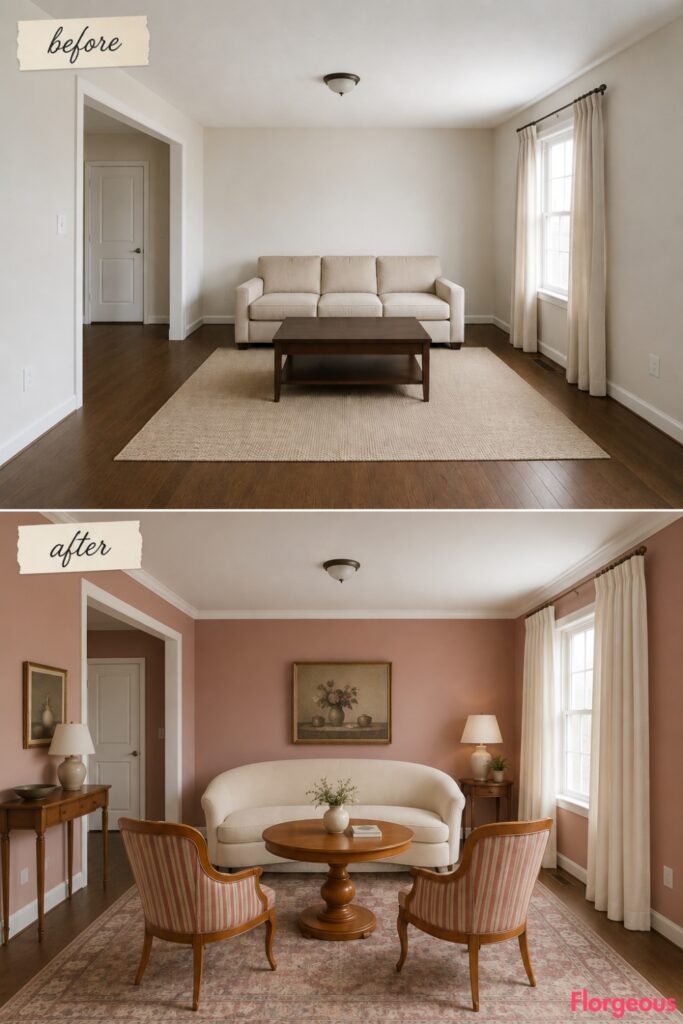
A warmer, gentler version of the style can still feel disciplined if the pattern and ornament remain restrained.
Before: The same warm off-white builder-grade room with beige sofa and basic furnishings.
After: Muted dusty-rose walls surround a cream curved sofa, two pearwood chairs with fine rose-gray striped upholstery, and a delicate round pearwood pedestal table. A faded taupe-rose rug, ivory curtains, ceramic lamps, and one small still-life-inspired artwork give the room an intimate character.
Style Note: Keep florals small and controlled. Large romantic patterns can push the room toward Victorian rather than Biedermeier.
6. Forest Green and Dark Walnut Without the Heavy Library Look
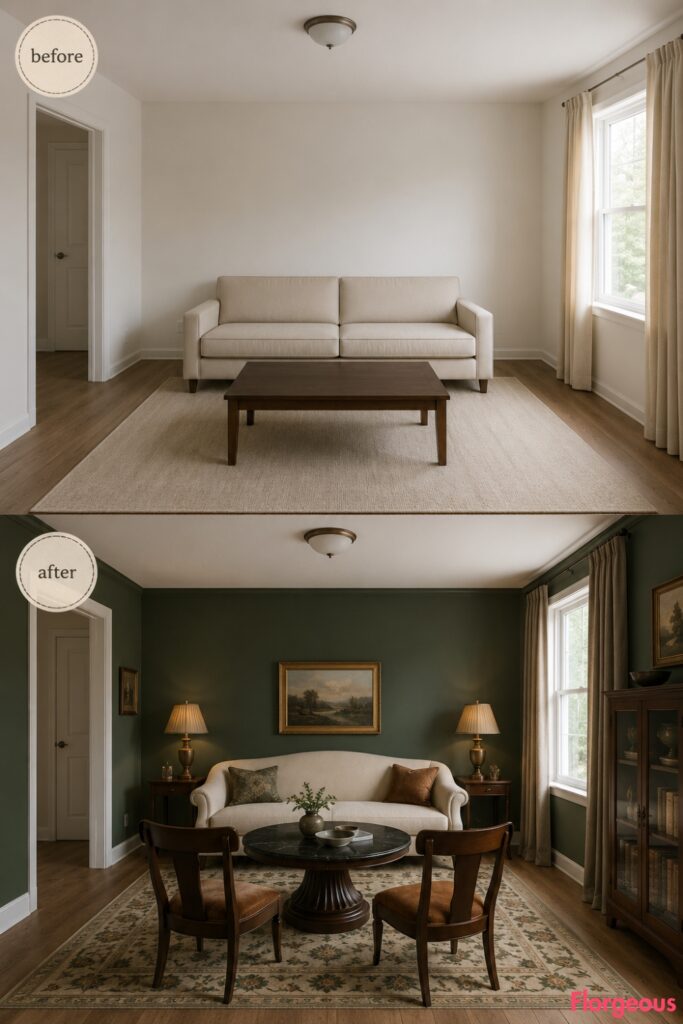
A deeper palette can feel sophisticated without turning the room into a period set.
Before: Identical plain room with warm off-white walls, beige sofa, bare coffee table, and minimal lighting.
After: Forest-green walls contrast with a warm cream sofa and two polished walnut chairs upholstered in muted tobacco. A walnut pedestal table with a restrained black stone top provides a dark anchor, while mushroom curtains and a narrow glass-front cabinet soften the composition.
Common Mistake: Do not make every surface dark. A pale sofa, light rug, or cream curtain is usually needed to give deep wood and paint enough breathing room.
7. Warm Oak and Performance Fabric for a Family-Friendly Version
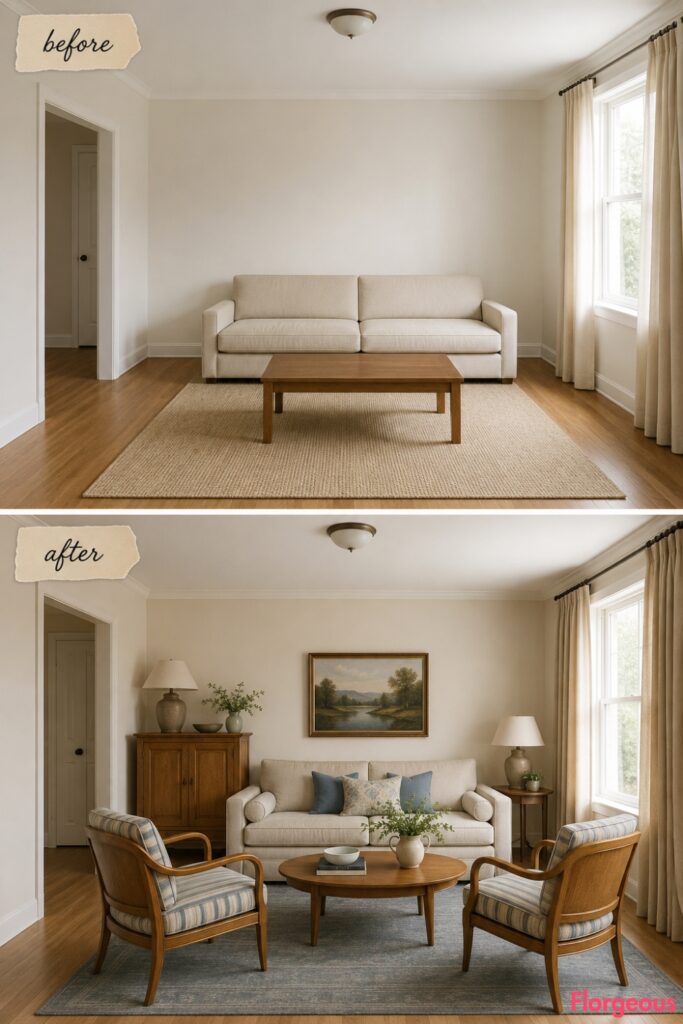
Biedermeier does not need to be delicate. The style adapts surprisingly well to durable modern upholstery.
Before: The same neutral room with generic furniture and unfinished surfaces.
After: Warm ivory walls, an oatmeal performance-fabric sofa, two medium-oak curved chairs with washable striped seat cushions, and a sturdy oval oak veneer coffee table create an everyday family layout. A low-pile blue-gray rug, lined flax curtains, and a closed oak cabinet keep maintenance simple.
Budget Version: Combine a durable contemporary sofa with one vintage or reproduction pair of chairs instead of buying an entire room of period furniture.
8. A Renter-Friendly Room Built Around Removable Details
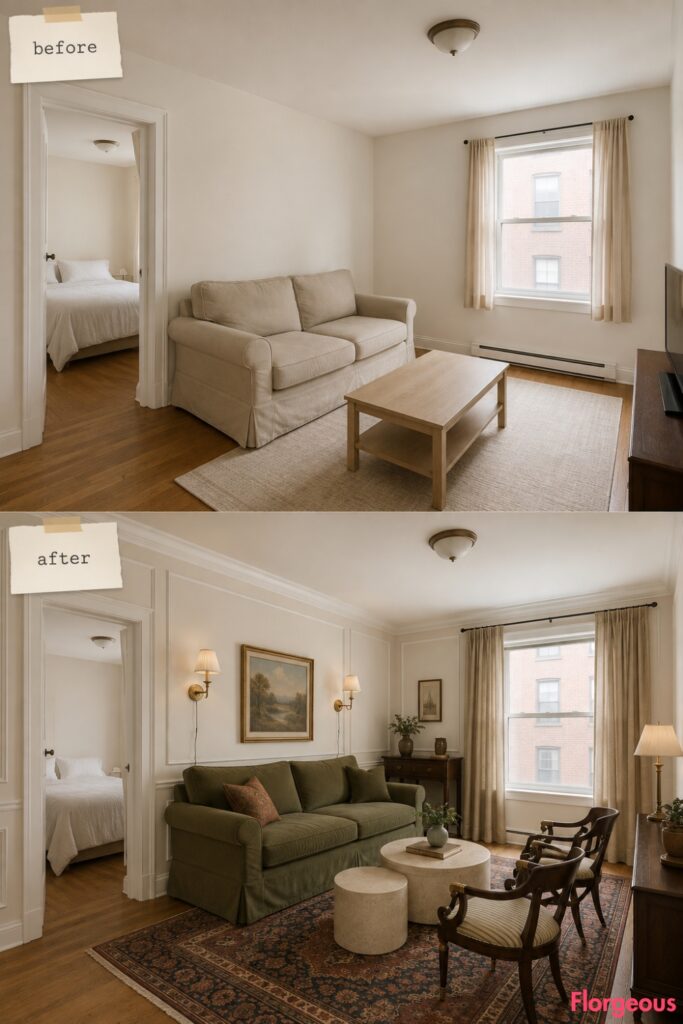
This makeover creates period character without permanent construction.
Before: The same blank builder-grade living room.
After: The existing wall color stays, but removable ivory picture-frame molding gives it structure. An olive slipcovered sofa sits opposite two walnut reproduction chairs, while lightweight plaster-look nesting tables, flax curtains, plug-in brass sconces, and a freestanding walnut console complete the room.
Nothing needs to be hardwired or built in.
9. Charcoal, Ash, and Ebonized Details for a Contemporary Crossover
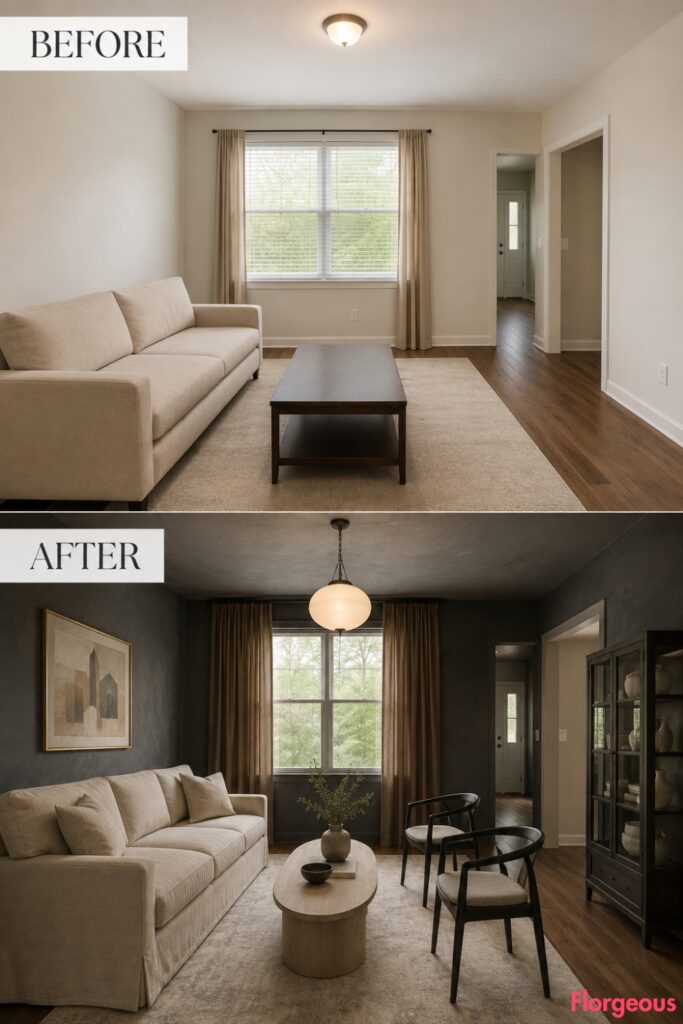
This is the most modern interpretation in the group, but it still relies on recognizable Biedermeier principles rather than generic minimalism.
Before: The same plain beige living room with warm off-white walls and basic lighting.
After: Charcoal mineral-plaster walls set off a parchment linen sofa, two ebonized ash chairs with elegantly curved backs, and a pale ash oval table. A smoky cream rug, tobacco curtains, opaline pendant, and narrow glass-front ash cabinet keep the styling spare and architectural.
Why It Works: With fewer accessories, wood grain and silhouette become the decoration.
10. Pale Blue Walls and Elm for a Botanical Gallery Room
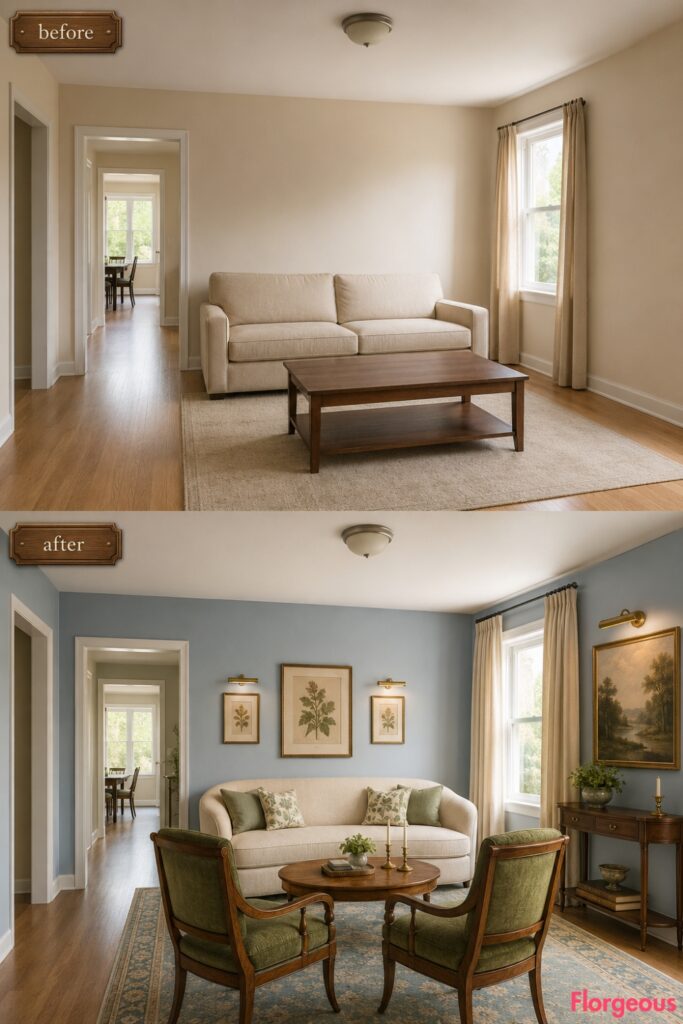
Instead of relying on heavy furniture, this version lets artwork establish much of the historical atmosphere.
Before: The identical neutral living room with empty walls and no focal point.
After: Pale mineral-blue walls hold a carefully spaced symmetrical arrangement of botanical and landscape art. A buttercream sofa, two elm chairs upholstered in moss-green wool, an oval elm veneer table, and a faded blue-moss rug reinforce the palette without competing with the artwork.
11. Tobacco Walls and Honeyed Birch for a Warmer, Masculine Room
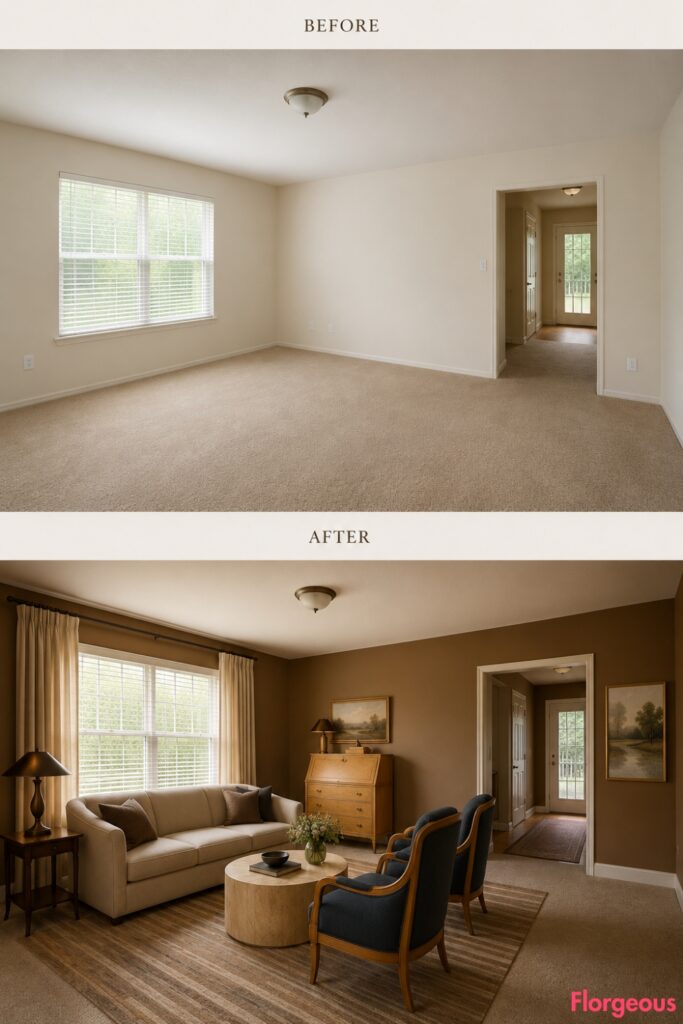
Rather than going dark with walnut, this makeover uses a deeper wall color against lighter furniture.
Before: The same basic beige room with plain walls and sparse styling.
After: Warm tobacco walls create a cocooning backdrop for a mushroom linen sofa and two polished honey-birch chairs upholstered in charcoal-blue wool. A birch drum table, muted striped rug, bronze lamps, parchment curtains, and a slim secretary introduce a subtle masculine edge without becoming clubby.
12. Burgundy and Pale Maple for a Richer Salon Without Palace Formality
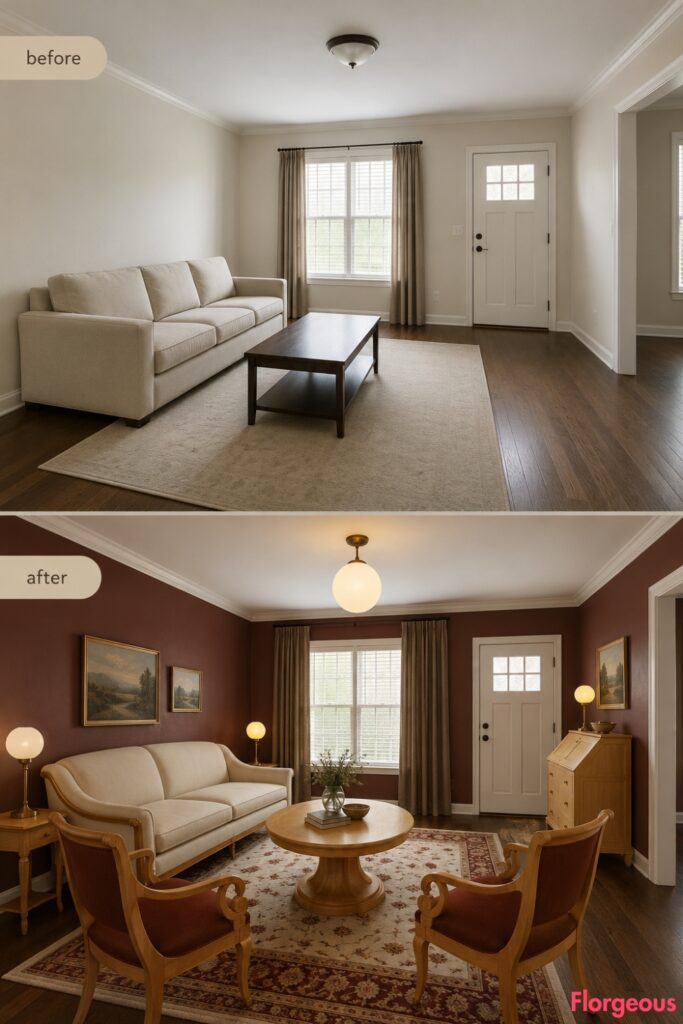
Burgundy gives the room drama, but pale maple prevents the space from becoming visually heavy.
Before: Identical plain builder-grade living room with beige furniture and minimal decor.
After: Muted burgundy walls surround a parchment sofa and two pale maple gondola-inspired chairs upholstered in tobacco-red fabric. A round maple pedestal table, parchment-burgundy rug, mushroom curtains, opaline globe lights, and a shallow maple secretary create a confident, polished interior.
Try this: If burgundy feels too strong for all four walls, use it only behind the sofa and keep the remaining walls warm ivory.
13. Ivory, Fruitwood, and Restrained Symmetry for the Most Polished Finish
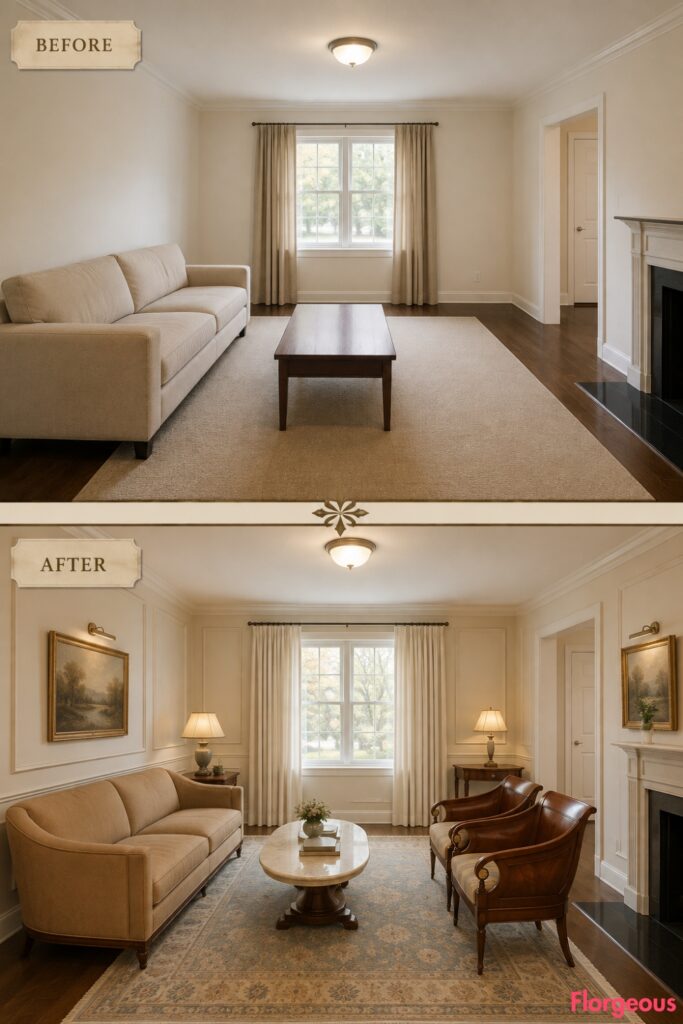
The final makeover takes Biedermeier’s classical side and makes it quietly formal rather than grand.
Before: The same neutral builder-grade room, still unchanged in architecture and layout.
After: Warm ivory walls gain narrow symmetrical molding. A soft camel sofa sits opposite two polished fruitwood gondola chairs, while a pale stone oval table keeps the center visually light. A faded parchment and blue rug, full-height ivory curtains, a slim fruitwood console, paired shaded lamps, and two balanced landscape artworks create an orderly but comfortable room.
Nothing is oversized, heavily gilded, or ceremonial.
How to Choose the Right Biedermeier Look for Your Own Living Room
The strongest transformations are not the ones with the most antiques. They are the rooms where wood grain, graceful proportion, comfortable seating, thoughtful color, and a few carefully chosen historical references work together.
Start by deciding which timber best suits your home. Birch and maple create a lighter, quieter effect. Cherry and pearwood feel warmer and more traditional. Walnut adds depth, while ebonized ash or maple can push the look toward a contemporary crossover.
Then choose one major move. That might be a pair of curved vintage chairs, a polished veneer table, full-length curtains, a glass-front cabinet, or a restrained group of botanical and landscape art.
For a convincing Biedermeier Living Room, resist the urge to make every element historical. A simple contemporary sofa beside one excellent vintage table often feels more authentic to modern living than a full matching reproduction suite.
Keep circulation open, avoid excessive gilding, and give beautiful timber enough empty space around it to be appreciated. That is usually where the style feels most refined.