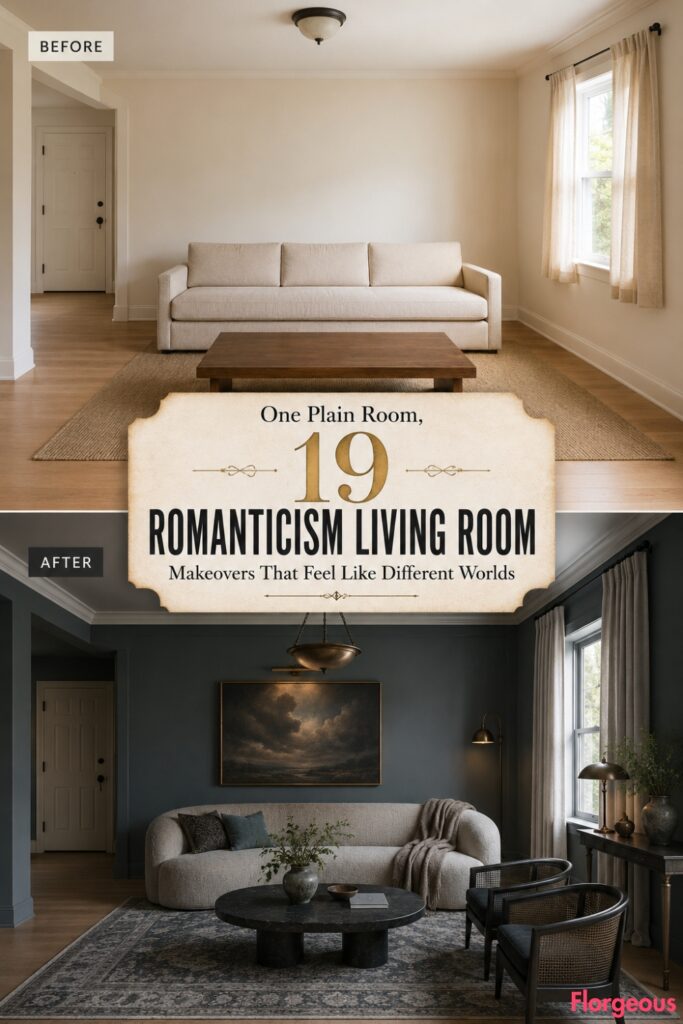
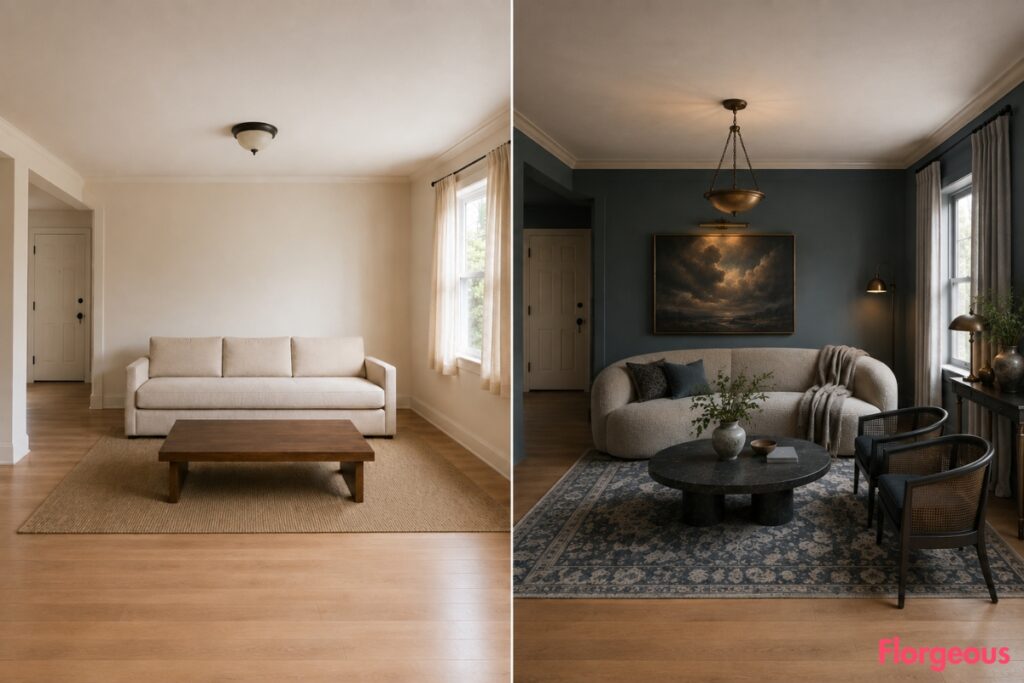
Our starting room is clean, neutral, and completely forgettable. Warm off-white walls surround a straight beige sofa, bare rectangular coffee table, simple rug, short curtains, basic ceiling light, and empty surfaces. Nothing is technically wrong, but nothing creates a mood either.
That makes it the perfect testing ground for Romanticism Living Room ideas. Instead of changing the architecture, every makeover keeps the exact doorway, window, flooring footprint, ceiling height, proportions, camera angle, and circulation route intact.
What changes is the emotional character. Across these nineteen versions, the same room moves from pastoral softness and botanical color to woodland depth, Romantic Gothic drama, quiet classicism, sublime landscapes, contemporary restraint, and midnight atmosphere.
1. Begin With Sun-Washed Pastoral Romanticism
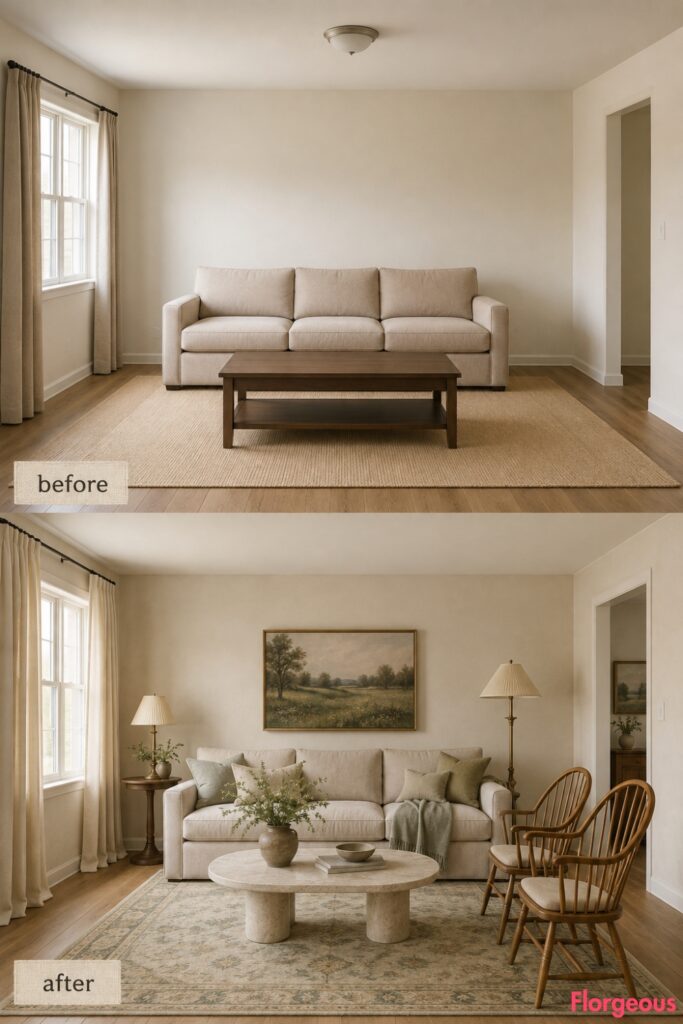
The gentlest interpretation starts with warmth rather than drama.
Before: The beige sofa, neutral walls, basic rug, short curtains, and empty surfaces make the room feel unfinished.
After: Warm parchment walls frame an oatmeal linen sofa, two honey-oak spindle chairs, an oval limestone table, and a faded sage-and-cream wool rug. Long ivory curtains, aged-brass lamps, and restrained meadow-inspired artwork bring softness without slipping into cottage clichés.
Try this: Full-height curtains and one vintage-look landscape print can establish the mood before you replace any furniture.
2. Paint the Room Like a Stormy Landscape
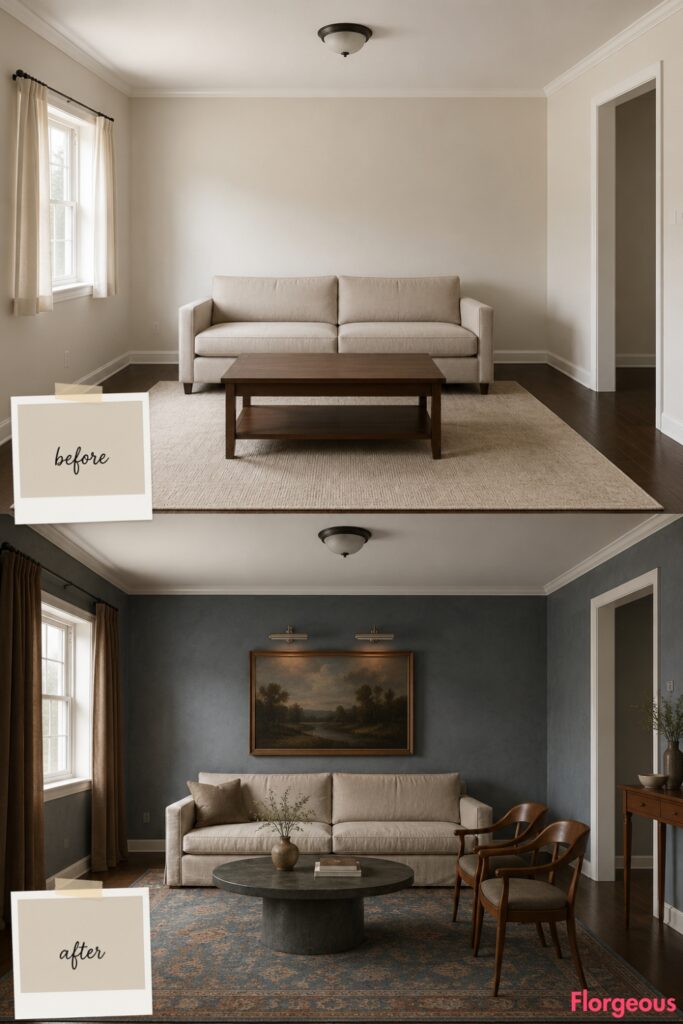
Here, color creates nearly all the drama.
Smoky blue-gray mineral walls surround a flax sofa, polished cherrywood chairs, and a charcoal-stone table. Tobacco-colored curtains and a faded rust-and-blue rug prevent the cool walls from feeling icy.
Color Story: Look for blue-gray paint with green or brown undertones rather than a crisp blue.
3. Build a Woodland Interior With Moss and Walnut
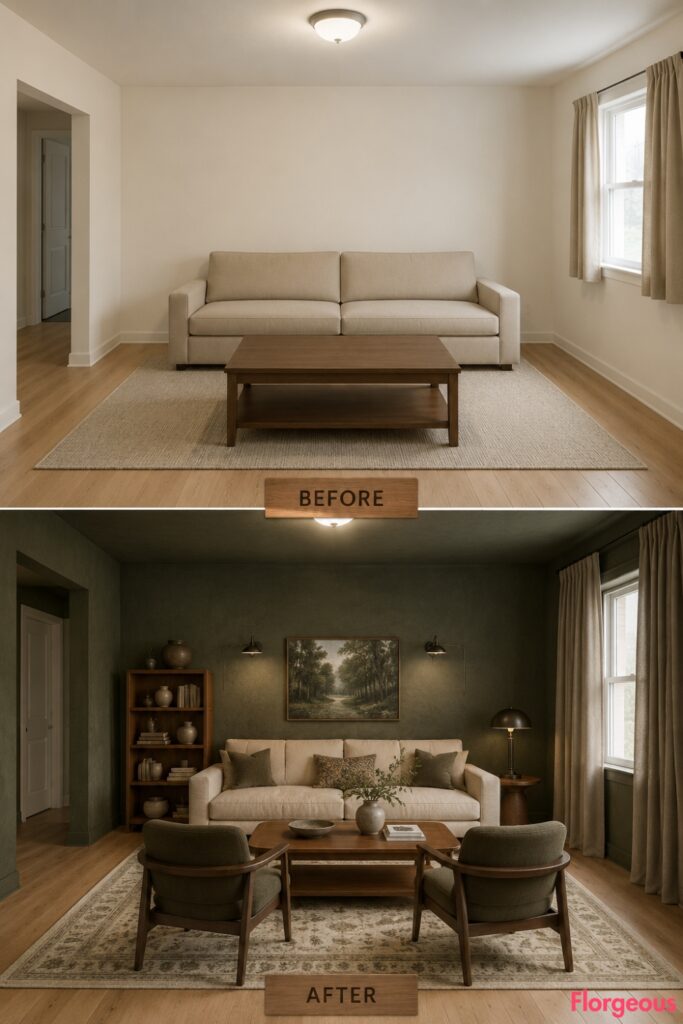
This version borrows from a forest without covering the room in leaves.
Deep moss walls, walnut furniture, olive wool, parchment linen, and blackened-bronze lighting create a grounded, shadowy palette. A cream-and-olive rug keeps the composition open enough for everyday living.
4. Give Romantic Gothic a Restrained Residential Look
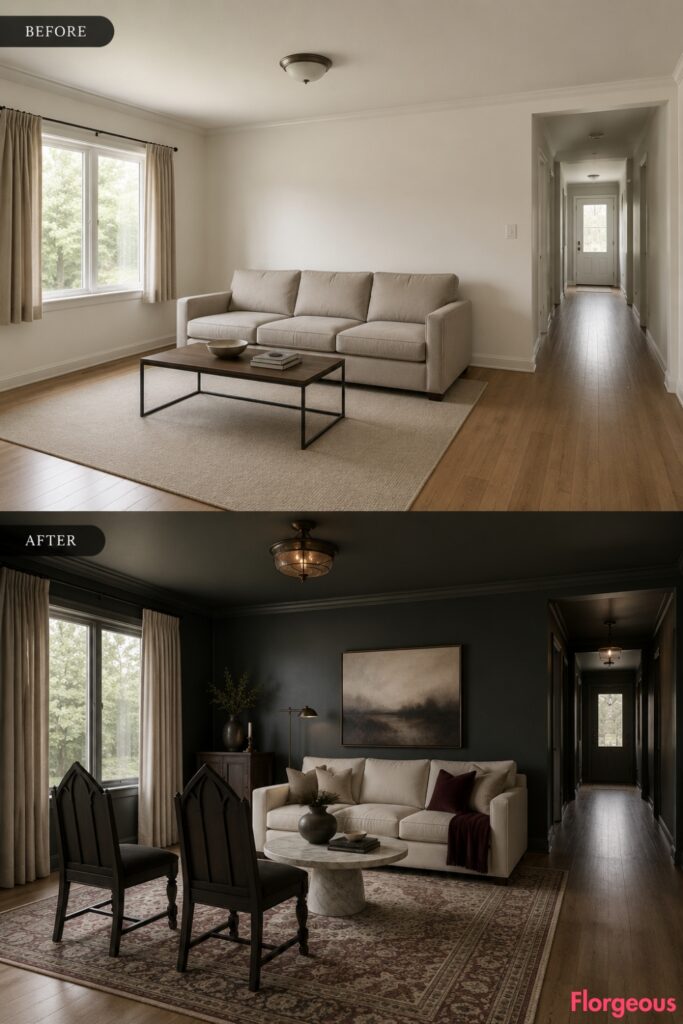
Romantic Gothic works beautifully when architecture is suggested rather than fabricated.
Forest-charcoal walls create the backdrop for an ivory sofa and two dark oak high-back chairs with subtly pointed silhouettes. Pale gray marble, oxblood accents, and natural linen stop the darker elements from becoming theatrical.
Common Mistake: Armor, faux-medieval props, excessive black furniture, and invented arches make this direction feel themed rather than atmospheric.
5. Let Polished Mahogany and Burl Carry the History
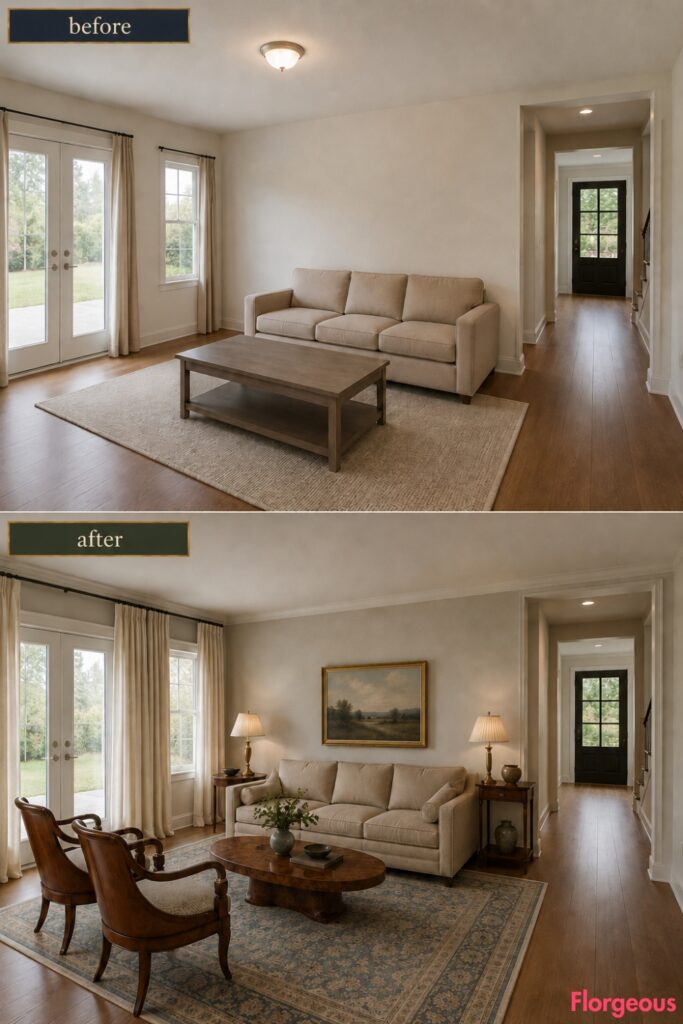
Rather than layering on historical accessories, let extraordinary timber do the work.
Warm limestone-gray walls and a pale flax sofa create breathing room around polished mahogany gondola chairs, a low burl-wood table, and a slender matching console. A muted blue rug brings in the landscape-inspired color Romanticism handles so well.
6. Treat Botanical Wallpaper Like a Work of Art
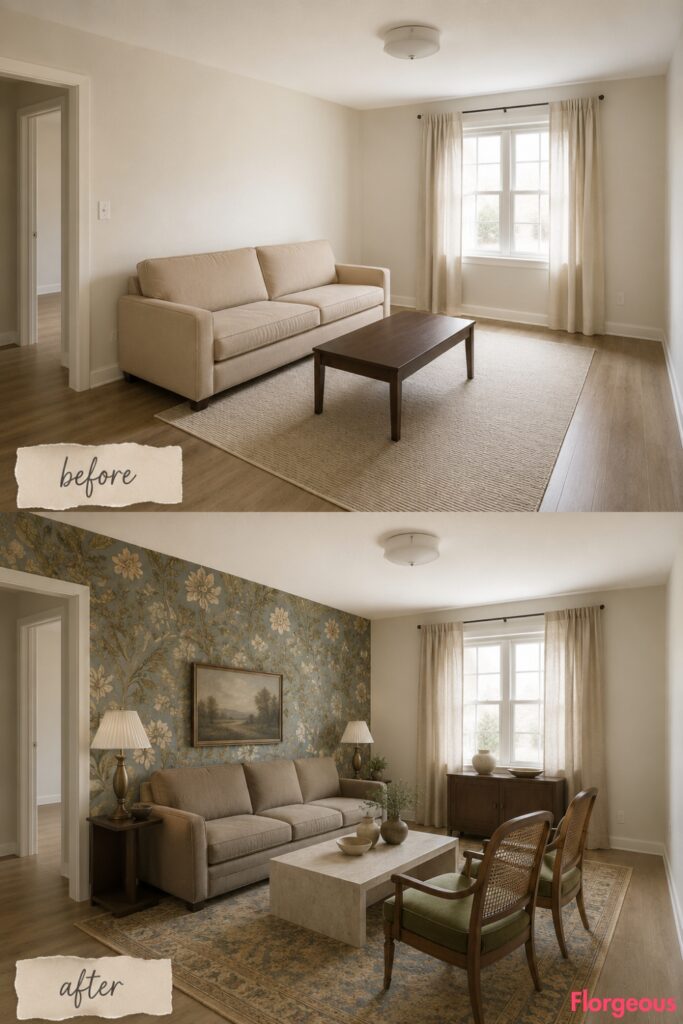
This transformation embraces pattern, but only in one carefully controlled place.
A large-scale vine wallpaper in smoke blue, olive, faded ochre, and parchment becomes the focal point. A mushroom sofa, chestnut cane-back chairs, plain flax curtains, and a simple limestone table prevent the pattern from becoming overly decorative.
Designer Tip: Pull two colors from a botanical wallpaper for the rug and upholstery, then stop repeating the pattern.
7. Pair Romanticism With Quiet Neoclassical Order
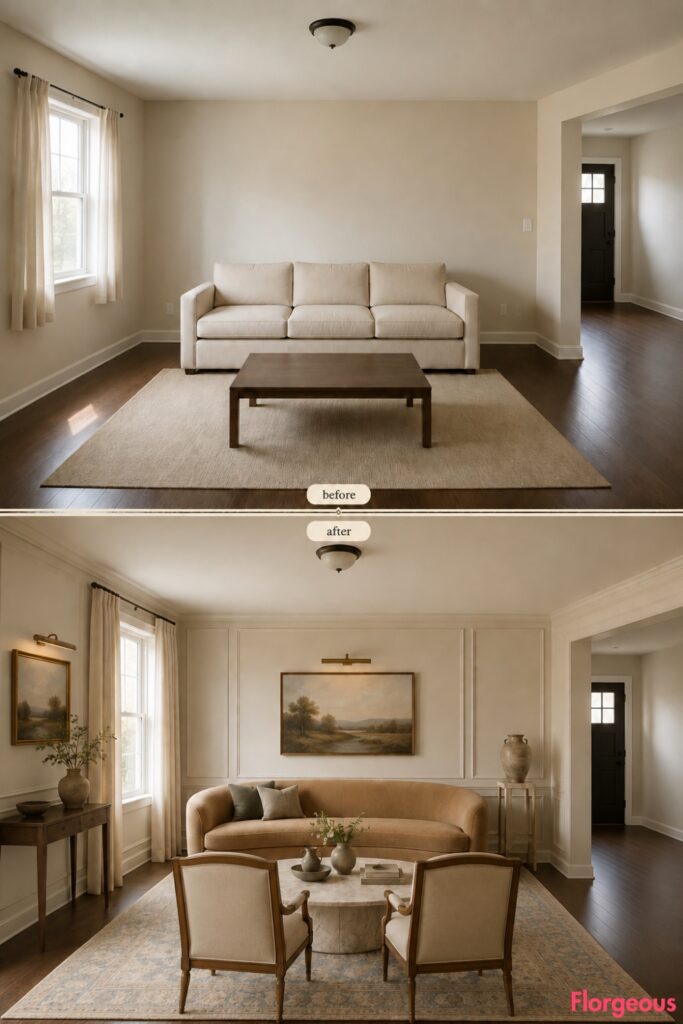
Romanticism becomes surprisingly serene when it sits inside a disciplined classical framework.
Soft cream walls with restrained symmetrical molding provide structure. A camel curved sofa, walnut fauteuil-inspired chairs, pale marble table, and faded sky-blue rug introduce warmth and movement without excessive ornament.
8. Explore Aubergine, Tobacco, and Cognac
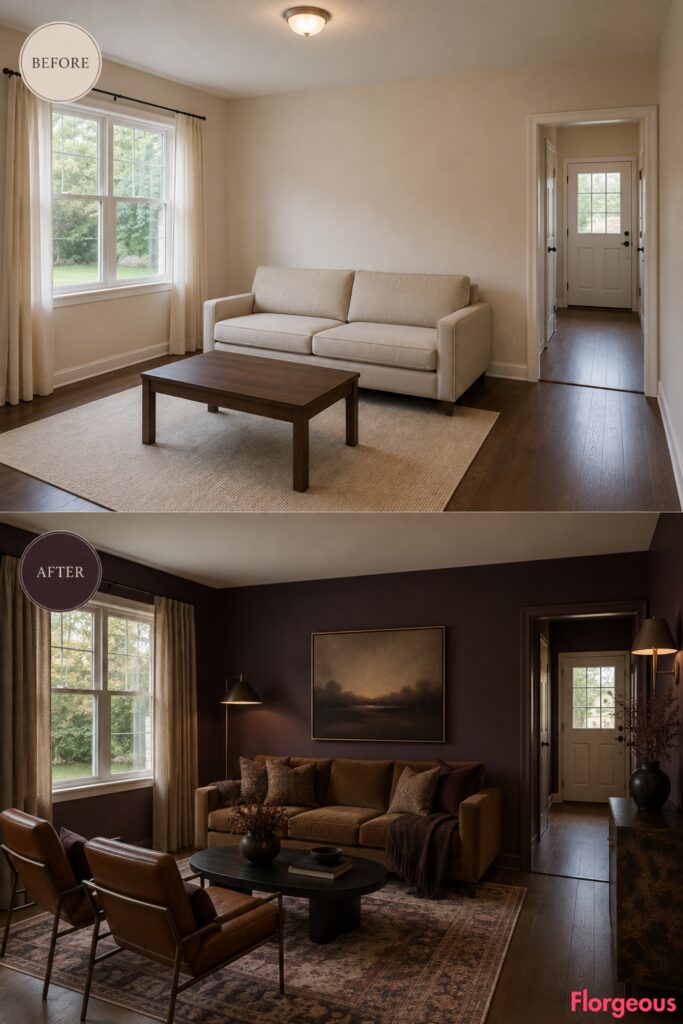
This is Romanticism at its richest and most enveloping.
Smoky aubergine walls meet a tobacco wool sofa, cognac leather chairs, an ebonized oval table, and parchment-plum rug. Mushroom curtains provide one large pale surface so the room remains intimate rather than oppressive.
9. Make Romanticism Work for Family Life
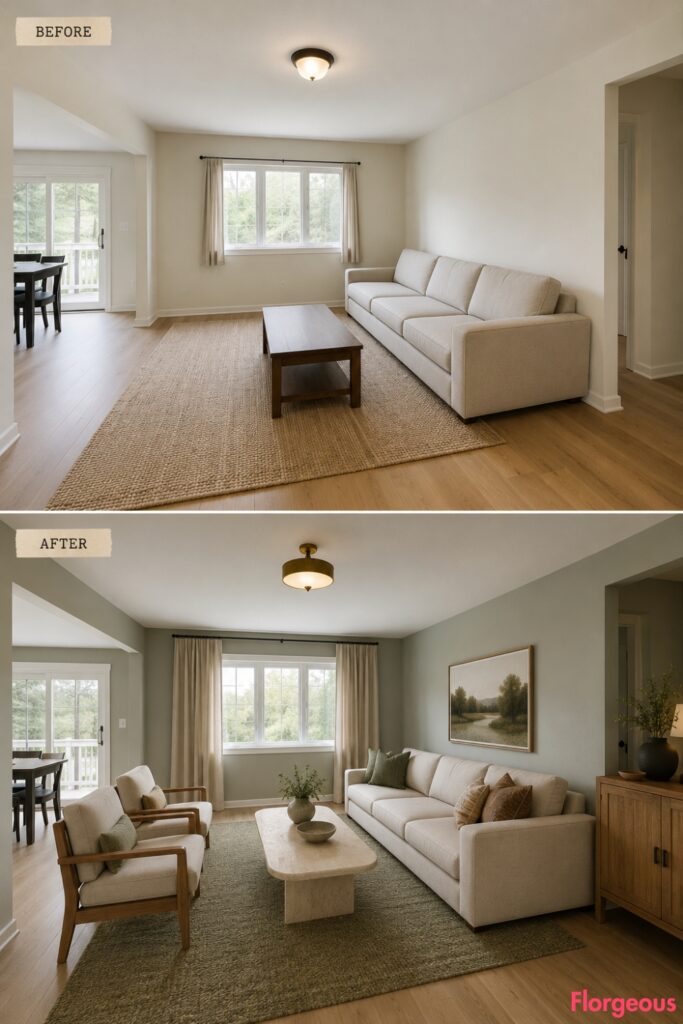
Beautiful atmosphere does not require delicate upholstery.
Muted sage-gray walls, a flax performance-fabric sofa, solid oak chairs, rounded travertine table, durable wool rug, and closed storage create a room that can handle actual daily use.
The emotional character comes from painterly color, warm timber, landscape imagery, and soft light rather than fragile antiques.
10. Give a Compact Room a Pale Celadon Mood
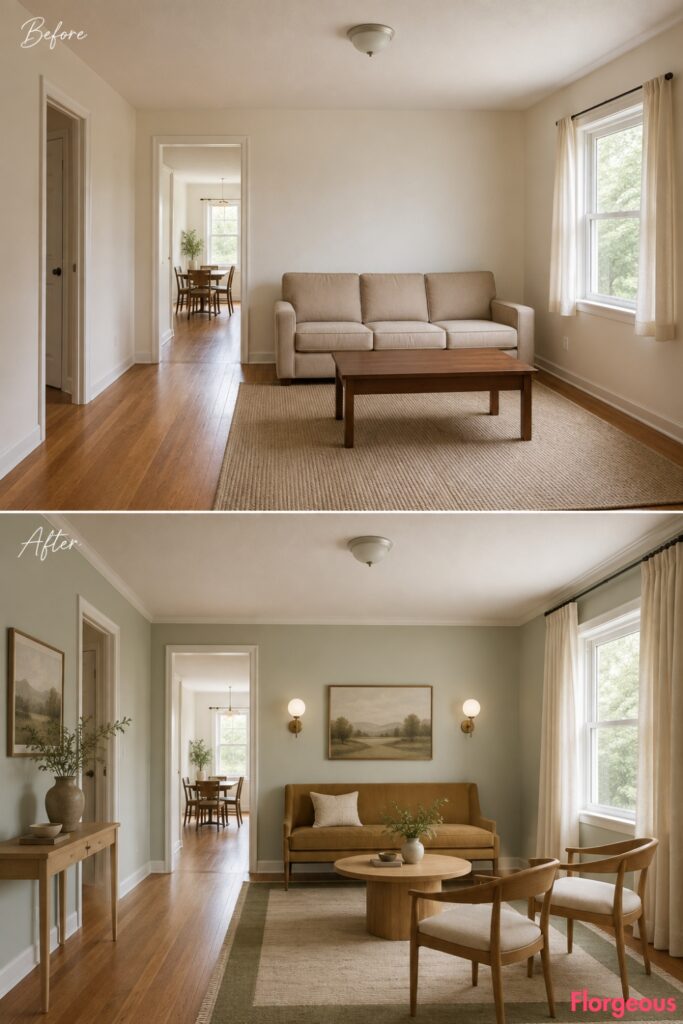
Small spaces benefit from Romanticism because color and atmosphere do not consume floor space.
Pale celadon walls visually soften the room while a narrow camel settee, maple chairs, small oval pedestal table, and shallow console keep furniture depth under control. Cream curtains hung high extend the room vertically.
Small Space Tip: Furniture with visible legs preserves more visual floor area than blocky upholstered pieces.
11. Create a Renter-Friendly Collected Room
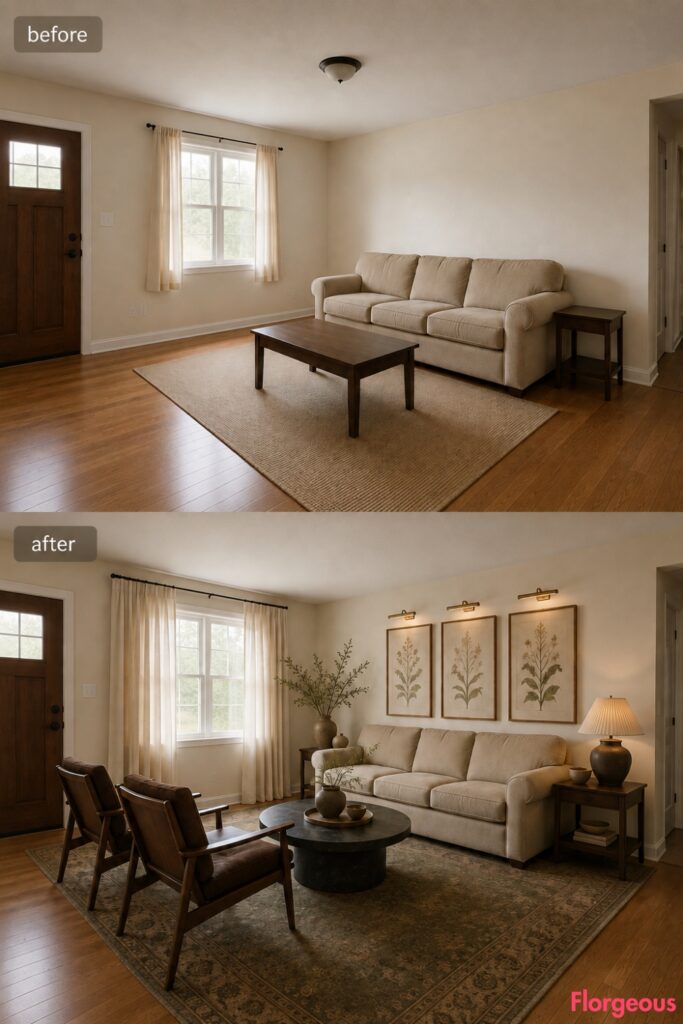
This version keeps the builder-grade walls and even the original beige sofa.
Atmosphere arrives through removable framed botanical panels, an oversized faded olive-and-tobacco rug, floor-length curtains, walnut accent chairs, plug-in picture lights, and thrifted wood side tables.
Budget Version: Spend first on the rug, curtains, and lighting. They occupy more visual space than small accessories and change the room faster.
12. Lean Into Rustic European Craftsmanship
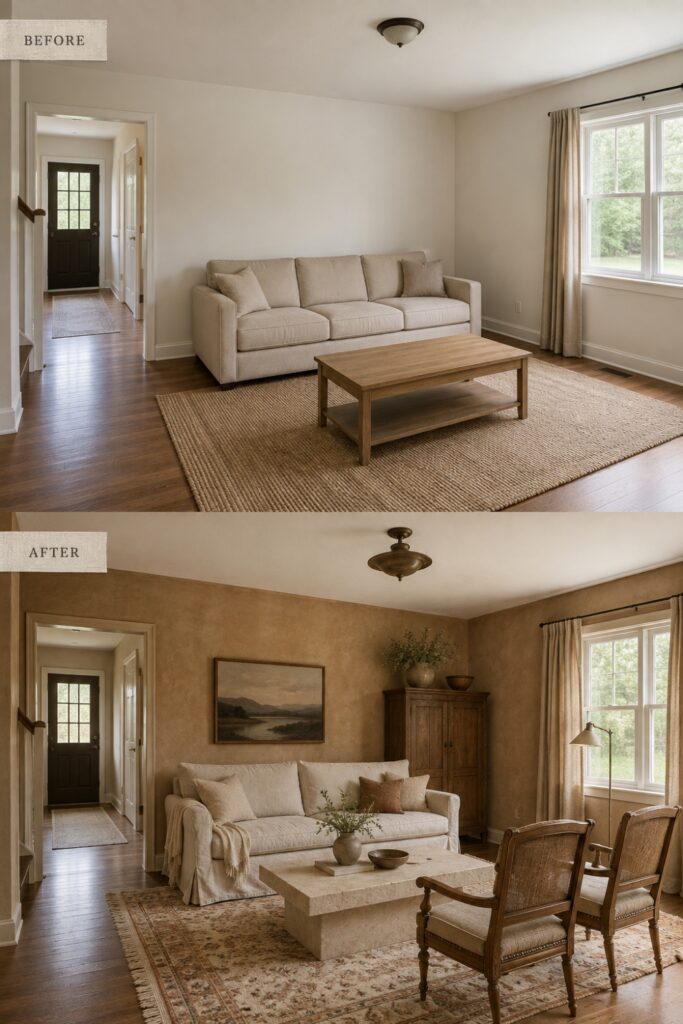
This room replaces polish with tactility.
Warm clay limewash, a flax slipcovered sofa, carved medium-oak chairs, thick honed limestone, woven wool, handmade ceramics, and dark iron create an interior that feels accumulated slowly rather than decorated in one shopping trip.
13. Let One Monumental Landscape Control the Palette
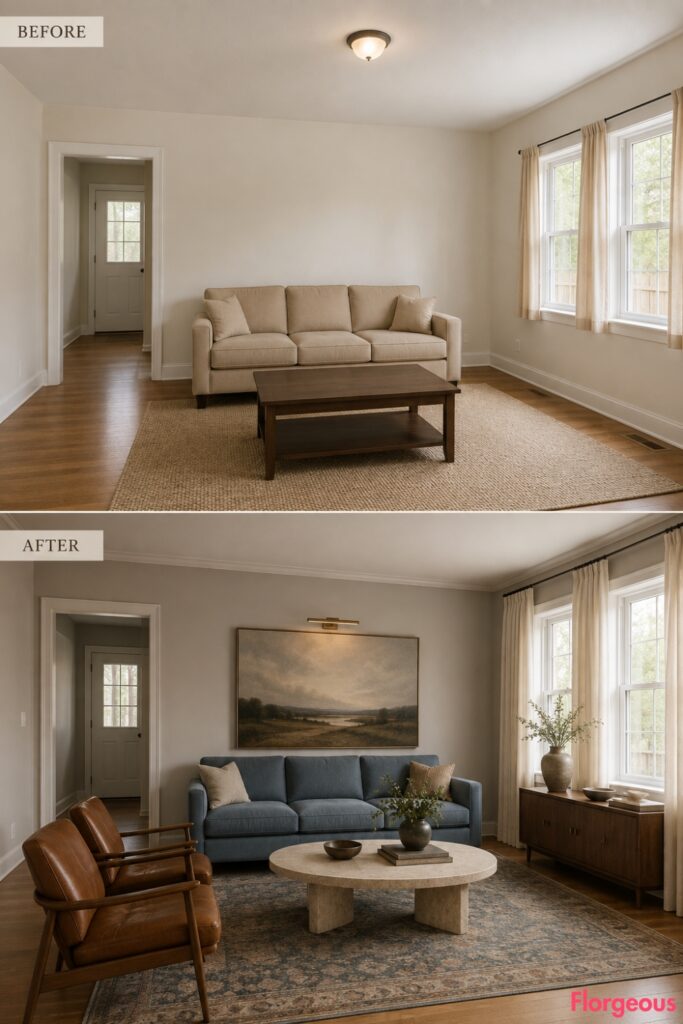
Instead of creating a gallery wall, give the room one commanding image.
Warm parchment-gray walls support an oversized atmospheric landscape above a low walnut console. A muted dusty-blue sofa, saddle-brown leather chairs, pale stone table, and blue-brown rug pull their colors directly from the artwork.
14. Make Dusky Rose Feel Earthy Rather Than Sweet
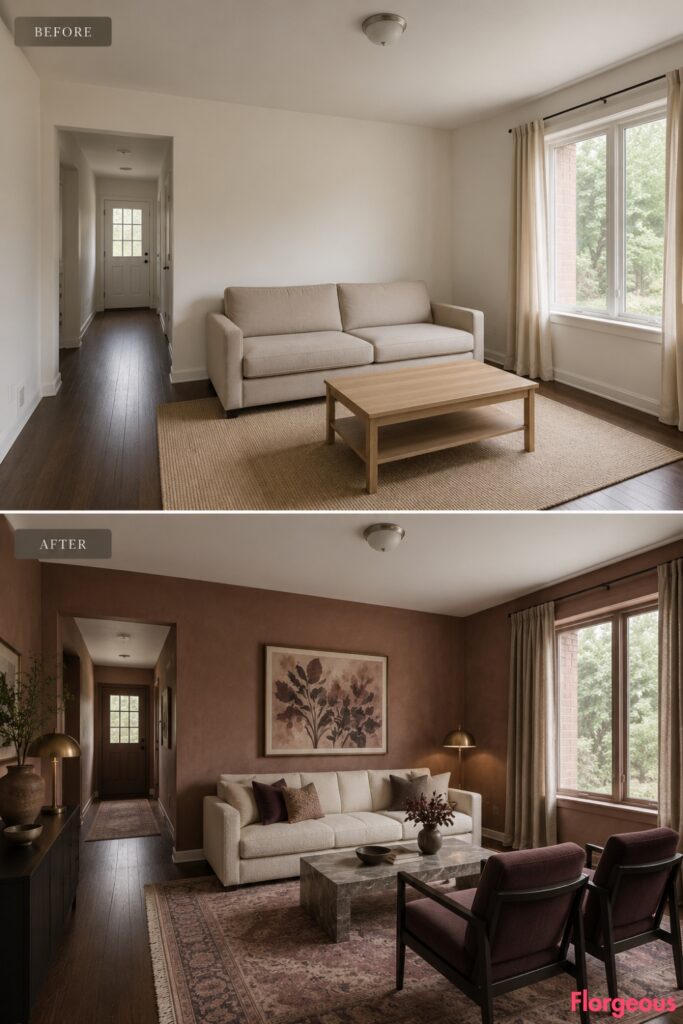
Rose belongs here as a faded mineral pigment, not a sugary decorating theme.
Muted rose-brown plaster surrounds an oatmeal sofa, blackened-oak chairs, gray marble, deep flax curtains, and a plum-parchment rug. The dark wood immediately toughens the palette.
15. Bring Arts and Crafts Into the Romantic Story
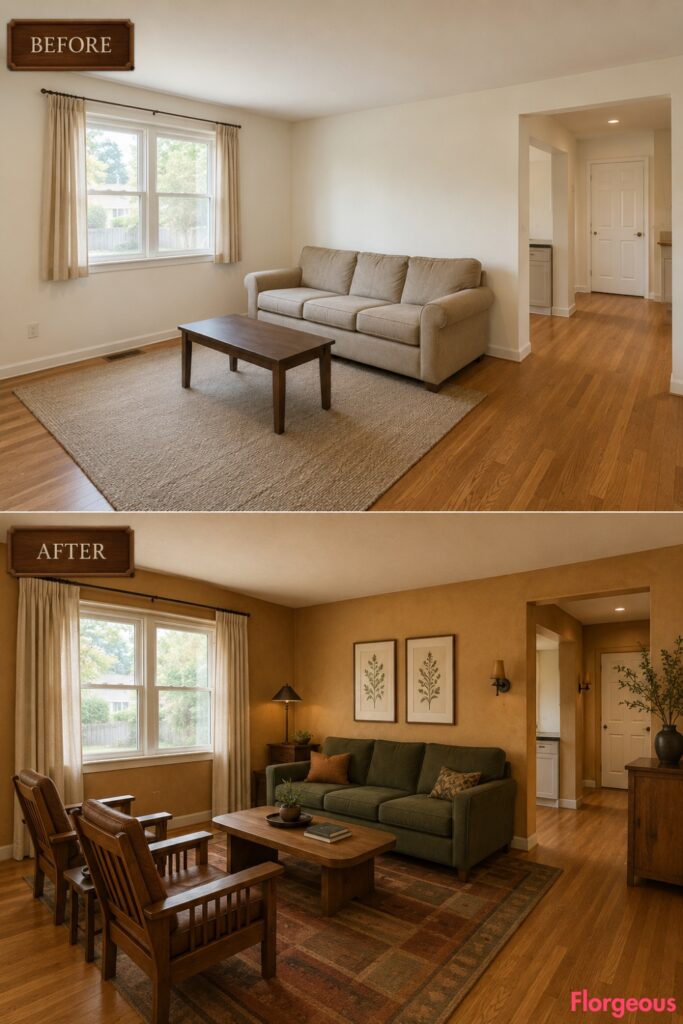
The Romantic interest in nature and craftsmanship makes Arts and Crafts an especially natural crossover.
Muted ochre walls, an olive wool sofa, quarter-sawn oak chairs, a simple oak table, geometric wool rug, and dark bronze lighting make construction and material honesty the decorative focus.
16. Strip the Romanticism Living Room Back to Modern Essentials
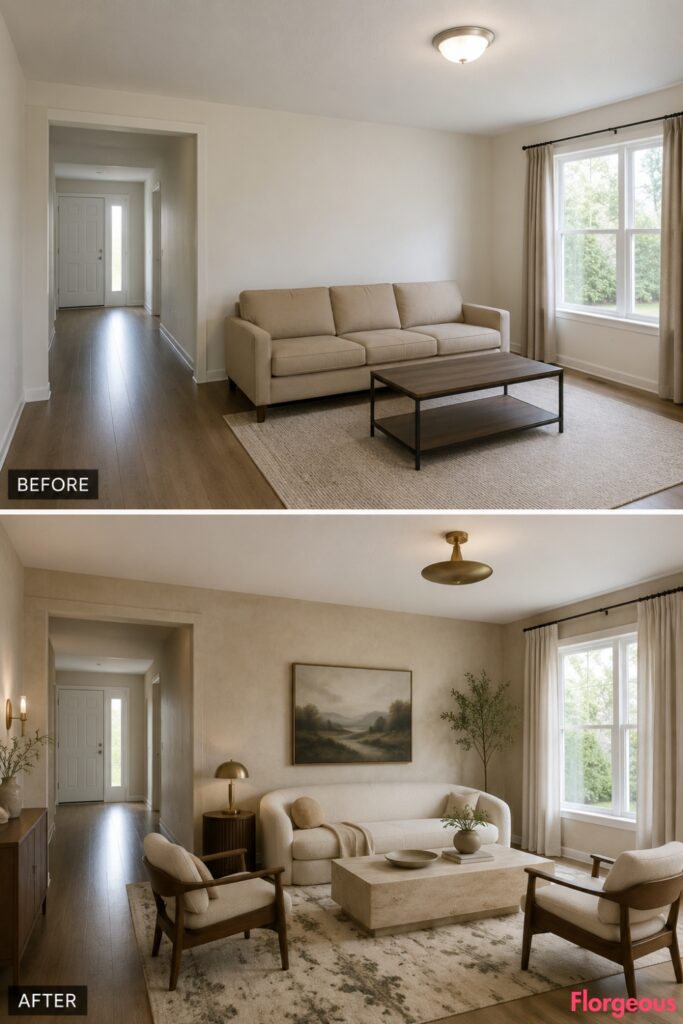
This version proves the style can survive without a single heavily antique-looking piece.
Pale mushroom limewash, a clean ivory curved sofa, sculptural walnut chairs, monolithic limestone, an understated cream-and-forest rug, and one abstracted landscape create emotional depth through material and light.
The result feels current, but its connection to nature, craftsmanship, atmosphere, and expressive art keeps it firmly rooted in the Romantic idea.
17. Capture the Sublime With a Sea-and-Storm Palette
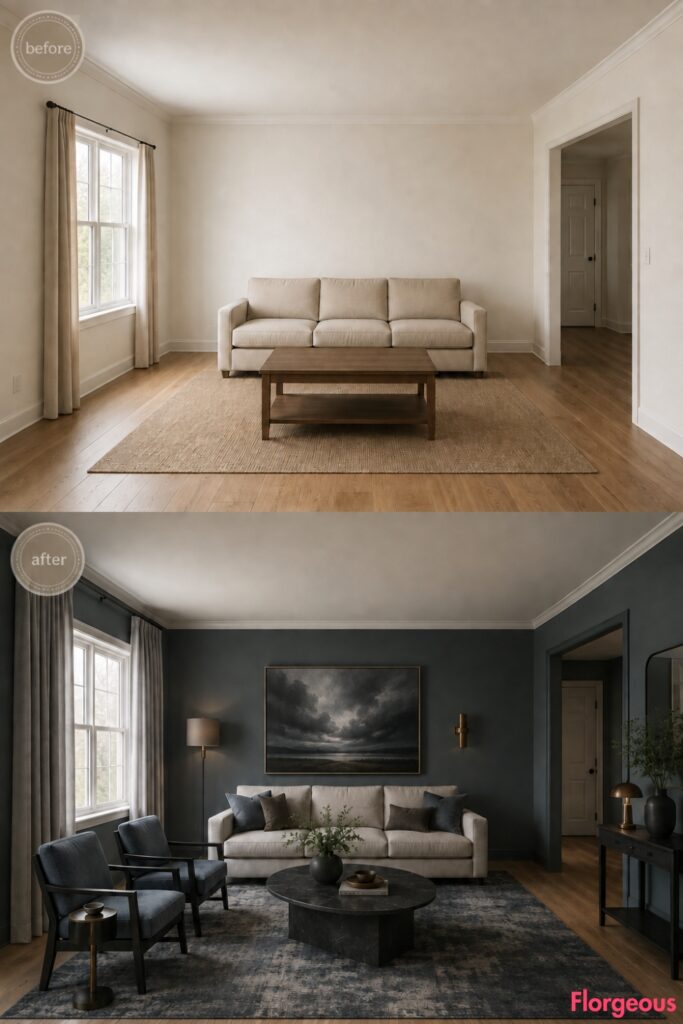
Romanticism often found beauty in landscapes that felt bigger and wilder than human scale. That idea works indoors without a single seashell or nautical reference.
Slate-teal walls meet a pearl-gray sofa, blackened-ash chairs, dark soapstone, fog-blue wool, and storm-cloud artwork. Pale gray curtains keep the room luminous around the edges.
Style Note: Think weather, horizon, stone, and water rather than coastal decorating motifs.
18. Reimagine Romanticism as an Alpine Retreat
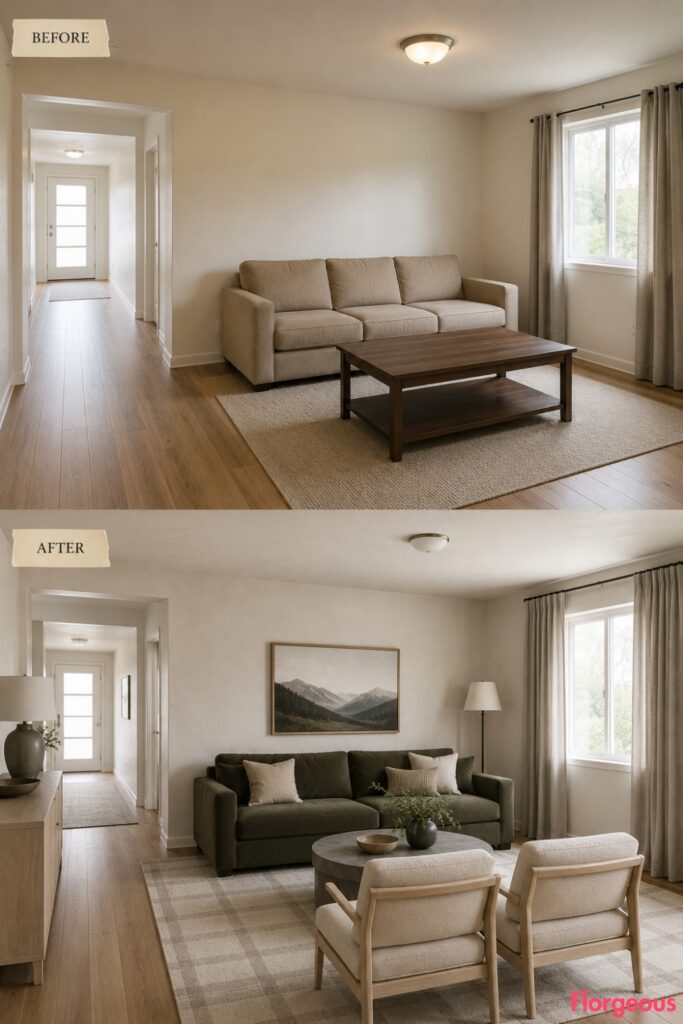
This interpretation turns toward mountain landscapes, crisp air, stone, wool, and pale timber.
Chalky warm-white plaster gives the room a luminous shell. A loden-green sofa sits with pale birch chairs, a cool gray limestone table, soft checked wool rug, and cloud-colored curtains. The atmosphere is fresh and quiet rather than rustic-heavy.
19. End With a Midnight Painterly Salon
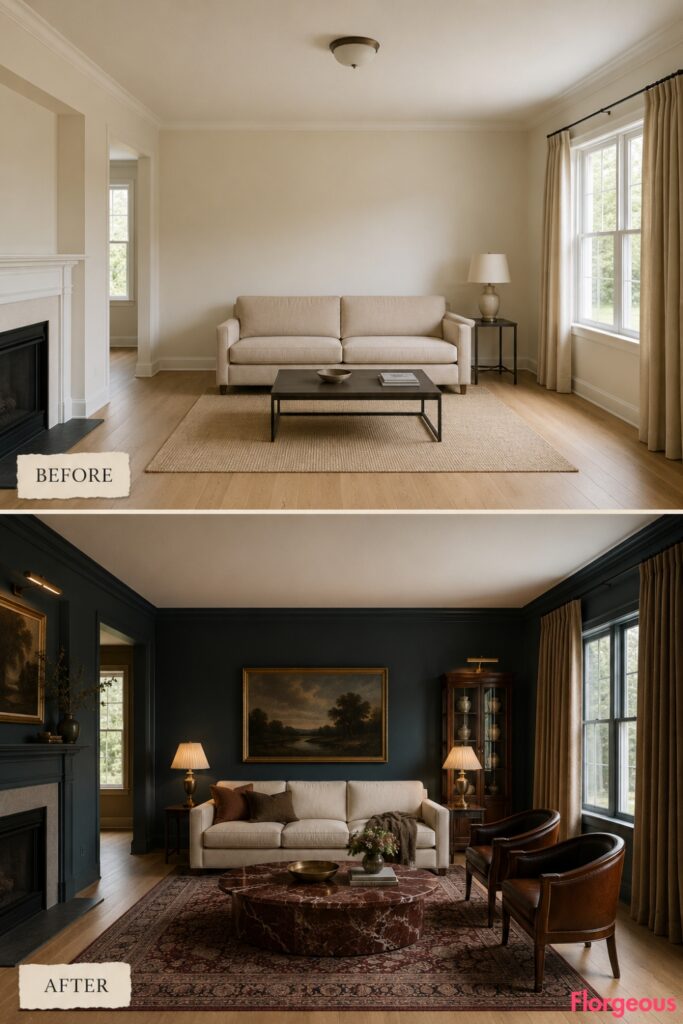
The darkest transformation saves its drama for the finish.
Midnight blue-green walls surround a pale stone sofa, polished mahogany chairs, rust-veined marble, faded burgundy wool, and heavy mushroom curtains. Instead of bright general illumination, shaded brass lamps create deliberate pools of warm light.
The result feels cinematic and intensely personal, but the furniture layout and restrained styling keep it believable as a real living room.
Choose the Mood Before You Choose the Decor
The best Romanticism-inspired rooms do not succeed because they contain the most antiques, florals, dark paint, or historical references. They work because color, nature, craftsmanship, artwork, timber, stone, textiles, and light support one clear emotional idea.
For a brighter Romanticism Living Room, start with parchment, celadon, chalk, pale timber, faded botanical color, or sky-inspired blue. For something more dramatic, explore moss, aubergine, slate-teal, midnight blue-green, mahogany, blackened oak, and warm metals.
Before buying accessories, choose four things: your overall mood, dominant wall treatment, primary wood tone, and textile palette. Then decide what kind of artwork belongs in that world. Building the room in that order makes it far easier to create atmosphere without drifting into clutter or historical costume.