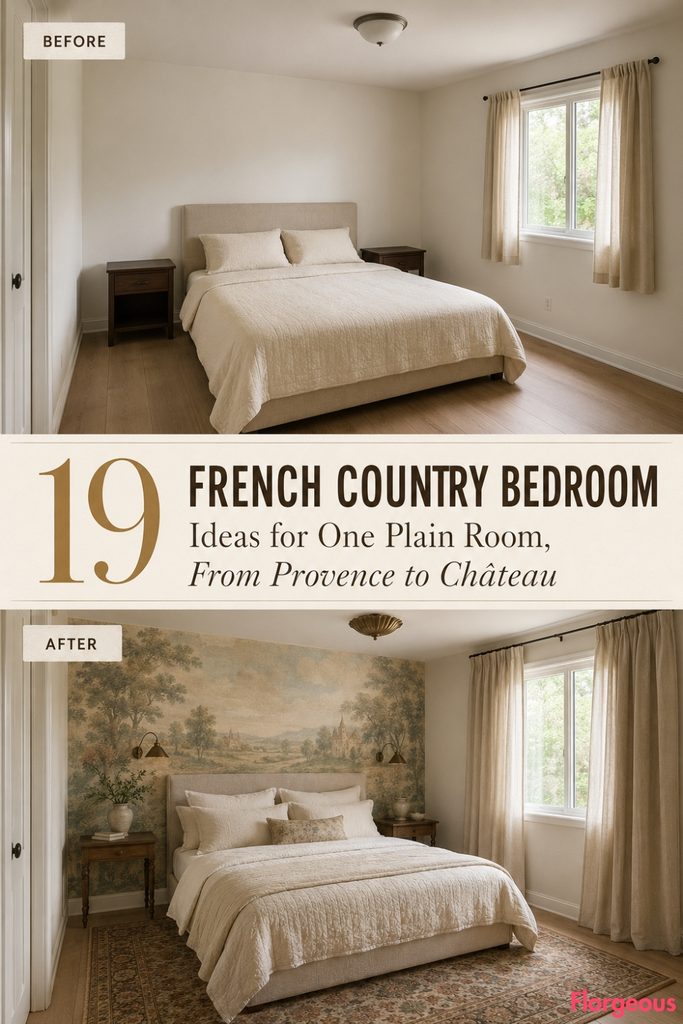
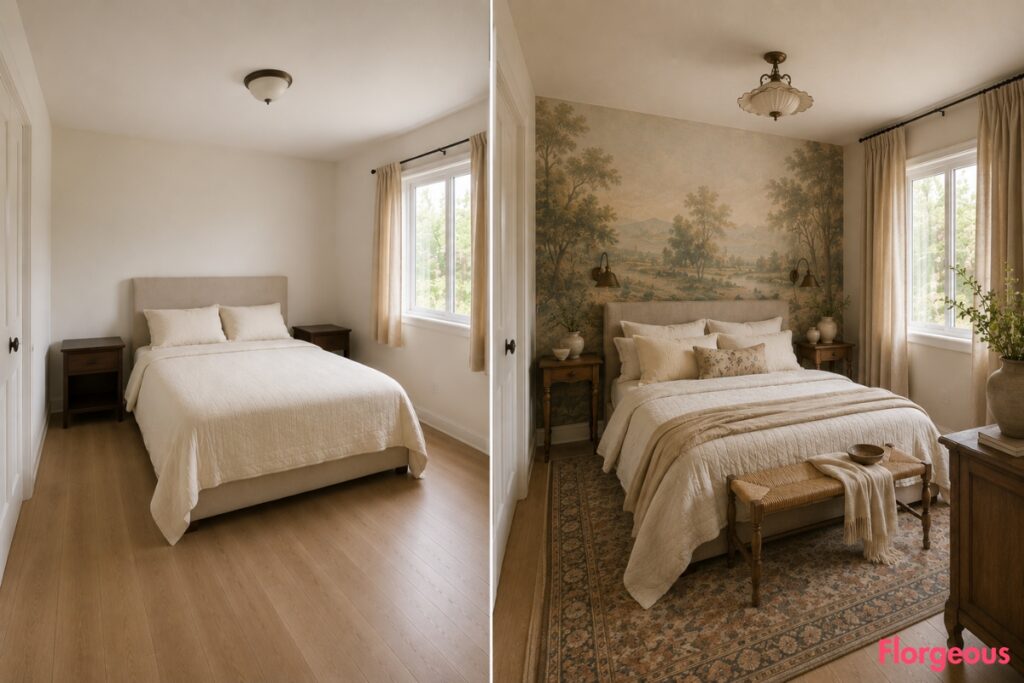
Our starting bedroom is the sort of space many homes have: warm off-white walls, a basic neutral bed, simple cream bedding, two bare nightstands, short curtains, a generic ceiling light, and plenty of room for improvement.
Rather than redesigning the architecture, we kept that exact bedroom locked in place. The doorway, window, flooring footprint, camera position, ceiling height, daylight direction, and circulation stay identical in every makeover.
Then we asked how many genuinely different personalities one French Country Bedroom could take on. The answer goes far beyond cream paint and floral cushions. These 19 ideas move through sun-washed Provence, tailored toile, rustic limestone, antique walnut, cane, romantic bed drapery, darker pastoral rooms, and renter-friendly interpretations.
The useful part is seeing exactly which design move gives each version its identity, so you can borrow one idea without recreating the entire room.
1. Start in Provence With Powder Blue, Pale Oak, and Rush
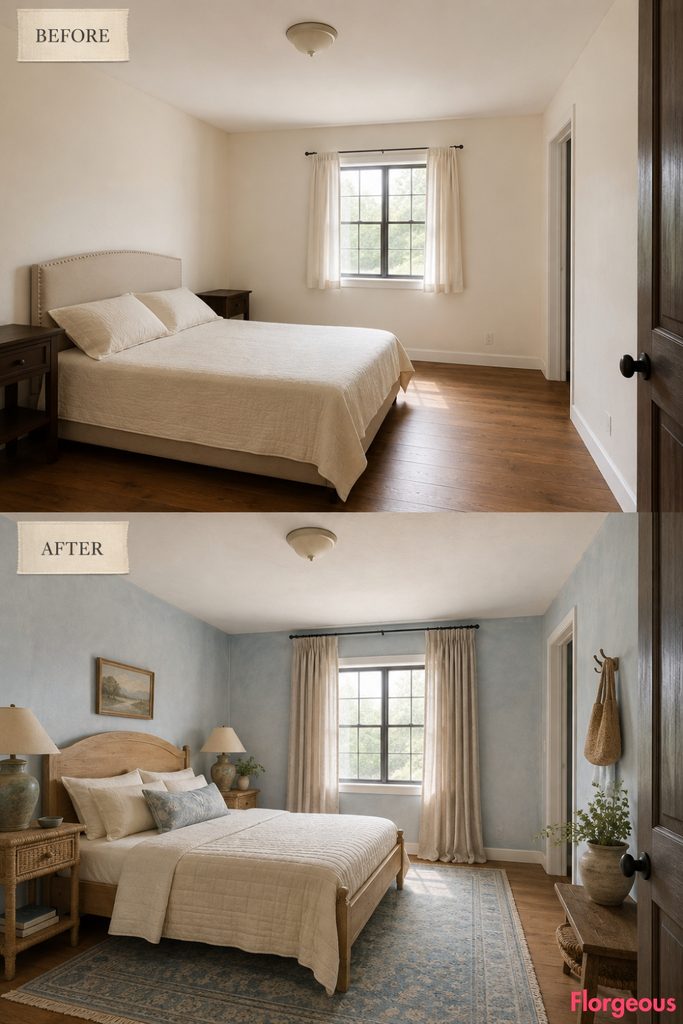
The first makeover is intentionally light and relaxed.
Before: The plain builder-grade bedroom feels clean but unfinished, with warm off-white walls, a basic neutral bed, two bare nightstands, short curtains, and flat lighting.
After: Powdery blue mineral paint softens the walls, while a simple pale-oak bed brings warmth. Rush-top bedside stools, oatmeal linen curtains, an ivory quilt, and a faded blue flatweave rug keep the look rustic rather than coastal.
Designer Tip: Choose blue with plenty of gray in it. Clear or saturated blues can quickly change the style entirely.
2. Use Toile on a Bed Corona Instead of Covering the Whole Room
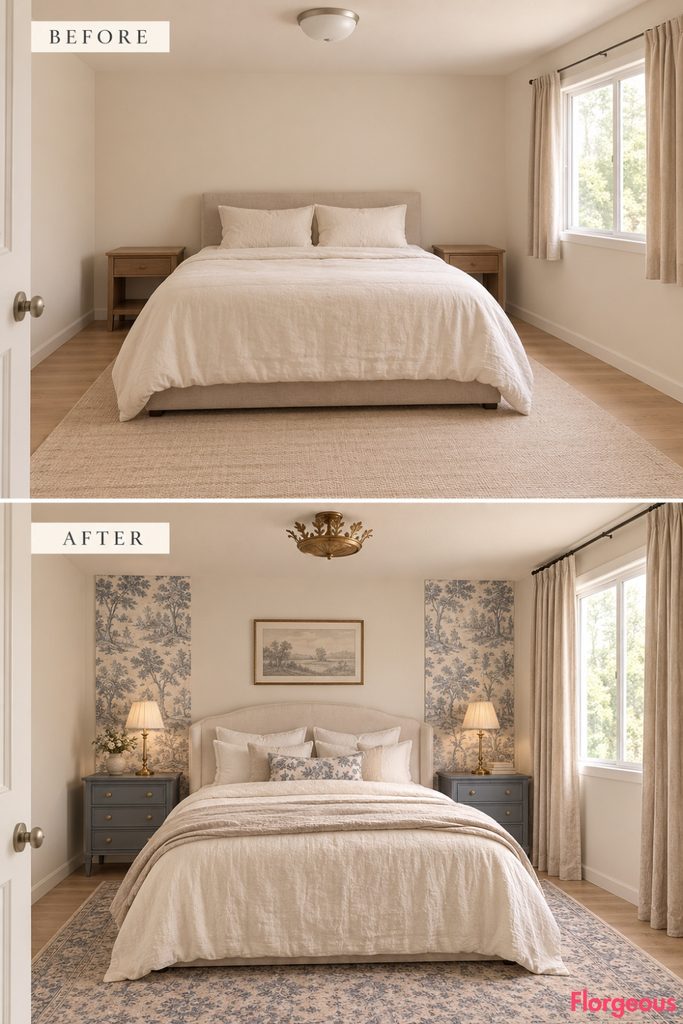
This version treats toile as architecture rather than ordinary upholstery.
A compact antique-brass bed corona sits high above a simple cream upholstered bed, with faded blue-and-ivory toile panels falling only behind the bedside zone. The rest of the room stays quiet with flax curtains, white bedding, and blue-gray painted tables.
The controlled placement gives toile drama without making the room feel themed.
3. Strip the Style Back to Limestone, Oak, and Undyed Linen
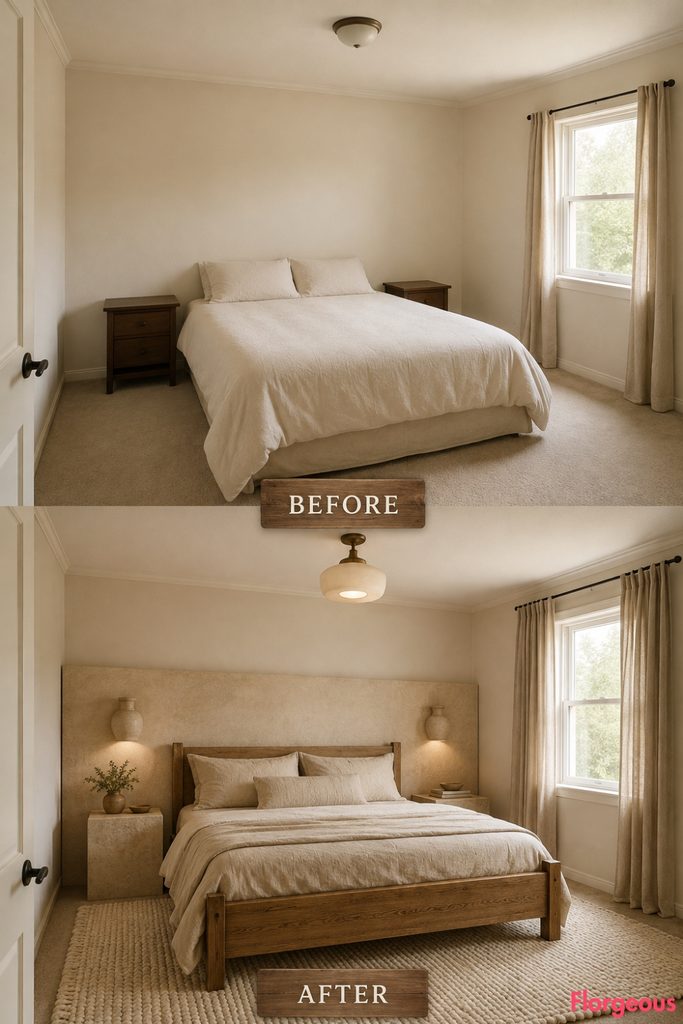
No floral fabric is needed here.
A wide, shallow limestone-toned plaster panel gives the bed wall weight. Against it sits a substantial natural-oak bed with undyed flax bedding, while two small blocky stone tables replace delicate French furniture.
Hand-thrown ceramic sconces and a nubby cream rug finish the room.
Why It Works: Patina, imperfect texture, and natural material variation can communicate country character just as effectively as pattern.
4. Give the Same Room a Quiet Château Formality
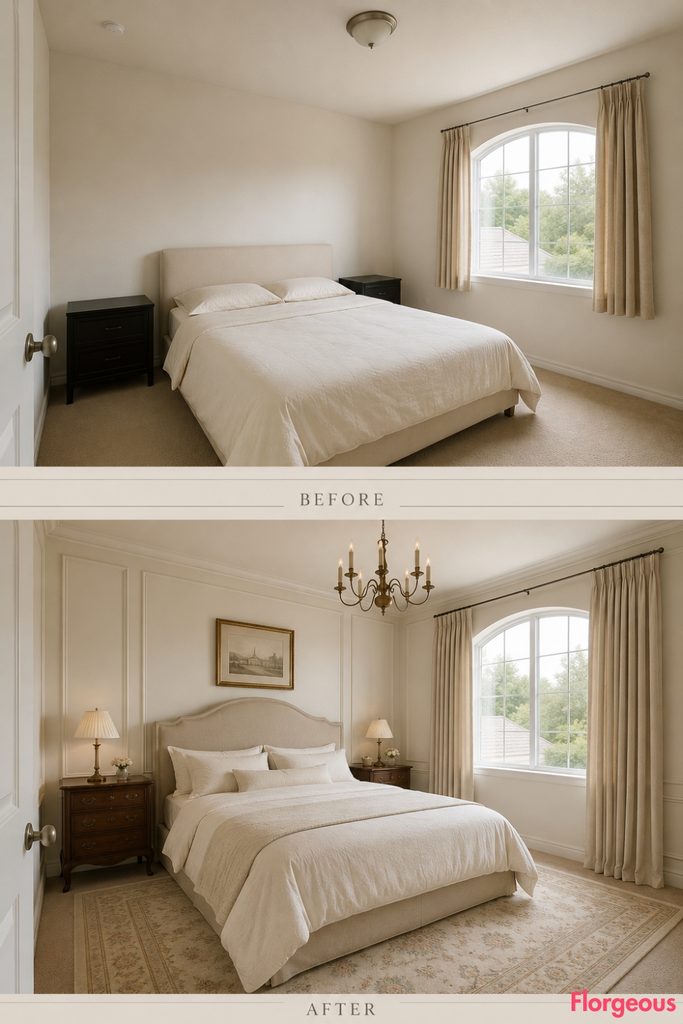
This is the polished counterpart to the raw stone bedroom.
Fine picture-frame molding painted warm ivory introduces architecture without changing the room shell. A tall camelback linen bed, petite walnut commodes, a pale Aubusson-inspired rug, pleated lamps, and a restrained brass chandelier bring controlled symmetry.
There is nothing rustic about the composition, yet the softened finishes keep it from feeling grand or flashy.
5. Ground Everything With a Dark Walnut Four-Poster
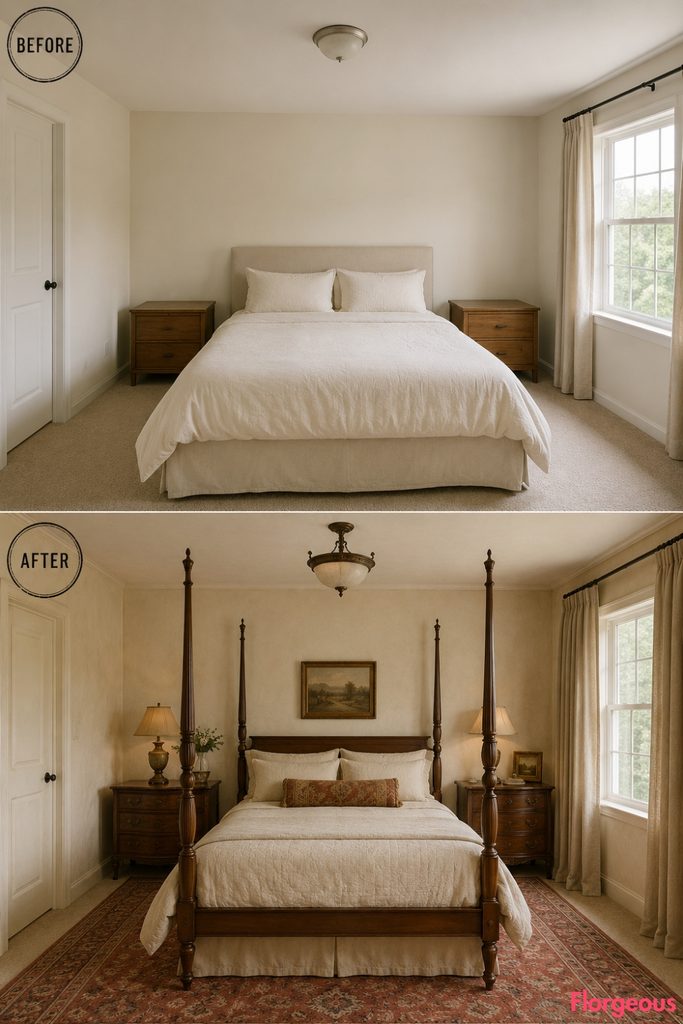
Instead of making the walls the focal point, make the bed impossible to miss.
A slender dark-walnut four-poster creates a strong outline against parchment walls. Keep it fabric-free at the top, then layer cream linen, a muted tapestry-style bolster, dark fruitwood tables, and a faded brick-red rug beneath it.
The darker furniture creates the feeling of an old country estate without filling the space with carved pieces.
6. Make Painted Furniture the Entire Design Strategy
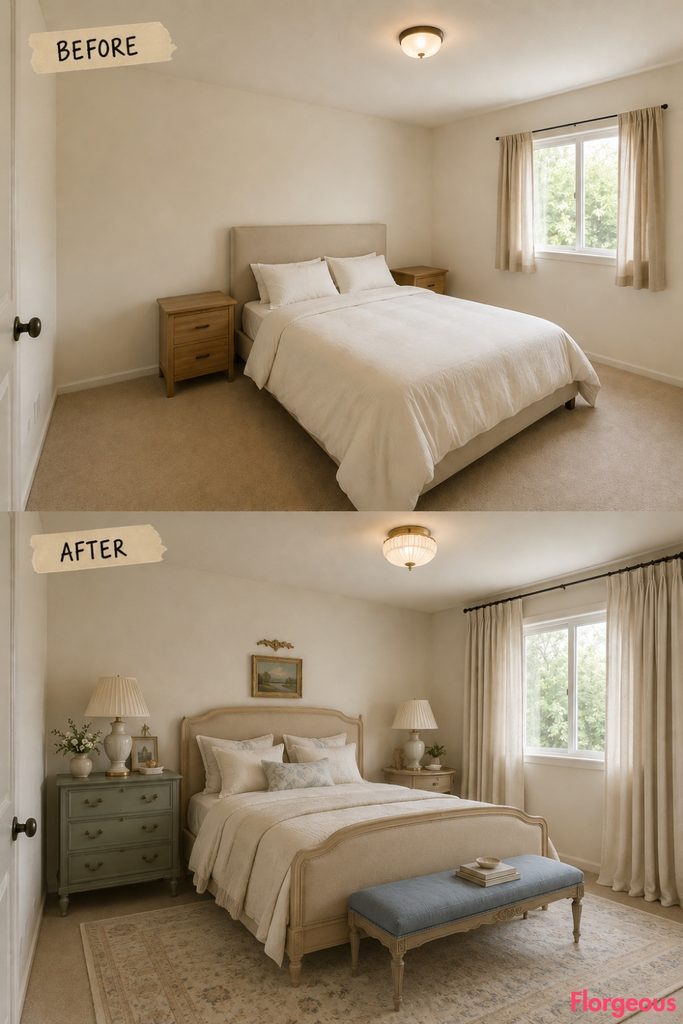
Here, the room changes through furniture finish rather than architecture.
One bedside chest becomes dusty sage, the other warm putty. A slim painted bench in muted blue-gray sits at the foot of a simple flax bed, while aged-brass knobs visually connect the mismatched pieces.
A quiet wool rug and plain bedding prevent the painted furniture from looking overly decorative.
Budget Version: Repaint furniture you already own, then replace shiny hardware with aged-brass or antique-bronze knobs.
7. Pair an Aged Iron Bed With Faded Garden Florals
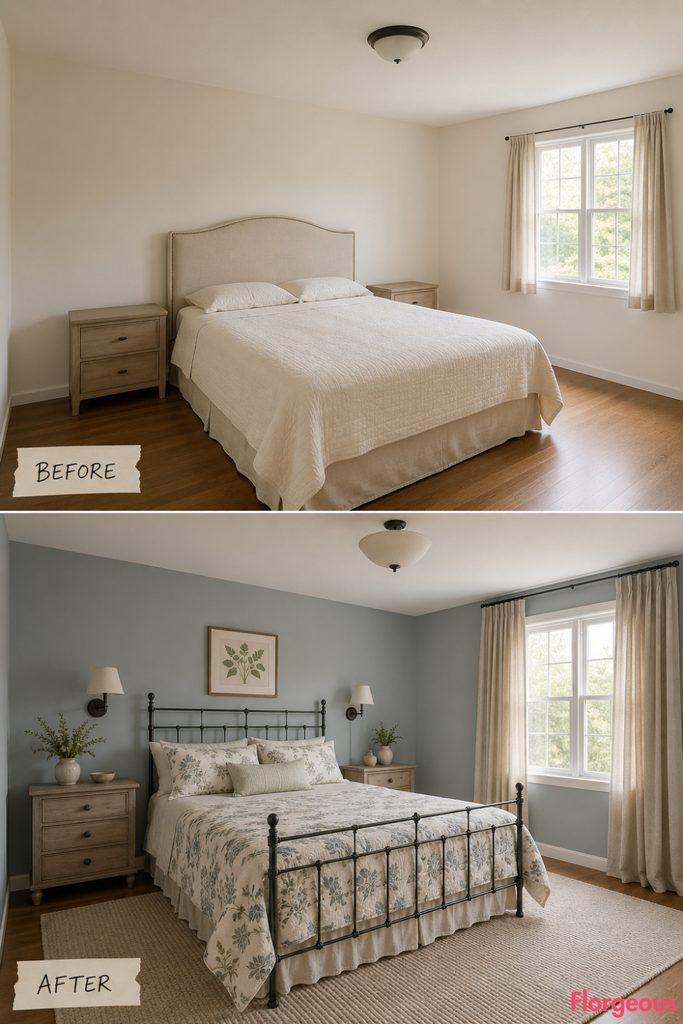
This interpretation gets its character from contrast.
A slender blackened-bronze iron bed cuts through soft chalky walls and washed botanical bedding. Scrubbed-pine bedside tables keep the composition informal, while a cream woven rug and simple flax curtains stop the metal frame from feeling industrial.
Style Note: Choose graceful ironwork with restrained curves. Highly elaborate scrollwork can read Victorian rather than French country.
8. Bring in Cane for an Airier Country-Manor Look
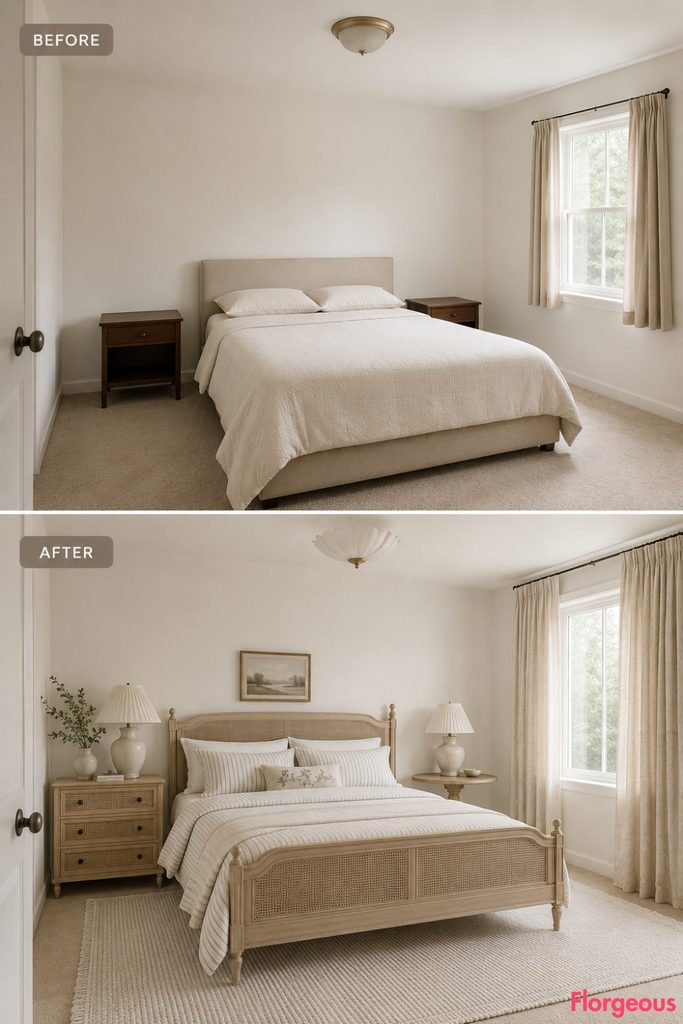
Heavy antiques can overwhelm a modest bedroom, so this makeover moves in the opposite direction.
A pale oak bed with a broad cane inset becomes the centerpiece. One cane-front chest and one tiny round pedestal table deliberately avoid a matching set.
Ticking-stripe bedding and a light flatwoven rug add just enough pattern.
9. Let a Gray-Green Armoire Do the Work of Built-Ins
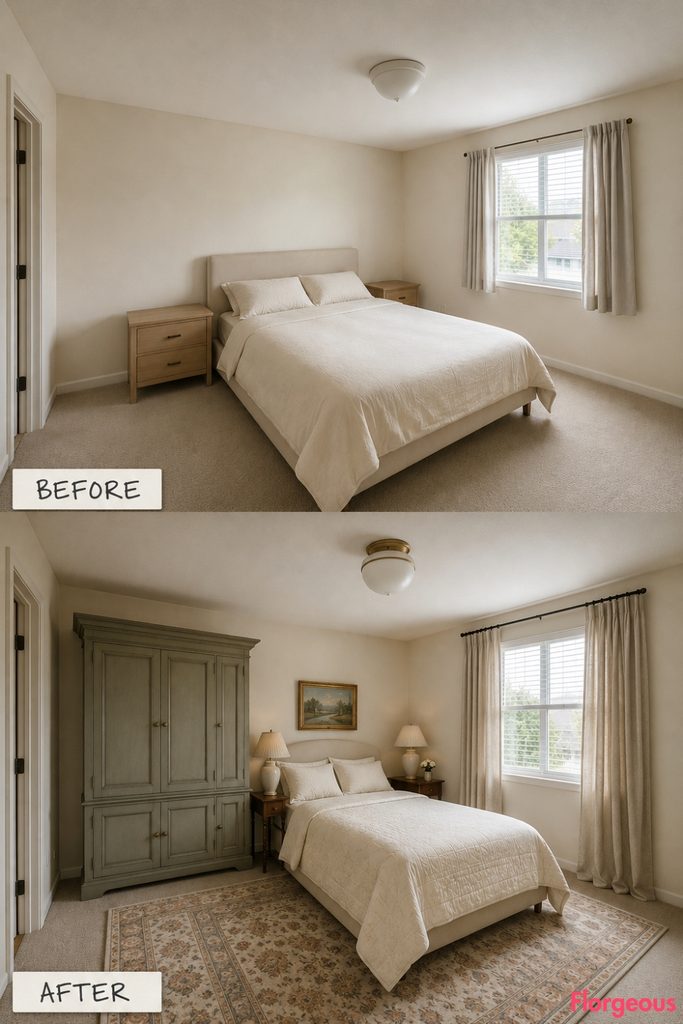
This is a storage makeover disguised as a decorative one.
Place a shallow paneled armoire on a free wall outside the doorway and window routes. Its muted gray-green paint, antique-brass hardware, and lightly aged finish create instant presence.
The bed stays intentionally simple so the tall cabinet remains the room’s anchor.
Small Space Tip: Check the armoire depth as carefully as its width. Shallow vintage-style storage is usually more useful in a bedroom than a deep wardrobe that narrows circulation.
10. Build the Palette From One Faded Aubusson-Inspired Rug
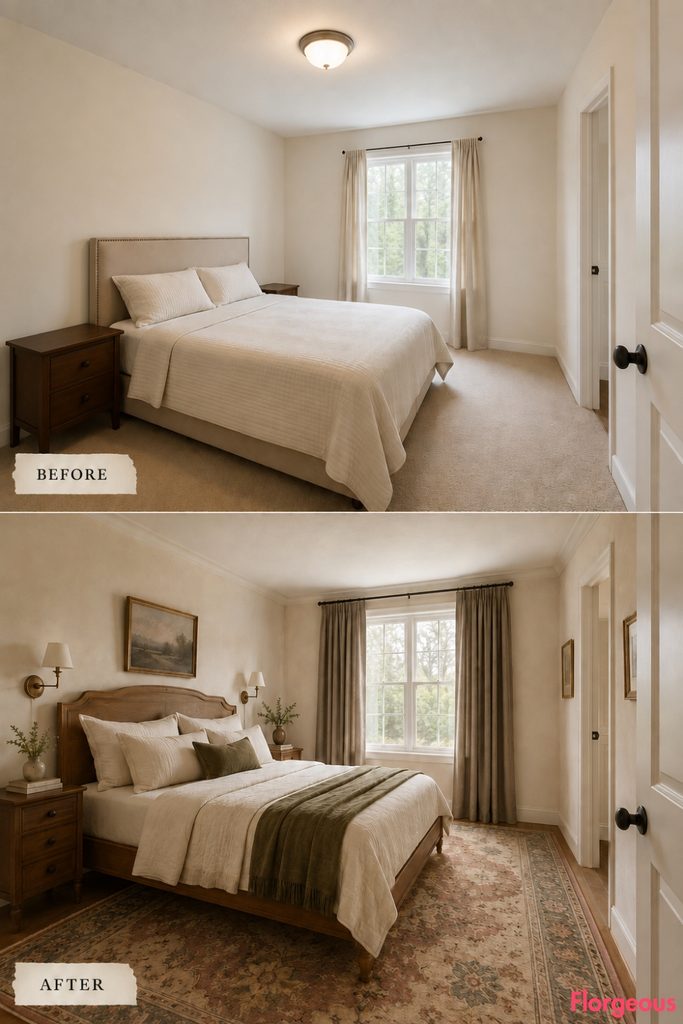
This room begins from the floor upward.
Choose a large rug blending dusty rose, faded blue, moss, parchment, and small touches of brown. Then pull only a few of those colors into the room: parchment walls, an oak bed, muted moss cushions, and mushroom curtains.
The effect feels coordinated without looking matched.
11. Turn Ochre and Terracotta Into a Sun-Baked Southern Scheme
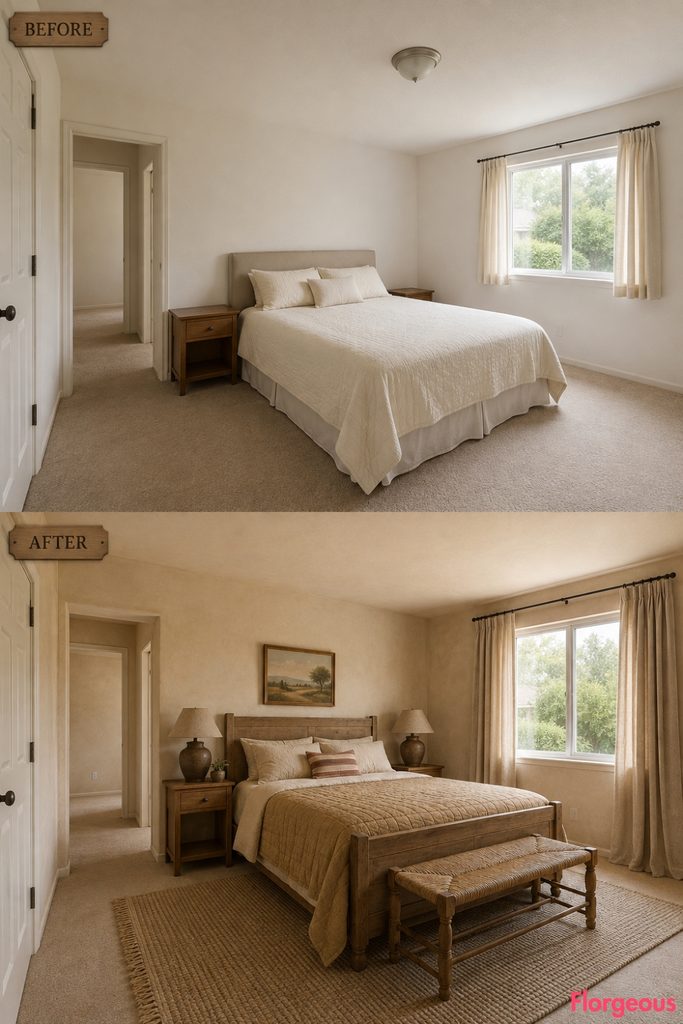
This makeover avoids both blue and pink.
Warm plaster-colored walls form the backdrop for an aged-oak bed, muted ochre matelassé coverlet, terracotta-striped cushion, and woven rush bench. Clay ceramic lamps echo the warmer textiles without matching them exactly.
Natural flax at the windows keeps the palette dry and sun-faded.
Color Story: Keep terracotta muted and earthy. Bright orange can pull the space toward Mediterranean or southwestern styling.
12. Replace the Headboard Moment With Draped Linen
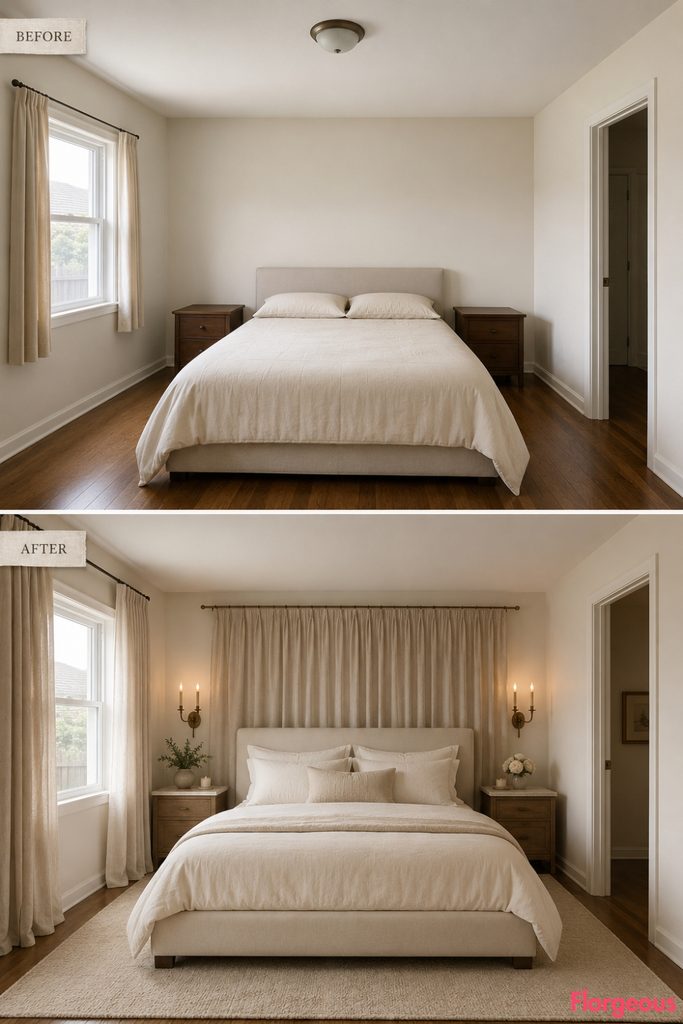
This room gets its romance from fabric rather than ornate furniture.
Behind a low cream bed, hang a generous panel of natural linen from a slim antique-bronze wall rail. Let the textile fall loosely to the floor behind the bed, then pair it with small limestone-topped tables and candle-style sconces.
The softness feels distinctly old-world, but the furniture remains minimal.
13. Make a Faded Pastoral Mural Feel Like Part of the Architecture
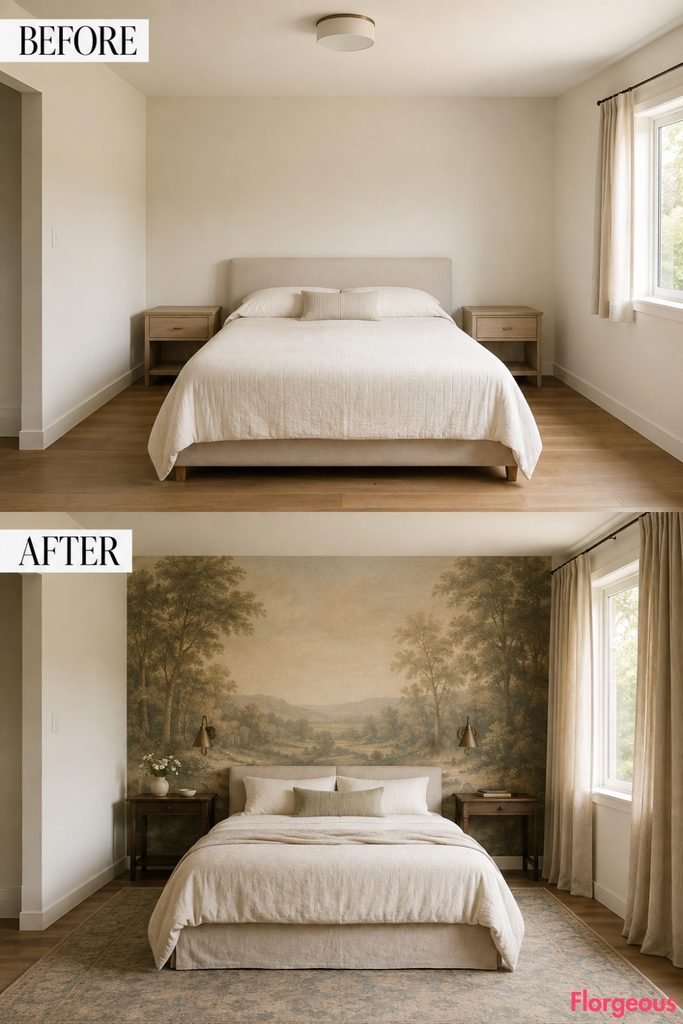
Instead of conventional framed artwork, let one wall carry the visual story.
A muted pastoral mural spans the bed wall in parchment, moss, dusty blue, and sepia. Place a low flax bed in front of it with narrow dark-wood tables and simple bronze reading lights.
Everything else stays deliberately plain so the scenic wall can breathe.
14. Use Mismatched Antiques to Make the Room Feel Collected
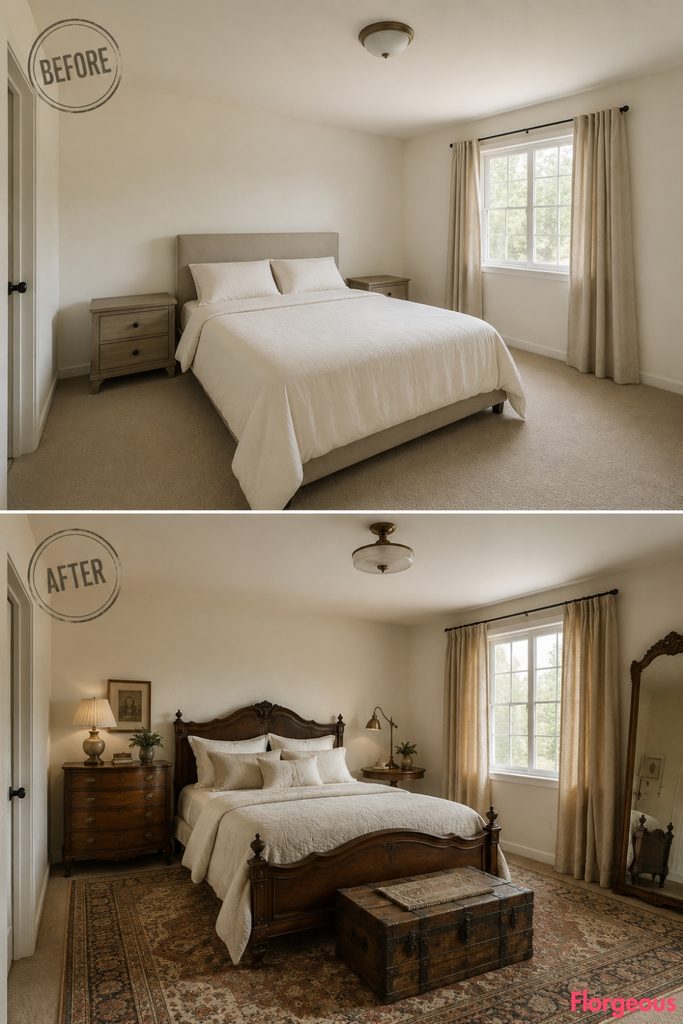
Perfect symmetry disappears in this version.
One side of the bed receives a bow-front walnut chest, while the other gets a small round pedestal table. A carved wood bed, antique trunk at the foot, tall vintage mirror, relaxed curtains, and worn Persian-style rug continue the layered feeling.
The key is controlled asymmetry, not randomness.
15. Add a Real Reading Destination Beside the Window
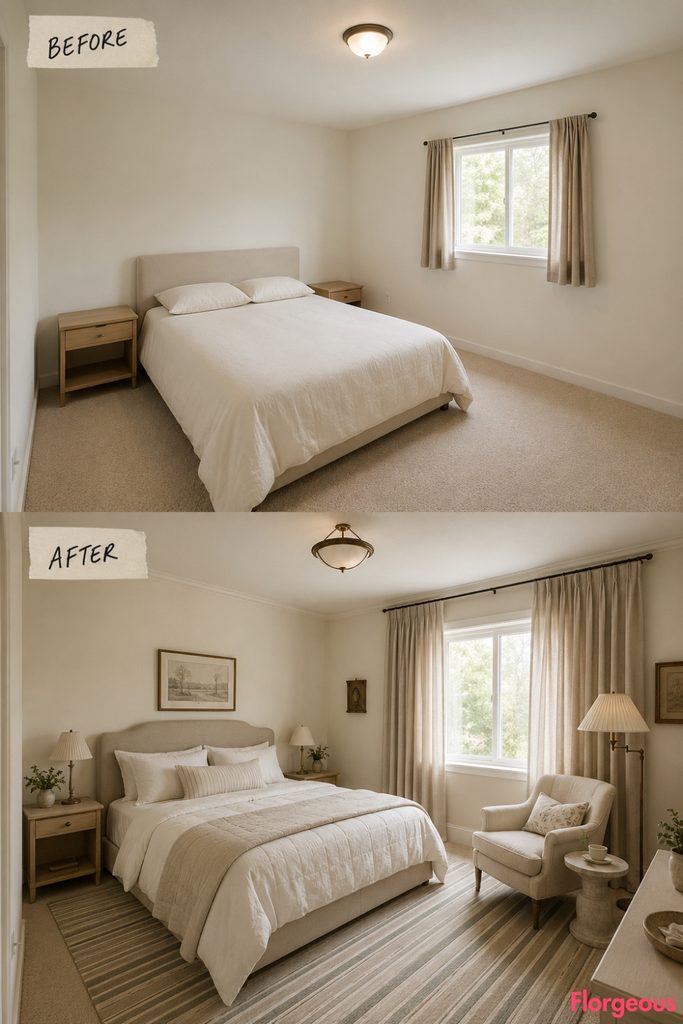
The bed is no longer the only focal point.
Place a petite bergère-inspired chair beside the window, outside the circulation path, with a tiny stone-topped pedestal table and pleated floor lamp. A simple upholstered bed and quiet striped rug keep the sleeping area understated.
This version works especially well for a primary bedroom or generous guest room.
16. Replan the Same Footprint as a Charming Twin Guest Room
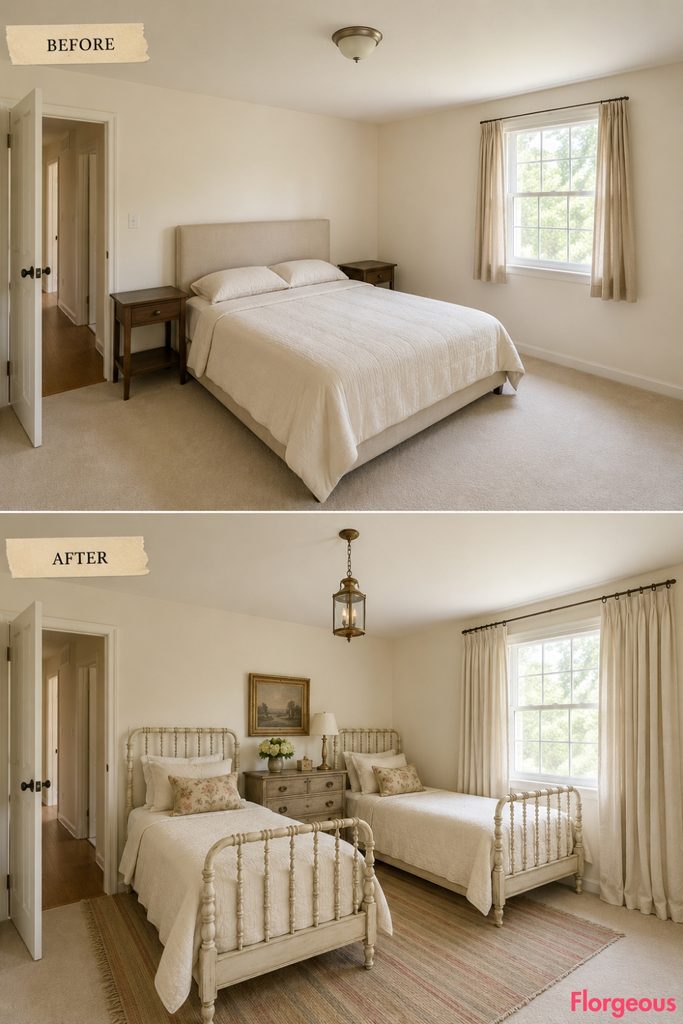
This is the one concept that deliberately changes the furniture arrangement.
Two narrow putty-painted spindle beds replace the single bed while preserving generous circulation. A shared antique chest sits between them, with matching ivory coverlets and only one small patterned cushion per bed.
A petite bronze lantern centers the ceiling without making the room childish.
17. Take the Palette Dark With Olive, Tobacco, and Old Oak
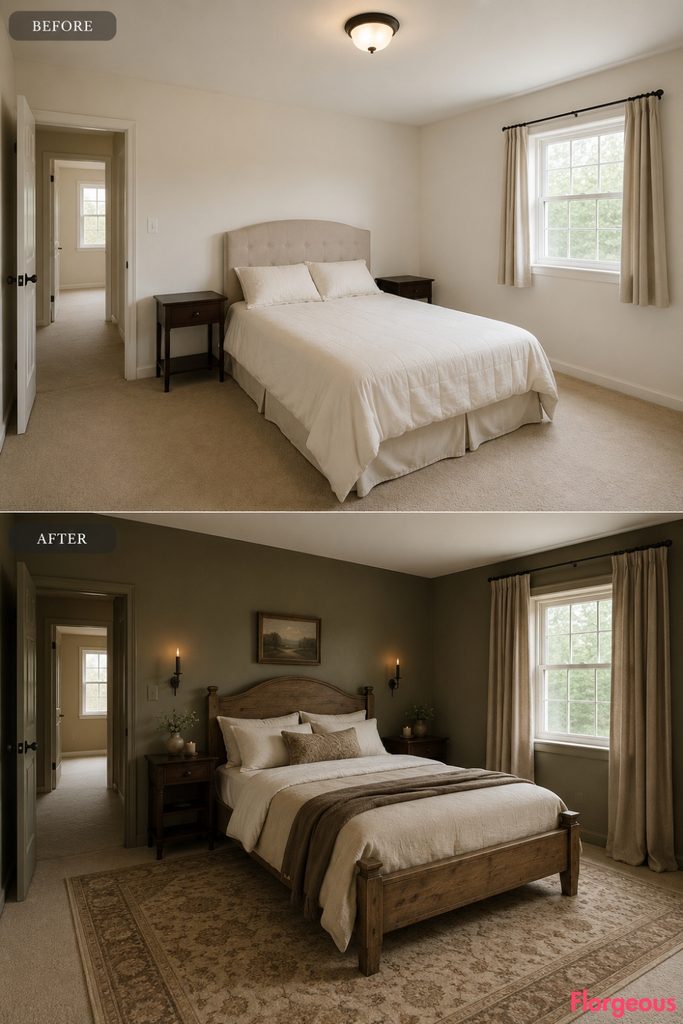
French country does not need to be pale.
Smoky olive-brown walls wrap the bedroom in a deeper envelope, while a medium-tone oak bed and tobacco-colored vintage rug reinforce the warmth. Ivory linen becomes the brightest element.
Blackened-bronze candle sconces and flax curtains complete the slightly moody countryside look.
Common Mistake: Avoid pairing deep walls with too many dark furniture pieces. The bed can be substantial, but lighter bedding and curtains are what keep the room balanced.
18. Give the Room a Tailored French Country Hotel Finish
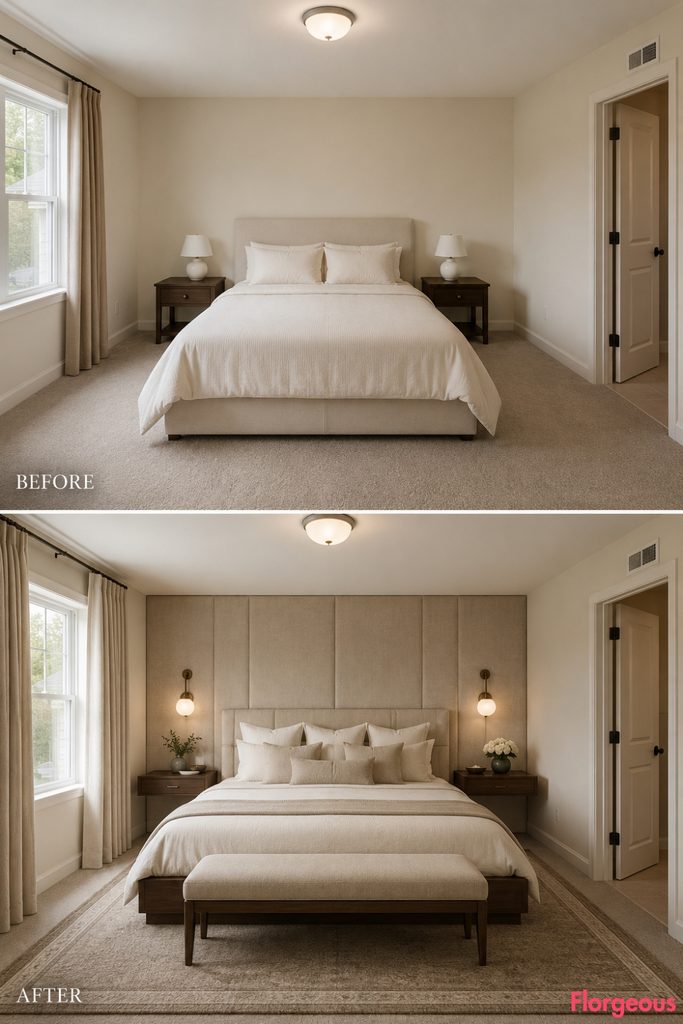
This is the most polished interpretation in the collection.
A wide mushroom upholstered bed wall replaces the usual freestanding headboard. Low walnut bedside ledges, symmetrical bronze globe sconces, an ivory wool rug, a slim upholstered bench, and substantial oatmeal curtains introduce hotel-level proportion.
There are almost no decorative accessories, proving that traditional influence can come from form and material rather than clutter.
19. Finish With a Completely Renter-Friendly French Country Makeover
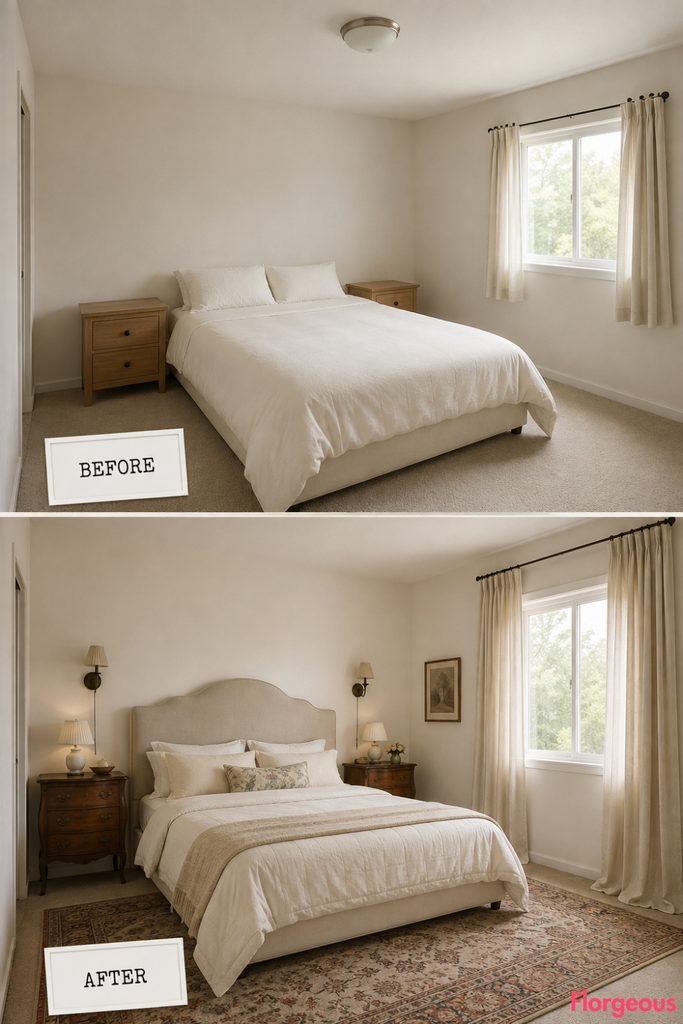
The final room proves that architectural renovation is optional.
Keep the existing bed and place a removable camelback linen headboard behind it. Bring in freestanding vintage-style bedside chests, plug-in bronze sconces with tidy cord covers, an oversized traditional-pattern rug, layered cream bedding, and ready-made curtains hung high and wide.
Nothing is permanently attached beyond ordinary renter-friendly fixings, yet the proportion and textile changes make the room feel finished.
Budget Version: If you can only afford three changes, start with an oversized rug, ceiling-height curtains, and better lighting. Those elements correct scale before you spend money on decorative accessories.
Which French Country Direction Should You Start With?
The most convincing rooms in this style rarely use every traditional ingredient at once. They choose a clear anchor, then let the rest of the design support it.
For a bright bedroom, powder blue, cane, toile, or an Aubusson-inspired rug can introduce character without making the room heavy. Bedrooms that feel visually cold often respond better to walnut, terracotta, limestone, or a large textile focal point.
If space is tight, choose one statement, such as the iron bed, painted armoire, scalloped headboard, or scenic wall. Larger rooms can comfortably support the reading corner, four-poster, or twin-bed arrangement.
Before shopping for your own French Country Bedroom, decide what should lead the room: the bed silhouette, wall treatment, major antique, rug, or curtain fabric. Build the palette and furniture choices outward from that one decision, and edit anything that does not strengthen it.