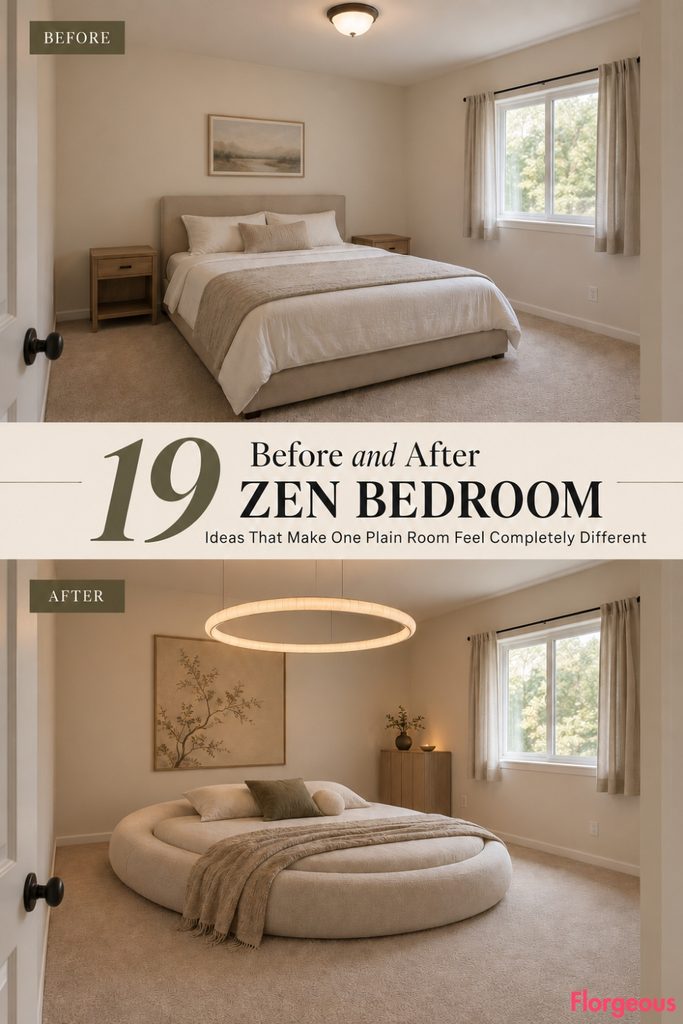
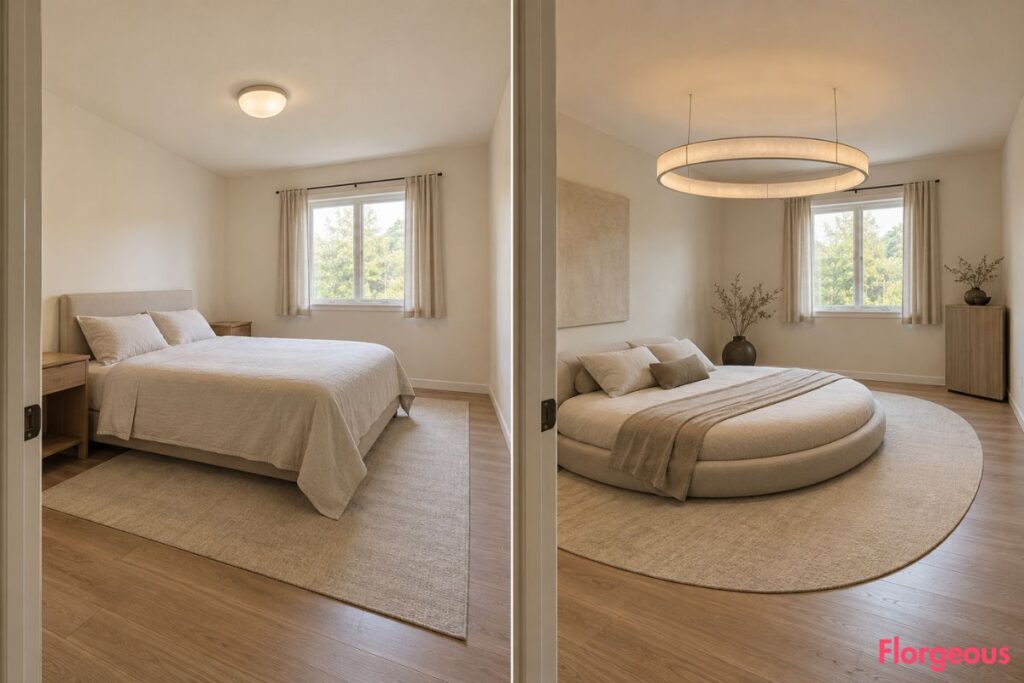
A builder-grade bedroom can be neat, bright, and perfectly usable, yet still feel oddly restless. The warm off-white walls are safe, the furniture does its job, and the room looks clean, but nothing about it slows the eye down or makes the space feel restorative.
That is why a good Zen Bedroom is less about adding more things and more about changing the way the room is composed. The same plain bedroom can feel softer, calmer, lighter, or more grounded depending on the furniture silhouette, the amount of negative space, the material palette, and the way evening light is handled.
Every idea below starts with the same plain base room: warm off-white walls, a basic neutral bed, two bare nightstands, short plain curtains, minimal styling, soft daylight, and one simple builder-grade light. The shell stays the same every time. Only the after version changes.
1. Replace the Standard Bed With a Low Elliptical Sleeping Island
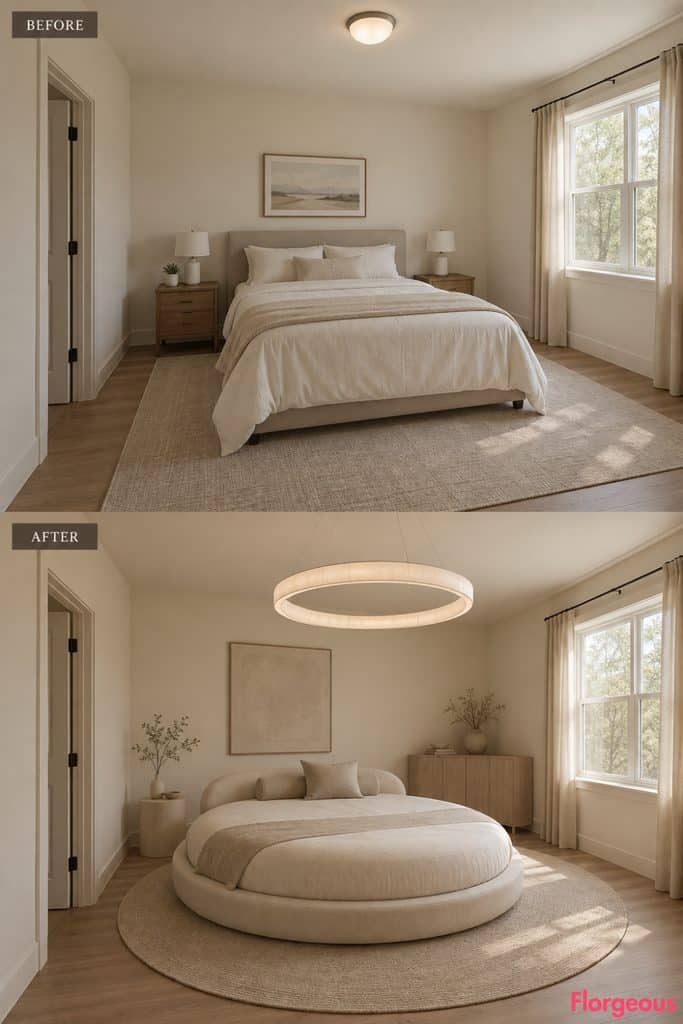
Before: The plain bedroom has a basic rectangular bed, two bare nightstands, short curtains, and a simple central opal flush light.
After: Swap the standard bed for a very low elliptical upholstered sleeping island set slightly left of center. Remove separate nightstands, place one compact ash cabinet in the rear-right corner, and keep a clean perimeter around the bed. A thin translucent paper ring suspended above the oval becomes the room’s only evening light.
Why it works: The curved bed immediately softens the room and removes the rigid hotel-like feeling.
2. Balance the Room With a Cylindrical Cork Wardrobe
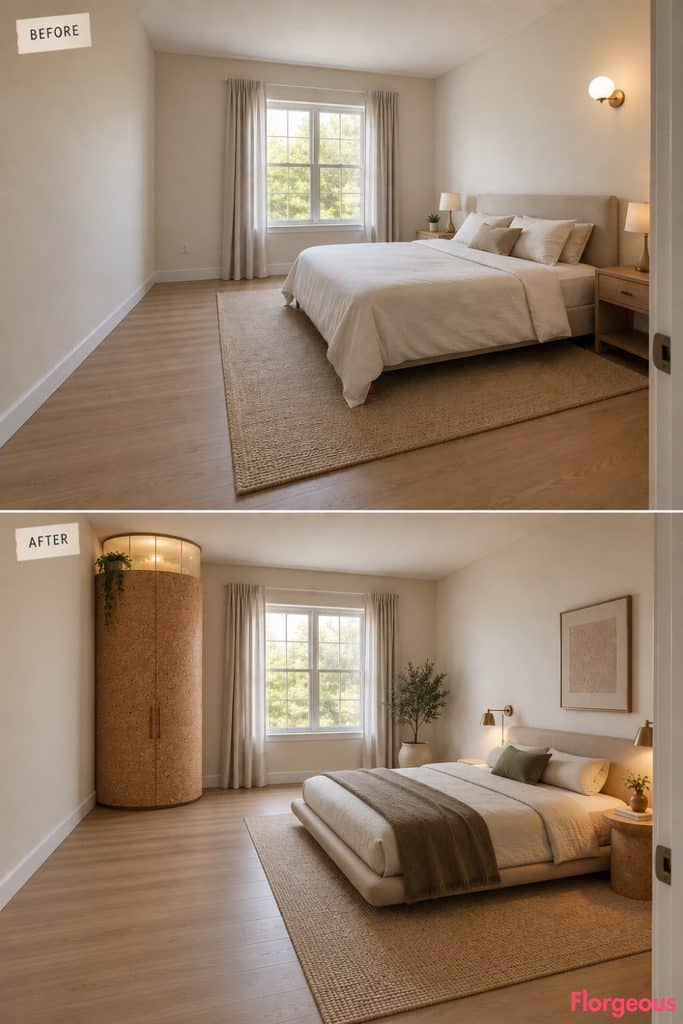
Before: The same plain room is lit by one high-wall frosted globe sconce.
After: Place a low bed along the right wall and add a tall cylindrical cork wardrobe in the rear-left corner. Keep the middle floor clear so the curved volume can stand out without blocking circulation. A luminous glass cap recessed into the wardrobe top creates a soft upward glow.
Try this: If full cork feels too bold, use a cork veneer wrap on a rounded cabinet shell.
3. Float the Mattress on a Slim Timber Bridge Frame
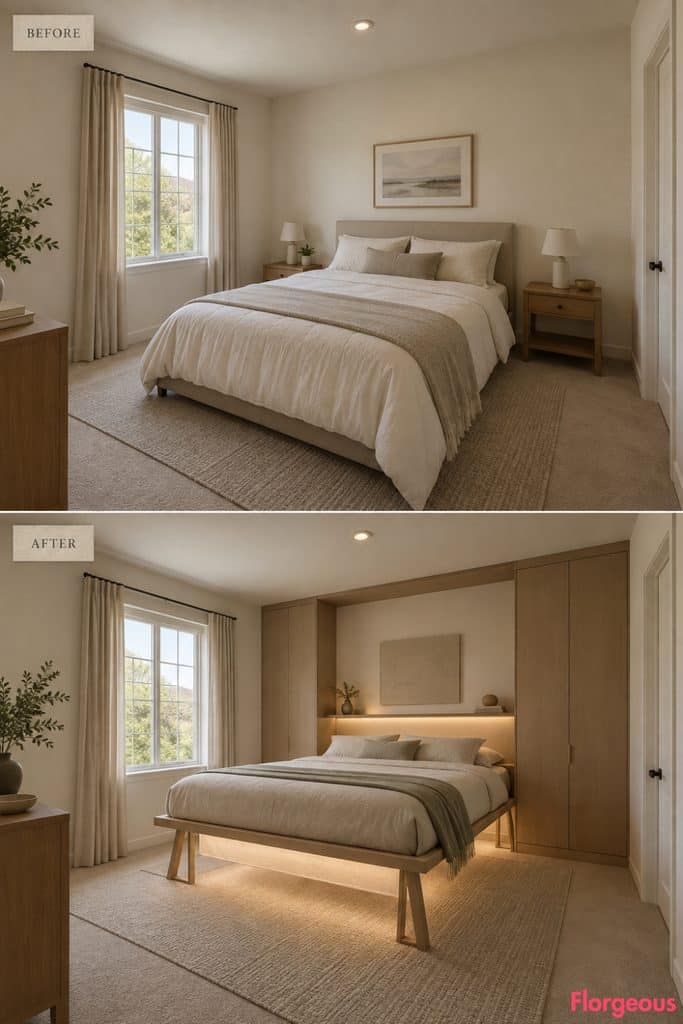
Before: The builder-grade room uses one recessed adjustable ceiling spotlight.
After: Replace the ordinary bed with a slim ash bridge frame that spans between two compact end trestles, leaving most of the floor visible underneath. Move closed storage to the far wall and keep the bed area visually light. A narrow fabric light ribbon runs beneath the bridge and glows sideways across the floor.
Why it works: Seeing the floor beneath the bed makes the room feel more open and less heavy.
4. Use One Paper-Pulp Boulder as the Main Storage Piece
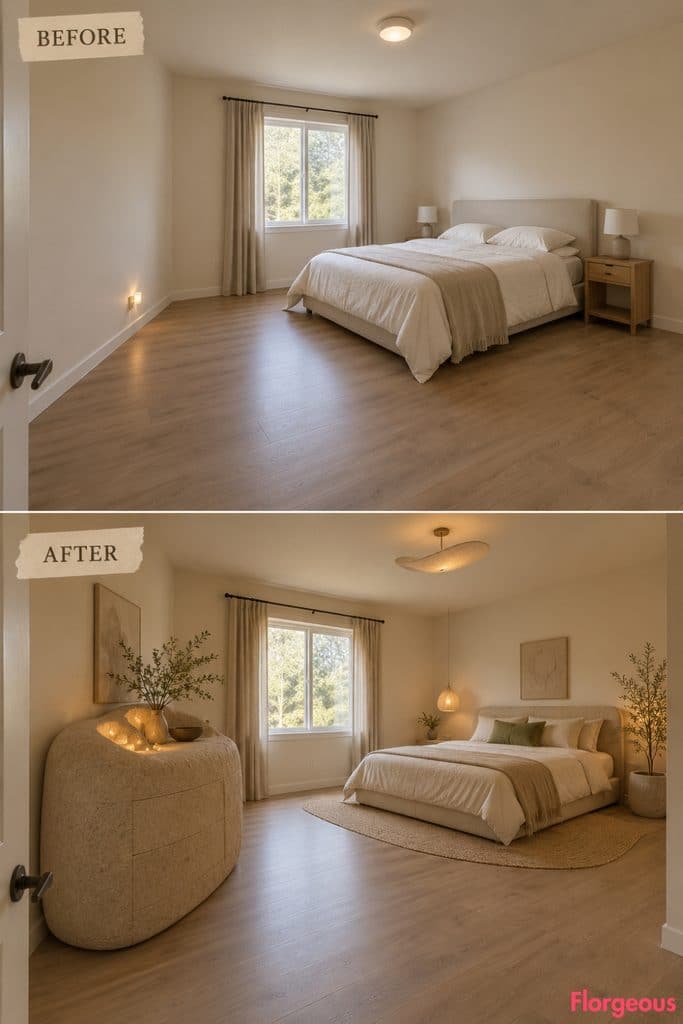
Before: The plain bedroom is lit only by a tiny outlet-level plug-in nightlight.
After: Position the bed in the rear-right quadrant and introduce one large irregular paper-pulp storage boulder near the front-left wall. It should read as one calm sculptural mass with nearly invisible seams. Tiny light apertures inside a shallow top depression create a subtle upward shimmer.
Why it works: One strong object feels quieter than several competing storage pieces.
5. Nest the Mattress Inside a Woven Rush Cradle
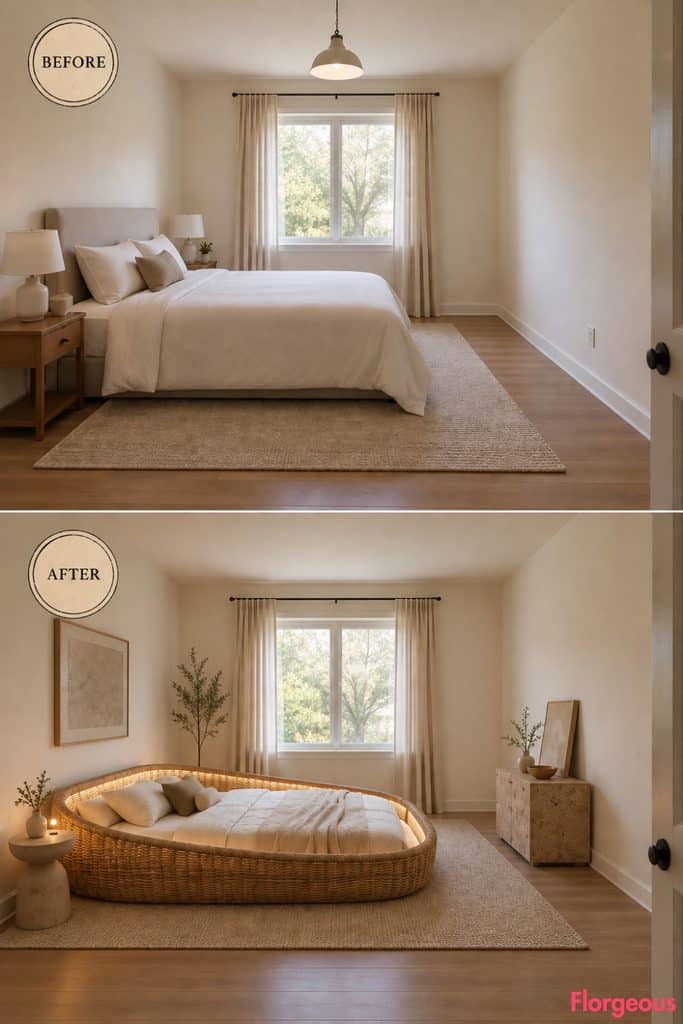
Before: A simple enamel pendant hangs over the base room and throws a direct downward beam.
After: Replace the ordinary bed base with a shallow woven-rush cradle oriented toward the window. Remove bedside tables and use one small closed box along the opposite wall. A concealed source inside the upper rim lights the rush weave from within.
Style Note: Keep the cradle broad and low so it feels peaceful, not themed.
6. Replace the Dresser With Two Unequal Oval Storage Towers
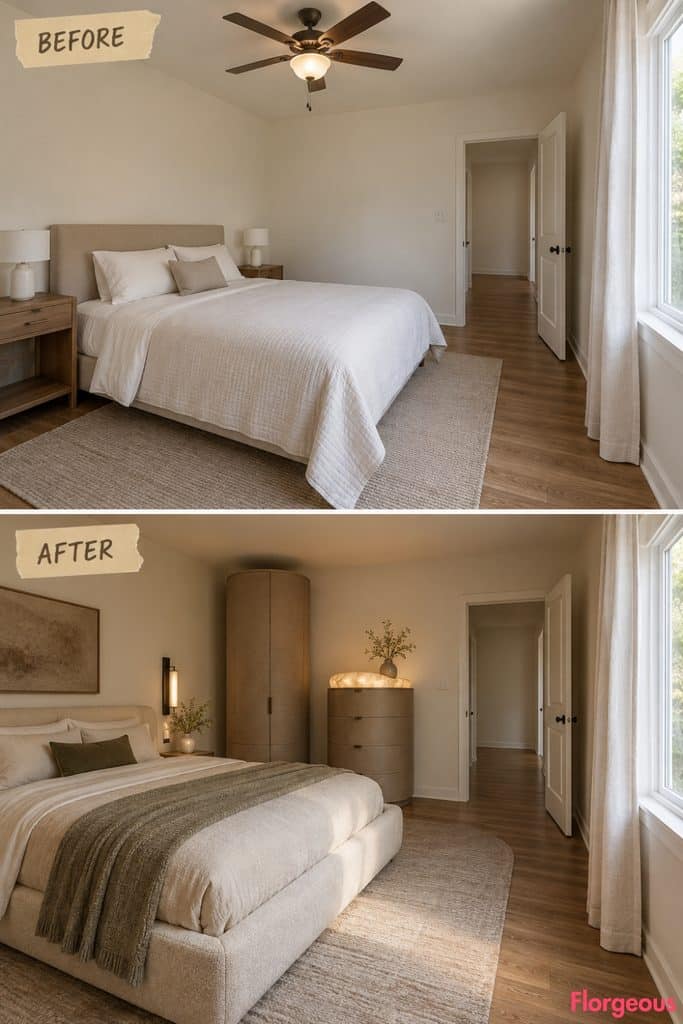
Before: The room has a standard ceiling fan with a small central light.
After: Move the bed deeper into the left half of the room and add two separate oval storage towers, one taller and slimmer at the far-left wall and one shorter in the right foreground. Only the shorter tower glows, using a thin translucent mineral lid. The rest of the room stays quiet and open.
Why it works: Unequal forms create calm balance without obvious symmetry.
7. Turn an Empty Corner Into a Sculpted Felt Wedge
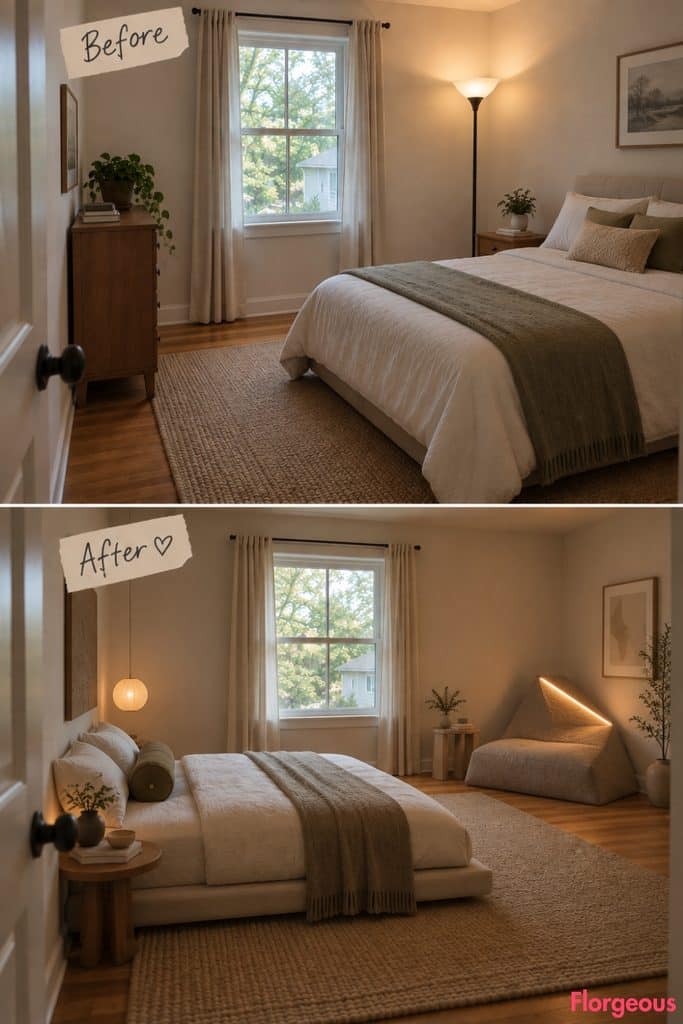
Before: A corner torchiere floor lamp provides the room’s only evening light.
After: Run the bed crosswise through the rear half of the room and place one oversized triangular felt wedge in the opposite corner as a reclined support piece. The wedge contains a narrow slot at its upper fold that casts a soft diagonal wash on the nearby wall.
Try this: Keep the rest of the room very edited so the felt form reads as intentional.
8. Make a Circular Cane Drum the Room’s Main Storage Form
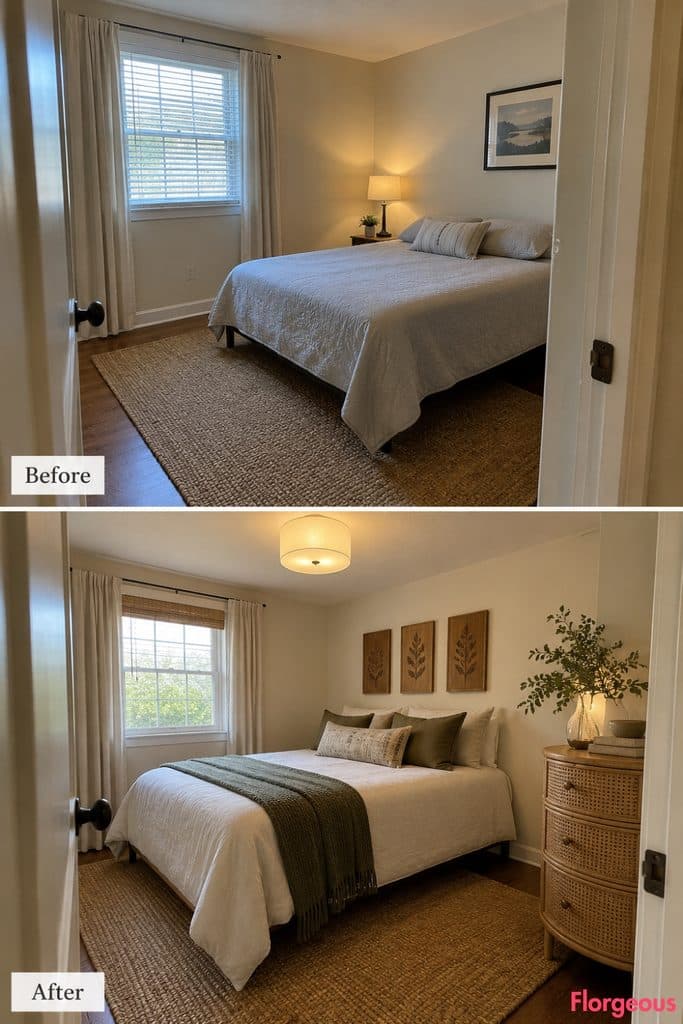
Before: A basic shaded table lamp sits on one bare nightstand.
After: Move the bed to the short wall, remove both nightstands, and place one broad circular cane drum dresser near the outer foot-side area. Leave the center lane open. A frosted glass core rises through the middle of the drum and produces a low diffuse glow.
Why it works: The round storage form feels lighter and more relaxed than a rectangular chest.
9. Put the Bed on Long Curved Timber Runners
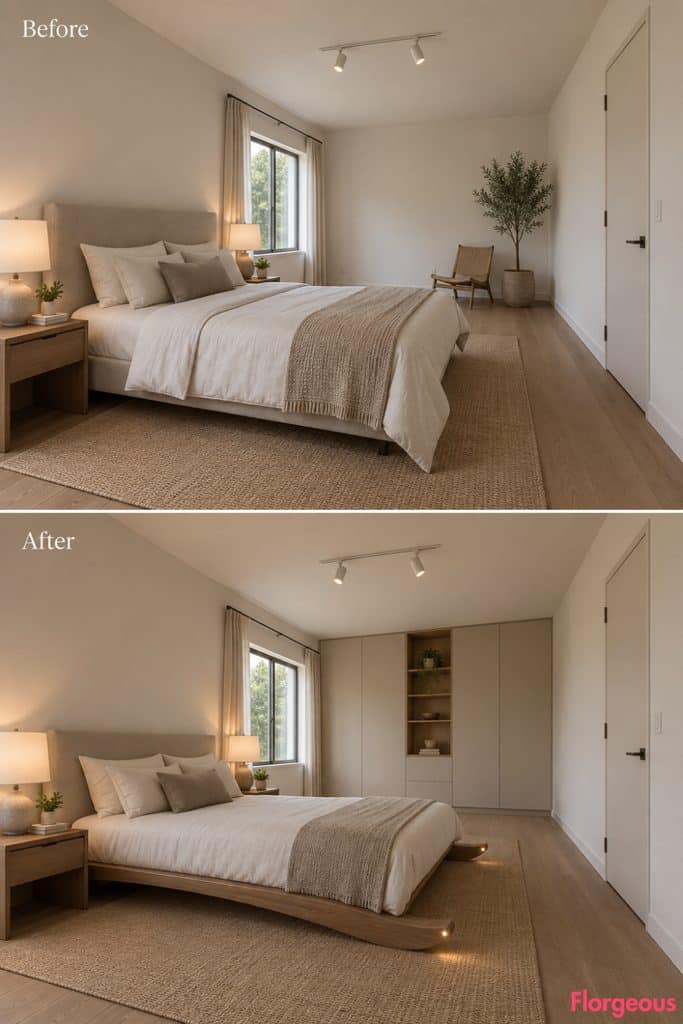
Before: The plain room uses a short two-head ceiling track with adjustable spots.
After: Replace the standard bed base with a low timber sled frame carried by two long curved runners. Keep the remaining furniture against one far wall. Tiny pin lights recessed into the front runner tips illuminate only the floor just beyond the bed.
Why it works: The extended runners give the bed a calmer, more directional silhouette.
10. Introduce One Rounded Straw Storage Cocoon
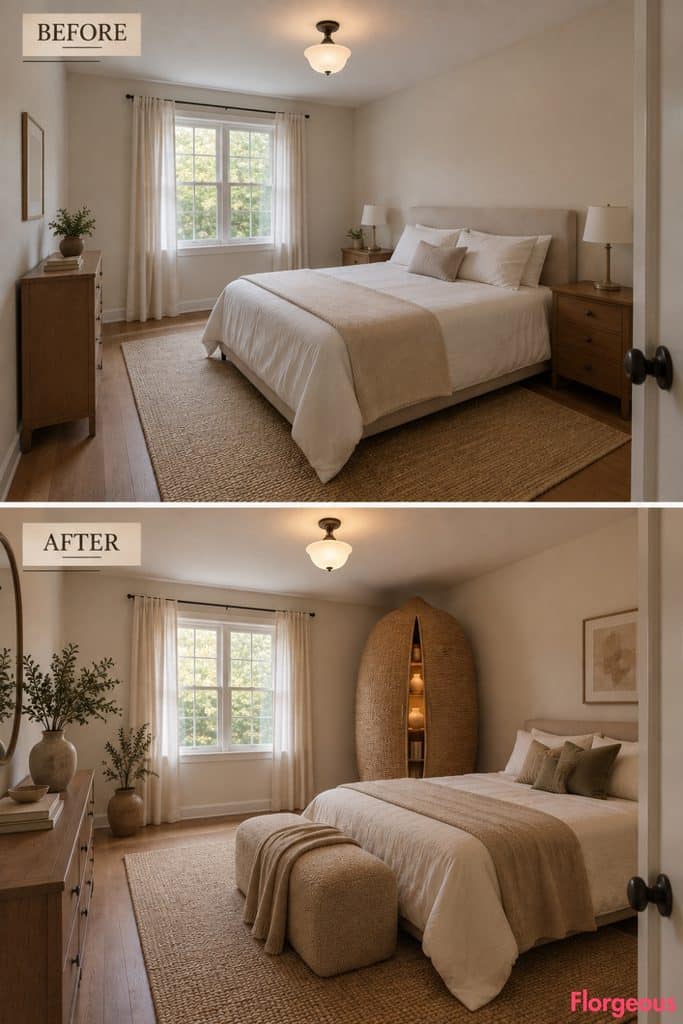
Before: The base bedroom is lit by a simple schoolhouse semi-flush fixture.
After: Shift the bed toward the window-side half while keeping window access open. In the opposite rear corner, place one tall rounded compressed-straw storage cocoon with a narrow vertical opening. A removable ceramic light puck inside the upper hollow softly illuminates the straw interior when the door is ajar.
Why it works: Closed storage remains useful but still feels soft and sculptural.
11. Use Oversized Ceramic Basins Instead of Nightstands
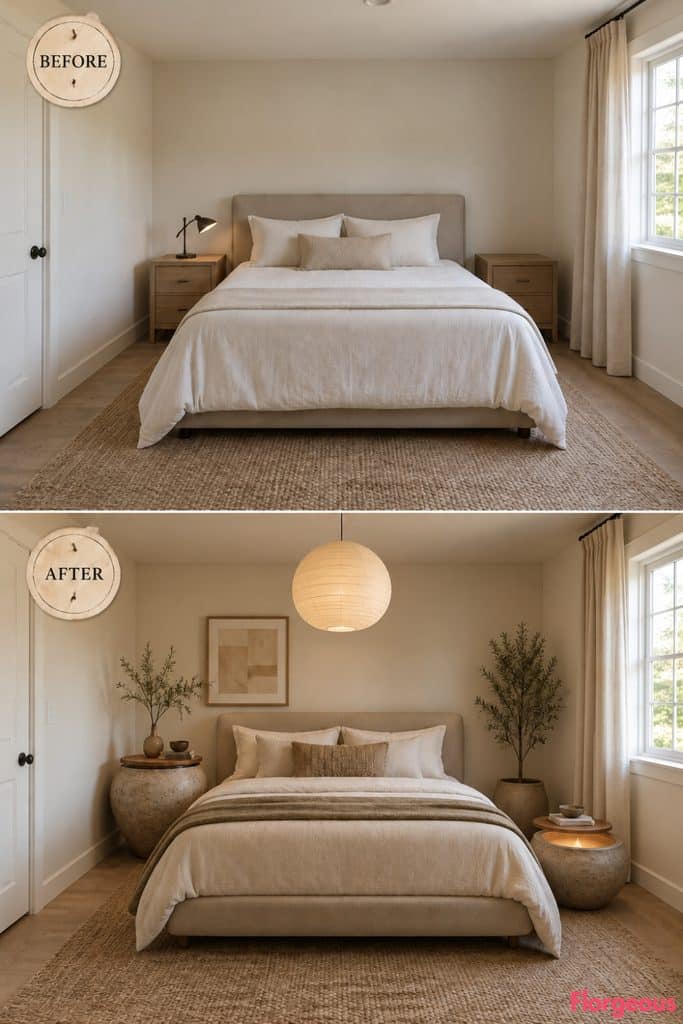
Before: A clip-on reading lamp is attached to the plain headboard.
After: Float the bed slightly forward and replace bedside tables with two very large shallow ceramic basins placed asymmetrically. Partial timber discs bridge their rims to create practical surfaces. One basin contains a hidden reflected light that brightens only its inner ceramic surface.
Why it works: The basins give the room function without repeating ordinary furniture shapes.
12. Give the Bed Thick Braided Hemp Side Rails
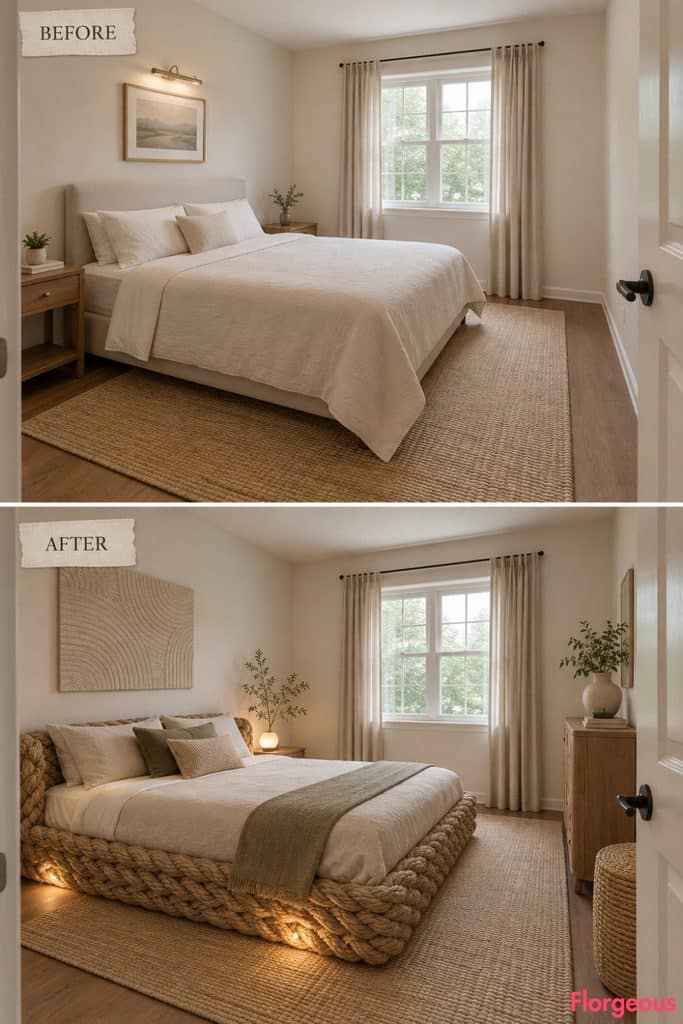
Before: A narrow picture light mounted high on the wall provides direct light.
After: Place the bed lengthwise along the left wall and use thick braided hemp ropes tensioned between simple oak end posts as the side rails. Keep the right half of the room almost empty except for one compact closed storage block. A low ceramic source inside one post throws light through the rope fibers.
Try this: Keep the bedding simple so the rope texture remains the focus.
13. Anchor the Room With a Fan-Shaped Felt Floor Island
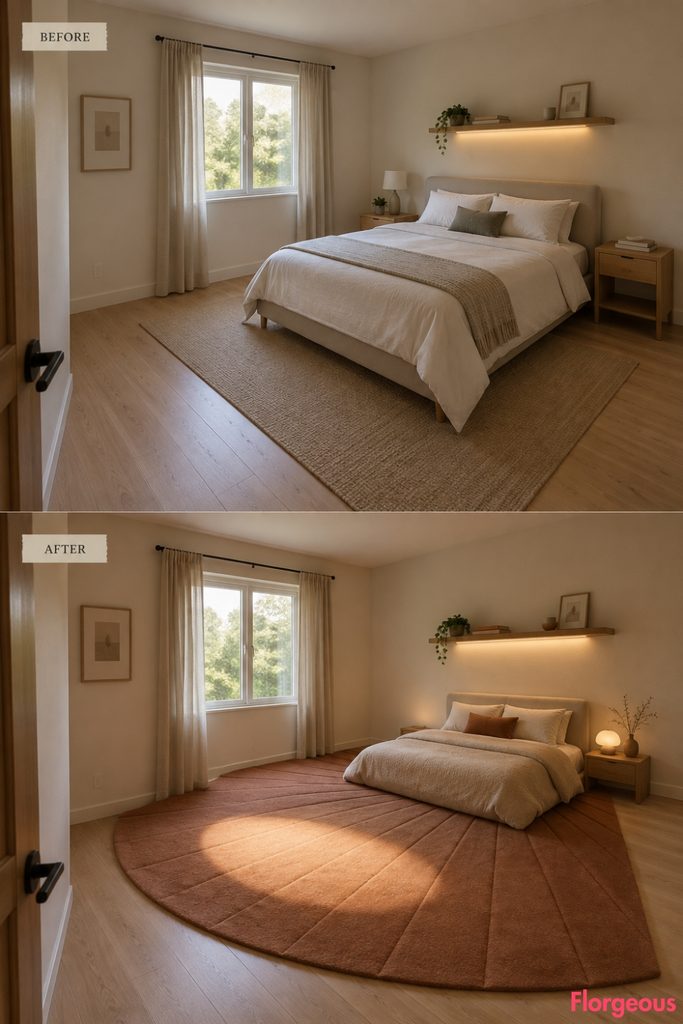
Before: A basic under-shelf task strip is fixed beneath a plain wall shelf.
After: Spread one oversized fan-shaped felt floor island from the rear-right corner toward the center. Position the bed at the narrow base of the fan and leave the broad end mostly empty. A tiny overhead projector casts one soft oval of light onto the open felt surface.
Why it works: The room feels organized by one quiet floor gesture instead of several furniture pieces.
14. Rest the Mattress on a Low Timber Drum
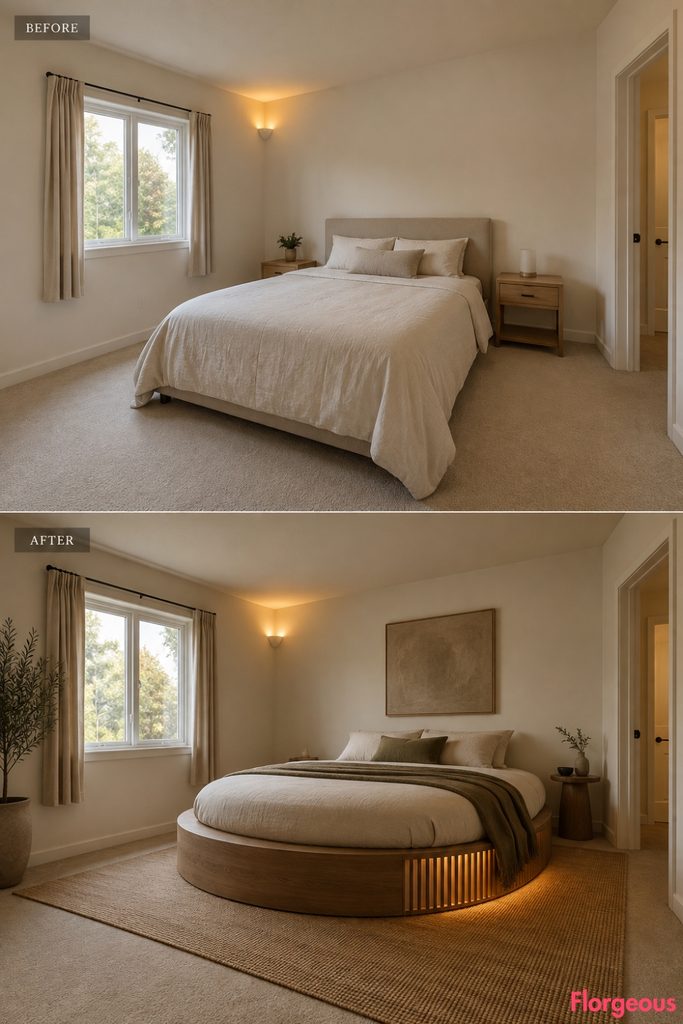
Before: A high corner wall uplight washes the ceiling.
After: Place the bed center-right on a broad low cylindrical timber drum with continuous vertical battens all around. Use minimal surrounding furniture. A small concealed light inside the hollow center shines through battens on just one side.
Why it works: The drum gives the room a grounded focal point without crowding the perimeter.
15. Replace the Wardrobe With a Bell-Shaped Reed Closet
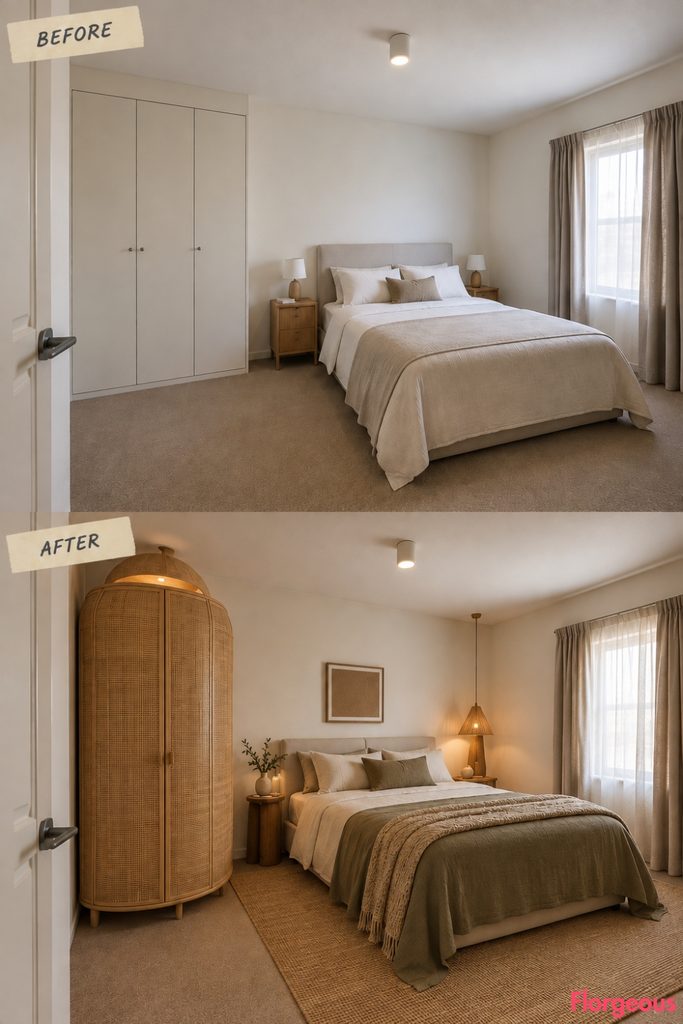
Before: The base room uses one surface-mounted cylindrical ceiling downlight.
After: Move the bed deeper into the rear-left zone and place one tall bell-shaped woven-reed closet along the entry-side right wall. Its widest portion is lifted above the floor so the walkway stays clear. A small internal top light illuminates the closet only when opened.
Why it works: The lifted bell silhouette keeps storage from feeling blocky or heavy.
16. Scatter Three Cork Totems Through the Room
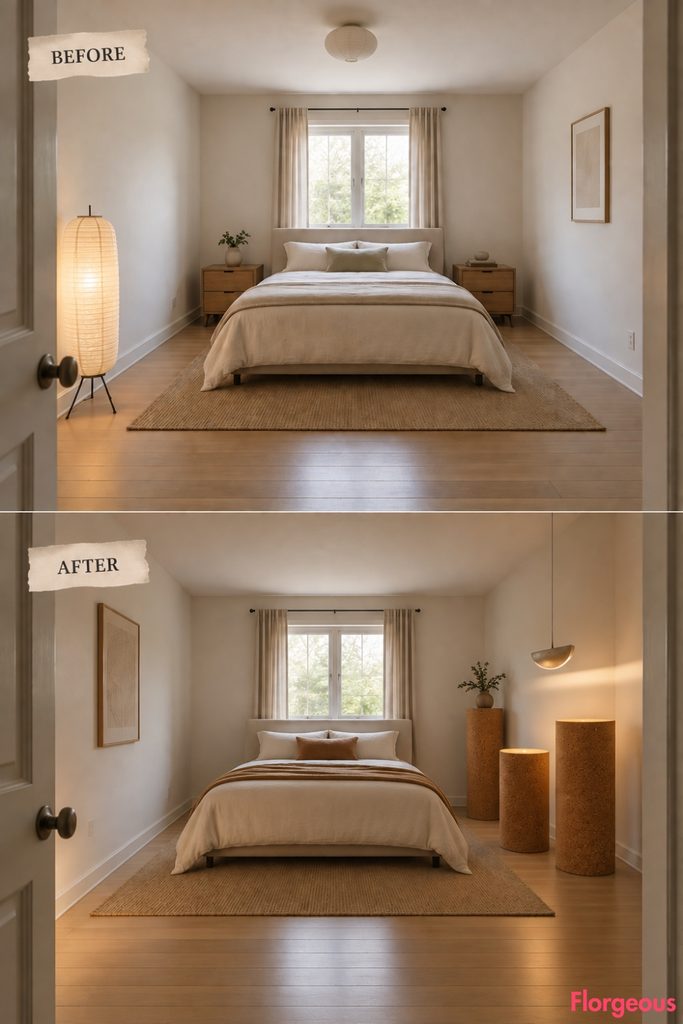
Before: A portable battery lantern sits on the floor beside the basic bed.
After: Keep the bed near the far wall and place three solid cork totems of different diameters across separate parts of the room. One works as a stool, one as a surface, and one hides storage. A small suspended reflector between the shorter two throws light sideways across their cork surfaces.
Why it works: The room becomes more relaxed when secondary pieces are spaced apart instead of grouped.
17. Replace the Foot Bench With a Sculpted Clay Saddle
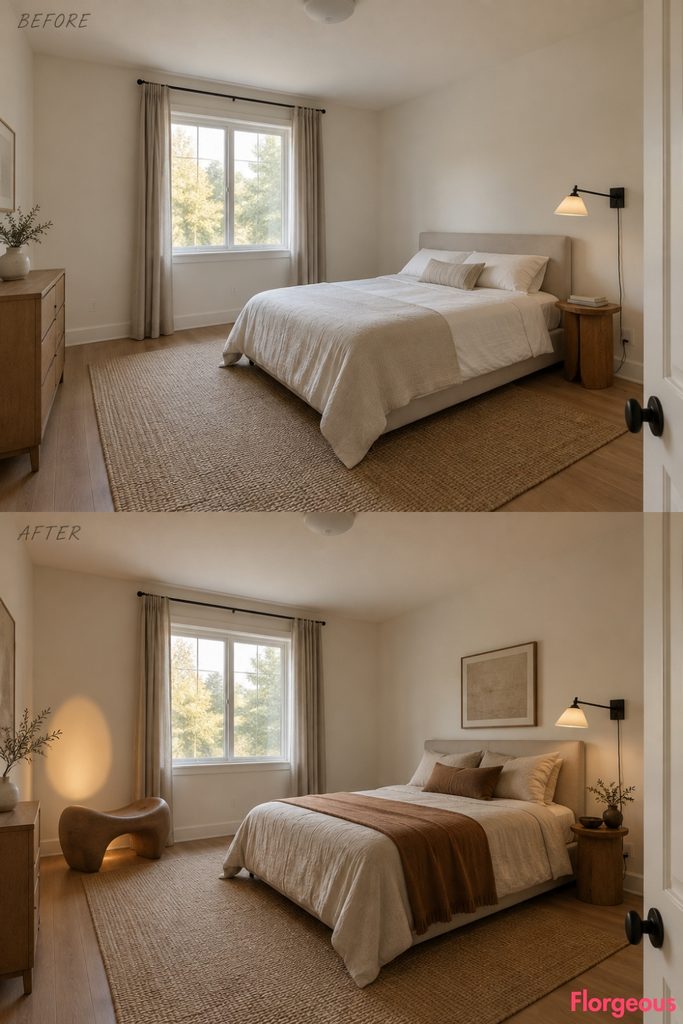
Before: A plug-in swing-arm wall lamp provides generic bedside light.
After: Place the bed along the right wall and introduce one long sculpted clay saddle in the far-left foot-side zone. Its center dips slightly so it can function as a perch. A concealed source inside its underside opening projects one soft ellipse of light onto the wall behind it.
Why it works: The clay form adds presence without reading like another bench.
18. Draw a Loose Boundary With One Thick Wool Cord
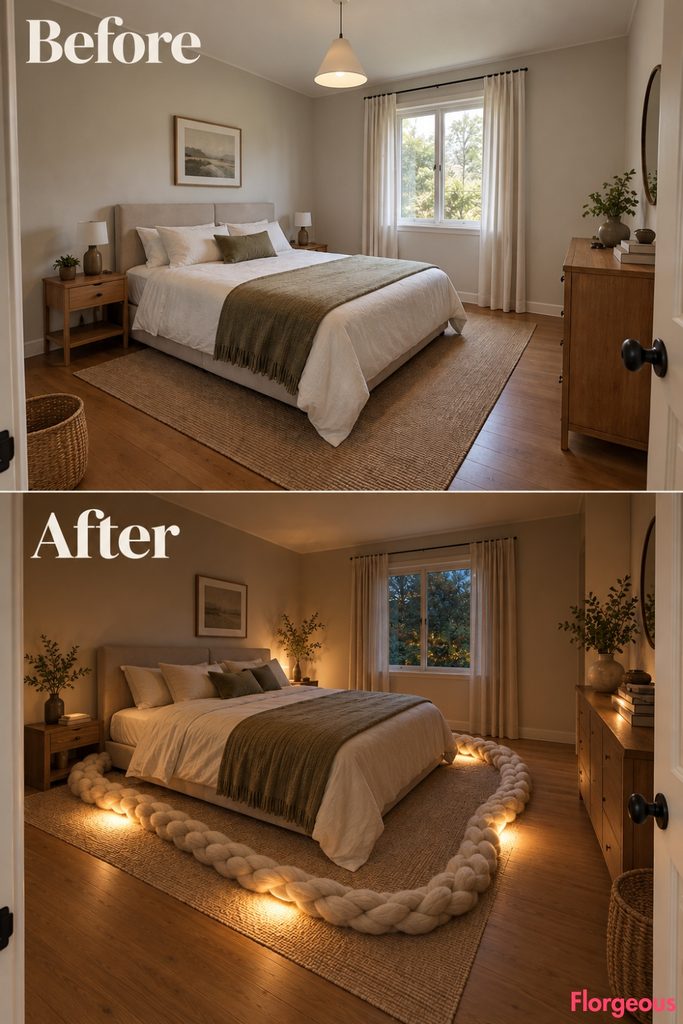
Before: An opal cone pendant hangs from the center of the ceiling.
After: Position the bed deeper toward the left and lay one extremely thick braided wool cord in a loose incomplete oval around the sleeping zone. All storage stays outside the cord. Tiny rechargeable light beads hidden beneath only three points in the braid create separate pools rather than a continuous outline.
Try this: Leave gaps in the oval so the room still feels open and easy to move through.
19. Use Two Staggered Low Beds for a Shared Calm Layout
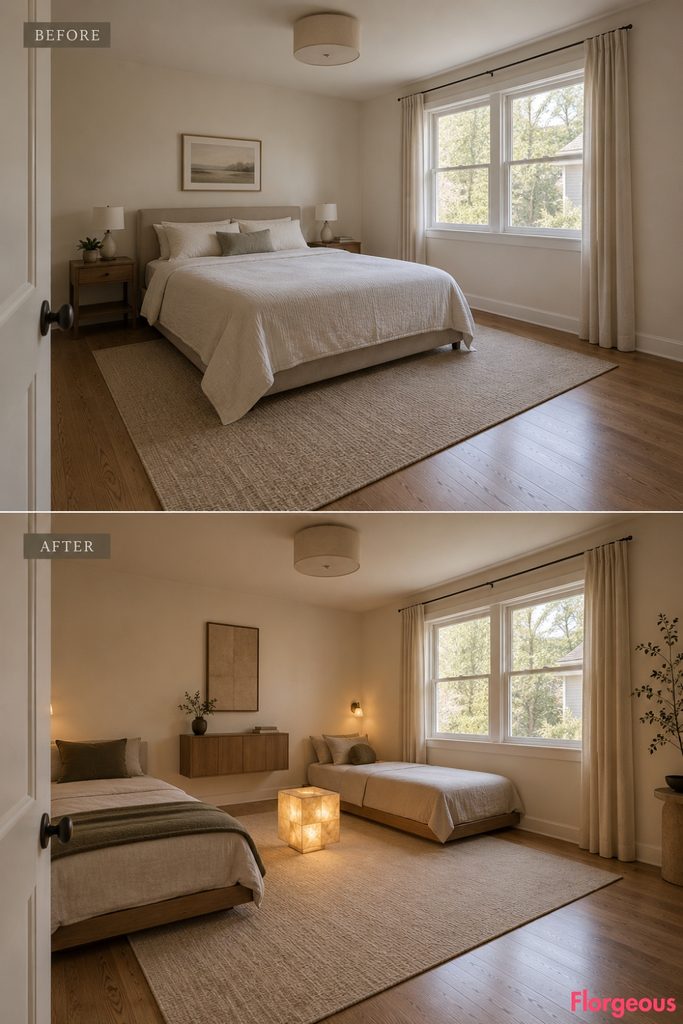
Before: The plain room uses a shallow fabric drum semi-flush light.
After: Replace the single bed with two narrow low beds staggered on opposite sides of the rear half of the room. Leave a shared open void between their foot ends and add one compact closed cabinet against the remaining wall. A low freestanding mica light in the center gives the shared zone a soft mineral shimmer.
Why it works: The room feels communal and calm without becoming a standard twin-bedroom setup.
How to Choose the Version That Fits Your Home
The most successful Zen Bedroom is not the one with the fewest objects. It is the one where the room feels intentional, easy to move through, and visually quiet.
Start with circulation first. Make sure the route from the doorway to the bed and window feels clear before choosing statement pieces. Then decide what kind of calm you want. Curved forms feel softer, tall rounded storage adds quiet presence, and tactile materials like cork, felt, clay, cane, rush, timber, and straw make the room feel grounded without relying on clutter.
Lighting matters just as much. A focused glow inside one object, a diffused ring above the bed, or a soft reflected wash can change the mood more effectively than several unrelated fixtures. If the layout, material, and lighting each have one clear job, the room is already moving in the right direction.