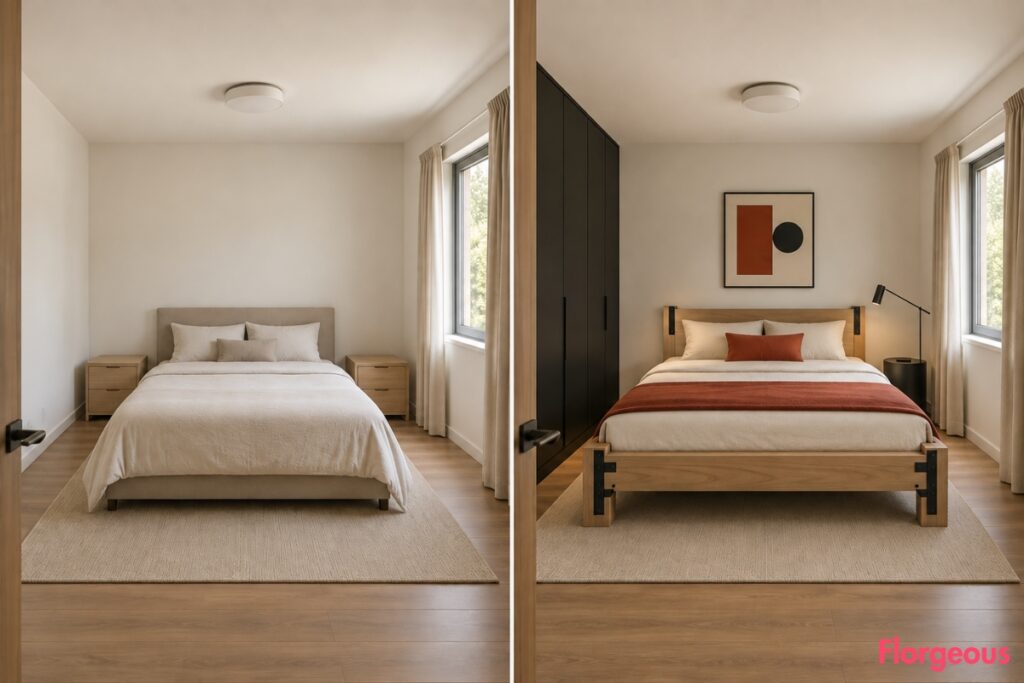
A plain bedroom does not need to be ugly to feel unfinished. Warm off-white walls, a neutral bed, two bare nightstands, and soft daylight can work perfectly well, yet still leave the room without a clear identity.
These Bauhaus Bedroom ideas start from that exact situation. Instead of filling the room with complicated statement furniture, each makeover uses one strong design decision, a small supporting furniture group, and a different approach to material, function, color, or geometry.
Every before uses the same medium rectangular bedroom: solid rear wall, one window fixed on the right wall toward the rear half, one entry door at the front-left, flat ceiling, flat walls, and continuous flooring. The architecture never changes.
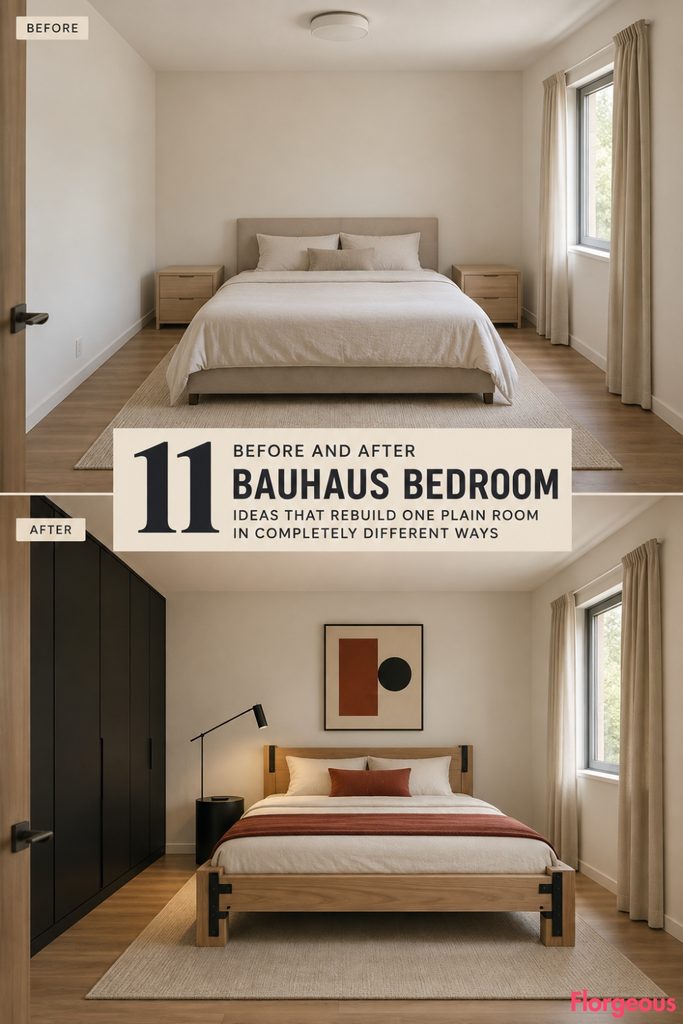
1. Build the Bed With Visible Compression Joinery
This room begins with construction rather than decoration.
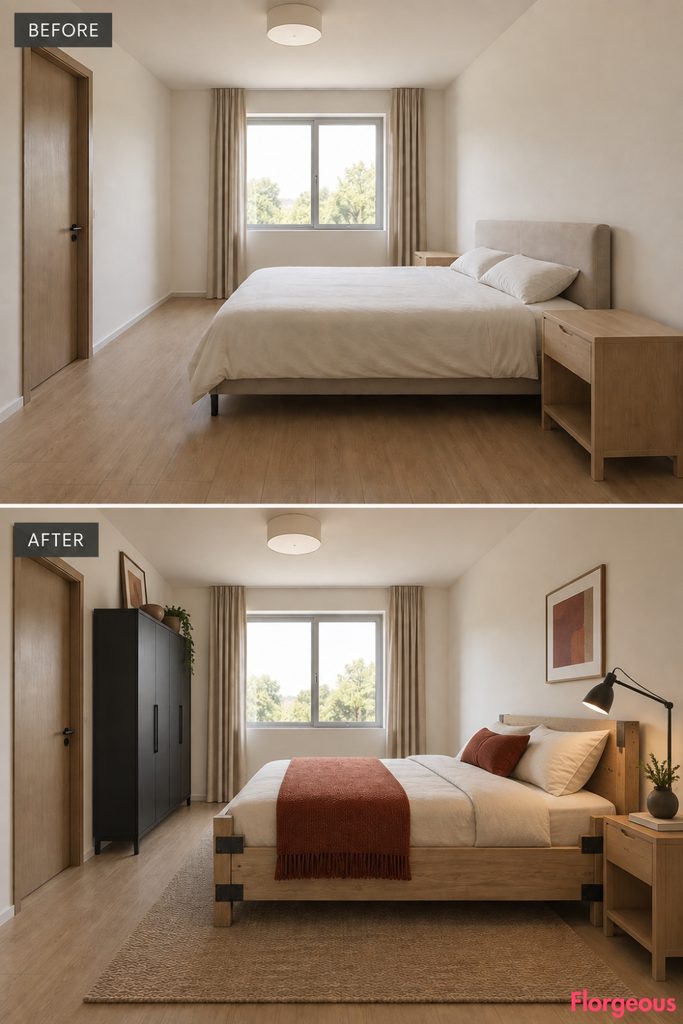
Before: Warm off-white walls, a basic neutral bed centered on the rear wall, two bare nightstands, simple bedding, short plain curtains, basic ceiling light, and soft daylight.
After: Replace the standard bed with a full-size ash frame whose side rails are visibly clamped between substantial upright blocks. Black compression plates make the joints easy to understand without becoming ornamental.
A full-depth matte-black clothes press occupies the left wall, while one compact adjustable reading lamp handles bedside lighting. Natural ash, black, cream, and a small brick-red textile accent keep the palette controlled.
Designer Tip: Visible construction looks convincing when every joint appears to have a real structural purpose.
2. Soften the Room With a Braided-Veneer Headboard
This version feels crafted and warm without drifting into cottage or Japandi territory.
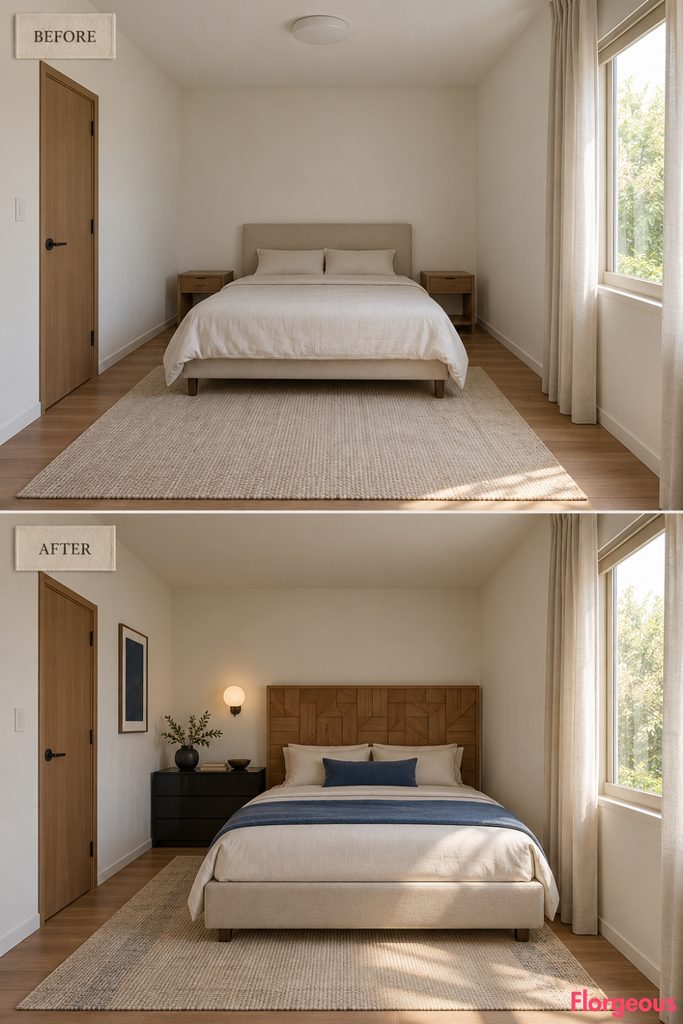
Before: The identical plain bedroom with the same basic bed, nightstands, curtains, and neutral finishes.
After: A simple upholstered bed sits on the rear wall behind one broad headboard woven from flat beech veneer strips. The pattern is oversized and geometric rather than cane-like or decorative.
A low black lacquer chest replaces both nightstands, positioned asymmetrically to one side. A compact opal wall light provides warm reading light.
The palette stays pale beech, black, ivory, and muted ultramarine, letting the woven headboard provide most of the texture.
3. Make One Lacquered Clothes Press the Main Focal Point
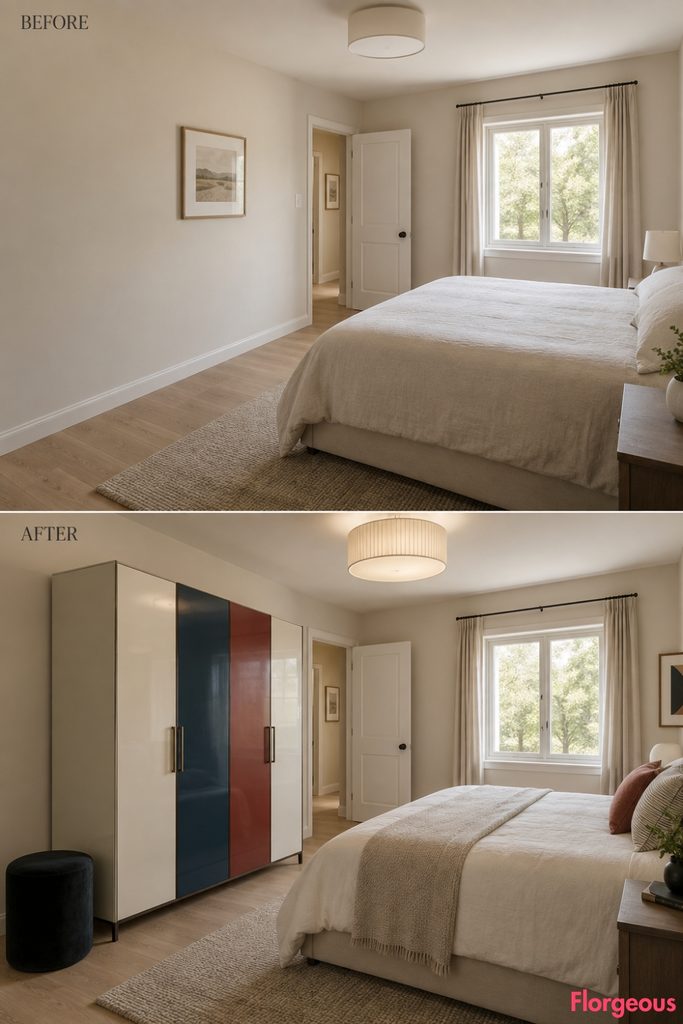
Here, the bed deliberately becomes quieter so storage can control the composition.
Before: The same plain bedroom with its neutral bed, two bare nightstands, minimal styling, and no strong focal point.
After: Keep a simple cream upholstered bed slightly toward the rear-right side. Along the left wall, place one substantial full-depth clothes press with three large lacquered door planes in bone white, deep blue, and muted red.
The cabinet remains one believable piece of furniture, not a modular feature wall. A small black dressing stool sits nearby and nothing else competes with it.
Broad ceiling light keeps the glossy lacquer reflective but not luminous.
Small Space Tip: One properly proportioned wardrobe usually looks calmer than several smaller storage units scattered around the room.
4. Use Tensioned Felt Cord Instead of a Solid Headboard
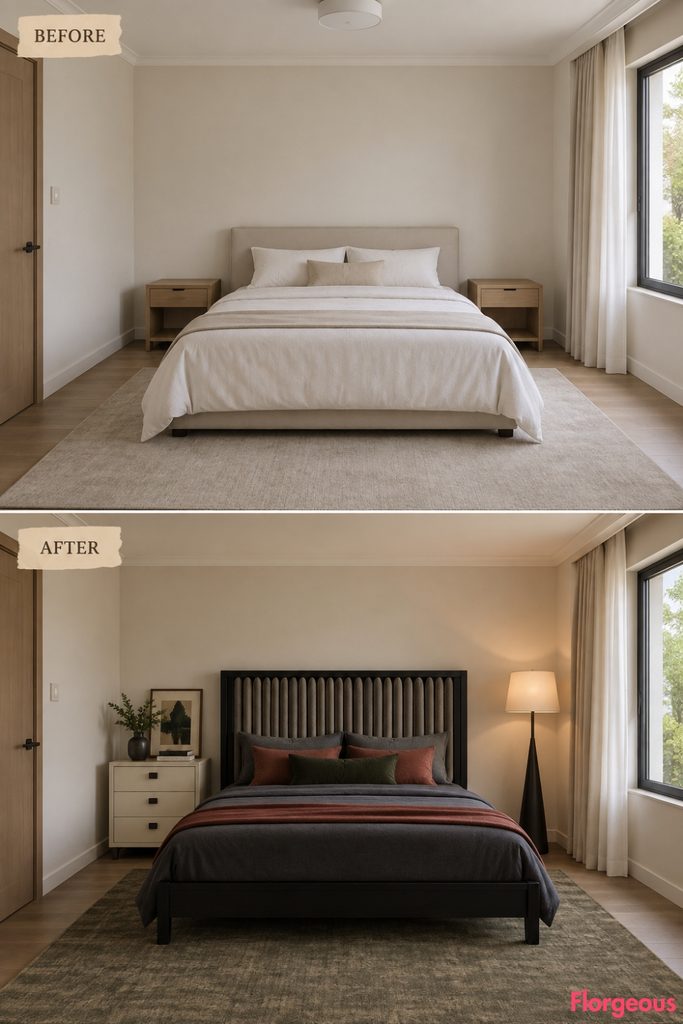
This makeover introduces softness through a very different construction method.
Before: The same neutral bedroom with a standard bed and two simple nightstands.
After: A full-size black timber bed gains a freestanding rectangular head frame filled with thick tensioned wool-felt cords running vertically at regular intervals. The cords remain clearly soft and flexible, while the outer frame stays rigid.
One compact cream drawer chest provides storage. A shaded floor lamp sits on the opposite side of the bed, keeping the composition asymmetrical.
Charcoal, cream, rust, and dark green make this room tactile and slightly moodier.
5. Turn Book Storage Into a Strong Black-and-White Grid
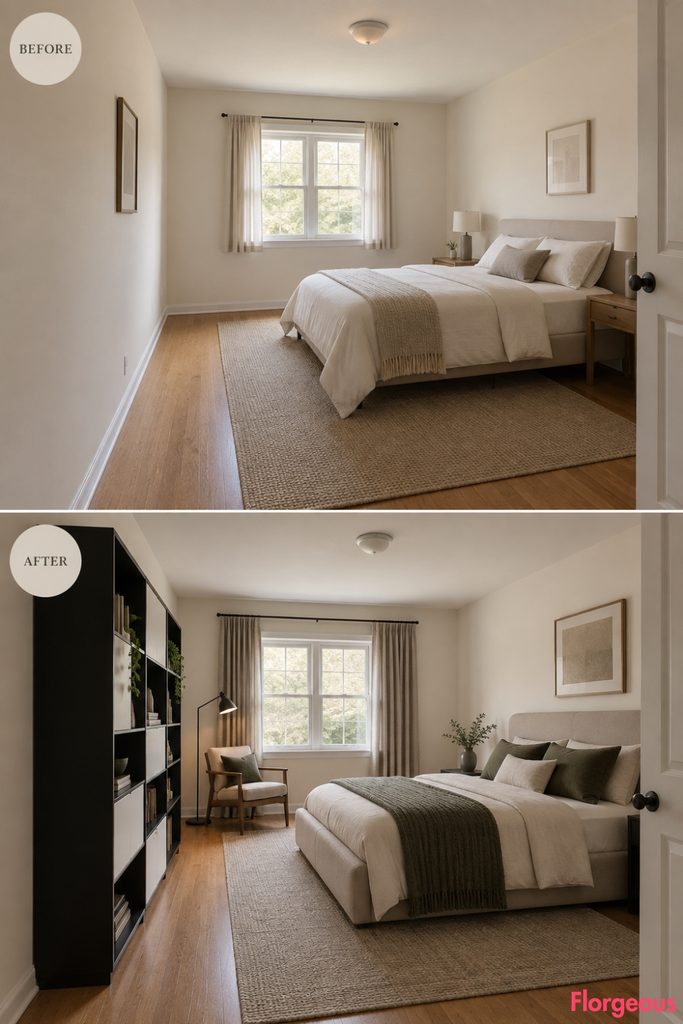
Storage drives this room, but with books rather than clothing.
Before: The identical plain bedroom with bare walls and almost no visual hierarchy.
After: Move a straightforward upholstered bed toward the right half of the rear wall. A freestanding full-depth book cabinet occupies the left side, divided into a strong irregular grid of open and closed compartments.
The frame is black, closed doors are warm white, and only a few compartments hold books and small neutral objects to avoid clutter.
One upright timber chair near the cabinet creates a compact reading position. Lighting comes from a simple directional floor lamp.
Why It Works: Open and closed compartments create rhythm without needing graphic paint or extra decorative furniture.
6. Contrast a Rectangular Bed With One Oversized Circle
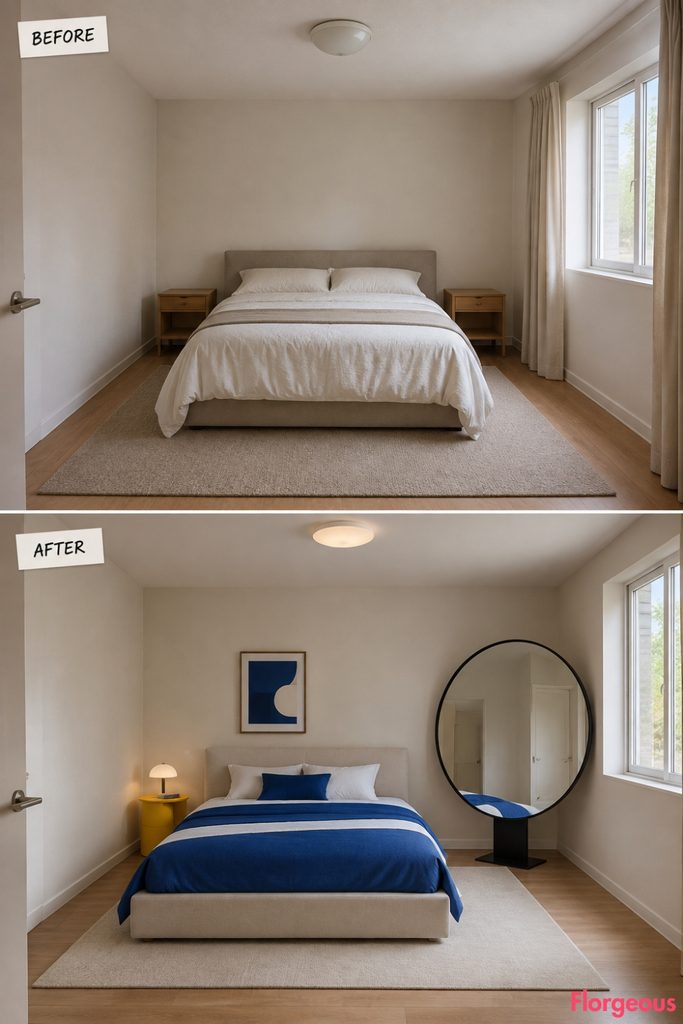
This is the most playful geometry in the article, but it remains simple enough to feel like a real bedroom.
Before: The same basic bedroom with a conventional bed, matching nightstands, and no dominant shape.
After: Keep a low rectangular upholstered bed slightly off-center on the rear wall. Beside it, introduce one large freestanding circular dressing mirror supported by a stable black base.
A small cylindrical yellow bedside table repeats the curved geometry at a much smaller scale. Everything else remains quiet.
White, black, cobalt bedding, and yellow give the room a graphic Bauhaus color story without covering the walls in shapes.
7. Let a Central Games Table Change How the Bedroom Works
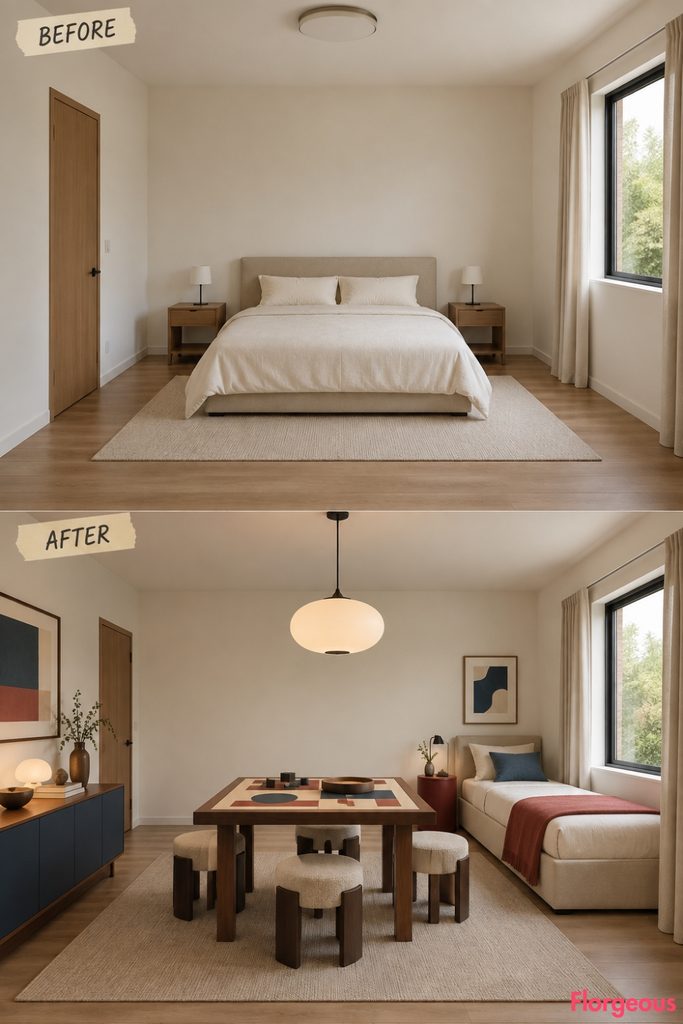
This room is social rather than bed-focused, but the composition stays intentionally simple.
Before: The same plain bedroom with nowhere meaningful to sit or gather.
After: Move a narrow upholstered bed along the right wall. A substantial square black-stained timber games table occupies the center, paired with four compact stools treated as one furniture group.
The tabletop uses simple cream, muted red, and blue geometric fields with no text, numbers, or recognizable game markings.
One low full-depth credenza against the left wall stores bedding and games. An opal pendant centers directly over the table.
8. Give the Bedroom a Compact Music-Practice Zone
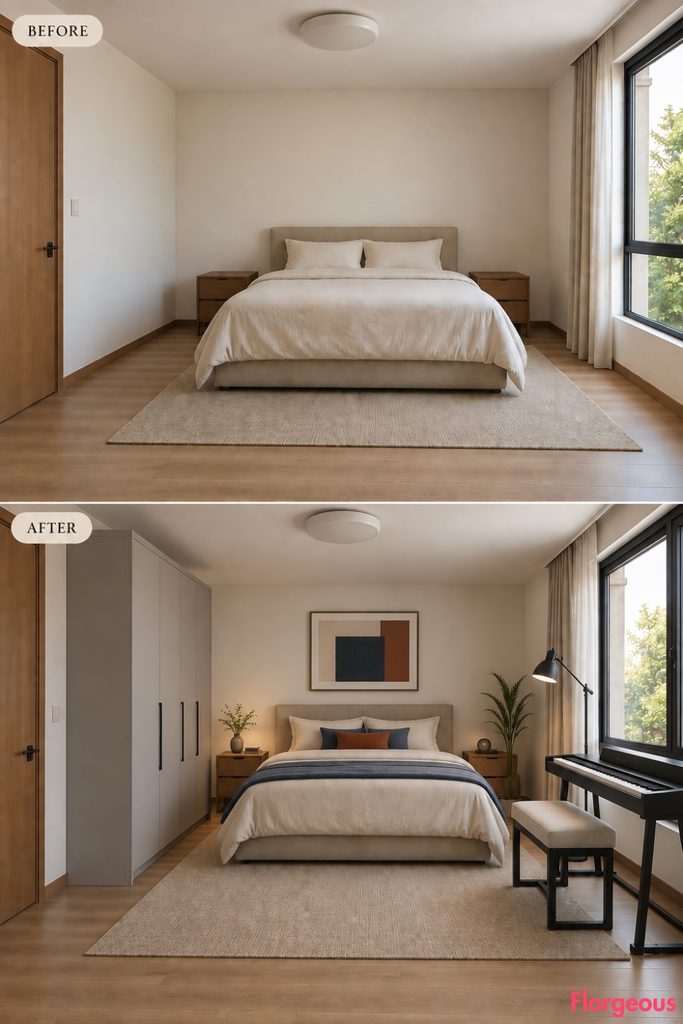
A hobby can lead the room without turning it into a studio packed with equipment.
Before: The same warm-neutral bedroom with no function beyond sleeping.
After: Keep a simple upholstered bed against the rear wall but shift it slightly left. Near the front-right side, place one compact brandless keyboard on a clean black stand with a simple upholstered bench.
A full-depth pale-gray cabinet on the left stores clothing and keeps the music equipment from becoming clutter.
A single adjustable floor lamp lights the keyboard zone. The palette uses pale gray, black, cream, and one muted red accent.
Style Note: Keep musical equipment visually quiet so the space still reads first as a bedroom.
9. Build a Softer Bed From Rolled Wool Forms
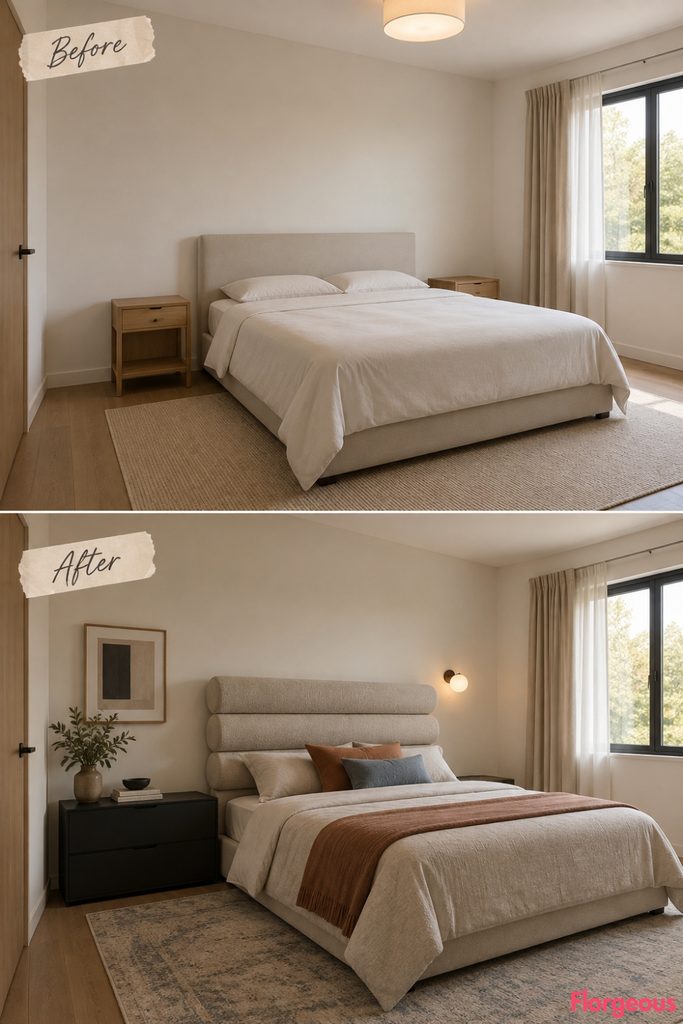
This concept changes the bed silhouette without adding moving parts or complex engineering.
Before: The same plain bedroom with a basic rectangular bed and bare nightstands.
After: Replace the standard headboard with three large horizontally rolled wool forms attached securely to a conventional upholstered bed frame. The rolls are firm and architectural rather than loose cushions.
One low black chest sits at the foot side, while a compact wall light keeps the bedside area free.
Oatmeal, charcoal, rust, and dusty blue make the room soft but graphic. The bed remains unmistakably functional and realistically proportioned.
10. Use Phenolic Laminate for a Crisp Synthetic Bedroom
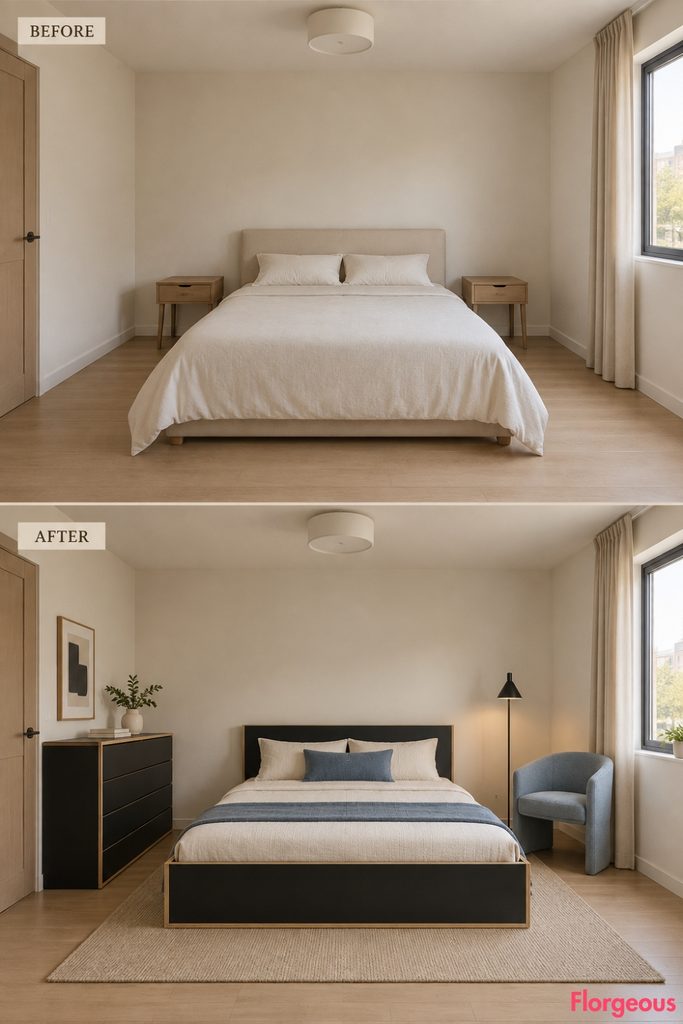
This room feels sharper and more industrial without resorting to exposed machinery.
Before: The same neutral bedroom with ordinary timber furniture and minimal styling.
After: A clean rectangular bed frame is finished in dark phenolic laminate with visible pale plywood edges. One matching full-depth drawer chest uses the same material but a very different proportion.
A compact pale-blue upholstered chair beside the window provides one softer counterpoint. Lighting comes from a simple black cone floor lamp.
Dark brown-black laminate, pale plywood edges, cream bedding, and pale blue give the room a distinctly synthetic Bauhaus personality.
Common Mistake: Do not make laminate look like glossy plastic. A believable phenolic surface is dense, matte, and slightly warm.
11. Finish With an Interlocking Solid-Wood Bed Frame
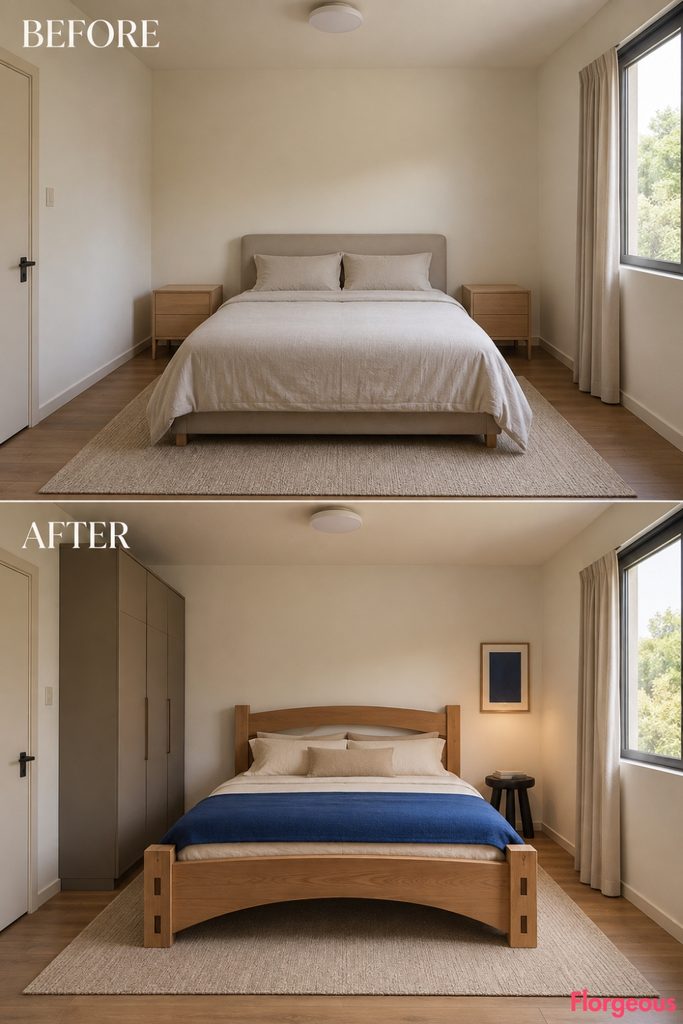
The final room returns to construction, but its visual language is completely different from the compression-jointed first concept.
Before: The same standard neutral bedroom baseline.
After: A full-size bed is built from thick solid-wood members that cross through one another at the head and foot using broad interlocking slots. The resulting frame has a subtle arch-like profile without becoming a canopy or decorative fantasy structure.
One tall warm-gray clothes press sits on the left wall, and one compact black stool handles dressing.
Natural beech, warm gray, black, and one cobalt blanket keep the final room calm and architectural.
How to Choose a Bauhaus Direction Without Overcomplicating the Room
A convincing Bauhaus Bedroom does not need a large number of unusual objects. The strongest rooms here use one clear idea and only enough supporting furniture to make the bedroom practical.
Choose a bed-led concept if you want the transformation to read immediately. Choose the lacquer wardrobe or book grid if storage is the bigger problem. The games and music layouts work when the bedroom needs another everyday function, while veneer, felt, wool, laminate, and exposed joinery offer quieter ways to introduce Bauhaus character.
Before changing anything, check the doorway, window clearance, furniture depth, and your normal circulation route. Then keep one focal idea and remove anything that does not help it.