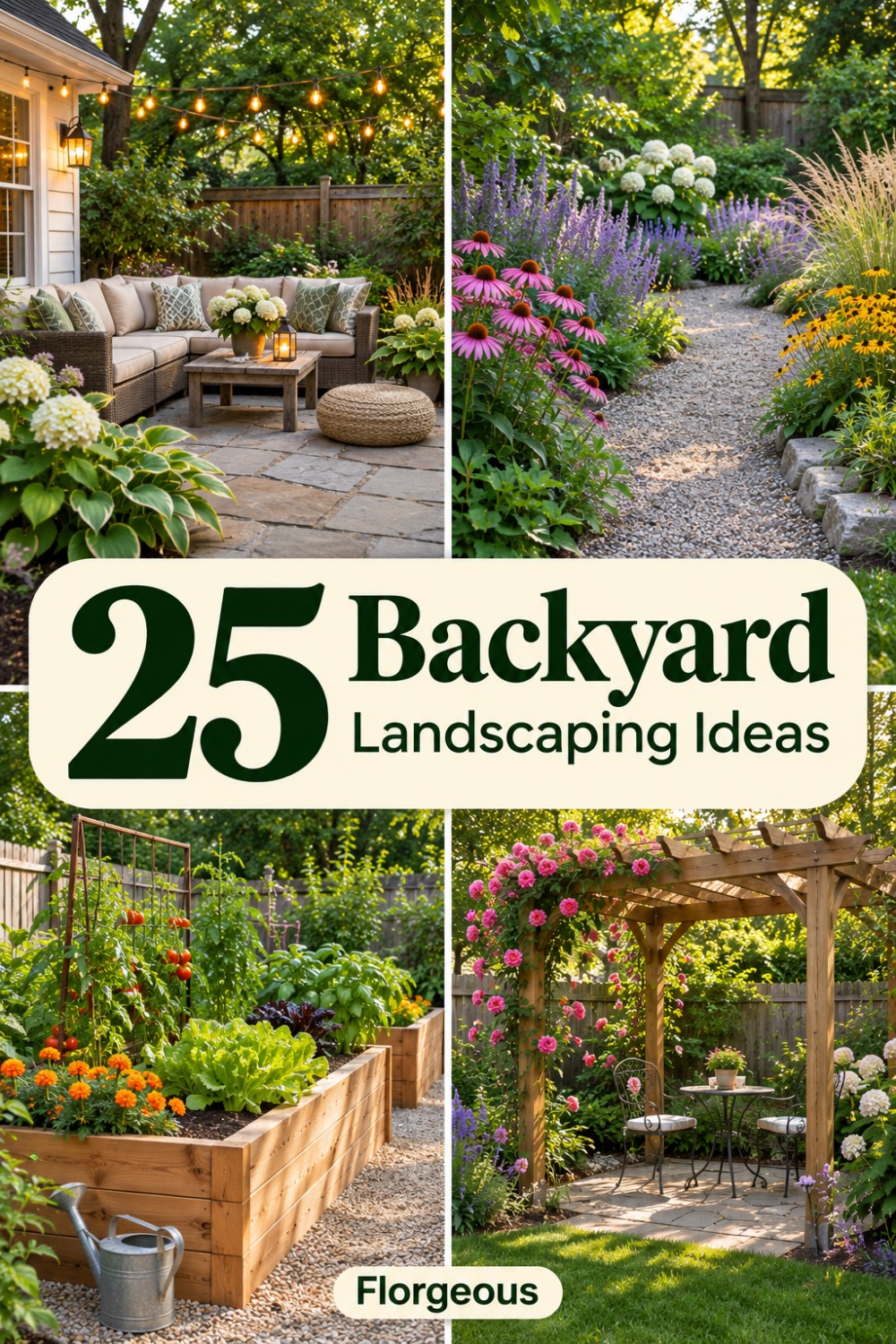
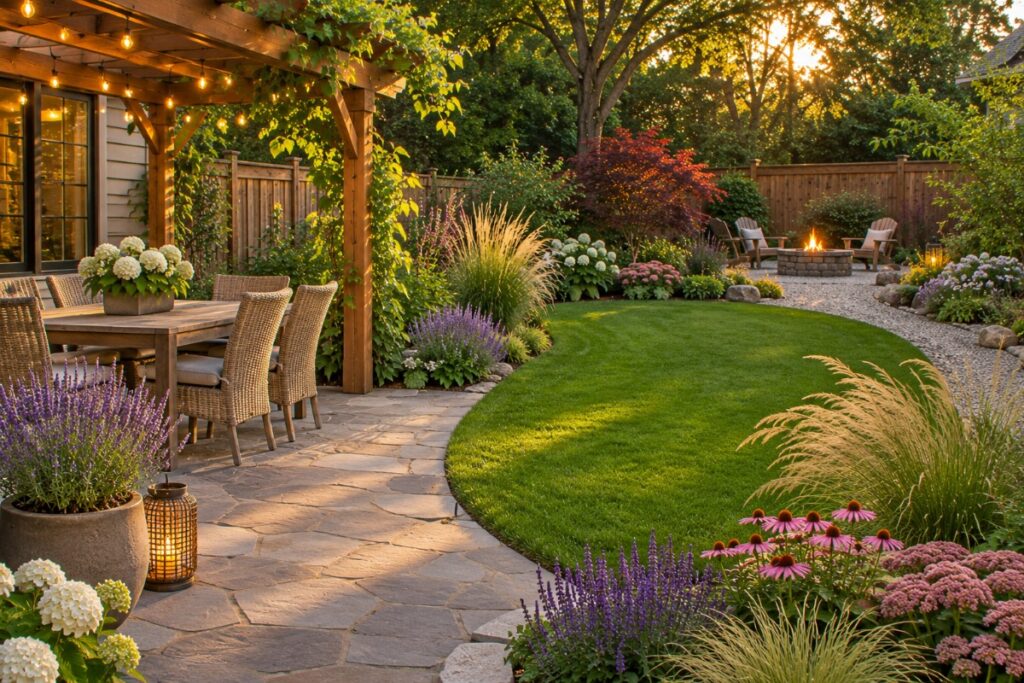
Most backyards start the same way: a rectangle of lawn, a fence and a patio that’s a little too small.
With the right layout, that same space can hold a dining spot, a quiet corner, a garden and room for kids or pets to play.
The secret is thinking in zones. Instead of one big open yard, you create a few smaller outdoor rooms, each with its own purpose, connected by paths and planting.
These 25 backyard landscaping ideas cover layout, privacy, planting, lighting and features, so you can pick what fits your space and the way you actually use it.
Backyard Ideas by Goal
| If you want… | Start with these ideas |
|---|---|
| More privacy | Mixed shrub screen, climbers on fences, tall grasses |
| Space to entertain | Patio by the door, string lights, outdoor kitchen, fire feature |
| Somewhere to relax | Reading nook, hammock corner, moon garden |
| To grow food | Raised vegetable beds, fruit trees and berries |
| Less maintenance | Smaller lawn, low-water section, drip irrigation |
| More wildlife | Wildlife pond, pollinator border, berry shrubs for birds |
1. Divide the Backyard Into Outdoor Rooms
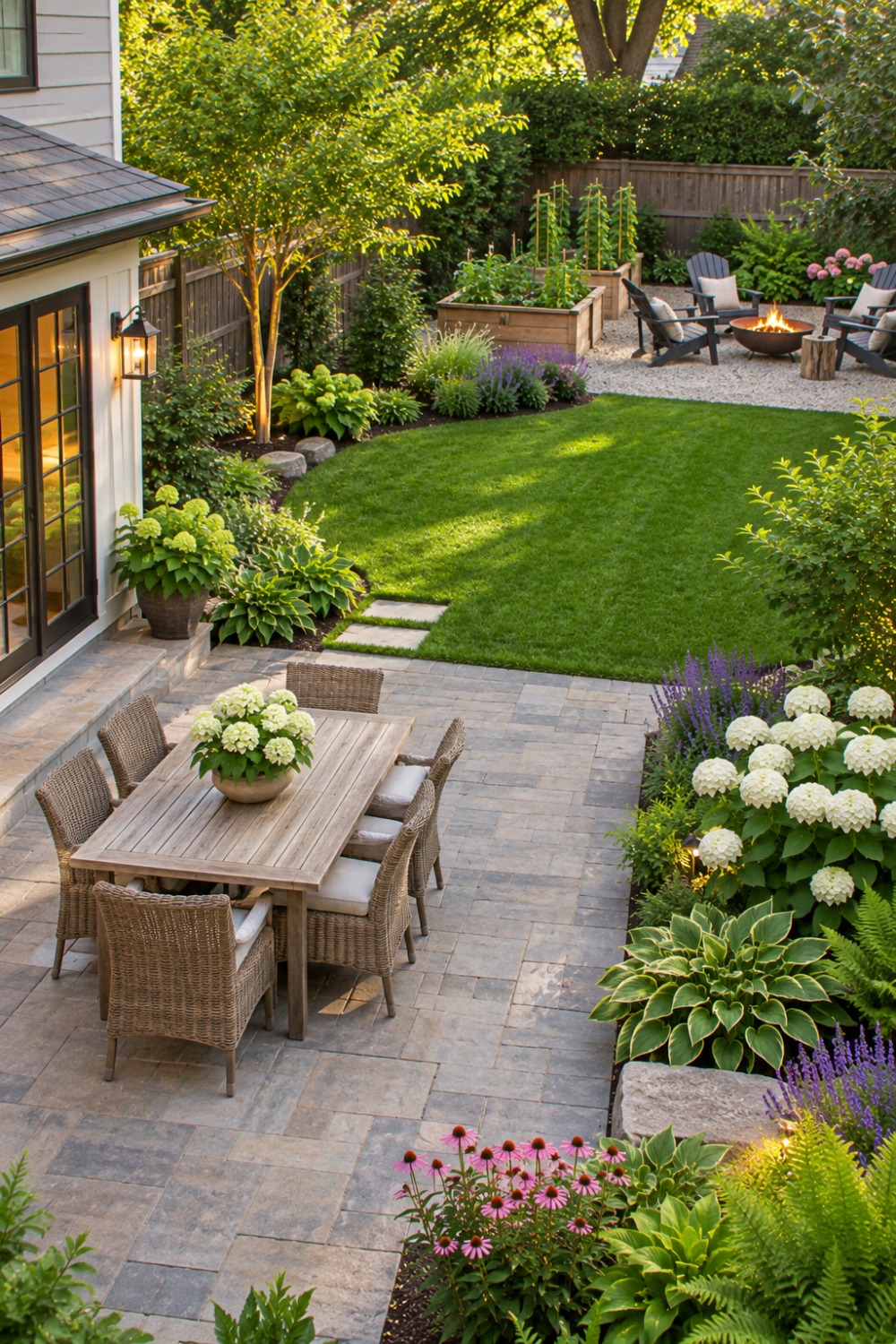
Large open yards often feel empty, while small ones feel cluttered. Zoning fixes both.
Decide on two to four uses, such as dining, lounging, play and growing, then give each its own area with a change of surface, a low hedge or a planted border between them.
Landscape designers report that homeowners increasingly want smaller, defined spaces like nooks and garden rooms rather than big showcase yards.
How to do it:
- List how you want to use the yard.
- Sketch rough zones on a plan, putting dining nearest the house.
- Separate zones with planting, paths or a change of paving.
2. Start With a Generous Patio by the Back Door
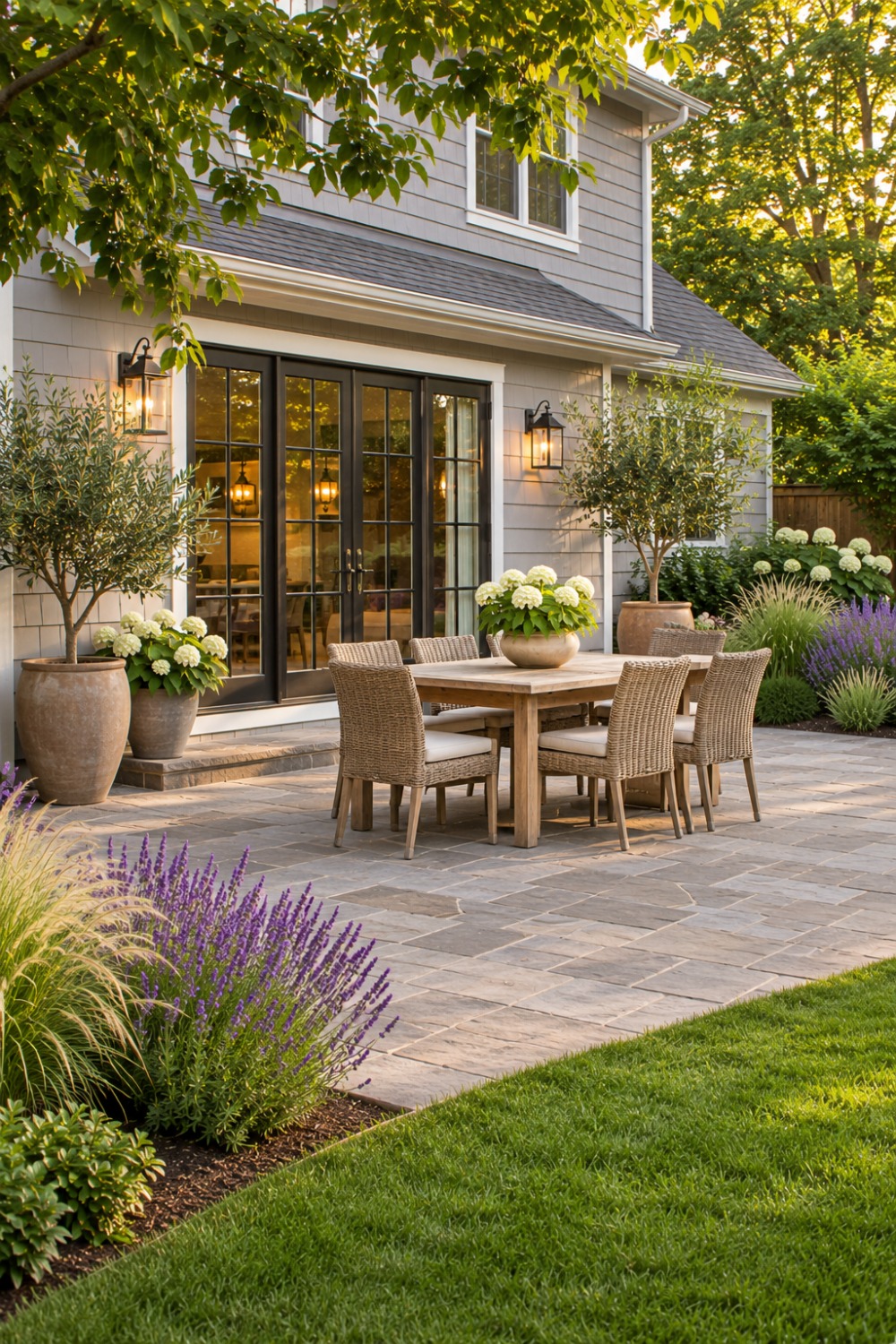
The area right outside the back door gets used the most, so make it big enough.
A dining table with chairs pulled out needs roughly 12 by 12 feet. If you also want lounge chairs, go bigger.
Choose paving that complements the house, and soften the edges with planting beds.
How to do it:
- Measure your table and furniture before deciding on patio size.
- Keep the patio level with a slight slope away from the house for drainage.
- Edge it with beds or pots so it doesn’t feel like bare slab.
3. Add a Pergola for Shade and Structure
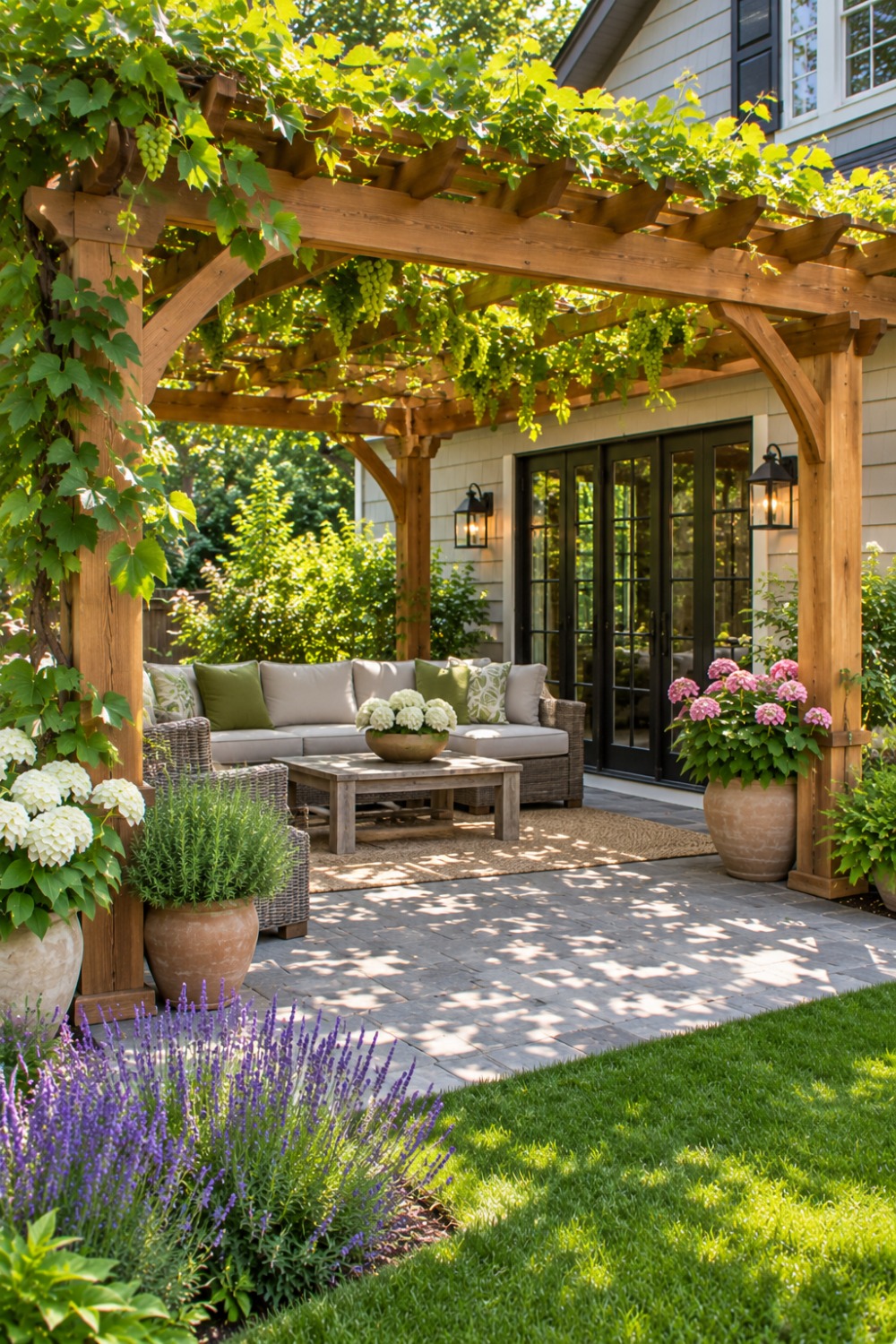
A pergola gives a patio or deck a ceiling, which makes it feel like a real outdoor room.
It also provides partial shade, especially once you add a climbing vine, outdoor curtains or a slatted roof.
Choose a size that covers your main seating area with a little room to spare.
How to do it:
- Check local permit requirements for permanent structures.
- Anchor posts on solid footings.
- Train a vine such as wisteria, grape or climbing rose up one or two posts.
4. Plant a Layered Privacy Screen
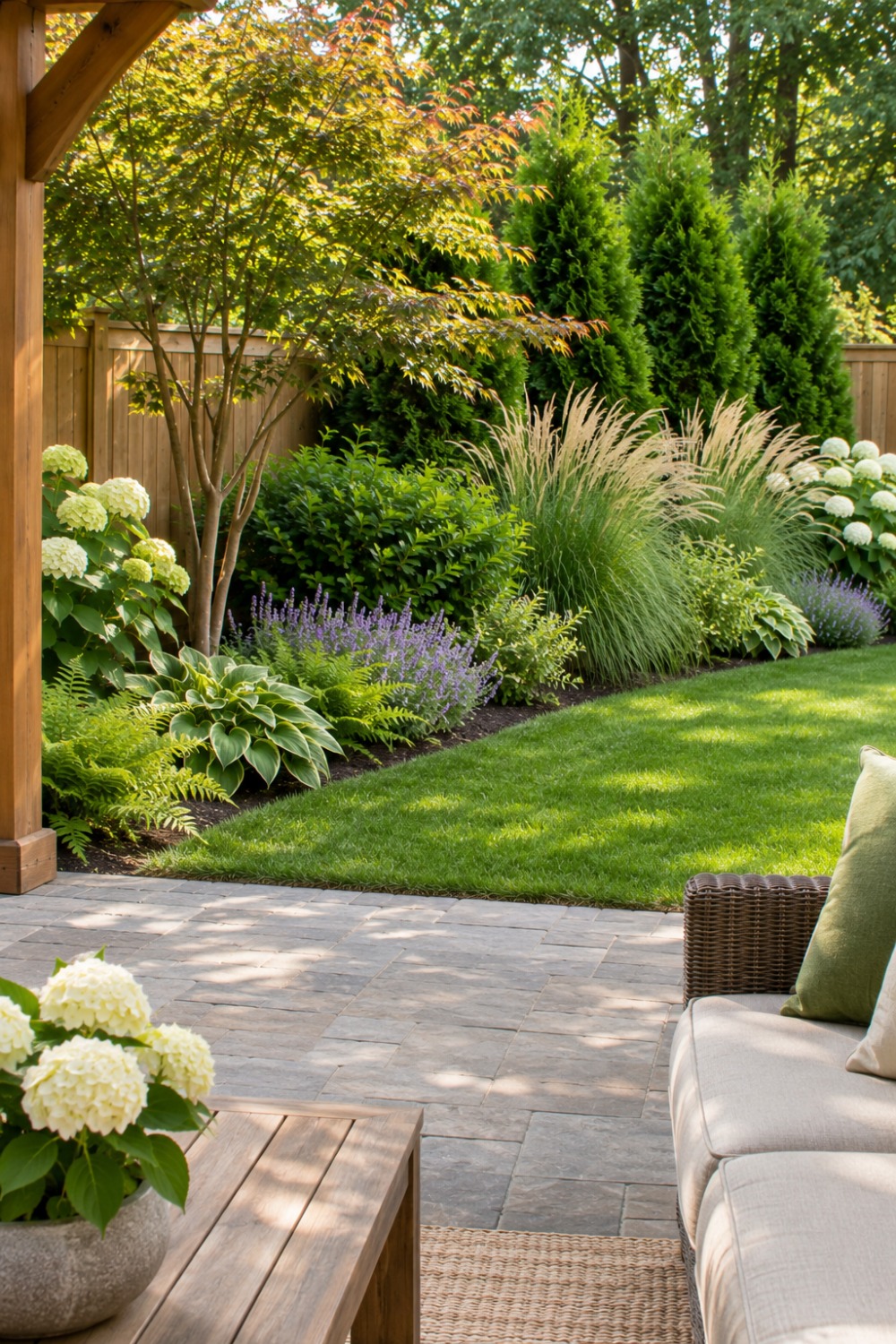
A single row of identical tall shrubs can look like a wall. A layered screen looks more natural and is more resilient.
Mix evergreen shrubs, small trees and tall grasses of different heights, staggered in two rows.
If one plant struggles, the others still give coverage.
How to do it:
- Note where you need privacy most, such as views from neighbors’ windows.
- Plant a staggered double row with a mix of three or four species.
- Water deeply through the first two summers.
Pro tip: you rarely need to screen the whole boundary. Focus on blocking the sightlines from your main seating area.
5. Build Raised Vegetable Beds in the Sunniest Spot
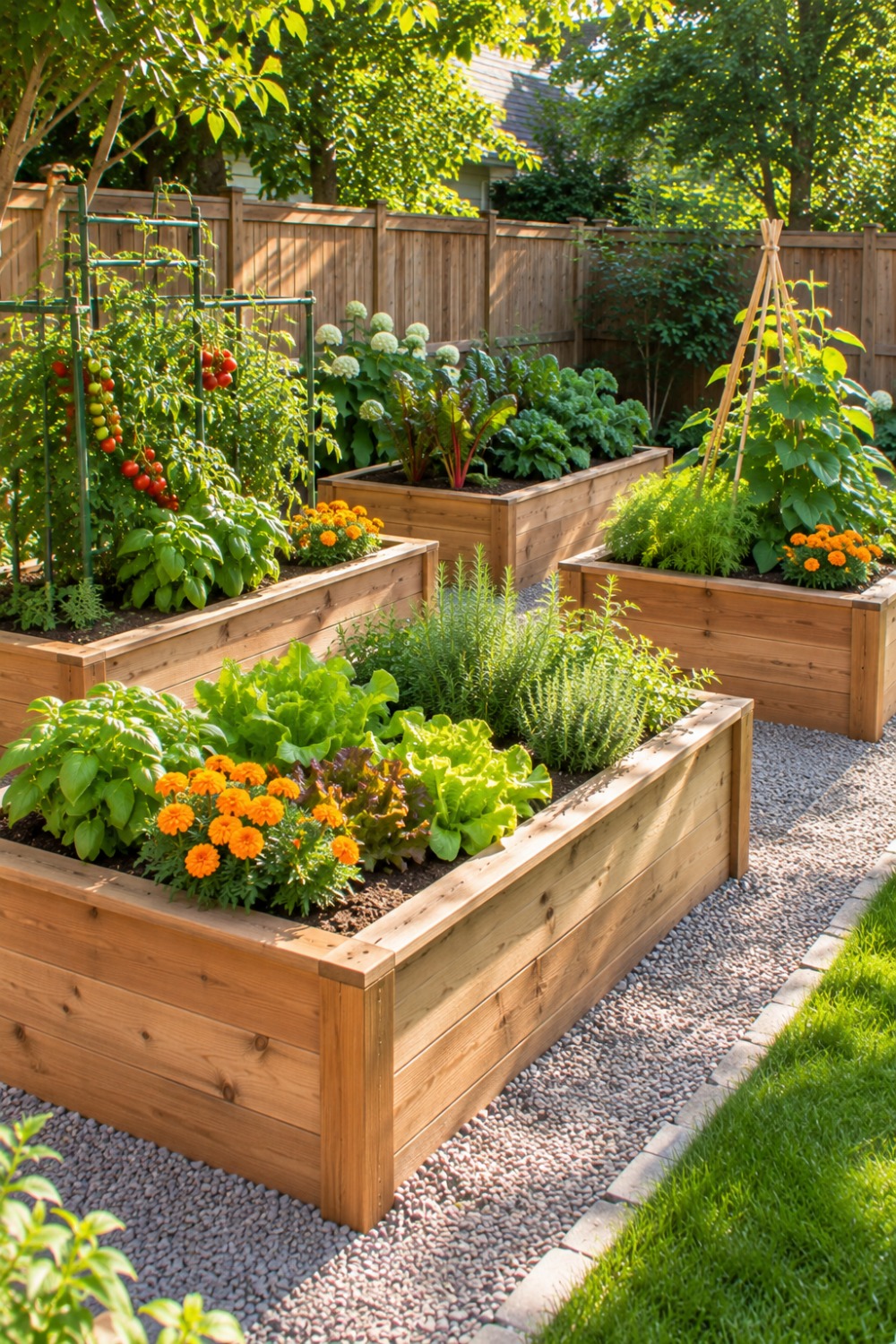
Raised beds make growing food easier: the soil warms faster in spring, drains well and is easier on your back.
Place them where they’ll get at least six to eight hours of sun, with paths wide enough for a wheelbarrow.
Wood, metal or stone beds can all look tidy enough to sit in view of the patio.
How to do it:
- Choose the sunniest part of the yard.
- Build beds no wider than 4 feet so you can reach the middle.
- Fill with a mix of quality topsoil and compost.
6. Keep the Lawn Only as Big as You Use It
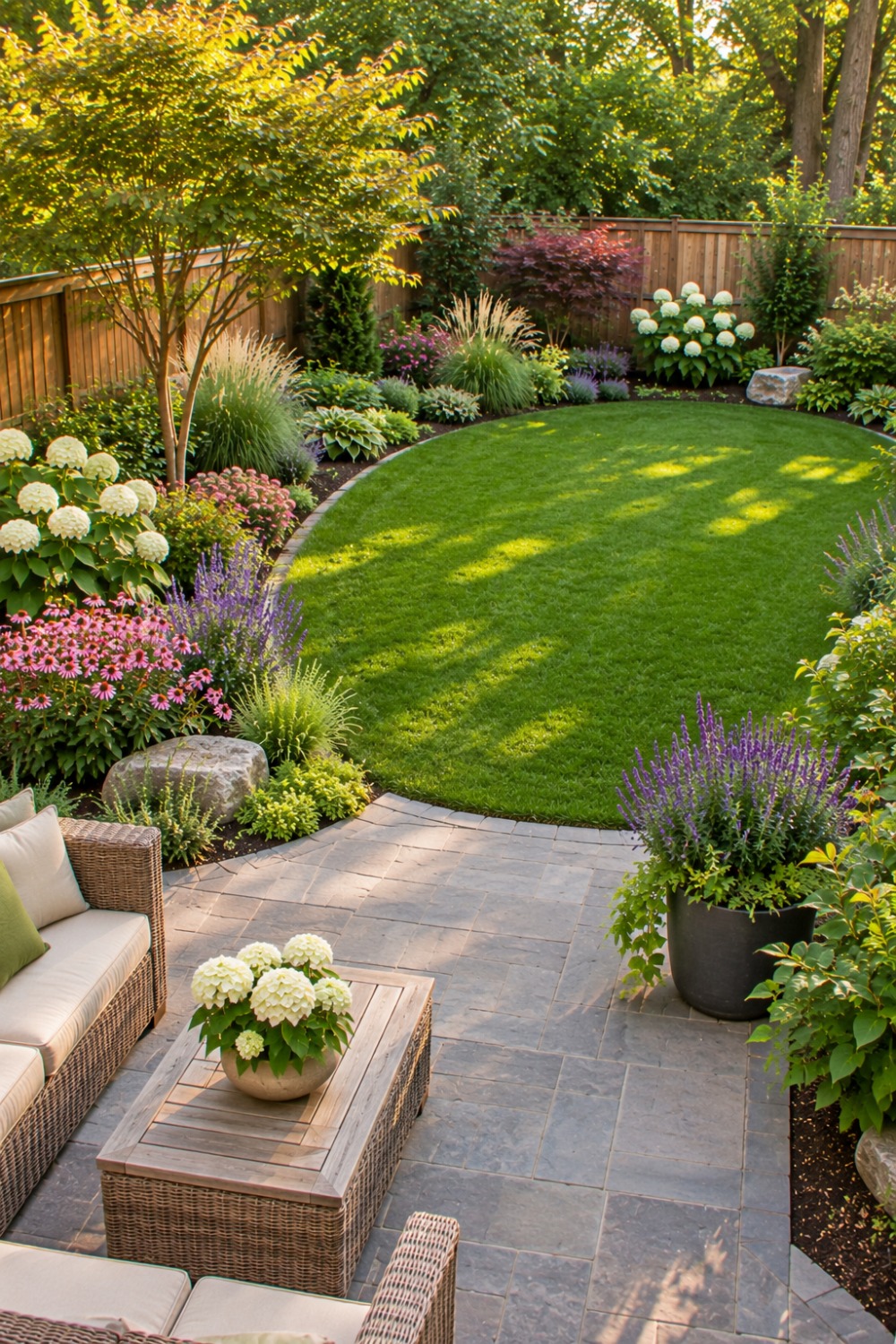
Lawns are great for kids, pets and games, but grass you never walk on is just more mowing.
Decide how much lawn you actually need, give it a simple, clean shape, and turn the rest into beds, meadow or gravel areas.
A well-shaped lawn, such as a neat oval or rectangle, also looks more designed.
How to do it:
- Mark the area you use for play or relaxing.
- Give it a simple shape with a crisp edge.
- Convert leftover grass into planting or low-water ground covers.
7. Create a Shady Reading Nook Under a Tree
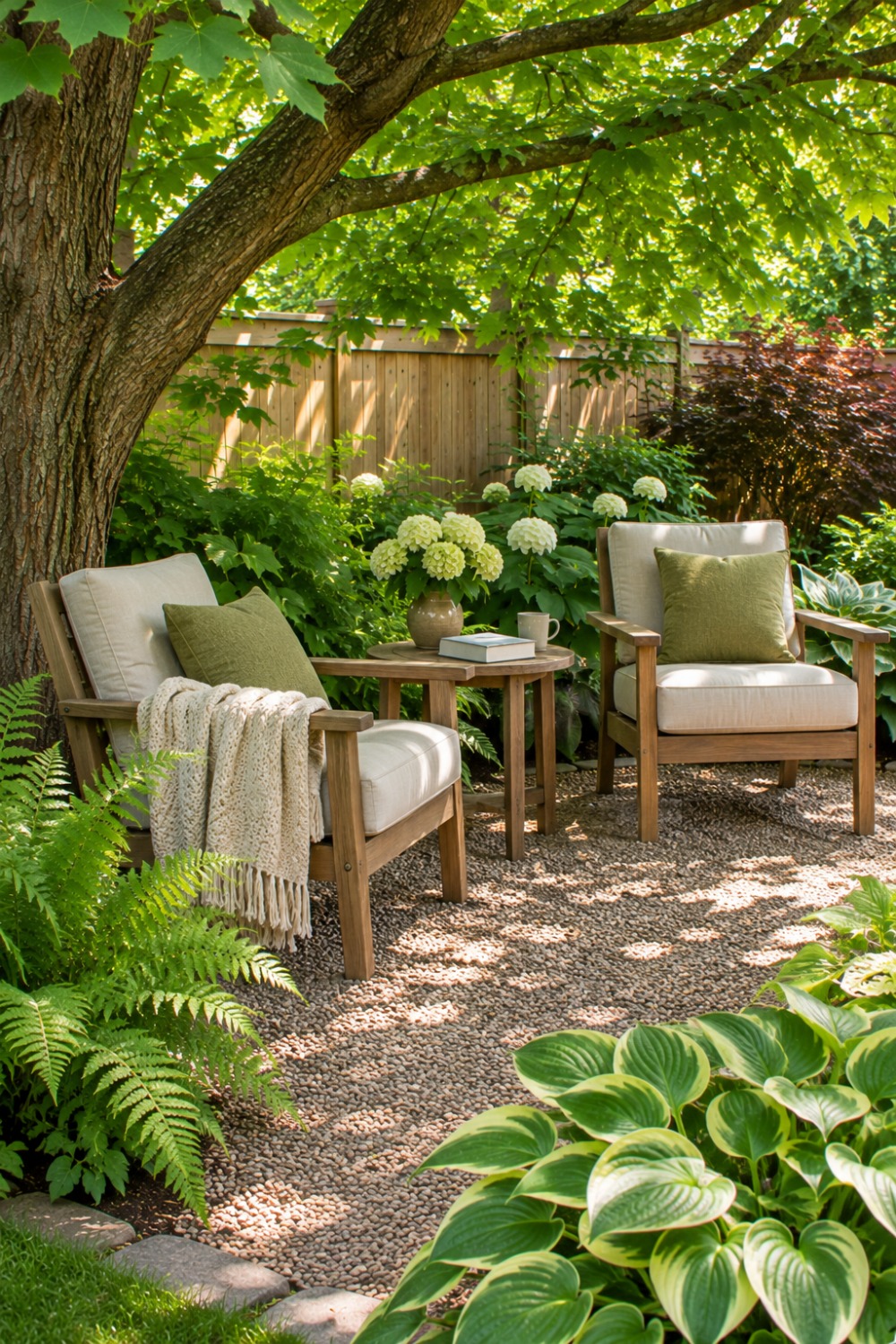
If you have a mature tree, the space under it is perfect for a quiet retreat.
Lay a small gravel or bark pad, add one or two comfortable chairs and a side table, and plant ferns and hostas around the edge.
It becomes the spot you head to on hot afternoons.
How to do it:
- Choose the shadiest spot under the canopy.
- Lay gravel or bark without heavily disturbing tree roots.
- Add shade plants around the edges to enclose the nook.
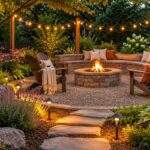
8. Add a Fire Feature as an Evening Focal Point
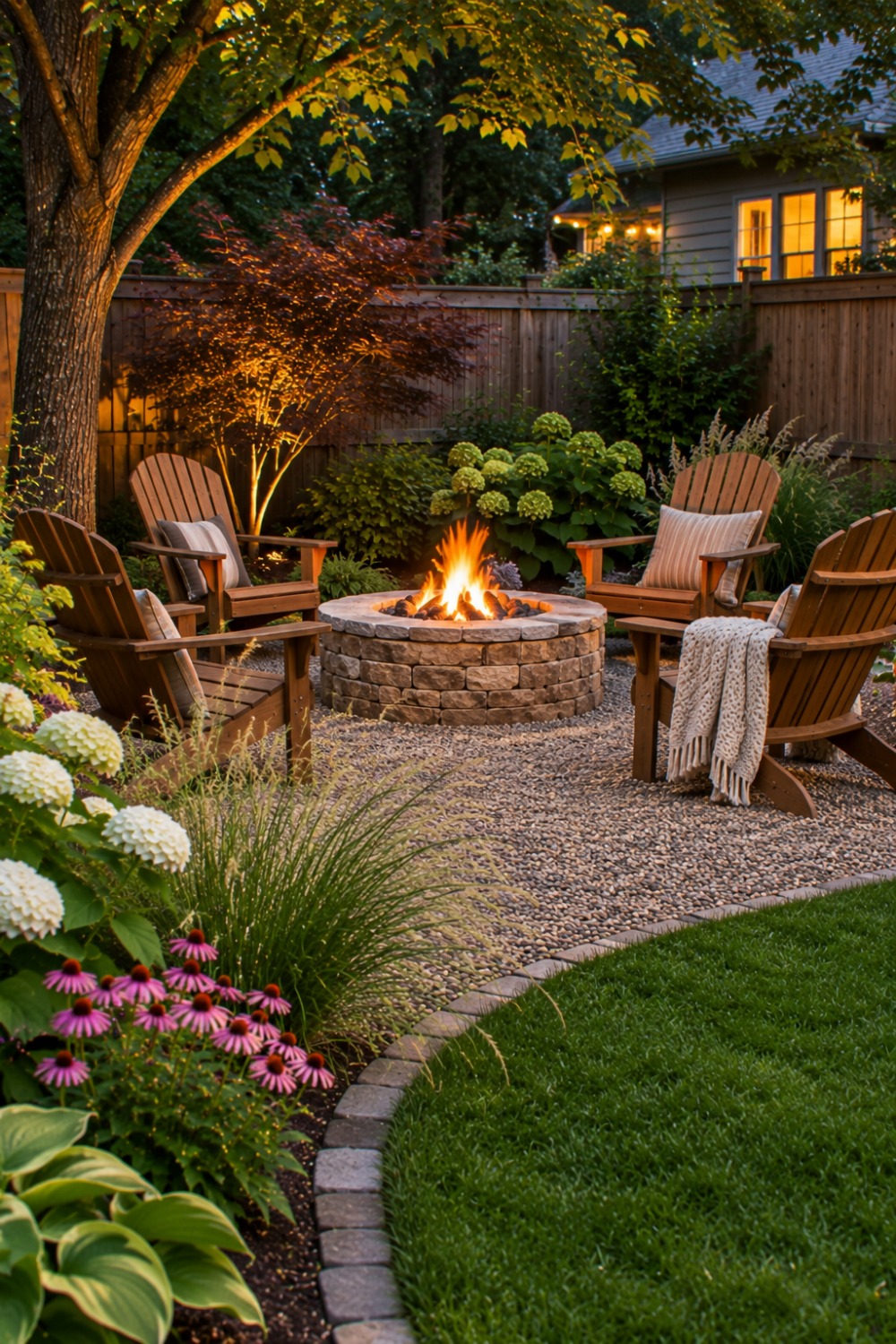
A fire pit or fire bowl gives people a natural reason to gather after dark and extends the outdoor season into fall.
Set it in its own zone, away from the house and overhanging branches, with seating arranged in a circle.
For more designs and safety tips, see our backyard fire pit landscaping ideas.
How to do it:
- Check local rules on outdoor fires before you buy or build.
- Place it on a non-combustible surface such as gravel or stone.
- Arrange seating with comfortable space around the fire.
9. Connect the Zones With a Winding Path
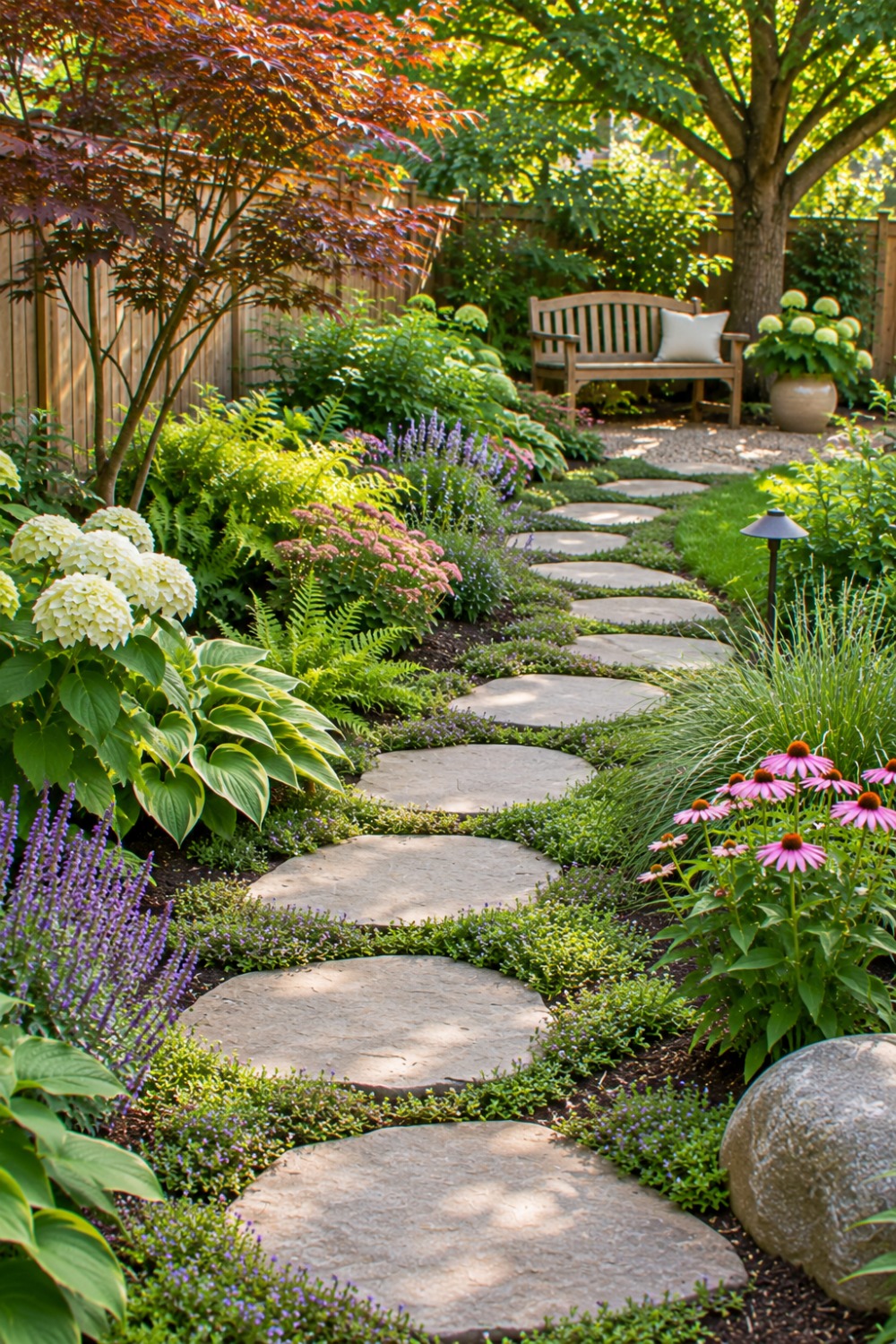
Paths invite you to explore the garden and link each outdoor room.
A gently winding route of stepping stones, gravel or brick makes even a modest yard feel bigger, because you can’t see everything at once.
Use planting to partly hide where the path goes next.
How to do it:
- Walk the route between zones and mark it.
- Choose a material that suits the style of the yard.
- Plant taller perennials at the bends to create a sense of discovery.
10. Dig a Small Wildlife Pond
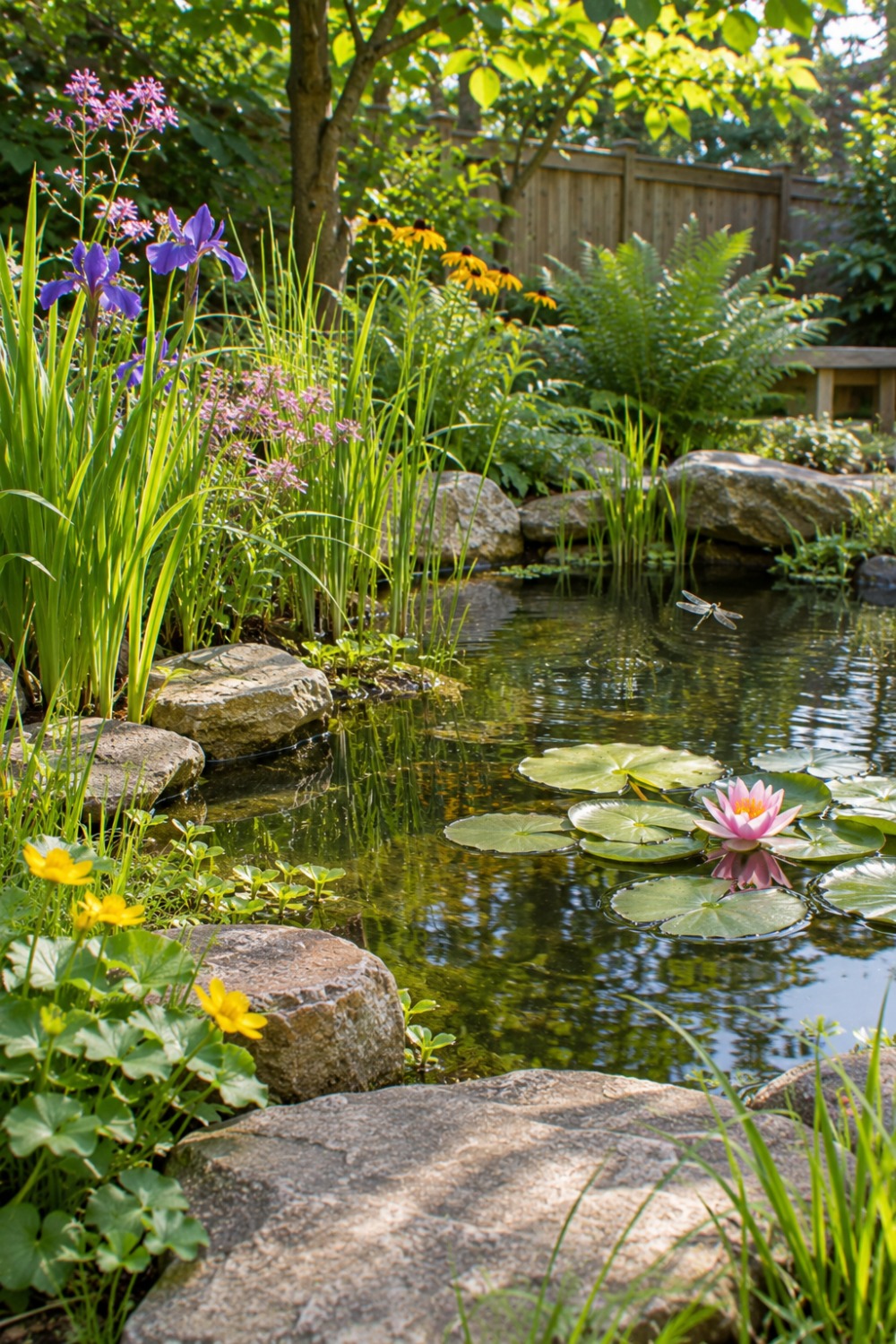
Even a small pond brings dragonflies, birds and frogs into a backyard.
Give it one shallow, sloping side so wildlife can get in and out, and plant the edges with native marginal plants.
Skip the fish if you want to attract more amphibians and dragonflies. Our guide to plants that attract dragonflies has ideas for the edges.
How to do it:
- Pick a spot with some sun but not under heavy trees.
- Dig a pond with shelves of different depths and one gentle beach.
- Use a flexible liner and edge it with stones and plants.
Good to know: check local rules on pond depth and fencing if you have young children or neighbors with kids.
11. Plant a Pollinator Border Along the Fence
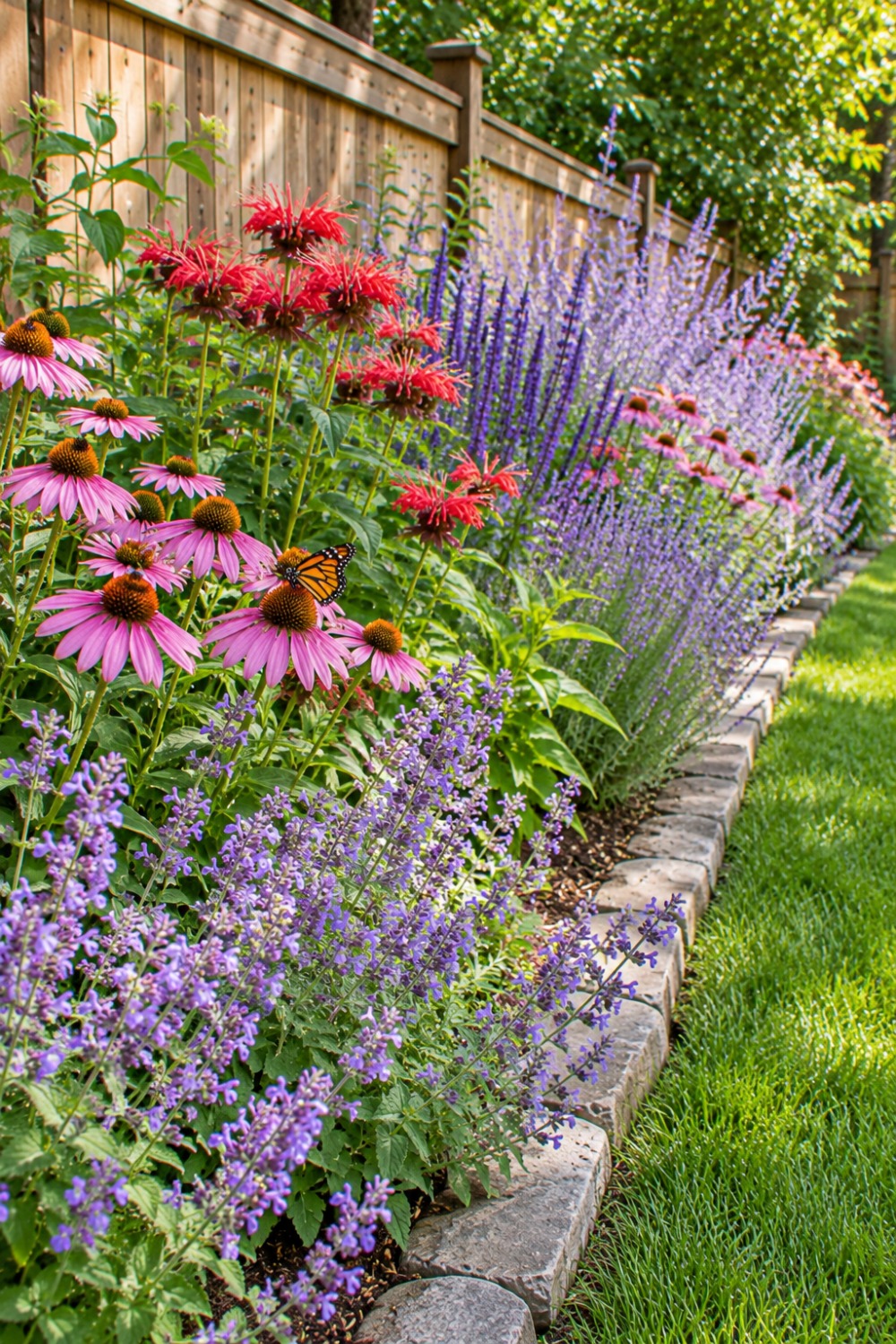
Fences are often the most neglected part of a backyard. A long pollinator border turns them into a backdrop of color.
Combine nectar-rich plants that flower in sequence, such as catmint, salvia, coneflowers, bee balm, asters and Russian sage.
Bees and butterflies will visit from spring to fall.
How to do it:
- Prepare a bed at least 3 feet deep along the fence.
- Plant in drifts of three to seven of each plant.
- Leave seed heads standing in fall for birds.
12. Hang String Lights Over the Dining Area
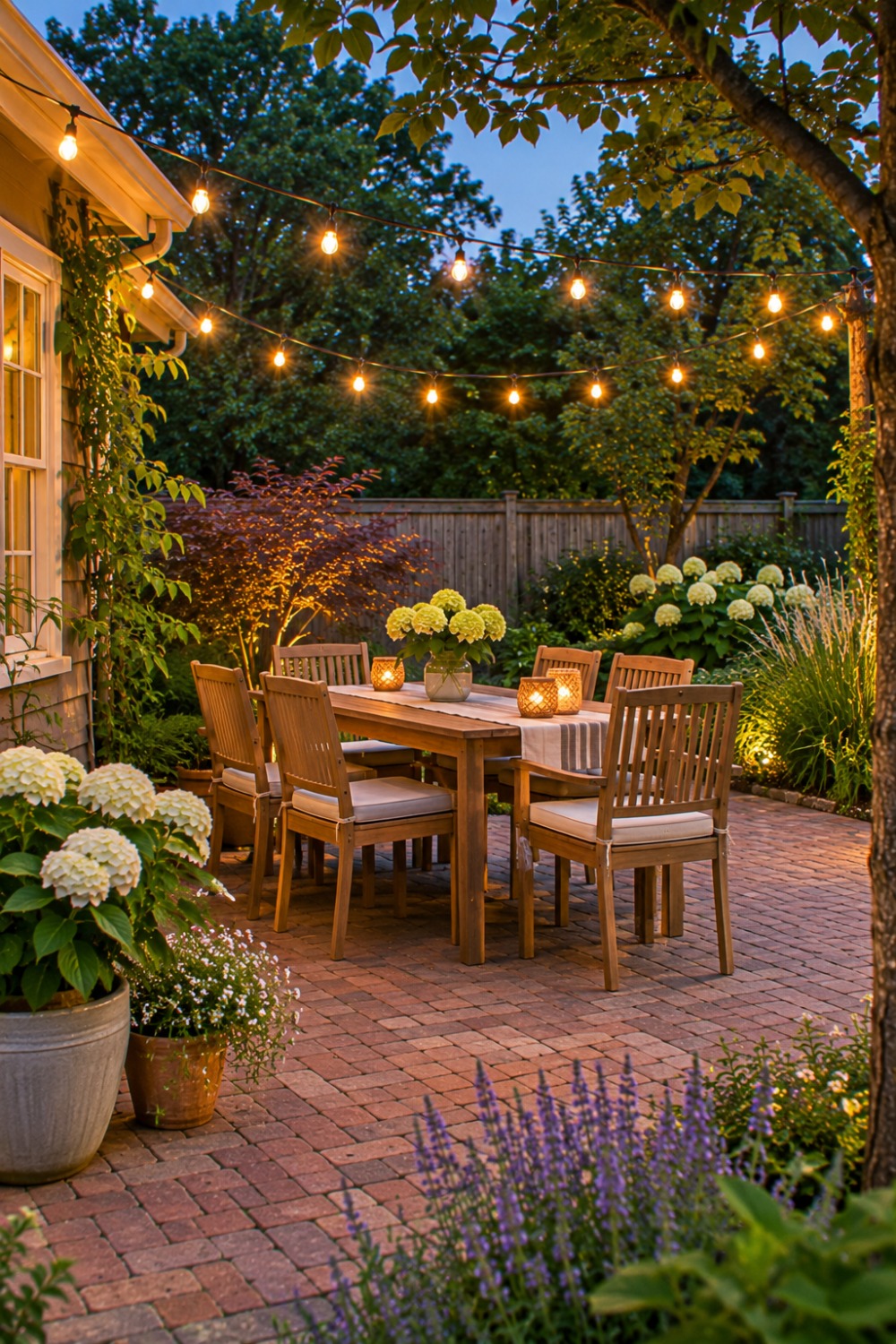
String lights are one of the quickest ways to make a backyard feel magical in the evening.
Zigzag them over the dining area between the house, a pergola or sturdy posts, keeping them high enough to walk under.
Choose warm white bulbs and outdoor-rated fixtures.
How to do it:
- Install sturdy anchor points or posts at each corner.
- Run a support wire first, then clip the lights to it.
- Plug into an outdoor-rated, ground-fault protected outlet.
13. Build a Simple Grill Station or Outdoor Kitchen
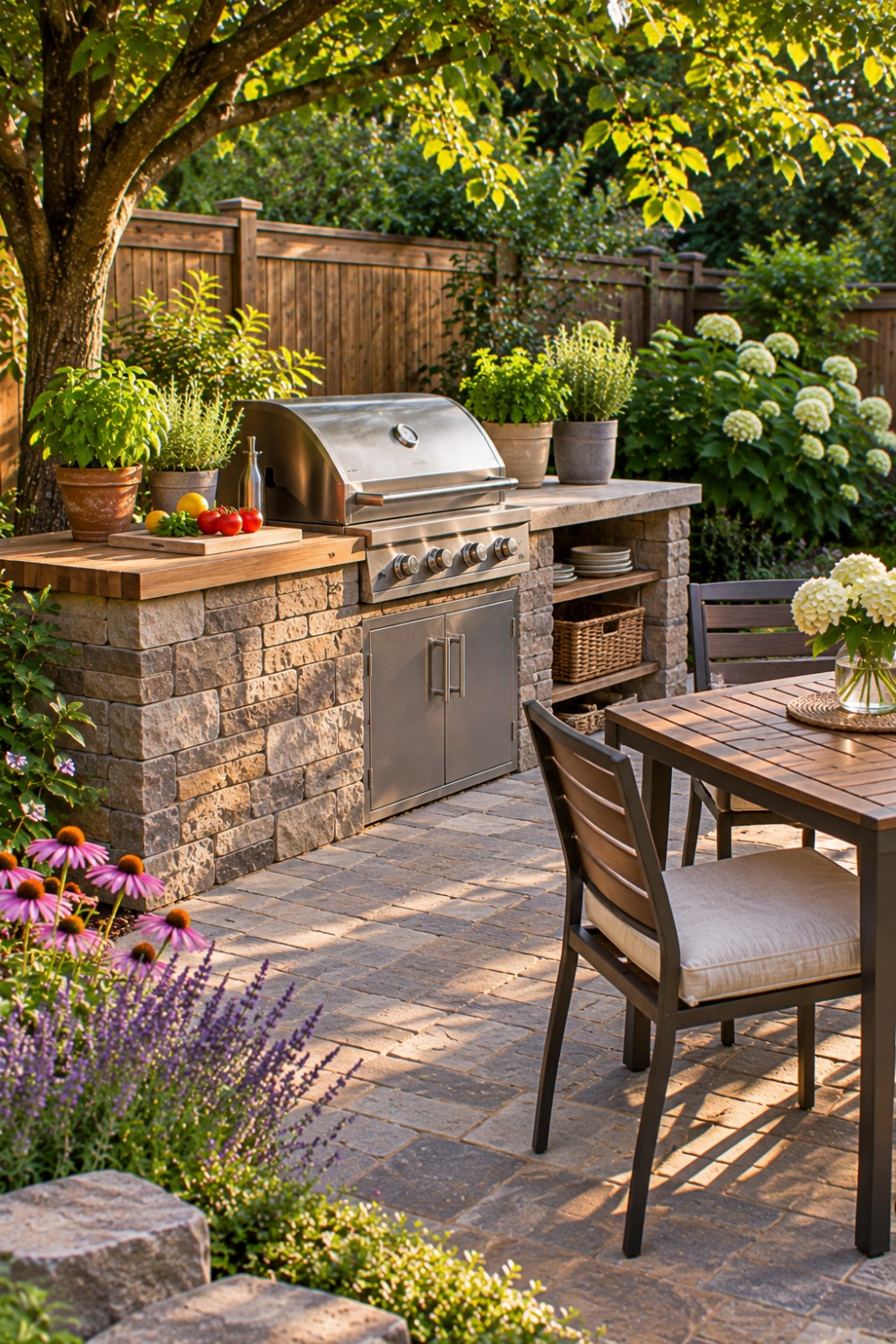
Cooking outdoors keeps the heat out of the house and keeps the cook in the conversation.
Even a simple counter beside the grill makes a big difference. A full outdoor kitchen with storage and a sink is a bigger project but adds a lot of value.
Browse our outdoor kitchen ideas and outdoor BBQ area ideas for layouts.
How to do it:
- Place the grill where smoke won’t blow into the house.
- Add a counter on at least one side for prep space.
- Keep it close enough to the kitchen door for easy trips inside.
14. Hang a Hammock in a Quiet Corner
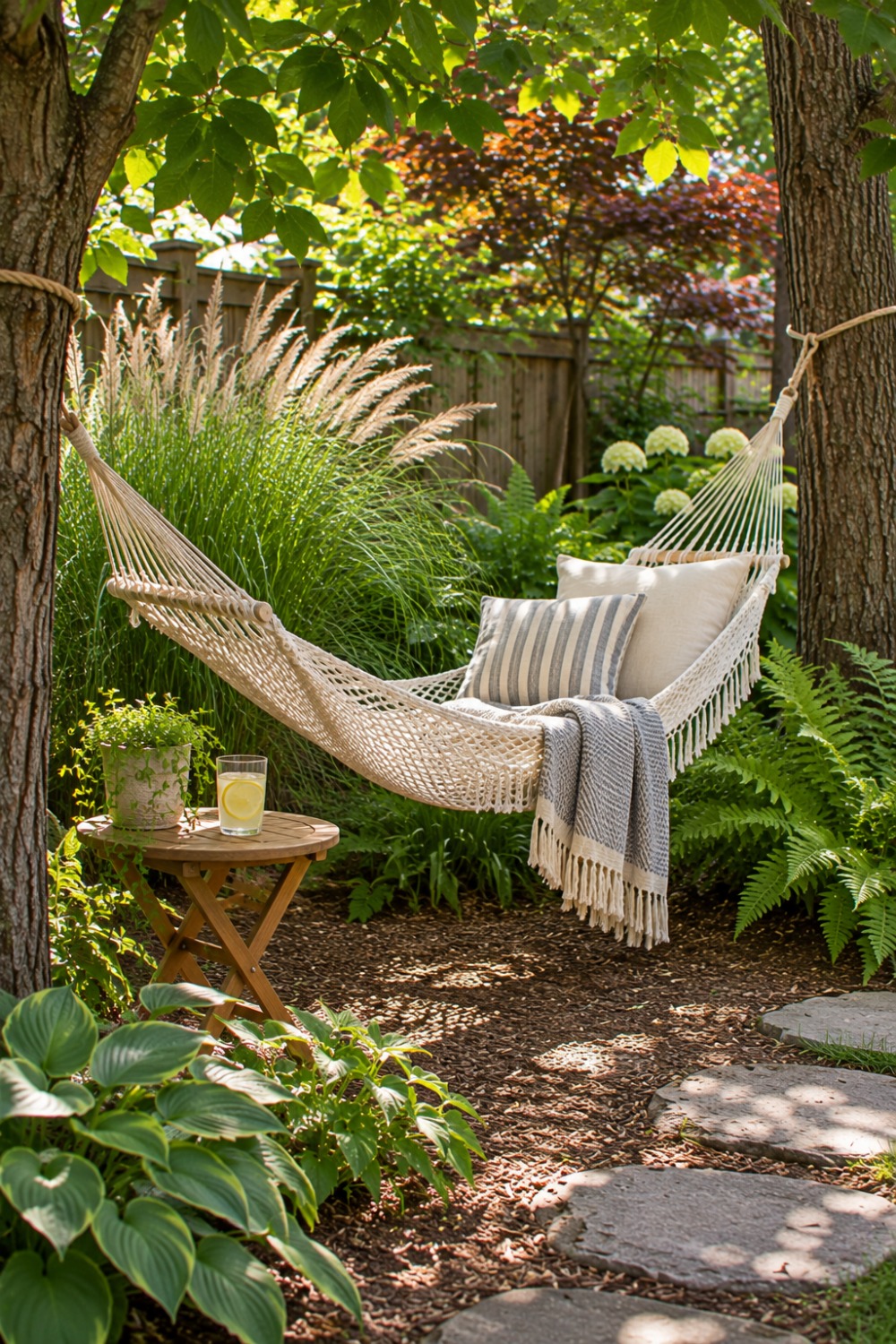
A hammock is one of the cheapest ways to create a true relaxation spot.
Hang it between two healthy trees or on a freestanding frame, and plant tall grasses or shrubs around it for a sense of seclusion.
A small side table for a drink and a book completes the scene.
How to do it:
- Choose trees that are sturdy and at least a hammock’s length apart.
- Use tree-friendly straps rather than ropes or nails.
- Lay soft ground cover or mulch underneath.
15. Set Up a Kids’ Play Zone With Soft Surfacing
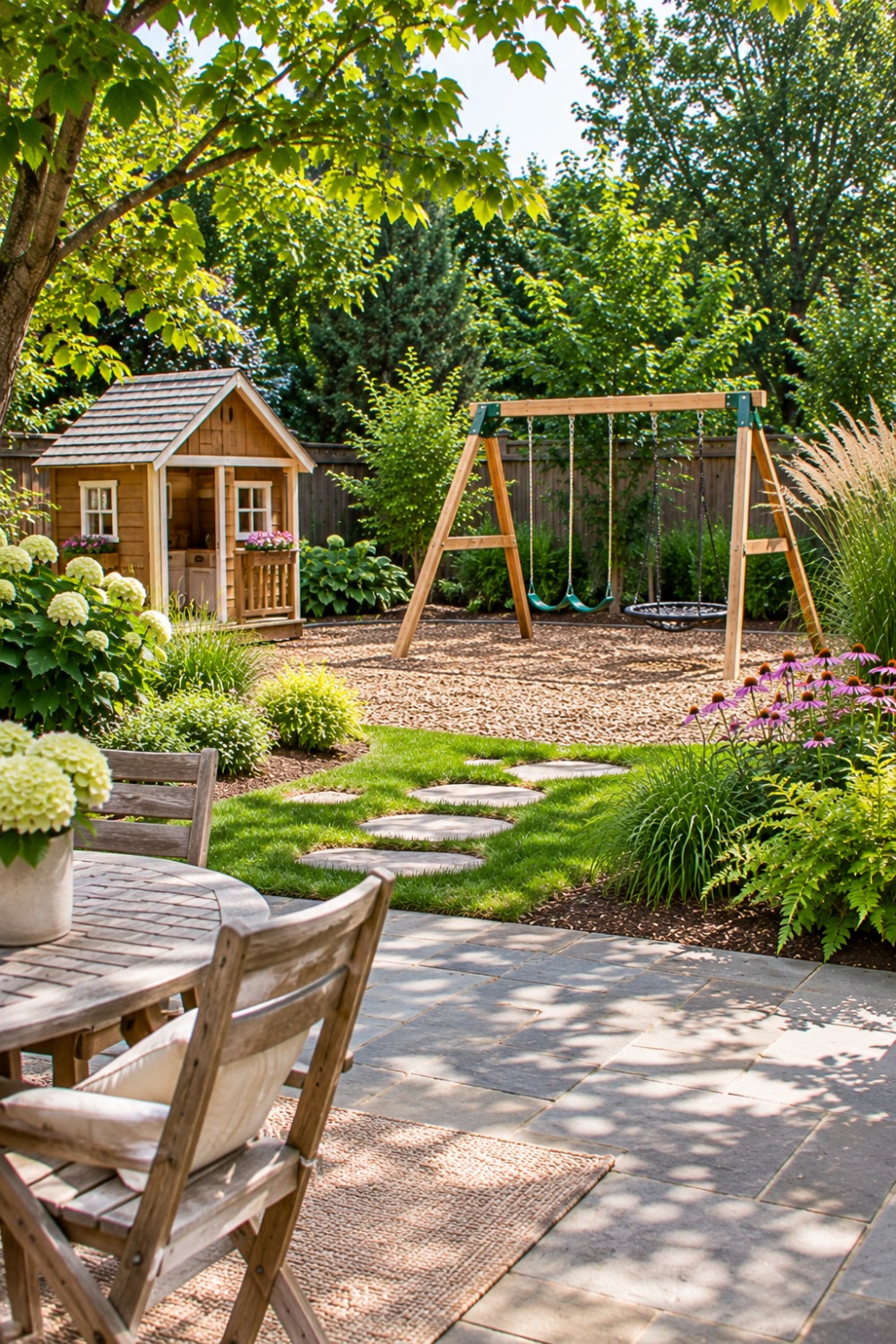
If you have children, give them a dedicated area so the rest of the garden can stay tidy.
Place play equipment where you can see it from the house, on soft surfacing such as wood chips or rubber mulch.
Surround the area with tough, non-toxic plants that can handle the occasional stray ball.
How to do it:
- Choose a visible spot away from ponds and fire features.
- Lay a deep layer of safety surfacing under swings and climbers.
- Plant sturdy shrubs and grasses around the edge.
16. Cover Fences and Walls With Climbers
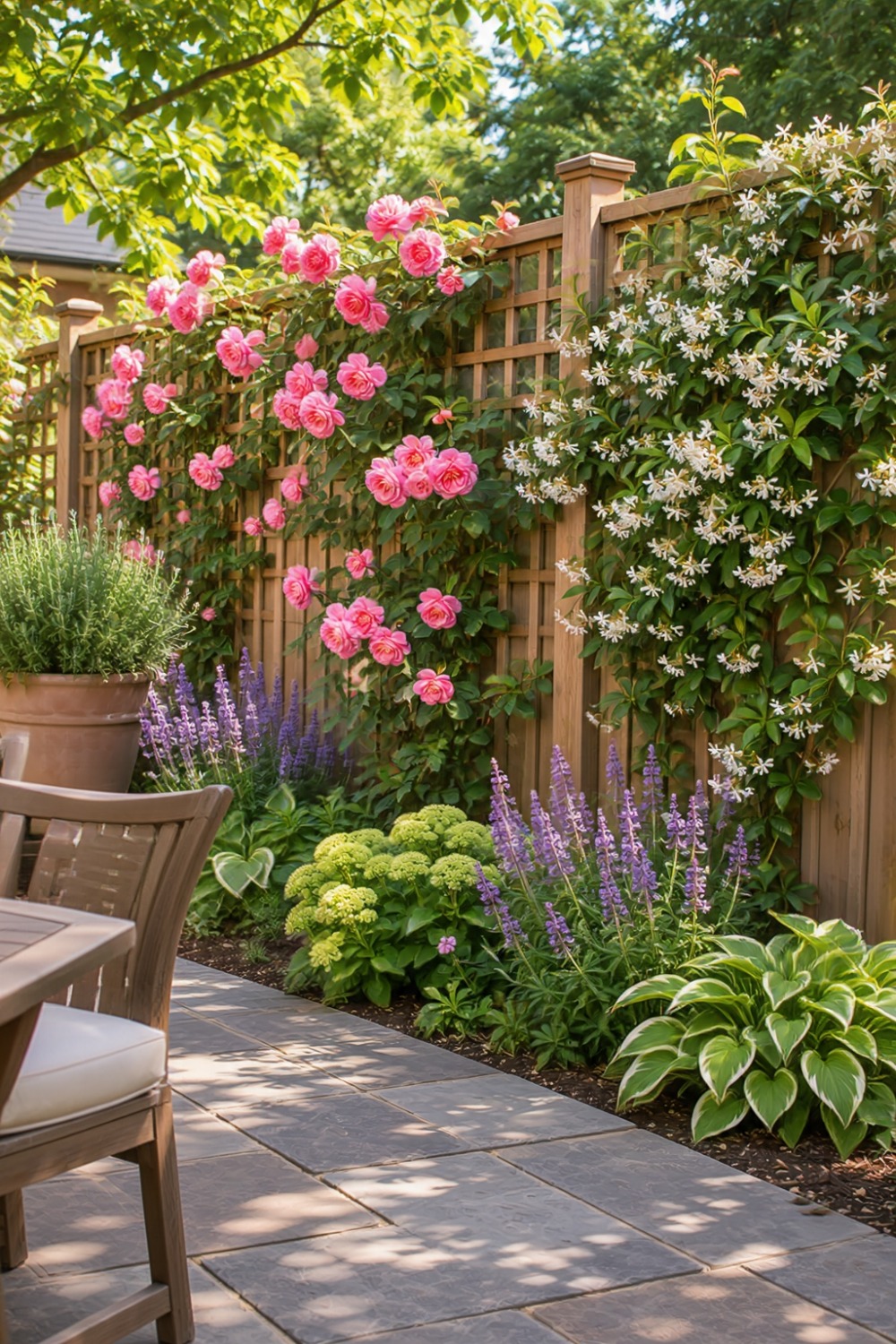
Climbing plants soften fences and walls and add privacy without taking up much ground space.
Use trellis panels or tensioned wires and choose climbers suited to your light, such as climbing roses for sun or climbing hydrangea for shade.
Avoid aggressive vines that can damage fences or spread into neighbors’ yards.
How to do it:
- Install trellis or wires a few inches from the fence for air flow.
- Plant climbers about a foot from the base.
- Tie in new growth and prune once a year.
17. Plant Fruit Trees and Berry Bushes
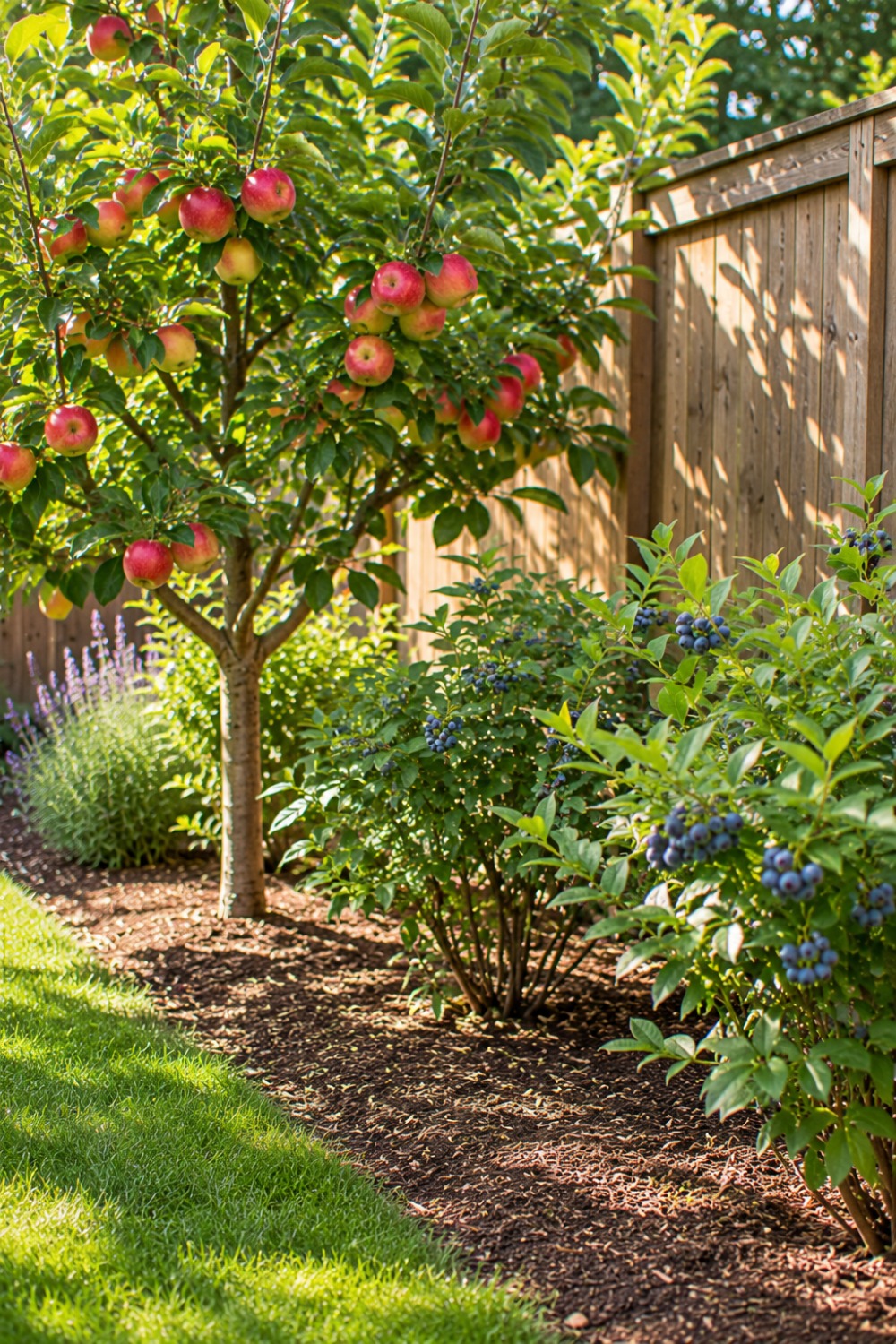
Fruit trees and berry bushes are both ornamental and productive.
Dwarf apples, pears, figs or citrus (in warm zones) fit small yards, and blueberries make handsome shrubs with fiery fall color.
Check whether your varieties need a pollination partner.
How to do it:
- Choose varieties suited to your climate and chill hours.
- Plant in full sun with good drainage.
- Prune and feed according to each plant’s needs.
Good to know: blueberries need acidic soil. Our guide to plants that like acidic soil explains what that means for your beds.
18. Soften Hard Edges With Ornamental Grasses
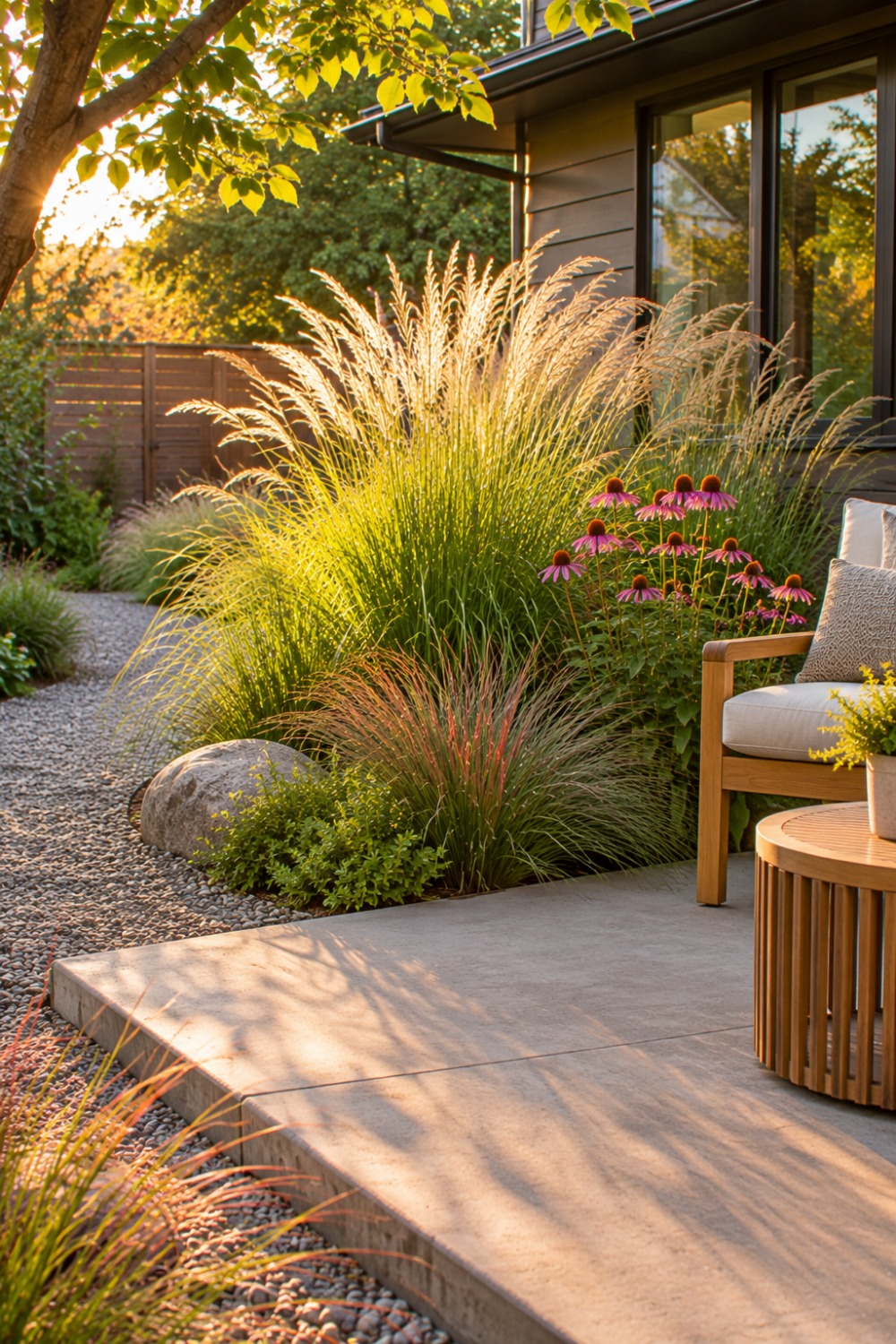
Patios, fences and paths can look harsh on their own. Ornamental grasses bring movement and softness.
Mix upright grasses like feather reed grass with mounding ones like switchgrass and blue fescue.
They catch the light beautifully at sunrise and sunset.
How to do it:
- Plant grasses at patio corners and along path edges.
- Group them in threes or fives.
- Cut them back in late winter before new growth.
19. Design a Low-Water Garden Section
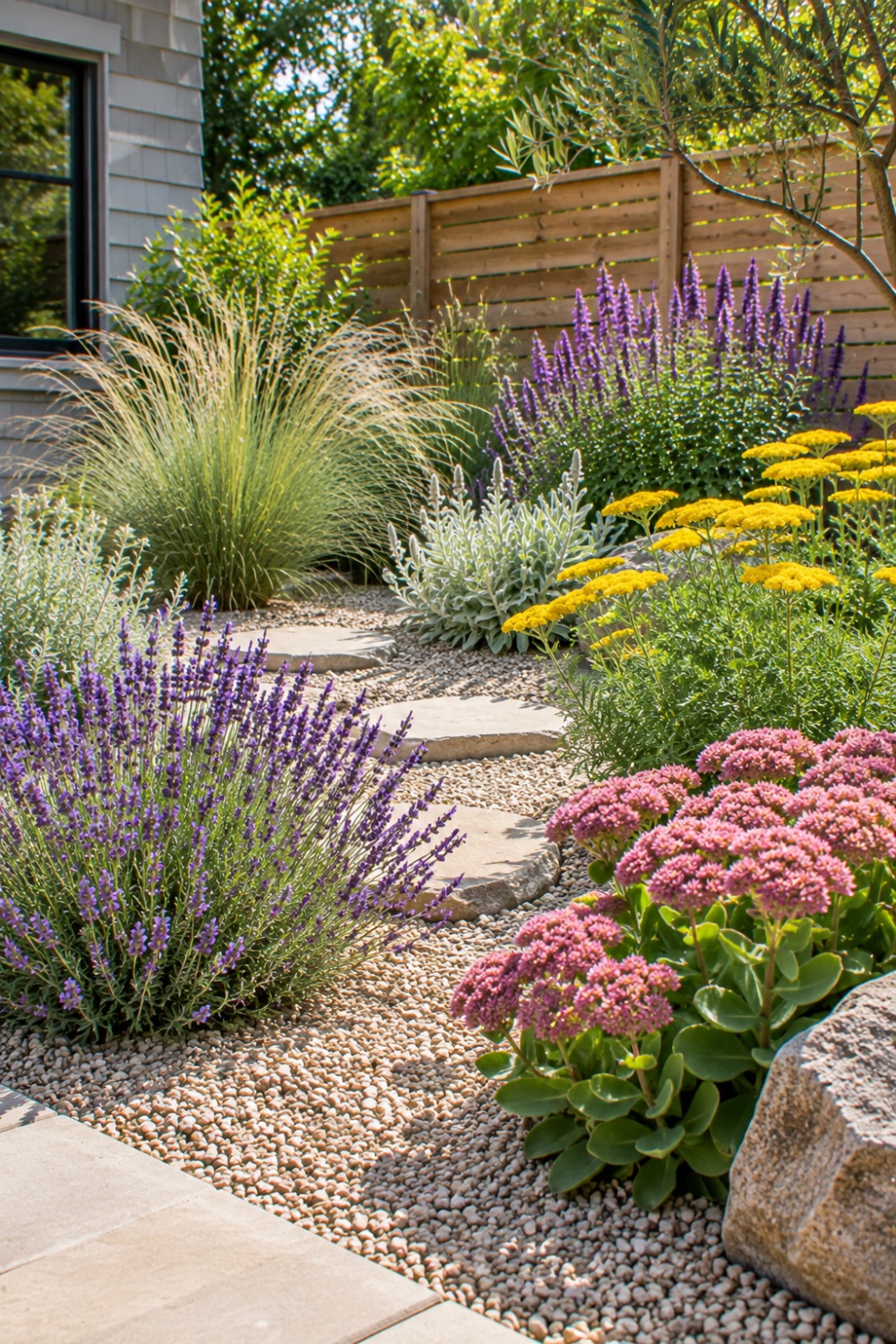
Water restrictions and hot summers make drought-tolerant planting more practical every year.
Pick the sunniest, driest part of the yard and plant lavender, sedum, yarrow, agastache and drought-tolerant grasses in gravel mulch.
Once established, this area may need only occasional deep watering.
How to do it:
- Improve drainage with grit or gravel if your soil is heavy.
- Group plants with similar water needs.
- Water deeply but infrequently during the first year.
20. Turn the Garden Shed Into a Focal Point
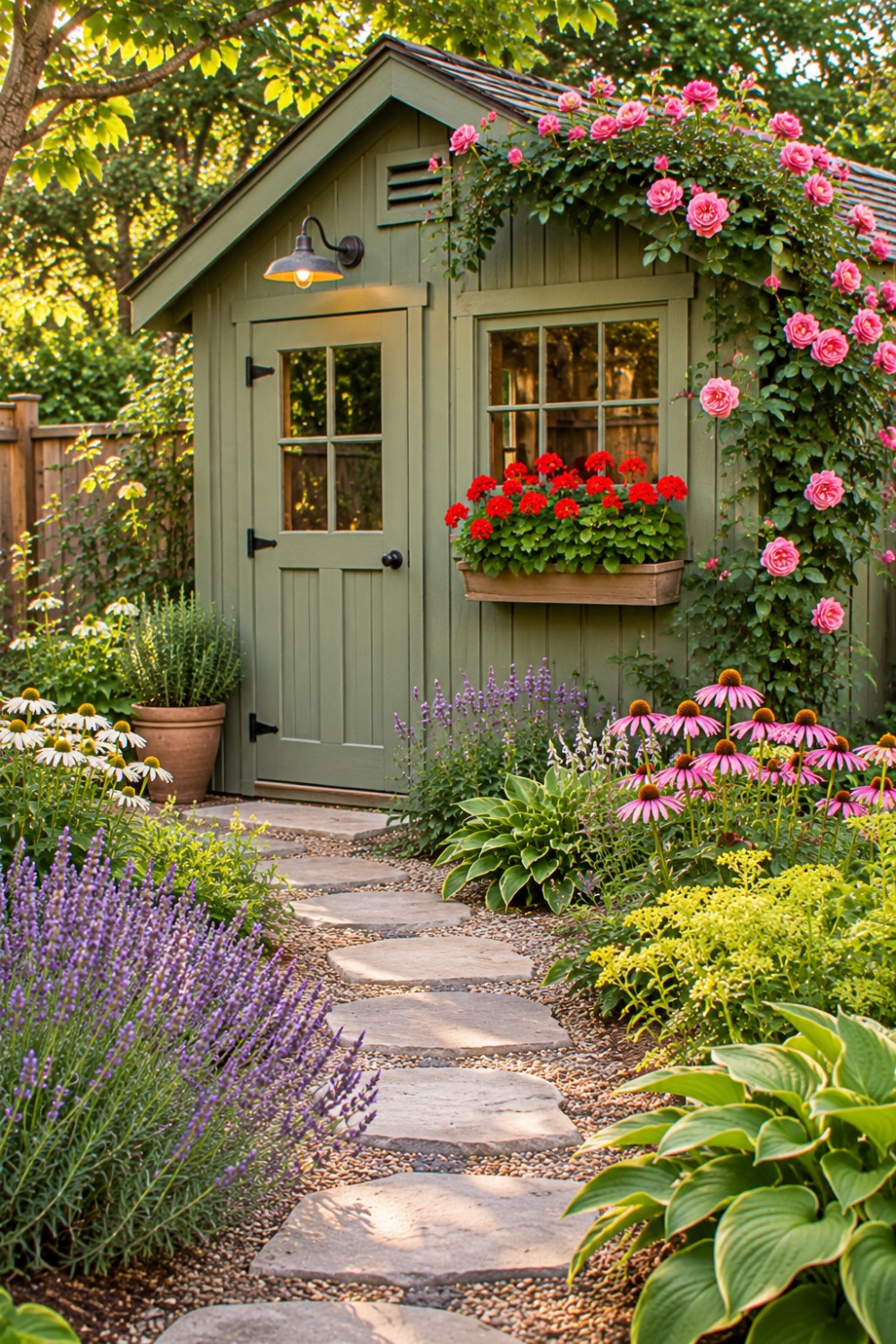
A plain shed can become a charming feature with a coat of paint, window boxes and planting around its base.
Paint it a color that contrasts with the fence, add a path leading to it and frame the door with containers.
It gives the eye somewhere to land at the end of the garden.
How to do it:
- Paint the shed in a color that complements the house.
- Add window boxes or a climbing vine.
- Lead a path to the door and plant around the base.
21. Install Drip Irrigation on a Timer
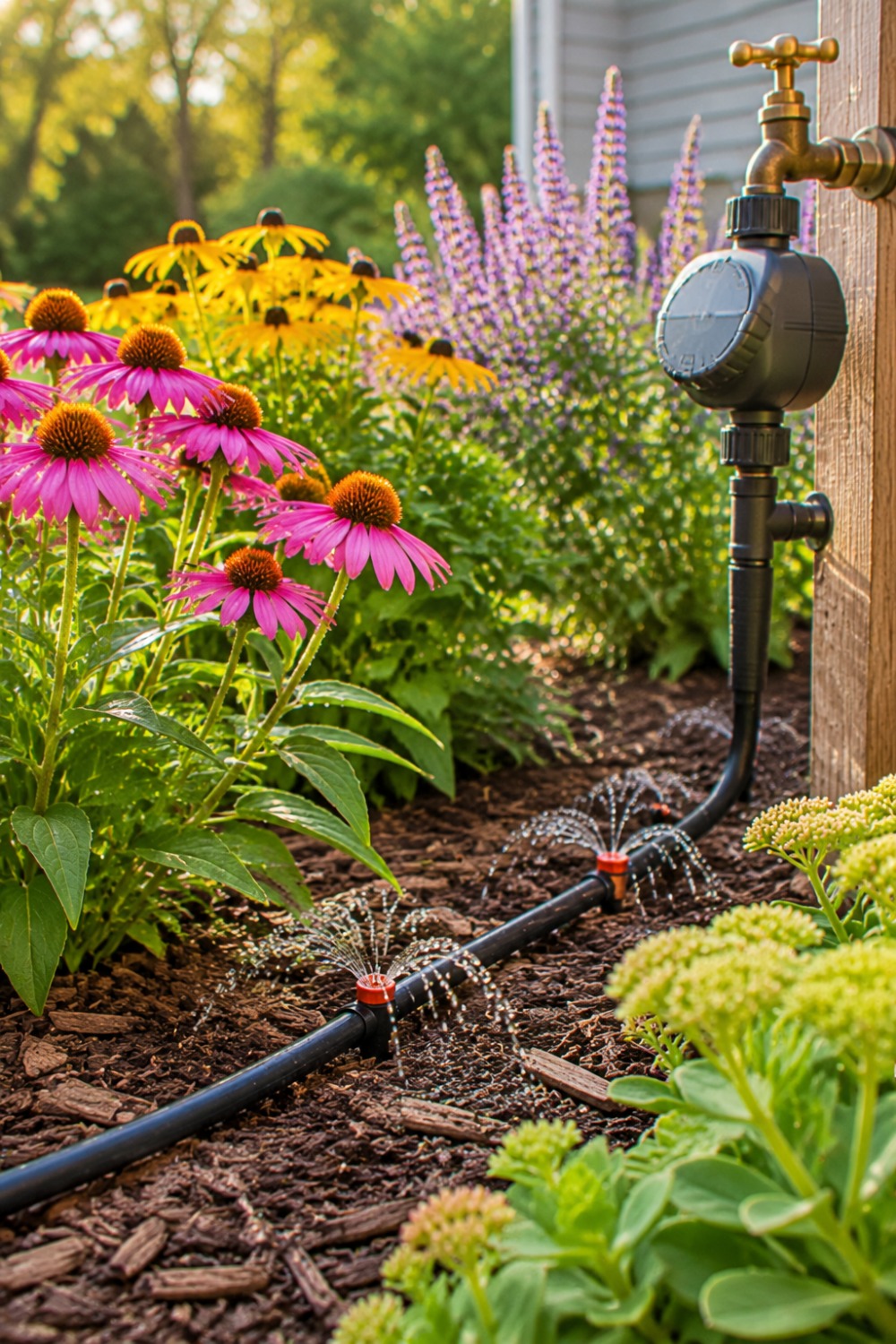
Drip irrigation delivers water directly to roots, wasting far less than sprinklers.
Run drip lines through beds and containers and connect them to a simple timer at the faucet.
It’s one of the easiest ways to keep a planted backyard healthy through summer without daily hand watering.
How to do it:
- Map beds and containers and plan main and branch lines.
- Lay drip tubing or emitters at the base of plants and cover with mulch.
- Set the timer to water early in the morning.
22. Hide the Compost Bins Behind a Tidy Screen
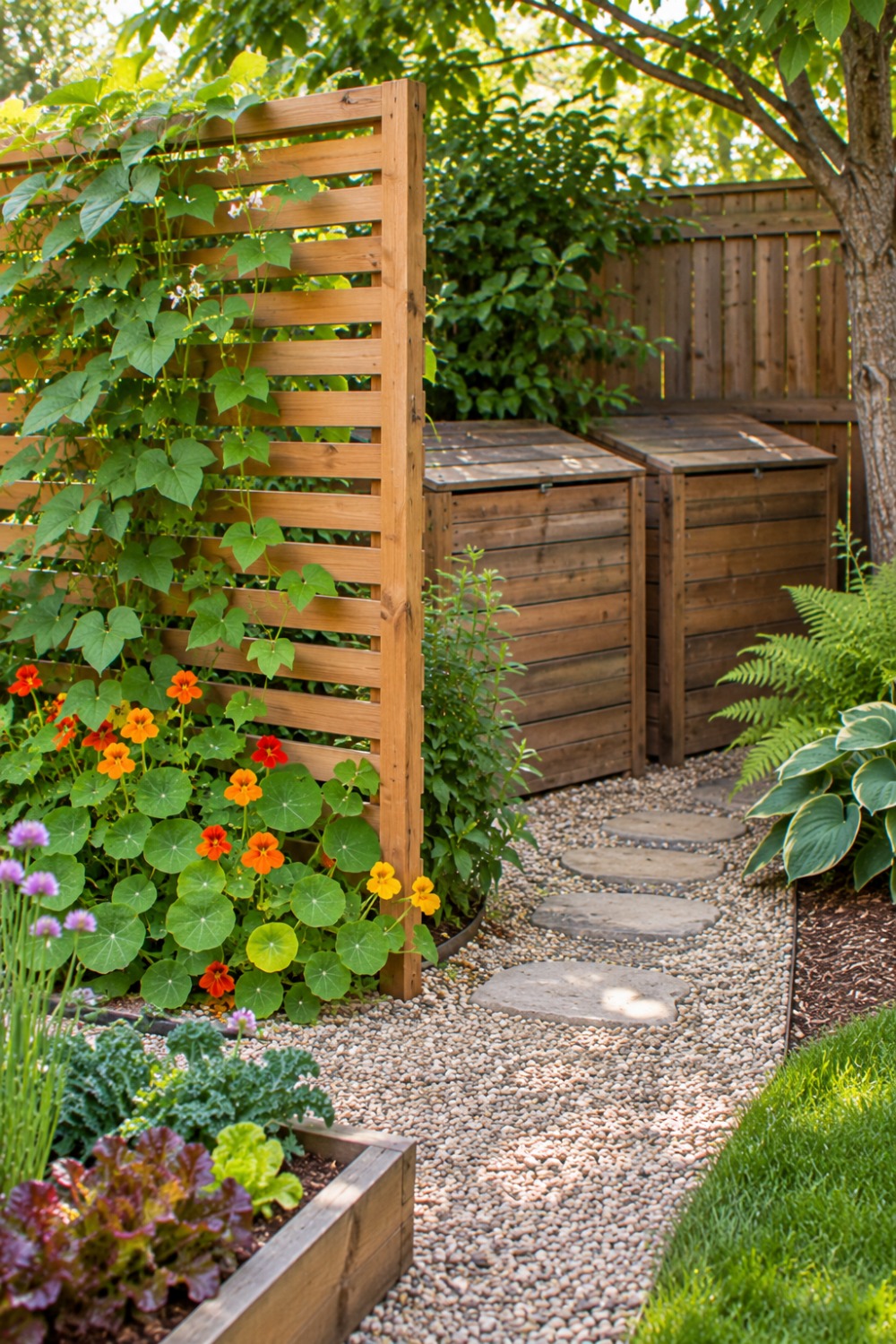
Composting turns kitchen scraps and garden waste into free soil improver, but bins aren’t always pretty.
Place them in a corner behind a short slatted fence, a trellis with climbers or a row of shrubs.
Keep the area accessible with a firm path for wheelbarrows.
How to do it:
- Choose a level, partly shaded spot close to the garden beds.
- Build or buy two bins so one can mature while you fill the other.
- Screen them with a slatted panel or planting.
23. Build a Deck to Tame a Sloping Yard
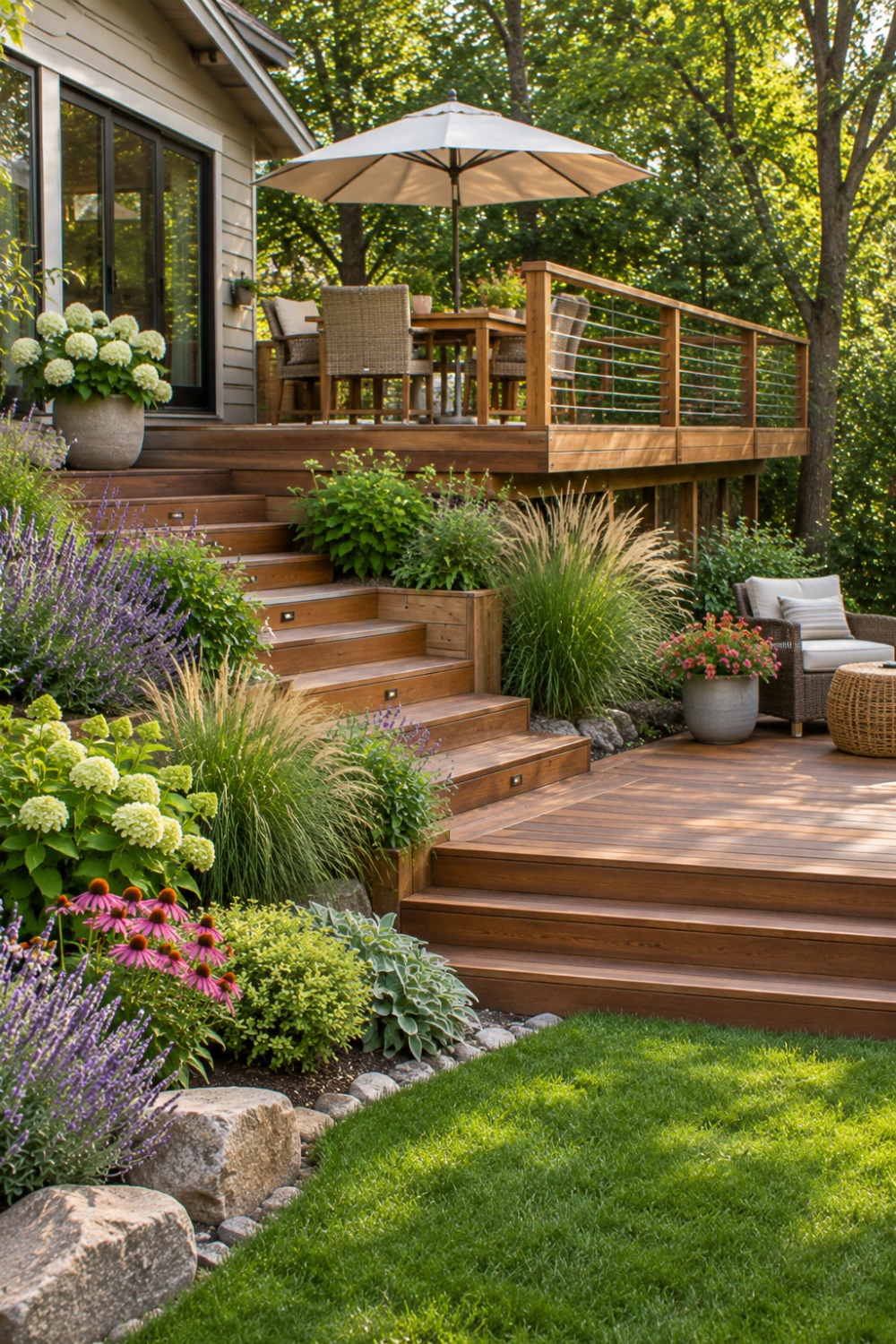
On a sloping lot, a deck creates flat, usable space without heavy excavation.
A multi-level deck can step down the slope, with planting beds filling the gaps between levels.
Under-deck areas can be screened with lattice and shade-loving plants.
How to do it:
- Have a professional assess the slope and footing requirements.
- Plan levels to follow the natural grade.
- Plant the slope below with deep-rooted ground covers to prevent erosion.
24. Plant a White Moon Garden for Evening Glow
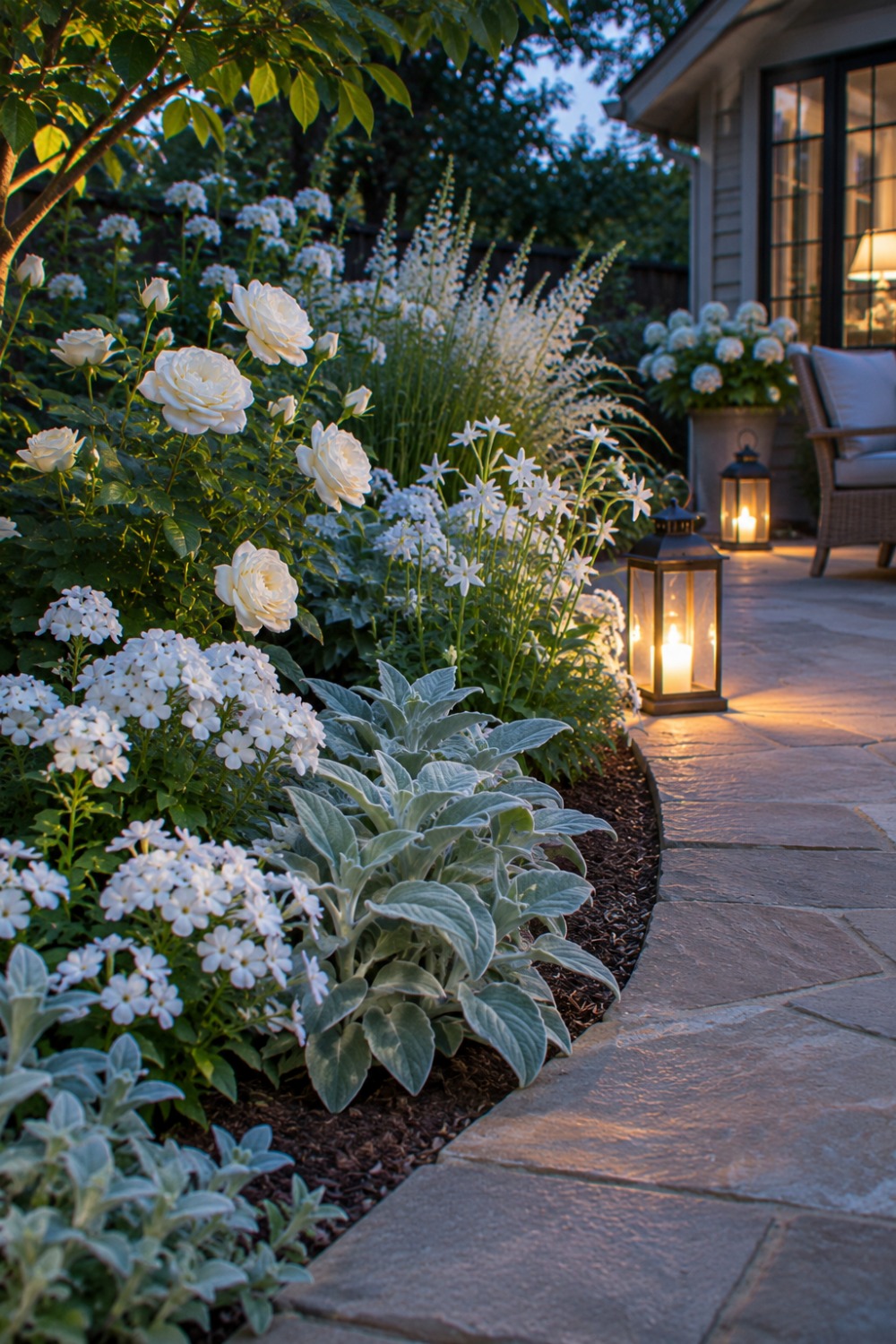
White and silver plants glow in low light, so a moon garden looks best exactly when you’re home in the evening.
Combine white roses, white phlox, nicotiana, moonflower vine and silver-leaved plants like lamb’s ears and artemisia.
Many evening-scented flowers also release their fragrance after dusk.
How to do it:
- Plant close to a patio or seating area you use at night.
- Mix white flowers with silver foliage.
- Add soft, low lighting to highlight the plants.
25. Plant Berry-Producing Native Shrubs for Birds
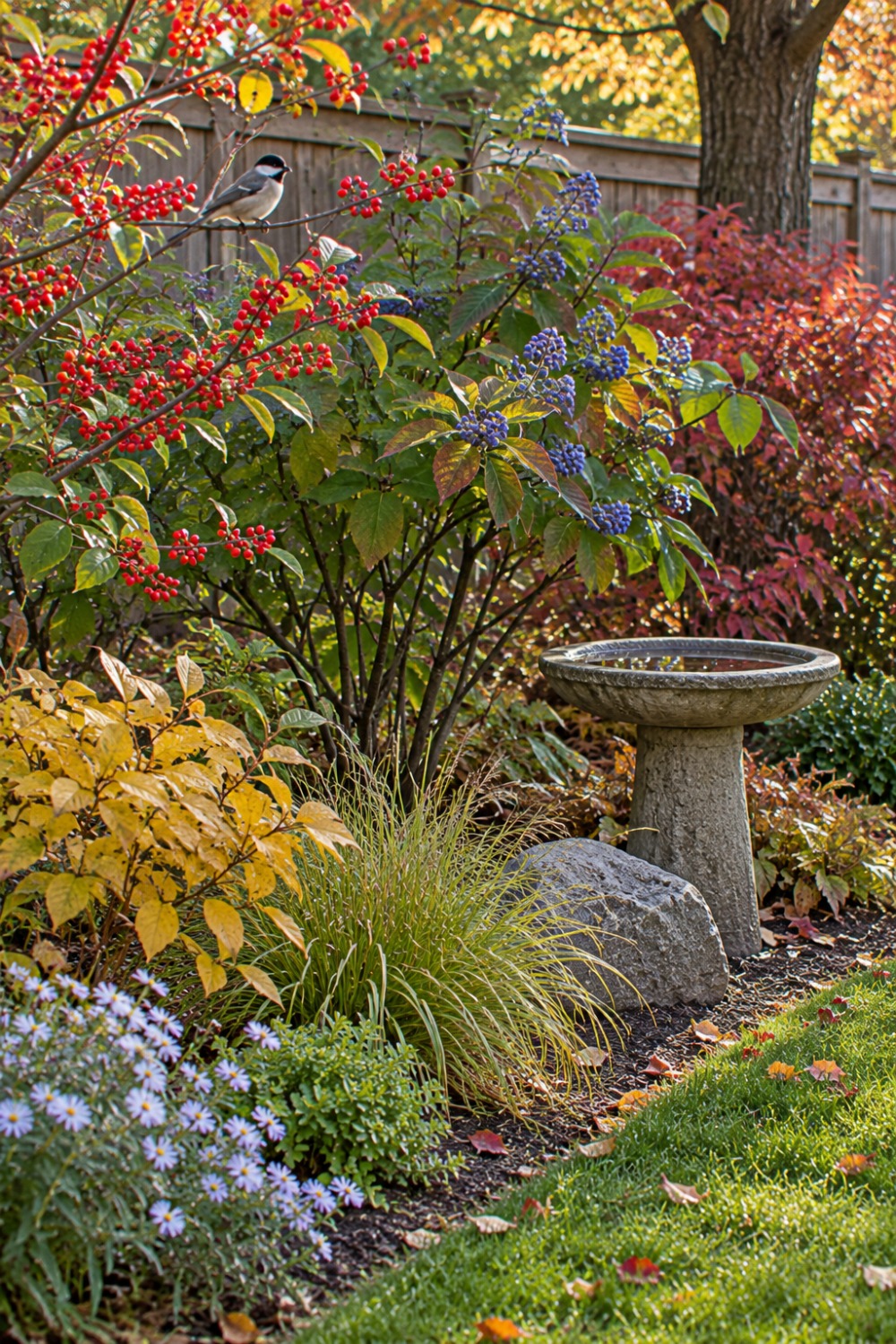
Native shrubs that produce berries bring birds into the garden all year.
Serviceberry, viburnum, winterberry and elderberry offer flowers in spring, fruit for birds and color in fall.
Add a bird bath and leave some seed heads standing, and you’ll have visitors even in winter. To keep pests down naturally, see our list of plants that keep bugs away.
How to do it:
- Choose shrubs native to your region.
- Plant them in a group near a window so you can watch the birds.
- Avoid spraying insecticides that remove birds’ food.
Frequently Asked Questions
How do I landscape my backyard on a budget?
Start by deciding on zones, then spend first on the area you’ll use most, usually the patio by the house. Grow perennials from divisions, use gravel or wood chips for paths and add bigger features over time.
What is the easiest backyard landscaping to maintain?
A smaller lawn, mulched beds of tough perennials and shrubs, gravel paths and drip irrigation on a timer make a backyard much easier to look after.
How can I get privacy in my backyard quickly?
Use trellis panels with fast climbers, tall grasses or freestanding screens for quick results while slower evergreen shrubs fill in behind them.
What should I put in the middle of a large backyard?
Break up a large space with an island bed, a small tree, a fire pit area or a path leading to a destination such as a bench or shed, so the yard feels like a series of rooms.
Final Thoughts: Build Your Backyard One Room at a Time
A great backyard isn’t finished in one weekend. It grows into itself.
Start by deciding how you want to use the space and sketching simple zones: somewhere to eat, somewhere to relax and somewhere to grow or play.
Spend first on the area closest to the house, because that’s where you’ll spend the most time.
Then add privacy, paths and planting to connect everything, and bring in lighting so the yard works after dark.
Choose plants that suit your climate and the amount of time you have for upkeep, and let tougher perennials, grasses and shrubs do most of the work.
Every season, add one new feature or bed. In a couple of years you’ll have a backyard that feels like an extra room of your home.