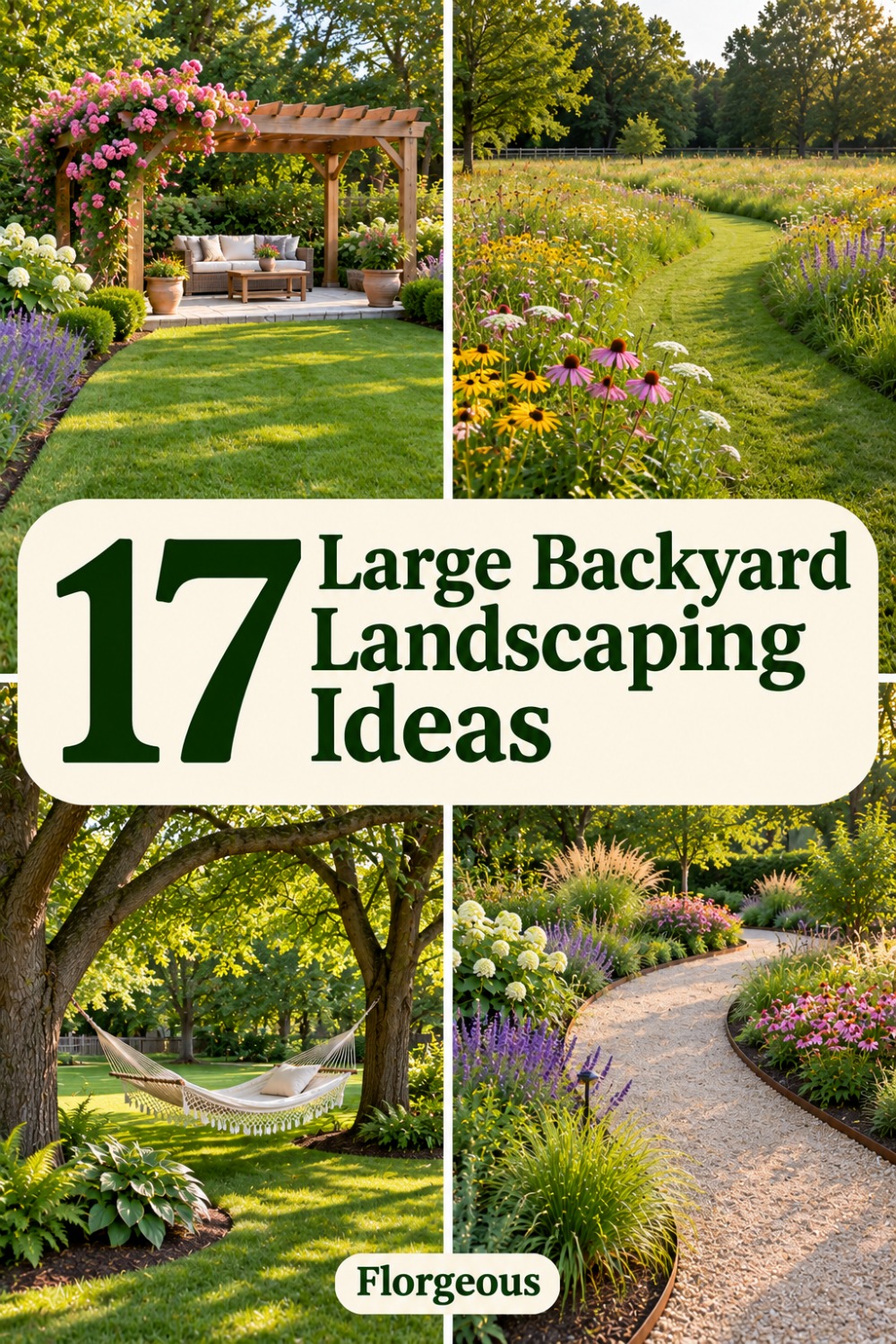
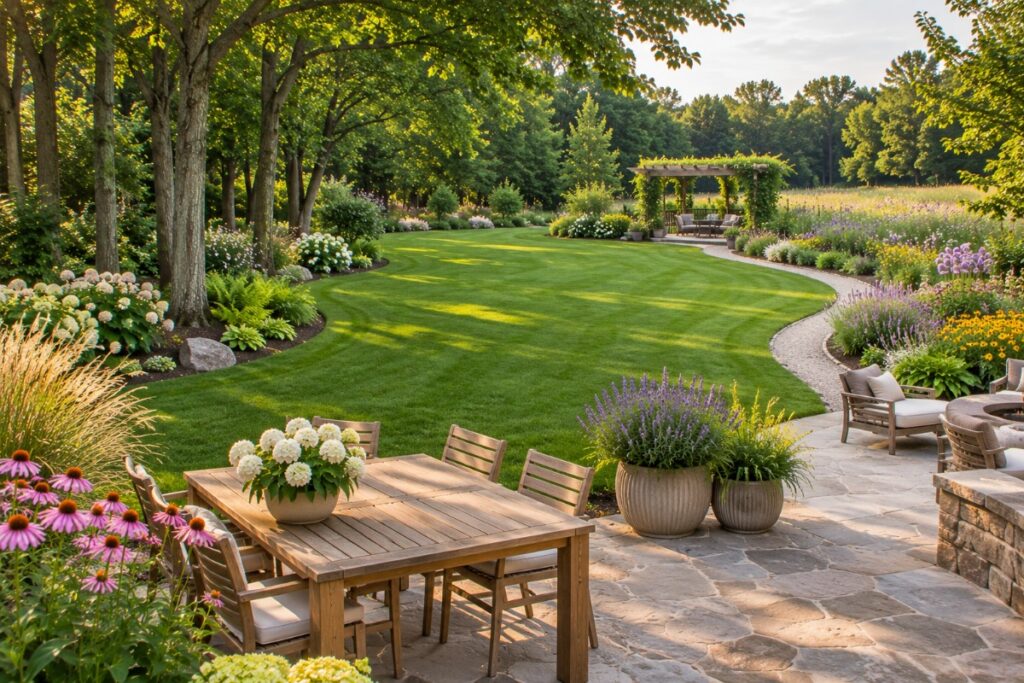
A big backyard is a gift, until you try to landscape it.
Plants that look generous in a small garden disappear, and a few scattered beds make all that lawn feel even emptier.
The secret to a large backyard isn’t filling every inch. It’s giving the space a plan: clear zones, a path that connects them and planting at a scale that matches the yard.
These 17 large backyard landscaping ideas will help you turn wide open space into a yard that feels intentional, useful and easier to look after.
Big Yard Zones at a Glance
| Zone | Best placed | Ideas |
|---|---|---|
| Everyday living | Closest to the house | Patio, dining, kitchen garden, kids’ play |
| Open lawn | Middle of the yard, in sun | Games, gatherings, a calm view |
| Destination | Far end, at the end of a view | Pergola, bench, focal tree |
| Low-mow areas | Edges and far corners | Meadow, shade grove, orchard |
| Boundary | Along fences and property lines | Wide mixed border, windbreak |
| Wildlife | Quiet spots away from the house | Natural pond, native shrubs |
1. Draw a Scale Plan Before You Dig
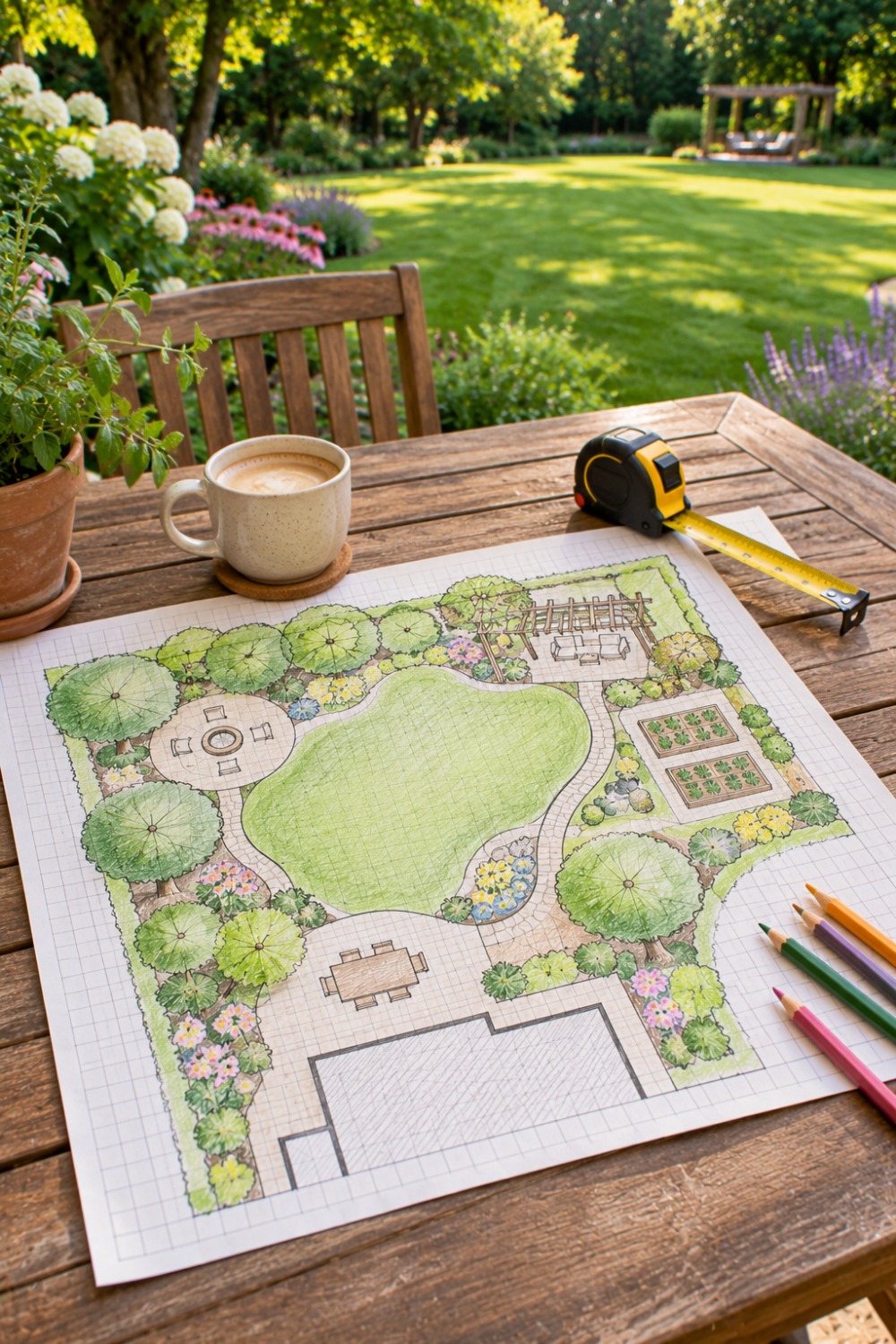
In a big yard, small mistakes become expensive ones.
A simple plan on graph paper helps you see how zones, paths and trees fit together before you buy a single plant.
Mark the house, doors, sun and shade, slopes, wet spots, views you like and views you want to hide.
How to do it:
- Measure the yard and draw it to scale, such as 1 square for every 5 feet.
- Mark sun, shade, wind, drainage and existing trees.
- Sketch zones as loose bubbles before deciding on details.
2. Divide the Yard Into Outdoor Rooms
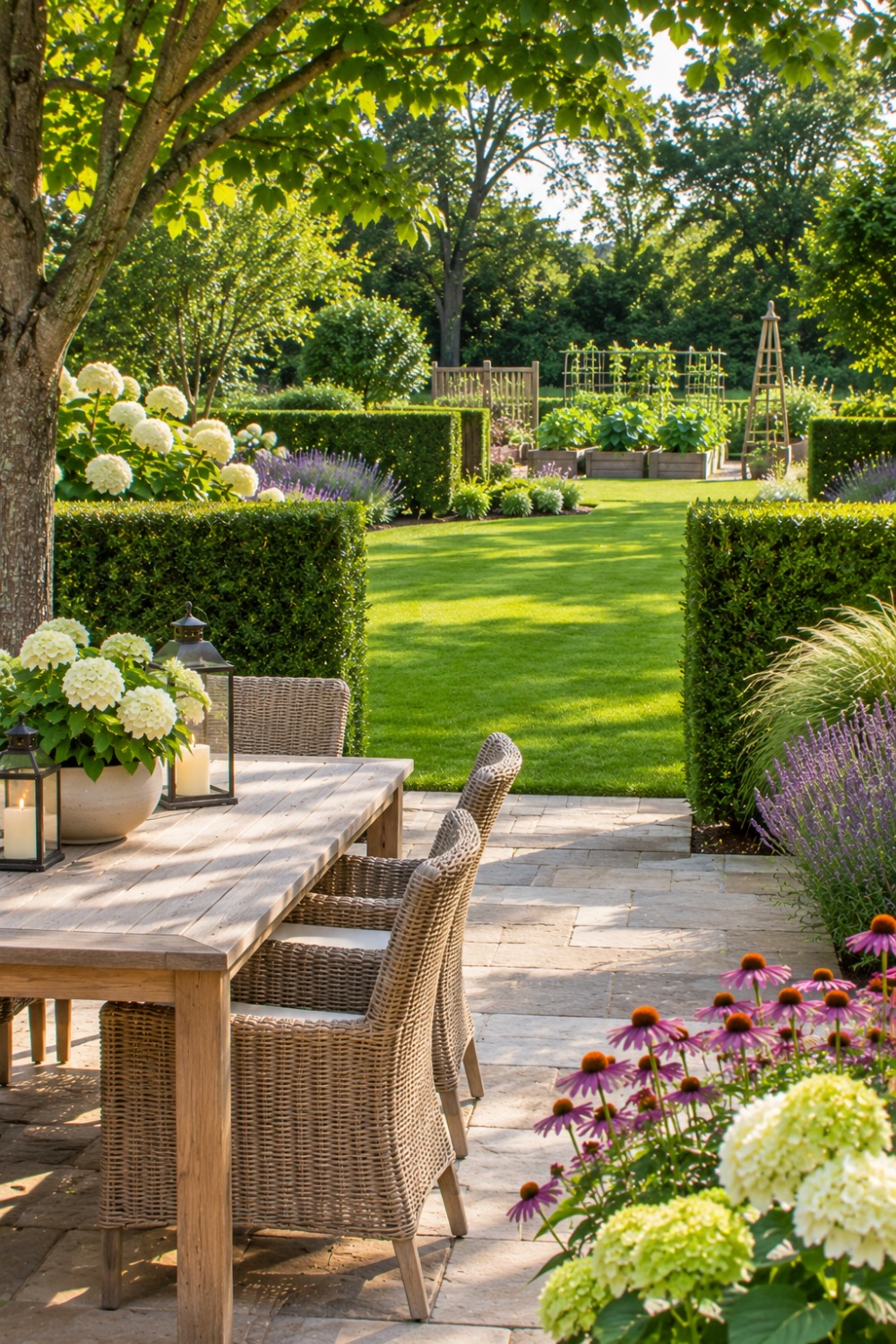
Breaking a big yard into smaller “rooms” makes it feel cozy and gives every area a purpose.
Hedges, shrub borders, a change in paving or even a mown edge can separate a dining area from a lawn or a vegetable garden.
You don’t need walls. Partial screens that let you glimpse the next room make the yard feel bigger and more interesting.
How to do it:
- Choose three to five rooms based on how you use the yard.
- Separate them with low hedges, borders or a change in surface.
- Leave openings so the rooms flow into each other.
3. Keep the Busy Zones Close to the House
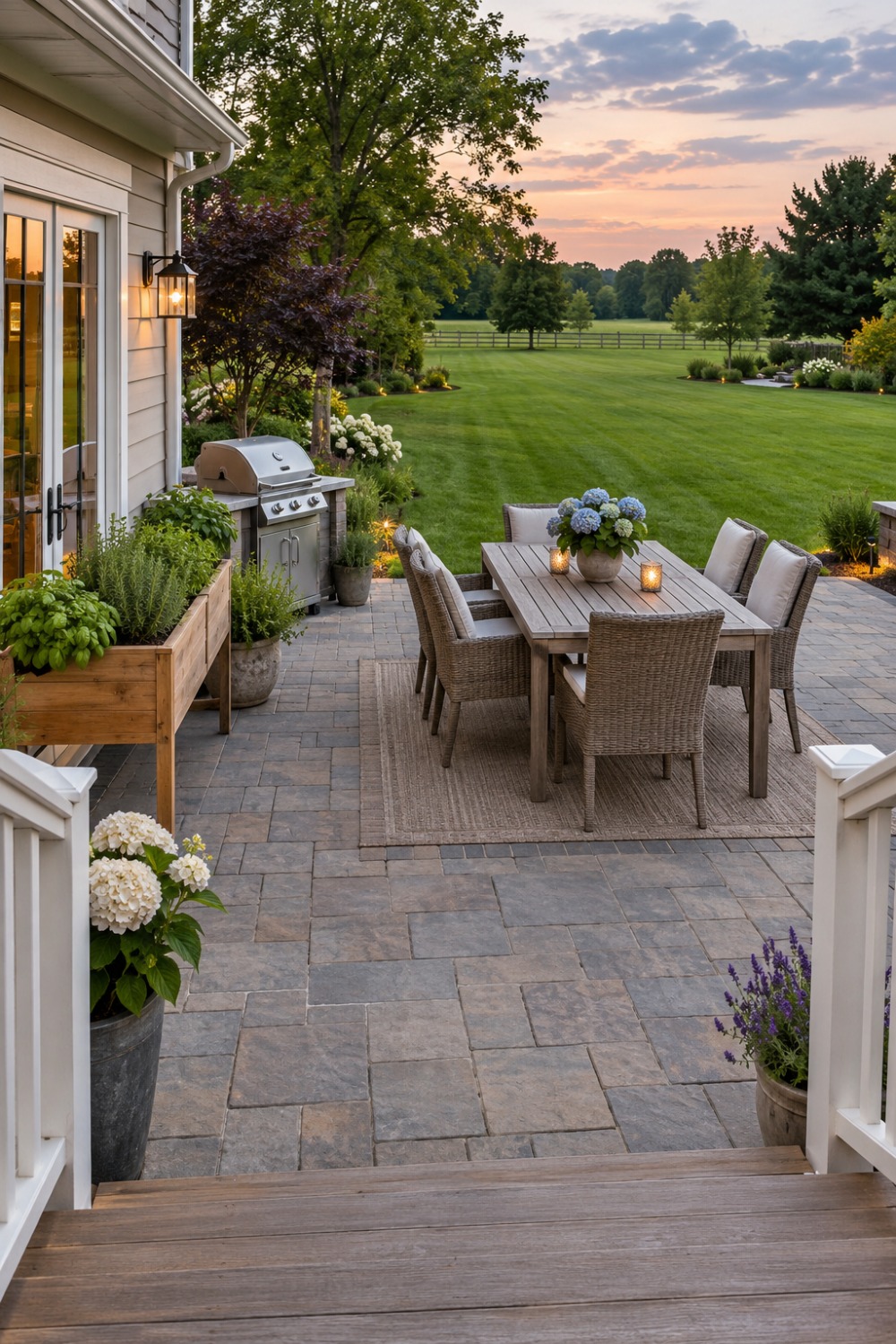
The spaces you use every day should be the easiest to reach.
Put dining, grilling and lounging areas near the back door, and save quieter spots for farther out.
This also keeps your most-watered and most-tended plants close to the hose and the kitchen.
How to do it:
- List what you do outdoors most often.
- Place those activities within a short walk of the house.
- Move low-care zones like meadow or orchard to the far edges.
4. Connect the Zones With One Wide Main Path
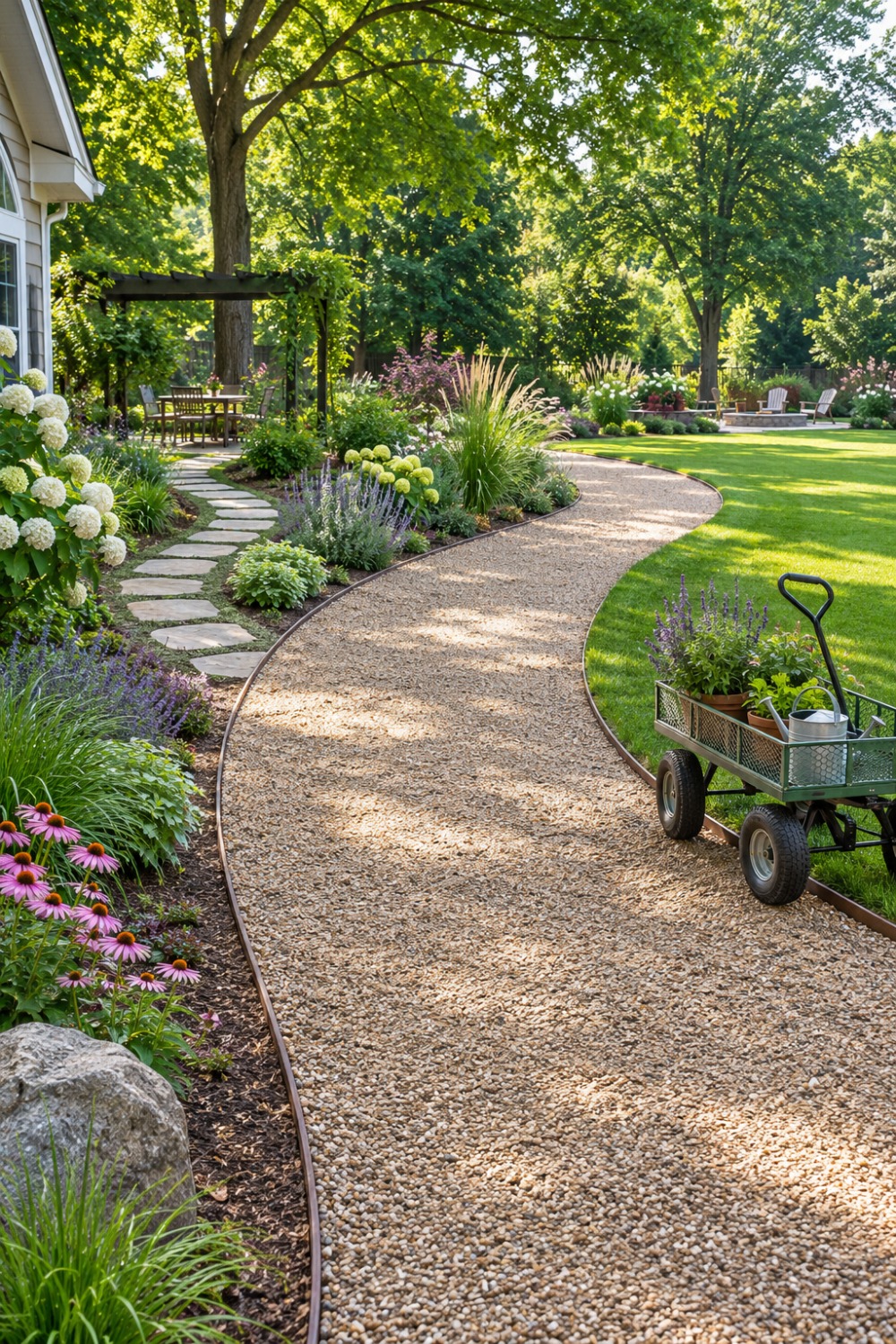
A large backyard needs a clear route, or people wear tracks across the lawn.
One main path, wide enough for two people or a garden cart, ties the zones together and leads the eye through the yard.
Gravel, flagstone and mown grass all work. Narrower side paths can branch off to smaller areas.
How to do it:
- Walk the route you naturally take and mark it with stakes.
- Make the main path 4 to 5 feet wide.
- Use one material for the main path and simpler ones for side paths.
5. Create a Long View to a Focal Point
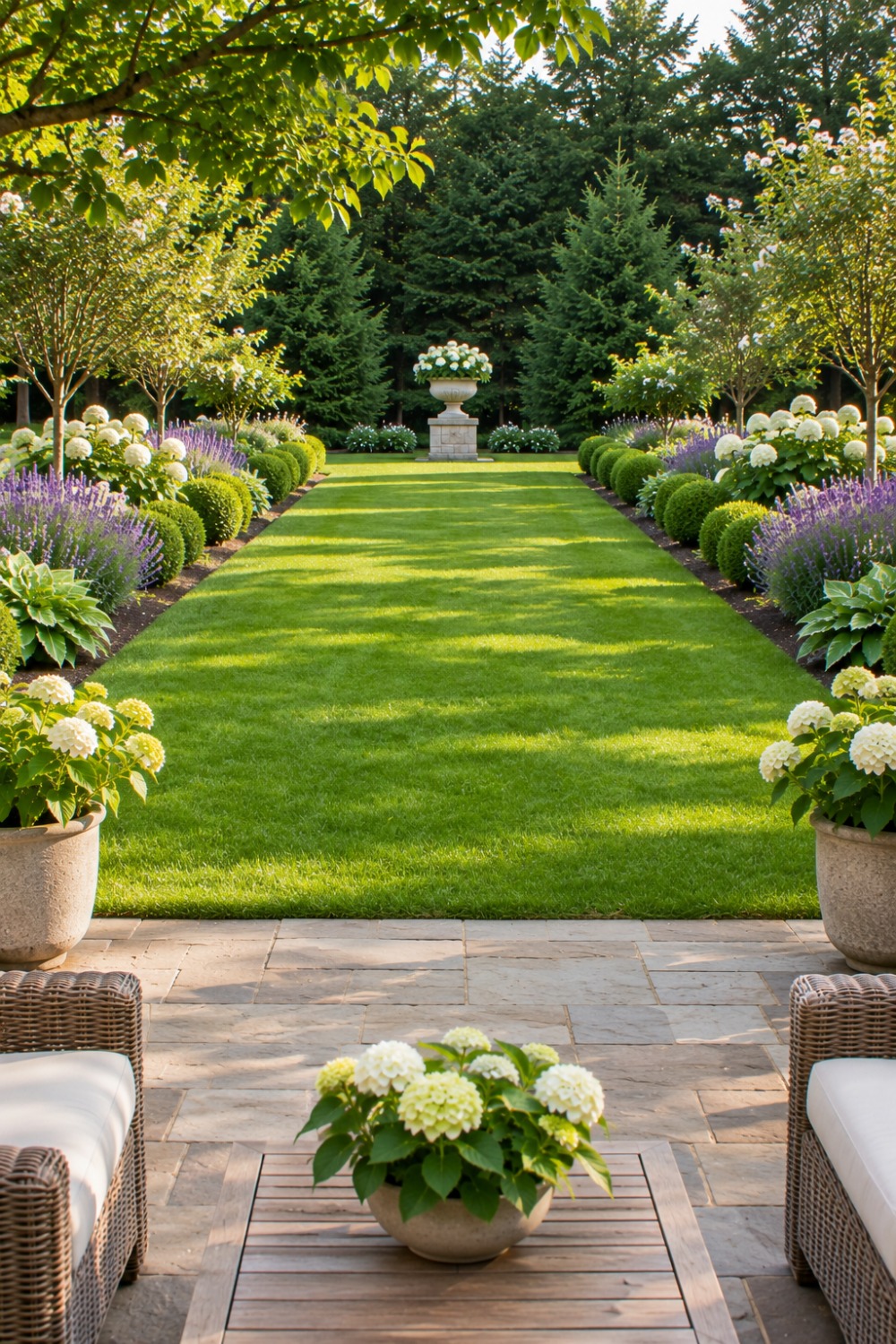
Big yards have something small yards don’t: distance.
Use it by lining up a long view from the back door or patio to a focal point at the far end, such as a statue, bench, specimen tree or large urn.
Frame the view with planting on both sides so the eye travels straight to it.
How to do it:
- Stand at your main window or seat and find the longest straight view.
- Place a bold focal point at the end of it.
- Plant matching shrubs or borders along each side.
6. Build a Destination Pergola at the Far End
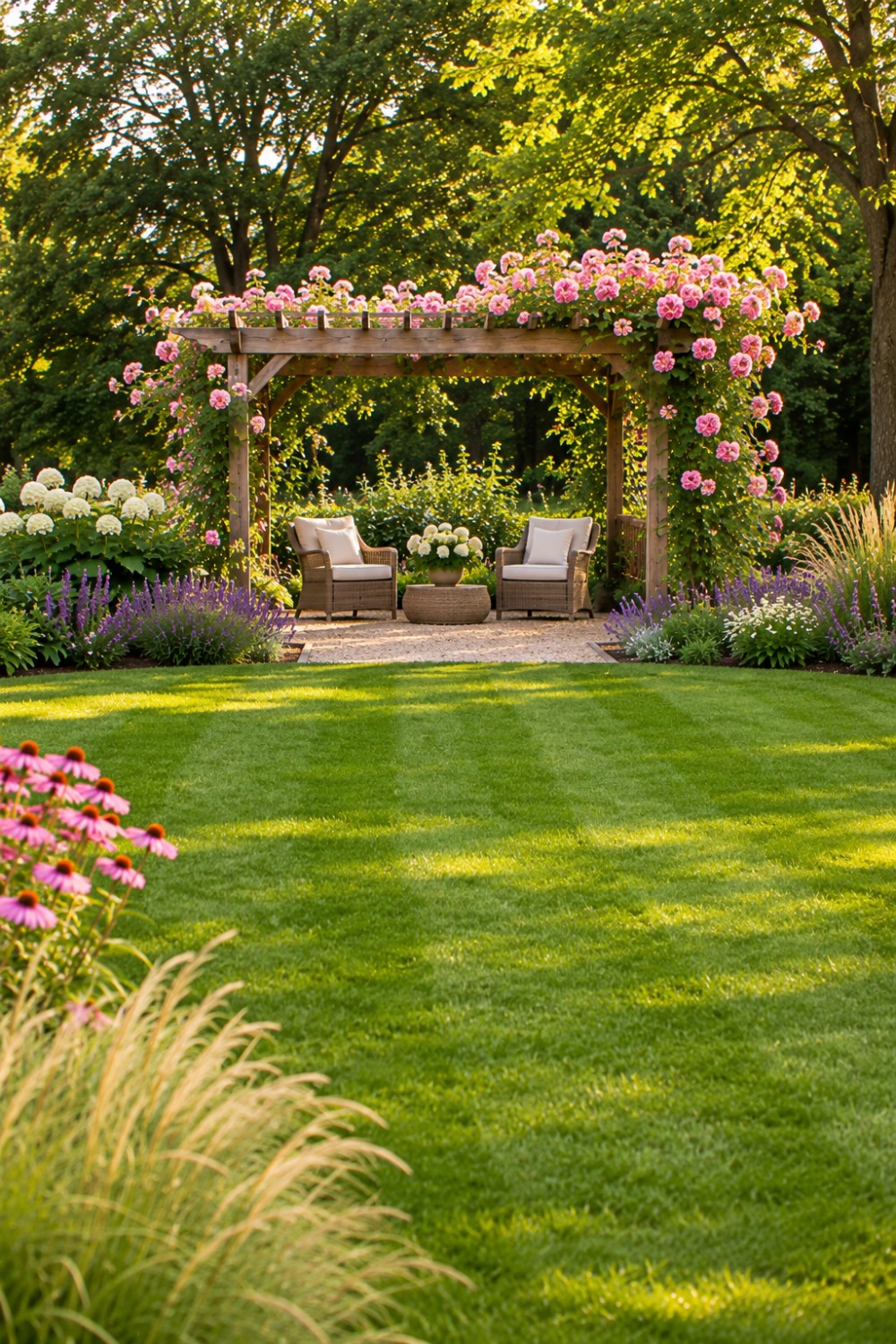
A pergola at the far end of the yard gives people a reason to walk out and enjoy the whole space.
It’s a shady spot to read or have coffee, and from the house it acts as a strong focal point.
Grow climbing roses, clematis or native crossvine (Bignonia capreolata) over the top, and skip Asian wisteria, which is invasive in many areas.
How to do it:
- Place it at the end of a path or long view.
- Set it on a gravel or paver pad with room for chairs.
- Plant vines at the posts and a low bed around the base.
7. Replace Part of the Lawn With a Meadow
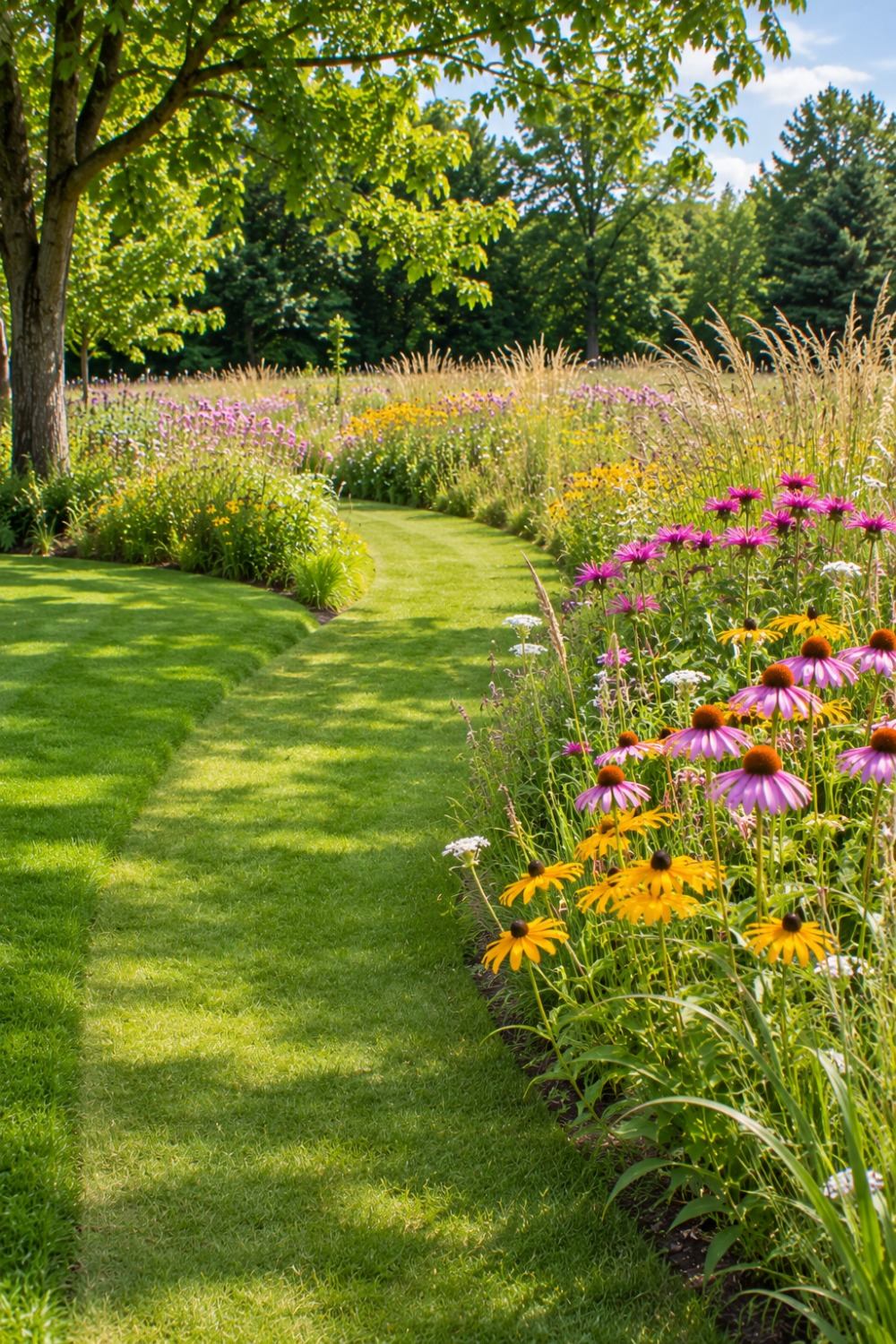
Mowing a huge lawn every week takes hours.
Turning part of it into a meadow of native grasses and wildflowers cuts mowing, feeds pollinators and adds movement and color.
Mow a curving path through it so it looks intentional, and keep a neat mown edge where meadow meets lawn.
How to do it:
- Choose a sunny area away from the house.
- Remove the turf and sow or plug a regional native seed mix.
- Mow the meadow once a year in late winter or early spring.
8. Plant a Shade Grove With a Hammock
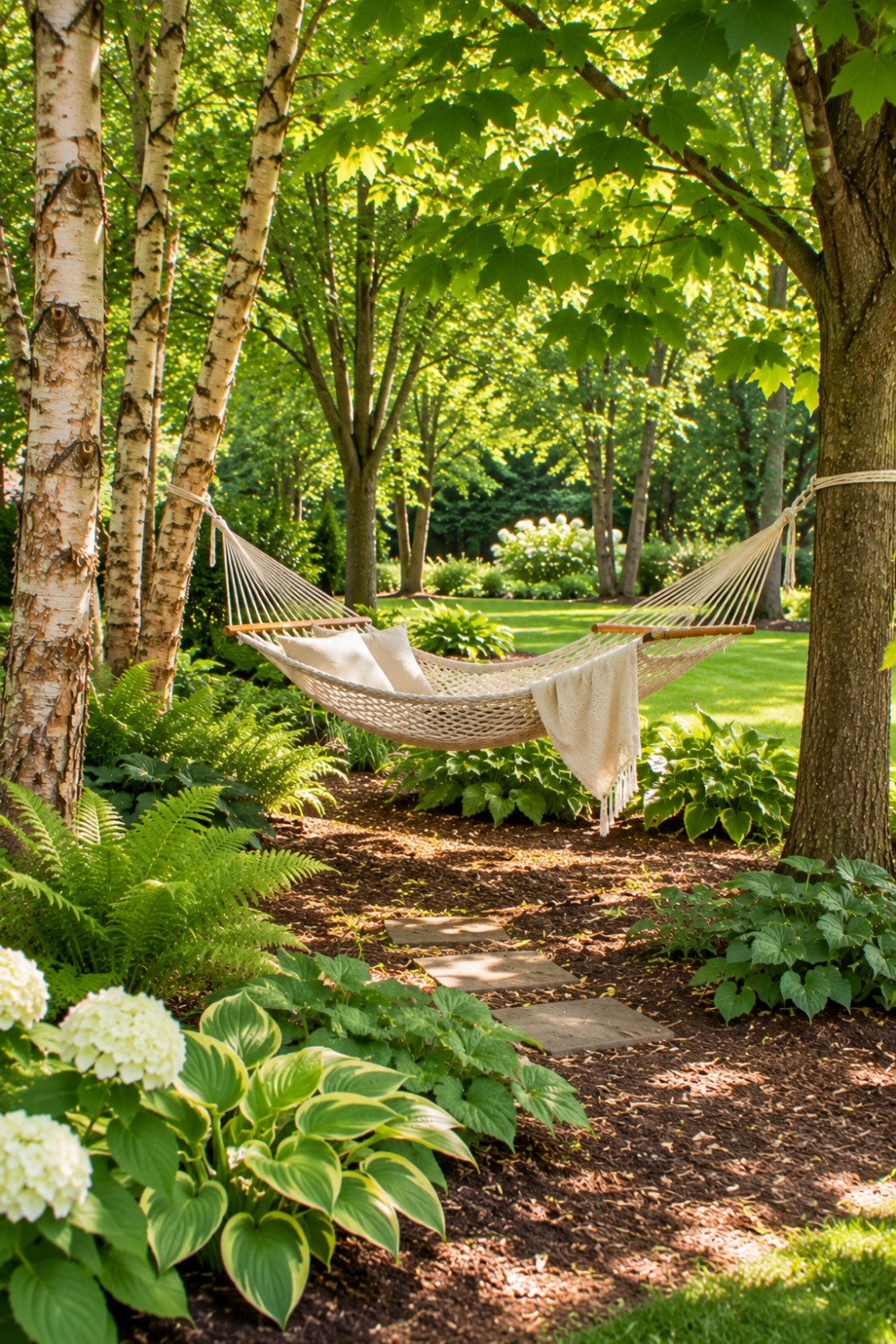
A group of trees planted together feels like a small woodland and gives you cool shade in summer.
Under the canopy, a hammock, a couple of chairs or a simple bench make it a favorite retreat.
Plant three to seven trees of one or two kinds, and mulch the ground beneath instead of trying to grow grass.
How to do it:
- Choose trees suited to your climate, such as oaks, maples or river birch.
- Plant them in a loose cluster, spaced for their mature size.
- Mulch the ground and add shade-loving ground covers.
9. Leave an Open Lawn for Games
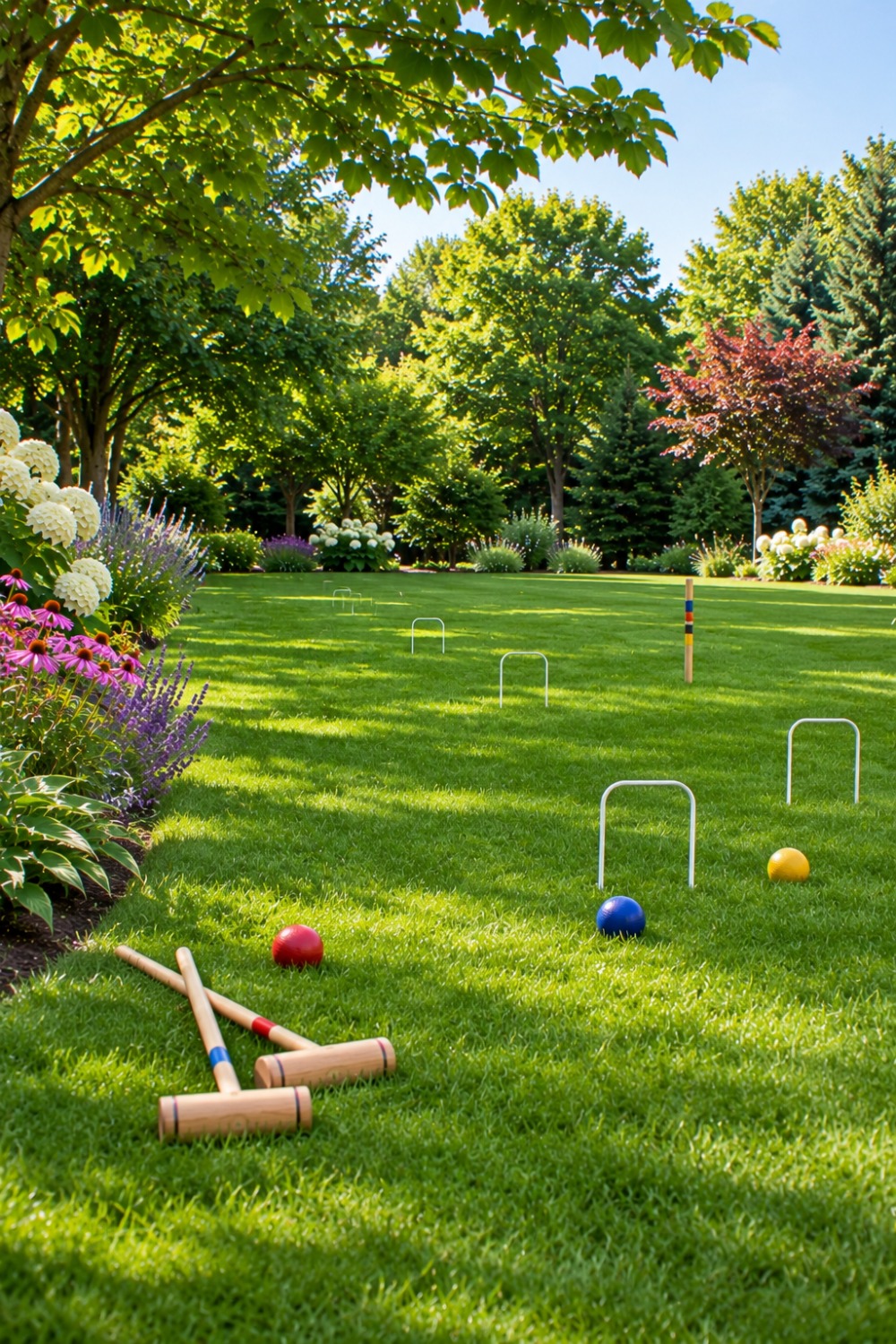
Not every inch needs planting. A large, open lawn is one of the best things a big backyard can offer.
It’s space for games, kids, dogs and parties, and it gives the eye a calm place to rest between busy planted areas.
Keep it in the sunniest, flattest part of the yard, with a simple shape that’s easy to mow.
How to do it:
- Choose a level, sunny area.
- Give it one clean shape, such as a rectangle or oval.
- Frame it with borders or trees instead of dotting beds through it.
10. Plant a Small Orchard of Dwarf Fruit Trees
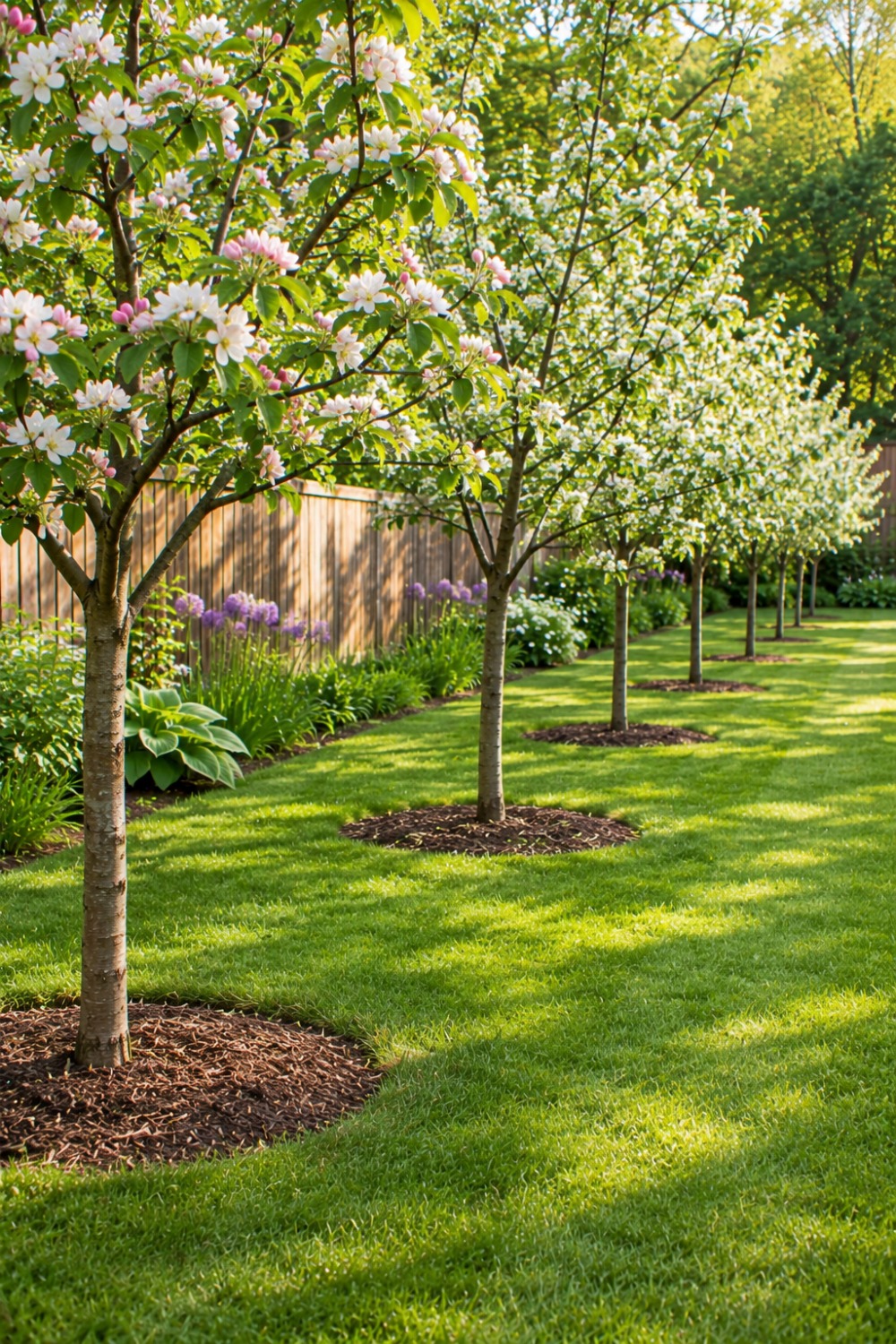
A few fruit trees turn a large backyard into something productive and beautiful.
Dwarf and semi-dwarf apples, pears, plums and peaches give spring blossom and summer fruit without needing a ladder.
Many fruit trees need a second variety nearby for pollination, so check before you buy.
How to do it:
- Choose varieties suited to your area and check pollination partners.
- Plant in a sunny, well-drained spot, spaced for their mature size.
- Mulch each tree and prune once a year in late winter.
11. Add a Natural Pond for Wildlife
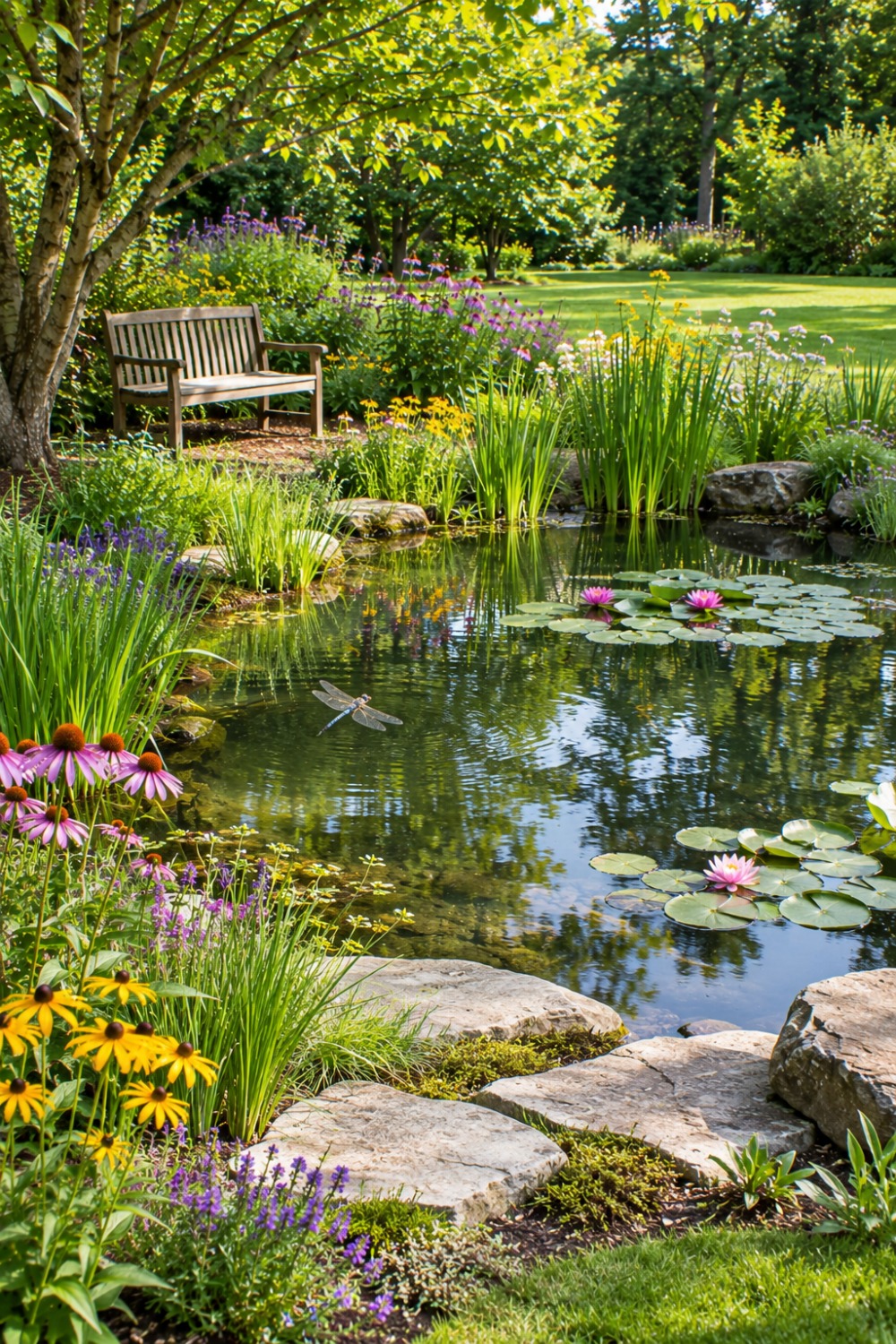
A pond brings birds, frogs, dragonflies and the calming sound and sparkle of water.
In a large yard you can make it bigger and more natural, with gently sloping sides and plants around the edge.
Check local rules on depth and fencing, especially if young children live nearby or visit.
How to do it:
- Choose a spot with some sun and away from trees that drop lots of leaves.
- Dig with shallow, sloping edges and line it with a flexible pond liner.
- Plant native marginal plants around the rim.
12. Line the Boundary With a Wide Mixed Border
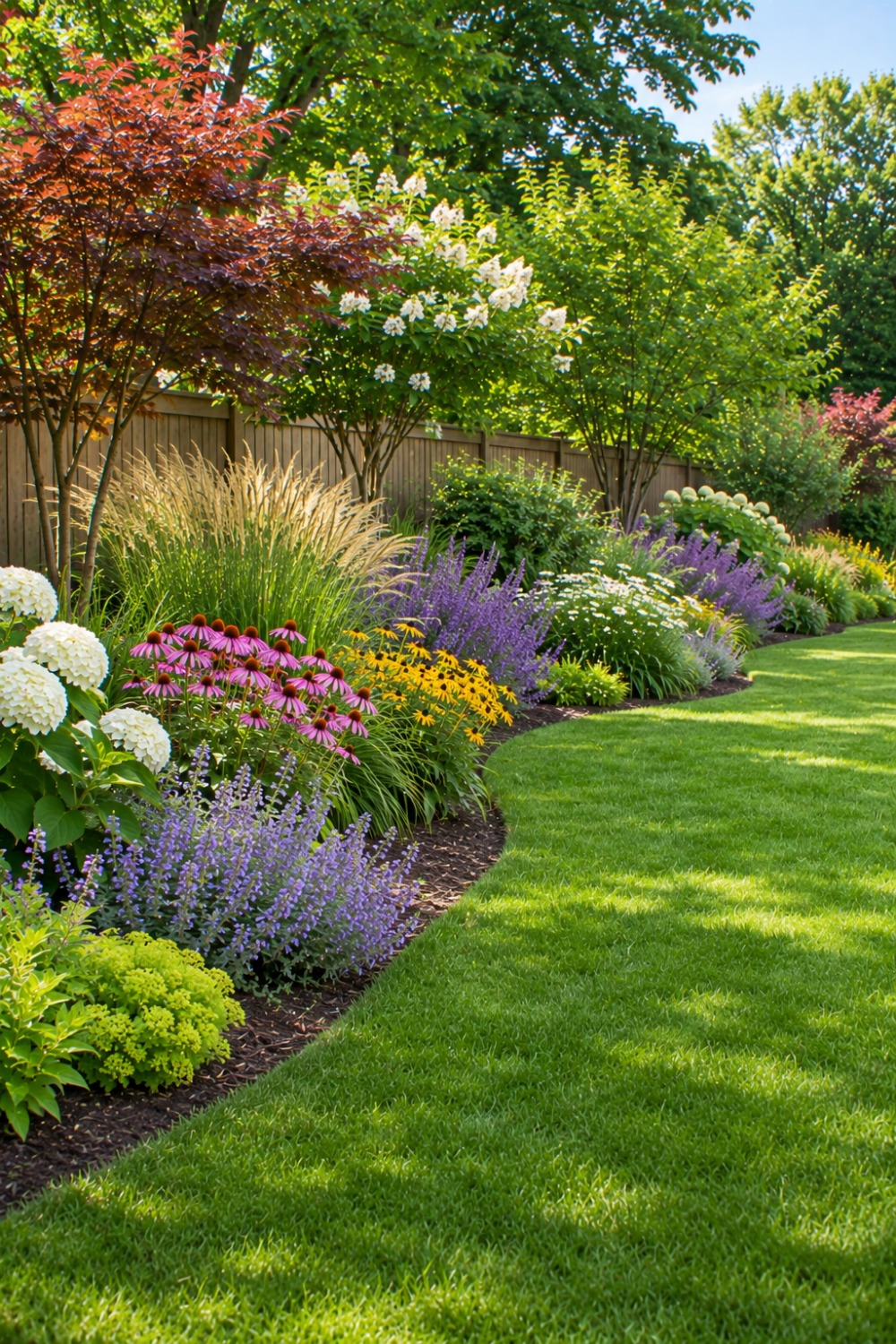
A narrow strip along a long fence looks thin. A wide mixed border looks lush and hides the boundary.
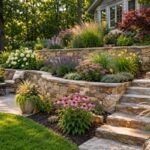
Make it 8 to 12 feet deep and layer shrubs, small trees, grasses and perennials.
It frames the lawn, adds year-round interest and gives birds shelter.
How to do it:
- Mark a border at least 8 feet deep with a smooth curved front edge.
- Plant shrubs and small trees at the back.
- Fill the front with grasses and perennials in large groups.
13. Plant a Windbreak on the Exposed Side
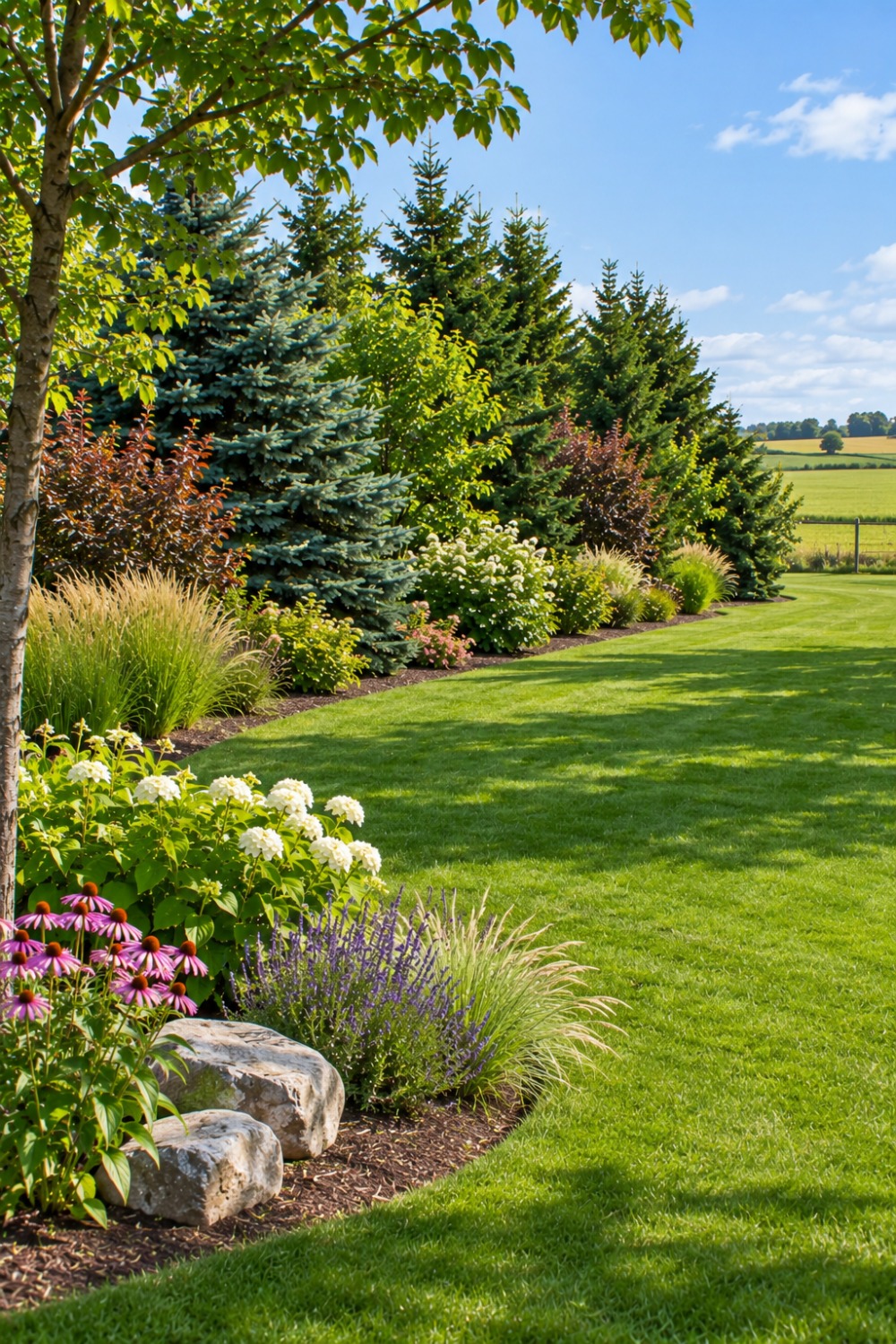
Large, open yards often catch strong winds that damage plants and make sitting outside uncomfortable.
A windbreak of evergreens and shrubs on the windward side slows the wind over a wide area behind it.
Two or three staggered rows of mixed species work better than a single row of one tree.
How to do it:
- Find the direction of the prevailing wind.
- Plant staggered rows of evergreens and shrubs on that side.
- Choose a mix of species to avoid losing the whole windbreak to one pest.
14. Plant in Big Drifts to Match the Scale
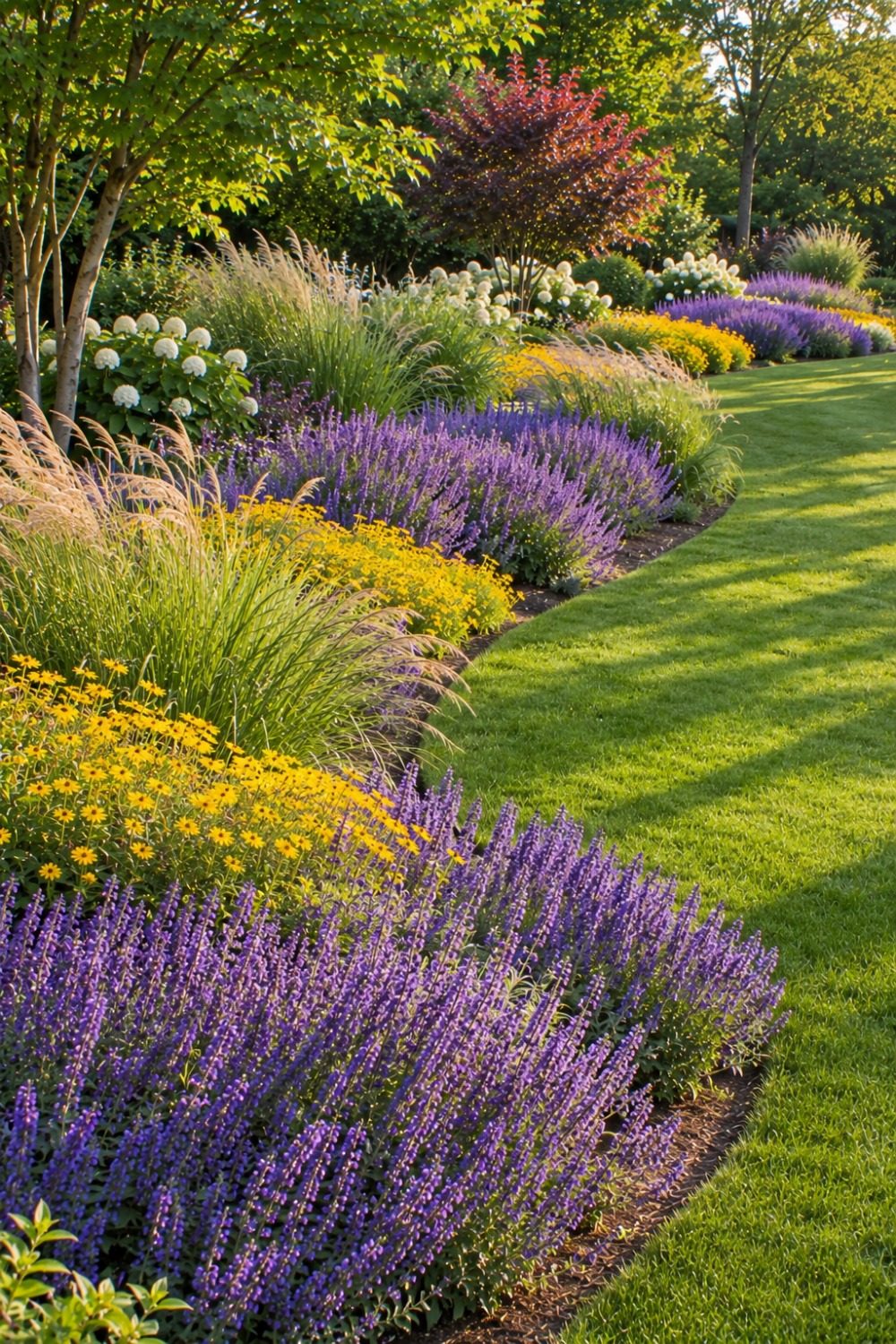
Single plants dotted through a large yard look lost.
Planting in big drifts of one variety, sometimes 10 or 20 at a time, reads clearly from a distance and looks far more natural.
It’s also easier to care for, since each drift needs the same treatment.
How to do it:
- Choose a few reliable plants for each border.
- Plant each in a long, flowing drift rather than a round clump.
- Repeat the same drifts in other borders to tie the yard together.
15. Set Up a Kitchen Garden Near the Back Door
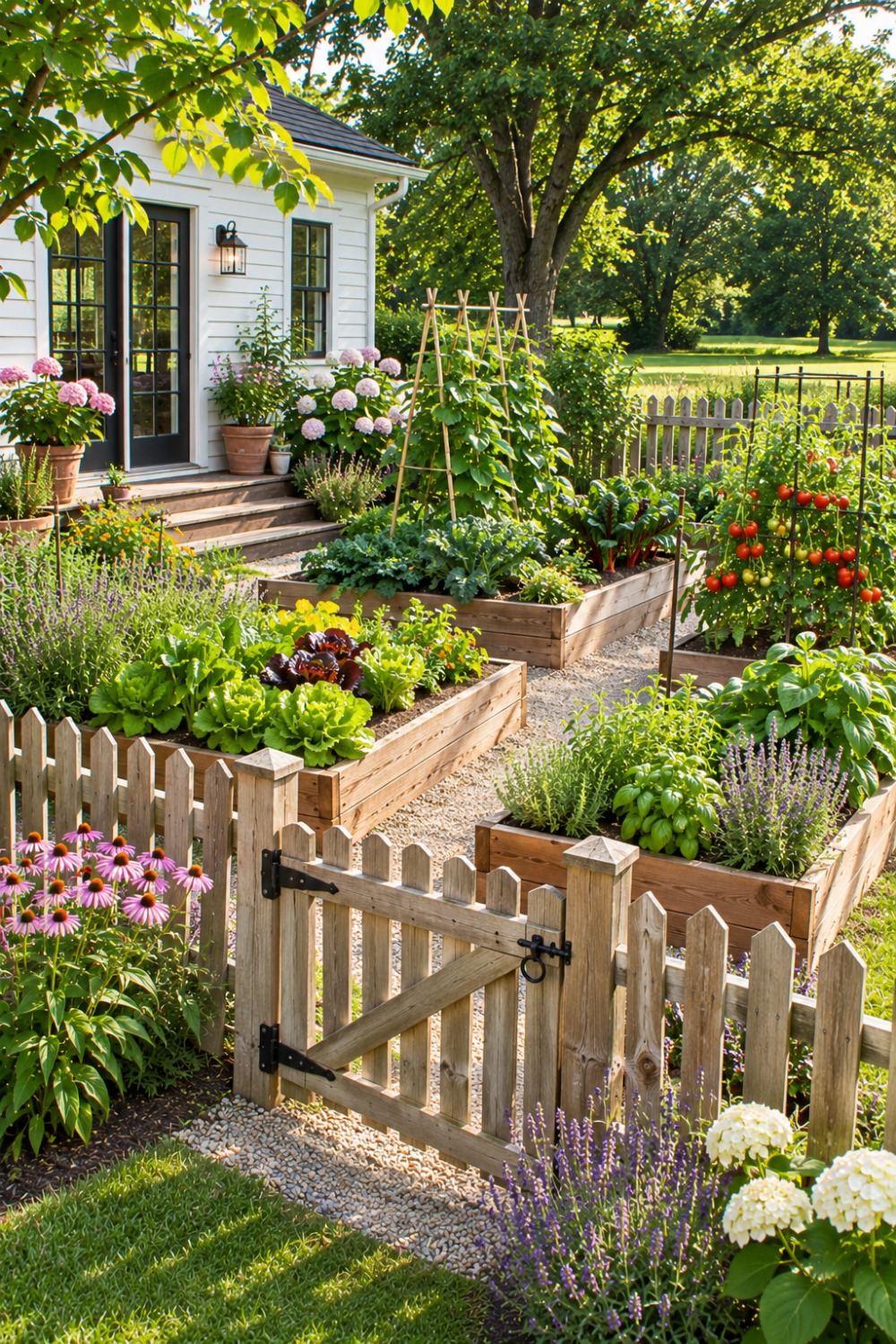
A big yard has room for a proper vegetable garden, but put it where you’ll actually use it.
Close to the kitchen means you’ll pick, water and weed more often.
A neat layout of beds with a fence or low hedge around it looks good and keeps out rabbits.
How to do it:
- Choose a sunny spot within a short walk of the back door.
- Lay out beds no wider than 4 feet so you can reach the middle.
- Add a low fence or edge to keep pets and rabbits out.
16. Give Kids a Play Zone in View of the House
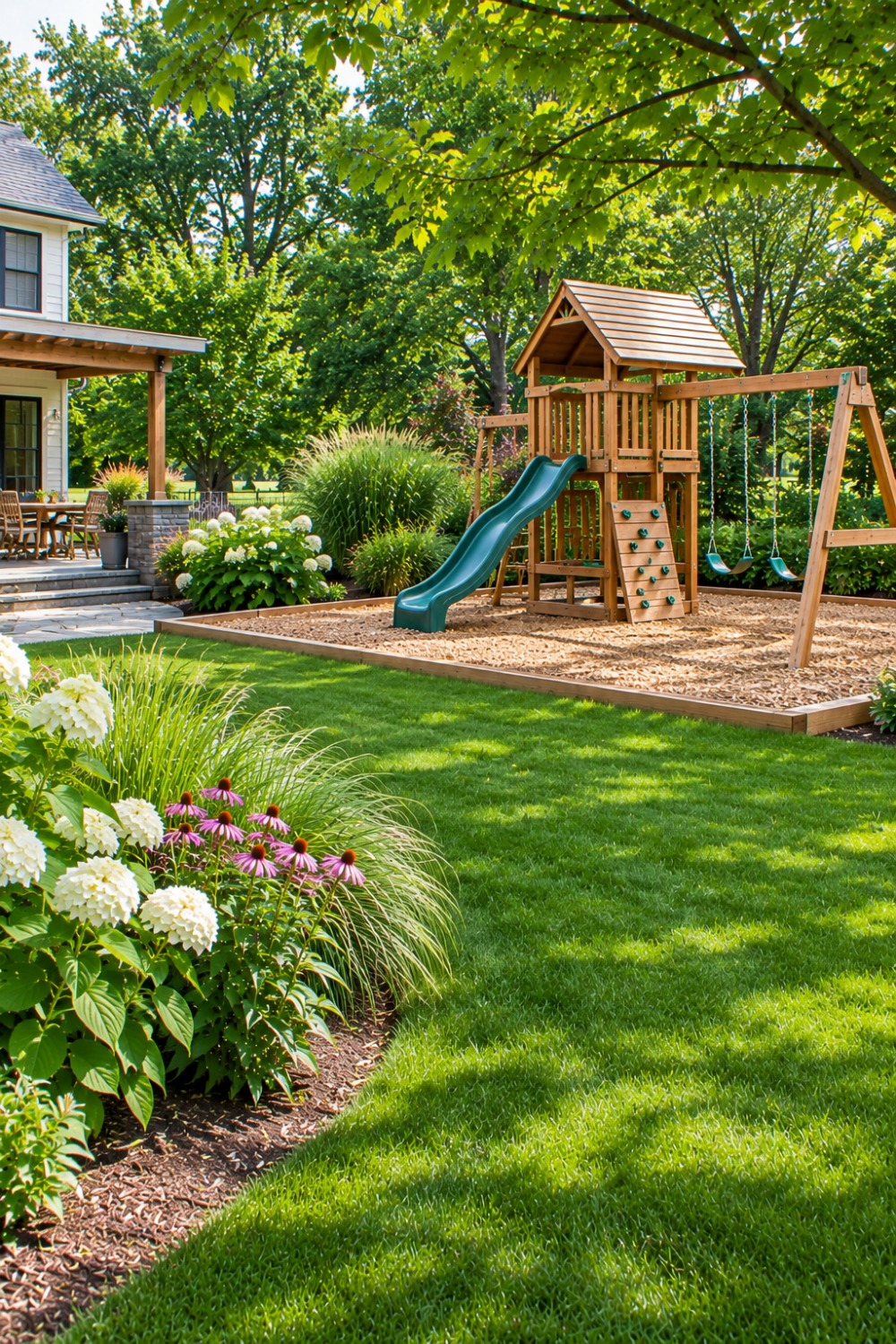
In a big yard, it’s tempting to put the play area far away. It’s usually better where you can see it from the kitchen or patio.
Use a soft surface such as wood chips under play equipment, and surround it with tough shrubs and grasses.
Choose a space that can turn into a garden or seating area once the kids outgrow it.
How to do it:
- Pick a spot visible from your main window or patio.
- Lay a deep layer of playground-grade wood chips under equipment.
- Plant sturdy, non-toxic shrubs around the edges.
17. Place Trees Where They’ll Fit in 20 Years
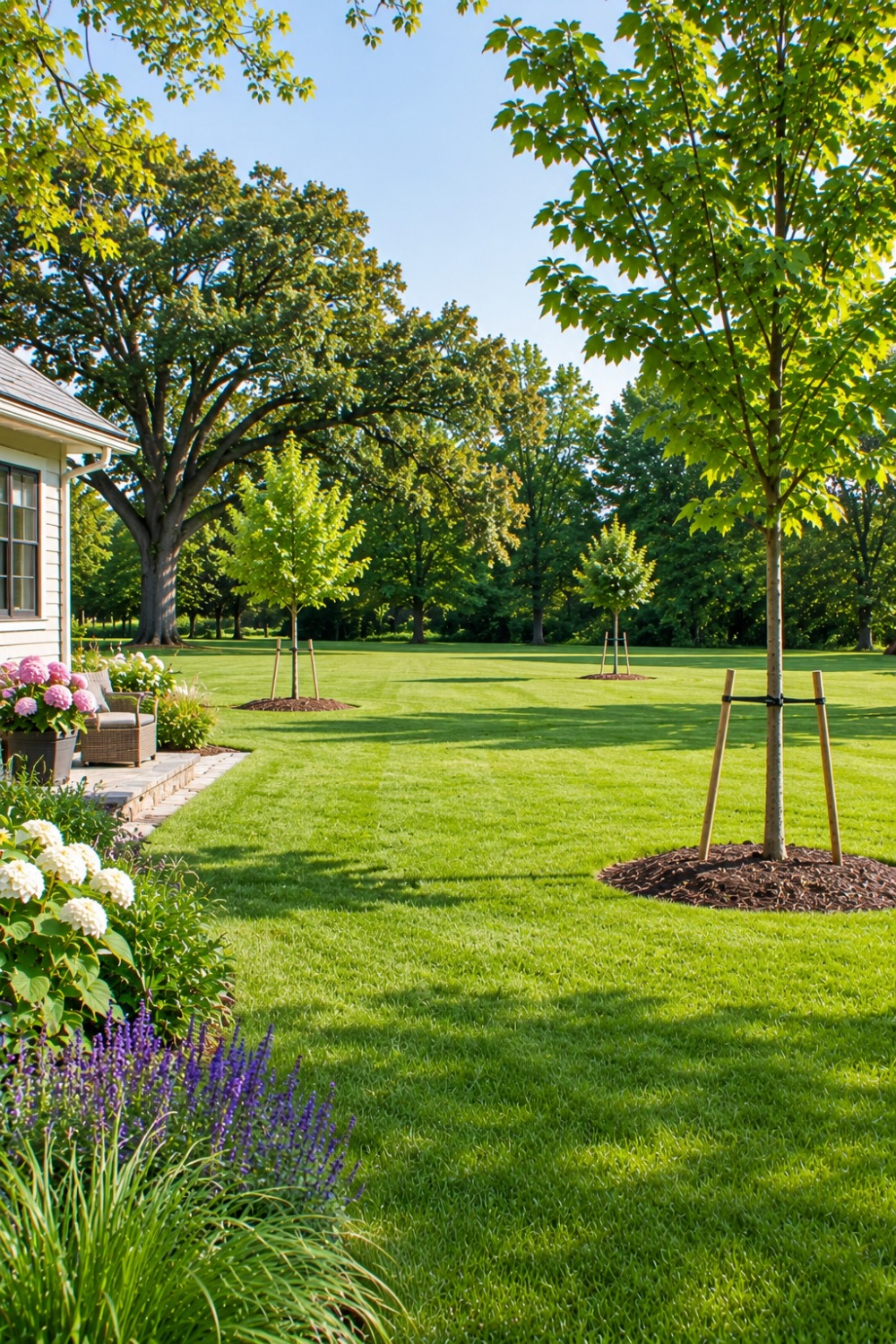
Trees are the biggest and longest-lasting part of a large backyard, so plant them for their adult size.
A young oak or maple looks small now but can spread 50 feet or more.
Keep large trees well away from the house, septic system, power lines and the sunny spots you need for vegetables or lawn.
How to do it:
- Check each tree’s mature height and spread.
- Mark that spread on your plan before choosing a spot.
- Plant large trees on the north or west side to shade without blocking winter sun.
For more ideas you can use in any size yard, see our backyard landscaping ideas.
Frequently Asked Questions
How do I landscape a large backyard on a budget?
Plan the whole yard first, then build it in stages. Convert part of the lawn to meadow from seed, use gravel or mown grass for paths, buy small plants and let them grow, and divide perennials as they spread.
How do I make a big backyard feel cozy?
Divide it into smaller rooms with hedges, borders or a change in surface, and add a destination seat or pergola. Planting in big drifts and adding trees for shelter also helps the space feel enclosed.
What is the lowest maintenance way to landscape a large yard?
Reduce the lawn to one simple shape, turn far areas into meadow or tree groves, plant shrubs and perennials in big drifts and mulch everything else. Stick with plants suited to your climate.
What should I plant along the back of a large yard?
A wide mixed border of shrubs, small trees, ornamental grasses and perennials looks good all year. On exposed lots, a windbreak of mixed evergreens adds shelter.
Final Thoughts: Plan Big, Then Build in Steps
A large backyard rewards a plan more than any other kind of yard.
Start with a scale drawing that shows sun, shade, slopes and views.
Group your everyday spaces close to the house, and save meadows, groves and orchards for the far edges.
Connect it all with one generous main path and a long view to a focal point.
Plant at the right scale: wide borders, big drifts and trees spaced for their adult size.
Leave an open lawn where it counts, and let the rest work harder for wildlife and lower upkeep.
If you’re planning a gathering spot, our backyard fire pit landscaping ideas fit naturally into a big yard.
Start with the zone closest to the house this year, then extend outward as time and budget allow.