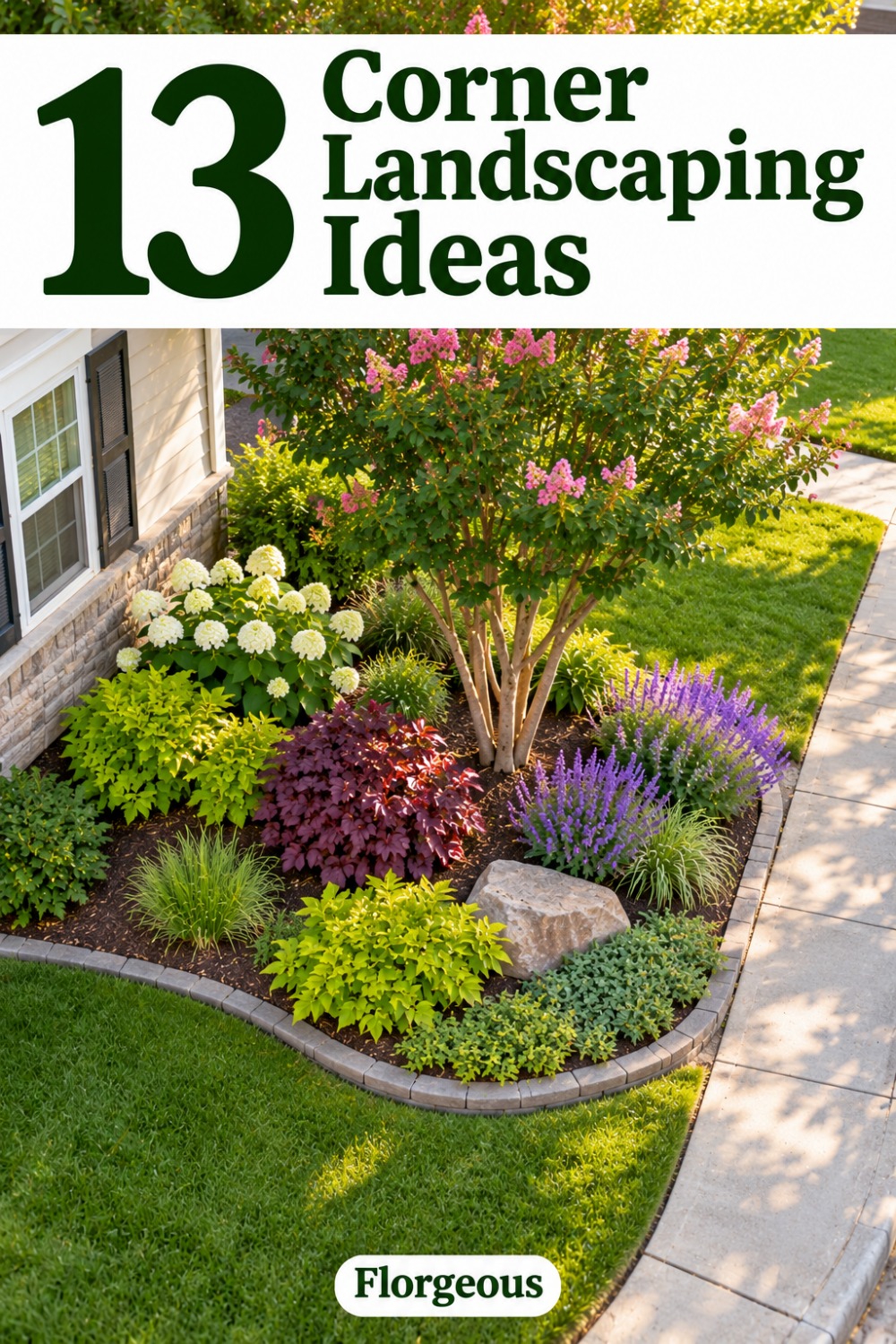
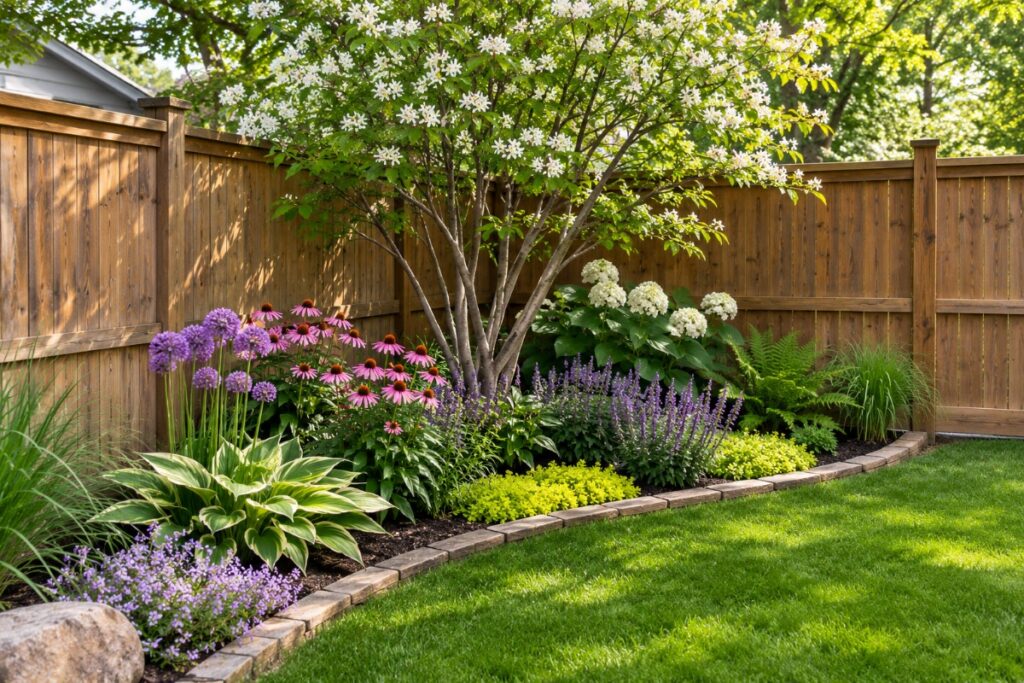
Every yard has a corner that never quite looks finished.
It might be where two fences meet, where the driveway hits the front walk or the bare point of a corner lot.
The secret to a great corner isn’t filling it with whatever is left over. It’s giving it one clear job, whether that’s a focal point, a screen, a seat or a place to catch rain.
These 13 corner landscaping ideas will help you turn front yard, backyard and corner lot spots into some of the best-looking parts of your garden.
Corner Types at a Glance
| Corner | Common problem | Best fixes |
|---|---|---|
| Back fence corner | Bare and boxy | Small tree, curved bed, pergola seat |
| Front yard corner lot | Blocks drivers’ view if planted too tall | Low plants in the sight triangle, taller ones farther in |
| Walk-meets-driveway corner | Trampled and cut across | Low, tough edging plants and a defined edge |
| Shady corner | Dark and gloomy | Variegated and white foliage, shade perennials |
| Low corner | Soggy after rain | Rain garden with moisture-tolerant natives |
| Utility corner | Boxes and meters on show | Loose screen that keeps access clear |
1. Anchor the Corner With a Small Multi-Stem Tree
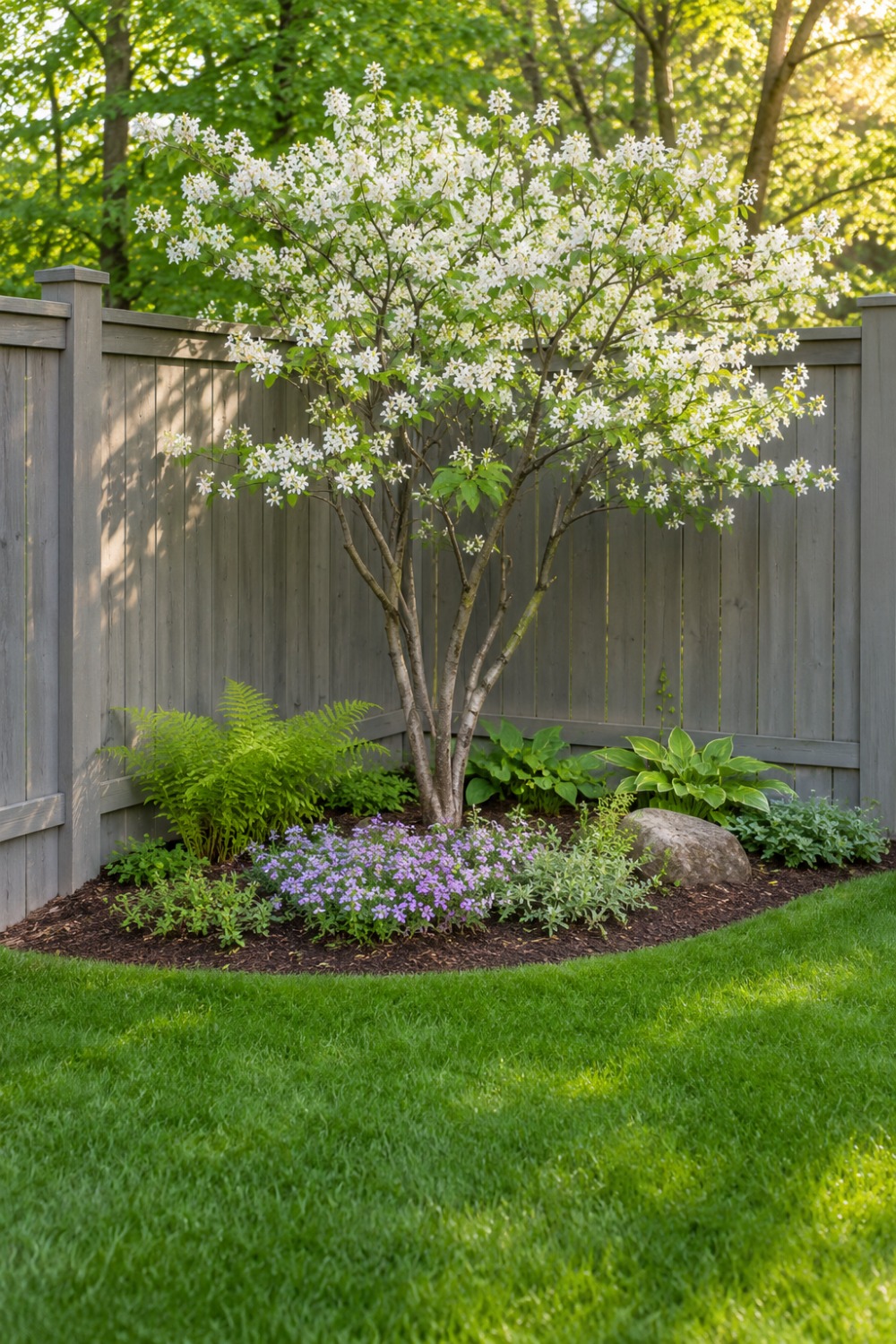
A single small tree is the fastest way to give a corner presence.
Multi-stem trees look especially good in corners because their trunks fan out and fill the angle naturally.
Serviceberry (Amelanchier), redbud (Cercis canadensis) and Japanese maple (Acer palmatum) stay modest in size and offer flowers or fall color.
How to do it:
- Check the tree’s mature spread so it won’t hang over the neighbor’s yard.
- Plant it a few feet out from the fence corner, not jammed into it.
- Underplant with low perennials or ground cover once it’s settled.
2. Sweep a Curved Bed Out From the Corner
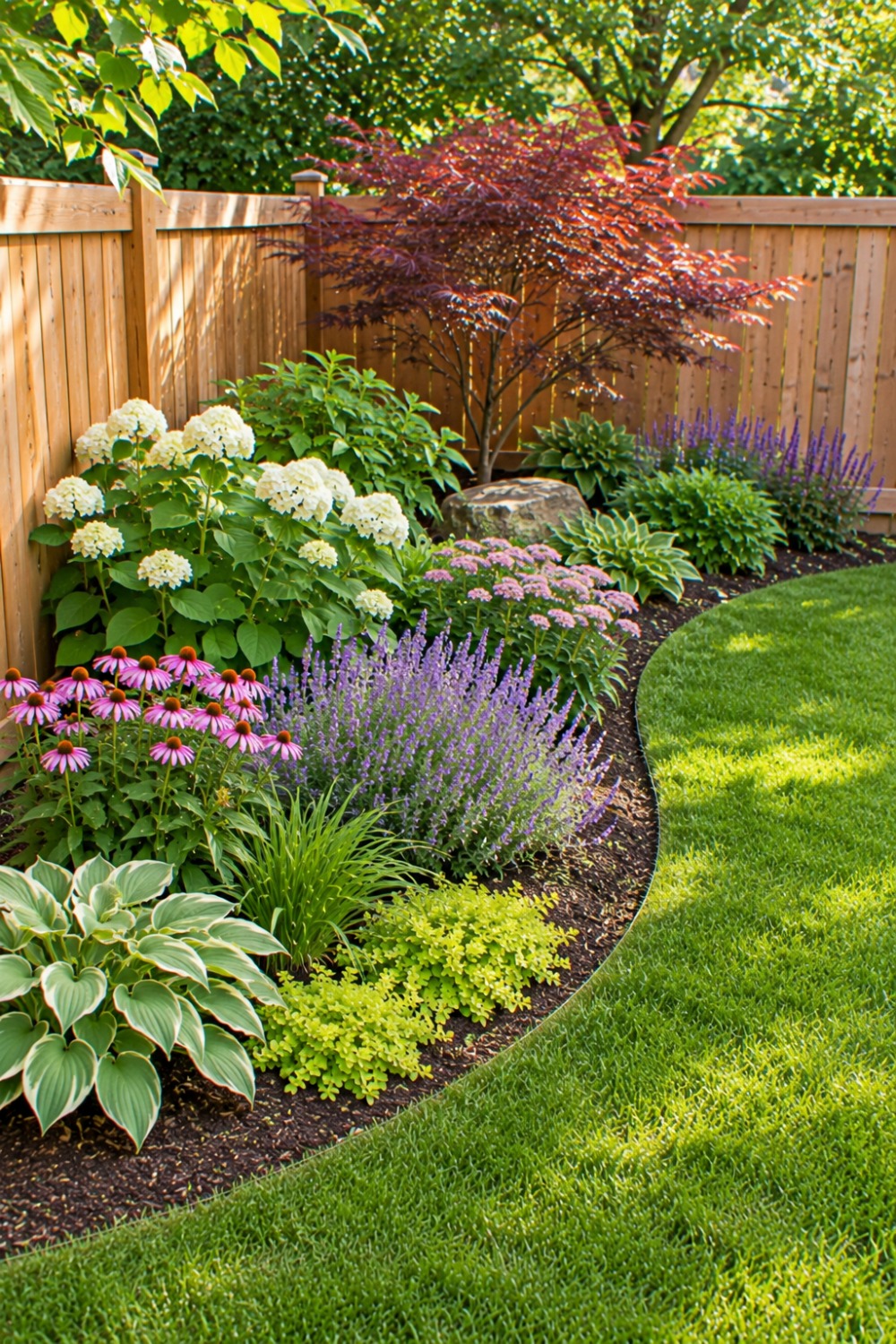
Square corners look stiff. A curved bed that sweeps out from the corner softens the whole yard.
Think of a quarter circle or a gentle kidney shape that’s deepest in the corner and tapers along each fence.
The curve also makes mowing easier, because there’s no tight angle to trim.
How to do it:
- Lay a garden hose in a smooth curve, at least 6 to 8 feet deep at the corner.
- Remove the turf inside the line and add compost.
- Edge the curve with a spade cut, steel or brick.
3. Layer Plants From the Tall Corner to the Low Edge
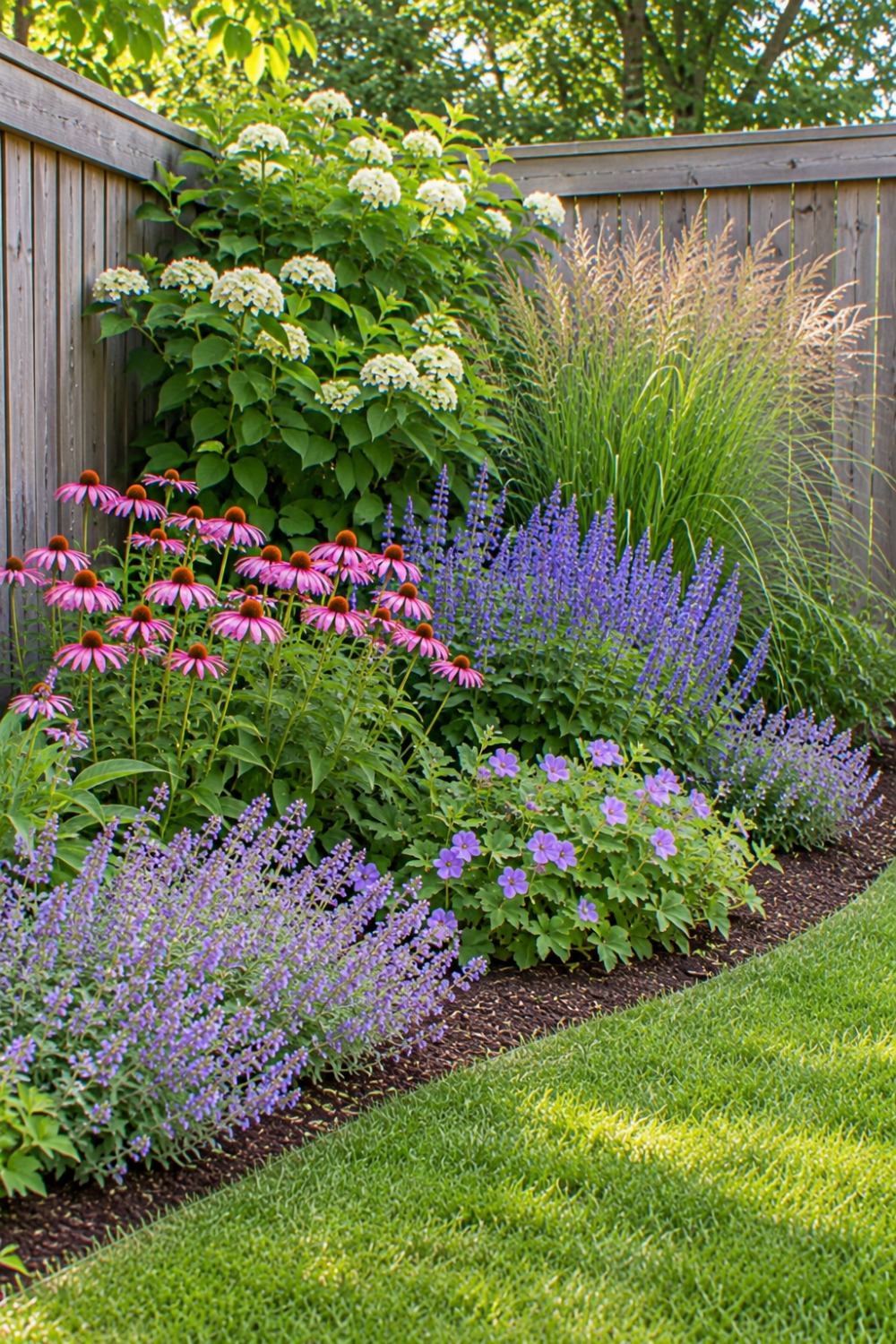
Corners give you depth, so use it.
Put the tallest plants in the very corner, mid-height plants in the middle and low edging plants along the front curve.
This builds a slope of foliage that looks full from every angle and hides the fence line.
How to do it:
- Choose one tall shrub or grass for the back, such as a viburnum or switchgrass.
- Add mid-height perennials like coneflowers or salvia in front.
- Finish with a low edge of hardy geranium, catmint or lilyturf.
4. Keep a Clear Sight Triangle on a Corner Lot
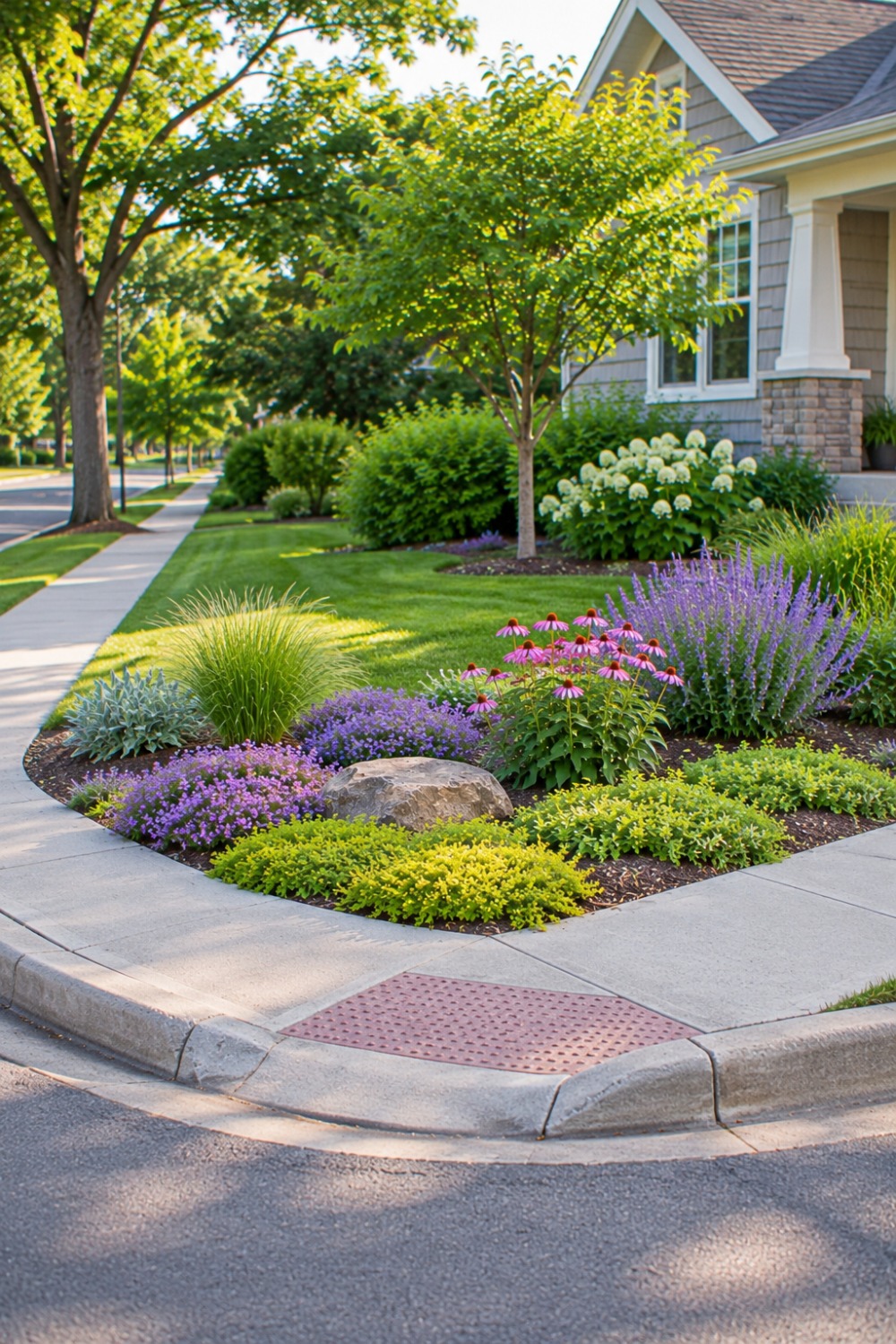
If your house sits on a street corner, the point closest to the intersection needs special care.
Many towns require a clear “sight triangle” where plants, fences and walls stay low so drivers can see cross traffic. Limits of about 2.5 to 3 feet are common, but rules vary.
Keep that zone to low perennials and ground covers, and build height farther from the corner.
How to do it:
- Check your local code for the sight triangle size and height limit.
- Plant only low, spreading plants inside it.
- Place shrubs, trees and screens outside the triangle.
5. Set a Corner Pergola Over a Small Seating Spot
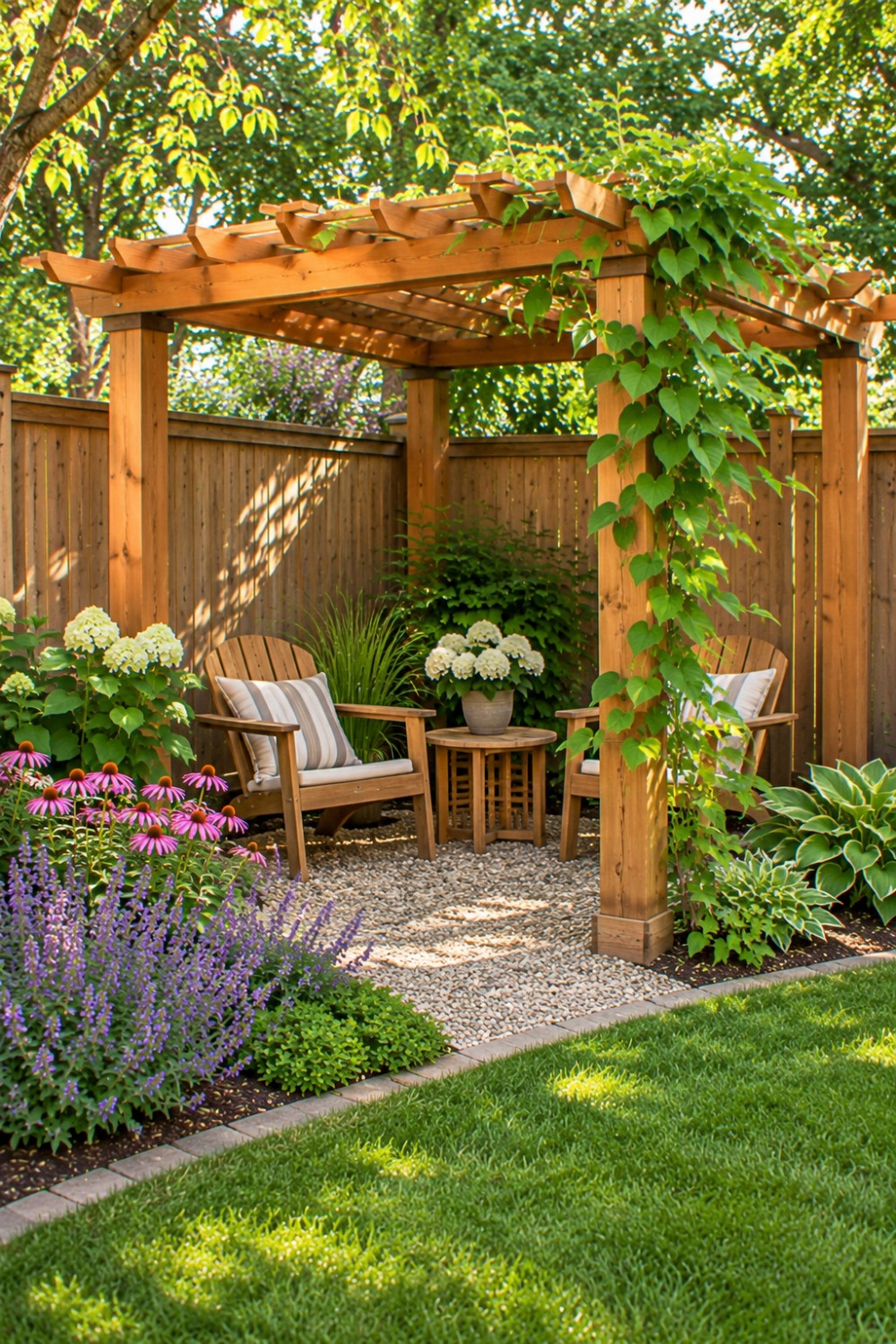
A back corner is often the quietest spot in the yard, which makes it perfect for a seat.
A small corner pergola gives the spot shape and a little shade, and turns it into a destination.
Grow a vine over the top, and set a small gravel or paver pad underneath for two chairs.
How to do it:
- Choose a level corner with some afternoon shade.
- Build or install a pergola sized for two chairs, about 8 by 8 feet.
- Plant a vine at one post and surround the pad with a low bed.
6. Raise the Corner Bed With a Curved Stone Wall
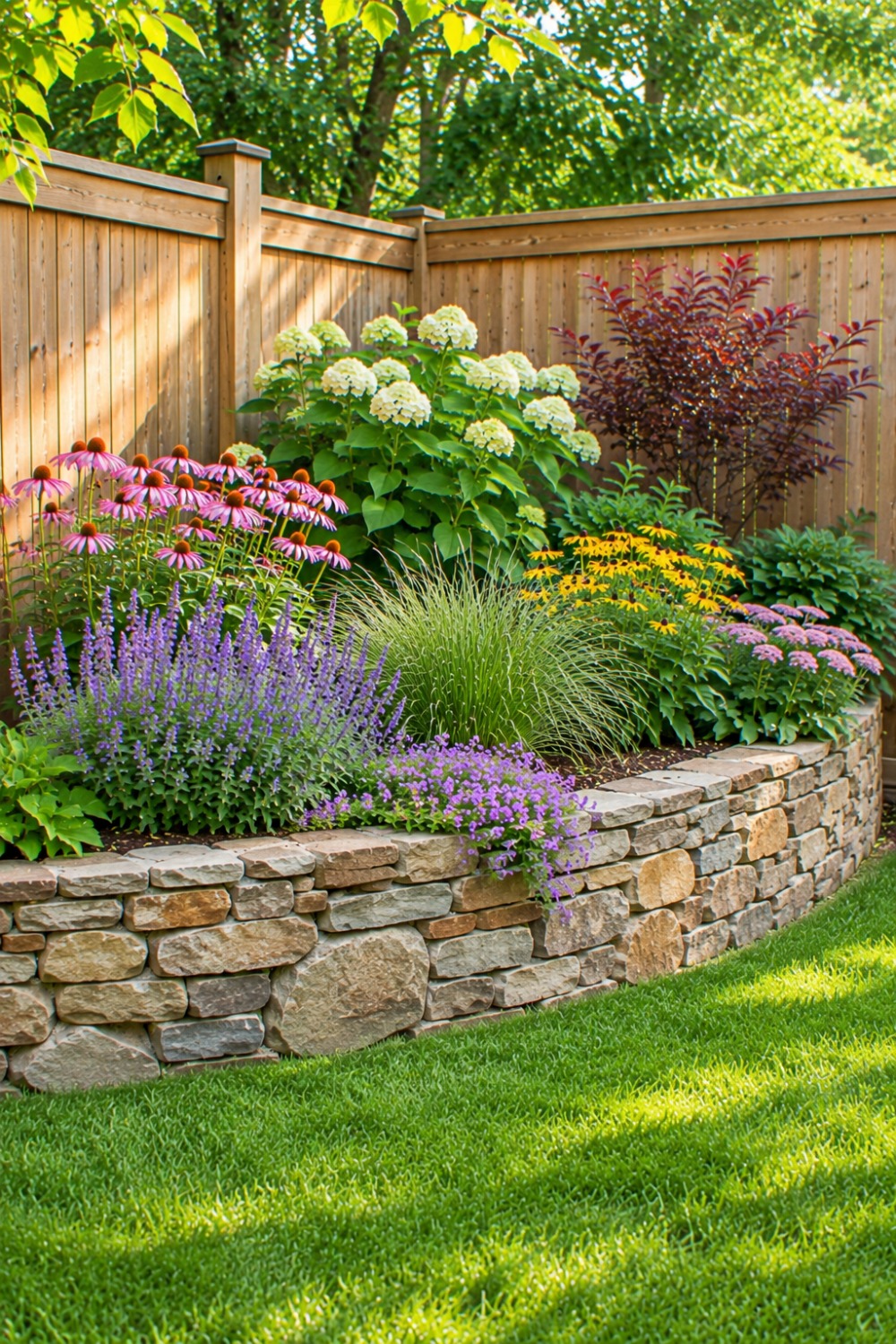
A low curved wall turns a flat corner into a raised bed with real presence.
The extra height helps with drainage, lifts flowers closer to eye level and gives you a place to sit on the edge.
Natural stone, stacked block or brick all work. Keep it to about 18 to 24 inches for a sitting height.
How to do it:
- Mark the curve and dig a shallow trench for a compacted gravel base.
- Stack the stones, stepping each course back slightly.
- Fill with a mix of topsoil and compost, then plant.
7. Brighten a Shady Corner With Variegated Foliage
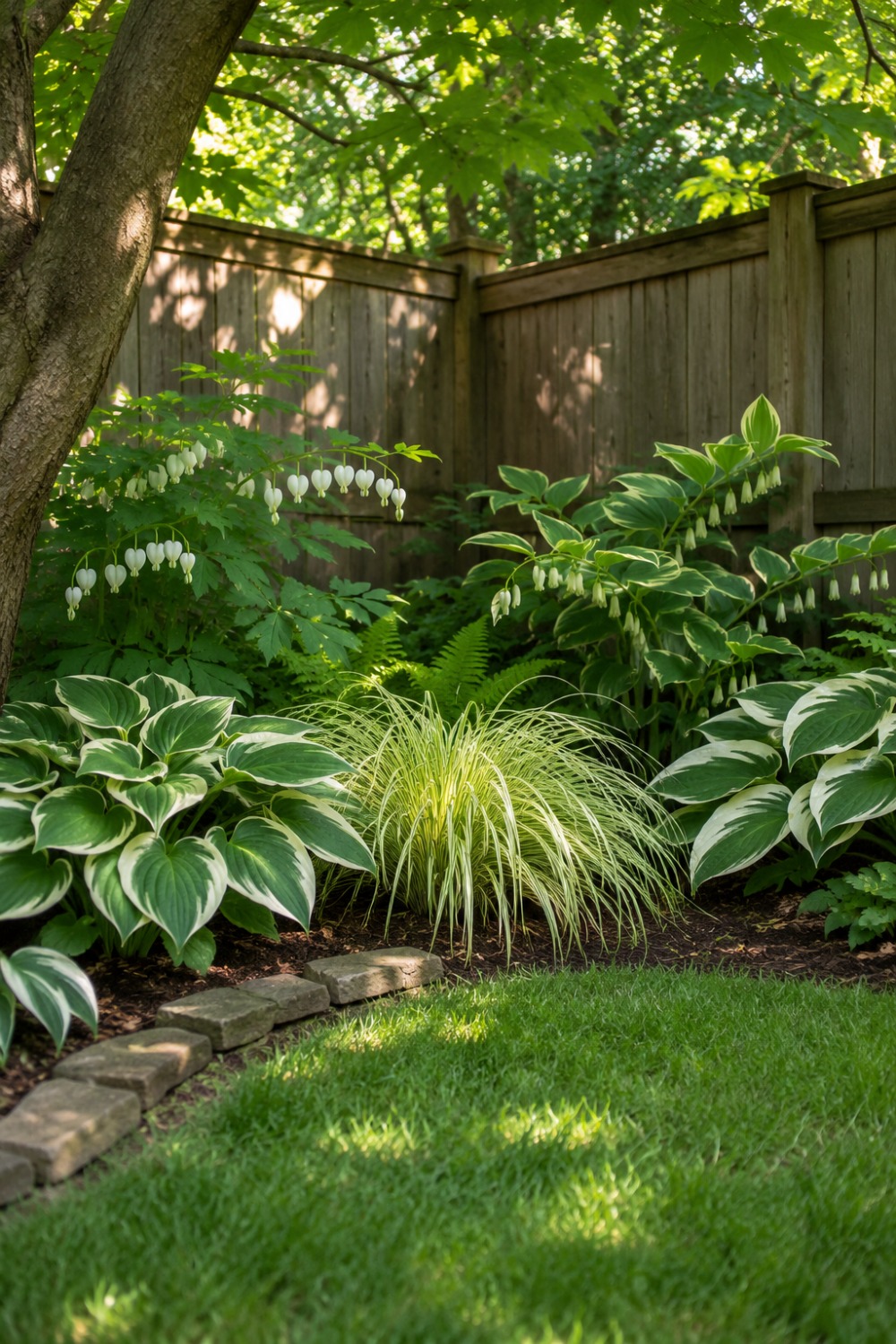
Shady corners can feel dark and forgotten.
Leaves edged or splashed with white and cream bounce light back and make the corner glow.
Try variegated hostas, Japanese sedge ‘Ice Dance’ (Carex morrowii), variegated Solomon’s seal (Polygonatum odoratum ‘Variegatum’) and white bleeding heart.
How to do it:
- Check how many hours of sun the corner gets.
- Group variegated plants with plain green ones so the bright leaves stand out.
- Add one white-flowered plant for spring or summer.
8. Train a Climbing Rose Up a Corner Trellis
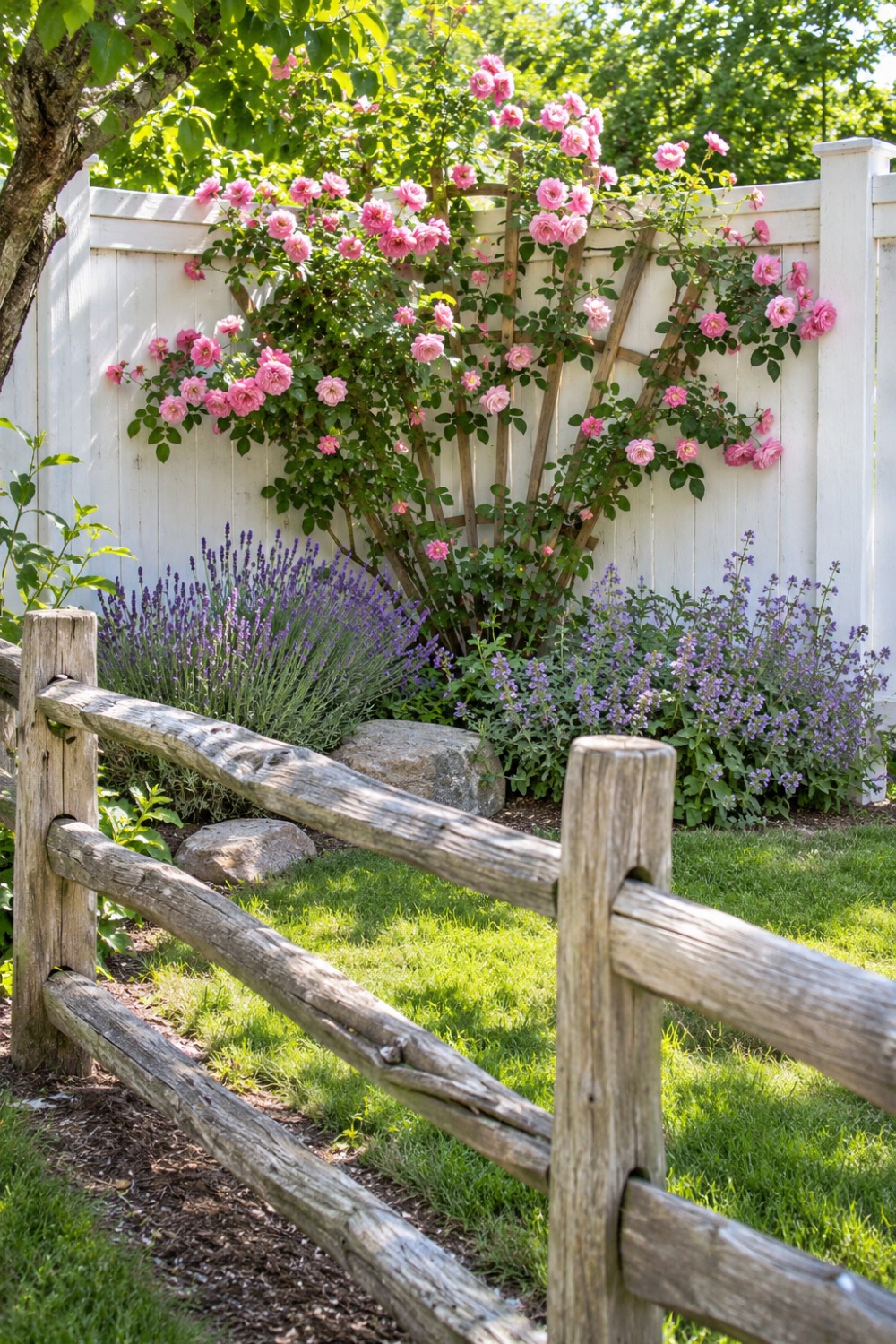
Fence corners are a natural place for something tall and romantic.
A climbing rose trained on a trellis fills the vertical space and frames the corner with flowers.
Choose a disease-resistant climber, give it at least six hours of sun, and tie the canes sideways to get more blooms.
How to do it:
- Fix a trellis to the fence a few inches out for air flow.
- Plant the rose about a foot from the base.
- Tie main canes in a fan shape as they grow.
9. Screen Utility Boxes in a Corner Without Blocking Access
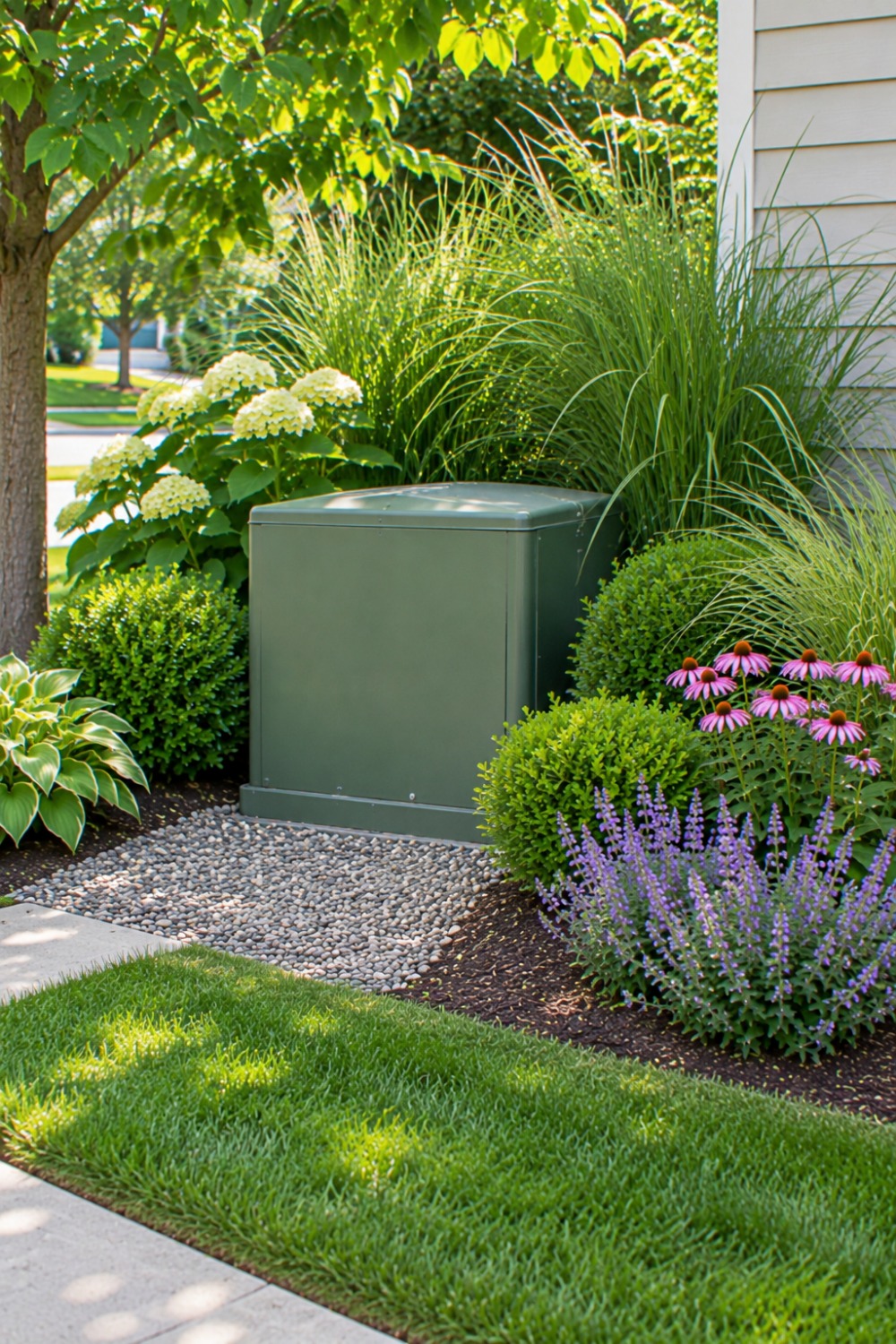
Electrical, cable and gas boxes often end up in corners.
You can soften them with plants, but utility companies need clear access, often several feet around the box and in front of any doors. Check your provider’s guidelines before planting.
Use loose grasses and small shrubs around the sides and back, and leave the front open.
How to do it:
- Find out the clearance your utility company requires.
- Plant around the sides and back only.
- Choose plants that won’t grow into the box, such as compact grasses.
10. Turn a Soggy Low Corner Into a Rain Garden
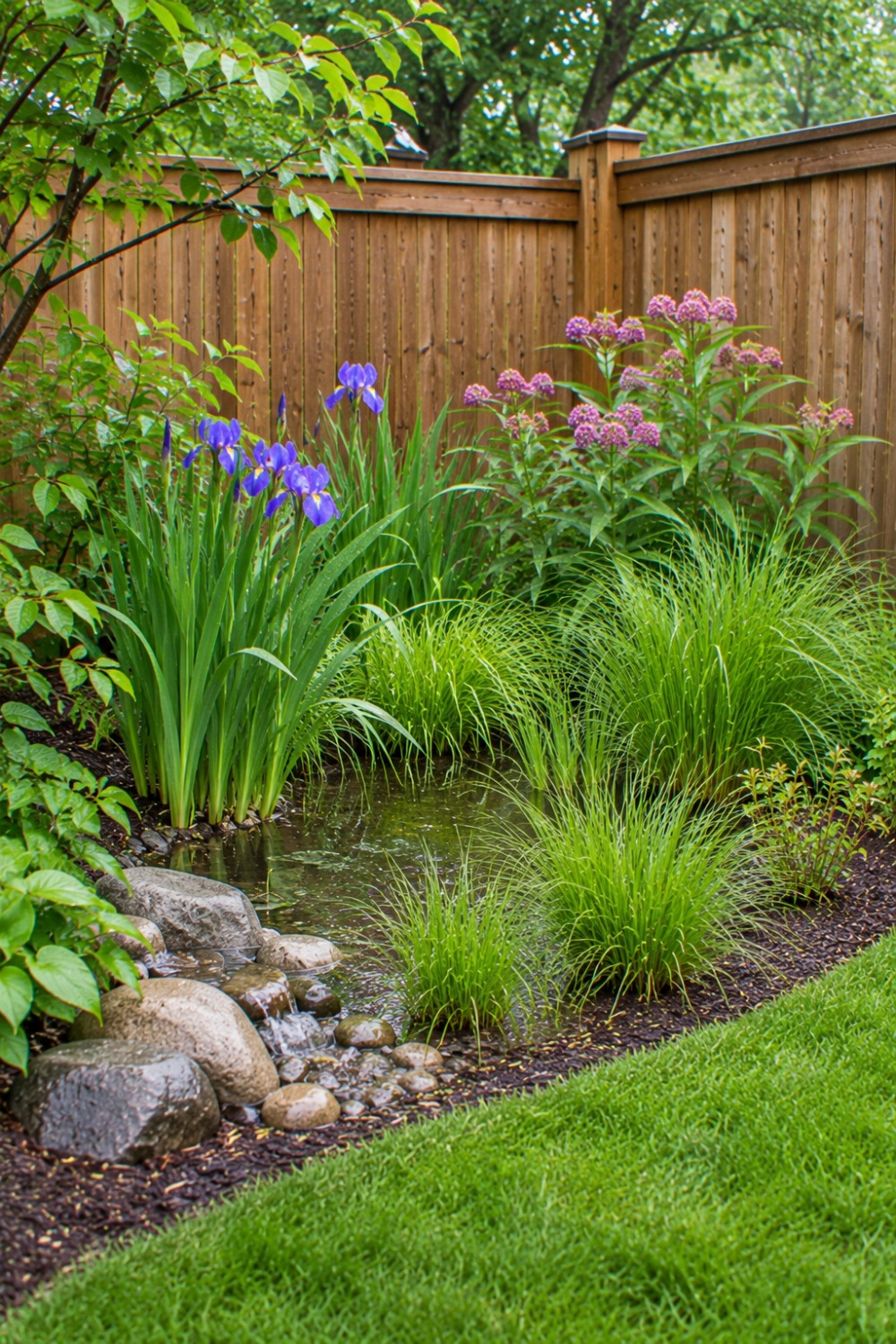
If water pools in one corner after storms, plant for it instead of fighting it.
A rain garden is a shallow, planted dip that catches runoff and lets it soak in within a day or two.
Moisture-tolerant natives such as blue flag iris (Iris versicolor), swamp milkweed (Asclepias incarnata) and sedges handle both wet spells and dry ones.
How to do it:
- Keep the rain garden at least 10 feet from the house foundation.
- Dig a shallow basin 4 to 8 inches deep and test that it drains within 48 hours.
- Plant the wettest-loving plants in the center and tougher ones on the rim.
11. Plant the Corner Where the Walk Meets the Driveway
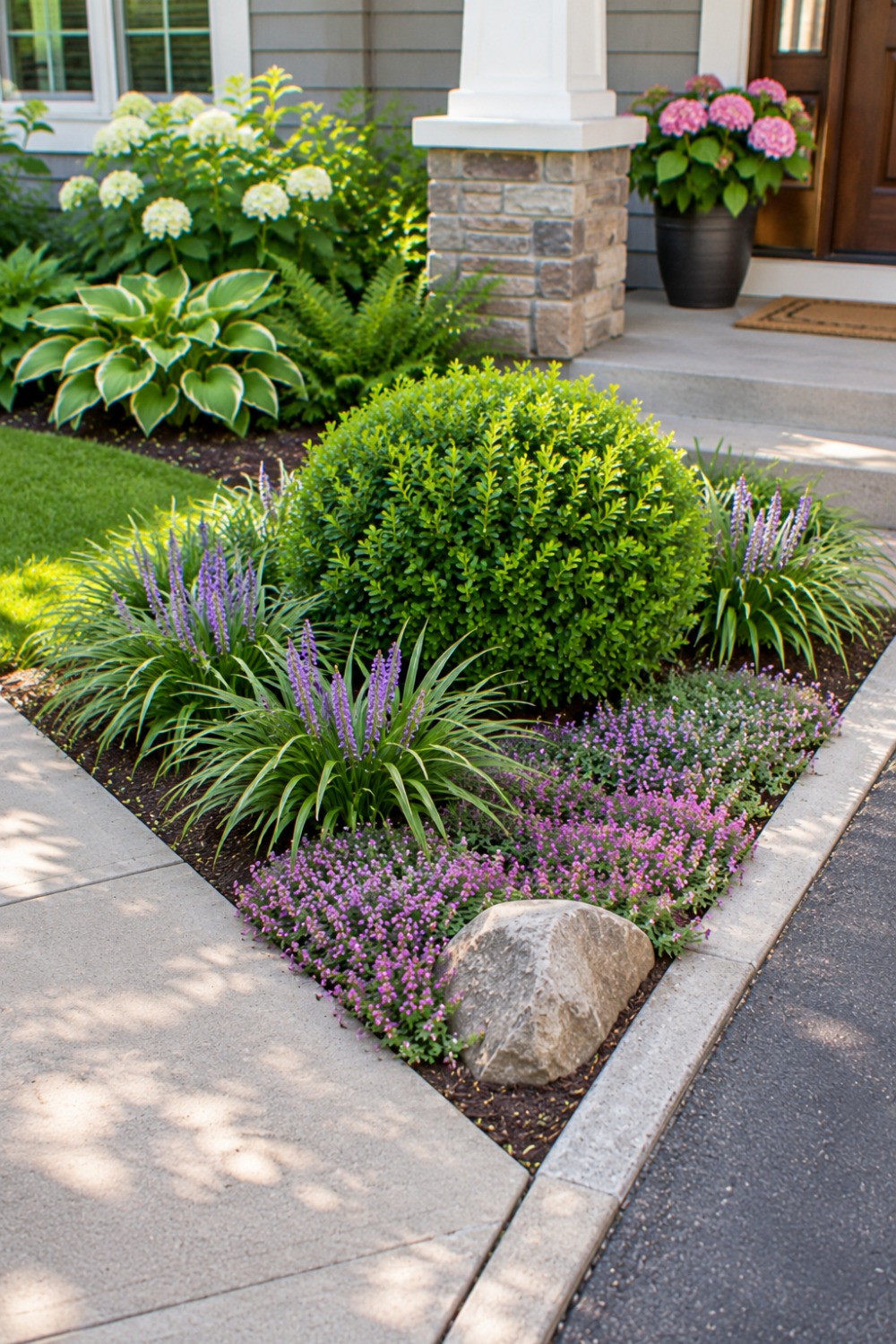
The corner where the front walk meets the driveway gets cut across, stepped on and splashed with grit.
A small, tough planting with a clear edge stops shortcuts and adds curb appeal.
Use low plants that bounce back, such as lilyturf, creeping thyme or sedum, with one small rounded shrub for structure.
How to do it:
- Define the corner with edging or a small boulder so people walk around it.
- Plant one compact shrub at the center.
- Fill around it with low, tough ground cover.
For a whole-yard plan around your entry, see our front yard landscaping ideas.
12. Grow a Corner Cutting Garden
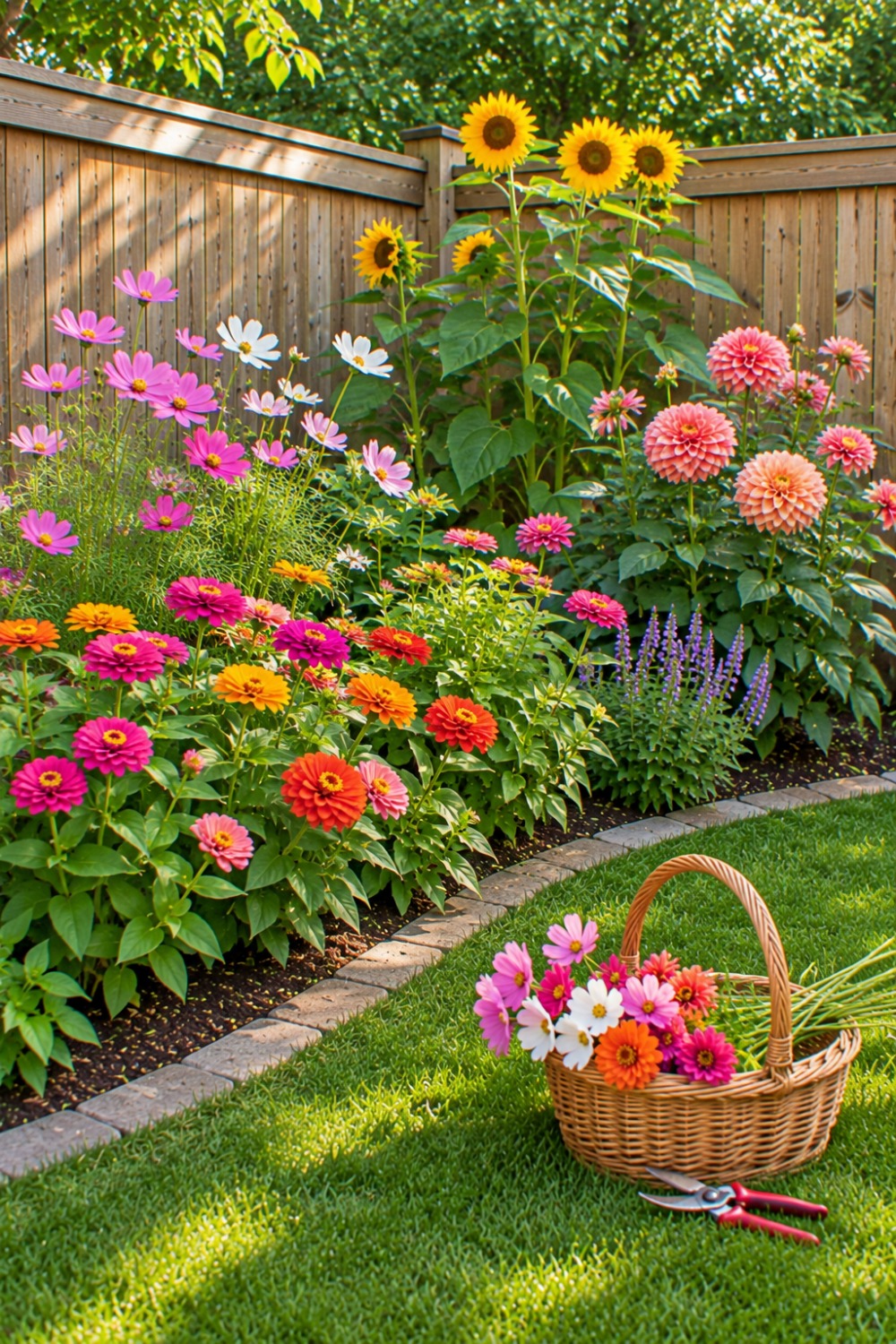
A sunny back corner is a great place to grow flowers just for picking.
You can cut freely without leaving gaps in your main beds, and the corner looks cheerful all summer.
Zinnias, cosmos, dahlias and sunflowers are easy and keep producing the more you cut.
How to do it:
- Choose the sunniest corner, with at least six hours of sun.
- Plant in short rows or blocks so you can reach every stem.
- Cut in the morning and pick often to keep new flowers coming.
13. Give the Corner Winter Structure With Evergreens
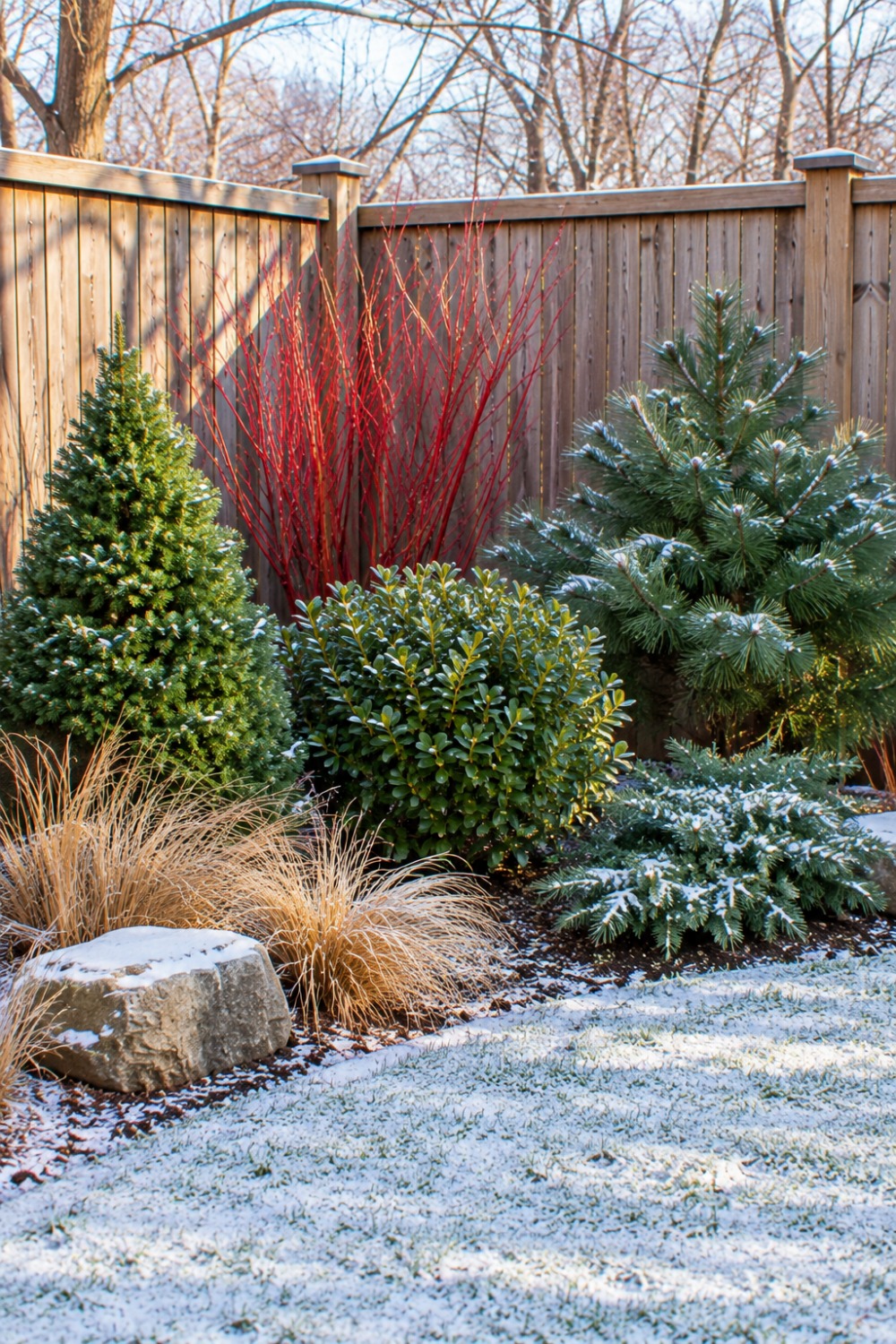
Many corners look great in summer and empty in winter.
A backbone of evergreens keeps the corner furnished all year.
Dwarf conifers, inkberry holly and boxwood work well. Add red-twig dogwood (Cornus sericea) for bright winter stems.
How to do it:
- Place one or two evergreens where they’ll hide the fence corner.
- Add a shrub with winter stems or berries in front.
- Plant spring bulbs around them for early color.
Frequently Asked Questions
What can I plant in the corner of my yard?
A small tree, a layered bed of shrubs and perennials, or a climbing plant on a trellis all work well. Match plants to the corner’s sun and moisture, and ask a local nursery what thrives in your area.
How do I landscape a corner lot front yard?
Keep plants low near the intersection so drivers can see, then build height farther in with shrubs and small trees. Check local codes for sight triangle rules before planting.
What do you put in a shady corner of the garden?
Ferns, hostas, sedges, hellebores and plants with variegated or white-edged leaves brighten shady corners. A bench or a pale planter also helps reflect light.
How do I make a corner of the backyard more private?
Plant a small tree or tall shrubs in the corner, or build a corner pergola with a vine. Placing the screen near where you sit blocks more of the view than planting on the property line.
Final Thoughts: Give Every Corner a Job
Corners are where yards most often look unfinished, and where a small project makes the biggest difference.
Start by deciding what the corner should do: hold a focal point, provide a seat, screen a view or solve a drainage problem.
Then choose one strong element, such as a small tree, a pergola or a raised stone bed.
Soften the shape with a curved bed and layer plants from tall in the corner to low at the edge.
On a corner lot, keep the area near the intersection low and safe.
Plan for winter with a few evergreens so the corner never looks bare.
If the corner gets lots of runoff, our river rock landscaping ideas show how stone can handle the water.
Pick the corner you see most often and start there. Once one corner looks finished, the rest of the yard will start to follow.