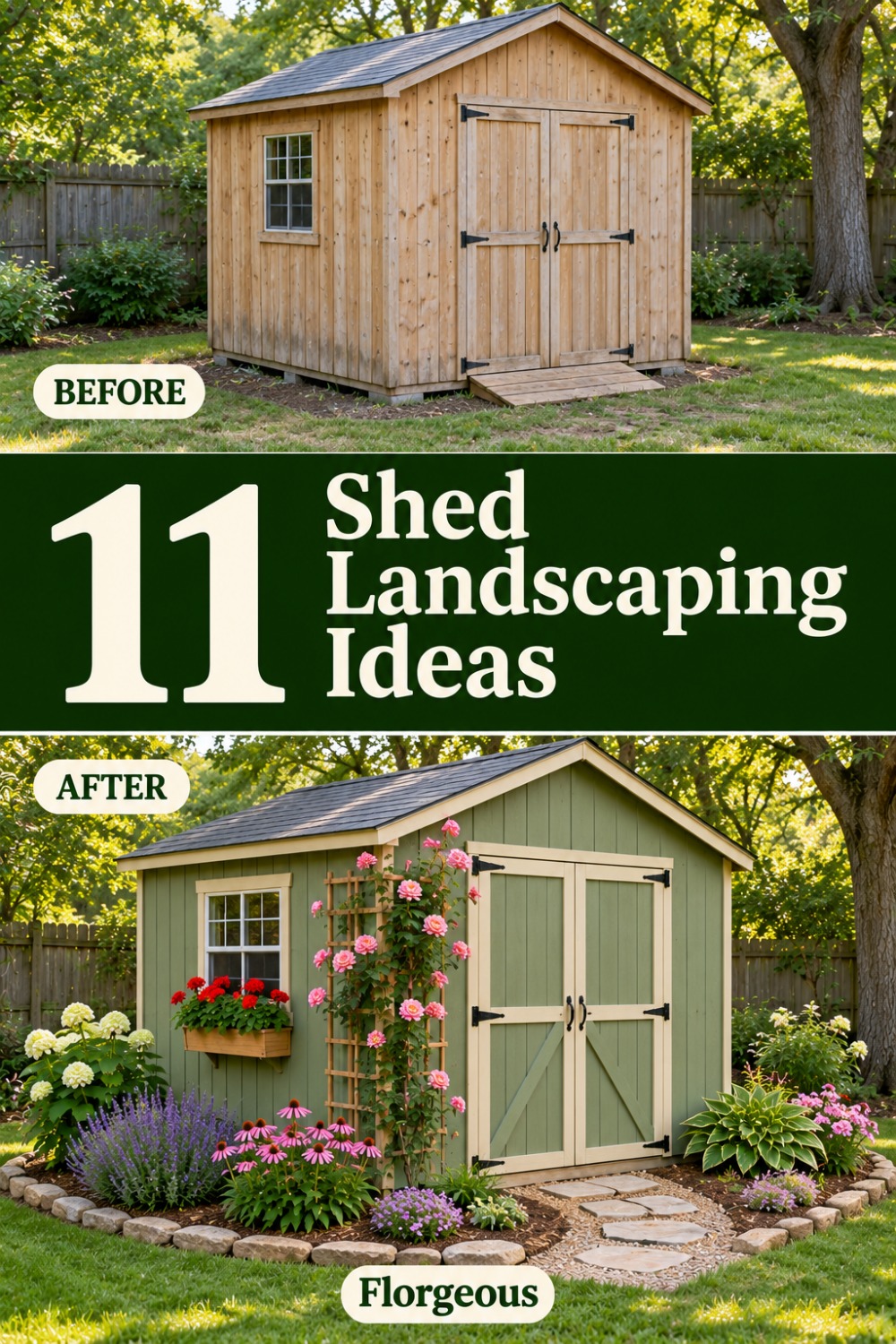
Most garden sheds are bought for storage and then simply plonked in a corner.
A bare box on a patch of lawn can drag down the look of the whole backyard.
The secret to shed landscaping isn’t hiding the shed. It’s planting and dressing it so it looks like it belongs in the garden.
These 11 shed landscaping ideas will help you soften the base, frame the doors and turn a plain storage shed into something you’re happy to look at.
Shed Planting Spots at a Glance
| Spot | What it does | Plant ideas |
|---|---|---|
| Around the base | Hides the foundation and grounds the shed | Hostas, ferns, hardy geranium, low shrubs |
| Window boxes | Adds color at eye level | Geraniums, petunias, trailing herbs |
| Walls and trellis | Softens bare siding | Clematis, climbing roses, honeysuckle |
| Path to the door | Makes it easy to reach | Creeping thyme between stepping stones |
| Roof | Turns it into a living feature | Sedums on a green roof tray |
| Door planters | Frames the entry | Boxwood, grasses, seasonal flowers |
1. Wrap the Base in a Foundation Bed
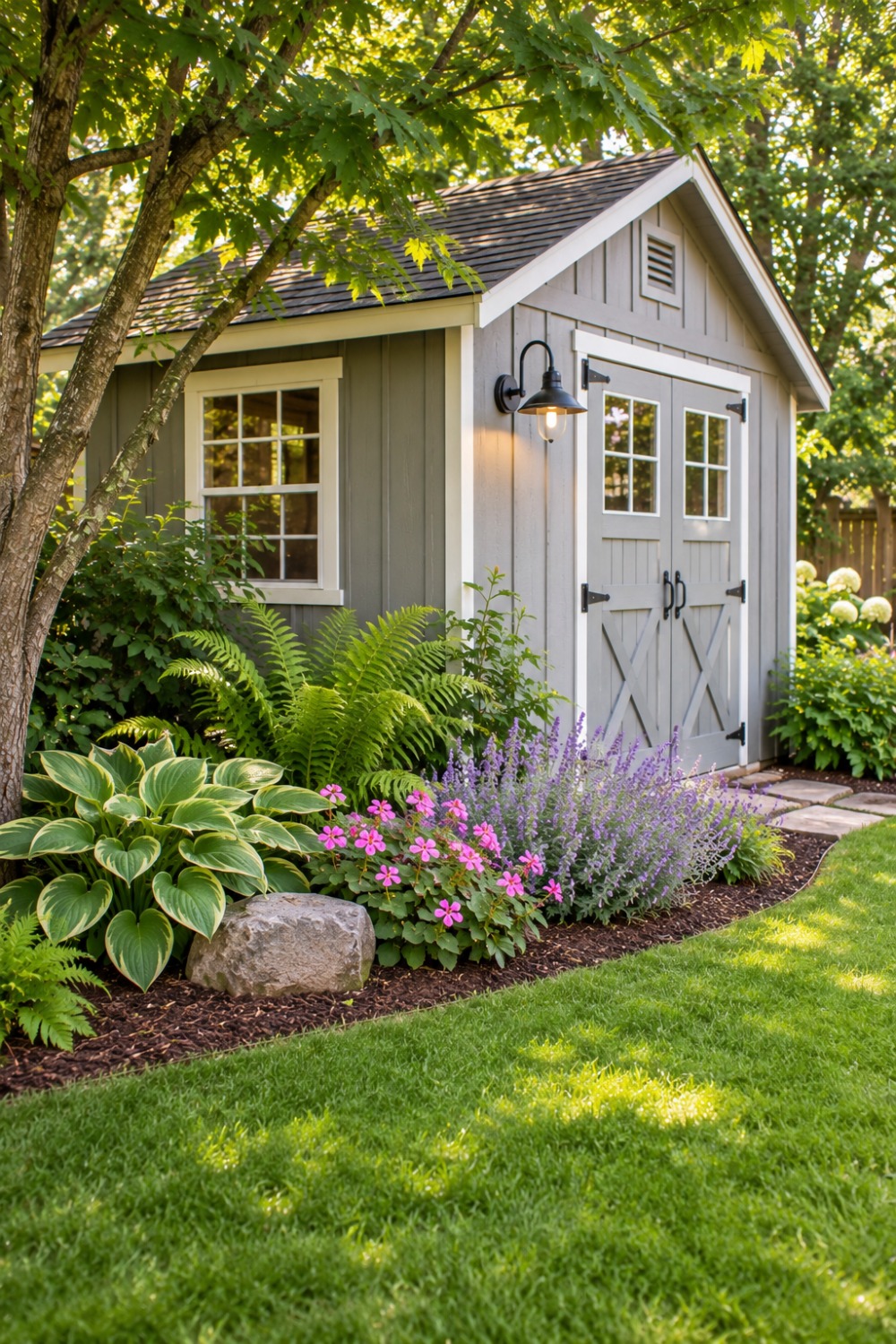
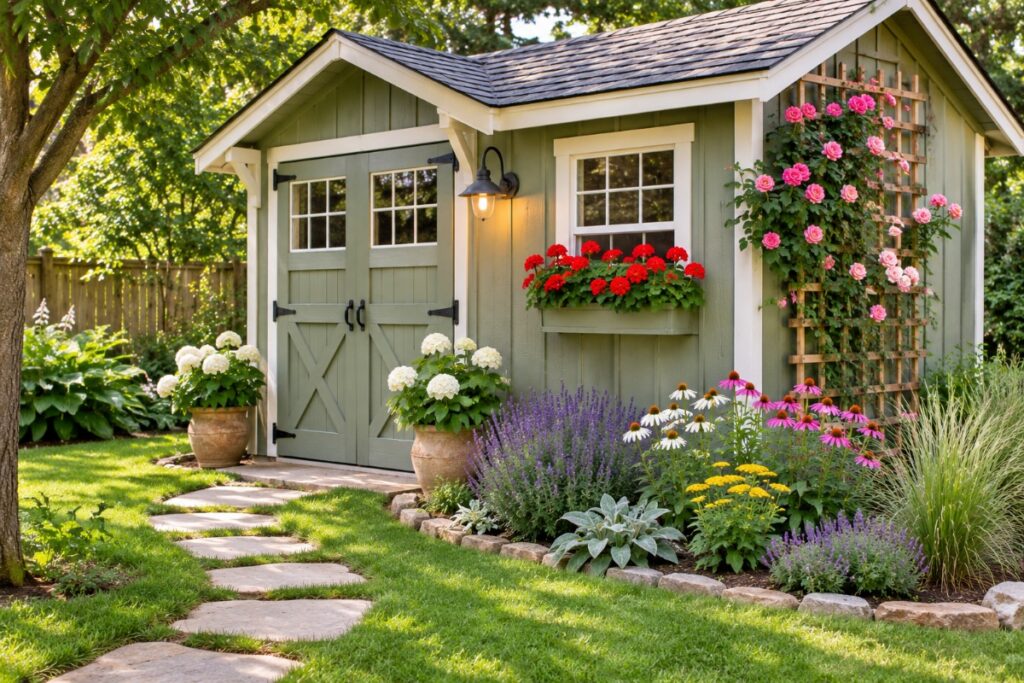
The quickest way to make a shed look settled is to plant around its base.
A bed 2 to 3 feet deep hides the foundation, the gap under the floor and any untidy edges.
Use shade lovers like hostas and ferns on the shady side, and sun-loving perennials on the bright side.
How to do it:
- Remove grass in a strip around the shed.
- Leave a few inches between plants and the siding for air flow.
- Mulch well so you’re not trimming grass against the walls.
2. Add Window Boxes for Color at Eye Level
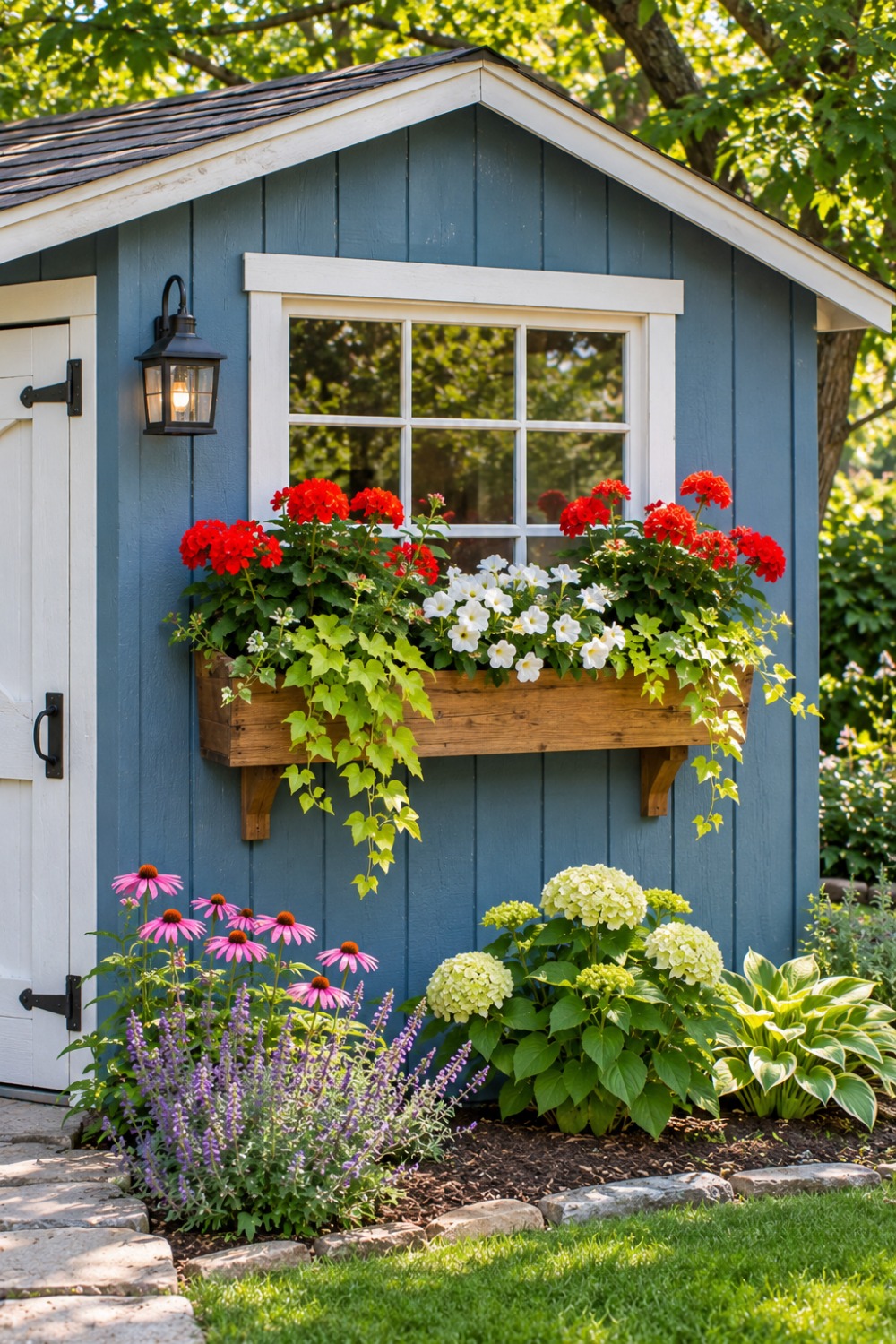
Window boxes make a shed look like a little cottage.
They add color right at eye level and are easy to change each season.
Choose plants for the light: geraniums and petunias for sun, impatiens and coleus for shade.
How to do it:
- Fix sturdy brackets below the window.
- Use a box with drainage holes and good potting mix.
- Water often, since window boxes dry out quickly.
3. Lay a Stepping-Stone Path to the Door
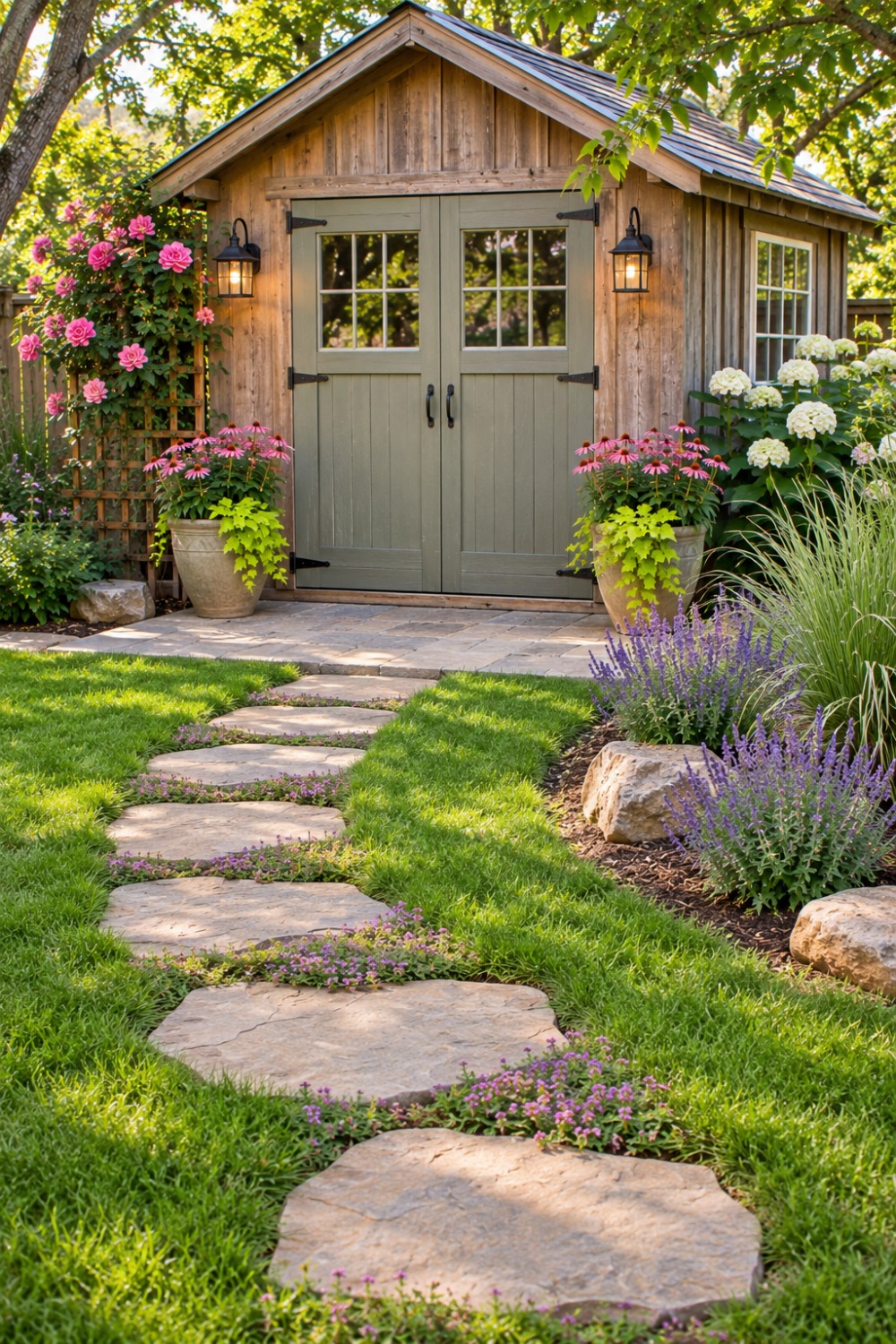
A worn track in the lawn is a sign the shed needs a proper path.
Stepping stones or a short gravel path keep your feet dry and make the shed feel connected to the rest of the garden.
Plant creeping thyme or low ground cover between the stones for a softer look.
How to do it:
- Walk your natural route and set stones where your feet land.
- Cut out the turf and set each stone slightly below lawn level.
- Make the last stone or a small pad wide enough for a wheelbarrow.
4. Grow a Vine on a Trellis Beside the Shed
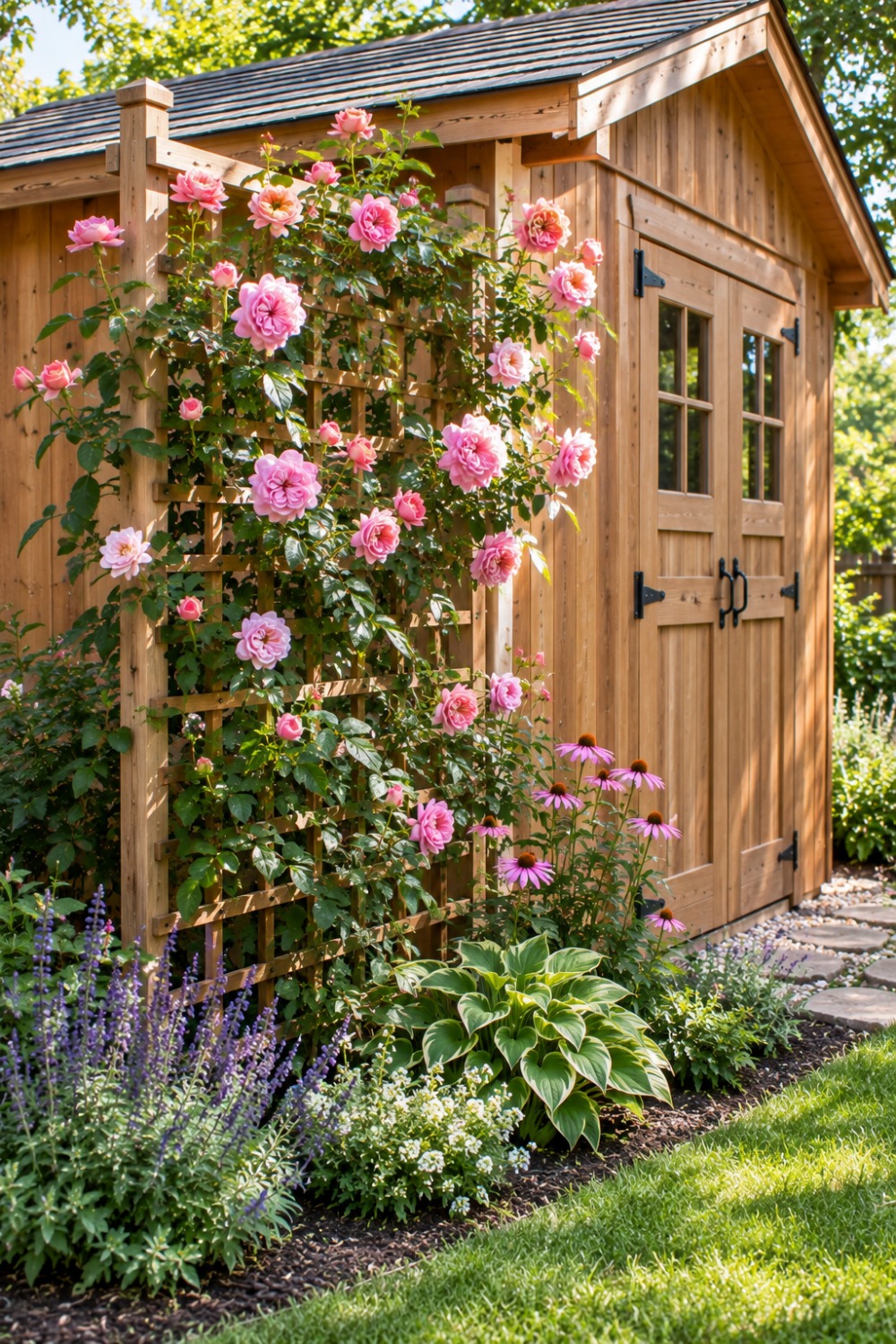
A flowering vine can turn a plain shed wall into the prettiest part of the yard.
Fix a trellis a few inches out from the siding so air can circulate and the wall stays dry.
Clematis, climbing roses and native honeysuckle (Lonicera sempervirens) are good choices. Avoid aggressive vines like English ivy that can damage siding.
How to do it:
- Mount a trellis on spacers or stand it just in front of the wall.
- Plant the vine about a foot from the base.
- Tie in new growth until it climbs on its own.
5. Paint the Shed a Garden-Friendly Color
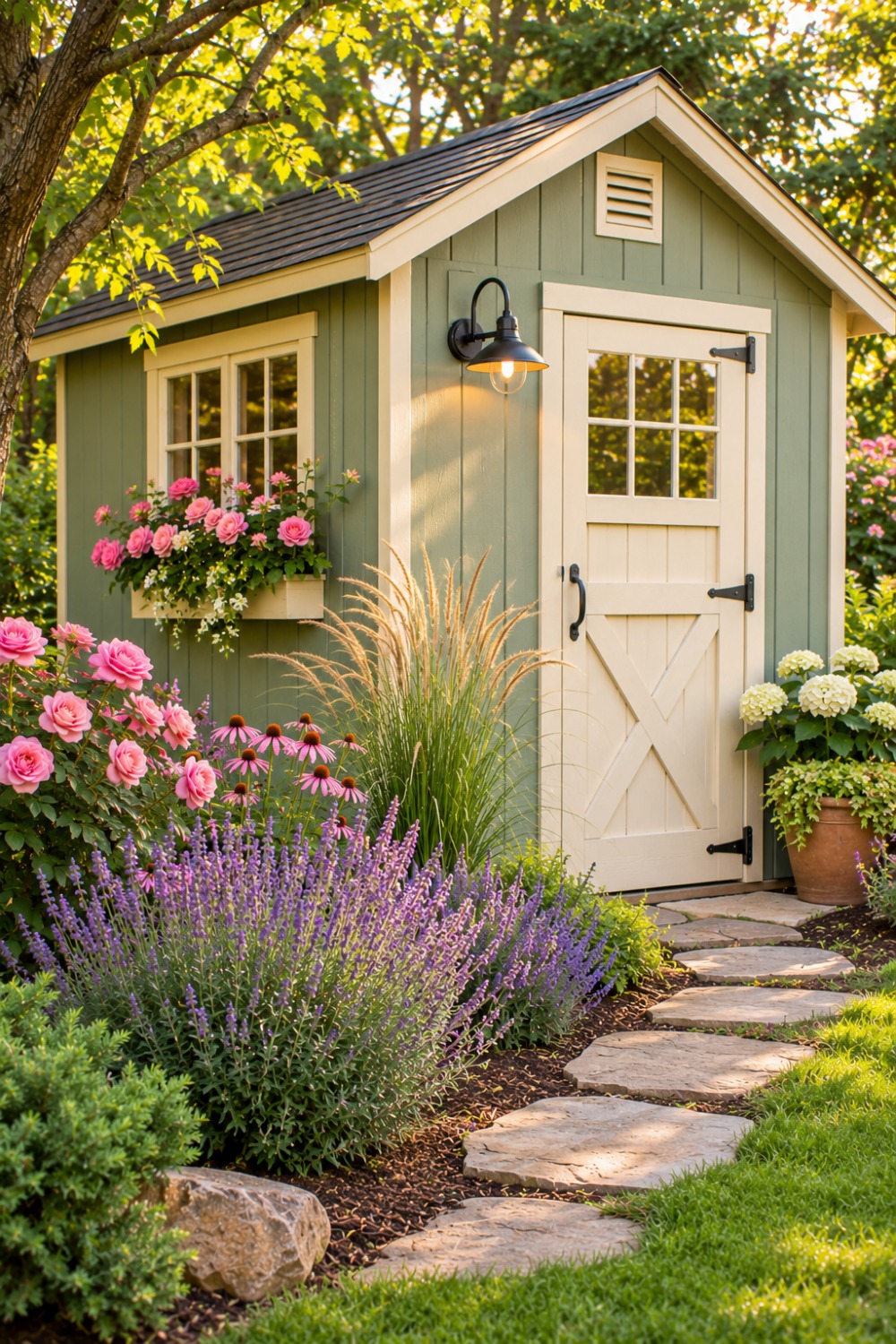
Color can make a shed disappear into the garden or turn it into a focal point.
Soft greens, gray-blues and deep charcoals blend into planting. Cheerful colors like duck-egg blue or buttery yellow make the shed a feature.
Pick a door or trim color that echoes flowers or your house.
How to do it:
- Clean and lightly sand the siding.
- Use exterior paint or stain made for wood.
- Paint the trim or door in a contrasting accent color.
6. Screen the Shed With a Layered Planting
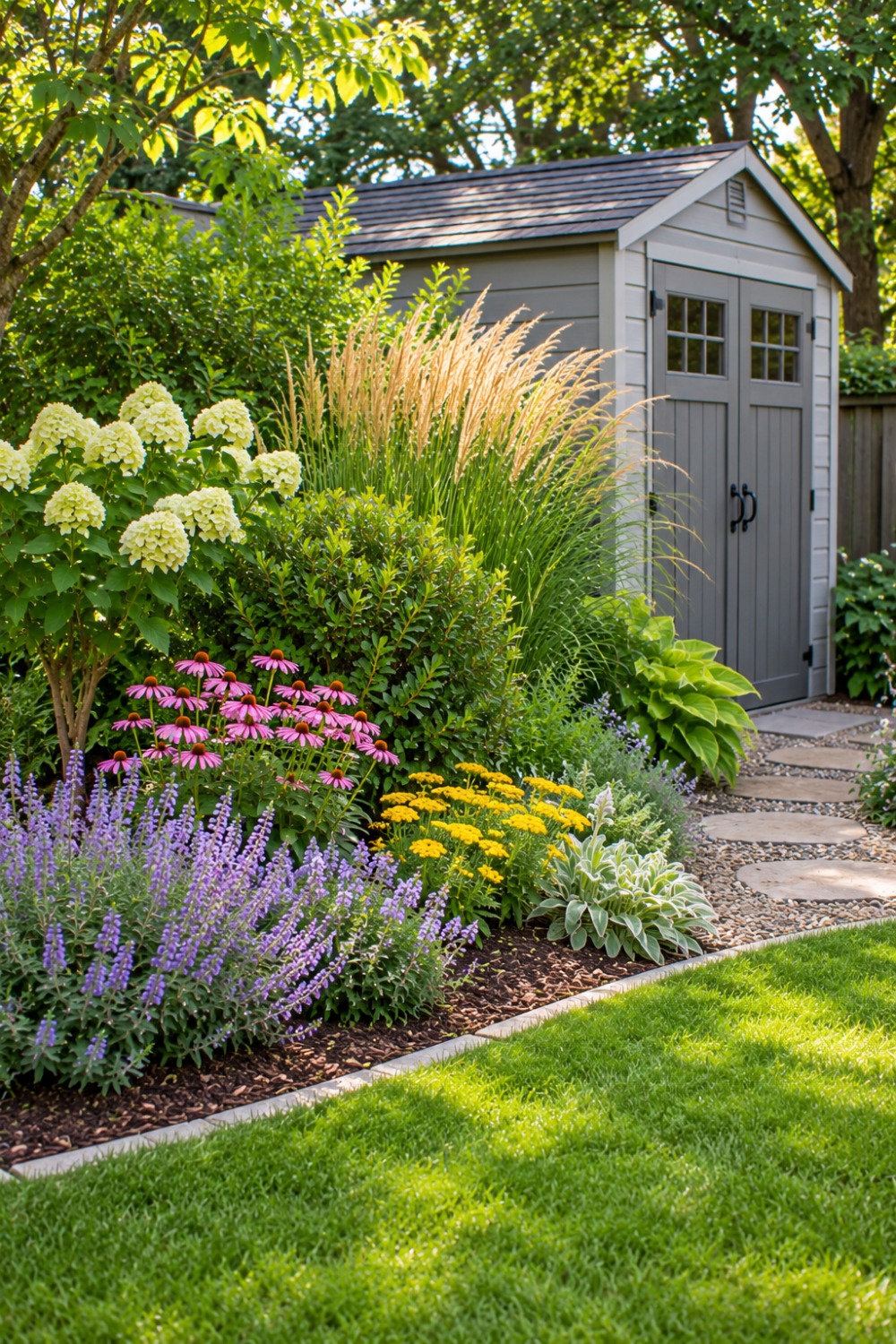
If you’d rather the shed blend in, a layered planting in front of it softens its outline.
Plant shrubs and tall grasses at the back, with lower perennials in front, leaving a clear way to the door.
It’s especially useful for plastic or metal sheds that are hard to dress up.
How to do it:
- Plant a curved bed in front of the side you see most.
- Use shrubs and grasses tall enough to hide the shed’s lower half.
- Keep the door side open for easy access.
7. Surround a Potting Shed With a Cottage Garden
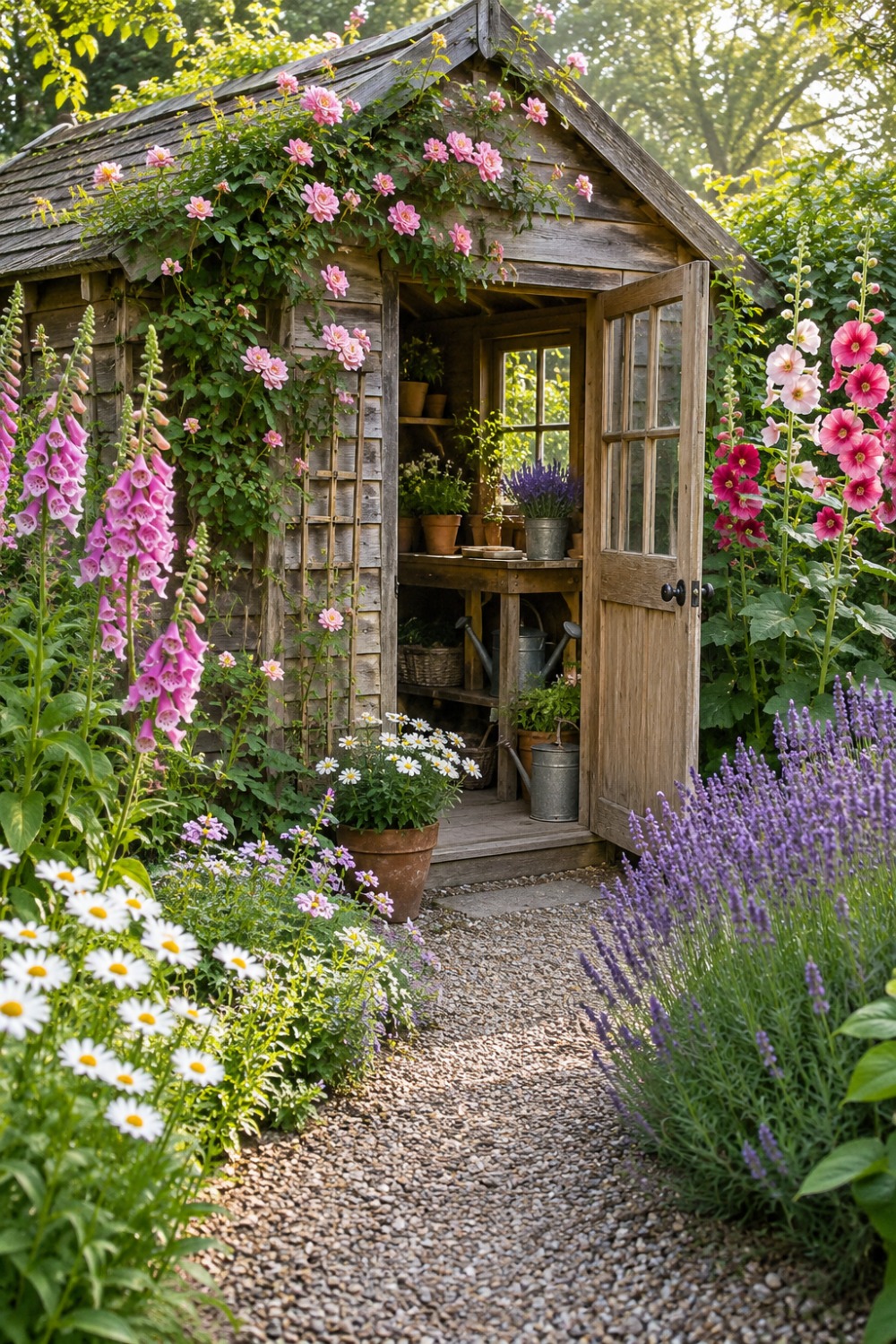
A shed used for potting and seed starting looks perfect wrapped in cottage flowers.
Foxgloves, roses, hollyhocks, daisies and lavender give it a charming, overflowing look.
Add a few herbs near the door so you can snip as you work.
How to do it:
- Plant tall flowers near the walls and shorter ones toward the path.
- Mix in self-seeding annuals that fill gaps.
- Leave room to step in and out with trays and pots.
8. Add a Potting Bench Along One Wall
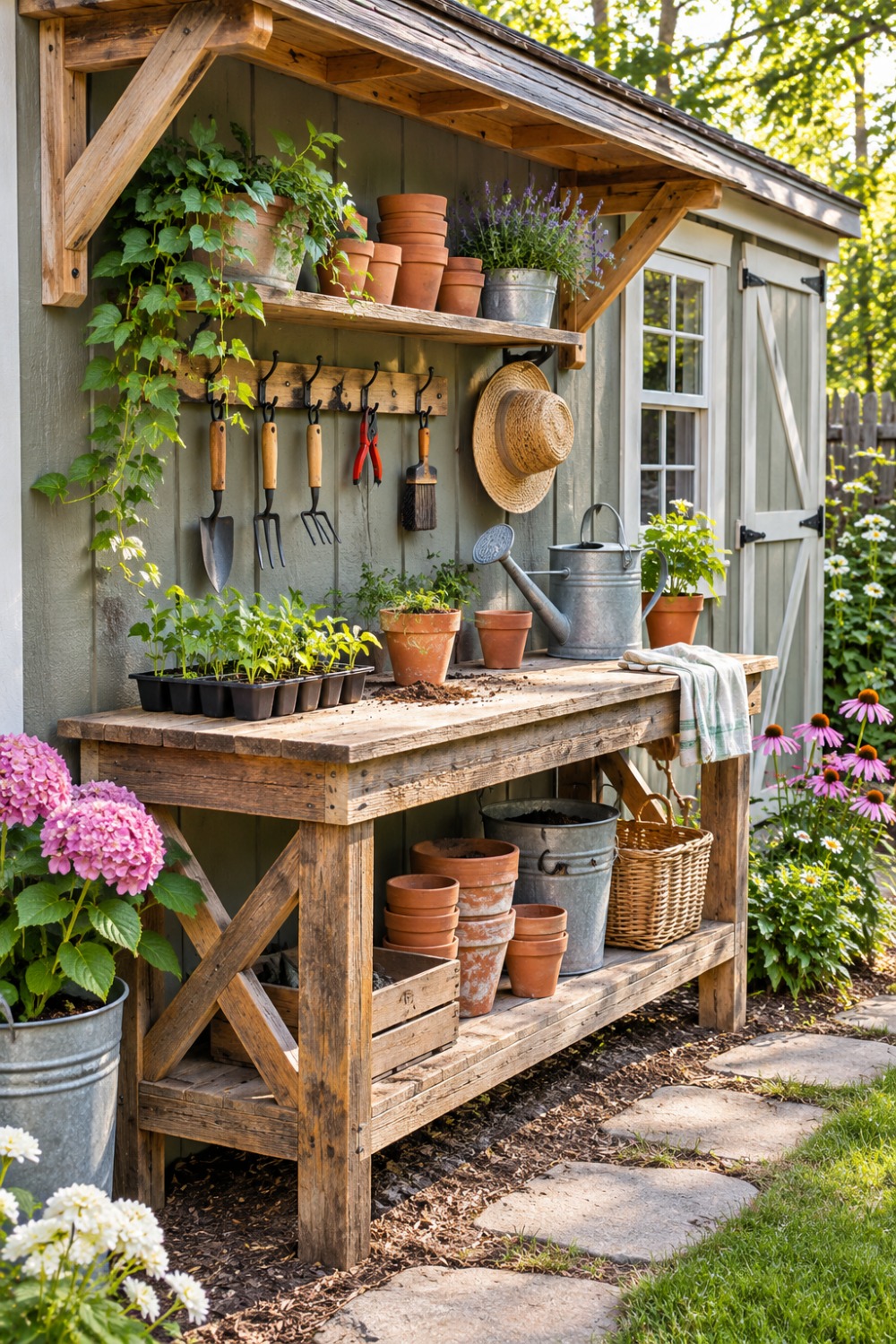
A potting bench against the shed wall makes the space both useful and attractive.
Line it with terracotta pots, a watering can and a few seedlings, and it becomes a little garden vignette.
A small roof overhang above the bench keeps you and your tools dry.
How to do it:
- Choose the sheltered side of the shed.
- Build or buy a weather-resistant bench at comfortable working height.
- Add hooks above it for small tools.
9. Top the Shed With a Green Roof
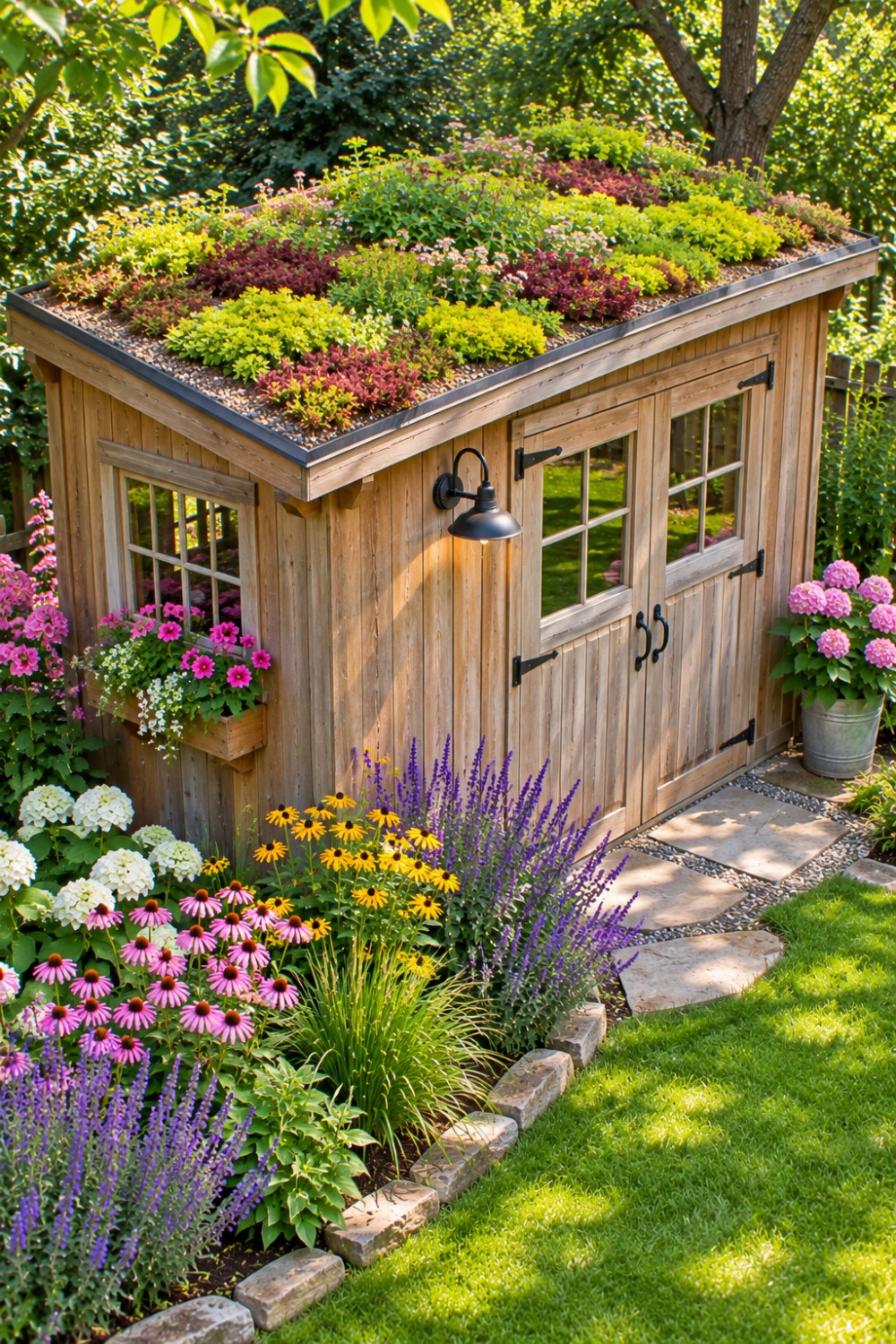
A green roof of sedums turns the shed into a living feature and helps slow rainwater.
Small sheds with a sturdy, low-sloped roof suit a lightweight sedum system.
Check that the roof can carry the extra weight, especially when the soil is wet.
How to do it:
- Confirm the shed’s roof and frame can support a green roof.
- Add a waterproof membrane, drainage layer and shallow growing medium.
- Plant drought-tolerant sedums and water until they root.
10. Frame the Doors With Matching Planters
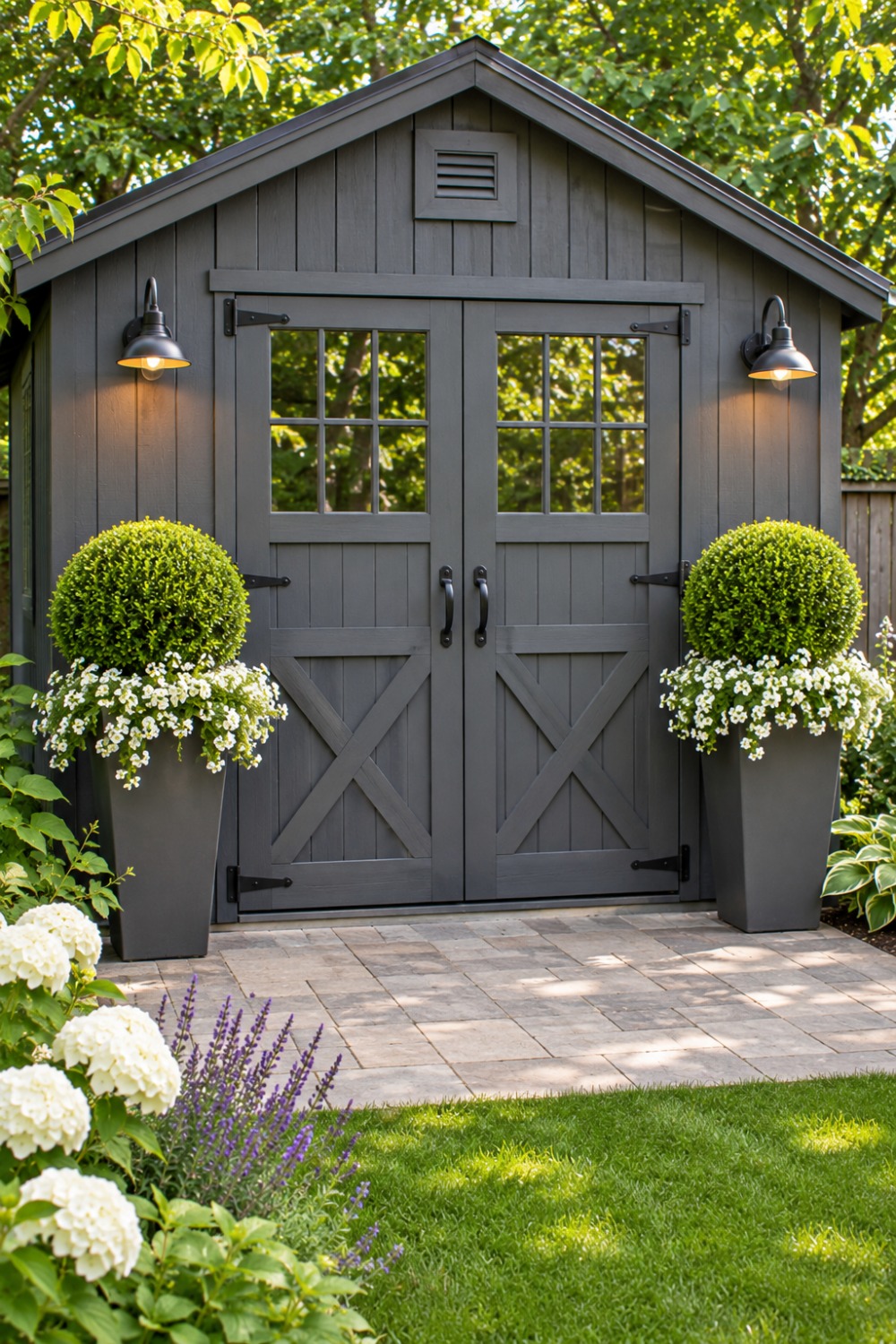
A matching pair of planters on either side of the doors gives the shed a finished, welcoming look.
Use evergreens for year-round structure, and tuck seasonal flowers or trailing plants around their base.
Keep them clear of the door swing so they don’t get knocked.
How to do it:
- Measure the door swing before placing pots.
- Choose two identical planters in a color that suits the shed.
- Plant matching shrubs and add seasonal color around the edges.
11. Leave Clear Access for Mowers and Wheelbarrows
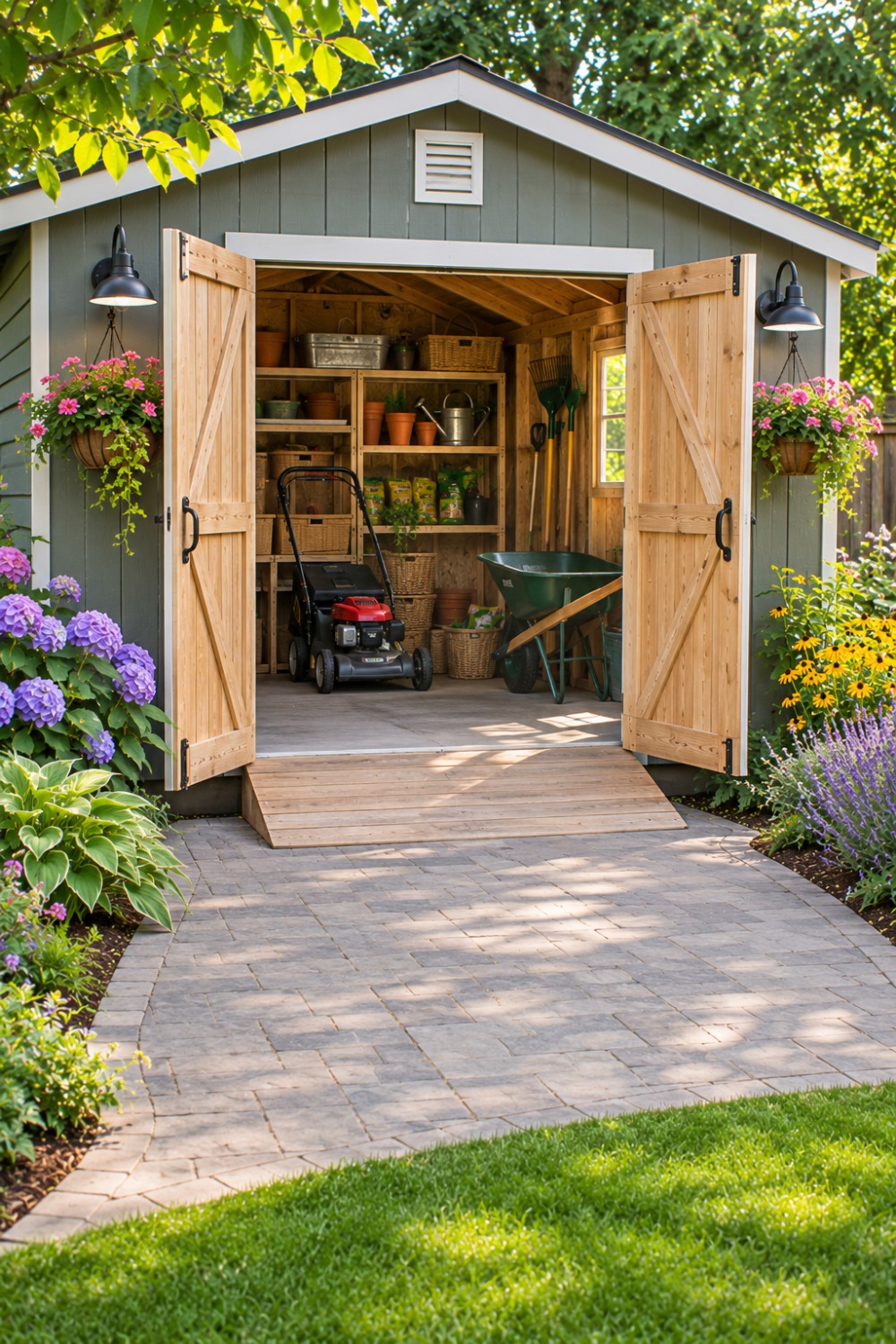
A beautiful shed is no use if you can’t get the mower in and out.
Keep a wide, level apron in front of the doors, and add a short ramp if the floor sits above the ground.
Paving or compacted gravel here stops ruts and mud.
How to do it:
- Make the apron at least as wide as the doors.
- Use pavers or compacted gravel on a firm base.
- Add a sturdy ramp with a gentle slope.
For more ideas on organizing the back of the yard, see our backyard landscaping ideas.
Frequently Asked Questions
What can I plant around a garden shed?
Hostas and ferns suit shady sides, while lavender, catmint, hardy geranium and small shrubs suit sunny sides. Climbing roses or clematis on a trellis soften bare walls.
How do I make my shed look nice?
Plant a bed around the base, paint it a color that suits the garden, add window boxes and a path to the door, and frame the doors with planters.
How far should plants be from a shed?
Leave a few inches between plants and the siding so air can circulate and the wood stays dry. Plant trees well away so roots and branches don’t damage the shed.
Can I put a green roof on a shed?
Yes, on small sheds with a sturdy roof that can carry the extra weight. Use a waterproof membrane, a drainage layer and lightweight growing medium planted with sedums.
Final Thoughts: Make the Shed Part of the Garden
A shed doesn’t have to be the eyesore at the back of the yard.
Start by grounding it with a planted bed around the base.
Then decide whether you want it to blend in, with soft colors and screening plants, or stand out as a feature with bold paint, window boxes and a vine.
Give it a proper path and a clear apron so it’s easy to use every day.
Add the finishing touches: planters by the doors, a potting bench or even a green roof.
If you’re planning other backyard projects, our backyard fire pit landscaping ideas can help you plan the rest of the space.
Start with a bed around the base this weekend. It’s the change that makes the biggest difference.