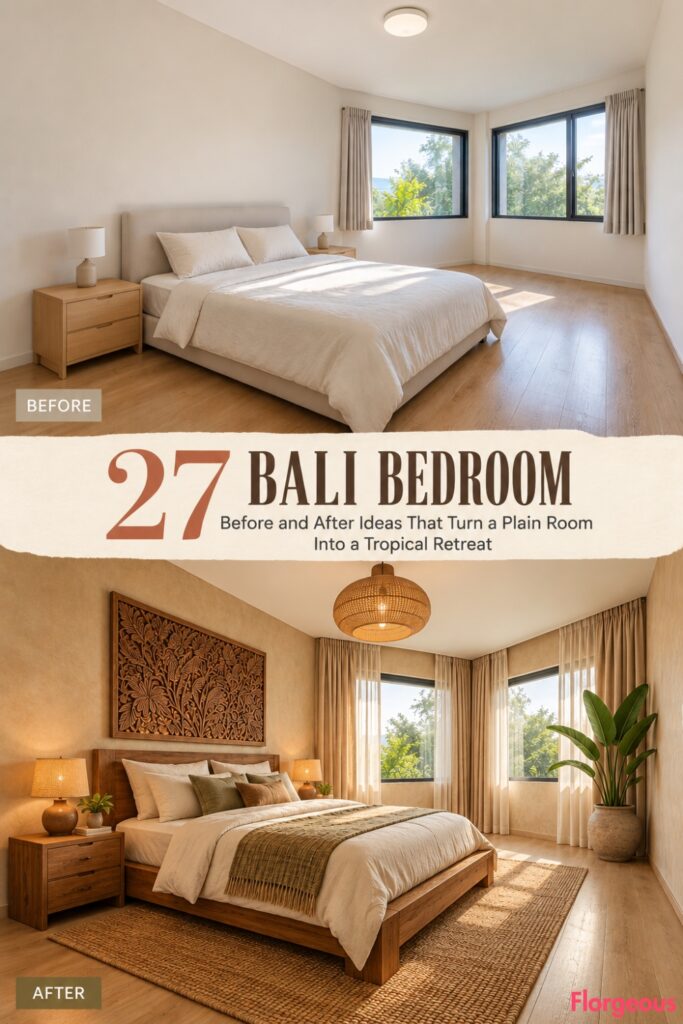
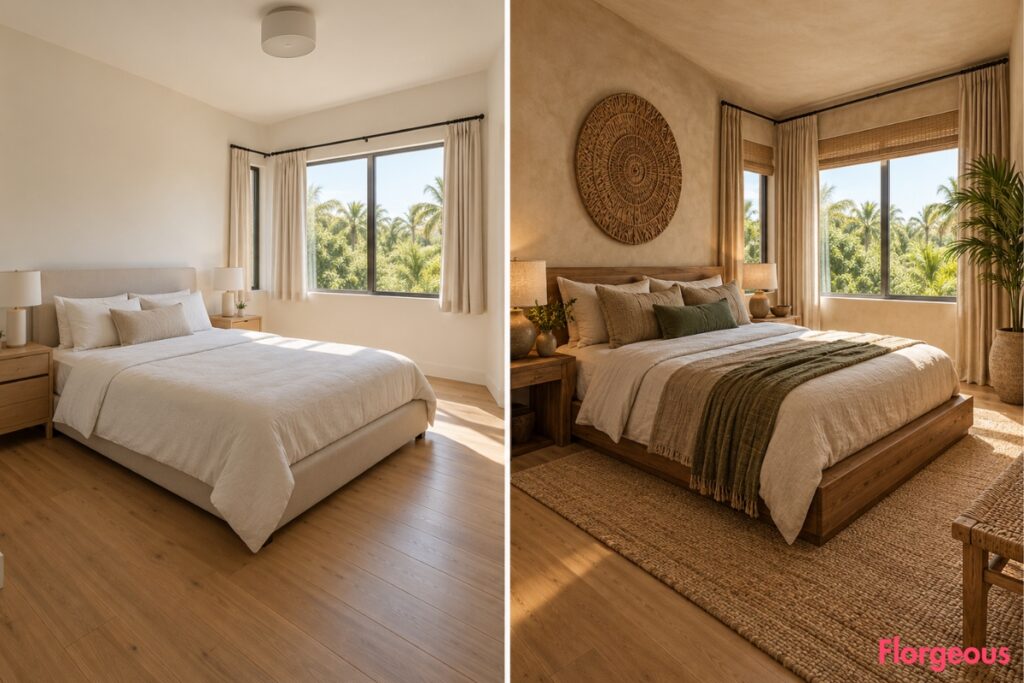
A plain bedroom does not have to stay plain for long. The same neutral shell can feel earthy, breezy, moody, polished, or quietly luxurious depending on the materials, colors, and mood you build around it.
That is what makes a Bali Bedroom so interesting. It is not just one look. Bali interiors can feel jungle-rich and cocooning, sun-bleached and airy, artisan and collected, or calm like a spa suite. The common thread is natural texture, craftsmanship, softness, and a sense of retreat.
For every makeover below, the starting room stays exactly the same: a near-square bedroom with the bed on the solid left wall, two large rectangular windows meeting at the back-right corner, a solid right wall, a front-left entry, a flat ceiling, and continuous oak flooring. The before version always has warm off-white walls, a basic neutral bed, simple ivory bedding, two bare nightstands, short plain curtains, a basic ceiling light, and soft daylight. Only the after changes.
1. Turn the Plain Room Into an Ubud Jungle Retreat
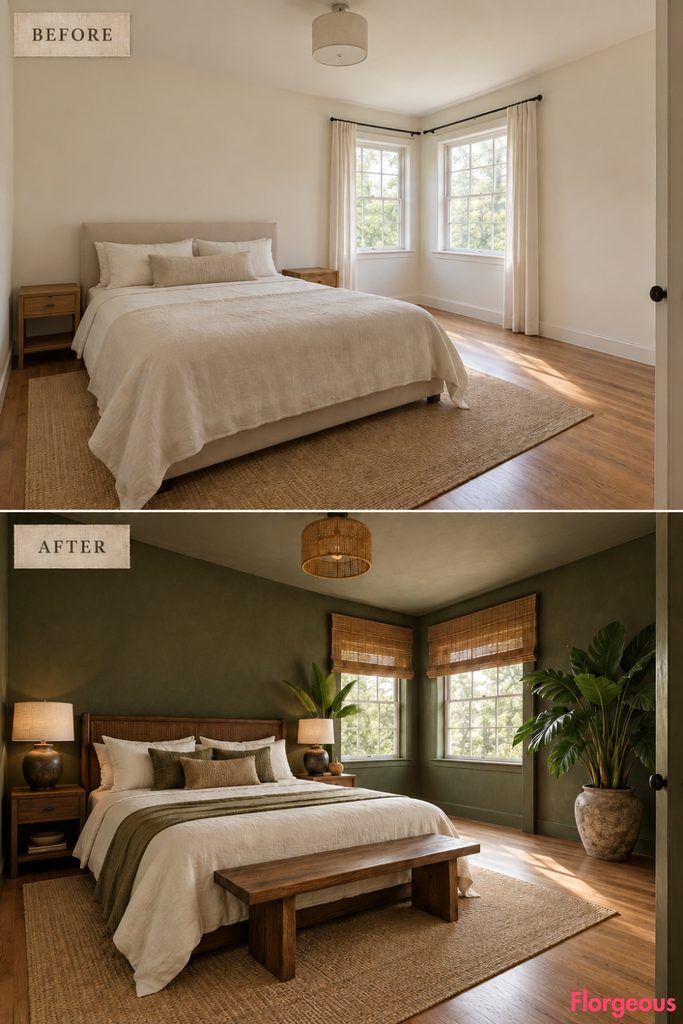
Before: The room feels bright but generic, with no focal point beyond the bed.
After: Deep moss plaster, dark teak, woven shades, and layered leafy greenery create a moodier Bali hideaway. Add one low bench at the foot of the bed, a handwoven rug, and smoked ceramic lamps for a tucked-away jungle-lodge feeling.
Why it works: The darker palette makes the room feel immersive without changing the shell.
Try this: Use one strong green wall and two large plants if you do not want to commit to a fully moody room.
2. Change It Into a Seminyak Boutique Hotel Suite
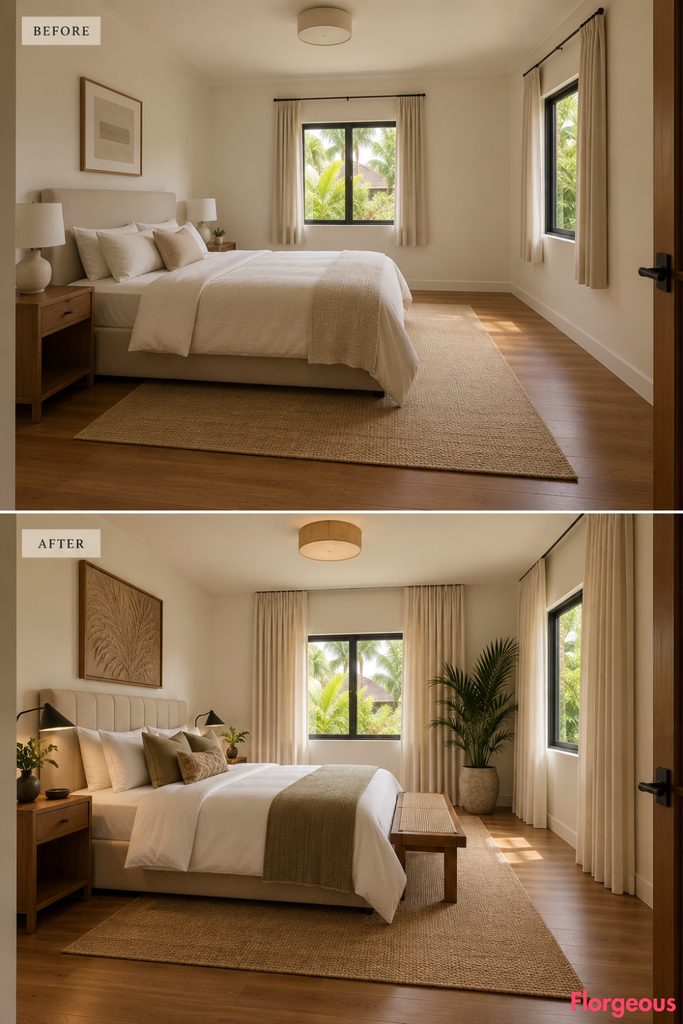
Before: The room has no polish, layering, or tailored detail.
After: Crisp white bedding, warm teak, tailored ivory drapery, slim black accents, and a refined upholstered headboard give the room a cleaner, more polished resort look. Keep styling spare and sharp.
Why it works: It captures Bali luxury through precision rather than rusticity.
Try this: Swap only bedding, drapery, and lighting first for a hotel-like upgrade.
3. Warm It Up With a Canggu Earthy Modern Look
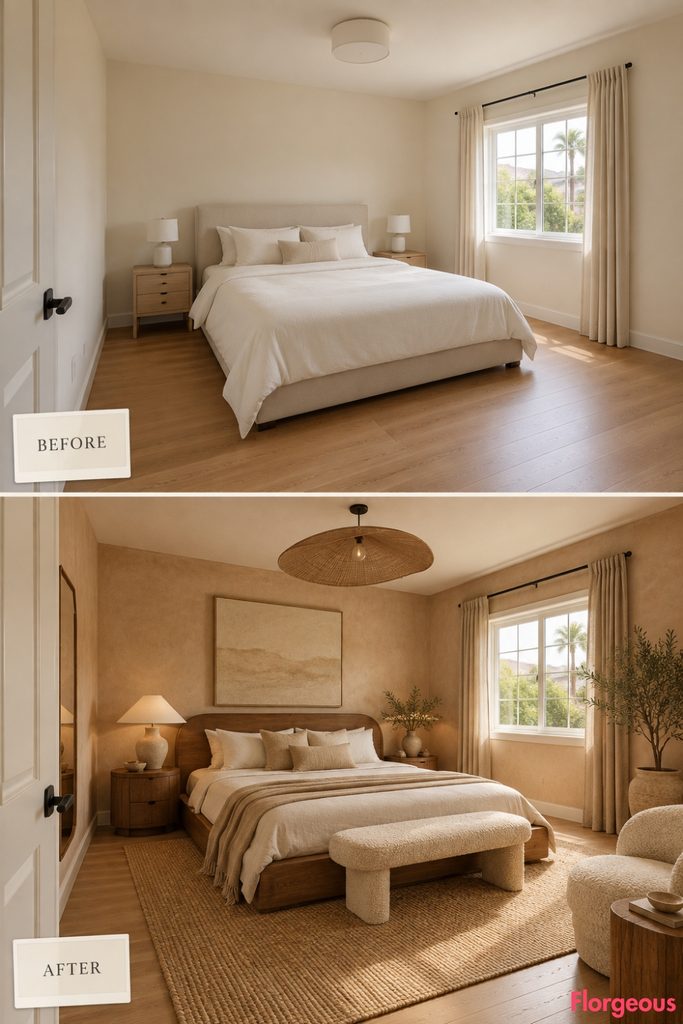
Before: The space feels neutral in a forgettable way.
After: Use clay-tinted plaster, soft bouclé, rounded teak forms, and a low sculptural bed. Add a textured rug and one asymmetrical ceramic lamp to bring in the relaxed, creative Canggu mood.
Why it works: The rounded furniture shapes instantly shift the room into a more current tropical-modern direction.
Try this: A rounded bench or curved lamp is enough to start pushing the room in this direction.
4. Give It a Traditional Carved-Wood Bali Mood
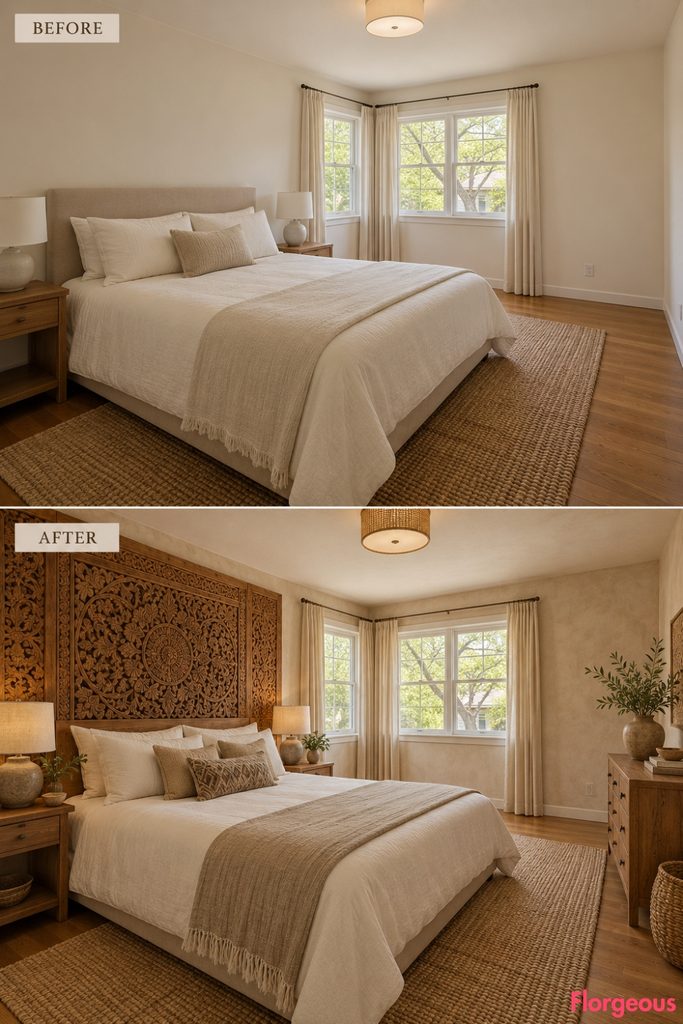
Before: The bed wall feels blank and underwhelming.
After: Place one broad carved teak relief behind the bed and repeat the wood tone in a compact dresser. Keep the bedding pale and the walls softly mineral so the craftsmanship stays in focus.
Why it works: It references heritage Balinese carving without making the room feel themed.
Try this: One carved panel is enough. The rest of the room should stay calm.
5. Lighten the Room Into a Bali Beach Villa
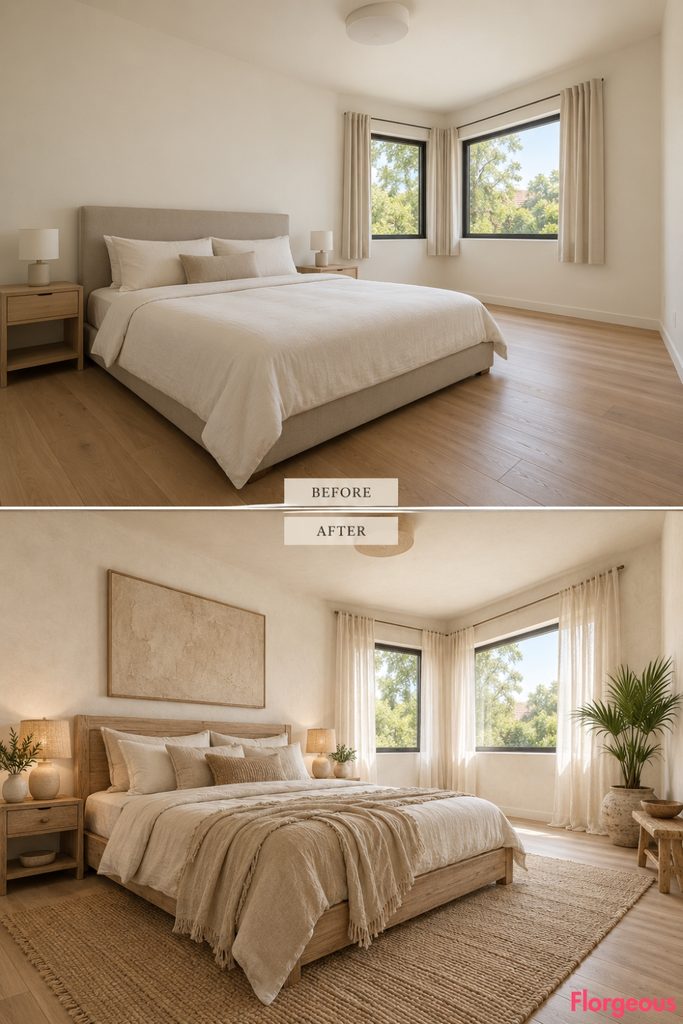
Before: The room lacks airiness and softness.
After: Sun-bleached wood, chalky white walls, sandy linen, gauzy cotton, and a pale woven rug create a brighter beach-villa interpretation of Bali. Keep everything matte and relaxed, not nautical.
Why it works: The room feels lighter without losing the natural warmth that makes Bali interiors so inviting.
Try this: Use whitewashed timber finishes and pale sand textiles rather than blue coastal accents.
6. Make It Feel Like an Uluwatu Cliff Villa
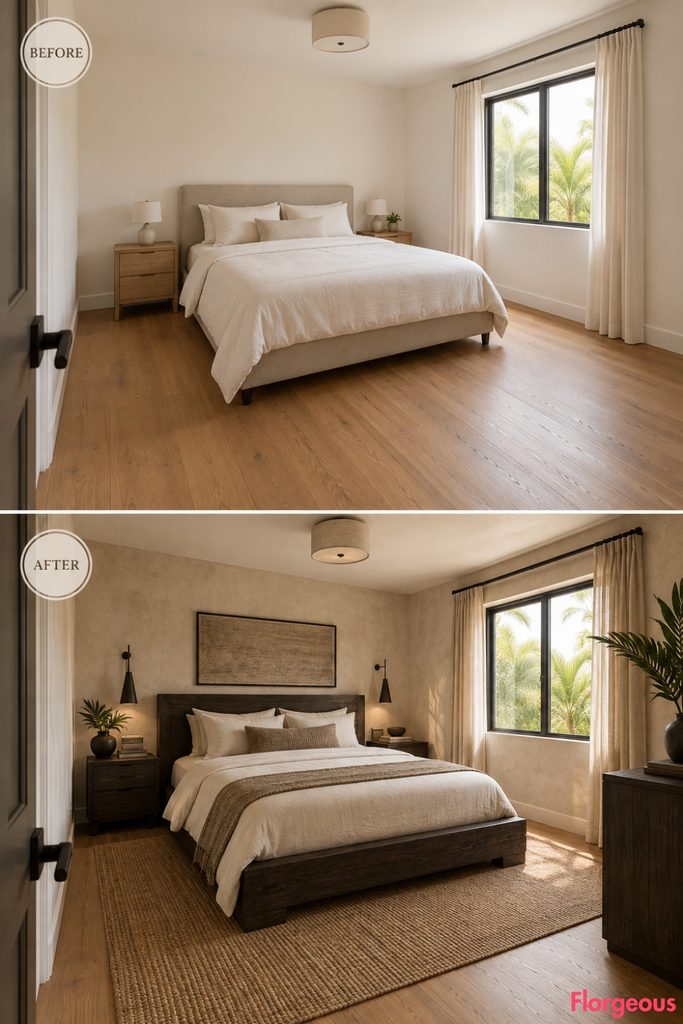
Before: The room feels soft but not striking.
After: Pale limestone tones, clean black shadow lines, dark sculptural wood, and a more architectural bed turn the room into a sharper luxury retreat. Keep accessories minimal and bold.
Why it works: The contrast between pale stone tones and dark wood gives the room a high-end cliffside-villa mood.
Try this: Pair limestone-colored plaster with one strong black or bronze lighting detail.
7. Turn It Into a Tropical Colonial Bali Bedroom
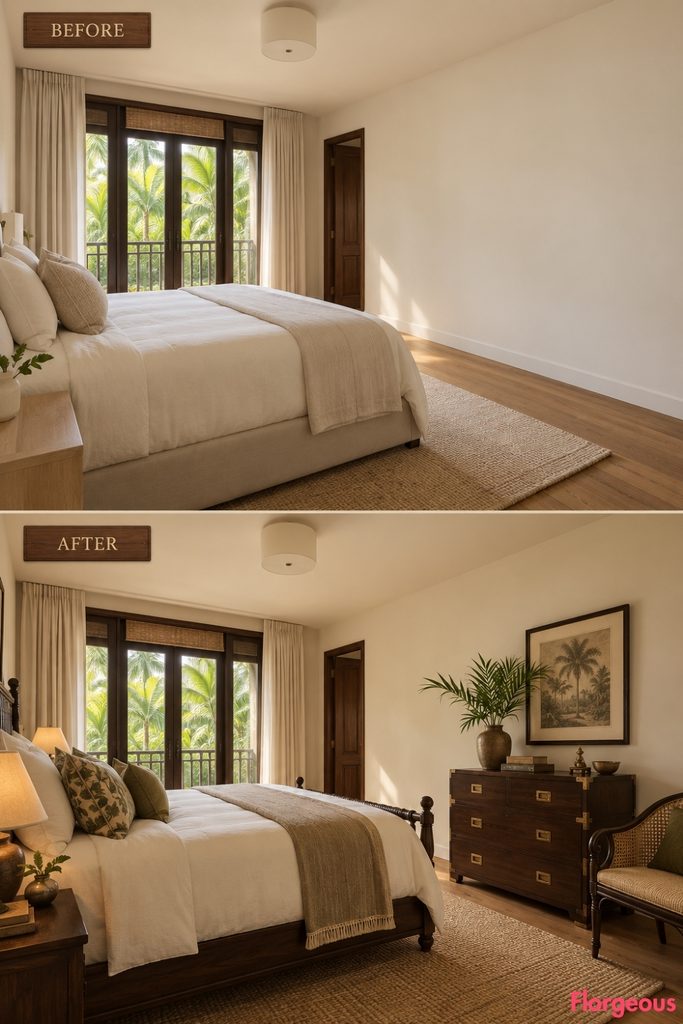
Before: The room has no layered old-world character.
After: Combine darker timber, ivory cotton, cane details, a compact campaign-style chest, and a tailored bed skirt. The result feels collected and classic without drifting into safari costume.
Why it works: It blends tropical ease with a more established, slightly formal elegance.
Try this: One campaign-style chest or side table can introduce the whole mood.
8. Soften It Into a Bali Spa Bedroom
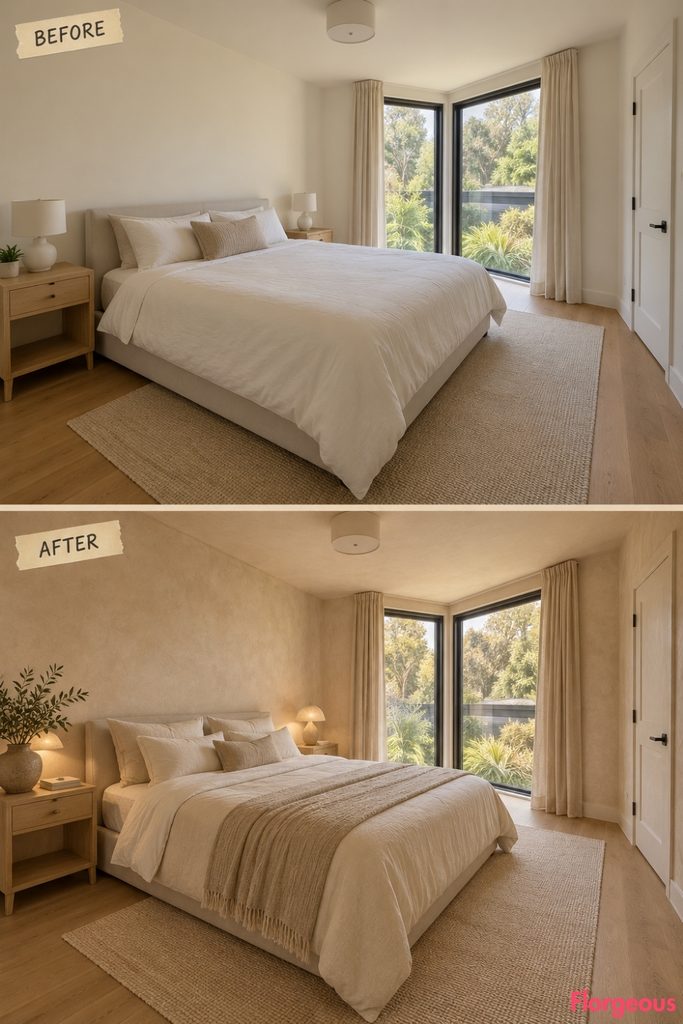
Before: The room feels ordinary rather than restorative.
After: Use pale stone tones, creamy bedding, low furniture, very soft lighting, and almost no decor. Add one stone vessel and one folded throw for a meditative, spa-like calm.
Why it works: The minimalism feels intentional and soothing rather than empty.
Try this: Strip the bedside surfaces back almost completely for a calmer effect.
9. Make the Room Feel Like a Bali Artisan Hideaway
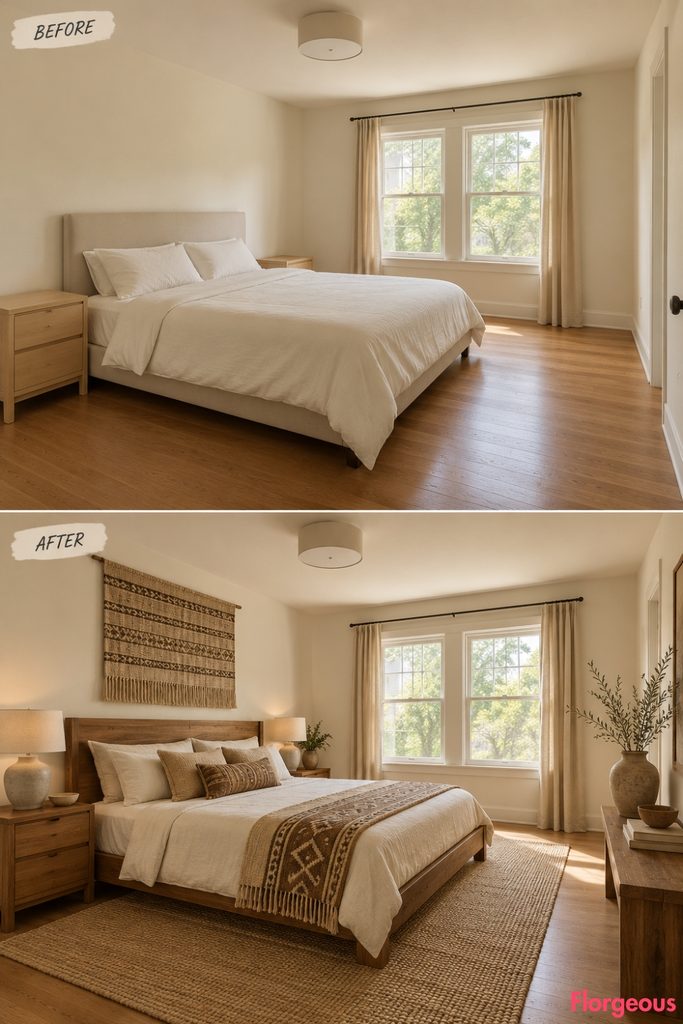
Before: The room lacks personality and handmade detail.
After: Layer warm teak with handmade ceramics, one artisan textile, a woven rug, and visible craft marks in the surfaces. Let the room feel collected, but still edited.
Why it works: The handmade pieces add soul without creating clutter.
Try this: Choose only three artisan pieces that matter rather than many small accents.
10. Wrap It in a Terracotta Bali Courtyard Palette
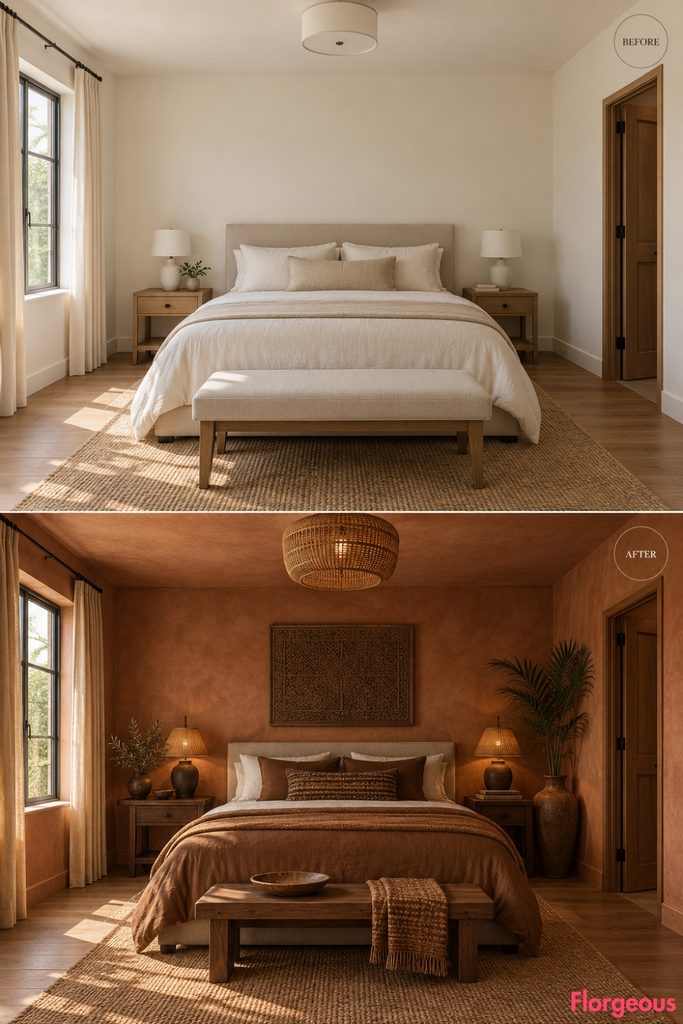
Before: The room feels safe but flat.
After: Warm terracotta plaster, tobacco linen, deep teak, and hand-shaped pottery create a sun-baked courtyard mood. Keep the lighting golden and the styling compact.
Why it works: The clay palette feels rich and warm without becoming heavy if the bedding stays pale enough.
Try this: Start with one clay wall and rust-toned pillows before committing to the full palette.
11. Brighten It Into a Whitewashed Bali Villa
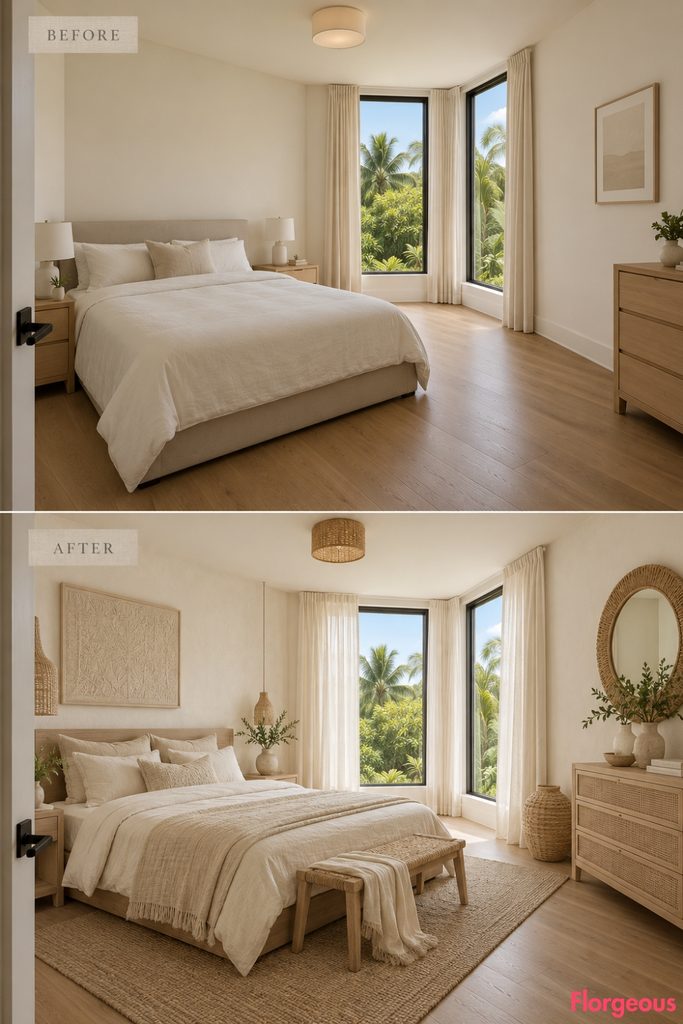
Before: The room feels plain but not especially fresh.
After: Chalk-white mineral walls, pale wood, soft cream textiles, and lightly textured natural fibers make the room feel brighter and more sun-faded. Keep shapes simple and open.
Why it works: The room looks fresh and breathable without losing warmth.
Try this: If pure white feels too stark, use chalk or warm shell instead.
12. Deepen the Mood With a Dark Tropical Bali Look
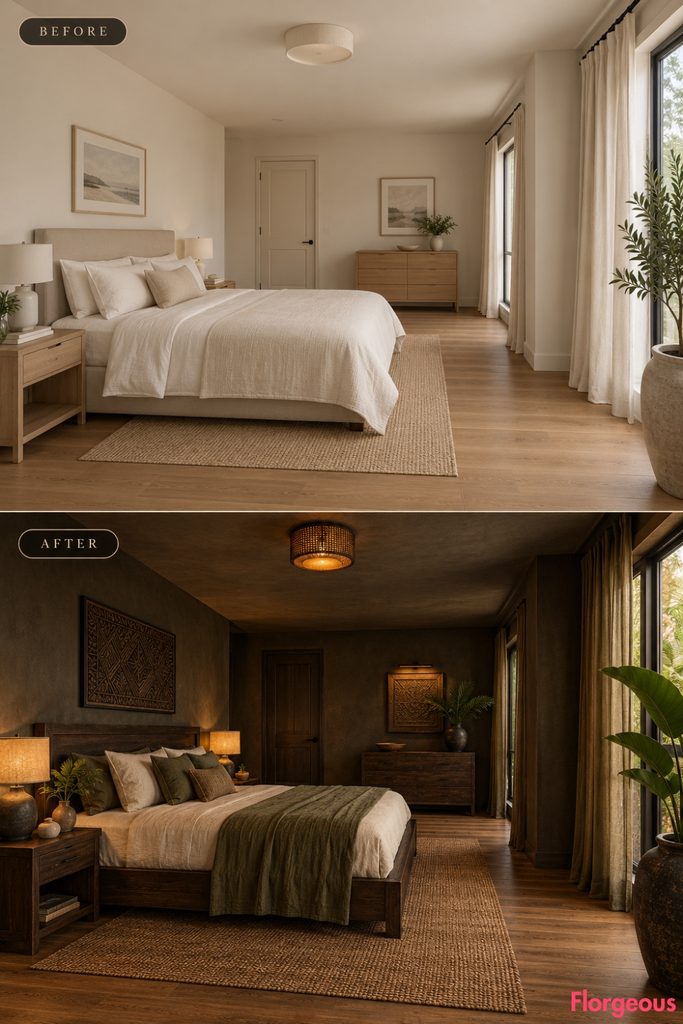
Before: The room has no evening atmosphere.
After: Smoked charcoal walls, dark timber, muted olive accents, and low amber lighting create a cocooning tropical mood. Keep the bedding creamy so the room still feels usable and calm.
Why it works: The mix of dark surfaces and warm light feels intimate rather than gloomy.
Try this: Use this palette on one wall first if you want a gentler version.
13. Open the Room Up as a Bali Garden Pavilion
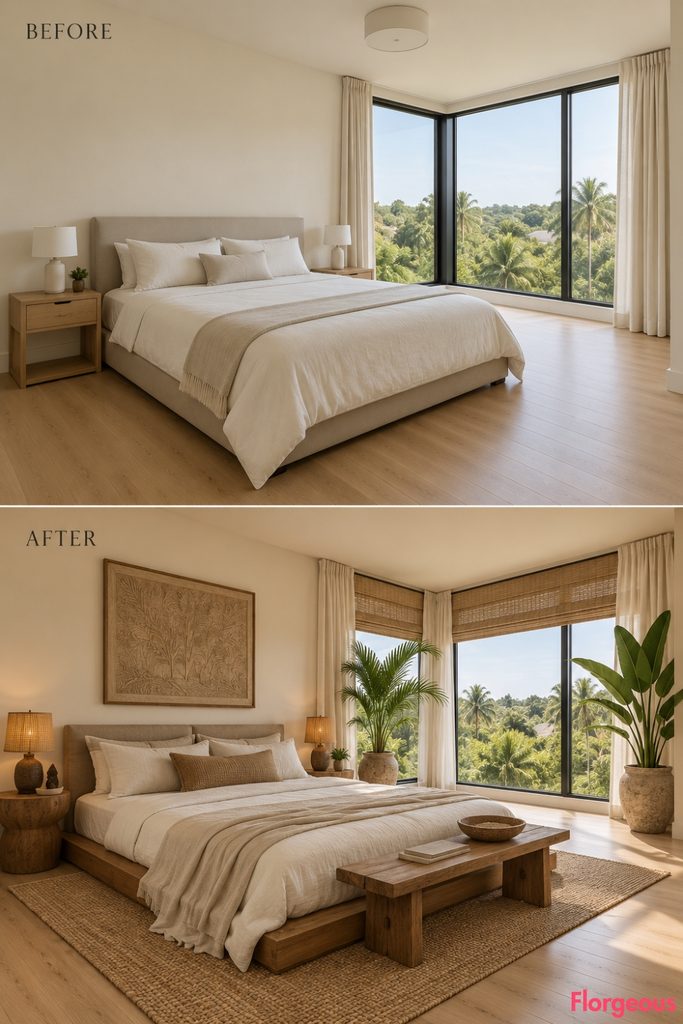
Before: The corner windows feel underused.
After: Put the visual focus on the glazing with woven shades, breezy linen, a lower bed profile, and two sculptural plants placed to frame the corner like a pavilion opening to a garden.
Why it works: The room feels more connected to the outdoors without changing the windows.
Try this: Choose plant forms with height and shape, not lots of small leaves.
14. Add an Indigo Handloom Bali Accent Story
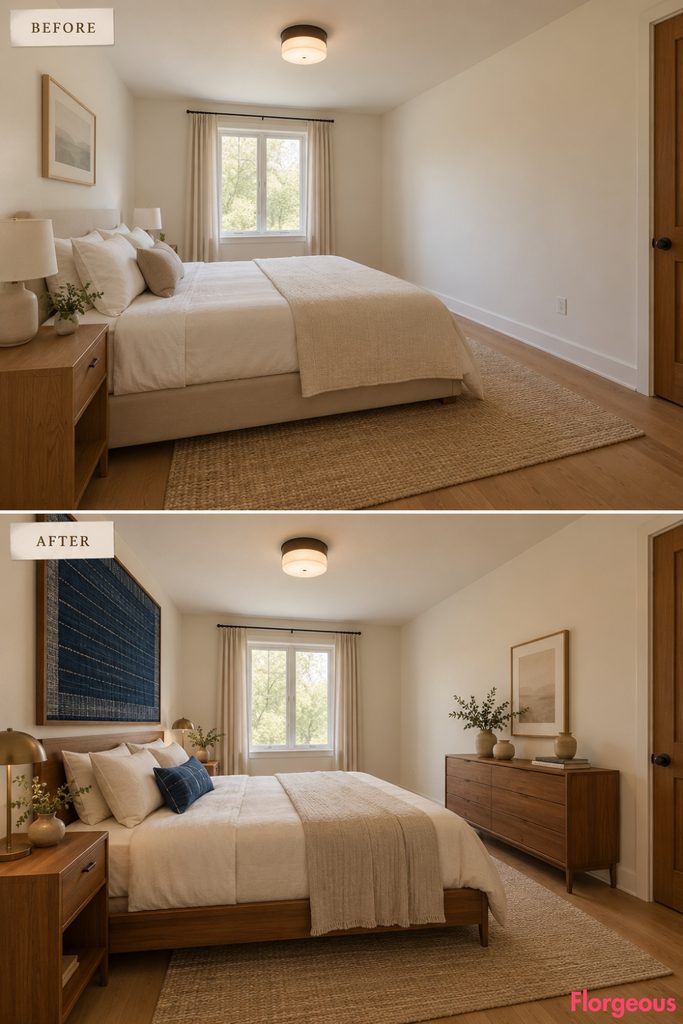
Before: The room feels too neutral to be memorable.
After: Keep the base soft and warm, then introduce one oversized indigo handloom textile over the bed and one small matching accent nearby. Everything else stays creamy and teak-toned.
Why it works: The indigo feels striking because it is limited.
Try this: Use one large textile panel instead of lots of blue decor.
15. Use a Rice-Terrace Palette for a Fresher Bali Mood
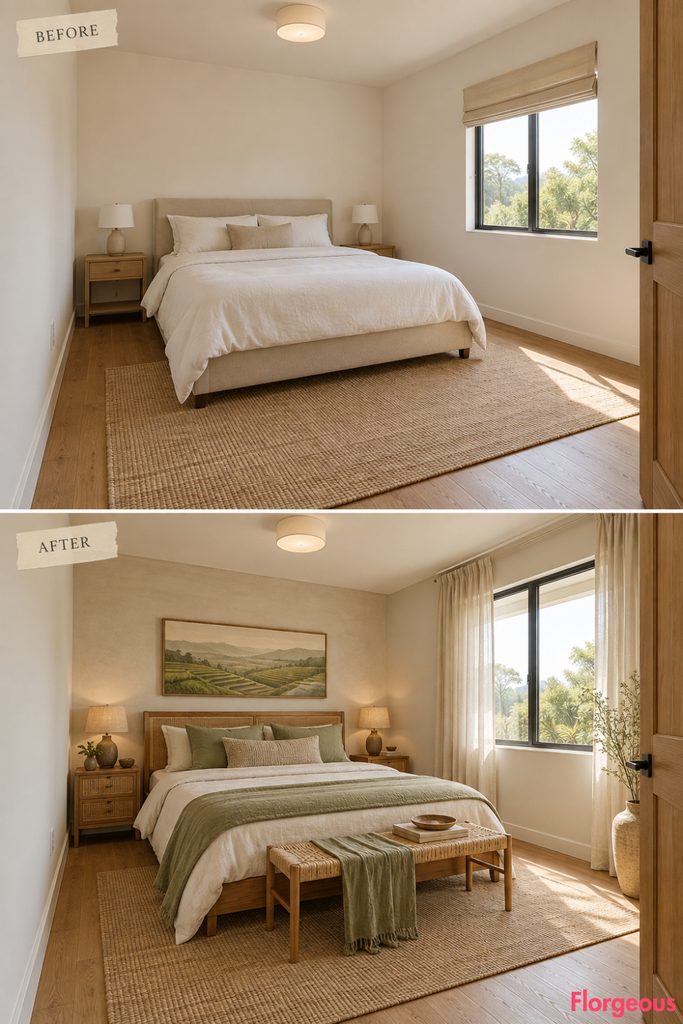
Before: The room lacks color but also lacks freshness.
After: Layer rice green, pale straw, warm stone, and light teak. Use a woven mat, light linen, and a soft green upholstered detail for a fresher, landscape-inspired mood.
Why it works: It references Bali through color memory instead of obvious tropical motifs.
Try this: Try a rice-green throw or bench cushion before repainting.
16. Make It Feel Volcanic and High Contrast
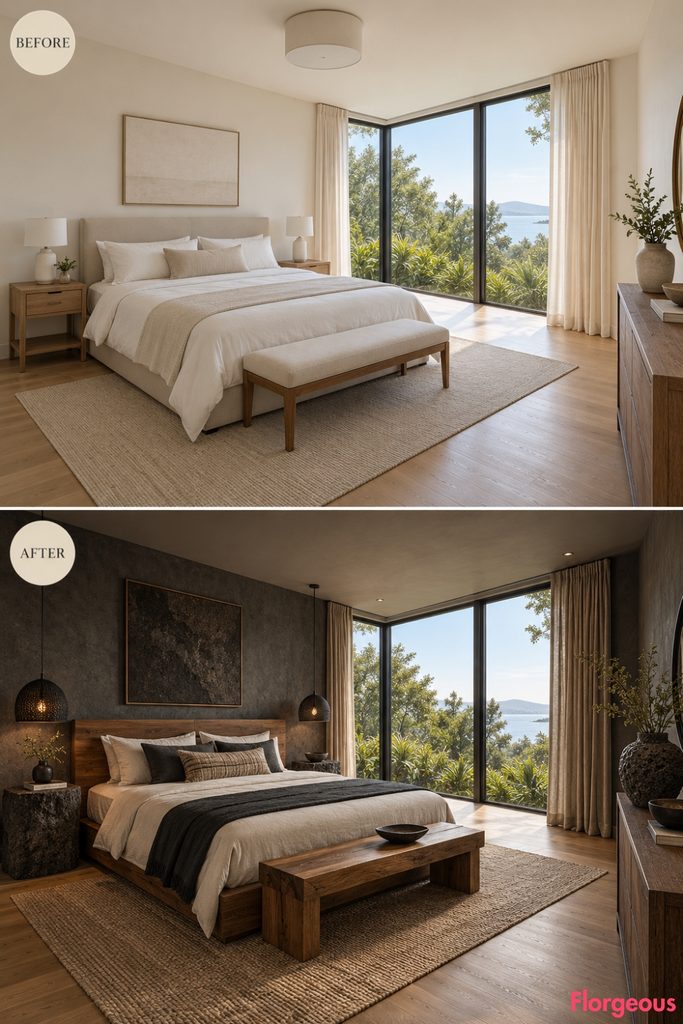
Before: The room feels low contrast and a little generic.
After: Bring in black lava-inspired tones, pale linen, medium teak, and one rough stone accent. The room should feel more dramatic and geological than leafy.
Why it works: The strong contrast makes the shell feel sharper and more memorable.
Try this: A single rough-textured black vessel or lamp base can introduce the look.
17. Shift It Into a Bali Sunset Bedroom
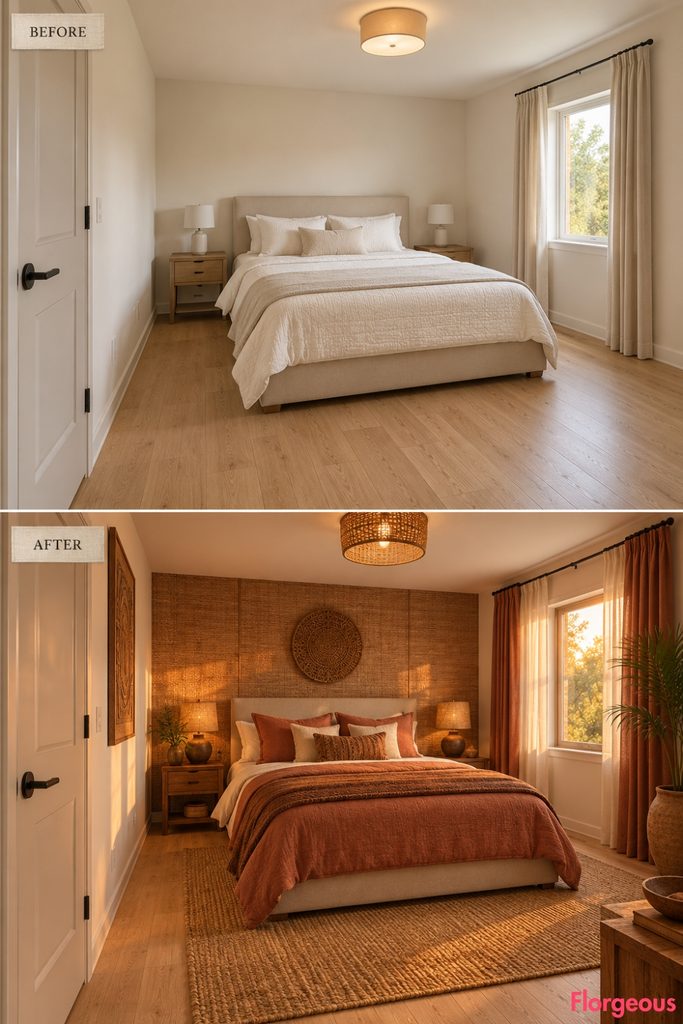
Before: The room feels neutral but emotionally flat.
After: Dusty coral, burnt sienna, honey timber, and tobacco accents create a warm late-afternoon mood. Keep the forms simple and the textiles soft.
Why it works: The palette feels romantic and atmospheric without becoming sugary.
Try this: Use sunset tones in the throw, rug, and wall art equivalent rather than everywhere at once.
18. Turn It Into a Bali Monsoon Retreat
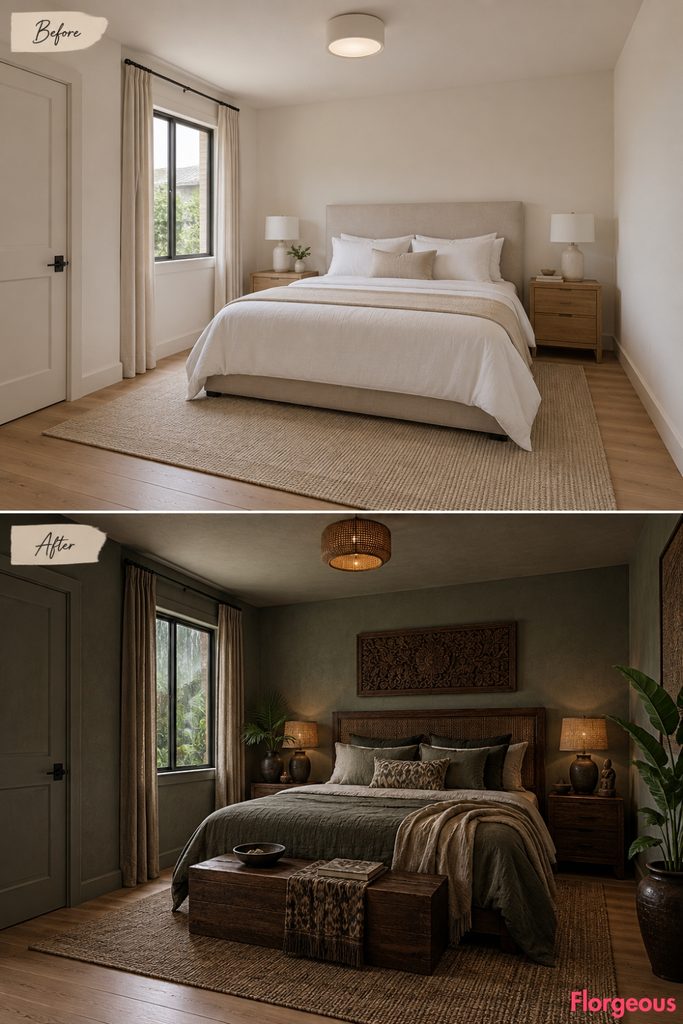
Before: The room has no atmospheric depth.
After: Stormy gray-green walls, heavy linen, dark timber, and a slightly moodier layered bed create the feeling of a tropical rainstorm outside, even on a sunny day.
Why it works: The cooler, denser palette gives Bali another side beyond sun and sand.
Try this: Use gray-green on the wall and keep the bedding warmer so the room stays inviting.
19. Let Palm Craft Become the Main Texture
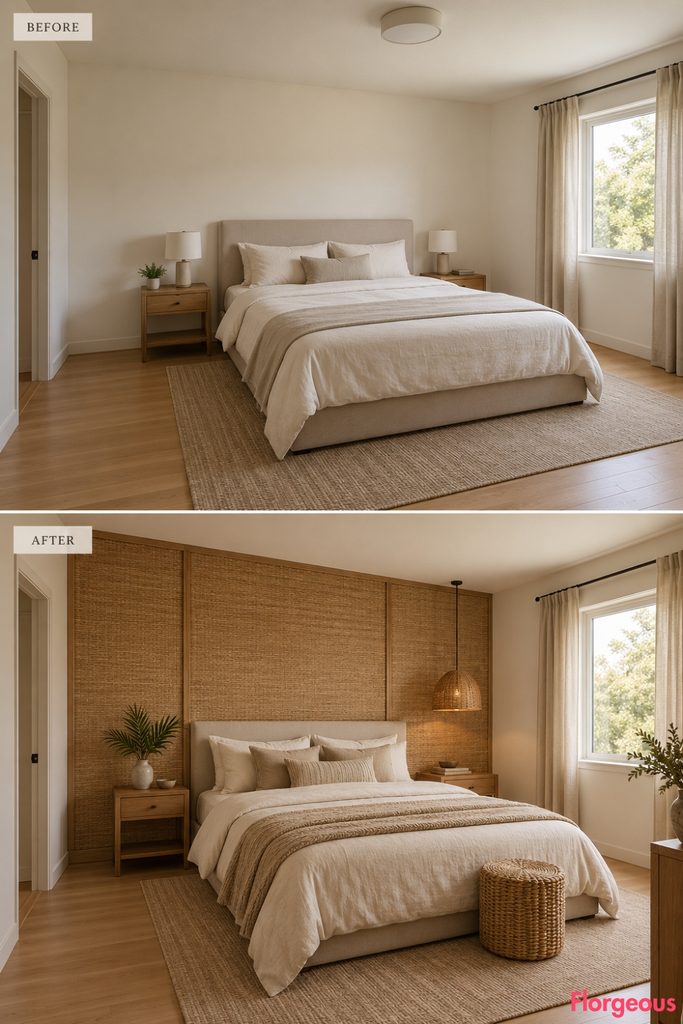
Before: The room has no strong tactile identity.
After: Use handwoven palm craft in a controlled way through wall panels, a lamp, and a small stool. Pair it with warm chalk walls and simple teak to keep it architectural rather than rustic.
Why it works: The texture feels unmistakably tropical without relying on generic rattan overload.
Try this: Choose one consistent palm weave rather than mixing many woven styles.
20. Make It Feel Like a Bali Stone Villa
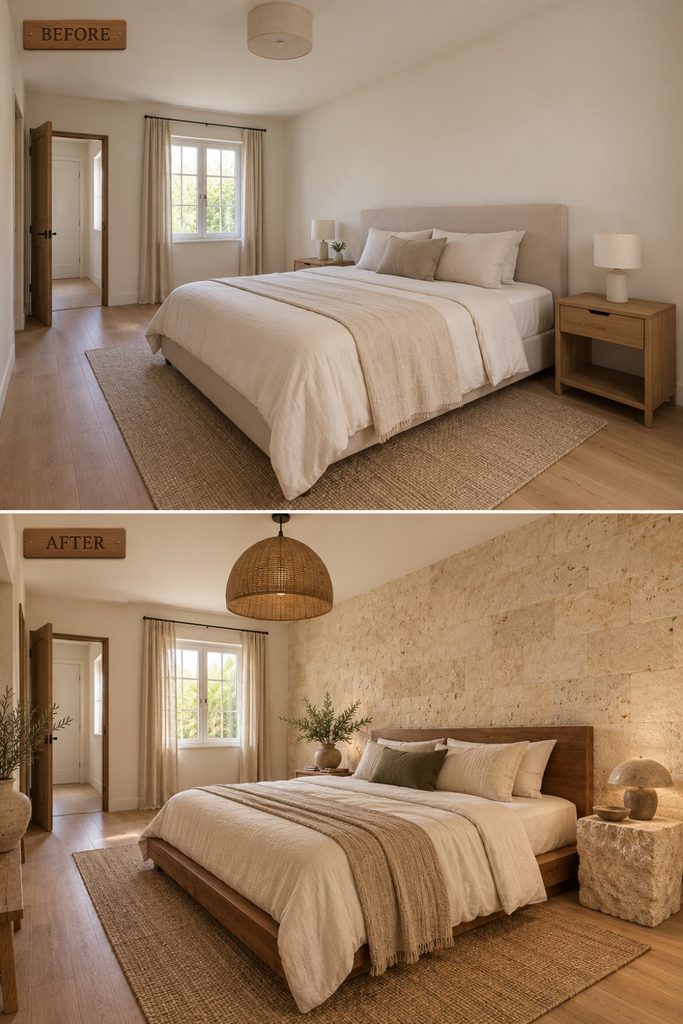
Before: The room lacks architectural weight.
After: Use pale limestone textures, one rough-cut stone side piece, warm teak, and creamy linen. Keep the styling sparse and sculptural.
Why it works: Stone gives the room a villa-like permanence and calm.
Try this: Even one stone side element can shift the feel dramatically.
21. Layer the Room With Bali Textiles
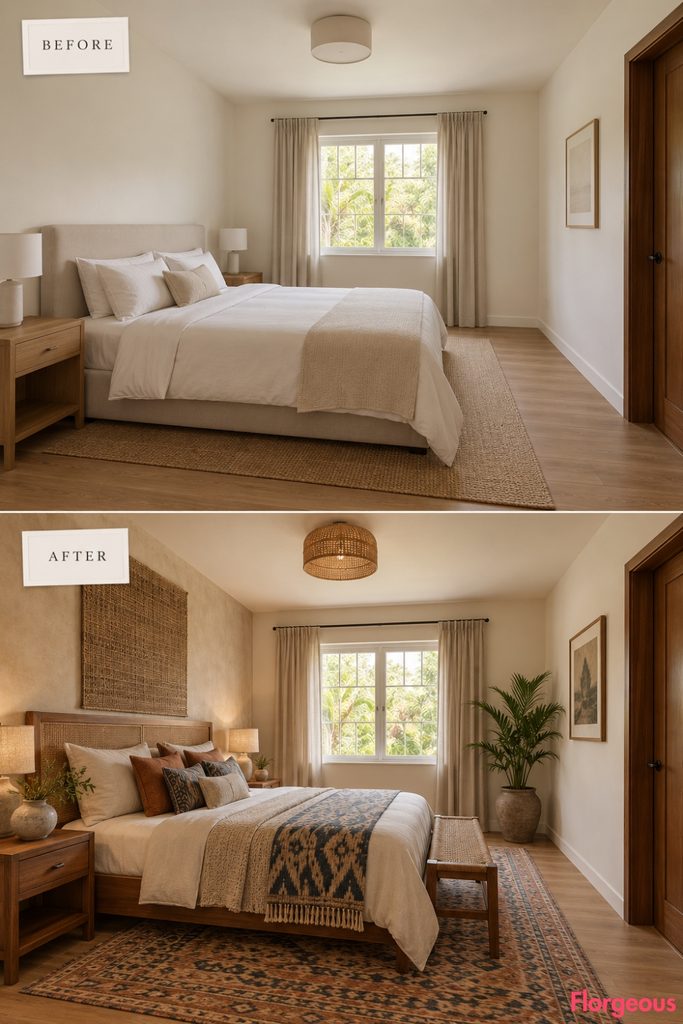
Before: The bed feels too plain and one-note.
After: Bring in handloom cotton, subtle ikat-inspired abstract patterns, and layered woven fabric on the bed and bench. Keep the wall treatment simple so the textiles lead.
Why it works: It feels rich and tactile without depending on larger furniture changes.
Try this: One patterned lumbar pillow and one handloom throw can go a long way.
22. Style It Like a Small Bali Design Gallery
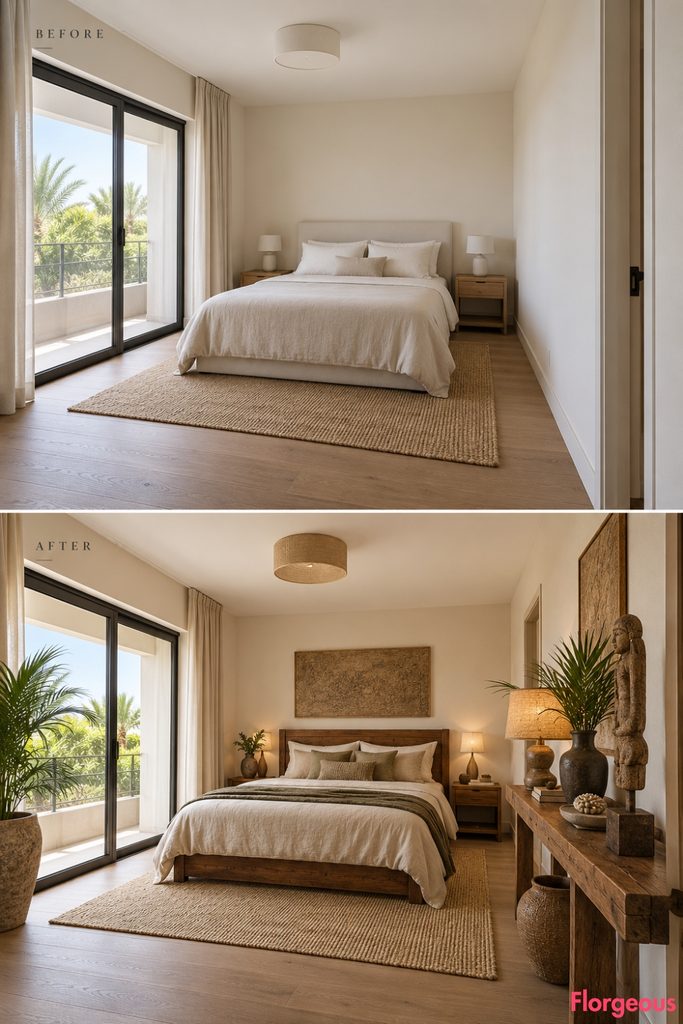
Before: The room has no curated personality.
After: Use the solid right wall for one elegant console with carved objects, pottery, and one sculptural lamp, arranged like a boutique gallery display. Keep the bed area quieter.
Why it works: The room feels curated and sophisticated rather than overdecorated.
Try this: Group fewer pieces with more breathing room between them.
23. Strip It Back to a Minimal Bali Bedroom
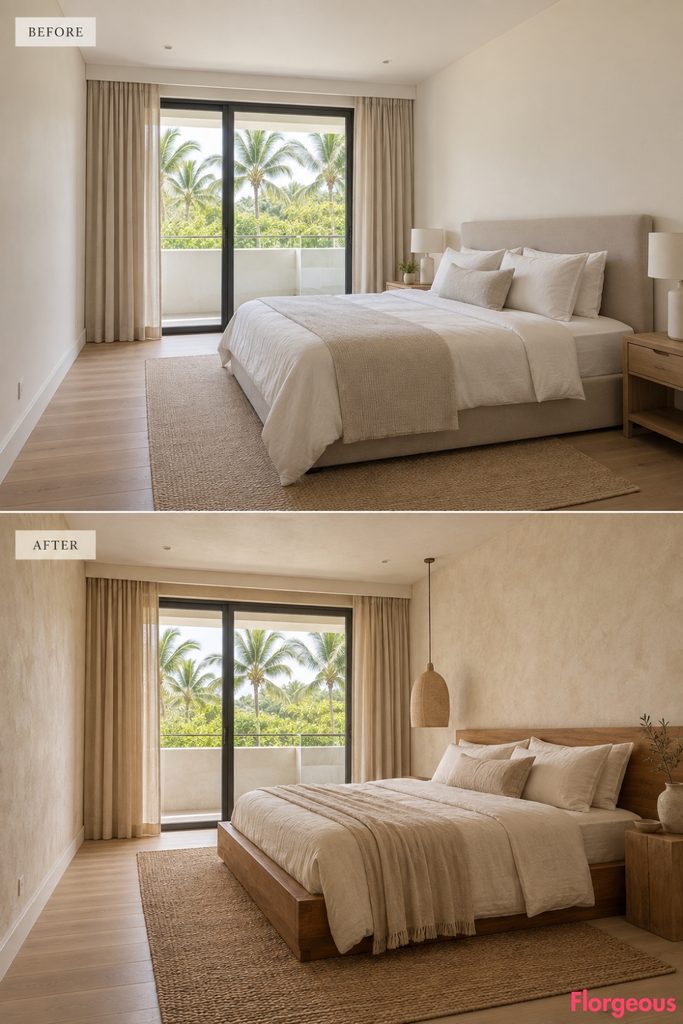
Before: The plain room feels unfinished, not intentional.
After: Keep only one strong timber form, pale mineral walls, low soft bedding, and almost no visible accessories. The room should feel distilled, serene, and architectural.
Why it works: The restraint lets the materials do all the work.
Try this: Remove half the objects you think you need, then edit again.
24. Make It Feel Like a Bali Hideaway
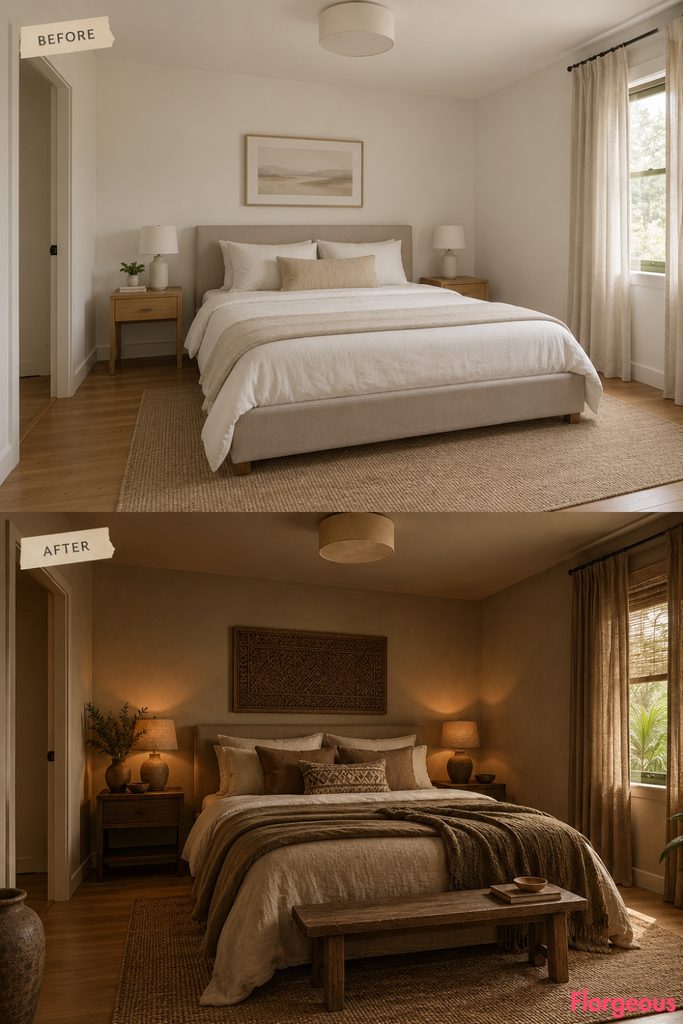
Before: The room has no sense of intimacy.
After: Use deeper earth tones, low lighting, heavy linen, and cocooning textures. Keep the palette warm and shadowy rather than black.
Why it works: The room feels private and wrapped, like a hidden villa room set back from the garden.
Try this: Focus on softer pools of light rather than one bright overhead source.
25. Soften It Into a Bali Honeymoon Suite
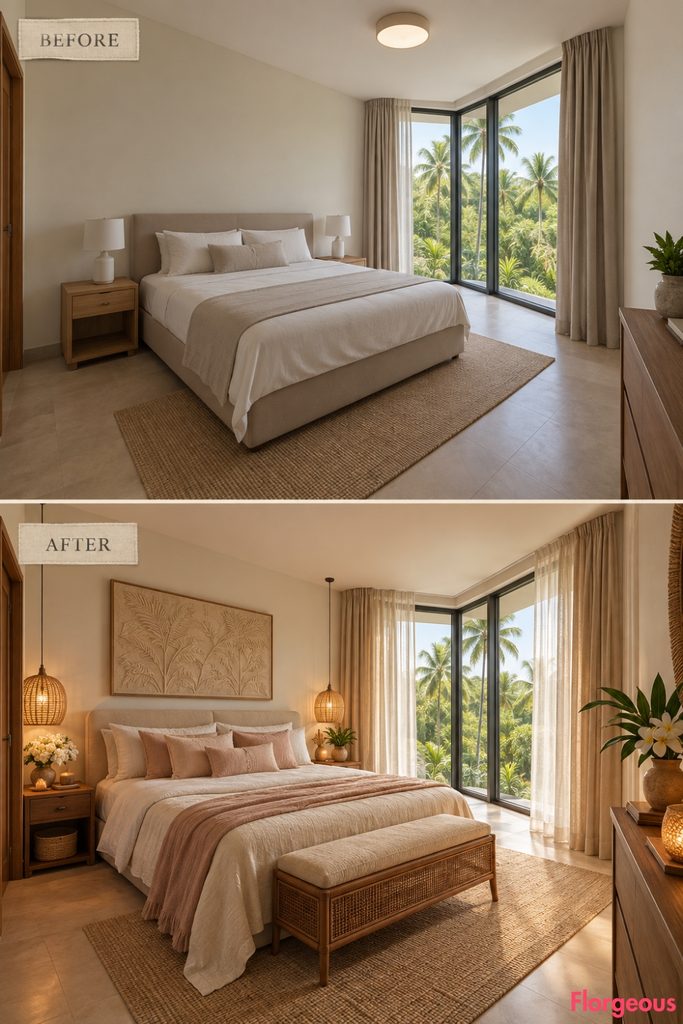
Before: The room feels practical but not romantic.
After: Use layered sheers, a more upholstered bed, delicate warm lighting, and extra-soft cream and blush-beige textiles. Keep it refined, not frilly.
Why it works: It feels dreamy and special while still rooted in natural Bali materials.
Try this: Layer one sheer curtain panel over linen for a softer resort effect.
26. Turn the Room Into a Bali Poolside Villa Bedroom
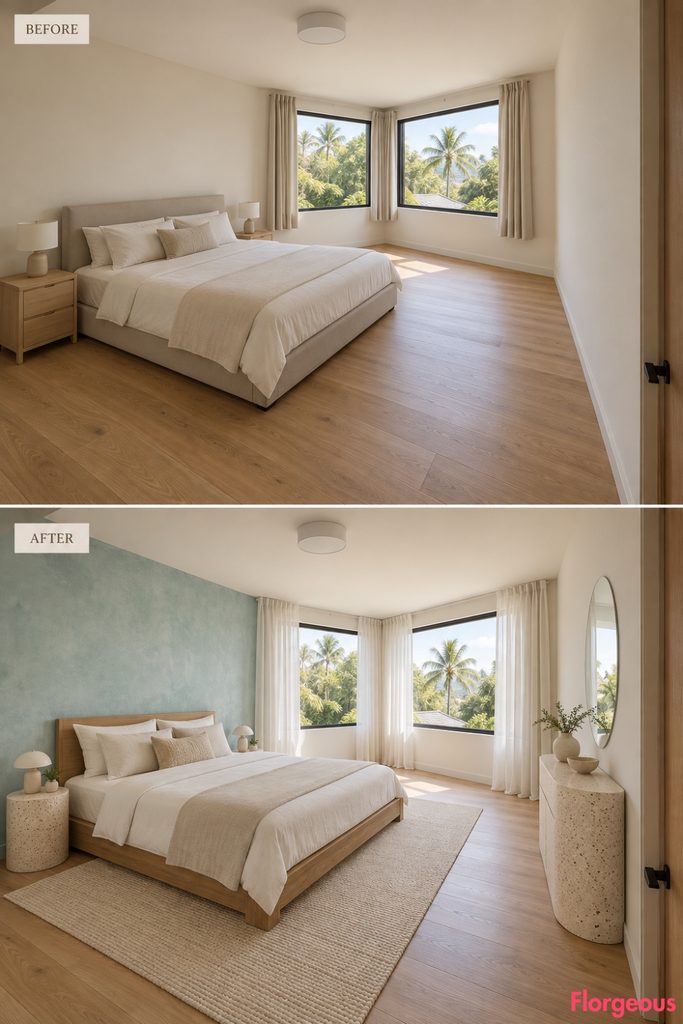
Before: The room feels neutral and disconnected from the bright tropical atmosphere outside.
After: Give the bedroom the fresh, luminous mood of a contemporary Bali villa beside the pool. Use a soft mineral aqua finish on the full left bed wall, then keep the remaining walls warm chalk white so the color feels airy rather than themed.
Replace the basic bed with a streamlined sun-washed teak frame dressed in crisp white and pale sand linen. Against the solid right wall, add one freestanding rounded terrazzo dressing console in a creamy base with fine warm-gray and ochre aggregate, paired with a simple frameless oval mirror. Introduce one small matching terrazzo bedside piece, a light woven rug, and sheer white curtains across the corner glazing.
The palette should feel cool and refreshing near the windows, but still warm through the teak, sand textiles, and softly speckled stone.
Why it works: This direction brings a completely different side of Bali into the series. Instead of jungle greenery, earthy clay, dark tropical tones, or artisan-heavy styling, it captures the bright architectural freshness of a modern poolside villa.
Color Story: Keep the aqua dusty and mineral rather than turquoise or tropical blue. It should feel like reflected water and weathered plaster, not beach-themed decor.
Try this: If a terrazzo console is too large an investment, use one compact terrazzo side table or lamp base against an otherwise simple teak-and-linen room.
27. Turn the Room Into a Bali Night Garden Bedroom
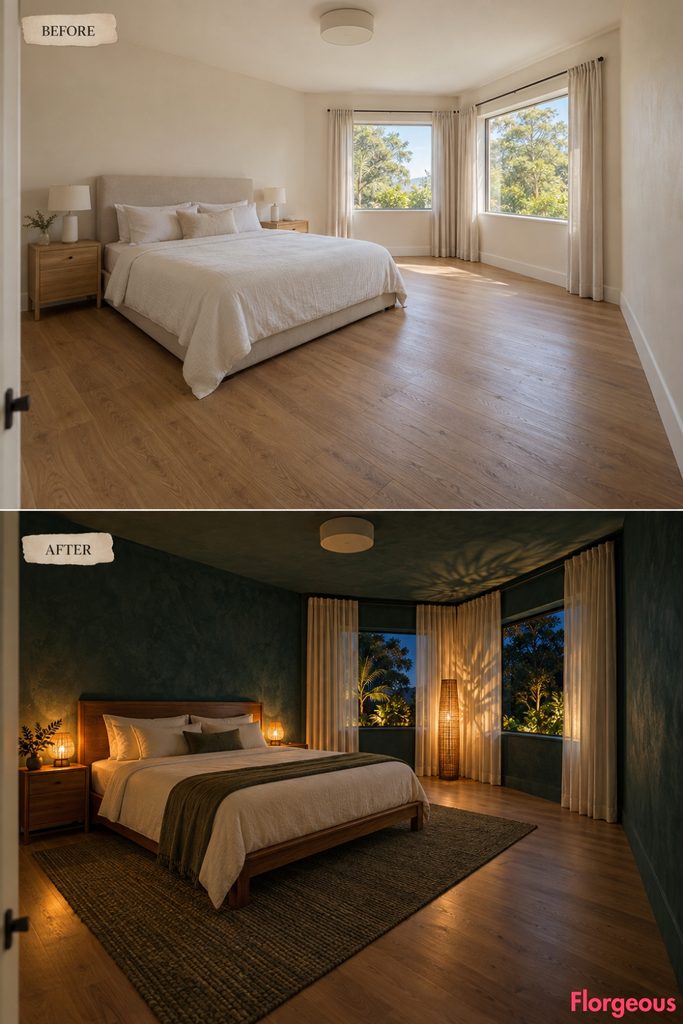
Before: The room feels bright and ordinary, with no atmosphere once daylight disappears.
After: Shift the bedroom into a dramatic evening palette inspired by a tropical garden after sunset. Use deep blue-green mineral walls, warm medium teak, ivory bedding, and full-height sheer curtains across the corner windows. Place one tall narrow floor lamp near the glazing so it casts soft leaf-like shadows across the curtains and adjacent wall, then add a dark moss rug and one low amber bedside light.
Keep the furniture restrained. The character should come from the contrast between cool night-toned walls, warm timber, translucent fabric, and believable pools of light rather than decorative objects.
Why it works: Most Bali bedrooms lean heavily on sunny neutrals, clay, or resort styling. This version creates a completely different identity through nocturnal color and shadow while still feeling tropical, calm, and clearly connected to Bali.
Try this: Use several low, warm light sources instead of one bright ceiling fixture. The shadows should remain soft and natural, never theatrical or neon.
How to Choose the Bali Bedroom Direction That Fits Your Home
The easiest mistake is treating every tropical bedroom the same. Some Bali-inspired spaces feel dark and leafy, others feel bright and beachy, and others lean into stone, textiles, or craftsmanship. The best version for your room depends on the atmosphere you want, not just the materials you like.
Start by choosing one lead idea: jungle mood, villa brightness, artisan craft, spa calm, stone architecture, or boutique-hotel polish. Then build everything else around that choice. If you try to mix all of them at once, the room loses clarity.
A successful Bali Bedroom should still feel breathable and practical. Keep the circulation open, let the corner windows stay visible, and use fewer, better materials rather than too many accents. That is what gives the room the calm, collected feeling people love in the best Bali interiors.