A nautical bedroom can be much more interesting than navy bedding, striped cushions, and a few seaside accessories.
The best rooms borrow from the actual language of maritime design: curved timber ribs, sailcloth, rope craft, navigation charts, teak decking, marine glass, weathered woods, disciplined stripes, and the shifting colors of the sea. Used carefully, those references can make a bedroom feel atmospheric and unmistakably nautical without turning it into a theme room.
Every makeover below starts from exactly the same plain bedroom shell. It is a rectangular split-level bedroom with a front-right entry opening, a lower entry deck in the foreground, one broad full-width step leading to a raised sleeping platform, a short solid return wall on the left, a completely solid far wall behind the bed, one high horizontal clerestory window on the right wall, a flat ceiling, and matte warm-oak flooring.
The BEFORE always contains warm off-white walls, a simple neutral upholstered bed, plain ivory bedding, two basic pale-wood nightstands, a basic flush ceiling light, minimal styling, and soft natural daylight.
Nothing architectural moves between versions. The doorway, step, platform, wall lengths, corners, window, ceiling, floor footprint, and daylight direction stay locked. Only the interior design changes.
1. Turn the Bed Wall Into a Sculptural Hull-Rib Installation
Instead of beginning with navy paint, start with the construction language of a wooden boat.
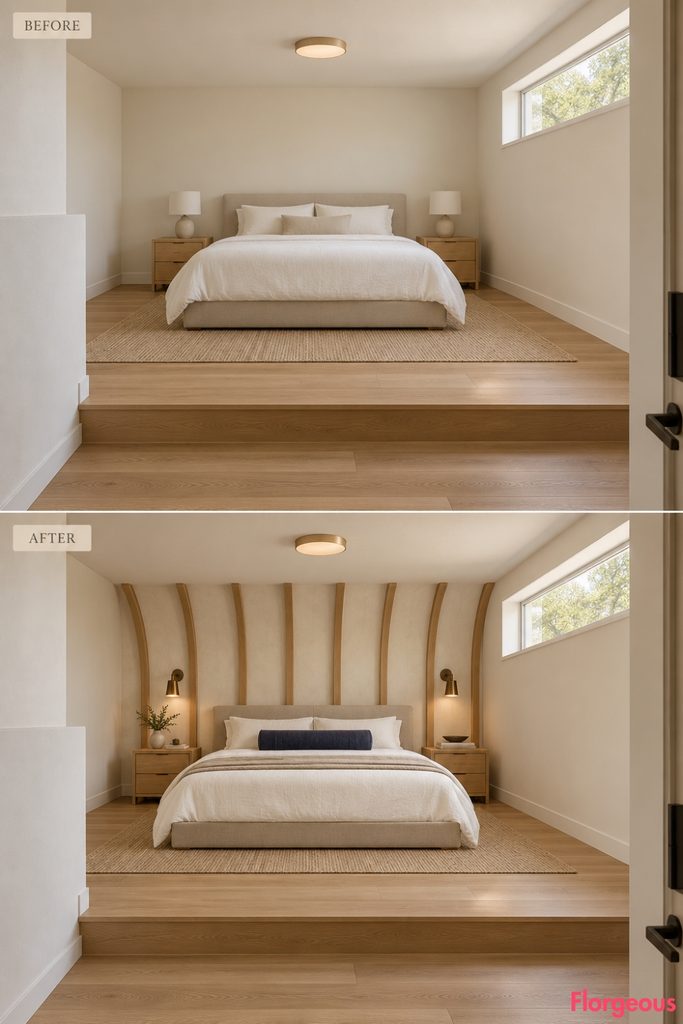
Before: The solid far wall is completely flat, leaving the raised sleeping platform without a strong focal point.
After: Apply a sequence of slender curved pale-oak ribs directly to the surface of the far wall. Let each rib rise vertically behind the bed and bend gently outward near the upper wall, referencing the internal framing of a traditional timber hull without changing the actual wall or ceiling.
Keep the plaster between the ribs warm ivory. Add a low flax-upholstered bed, chalk-white bedding, one navy wool bolster, and compact dark-bronze bedside lights. Two small oak nightstands should echo the pale timber ribs without copying their shape.
The result feels architectural, sculptural, and clearly maritime, but there is no literal boat decoration anywhere.
Why it works: The nautical reference comes from construction rather than accessories, giving the room much more depth.
Designer Tip: Keep the ribs shallow and widely spaced. Too many narrow slats would turn the idea into a generic contemporary slat wall.
2. Transform the Full Bed Wall Into a Faded Nautical Chart Mural
Here, the far wall becomes a piece of art rather than an architectural structure.
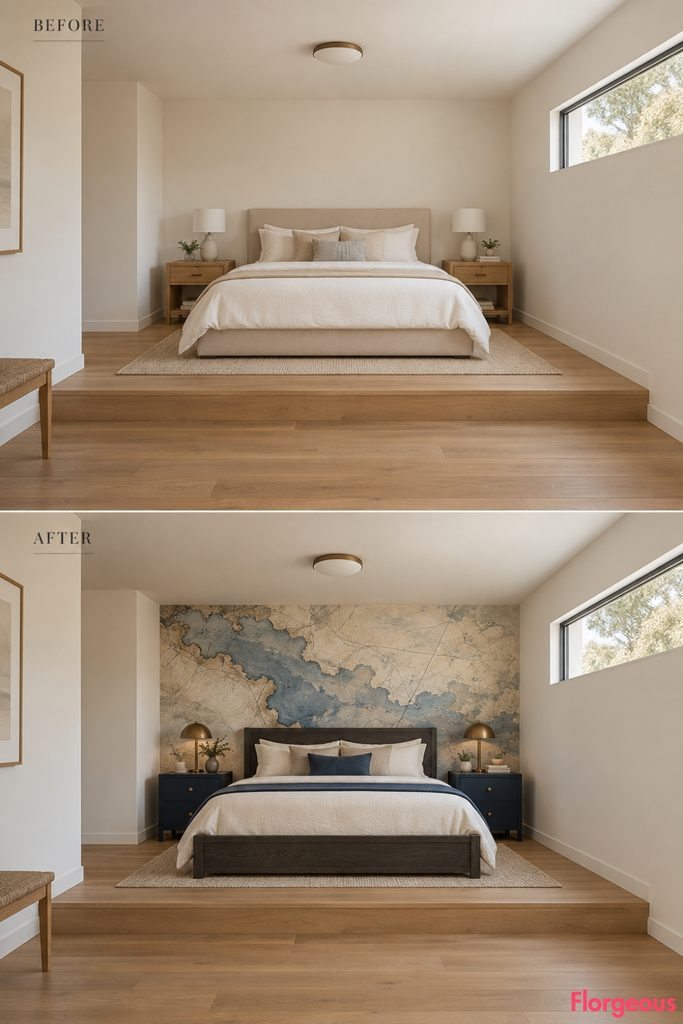
Before: The plain wall behind the bed has no focal point and no connection to the nautical concept.
After: Finish the entire solid far wall in a warm parchment ground, then layer on a softly faded hand-painted navigation mural. Use abstract coastline shapes, pale blue-gray water fields, smoky charcoal route lines, and delicate depth contours.
Avoid readable place names, coordinates, numbers, letters, compass symbols, or obvious printed-map graphics. The mural should look washed, imperfect, and painterly.
Place a simple blackened-oak bed in front of it, with ivory linen, deep-navy bedside cabinets, and narrow aged-bronze sconces.
The dark furniture makes the pale mural feel even more atmospheric.
Why it works: The nautical story is carried by one large artistic gesture instead of lots of small decorative objects.
3. Make a Handwoven Marine-Rope Headboard the Main Artwork
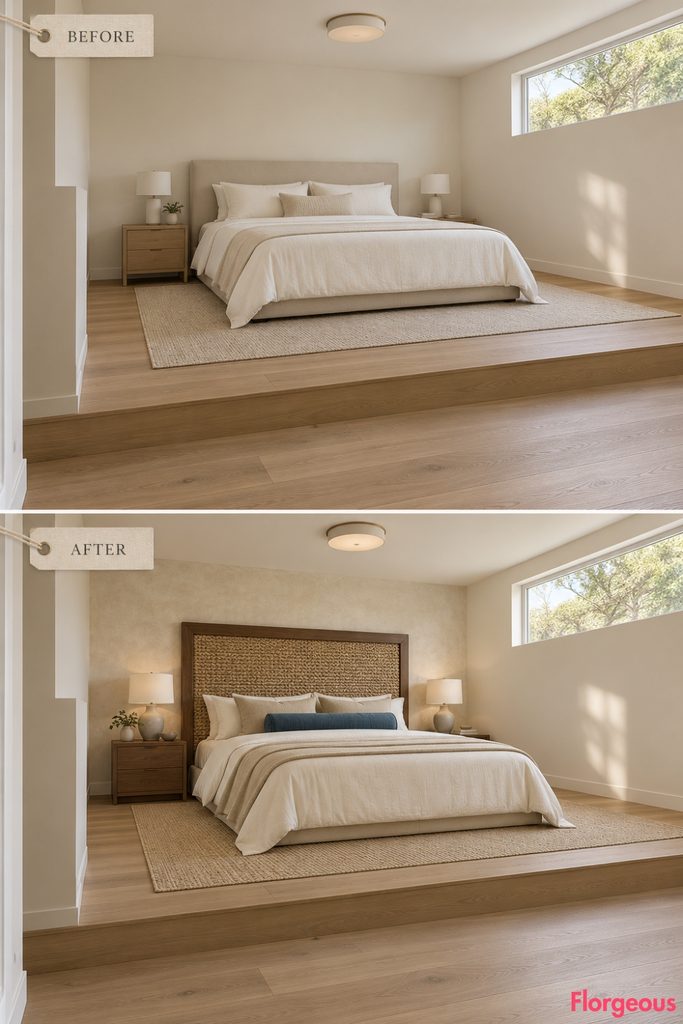
Rope works best when it becomes craftsmanship rather than decoration.
Before: The basic upholstered bed is visually soft but lacks texture and identity.
After: Replace the headboard with an oversized dark-walnut frame containing one tightly woven natural marine-rope panel. Use a dense geometric weave rather than loose knots or macramé.
Finish the far wall behind it in a pale shell-tone limewash so the natural rope and dark wood stand out clearly. Dress the bed in ivory and sand linen, then add one deep-sea-blue bolster.
Small matte ceramic bedside lamps keep the styling residential and prevent the room from becoming too industrial.
Do not repeat rope anywhere else.
Why it works: One concentrated rope element reads as skilled maritime craft. Repeating rope throughout the room would weaken the effect.
4. Float a Tailored Sailcloth Canopy Above the Sleeping Platform
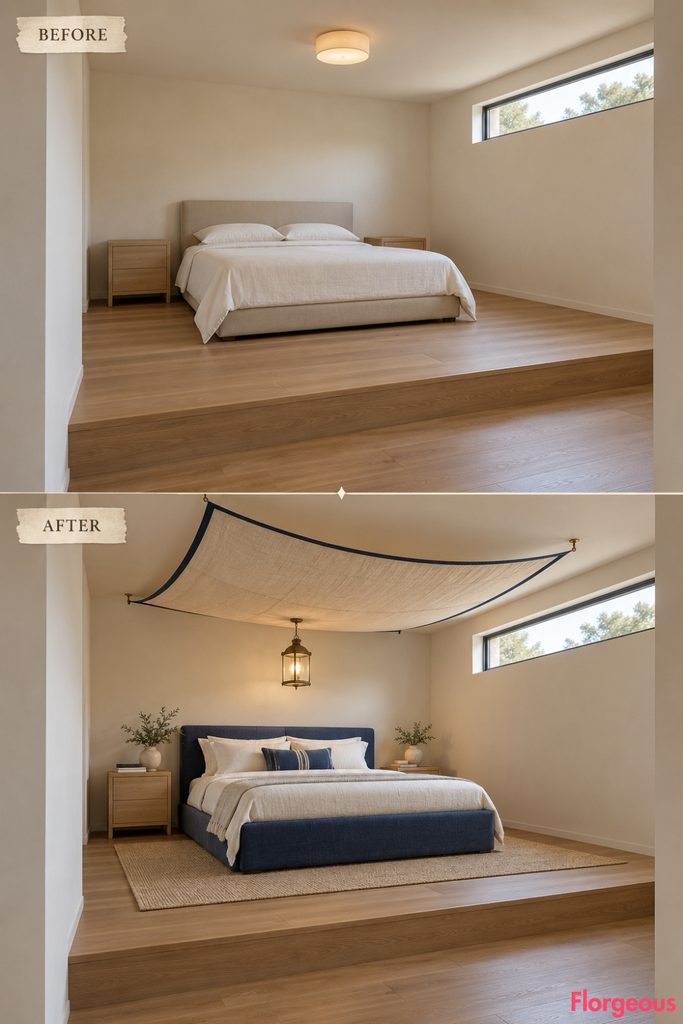
This concept focuses on the ceiling plane rather than the wall.
Before: The raised sleeping platform is distinctive architecturally, but nothing emphasizes it as a separate sleeping zone.
After: Suspend a broad rectangle of heavy natural sailcloth high above the bed. Keep it taut and shallow, with slightly softened edges and visible navy stitching around the perimeter.
The sailcloth should hover above the sleeping platform without touching the walls or changing the ceiling structure.
Below it, use a tailored midnight-blue upholstered bed, ivory linen, pale-oak bedside blocks, and one compact aged-brass lantern pendant hung high and centered.
A narrow sand-colored rug should remain completely on the raised sleeping platform.
Why it works: The floating sail defines the sleeping zone while working directly with the split-level architecture.
Style Note: Avoid loose draping. This is sail canvas, not a romantic canopy bed.
5. Create a Soft Weathered Harbor-House Bedroom
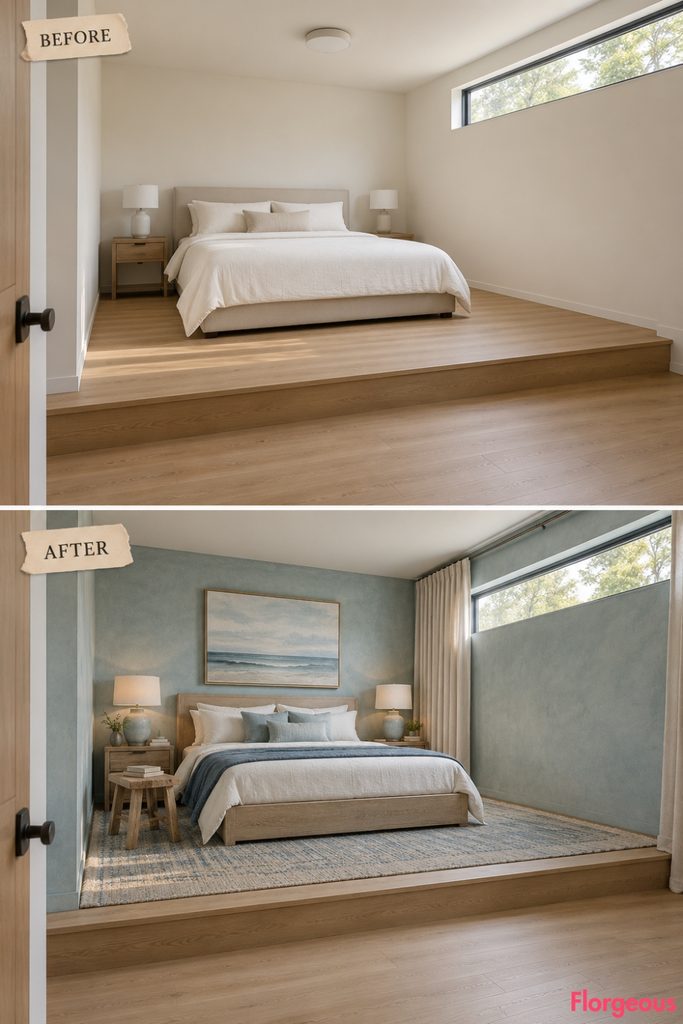
Instead of relying on recognizable marine objects, let color and weathered texture carry the concept.
Before: The warm-neutral room feels pleasant but visually anonymous.
After: Coat the walls in faded sea-glass blue mineral paint with slight tonal variation. Replace the bed with a low weathered-oak frame and layer washed flax, warm white, muted indigo, and cloudy gray textiles.
Use full-height natural linen drapery gathered well outside the clerestory opening so the window remains unobstructed. Add a thick handwoven wool rug in sand, gray, and faded blue across the sleeping platform.
A small antique-looking timber stool and one softly glazed ceramic lamp finish the room.
Color Story: Think foggy harbor mornings rather than bright seaside blue.
Why it works: The room communicates water, salt, timber, and age without depending on nautical symbols.
6. Build the Entire Scheme Around Tailored Sailor Stripes
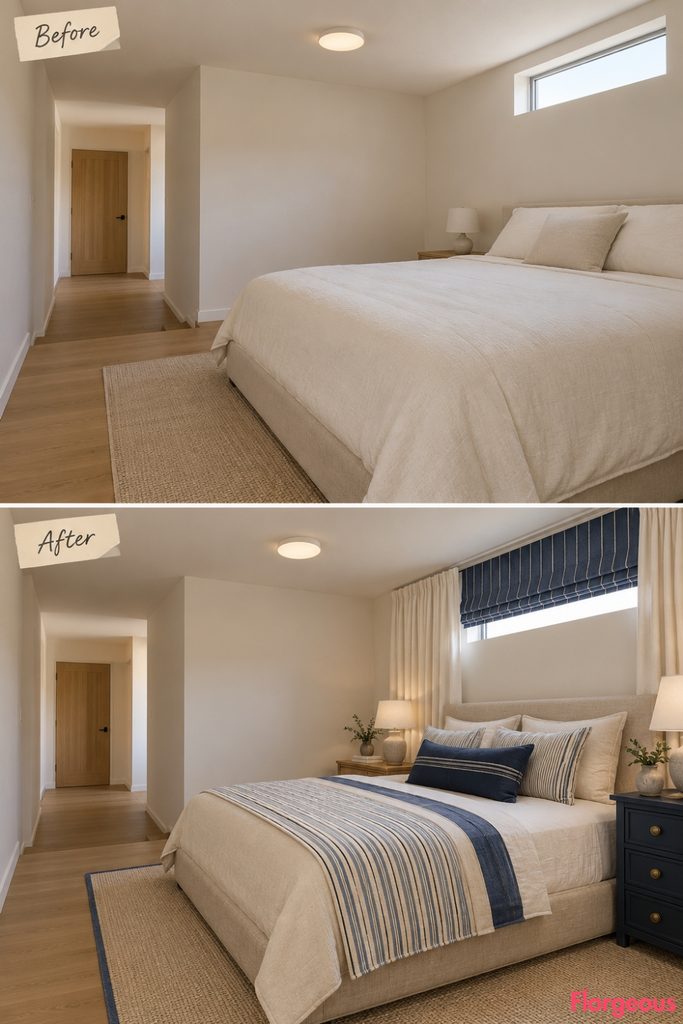
This room uses pattern rather than architectural detailing.
Before: The neutral textiles and plain window treatment do very little visually.
After: Keep the walls a clean warm white and introduce an upholstered bed in natural flax. Dress it with fine navy-and-ivory ticking sheets, a slightly wider stripe on the duvet edge, and one bold navy-and-cream lumbar cushion.
Treat the high clerestory window with a neatly tailored Roman shade in a narrow indigo stripe. Add plain ivory drapery outside the opening for softness.
Use a solid midnight-blue bedside chest on one side and a natural oak table on the other so the room does not become overly symmetrical.
Why it works: Varying stripe scale keeps the room lively, while the solid furniture pieces prevent pattern overload.
Common Mistake: Avoid matching every textile in the exact same stripe.
7. Turn the Whole Room Into a Tailored Navy Lacquer Yacht Interior
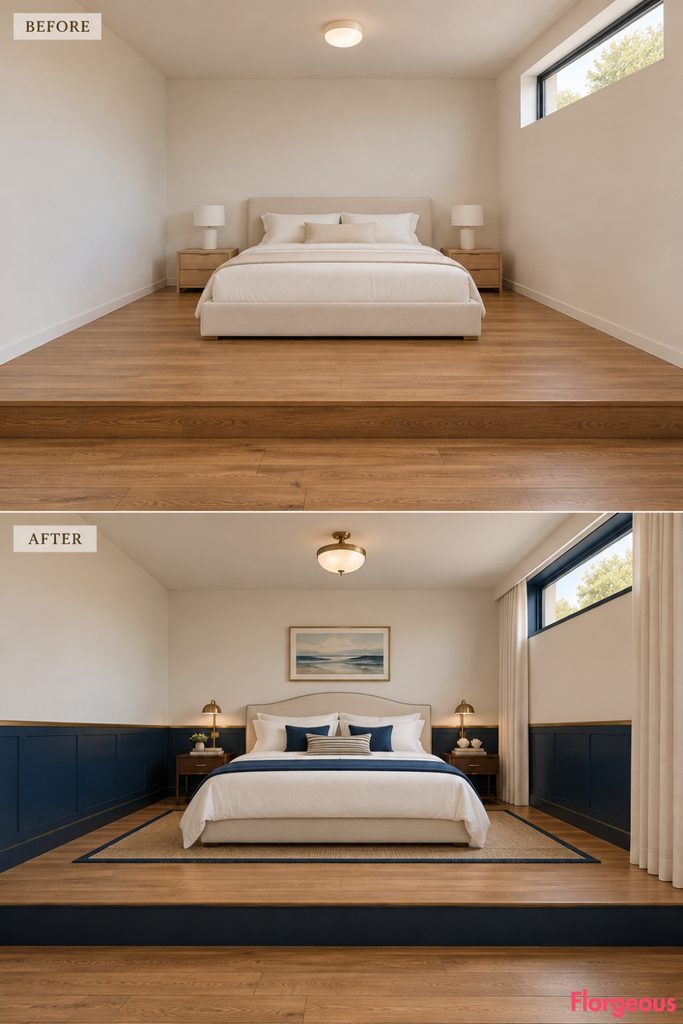
This makeover uses the polished restraint of classic yacht interiors, but translates it into a comfortable bedroom rather than copying a cabin literally.
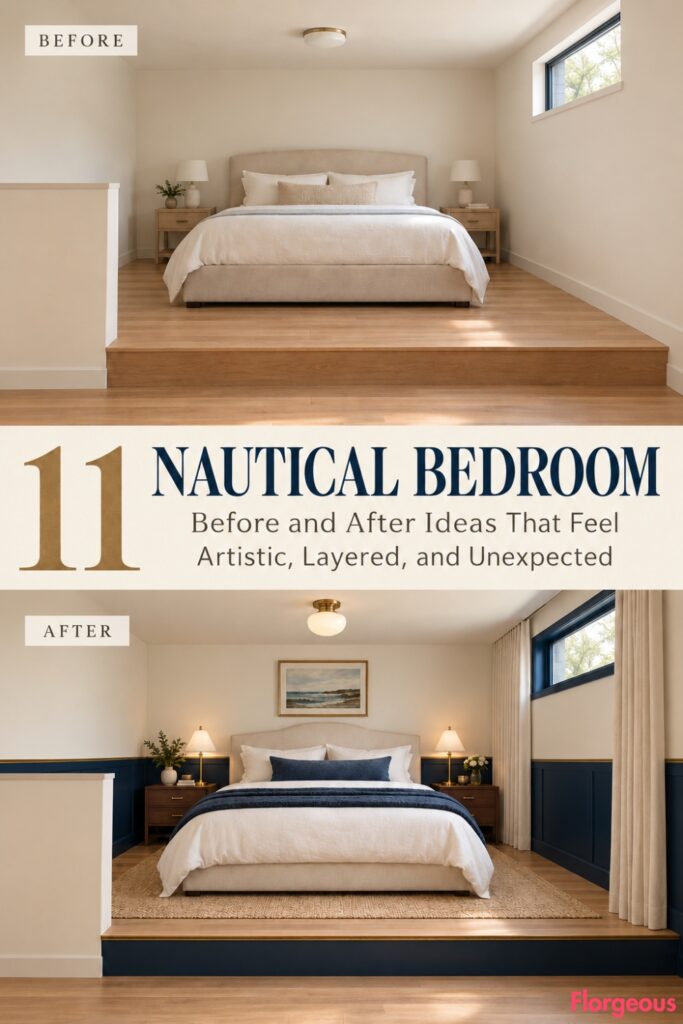
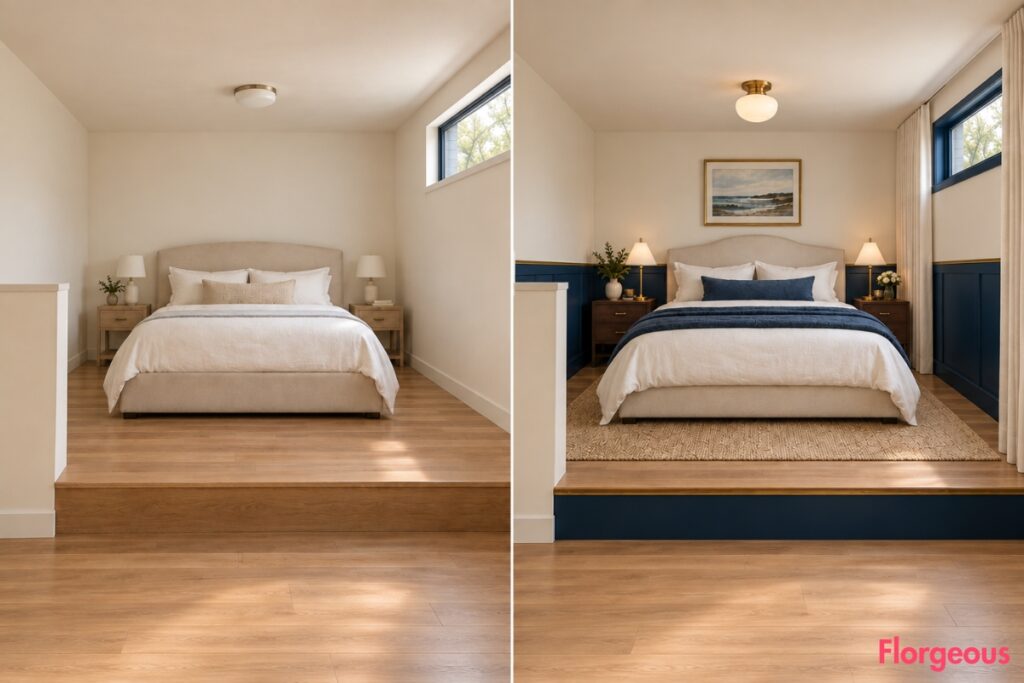
Before: The split-level room has warm off-white walls, a plain neutral bed, simple nightstands, uninterrupted oak flooring, and no architectural detailing to connect the different surfaces.
After: Wrap the lower third of every solid wall in deep navy satin-lacquer paneling, including the far wall and short left return wall. Keep the upper walls warm ivory, then separate the two finishes with one extremely slim aged-brass trim line running continuously around the room.
Continue the navy lacquer across the vertical face of the broad step so the raised sleeping zone feels intentionally framed. Leave the top of the platform in its original warm oak.
Paint the right-wall clerestory reveal warm ivory and frame it with a narrow dark-navy surround. Add full-height ivory linen panels positioned completely outside the opening.
Use an ivory upholstered bed with a gently arched headboard, chalk-white bedding, a midnight-blue wool throw, and dark walnut bedside tables. Finish the ceiling with a compact opal-glass flush fixture in aged brass.
Why it works: The room gains a complete visual architecture. Navy is no longer just an accent color on bedding, it becomes a disciplined lacquered envelope inspired by polished yacht interiors.
Try this: For an easier version, create the lacquer effect with satin-finish paint and simple surface-applied molding rather than custom timber panels.
8. Create a Sea-Glass Bedroom With a Full Ribbed-Glass Horizon Wall
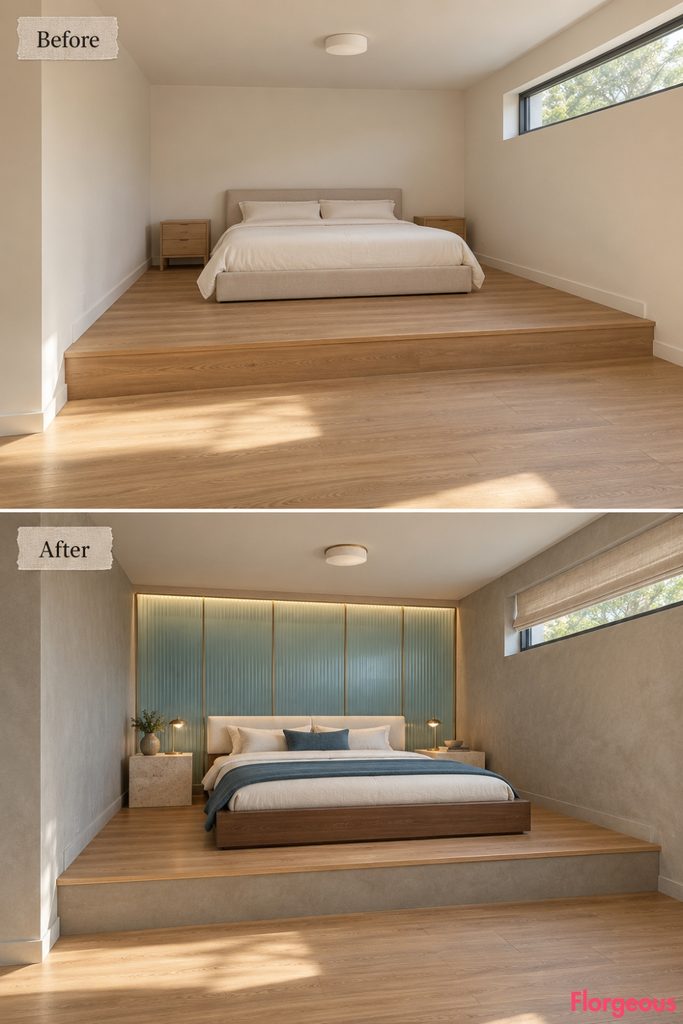
Instead of another painted feature wall, use translucent glass to give the room a watery, luminous quality.
Before: The far wall is flat and opaque, making the raised sleeping platform feel visually enclosed.
After: Cover most of the solid far wall with large surface-mounted panels of pale blue-green ribbed architectural glass, arranged in broad vertical sheets with extremely narrow bronze joints. Keep a warm plaster border around the entire installation so it clearly reads as a decorative wall surface rather than a new window.
Back the glass very softly with diffused warm light so the texture catches light without glowing unnaturally.
Finish the remaining walls in fog-gray mineral plaster. Paint the vertical face of the broad step the same fog gray, while keeping both floor levels in warm oak.
Use a low smoked-oak bed with a warm ivory upholstered headboard, cloudy white bedding, a muted petrol-blue blanket, and small limestone bedside blocks.
At the clerestory, use a simple translucent linen Roman shade in natural flax with no additional curtains.
Why it works: Ribbed glass changes the way the entire room handles light, giving the bedroom an abstract sea-glass quality that feels strongly nautical but completely different from murals, rope, stripes, or timber ribs.
Color Story: Fog gray, oxidized blue-green, smoked oak, ivory, and warm bronze create a cool maritime palette without defaulting to navy and white.
9. Turn the Split-Level Floor Into a Teak Deck and Whitewashed Boarding Scheme
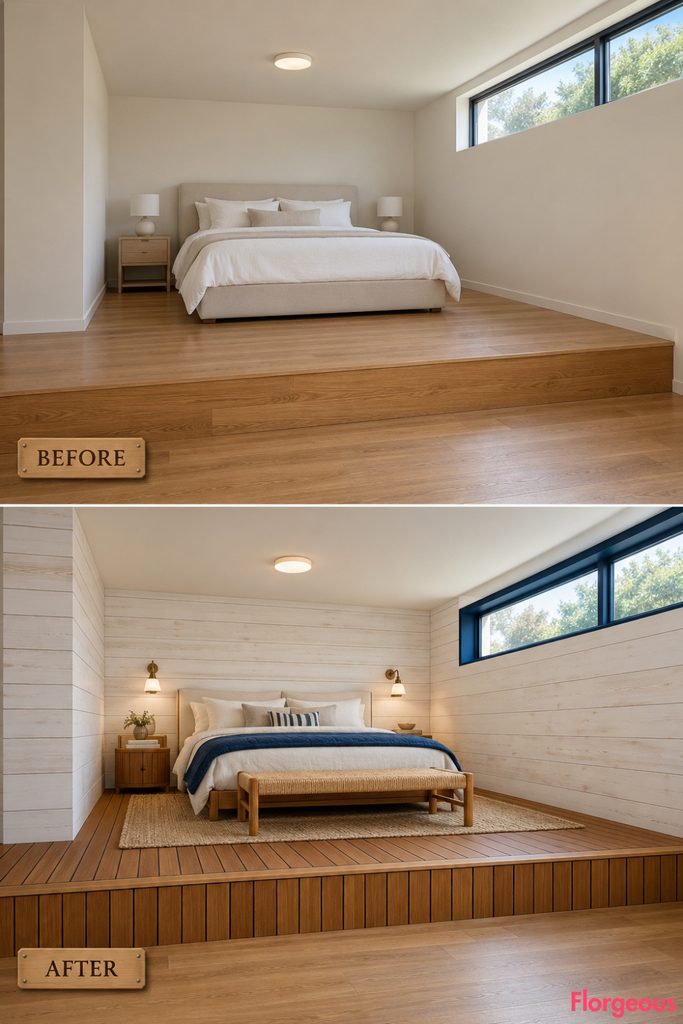
Here, the entire nautical concept grows directly from the room’s floor levels and long horizontal lines.
Before: The step and sleeping platform are visible, but both use the same ordinary oak finish.
After: Resurface only the raised sleeping platform and the broad vertical step face with narrow teak-deck boards running lengthwise toward the far wall. Add fine charcoal joints between the boards, while leaving the lower entry deck completely untouched.
Clad the full solid far wall and short left return wall in broad horizontal boards finished in soft whitewash, allowing faint wood grain to remain visible. Do not use a separate navy accent wall.
Paint the clerestory reveal deep ink blue, creating one long, narrow horizon-like line against the whitewashed walls.
Choose a low warm-white bed on a slim teak frame, with natural linen, a dark indigo quilt, and one woven bench at the far side of the platform. Use small ceramic-and-brass reading lights mounted directly onto the whitewashed boarding.
Why it works: The flooring, walls, step, and window reveal all work together. The room feels designed as one nautical composition instead of having nautical objects added to it afterward.
10. Reimagine the Room as a Rich Transatlantic-Liner Bedroom
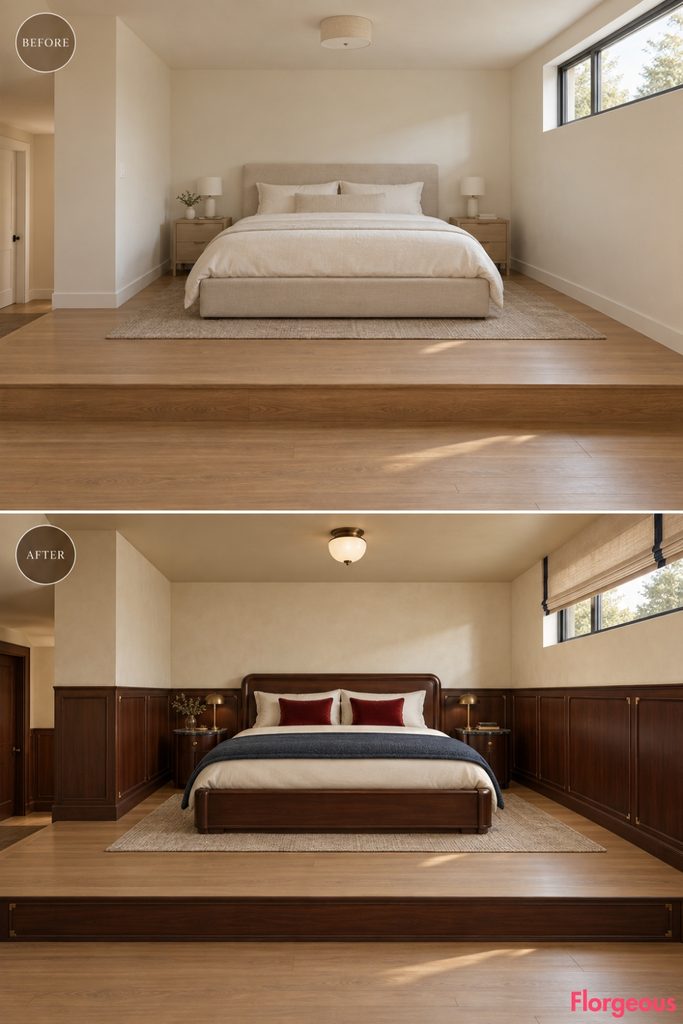
This direction explores a warmer, more glamorous side of nautical design, inspired by early passenger-liner interiors rather than casual coastal rooms.
Before: Pale walls and basic furniture make the room feel lightweight and contemporary.
After: Finish the lower half of the solid walls in deep mahogany surface paneling with restrained rectangular divisions and subtle bronze corner details. Above the paneling, use smooth parchment-colored plaster.
Carry the mahogany finish across the vertical step face, but keep the raised platform floor in warm oak so the room does not become too dark.
Paint the flat ceiling a soft tobacco-cream and introduce one compact opaline-glass ceiling light with a dark bronze fitting.
Use a deep mahogany bed with gently rounded corners, ivory sateen bedding, a midnight-navy wool blanket, and two oxblood velvet cushions. Add small round mahogany bedside tables with dark stone tops.
At the clerestory, use a tailored parchment Roman shade edged with one narrow navy border.
Why it works: Instead of repeating casual blue-and-white nautical cues, this room uses mahogany, parchment, opaline glass, wool, and bronze to create an entirely different maritime mood.
Designer Tip: Keep the wall paneling relatively low. Full-height dark mahogany would make the modest bedroom feel too enclosed.
11. Wrap the Room in a Handmade Tidal Ceramic Dado
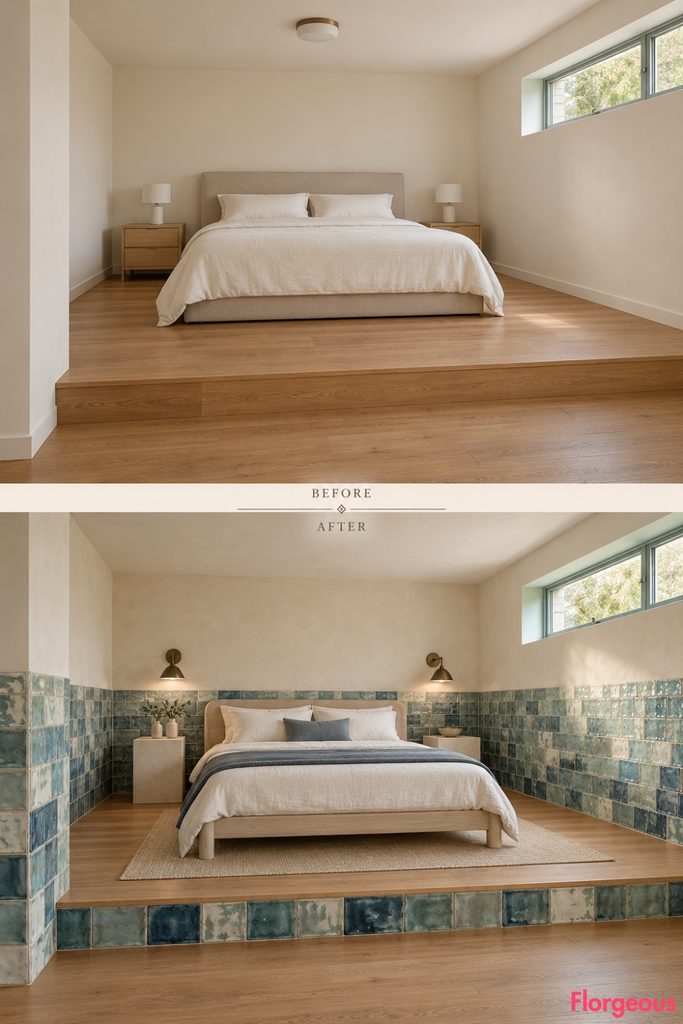
The final makeover uses color, craft, and reflected light to create an artistic interpretation of the sea.
Before: All of the walls are plain and the split-level shell has no continuous visual element tying the room together.
After: Wrap a broad handmade ceramic dado around every solid wall, including the far wall and short return wall. Let the tiled band rise to roughly headboard height.
Use irregular rectangular tiles with hand-glazed surfaces that shift gradually between deep Atlantic blue, storm gray, smoky teal, faded celadon, pale sea foam, and chalky white. Avoid a repeating pattern. The color should drift around the room like changing water.
Finish the wall above the ceramic in warm bone mineral plaster. Tile the vertical face of the broad step in the same ceramic palette, but keep both horizontal floor surfaces in warm oak.
Paint the clerestory reveal pale sea-foam rather than dark navy, allowing natural daylight to brighten the glazed surfaces.
Use a simple bleached-ash bed with rounded edges, warm-white linen, a graphite-blue blanket, and two low monolithic limestone bedside tables. Keep lighting minimal with small matte-bronze wall lights.
Why it works: The tile is not just a backsplash behind the bed. It becomes a continuous room-wide material treatment, turning the whole bedroom into an abstract interpretation of changing ocean color.
Try this: For a more achievable version, use handmade-look ceramic only on the far wall and step face, then repeat two of the tile colors in paint around the remaining walls.
How to Choose a Nautical Bedroom Direction That Feels Designed, Not Decorated
The strongest Nautical Bedroom ideas usually begin with one clear design language rather than a collection of maritime accessories. A room built around curved hull-inspired timber ribs will feel completely different from one shaped by sailcloth, navigation graphics, teak decking, sea-glass surfaces, or rich passenger-liner materials.
Start by deciding what should carry the nautical character. If you want something light and tactile, rope, sailcloth, weathered oak, washed linen, and faded sea tones work beautifully. For a cleaner, more architectural look, try yacht-style lacquer, whitewashed boarding, teak decking, or ribbed architectural glass. Mahogany, parchment plaster, oxblood, opaline glass, and dark bronze create a richer historical interpretation.
Wall treatments make the biggest difference when the room needs more than a simple furniture refresh. A chart mural can turn the bed wall into artwork, ceramic can wrap the whole room in oceanic color, and timber boarding can make even a modest bedroom feel deliberately maritime. Just make sure the treatment belongs to the concept rather than adding several unrelated nautical references at once.
Before choosing furniture or accessories, pick the room’s main visual idea first. Then use bedding, lighting, rugs, window treatments, and smaller furniture to support it. That approach keeps the bedroom layered and memorable while avoiding the anchor-sign-and-striped-pillow version of nautical decorating.