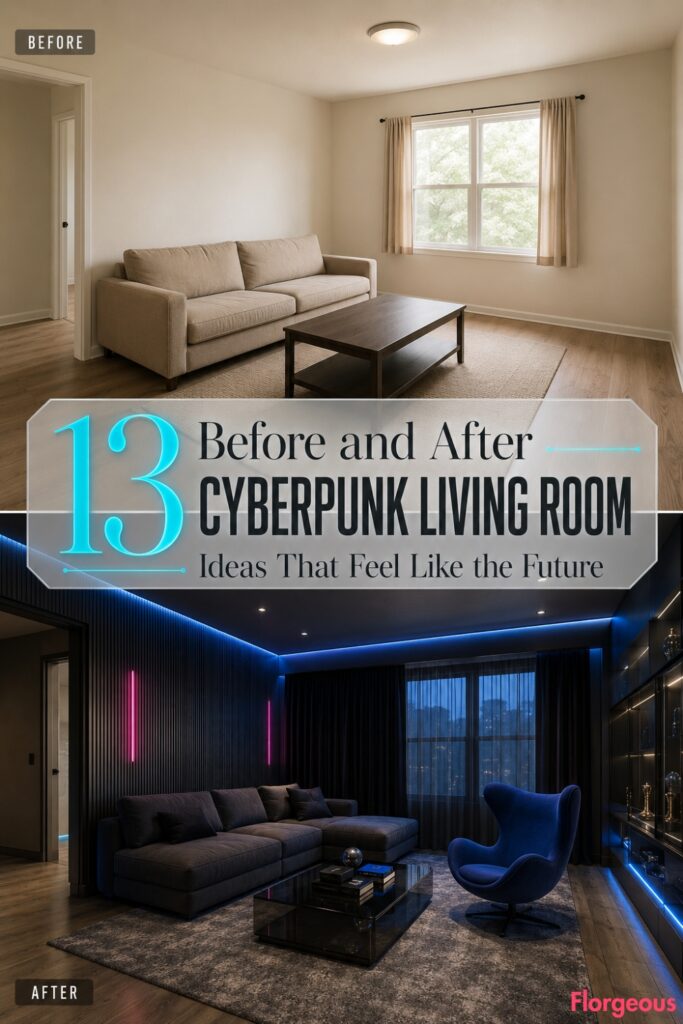
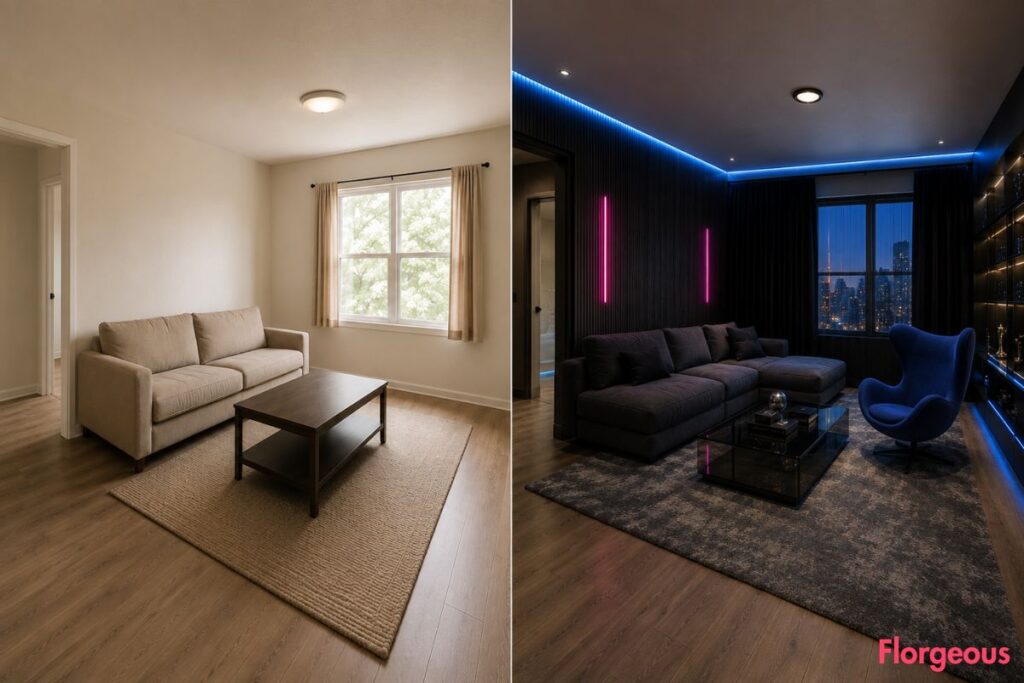
The starting room is deliberately ordinary: warm off-white walls, a straight beige sofa, a bare coffee table, short curtains, flat lighting, and no memorable focal point. It feels usable and clean, but it could belong to almost anyone.
Now imagine keeping the exact doorway, windows, flooring, ceiling height, proportions, and camera angle while changing everything that creates atmosphere. These Cyberpunk Living Room ideas turn the same builder-grade space into 13 completely different futuristic interiors.
Some makeovers are dark and cinematic. Others are pale, botanical, luxurious, compact, reversible, or surprisingly warm. Every concept remains a functional living room with comfortable seating, organized technology, practical storage, and clear circulation.
1. Turn the Plain Room Into a Neon Megacity Night Lounge
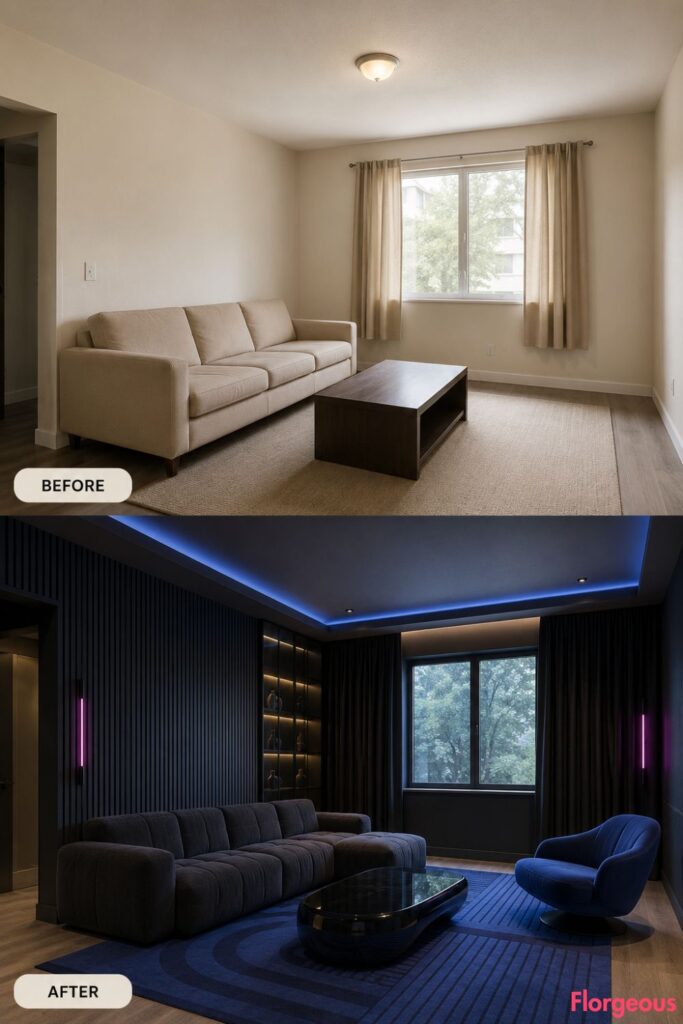
This is the most recognizable cyberpunk transformation, but disciplined lighting keeps it from feeling like a nightclub.
Before: Warm off-white walls, a beige sofa, bare table, neutral rug, short curtains, and a basic ceiling fixture leave the room visually flat.
After: Deep graphite ribbed panels frame a low charcoal modular sofa. A smoked-glass light wall becomes the focal point, while electric-blue channels and two narrow magenta tubes create the impression of distant city lights. A black resin table and cobalt rug ground the reflective surfaces.
Designer Tip: Place LED strips inside aluminum diffusers. The light will appear architectural and continuous instead of showing individual dots.
2. Give the Space a Rain-Soaked Tech Noir Mood
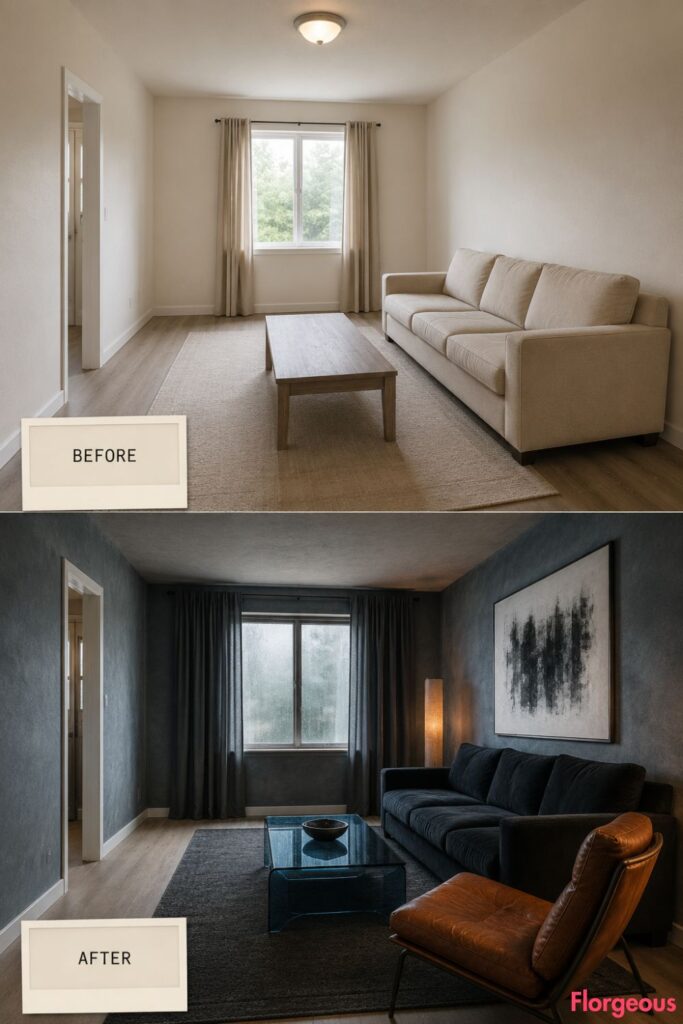
Tech noir relies on shadows, reflections, and restrained color rather than an abundance of neon.
Before: The standard room feels bright but generic, with no contrast between its furniture, walls, and lighting.
After: Blue-gray limewash surrounds an ink-colored sofa and a worn cognac lounge chair. Removable rain-glass film softens the windows, while a petrol-blue glass table catches the glow from a single amber floor lamp. A monochrome digital artwork provides a quiet focal point without dominating the room.
Lighting Note: Combining cool window light with one warm lamp creates more cinematic depth than using colored bulbs everywhere.
3. Rework the Room With Japanese Techno Minimalism
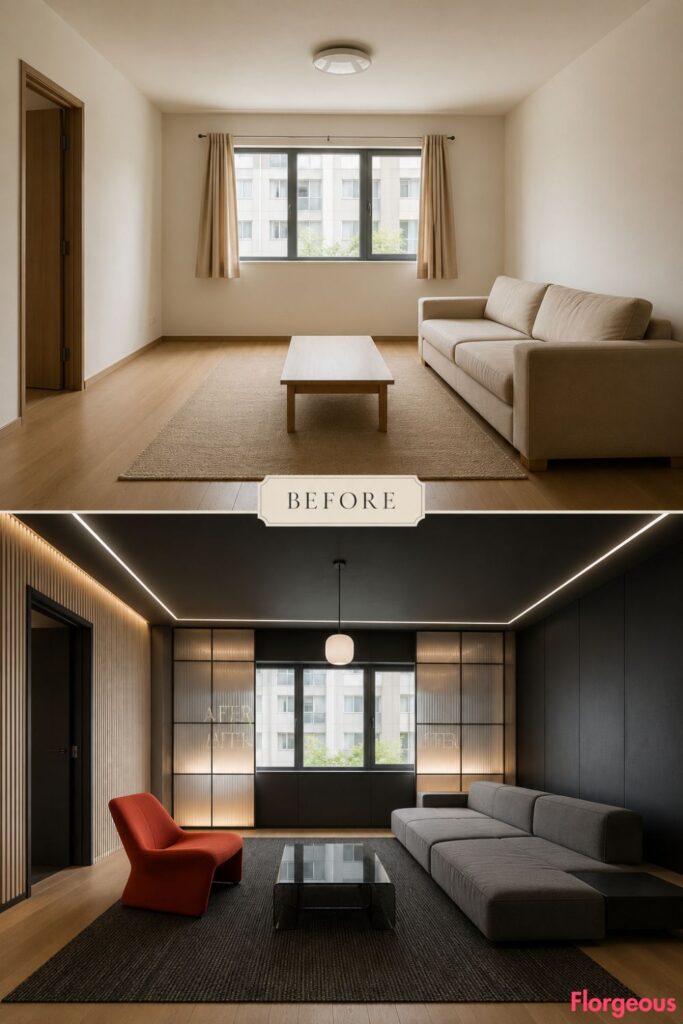
This concept proves that futuristic design can feel precise, quiet, and uncluttered.
Before: The builder-grade room has ordinary furniture, blank walls, and no clear relationship between storage and seating.
After: Matte black wall planes meet pale ash slats behind a low gray platform sofa. One vermilion molded chair introduces a controlled flash of color. Translucent technical screens conceal storage, a smoked acrylic table appears nearly weightless, and fine white light lines trace the ceiling edge.
Why It Works: The limited palette makes every material transition and furniture silhouette more noticeable.
4. Build an Industrial Hacker Workshop
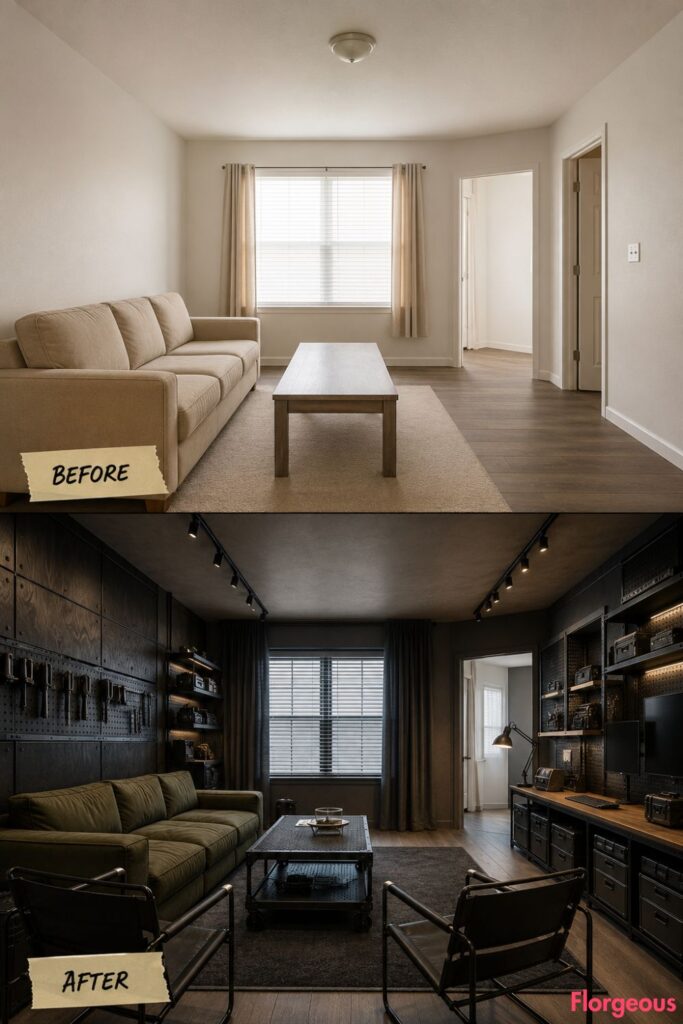
This makeover treats infrastructure as part of the visual language while keeping cables, equipment, and storage carefully organized.
Before: The beige furnishings and empty walls make the room look unfinished rather than intentionally utilitarian.
After: Charred plywood, perforated black steel, and gray acoustic panels form a structured workshop wall. An olive modular sofa faces two black sling chairs, while a wheeled steel table can be repositioned for projects or entertaining. Amber task lamps warm the raw finishes.
Tech Tip: Allow ventilation around routers, computers, and media equipment. Concealed technology still needs space for airflow and maintenance.
5. Create a Retro-Futurist Synthwave Salon
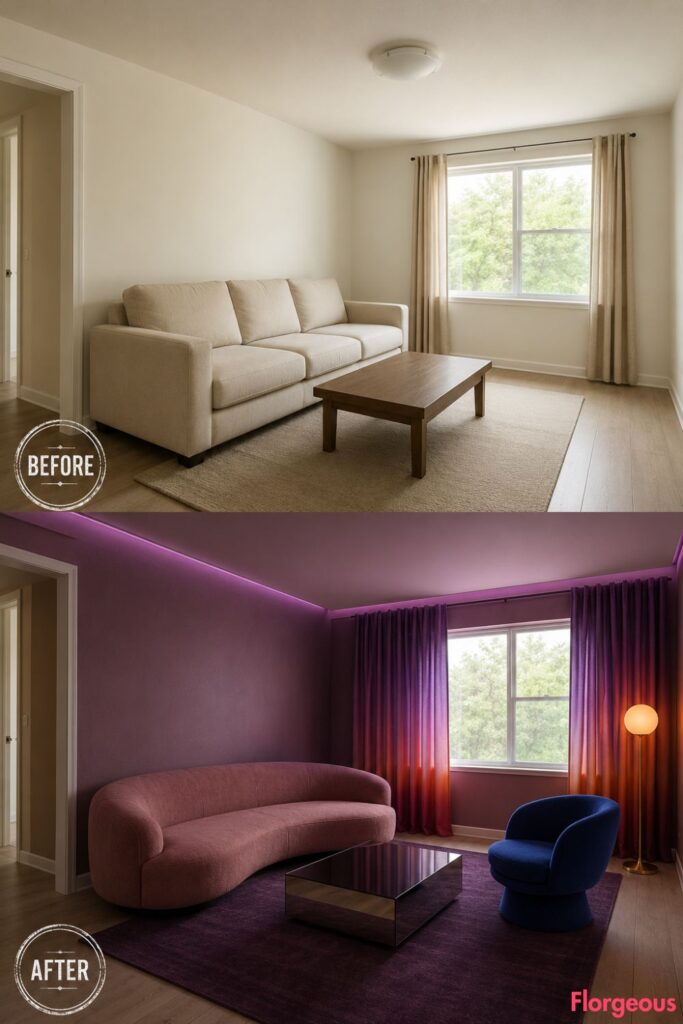
Curved furniture and softened sunset colors give this room a playful identity without turning it into a themed set.
Before: The neutral base has no color story, softness, or focal point.
After: Dusty plum walls wrap around a curved muted-pink sofa, cobalt pedestal chair, and smoked mirrored table. A violet-to-orange gradient curtain becomes the main visual feature. Low violet cove lighting and a warm orange globe lamp add evening atmosphere.
Color Story: Choose dusty or grayed versions of pink, purple, blue, and orange. Slightly muted colors feel more residential than full-strength neon.
6. Make Raw Concrete Feel Like a Dystopian Retreat
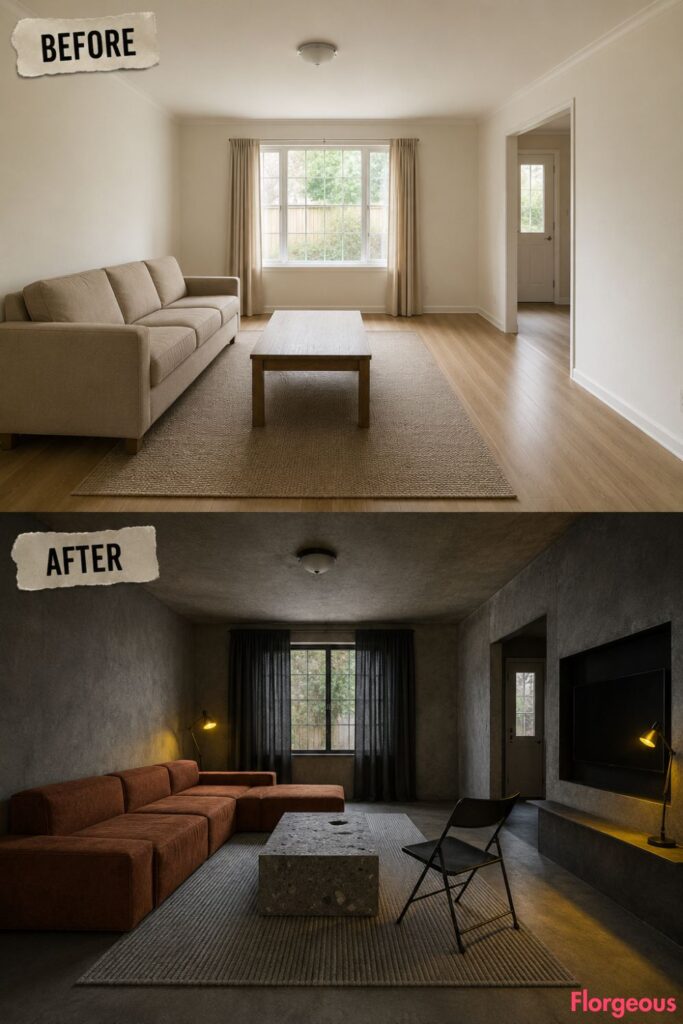
Brutalist cyberpunk works through weight, shadow, and strong material contrast.
Before: The original room feels visually soft, but its generic finishes give it little character.
After: Concrete-look mineral plaster wraps the walls, while a rust sectional prevents the palette from feeling cold. A folded black-metal chair faces the sofa across a monolithic recycled-stone table. Two toxic-yellow task lights provide precise accents rather than washing the entire room in color.
Common Mistake: Avoid combining dark concrete, black furniture, and weak lighting without relief. One warm upholstery color and a pale rug can keep the room comfortable.
7. Design a Pale Holographic Chrome Gallery
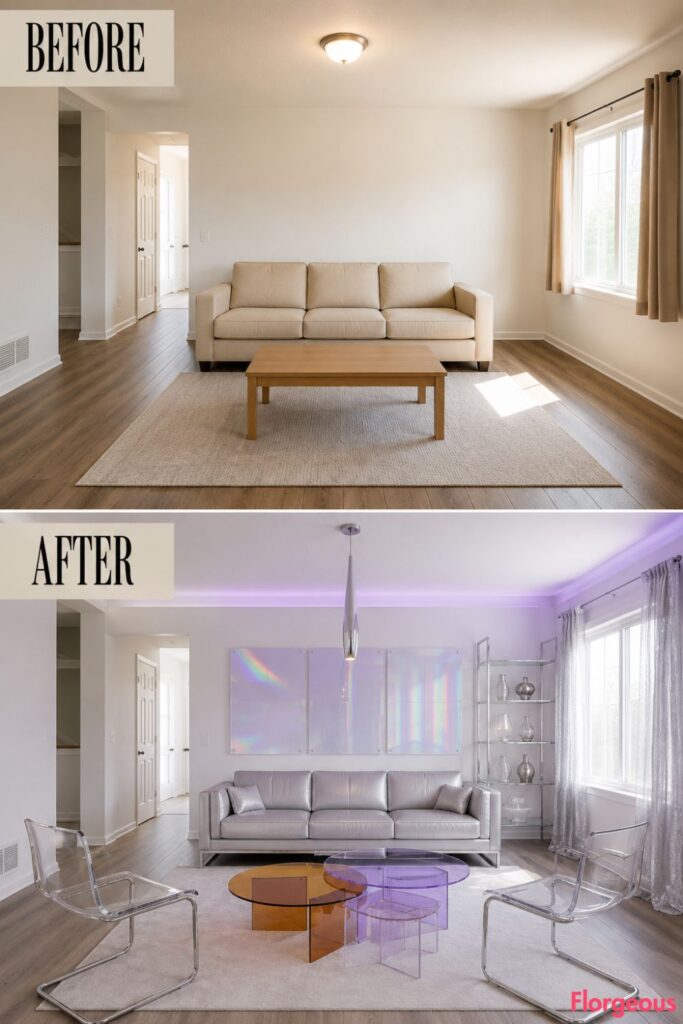
This lighter interpretation uses transparency, optical color, and reflective metal instead of dark walls.
Before: Although neutral, the room feels visually heavy because the furniture is basic and blocky.
After: Cool-white walls support a pearl-gray sofa, transparent acrylic chairs, chrome shelving, and overlapping amber, clear, and lavender tables. Removable iridescent panels shift color with the daylight, while a soft lavender ceiling wash adds depth after dark.
Budget Version: Apply holographic film to a freestanding acrylic sheet instead of covering an entire wall.
8. Grow a Biopunk Botanical Laboratory
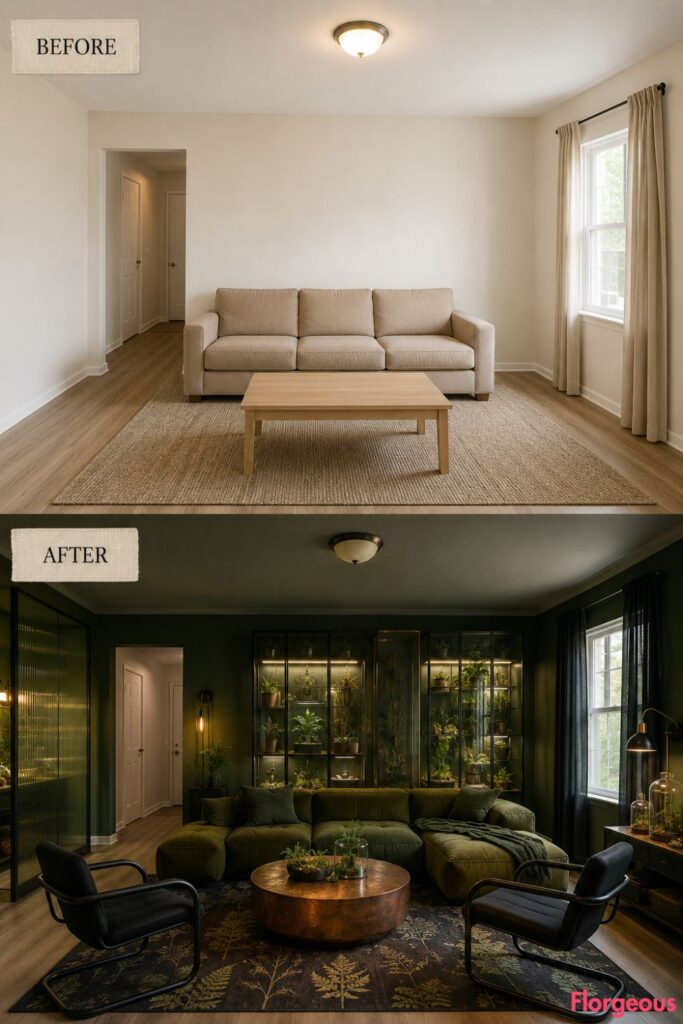
Dense greenery and controlled technology create a cyberpunk room that feels alive rather than mechanical.
Before: Empty walls and minimal styling leave the base room disconnected from nature.
After: Deep forest-green walls frame a moss modular sofa and black tubular chairs. Illuminated glass plant cabinets become the focal point, with concealed grow lights supporting real greenery. An oxidized-copper table and translucent green divider add laboratory character.
Style Note: Use only a few plant varieties in repeated groups. Too many unrelated pots can make the concept feel like an ordinary indoor garden.
9. Style a Corporate Cyberpunk Penthouse
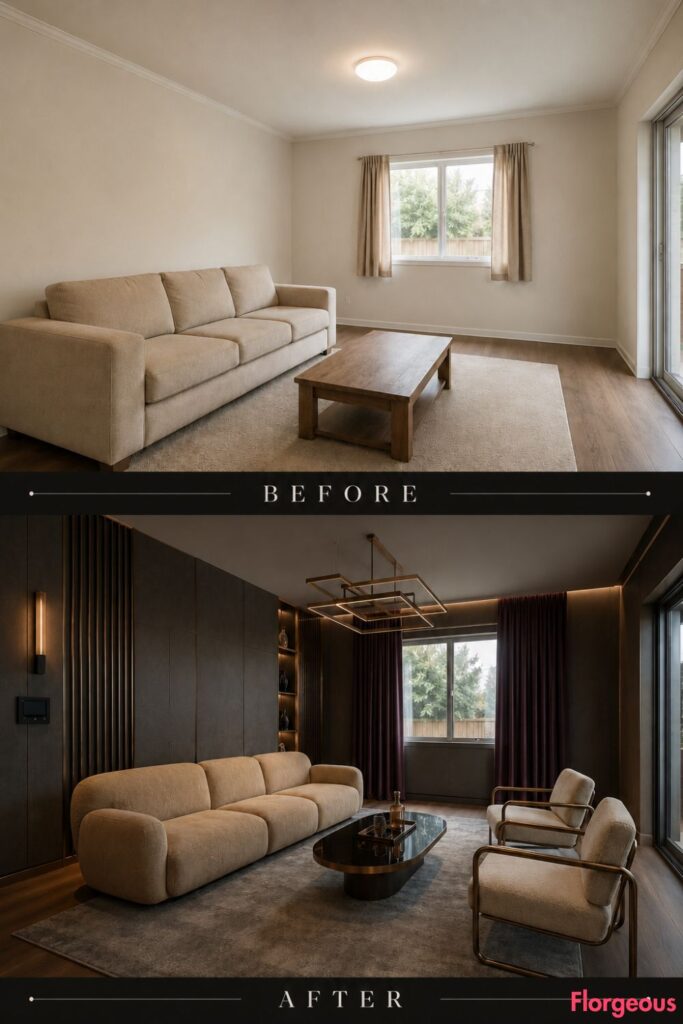
This room imagines the polished upper floors of a futuristic city, where technology is integrated rather than displayed.
Before: The ordinary living room appears modest and disconnected, with no architectural focal point.
After: Smoked-eucalyptus panels and bronze storage fins form a refined backdrop. A sand mohair sofa faces two ivory tubular chairs across an oval black-glass table. Deep aubergine curtains and a bronze geometric chandelier create a formal, high-rise atmosphere.
Visible technology is limited to one dark integrated control panel with a blank surface.
10. Build an Underground Arcade Command Lounge
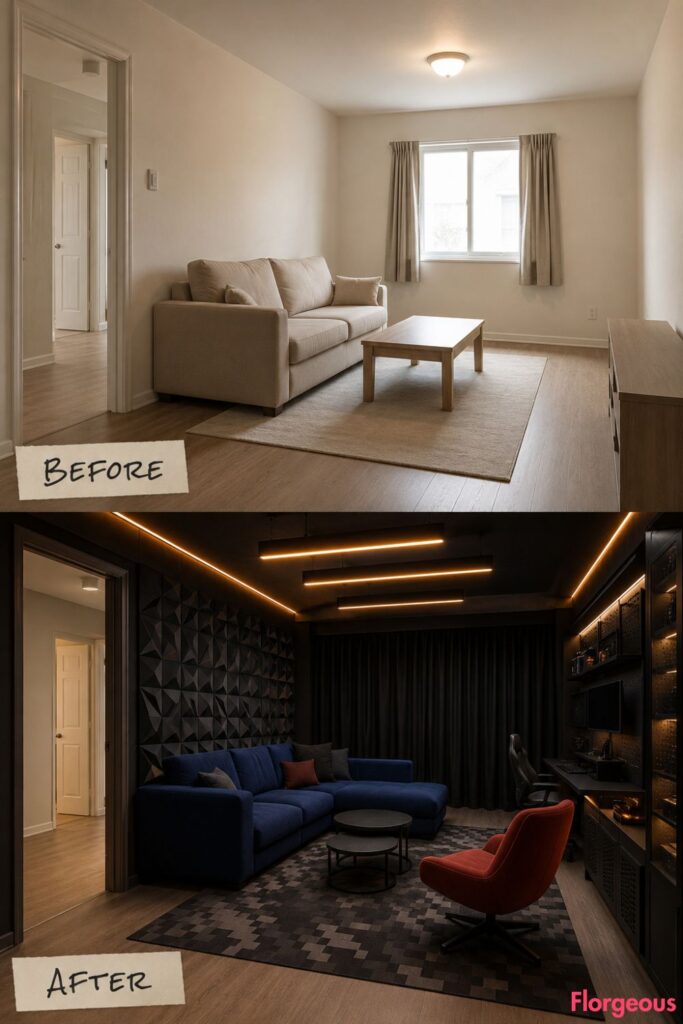
Rather than filling the space with gaming machines, this makeover borrows the geometry, sound control, and electric energy of an underground arcade.
Before: The neutral room has no entertainment zone or visual movement.
After: A cobalt sectional and red swivel chair form a social seating area around black nesting tables. One compact gaming station occupies the side wall, leaving the main layout open for conversation. Pixel-inspired carpeting, charcoal acoustic tiles, and amber ceiling bars define the atmosphere.
Try this: Keep monitors perpendicular to the windows whenever possible to reduce glare.
11. Borrow Texture From a Futuristic Street Market
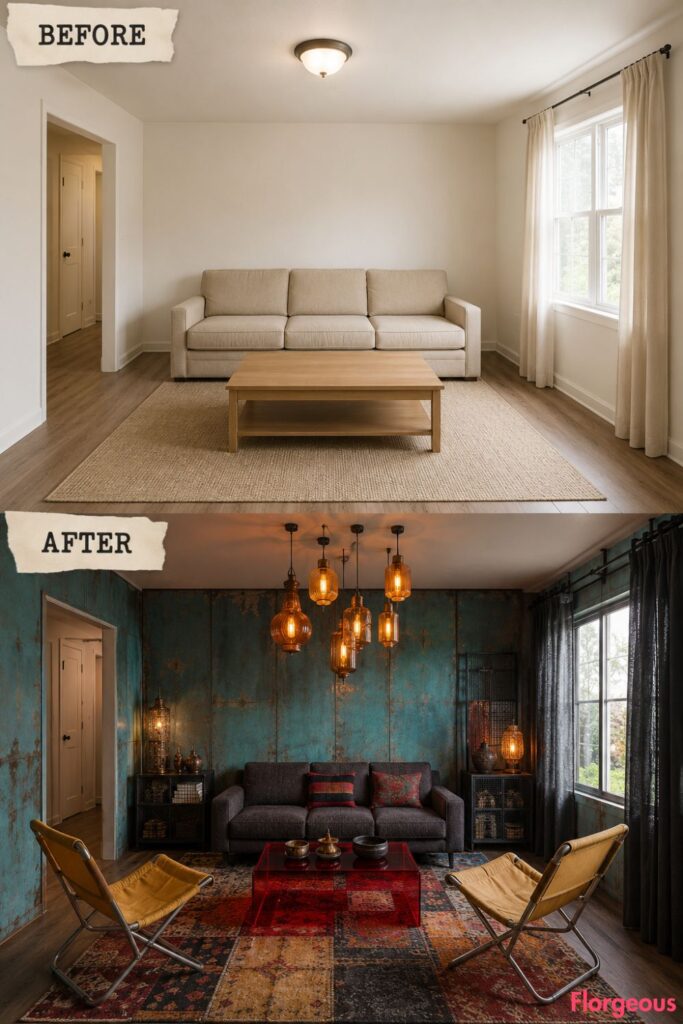
This concept feels colorful and collected, but every element remains suitable for a real home.
Before: The original space is tidy yet lacks texture, flexibility, and personality.
After: Weathered teal removable panels meet black mesh storage and layered utility textiles. A compact charcoal sofa faces two yellow folding lounge chairs around a translucent red table. A cluster of amber lantern-like pendants becomes the focal point without using literal signs or storefront graphics.
12. Fit a Renter-Friendly Capsule Apartment Into the Same Room
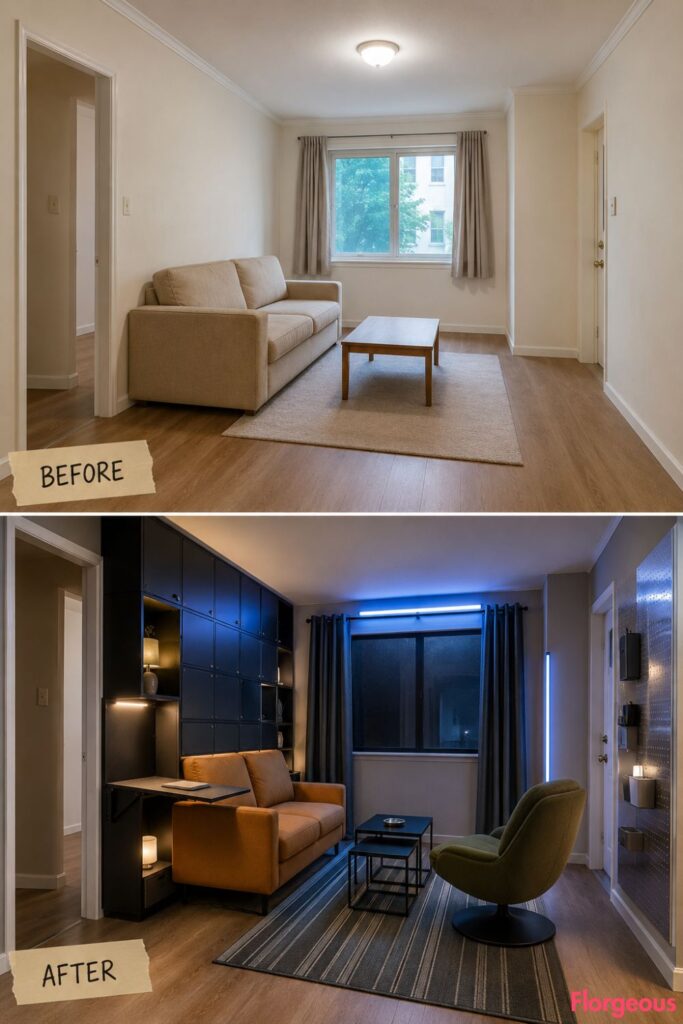
Compact cyberpunk design works best when storage and flexibility are solved before decorative effects are added.
Before: The straight sofa and single table take up space without providing storage or adaptability.
After: A freestanding graphite grid unit combines closed cabinets, open display niches, and a fold-down desk. A compact camel loveseat pairs with an olive swivel chair and lightweight black nesting tables. Smoked window film, plug-in light bars, and brushed-metal vinyl make the concept fully reversible.
Small Space Tip: Choose one tall storage system instead of scattering small cabinets around the room. The result will feel calmer and easier to navigate.
13. Finish With a Warm Analog-Tech Collector’s Lounge
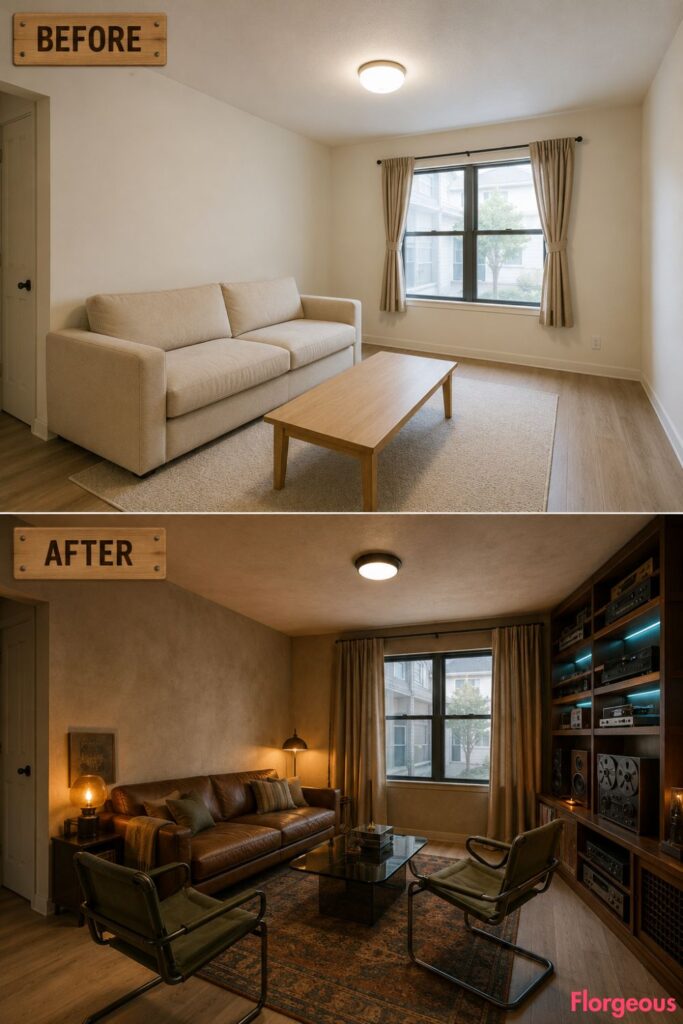
The final room gives cyberpunk a believable past through collected technology, warm materials, and softer residential lighting.
Before: The familiar builder-grade space feels clean but impersonal, with nothing that suggests history or ownership.
After: Mushroom plaster and dark walnut shelving frame a tobacco leather sofa and two olive canvas chairs. Vintage-inspired audio equipment is displayed like sculpture, while a smoked-glass table keeps the center visually light. Amber reading lamps and dim cyan shelf lighting create a warm-cool balance.
This approach feels futuristic without relying on glossy new technology. Worn leather, tactile controls, walnut grain, and neatly arranged equipment make the room feel lived in and personal.
How to Choose the Right Cyberpunk Look for Your Living Room
Begin with the way you actually use the space. A media-focused room needs glare control, ventilation, and concealed cables. A conversation room needs comfortable seating that faces inward. A small rental benefits more from removable panels, portable lighting, and flexible furniture than from complicated technology.
Choose one main focal point, such as an illuminated wall, botanical cabinet, collectible audio display, or translucent art panel. Support it with two or three materials and a limited accent palette. Too many competing effects can make even an expensive room feel unfinished.
Build the lighting in layers. Combine practical task lighting with a soft ambient source and one controlled colored accent. Test every color during daylight and at night, and make sure the room still looks appealing when the brightest effects are switched off.
For a permanent Cyberpunk Living Room, invest first in storage, acoustic control, dimmable lighting, durable seating, and proper cable management. For a reversible makeover, begin with window film, plug-in light bars, slipcovers, freestanding shelves, and removable wall finishes.