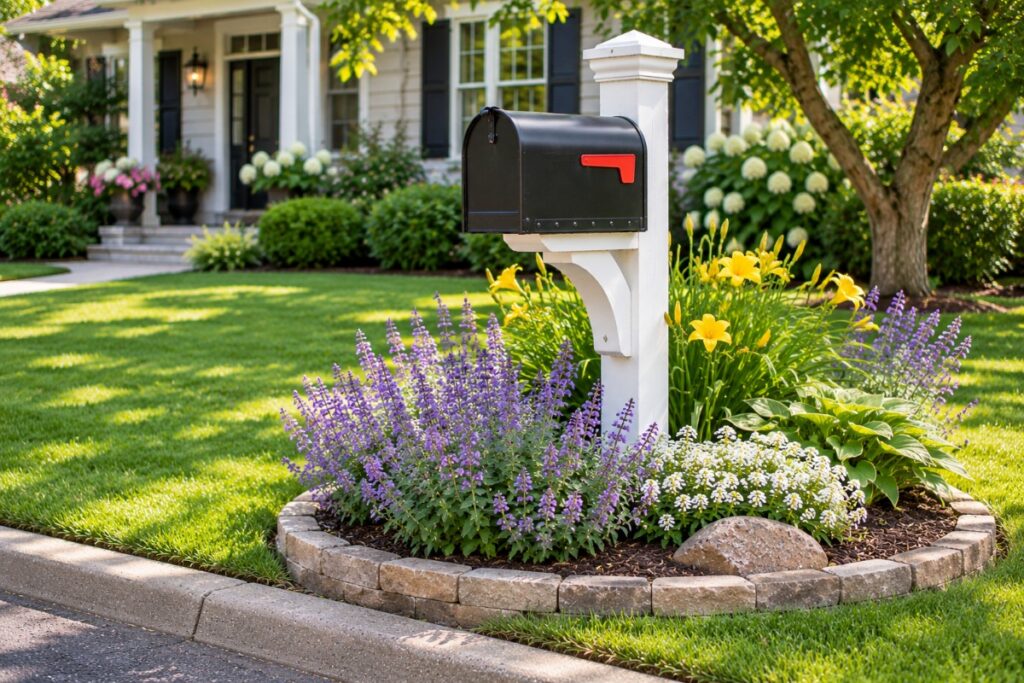
The mailbox is often the very first thing people notice about your home, even before the front door.
Yet most posts stand alone in a patch of scruffy grass, bumped by the mower and forgotten by everyone but the mail carrier.
The secret to a great mailbox bed isn’t lots of plants. It’s a small, tidy space filled with tough plants that can handle heat, salt and passing traffic.
These 11 mailbox landscaping ideas will help you turn that post into a cheerful welcome. For more budget-friendly touches, see our cheap simple front yard landscaping ideas.
Tough Plants for Mailbox Beds
| Plant | Height | Sun | Why it works |
|---|---|---|---|
| Catmint (Nepeta) | 12 to 24 in | Full sun | Long bloom, drought tolerant, deer resistant |
| Daylily (Hemerocallis) | 12 to 36 in | Sun to part shade | Very tough and handles heat and poor soil |
| Sedum | 3 to 24 in | Full sun | Thrives in hot, dry curbside soil |
| Blue fescue (Festuca glauca) | 8 to 12 in | Full sun | Neat blue tufts that stay tidy |
| Dwarf boxwood or holly | 1 to 3 ft | Sun to part shade | Evergreen structure all winter |
| Spring bulbs | 4 to 20 in | Full sun | Early color before perennials wake up |
1. Plant a Low Ring of Perennials Around the Post
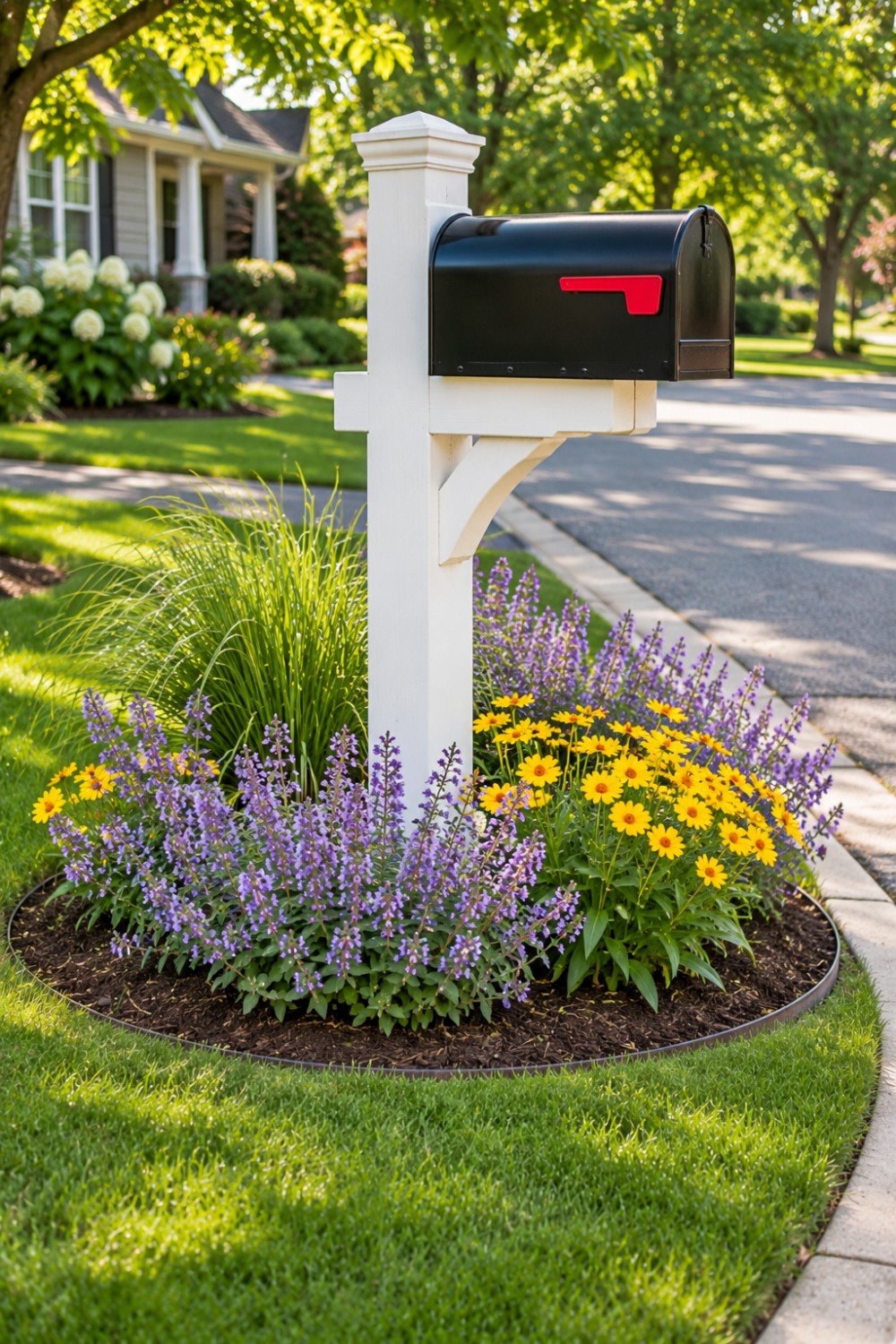
The simplest mailbox bed is a circle or square about 3 to 4 feet across, filled with a ring of low perennials.
Long-blooming, tough plants like catmint, coreopsis and daylilies give color for months with very little care.
Keep everything below the mailbox so the box and house number stay easy to see.
How to do it:
- Mark a circle around the post and remove the grass.
- Loosen the soil and mix in compost.
- Plant in groups of three and finish with 2 inches of mulch.
2. Grow a Clematis Up the Mailbox Post
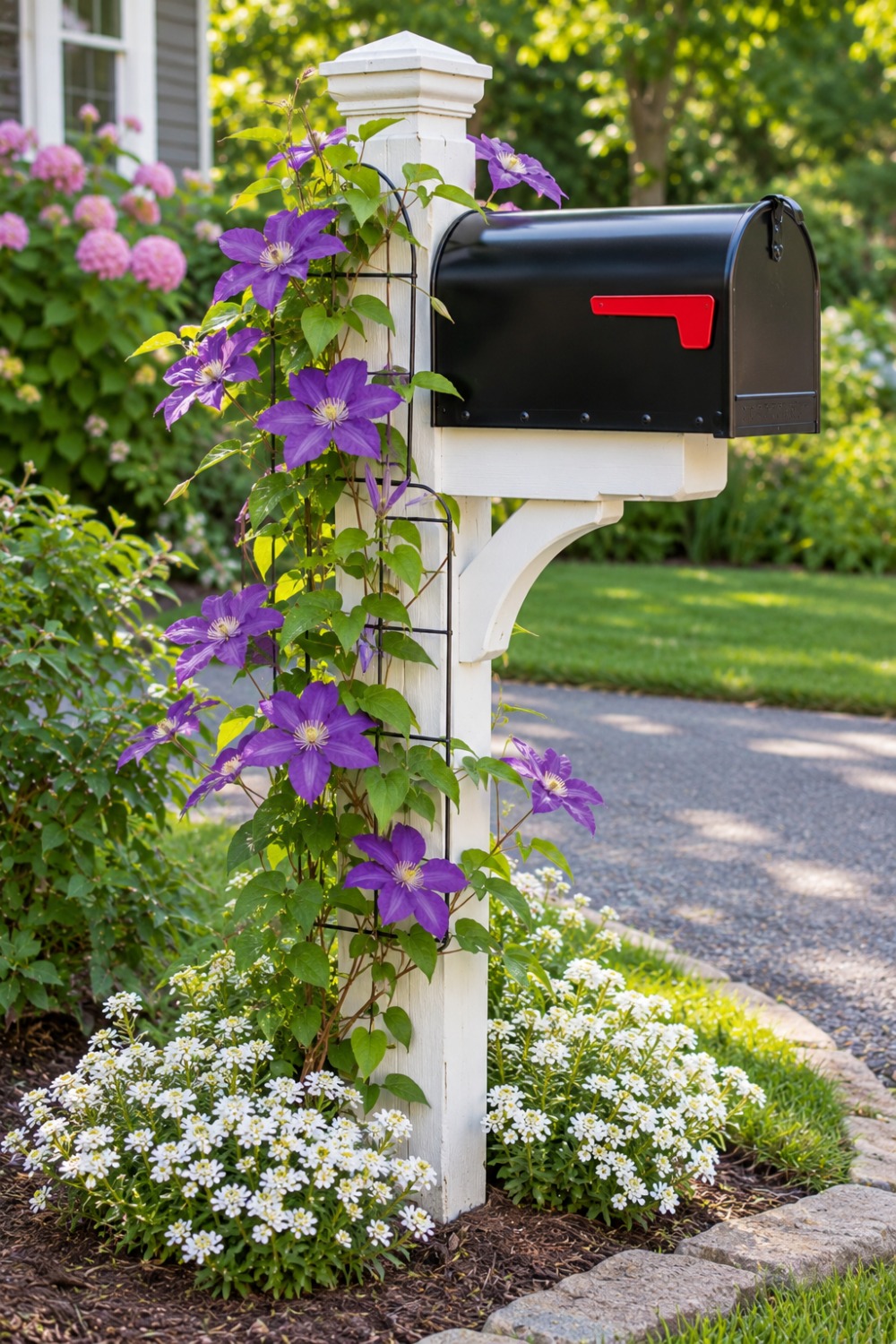
A climbing vine turns a plain post into a living column of flowers.
Clematis is a classic choice because it’s not too vigorous and loves to have its roots shaded and its top in sun.
Train it up the post but keep it off the mailbox door and flag, so the mail carrier never has to push through leaves.
How to do it:
- Attach a slim trellis or wire mesh to the post.
- Plant the clematis a few inches deep and shade its roots with low plants or mulch.
- Tie in new stems gently and trim any that reach the box.
3. Build a Raised Stone Bed Around the Mailbox
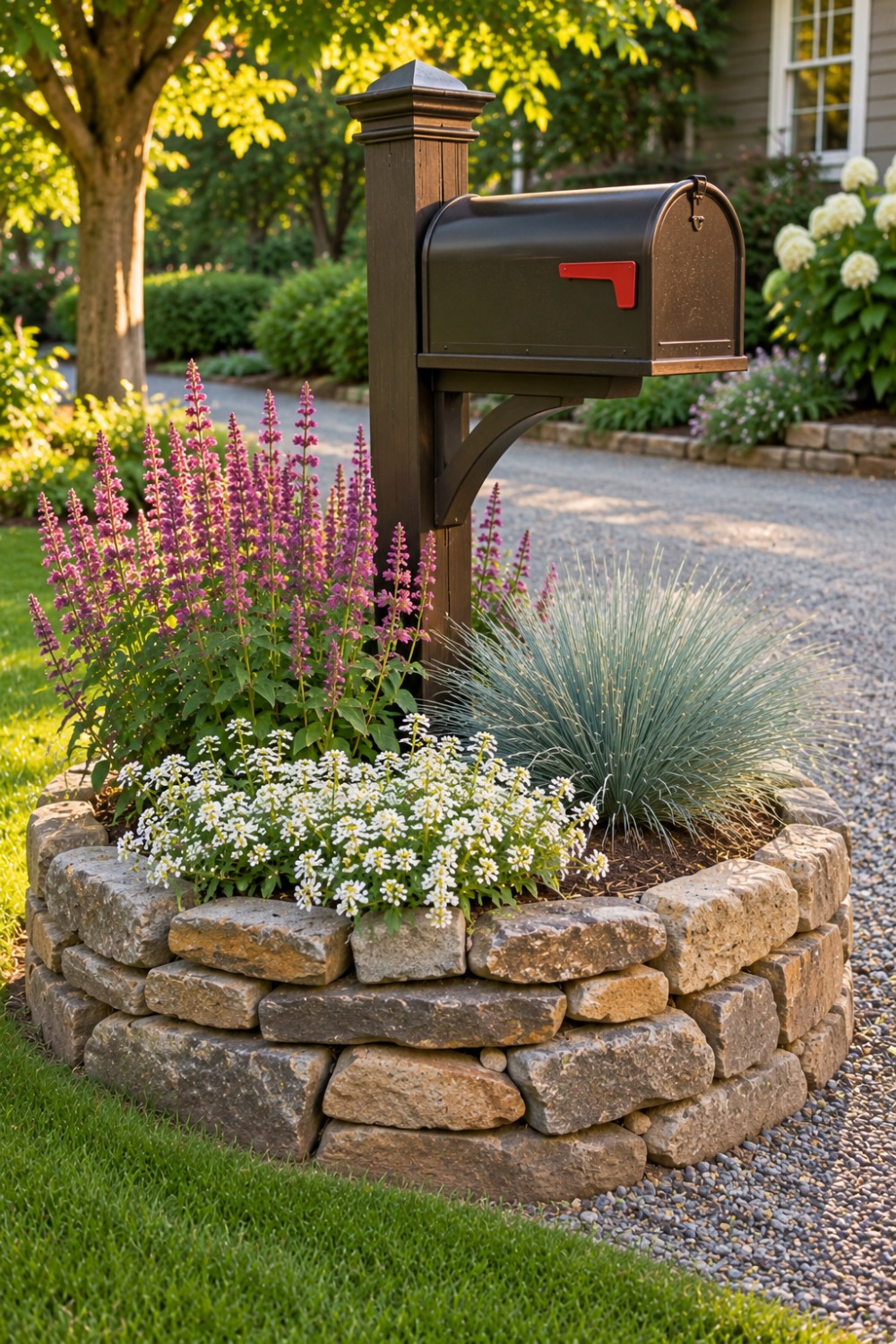
A low stone wall around the post lifts plants above the lawn and creates a neat, finished look.
It also protects the bed from mowers and string trimmers, which often damage the base of mailbox posts.
Natural fieldstone suits country homes, while cut stone or brick fits more formal houses.
How to do it:
- Lay out a circle about 3 feet wide and dig a shallow trench for the first course.
- Stack stones about 12 inches high, staggering the joints.
- Fill with good garden soil and plant.
4. Choose Drought-Tough Plants for Curbside Heat
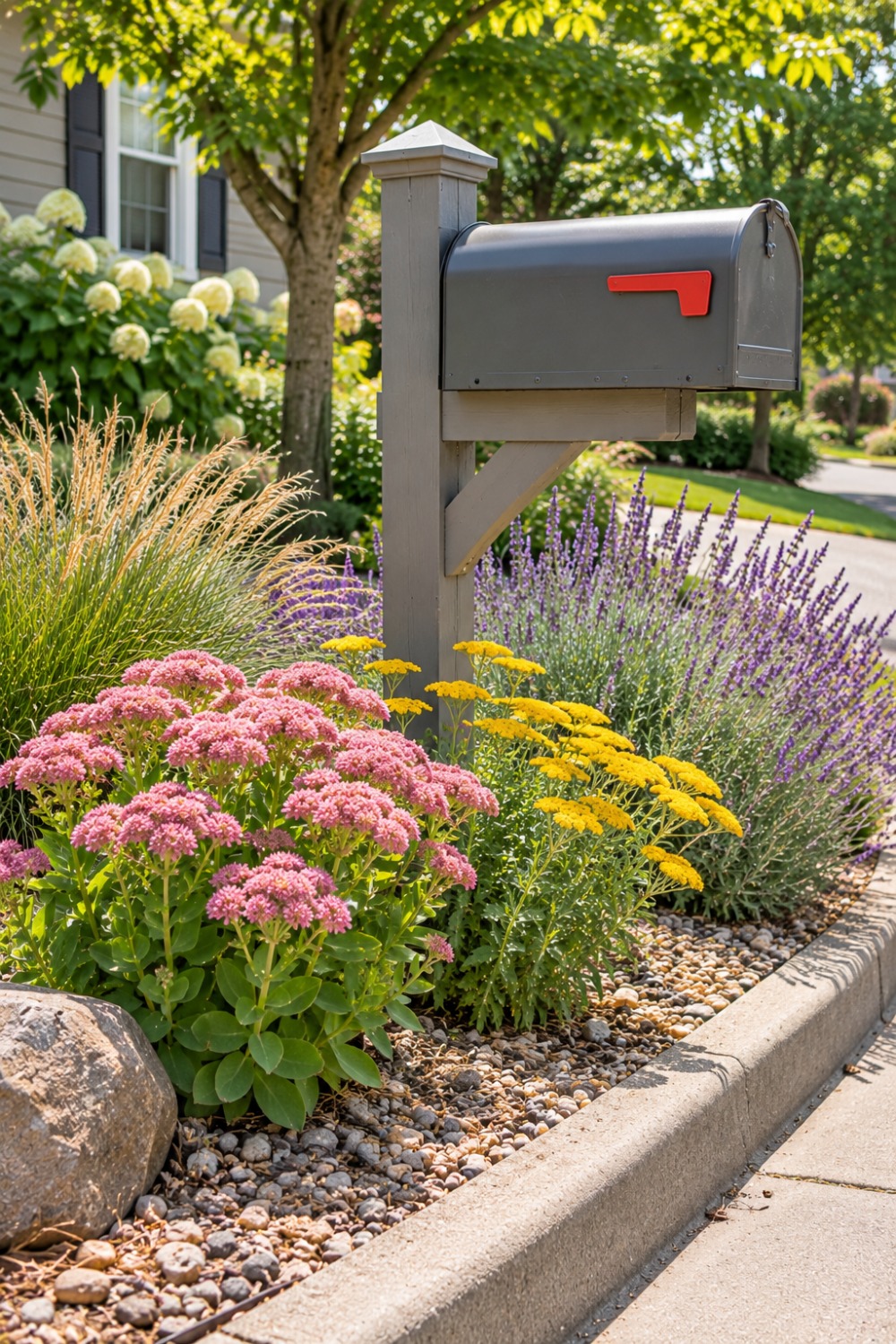
Mailbox beds are often far from the hose, close to hot pavement and exposed to road salt in winter.
Drought-tolerant plants like sedum, yarrow, lavender and coneflowers handle these conditions with ease.
Once established, they need little water, which makes them perfect for a spot you don’t visit daily. In cold climates, add salt-tolerant choices such as daylilies or ornamental grasses.
How to do it:
- Improve the soil with compost so roots establish quickly.
- Water deeply once a week for the first season.
- After that, water only in long dry spells.
5. Frame the Bed With Low Evergreen Shrubs
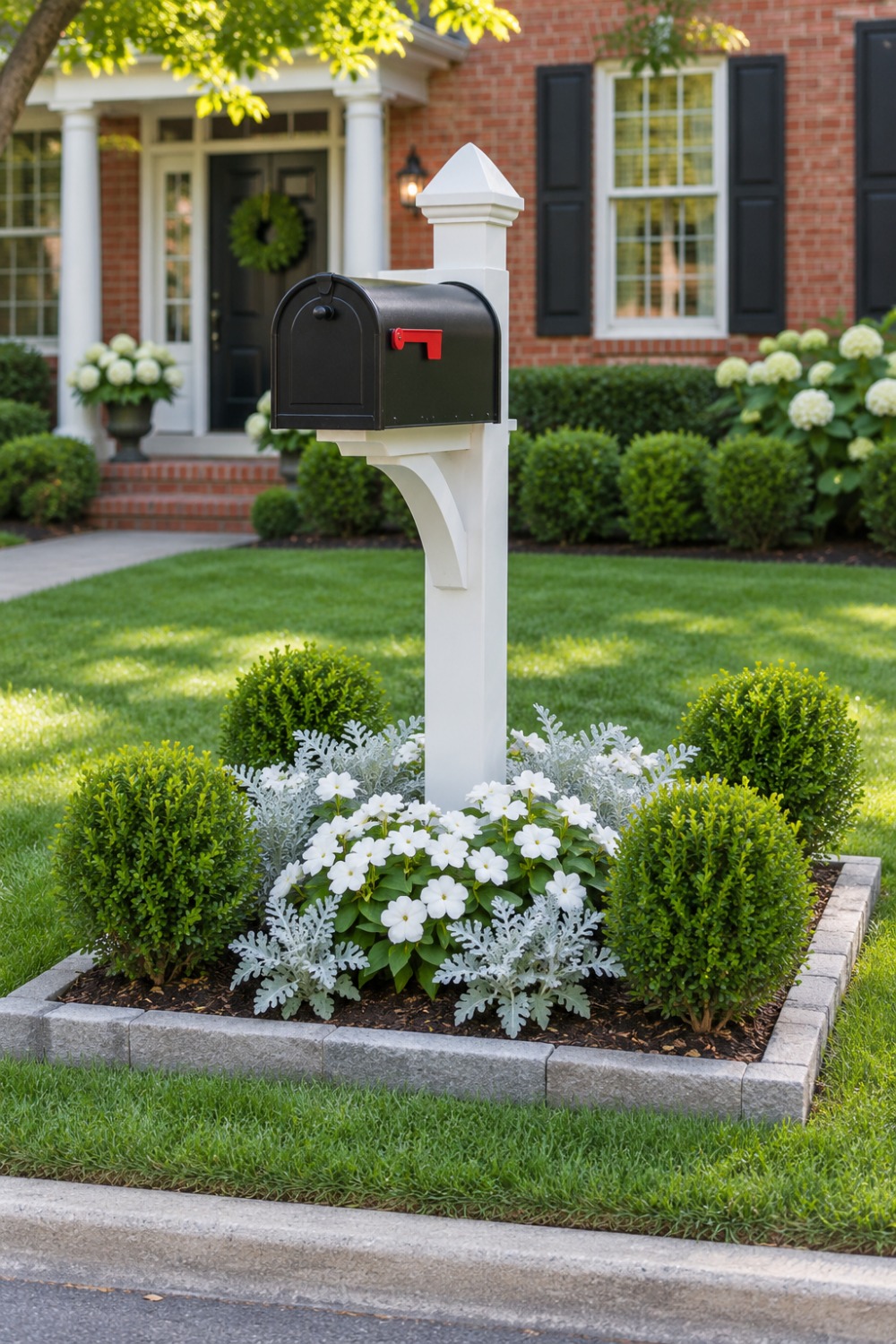
Evergreens give the mailbox bed shape and color even in the middle of winter.
Small clipped shrubs at the corners of a square bed create a classic, tidy look that suits traditional homes.
Fill the center with seasonal flowers that you can change through the year.
How to do it:
- Choose dwarf varieties that stay below about 2 feet without heavy pruning.
- Plant one at each corner of the bed.
- Clip lightly once or twice a year to keep a neat shape.
6. Add Spring Bulbs for an Early Show
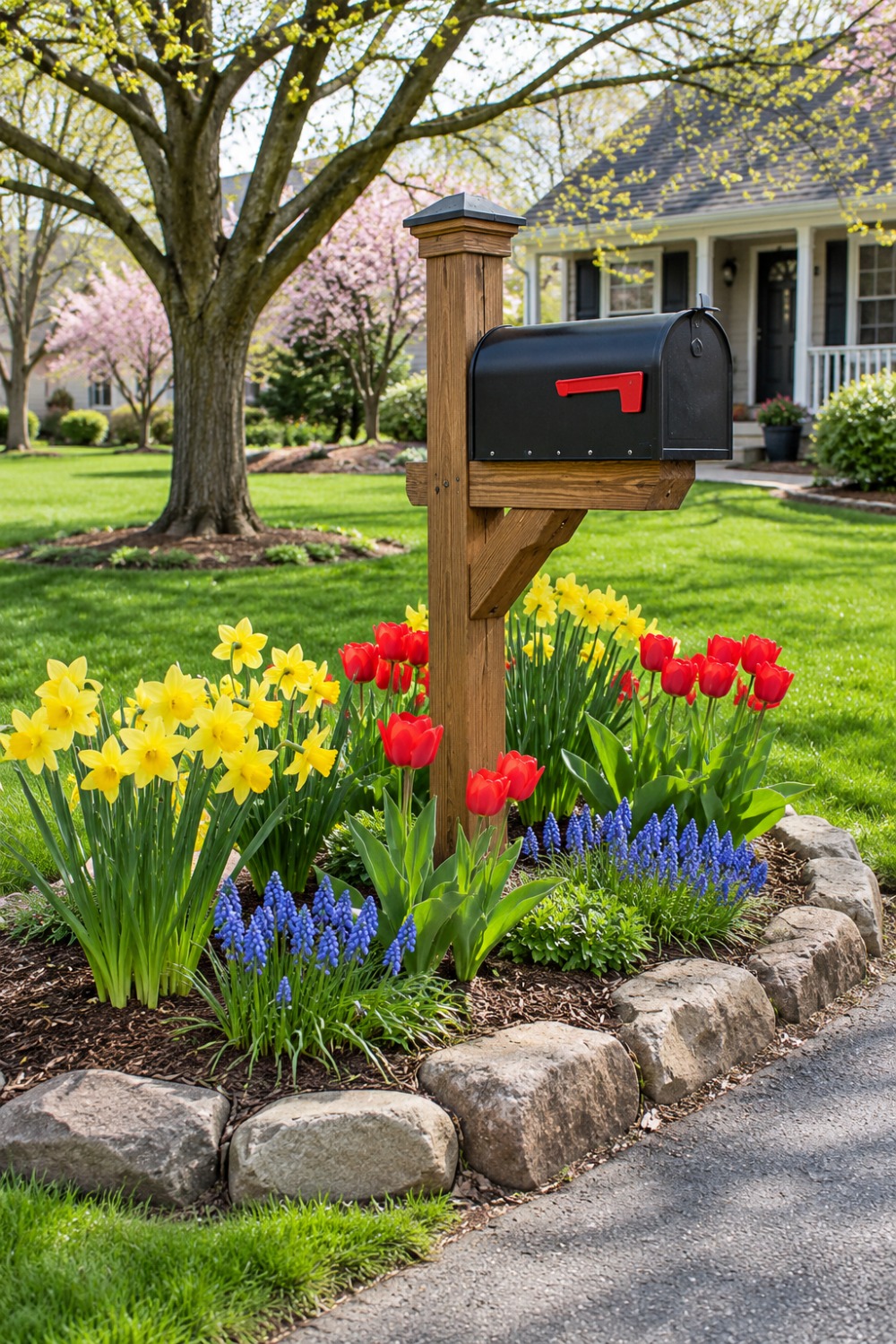
Bulbs planted in autumn bring a burst of color to the curb just as winter ends.
Daffodils are a great choice for this spot because deer and rodents usually leave them alone.
Plant them between perennials, which will grow up and hide the fading bulb foliage later in spring.
How to do it:
- Plant bulbs in autumn, about two to three times as deep as the bulb is tall.
- Group them in clusters of seven or more for a fuller look.
- Let the leaves die back naturally before trimming them.
7. Plant a Mini Rock Garden With Sedum and Hens and Chicks
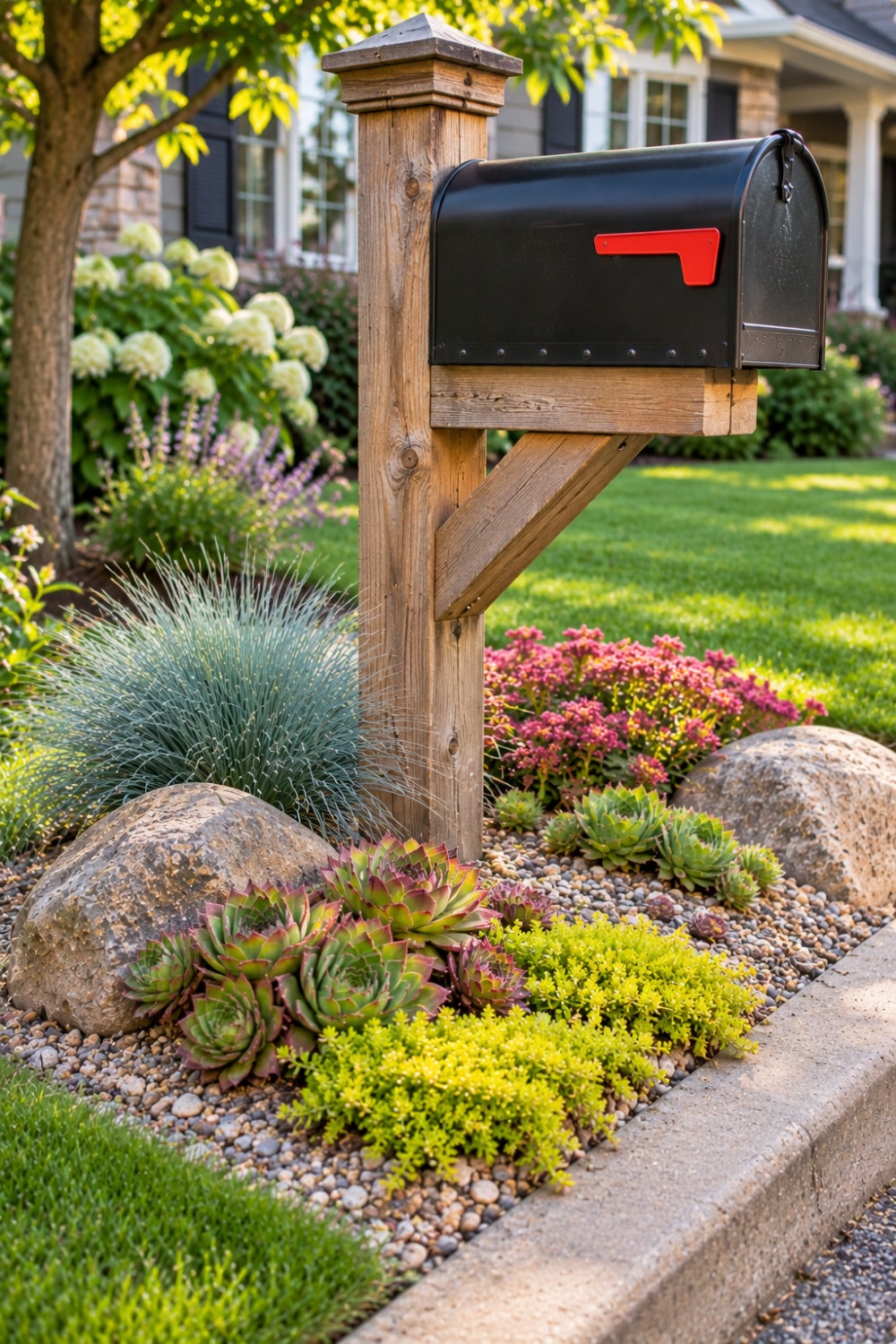
A few boulders and gravel with succulents make a mailbox bed that thrives on neglect.
Hens and chicks (Sempervivum) and low sedums spread into neat mats and handle heat, cold and drought.
This look suits modern and rustic homes alike, and it never needs deadheading.
How to do it:
- Set two or three boulders around the post, burying each one partly so it looks natural.
- Mix gravel into the soil so it drains quickly.
- Plant succulents in the gaps and top-dress with pea gravel.
8. Light the Mailbox and House Number at Night
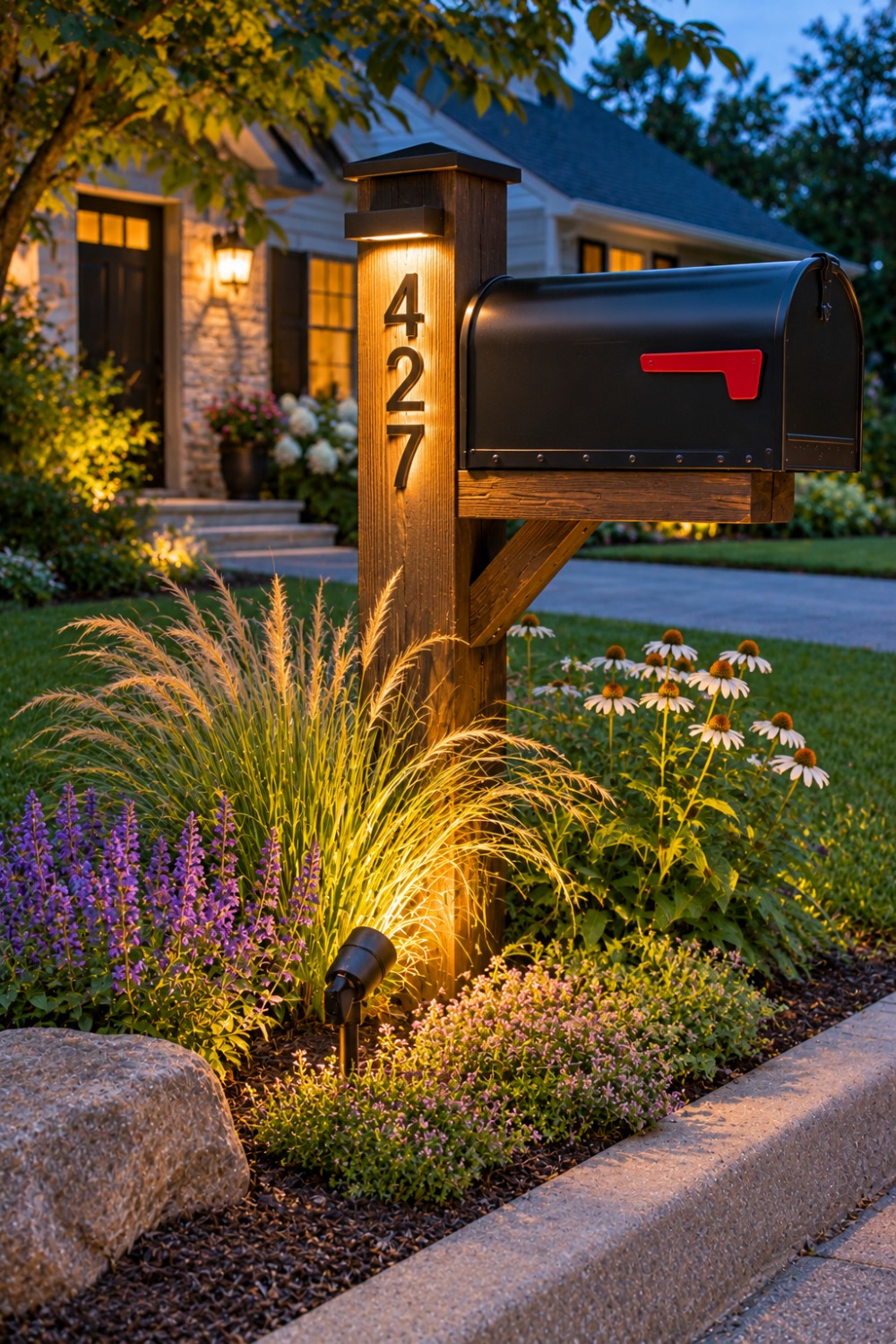
A little light at the mailbox helps visitors and delivery drivers find your home after dark.
A small solar spotlight tucked in the plants can wash the post and house number in a soft glow.
It also makes your plants look lovely in the evening and adds a sense of welcome.
How to do it:
- Choose a solar spotlight with a separate panel if the bed is shaded.
- Aim it upward at the house number from a low angle to avoid glare.
- Use a warm white light for a softer, more inviting feel.
9. Plant Pollinator Flowers Behind the Post
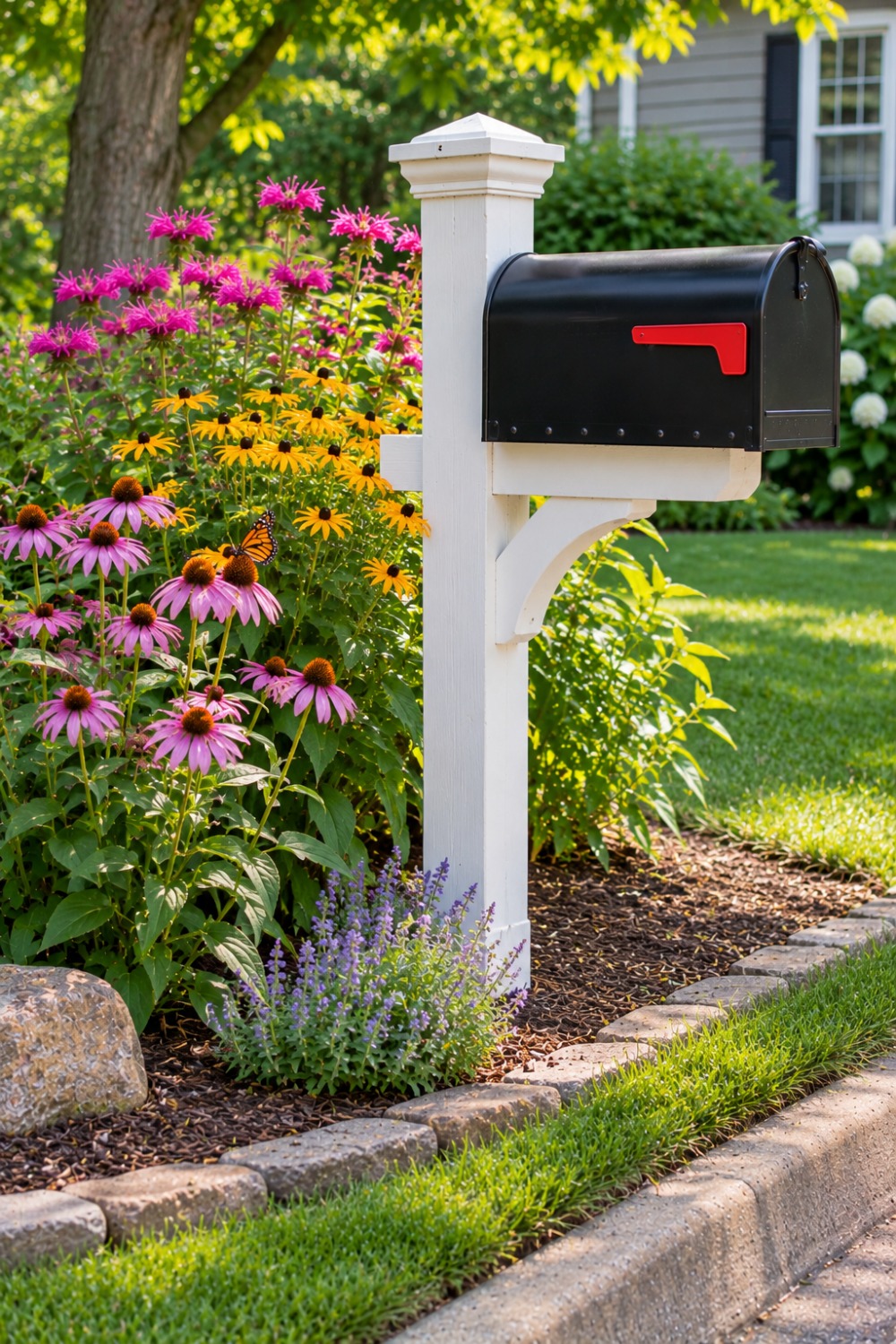
A mailbox bed can double as a small stop for bees and butterflies.
Native flowers like coneflowers, black-eyed Susans and bee balm bloom for weeks and feed pollinators.
Place the busiest bee plants behind and beside the post, keeping low plants at the front so the mail carrier isn’t reaching through buzzing flowers.
How to do it:
- Choose native flowers that bloom at different times for a long season.
- Plant taller ones behind the post and shorter ones at the front.
- Leave seed heads standing in autumn for birds.
10. Use a Mailbox Post With a Built-In Planter
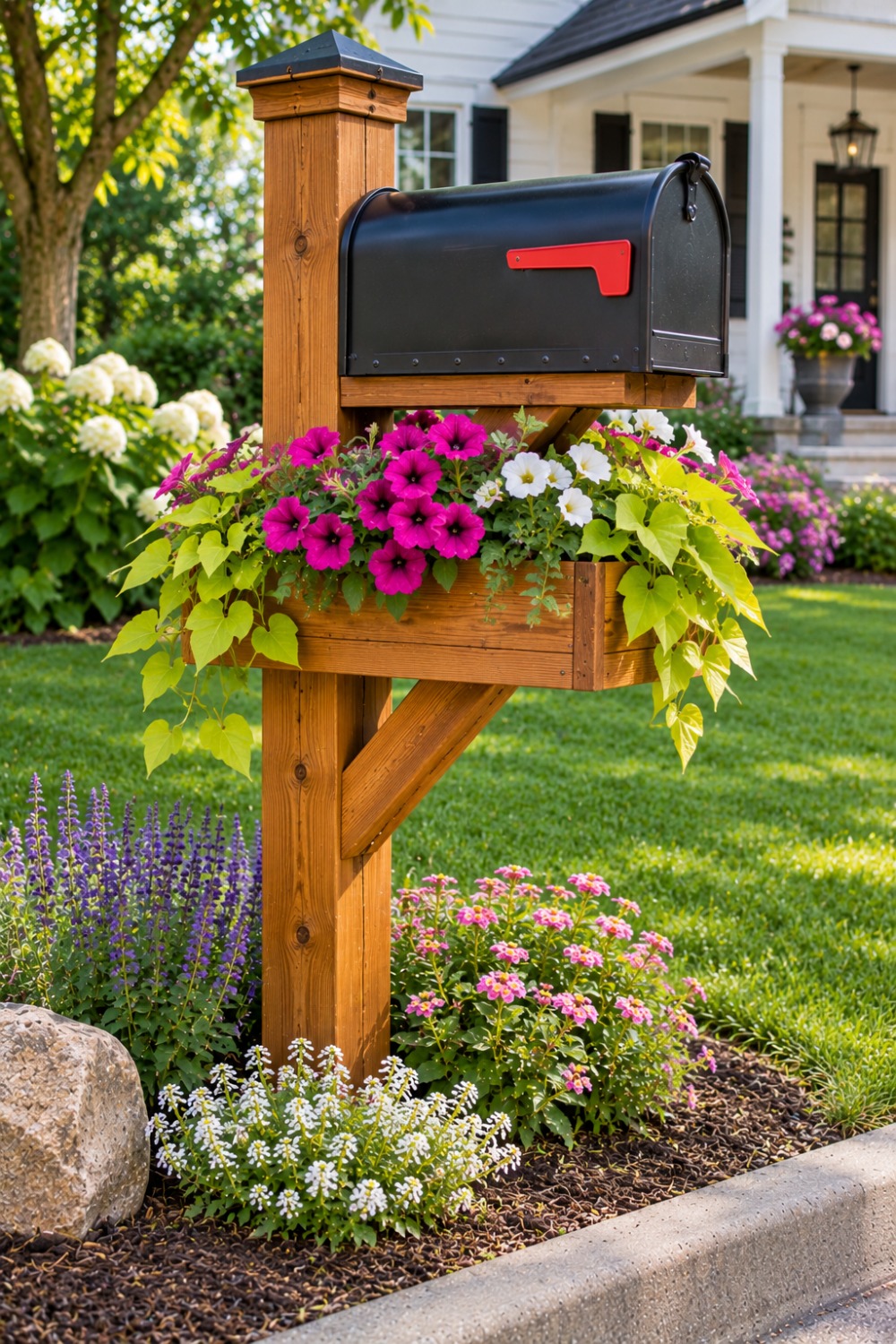
If you’re replacing an old post, consider one with a planter box attached.
Filled with trailing flowers, it adds color at eye level and makes the mailbox stand out.
Wooden posts with planters are an easy DIY project and pair well with a small bed at the base.
How to do it:
- Build or buy a post with a planter that has drainage holes.
- Fill it with potting mix and trailing annuals like petunias or calibrachoa.
- Water every day or two in summer, since small planters dry out fast.
11. Keep the Approach Clear for the Mail Carrier
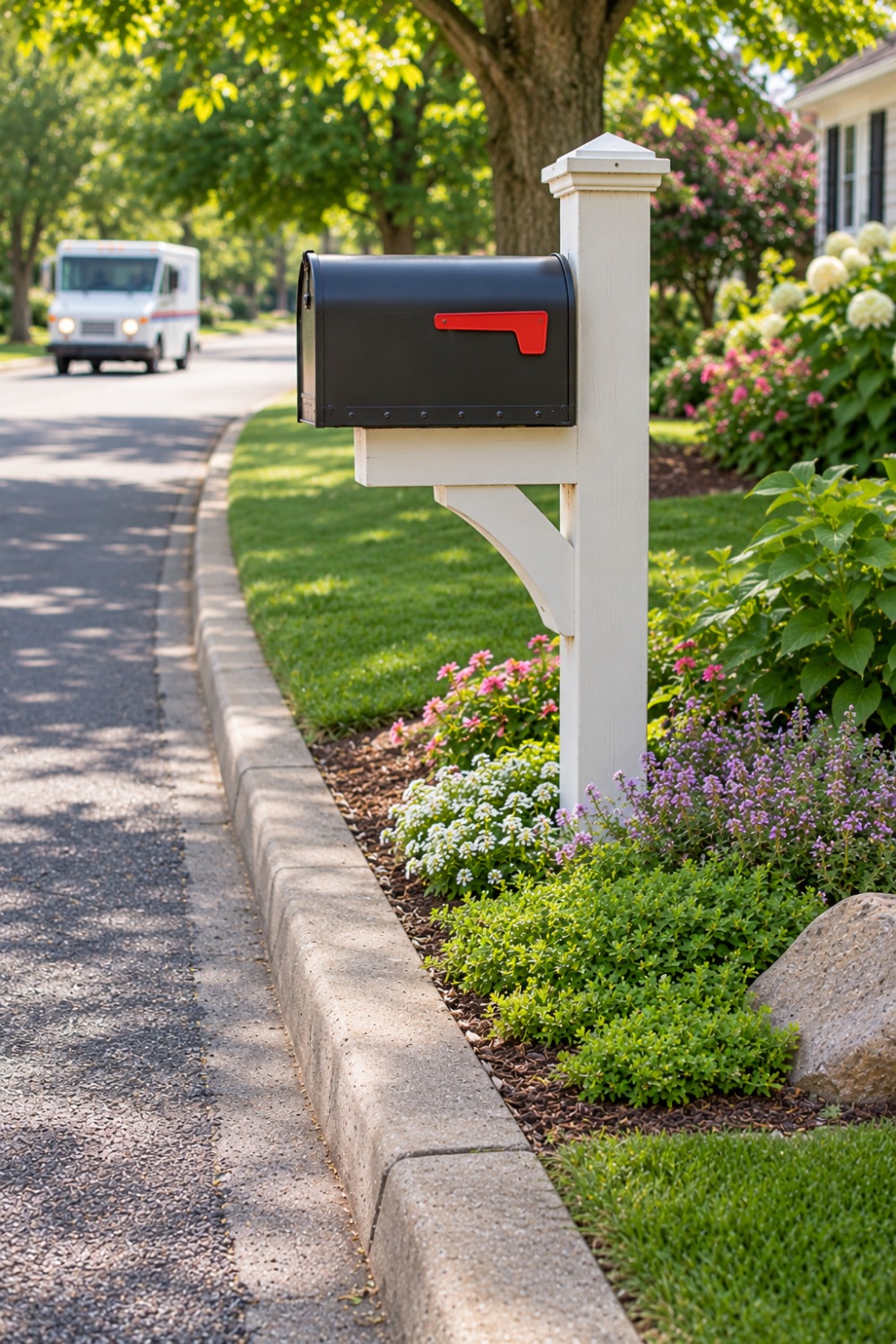
Your mailbox bed should look lovely without making delivery harder.
In the US, the Postal Service suggests mailboxes sit about 41 to 45 inches high, with the front set back about 6 to 8 inches from the curb. Check with your local post office before you move a post.
Keep plants low on the street side, avoid thorny shrubs and trim back anything that reaches the box.
How to do it:
- Check that the box height and position match local postal guidelines.
- Keep plants on the street side under about 12 inches.
- Trim back overhanging growth and keep snow cleared in winter.
Frequently Asked Questions
What are the best low-maintenance plants around a mailbox?
Daylilies, catmint, sedum, ornamental grasses and dwarf evergreens are all tough, long-lived and need little care once established.
How big should a mailbox flower bed be?
A bed about 3 to 4 feet across is usually enough. It looks balanced with the post and is easy to keep tidy.
Can I plant a climbing vine on a mailbox post?
Yes. Clematis or a small climbing rose can work well. Choose a vine that’s not too vigorous and keep it trimmed away from the mailbox door and flag.
What can I plant around a mailbox in full sun?
Sun-loving, drought-tolerant plants such as lavender, sedum, yarrow, coneflowers and blue fescue handle the heat of a curbside spot well.
Final Thoughts: A Small Bed With a Big Welcome
A mailbox bed is one of the smallest landscaping projects you can take on, but it has a big impact on curb appeal.
Start with a simple shape, a ring of tough plants and a fresh layer of mulch.
Then add one special touch, such as a climbing clematis, a stone border or a small light for the house number.
Choose plants that can handle heat, drought and road salt, so the bed looks good without daily care.
Repeat a plant or color from your front garden to tie the mailbox to the rest of the yard.
Always keep the approach clear for the mail carrier, and the bed will be a pleasure for everyone.
For more ways to improve the view from the street, explore our front yard landscaping ideas.
A little planting at the curb is a friendly hello every time someone passes by.