Gravel is one of the most forgiving materials you can use in a yard.
It drains fast, costs less than paving, never needs mowing and makes a satisfying crunch underfoot.
The secret to gravel that looks polished, not patchy, isn’t the stone you pick. It’s the base underneath and the edge around it.
These 13 gravel landscaping ideas will show you how to use gravel for courtyards, gardens, driveways, paths and the hard-working corners of your yard, and how to make it stay put.
Gravel Types Compared
| Gravel | Feel underfoot | Stays put | Best uses | Watch out for |
|---|---|---|---|---|
| Pea gravel (3/8 in, rounded) | Soft, shifts a little | Moves around without edging | Patios, dog runs, casual paths | Too deep feels like walking on a beach |
| Crushed stone with fines | Firm once compacted | Locks together well | Driveways, main paths, bases | Sharp edges can be hard on paws and bare feet |
| Decomposed granite | Smooth and firm | Good, best stabilized | Courtyards, natural paths | Can track indoors and wash out on slopes |
| River rock (1 to 3 in) | Hard to walk on | Stays put | Drainage strips, beds | Not for walking surfaces |
| Smooth beach pebbles | Uneven | Stays put | Accents and modern beds | Costly for large areas |
1. Create a French-Style Gravel Courtyard
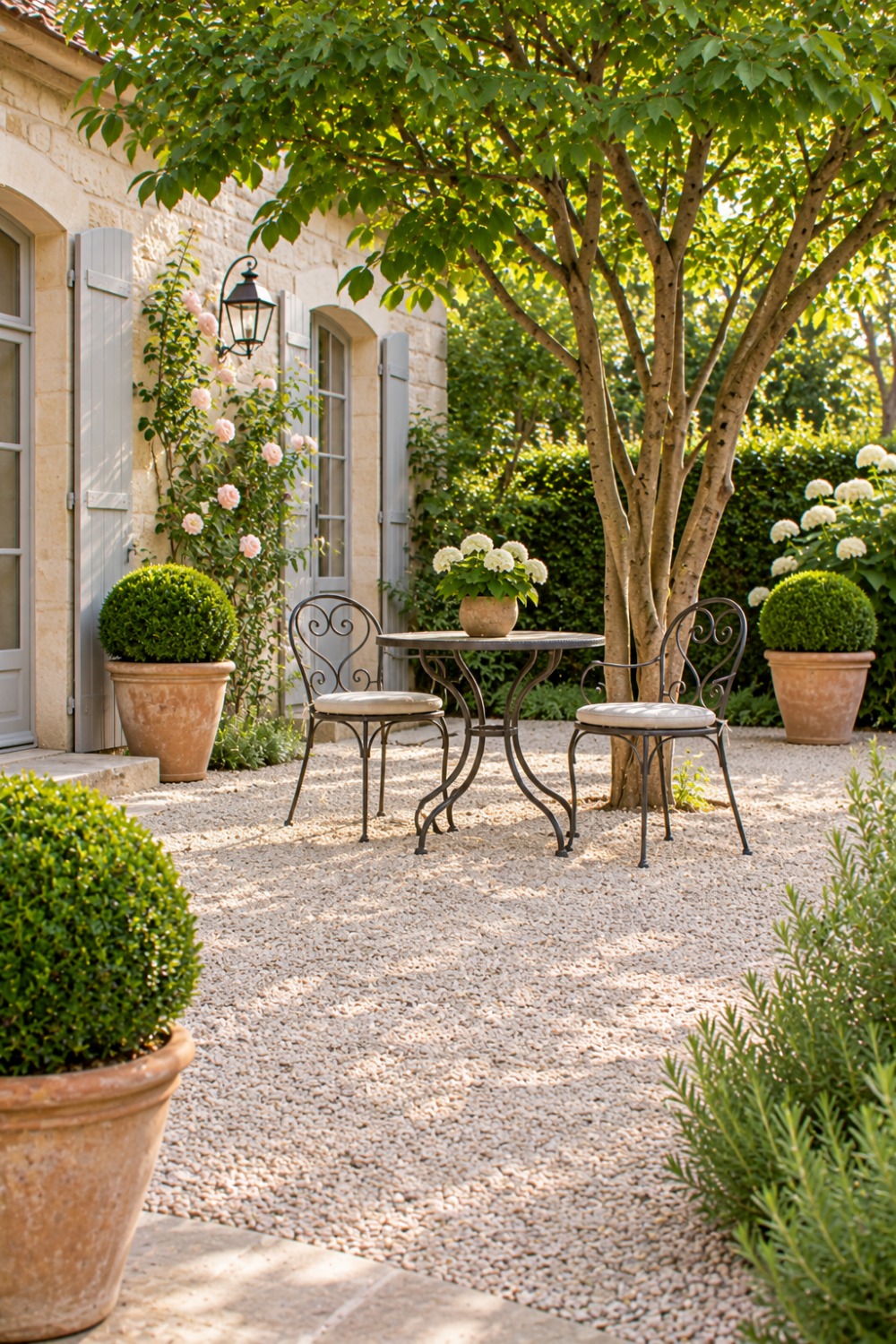
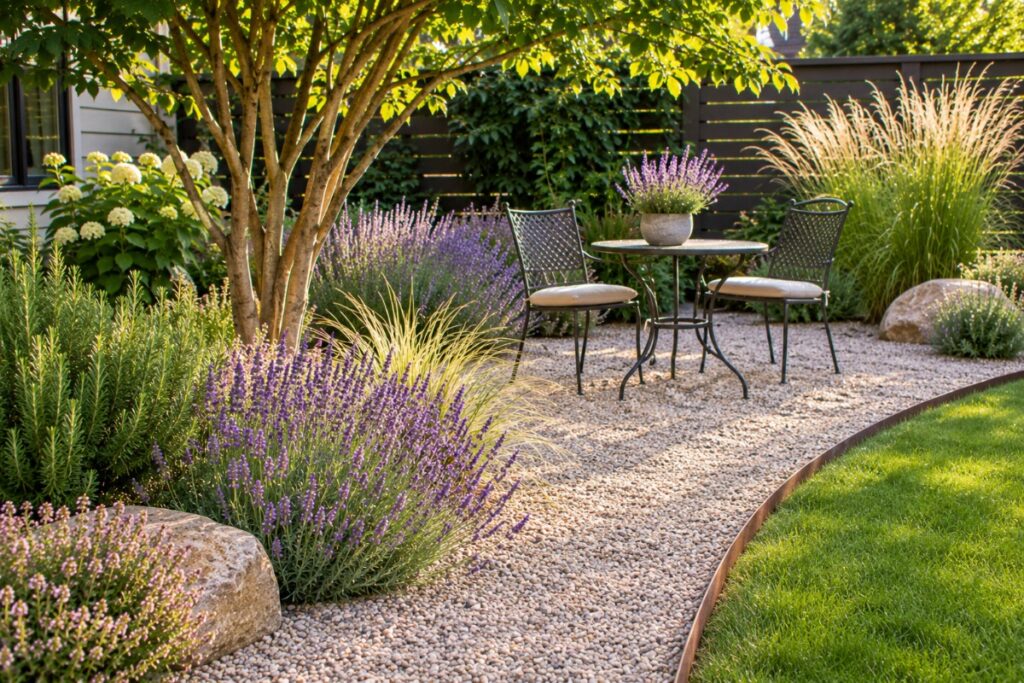
A gravel courtyard with a single tree feels relaxed, elegant and timeless.
Pale crushed stone or pea gravel, a few clipped evergreens in pots and a café table under the tree is all it takes.
Choose a small tree with a light canopy, such as a multi-stem serviceberry, or an olive in warm, dry climates.
How to do it:
- Choose a level, sunny or part-shade spot near the house.
- Plant the tree first, leaving a planting circle around the trunk.
- Lay a compacted base and top with 1 to 2 inches of pale gravel.
2. Plant a Mediterranean Gravel Garden
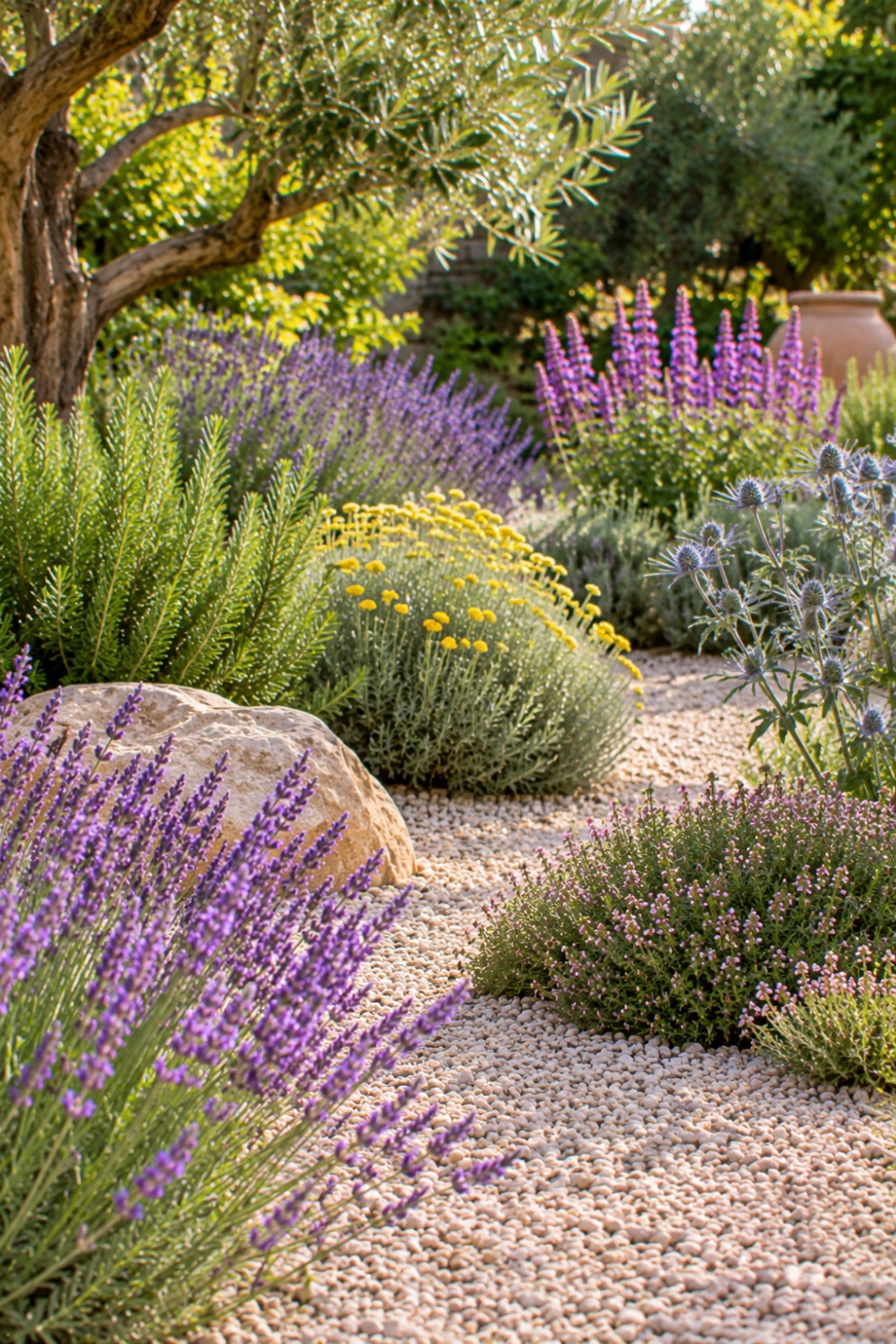
Drought-tolerant Mediterranean plants grow naturally in stony, well-drained ground, so they thrive in gravel.
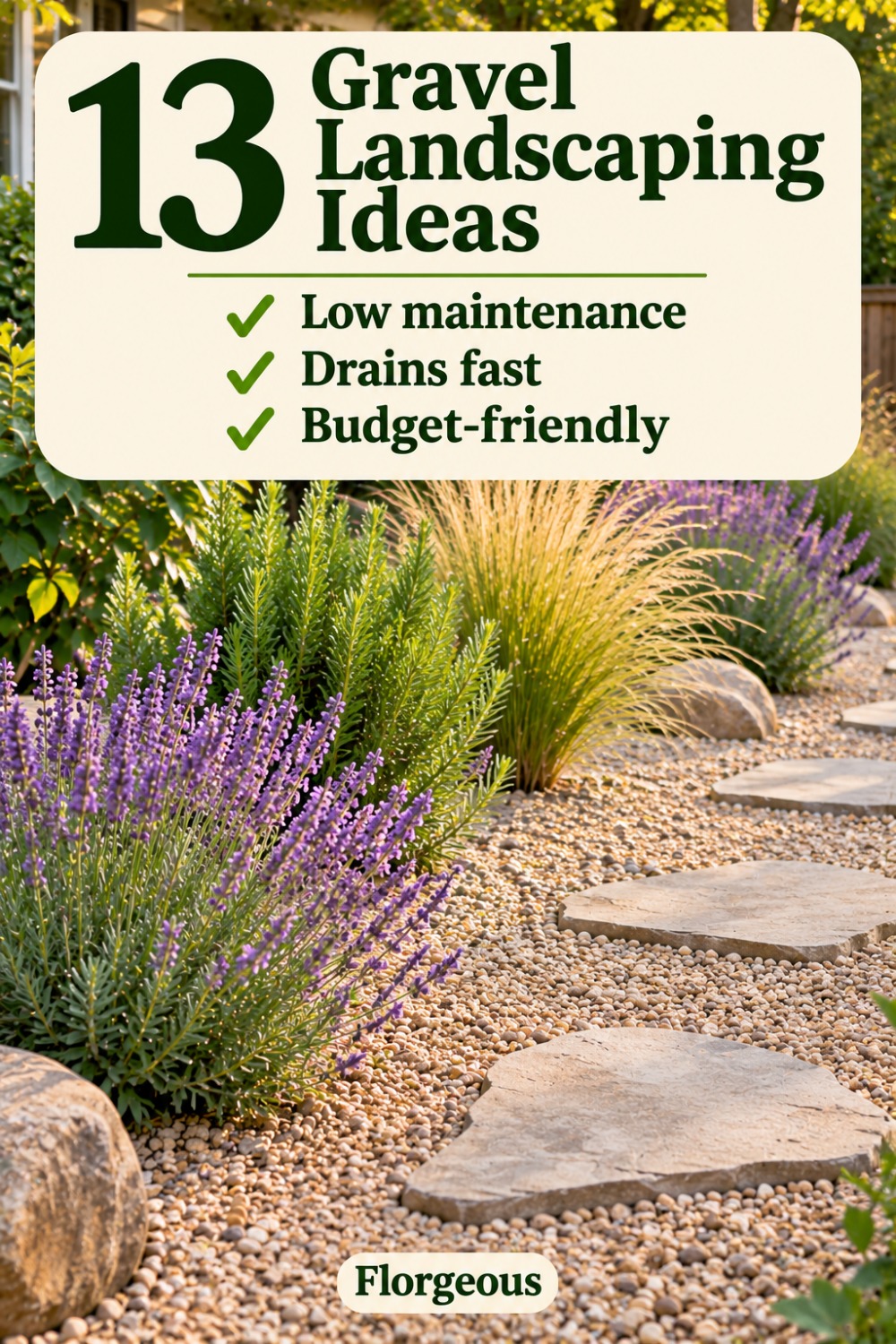
Lavender, rosemary, cotton lavender (Santolina), thyme, salvia and sea holly (Eryngium) look beautiful against pale stone and need little water once established.
Gravel keeps their crowns dry, which helps prevent rot in wet winters.
How to do it:
- Choose your sunniest spot with good drainage.
- Plant directly into the soil, then spread 2 to 3 inches of gravel around the plants.
- Water through the first summer, then only in long dry spells.
Common mistake: laying fabric under a gravel garden. It stops plants spreading and gradually fills with soil, which weeds root into anyway.
3. Lock Gravel in Place With Stabilizer Grids
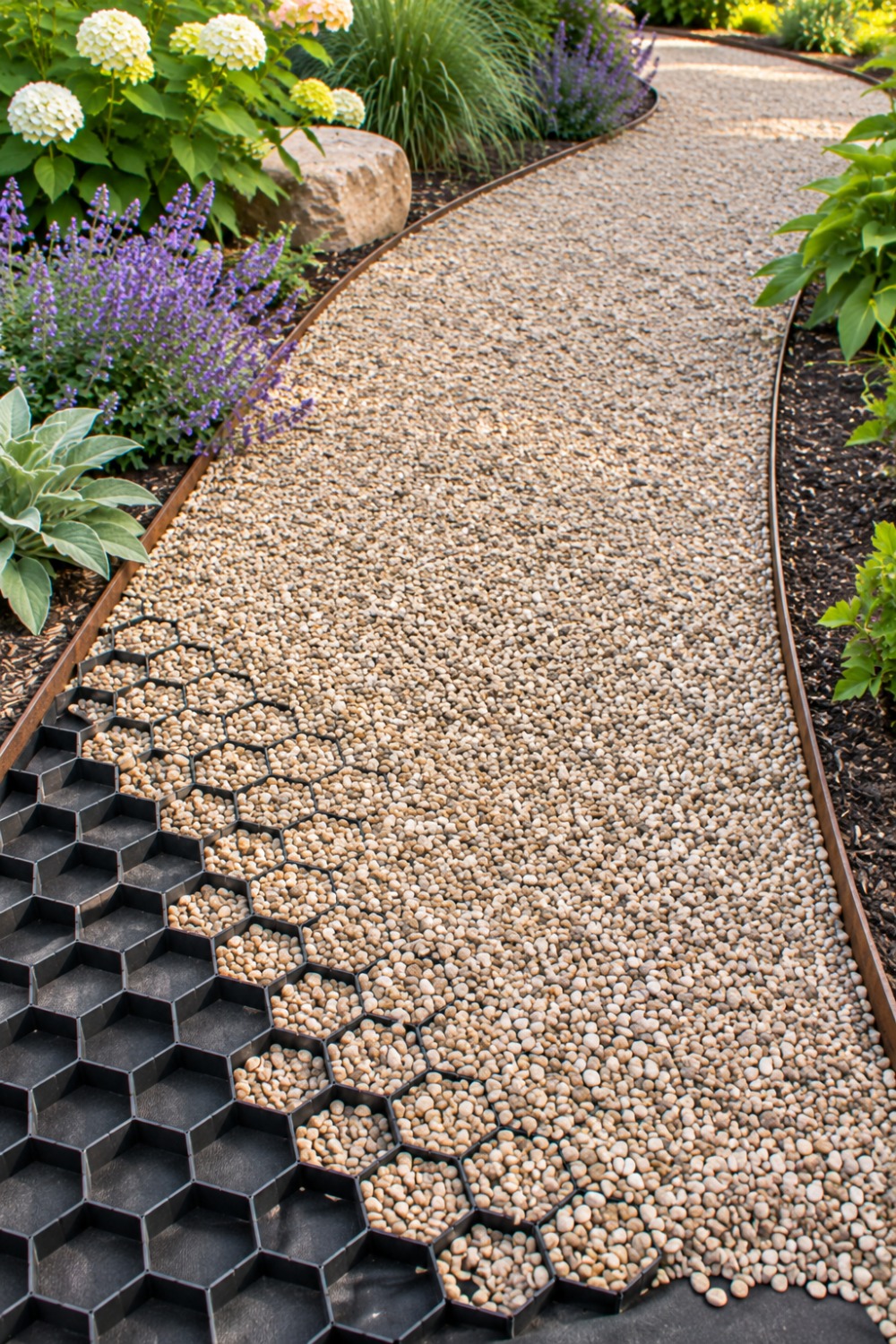
If gravel keeps rutting, scattering or migrating onto your lawn, a stabilizer grid fixes it.
These honeycomb panels sit just under the surface and hold each pocket of gravel in place.
They’re especially useful for driveways, parking pads and paths on gentle slopes.
How to do it:
- Prepare a compacted base and lay the grid panels on top.
- Fill the cells with gravel.
- Add a thin top layer so the grid is hidden.
4. Lay a Crushed Gravel Driveway With a Firm Edge
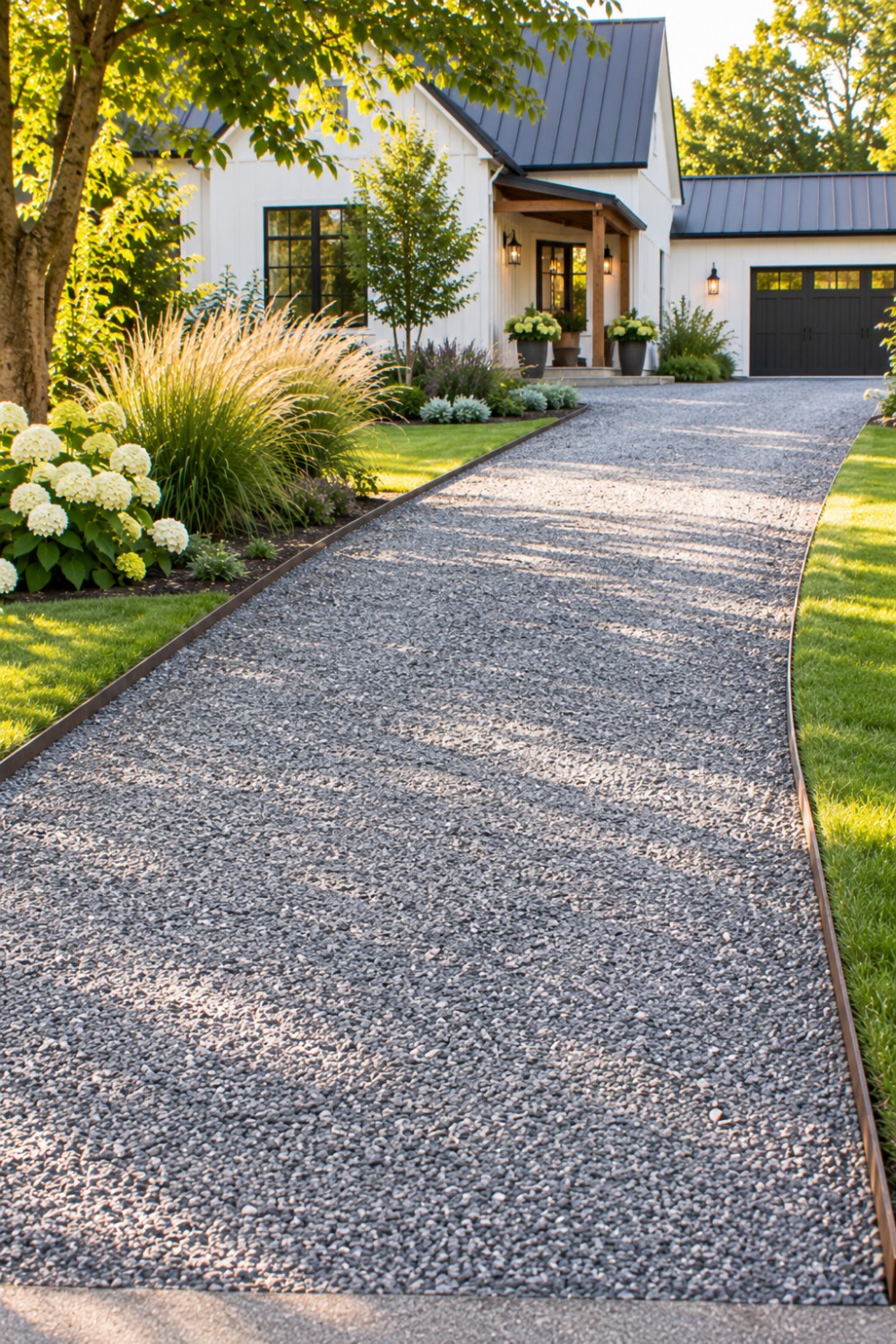
A gravel driveway costs much less than concrete or asphalt and suits farmhouse, cottage and rural homes.
Angular crushed stone locks together under the weight of cars, while rounded pea gravel rolls and ruts.
A solid edge of steel, brick, stone or timber stops the gravel spreading into the lawn and beds.
How to do it:
- Excavate and lay a deep, well-compacted base of larger crushed stone.
- Add a top layer of smaller crushed stone and compact it.
- Install a sturdy edge along both sides.
5. Build Gravel Steps With Timber Risers
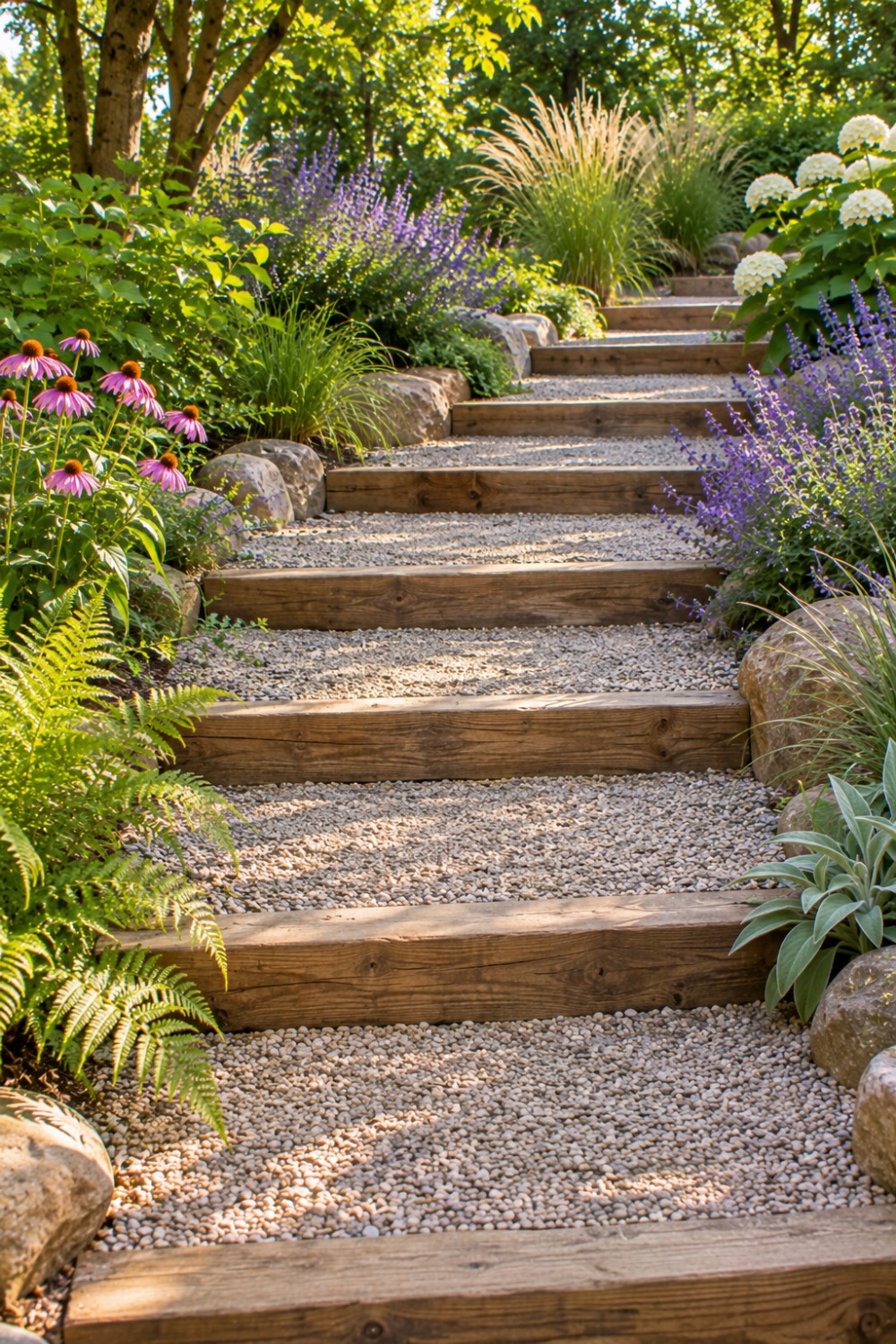
Gravel steps are a simple way to climb a slope in a natural garden.
Timber, stone or steel risers hold each step, and compacted gravel fills the tread.
They’re easier to build than solid stone steps and blend nicely into planting.
How to do it:
- Measure the slope and plan comfortable, even steps.
- Fix each riser with stakes driven into the ground.
- Fill the treads with compacted crushed stone and a thin gravel top layer.
6. Run Gravel Paths Between Raised Vegetable Beds
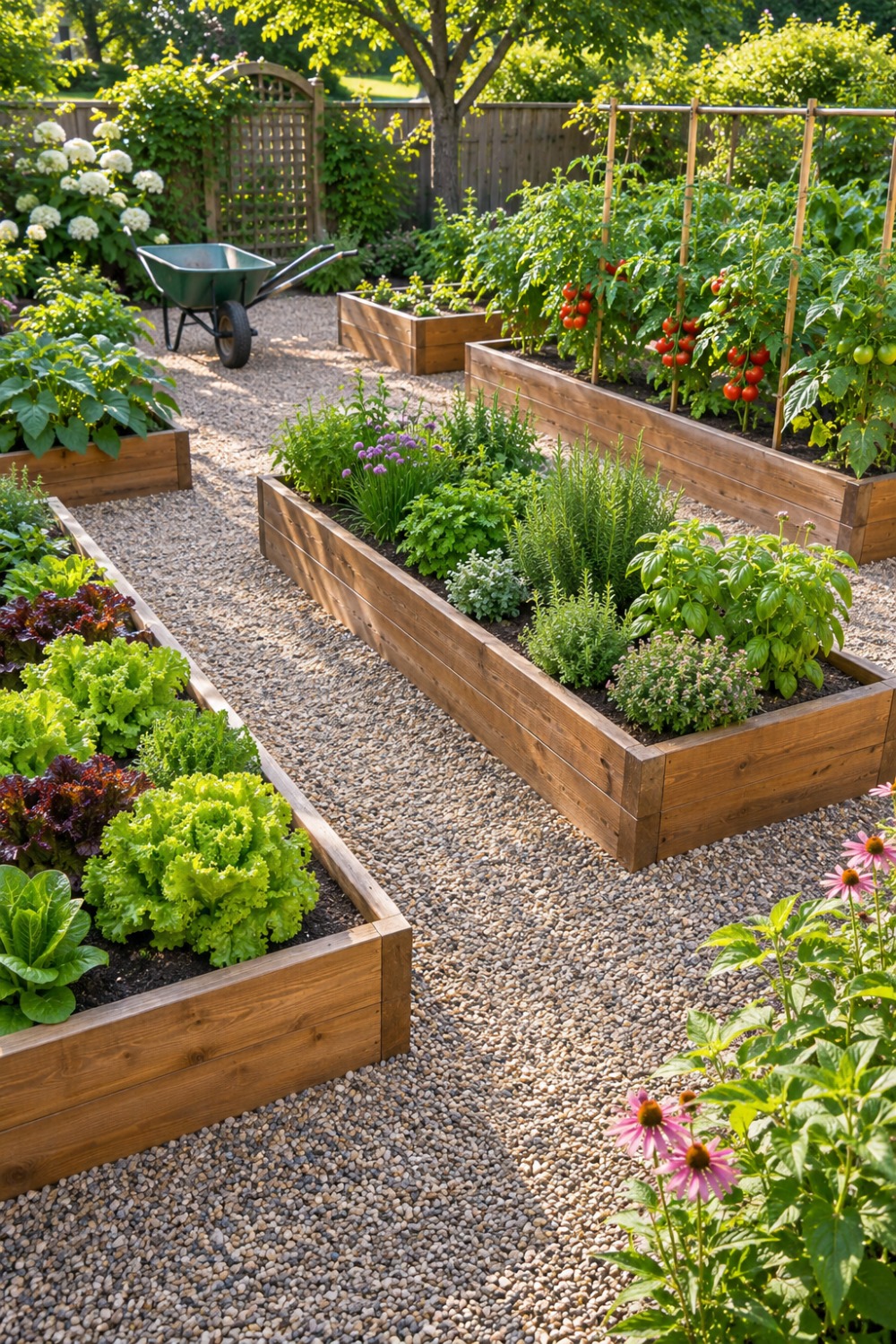
Gravel paths keep a vegetable garden clean, dry and easy to work in, even after rain.
They also stop grass creeping into your beds and save you mowing in tight gaps.
Make paths at least 2 feet wide, and wider where you’ll need a wheelbarrow.
How to do it:
- Lay out the beds and mark paths between them.
- Remove turf, lay landscape fabric and add a compacted base.
- Top with pea gravel or fine crushed stone.
7. Make a Paw-Friendly Gravel Dog Run
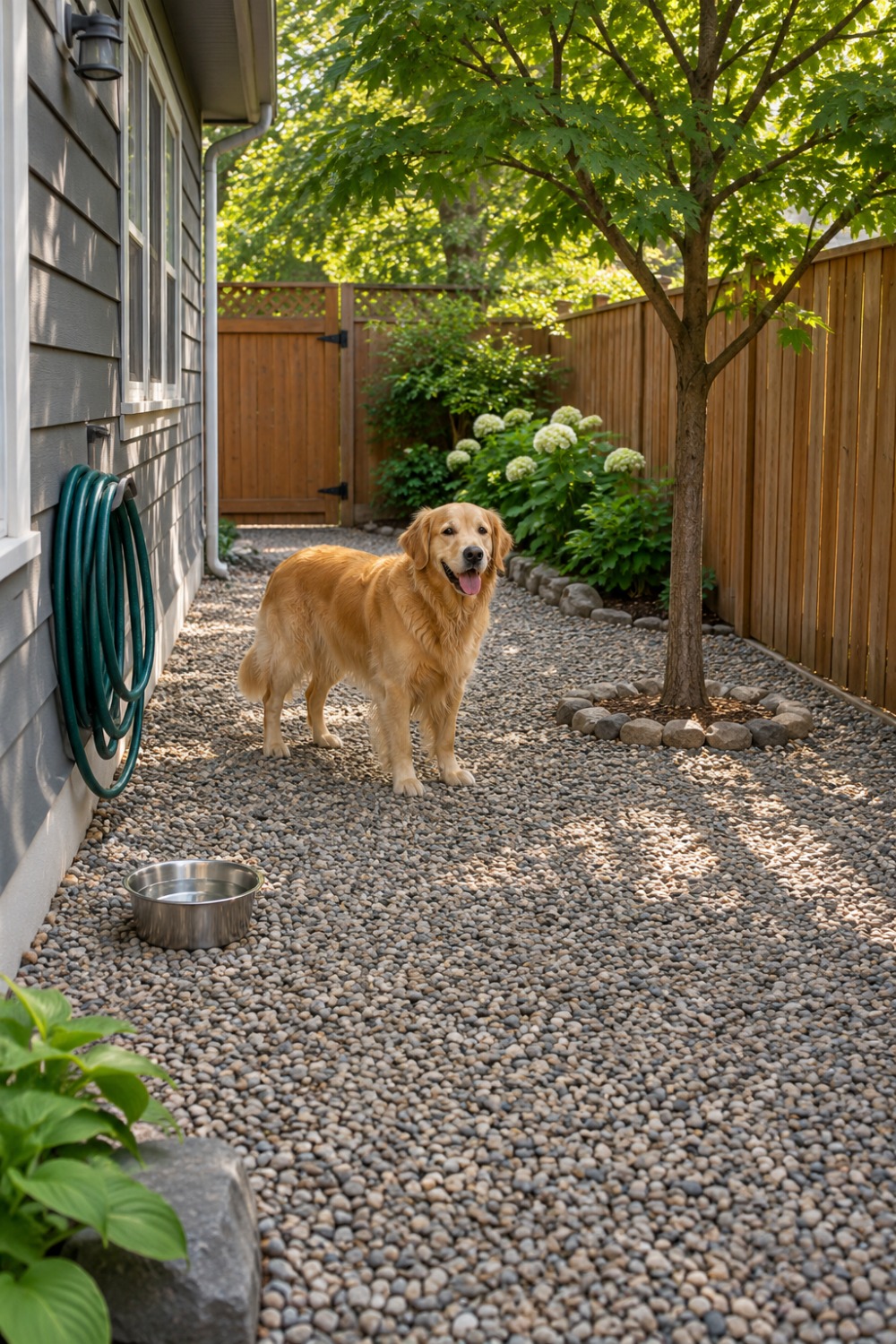
Dogs wear lawn down to mud fast. Gravel drains quickly and is easy to rinse clean.
Rounded pea gravel is gentler on paws than sharp crushed stone.
Add shade, a water bowl and a hose nearby, and pick up waste promptly.
How to do it:
- Choose a spot with some shade and good drainage.
- Lay a compacted base and 2 to 3 inches of pea gravel.
- Rinse the area with a hose regularly.
If your dog tends to eat stones, use a different surface.
8. Line a Cottage Gravel Path With Self-Seeding Flowers
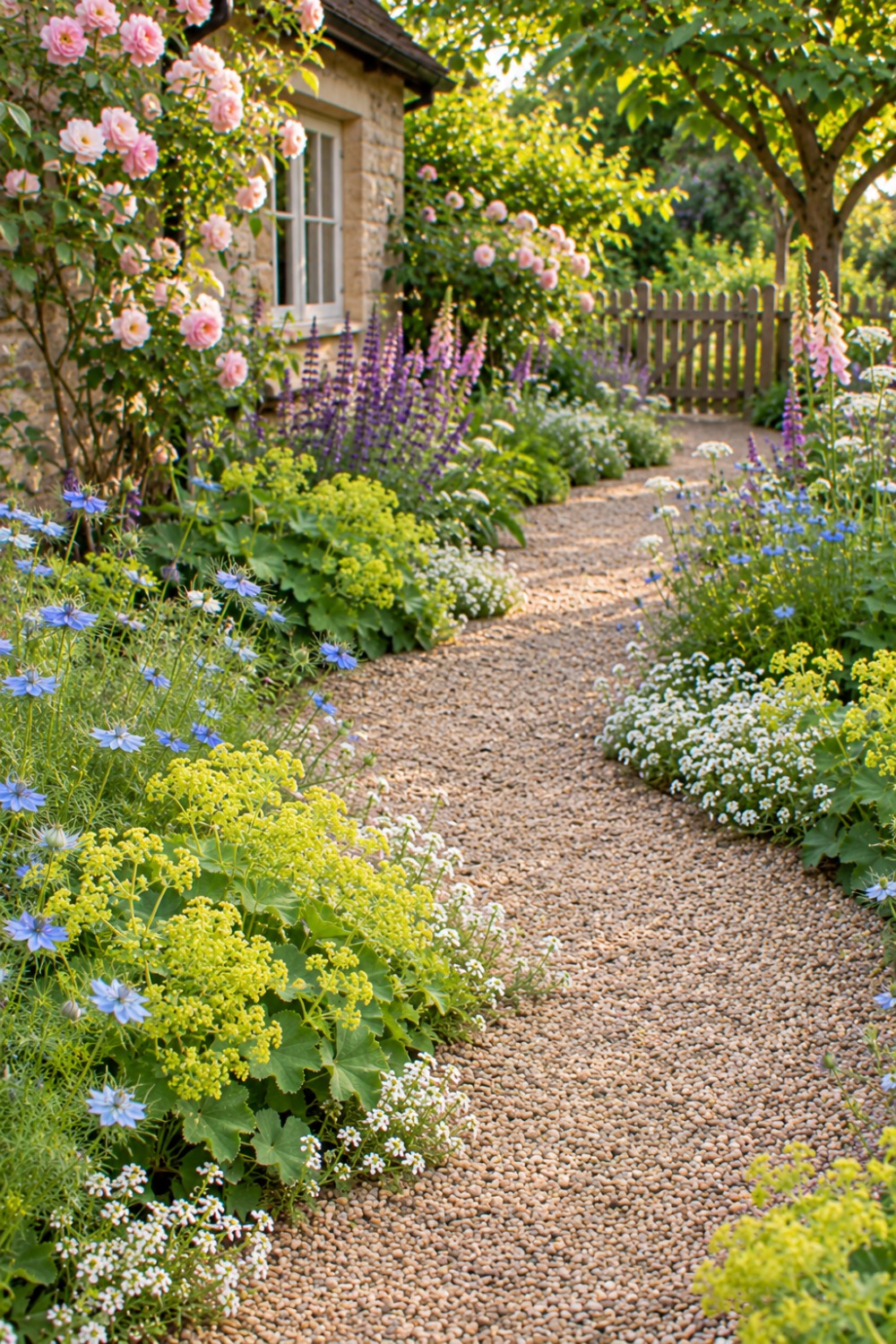
A gravel path doesn’t need to be perfectly clean to look beautiful.
In a cottage garden, letting a few flowers seed into the edges gives a relaxed, lived-in charm.
Lady’s mantle (Alchemilla mollis), love-in-a-mist (Nigella damascena) and sweet alyssum all seed gently into gravel.
How to do it:
- Skip landscape fabric at the edges so seedlings can take root.
- Let favorite flowers go to seed in late summer.
- Pull seedlings that land where you walk.
9. Set Large Pavers in Gravel for a Modern Grid
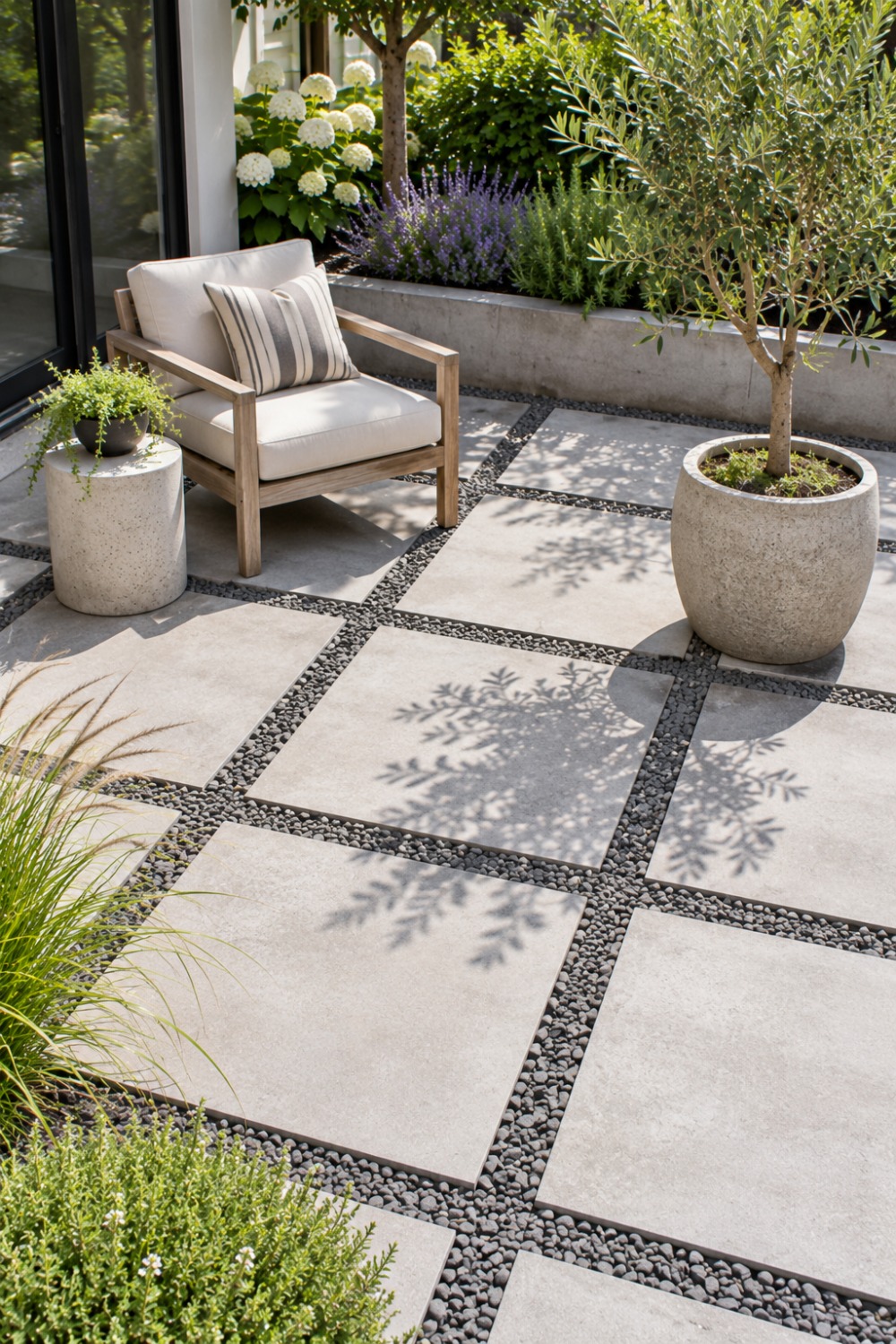
Large pavers with wide gravel joints look crisp and contemporary.
The pavers give a solid surface for furniture and walking, while the gravel lets water drain away.
Use square or rectangular concrete or stone slabs with gaps of 3 to 6 inches.
How to do it:
- Lay a compacted base across the whole area.
- Set the pavers level on a bedding layer, keeping joints even.
- Fill the joints with gravel in a contrasting or matching color.
10. Use Gravel in the Fire-Smart Zone Around Your House
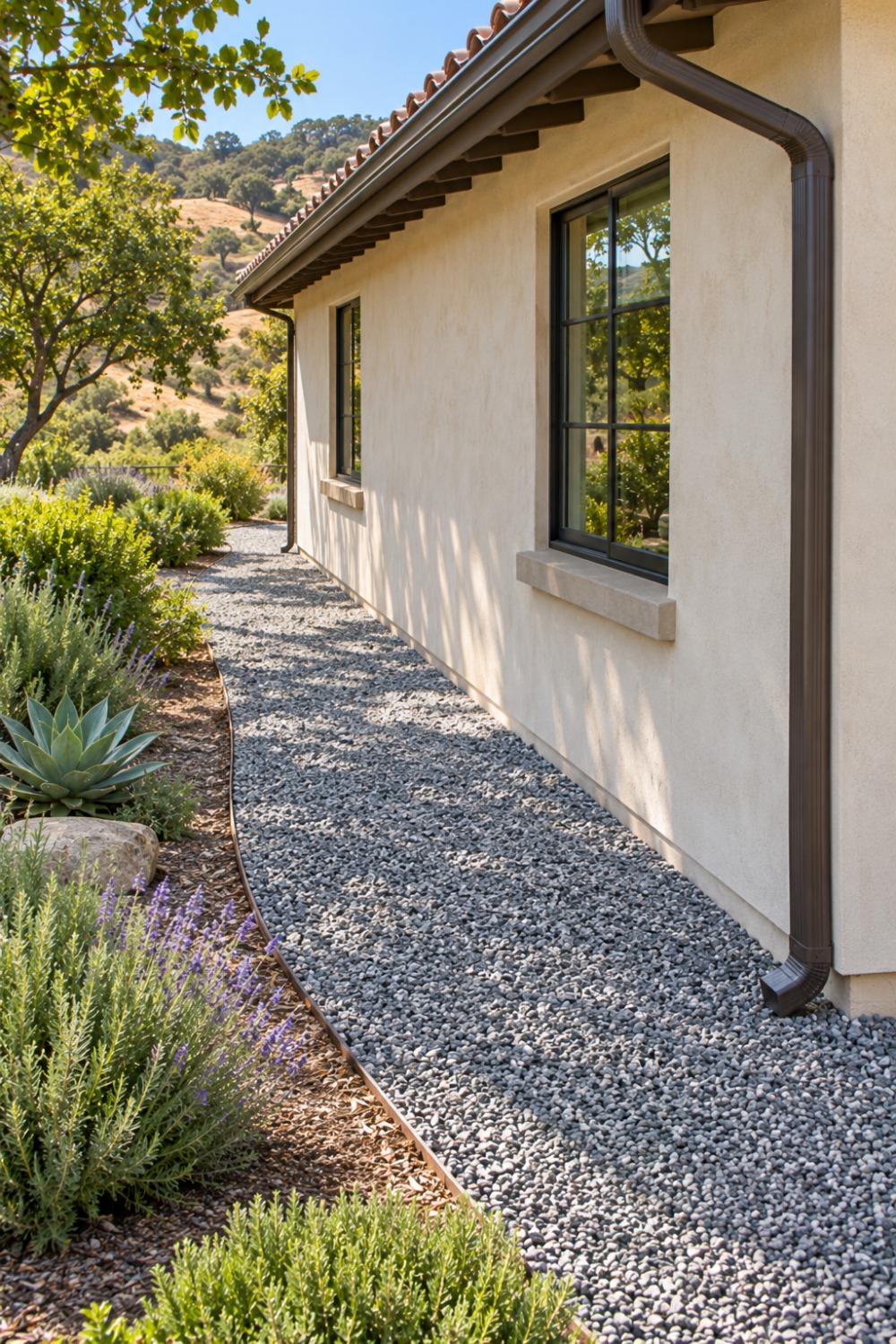
In wildfire-prone areas, fire agencies recommend keeping the first 5 feet around a house free of anything that can catch embers.
Gravel is ideal for this zone. It replaces wood mulch, which can smolder, right beside the walls.
Keep plants in this zone to a minimum and well watered, and keep gutters and roofs clear of dry leaves.
How to do it:
- Clear wood mulch and dry plant debris from the 5 feet around the house.
- Lay gravel or pavers in that strip.
- Set larger plants farther out, following your local fire agency’s guidance.
11. Tidy Utility Spots With a Simple Gravel Pad
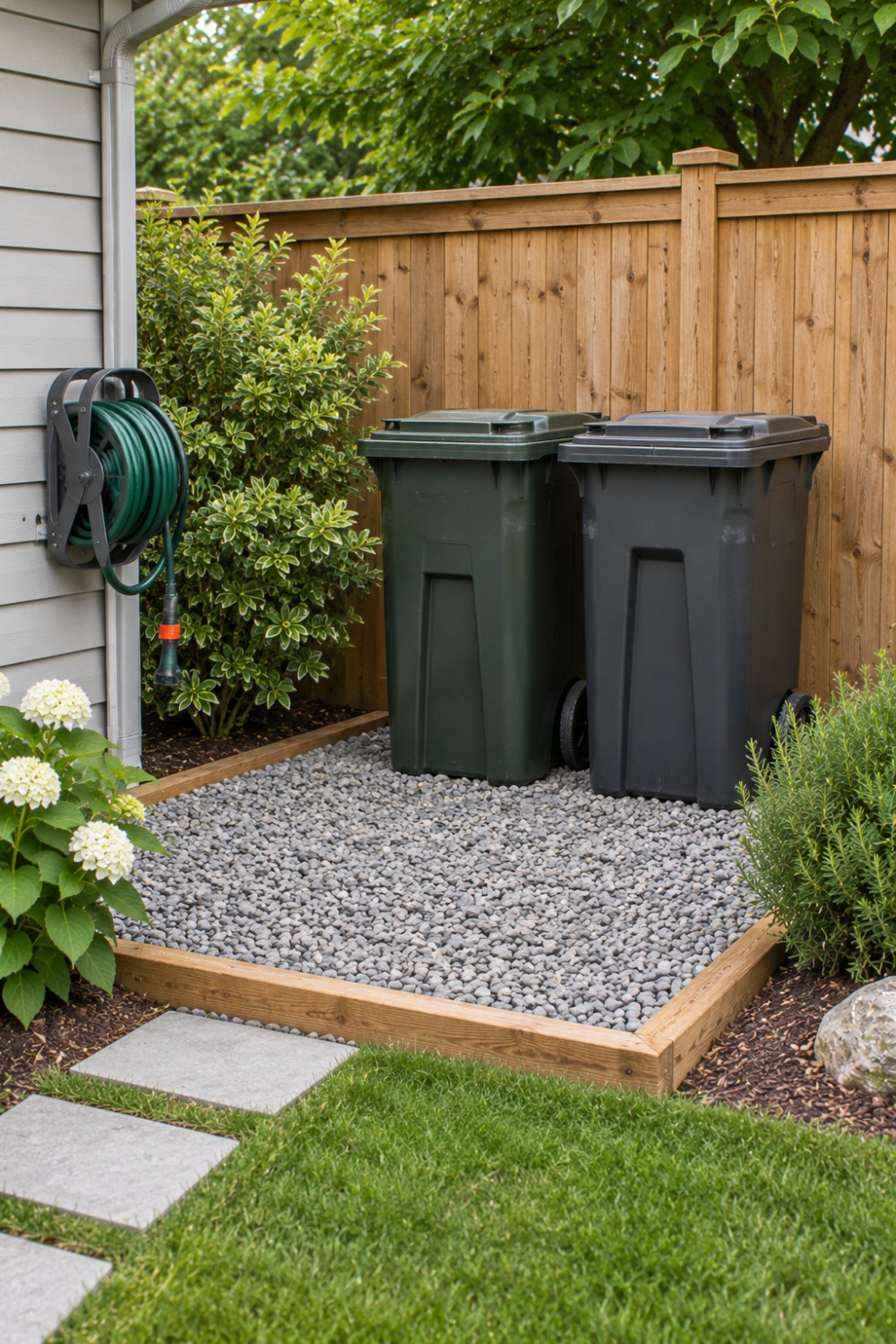
Every yard has awkward spots: around the air conditioner, beside the trash bins, behind the shed.
A neat gravel pad makes them look tidy, stops mud and saves you trimming around them.
Use angular crushed stone so bins and equipment sit level.
How to do it:
- Mark the area and remove grass and weeds.
- Lay landscape fabric and a compacted base.
- Top with crushed stone and edge with timber or steel.
12. Soften Gravel With Creeping Ground Covers
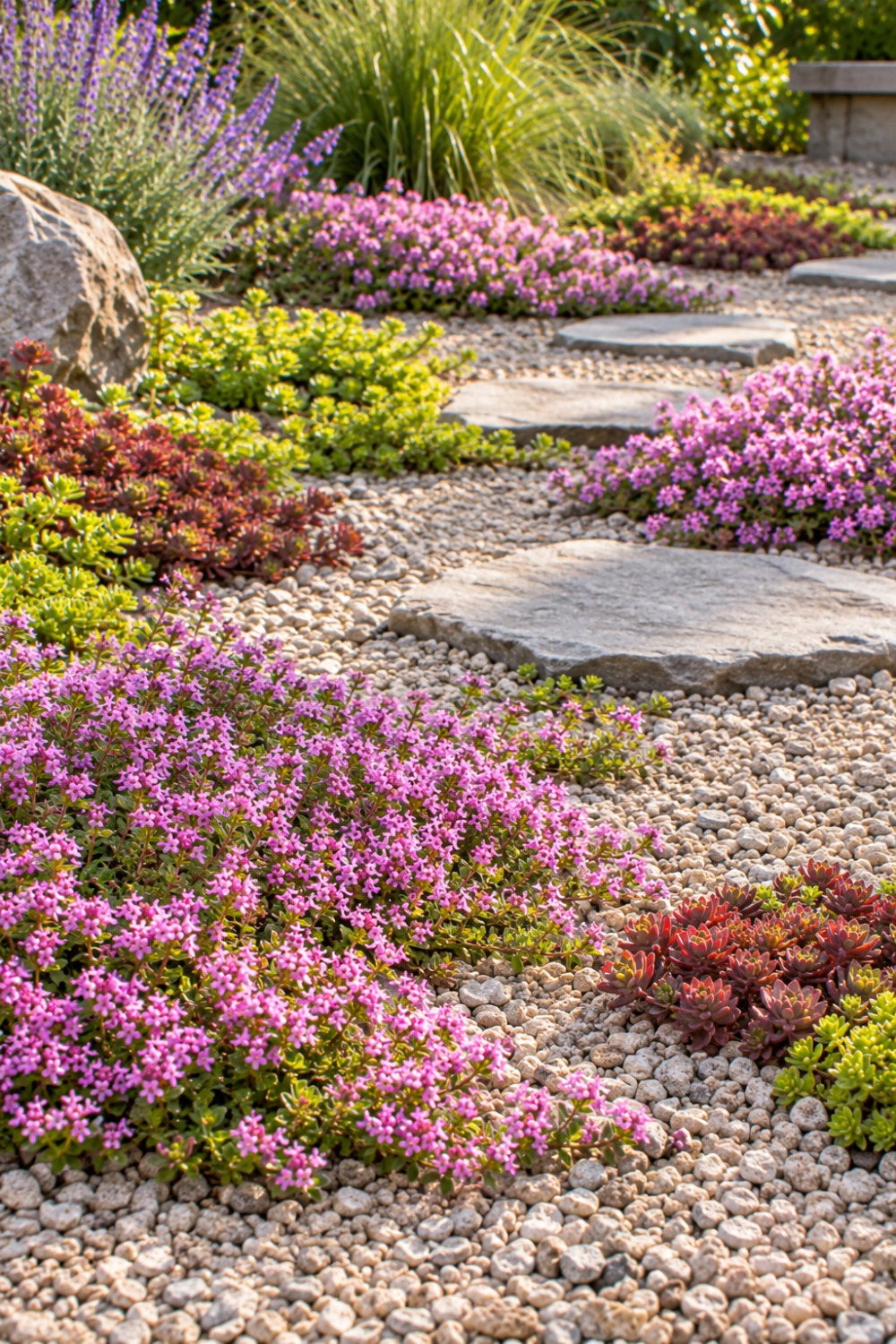
A large gravel area can look stark. Patches of creeping plants soften it.
Creeping thyme and low sedums spread across gravel in sunny, well-drained spots and handle light foot traffic.
Plant them in loose drifts, especially near edges and stepping areas.
How to do it:
- Rake back the gravel where you want plants.
- Plant small plugs directly into the soil below.
- Rake gravel back around them and water until established.
If you prefer a rockier look, our front yard landscaping ideas with rocks include dry creek beds, boulders and raked gravel.
13. Get the Base and Depth Right So Gravel Feels Firm
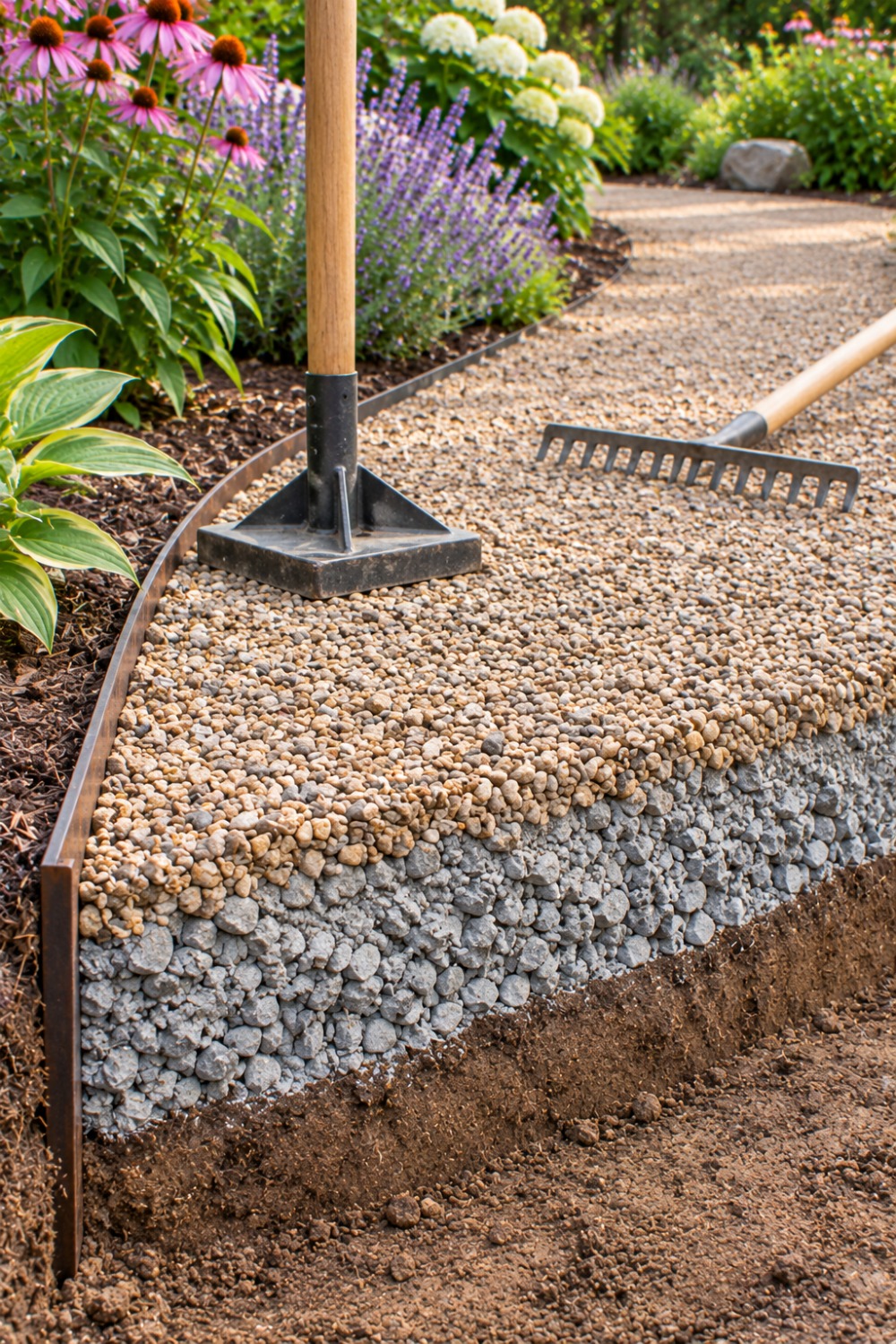
Most gravel problems, like sinking, rutting and weeds, come from skipping the base.
A compacted layer of crushed stone underneath gives a firm surface. The decorative gravel on top should be thin.
For walking surfaces, about 1 to 2 inches of pea gravel is plenty. Deeper than that and it feels loose underfoot.
How to do it:
- Excavate 4 to 6 inches for paths and patios, deeper for driveways.
- Add crushed stone with fines in layers and compact each one.
- Spread a thin top layer of decorative gravel and install edging.
Frequently Asked Questions
What is the best gravel for walking on?
Crushed stone with fines and decomposed granite compact into the firmest walking surfaces. Pea gravel is comfortable and attractive but shifts more, so keep it shallow and edge it well.
How deep should gravel be?
For paths and patios, use a compacted base of 3 to 4 inches with 1 to 2 inches of decorative gravel on top. Driveways need a deeper base to carry the weight of cars.
Should I put landscape fabric under gravel?
Use it under paths, patios, driveways and utility areas to separate the gravel from the soil. Skip it in gravel gardens where you want plants to spread and seed.
How do I keep gravel from spreading into the lawn?
Install a solid edge set slightly higher than the gravel, such as steel, brick, stone or timber. Keep the gravel layer shallow, and use stabilizer grids on driveways and slopes.
Final Thoughts: Build It Right Once and Enjoy It for Years
Gravel is one of the easiest ways to add texture, function and low-maintenance charm to a yard.
Start by choosing the right type for the job: crushed stone for driveways and main paths, pea gravel for relaxed seating areas and dog runs, decomposed granite for natural courtyards.
Then build a proper base. It’s the step that decides whether gravel feels firm and stays put.
Add a strong edge so the stone doesn’t wander into lawn and beds.
Soften large areas with plants, whether it’s a Mediterranean gravel garden, self-seeding flowers along a path or creeping thyme.
Use gravel to solve problems too, from muddy dog runs and messy utility corners to the fire-smart zone around the house.
For budget-friendly gravel paths and other low-cost upgrades, see our cheap simple front yard landscaping ideas.
Start with one small area, like a path or a seating nook, and you’ll quickly see how much gravel can do.