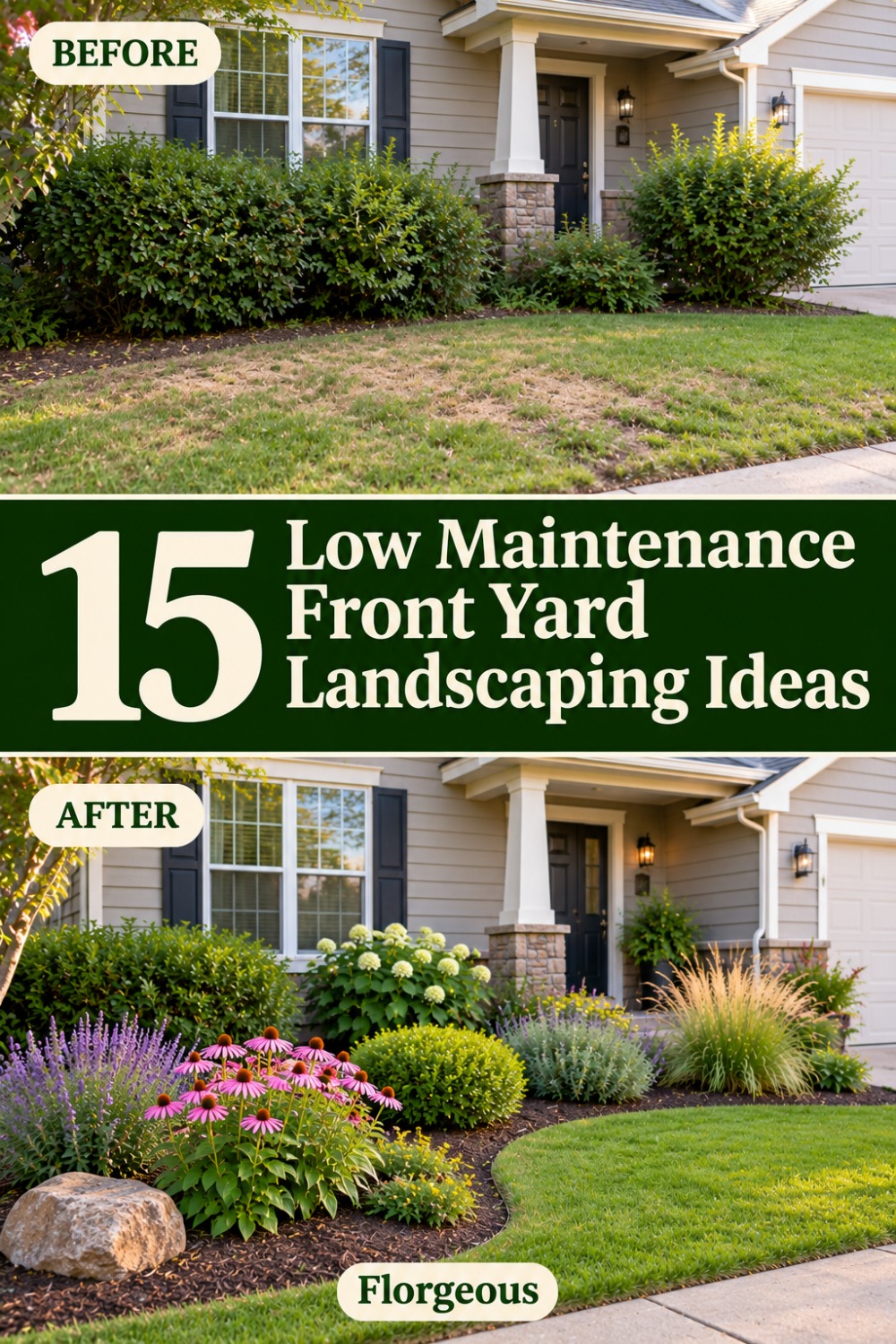
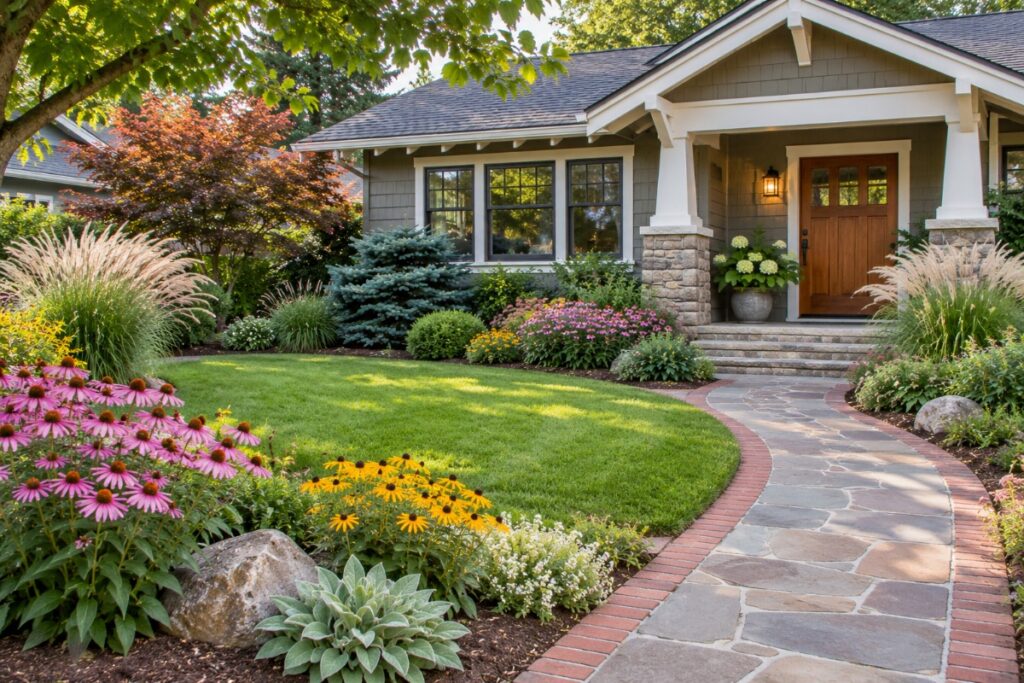
You want a front yard that looks cared for. You just don’t want to spend every weekend caring for it.
The good news is that low maintenance doesn’t have to mean bare rock and a few lonely shrubs.
The secret to a front yard that stays good-looking with little work isn’t doing less. It’s choosing plants and layouts that do the work for you.
These 15 low maintenance front yard landscaping ideas focus on smart plant choices and simple systems that cut out mowing, pruning, watering and weeding while keeping your curb appeal high.
Low Maintenance Swaps at a Glance
| Instead of | Try | Time you save |
|---|---|---|
| Fast-growing shrubs you shear often | Dwarf shrubs sized for the space | Most of the pruning |
| A large lawn with awkward corners | One simple lawn shape | Mowing and edging |
| Hand watering with a hose | Drip lines on a timer | Weekly watering |
| Bare soil between plants | Dense planting and ground covers | Most of the weeding |
| Flowers that need deadheading | Self-cleaning and seed-head plants | Weekly tidying |
| Grass under shade trees | Shade-tolerant ground covers | Reseeding and patching |
| Painted or stained wood | Stone, brick and weathering steel | Repainting and sealing |
1. Choose Shrubs That Fit Without Pruning
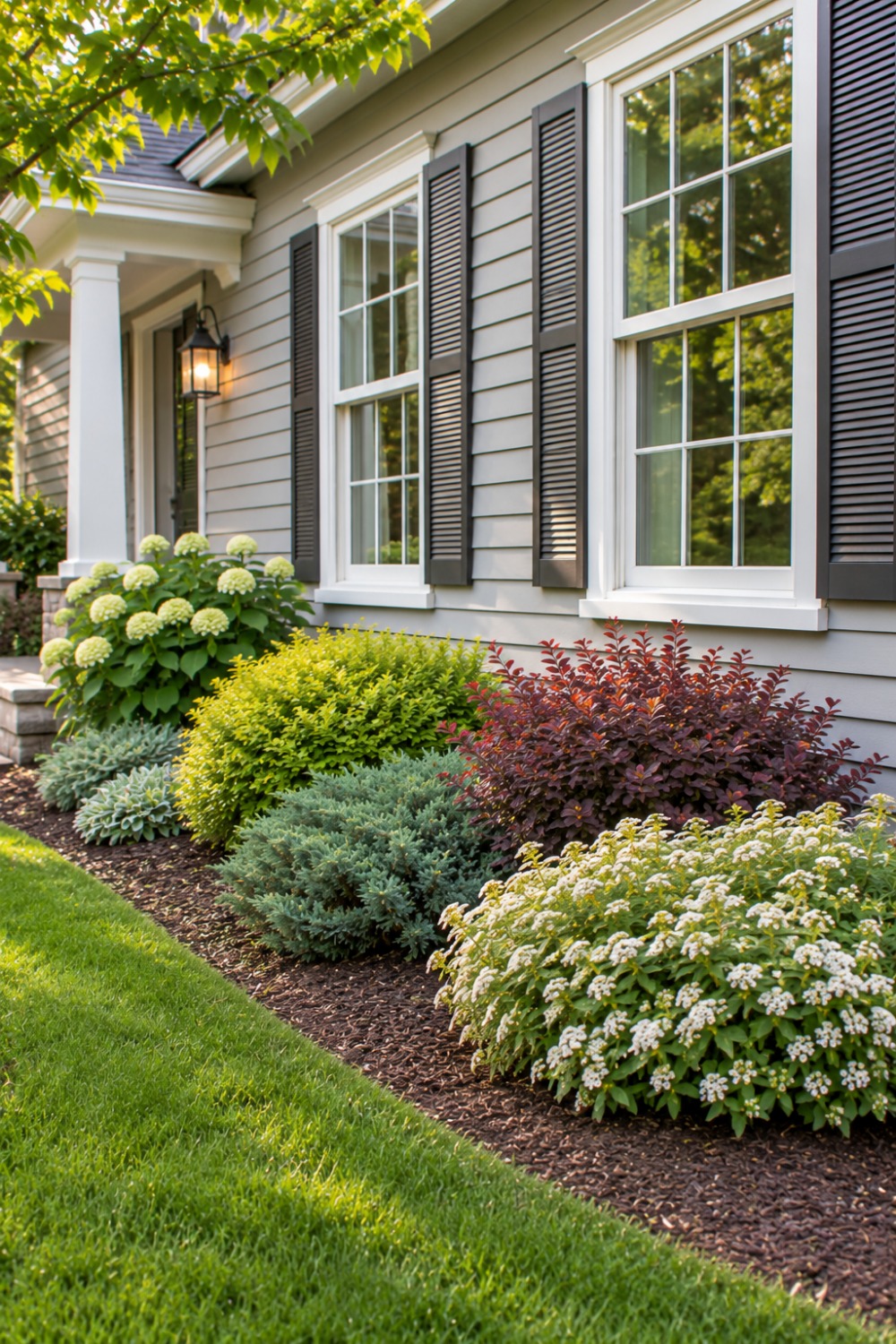
The biggest maintenance trap in front yards is shrubs that want to grow bigger than the space.
Every year you shear them back, and every year they grow back.
Check the mature height and width on the plant label and choose dwarf or compact varieties that fit the spot naturally, especially under windows.
How to do it:
- Measure the space, including the height under each window.
- Choose shrubs whose mature size fits with room to spare.
- Space them so they just touch when fully grown.
Common mistake: planting small shrubs close together for an instant look. Within a few years they crowd each other and need constant cutting.
2. Shrink the Lawn to One Simple Shape
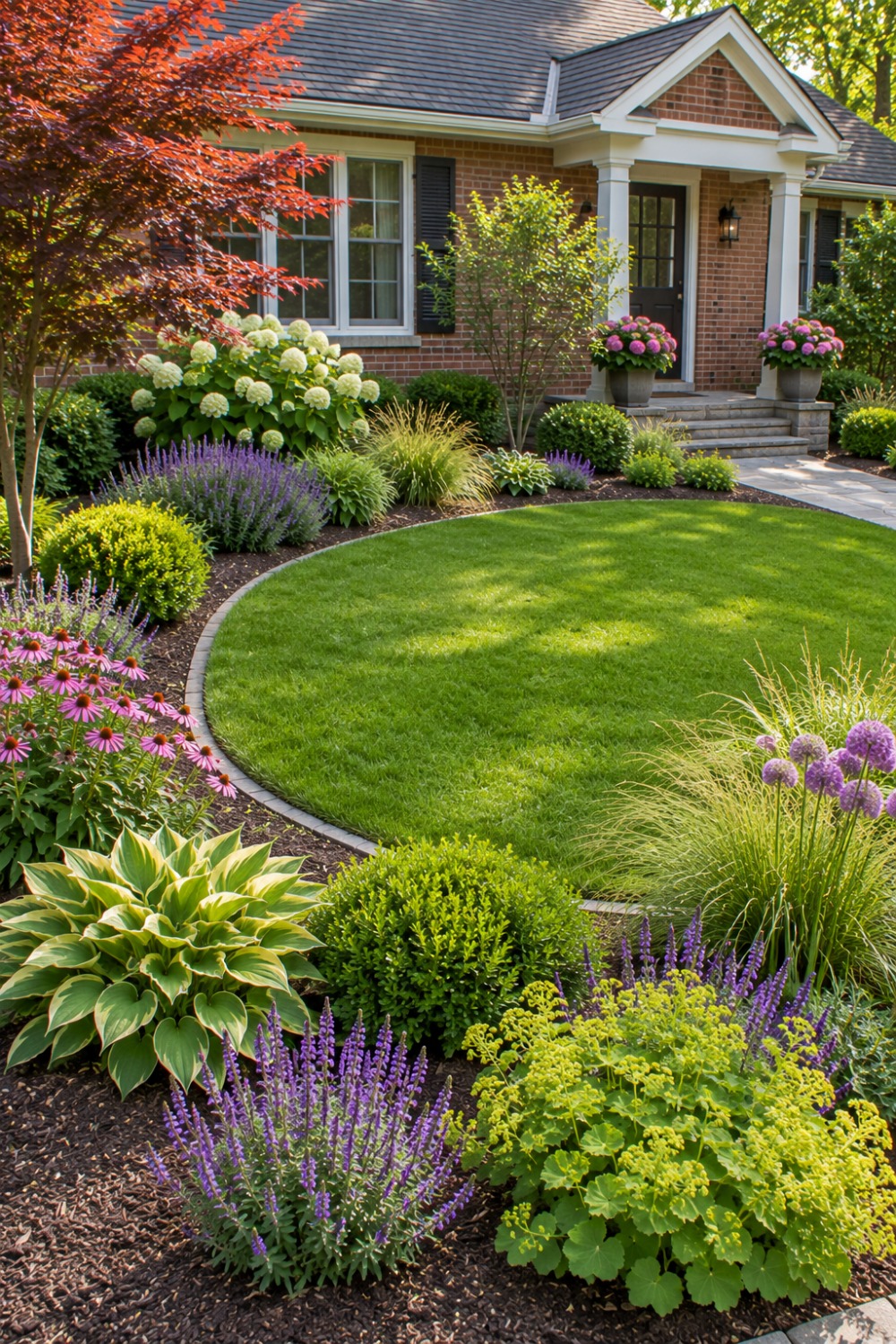
Lawns are the most time-consuming part of most front yards, especially when they’re broken into awkward strips and corners.
Keeping a single, simple shape, such as a rectangle or a soft oval, makes mowing quick and gives the yard a calm, open look.
Turn the leftover corners and narrow strips into planting beds.
How to do it:
- Sketch your yard and outline one clean lawn shape.
- Convert everything outside that shape into beds.
- Make the lawn edges wide, gentle curves or straight lines.
3. Plant Native Perennials That Return Every Year
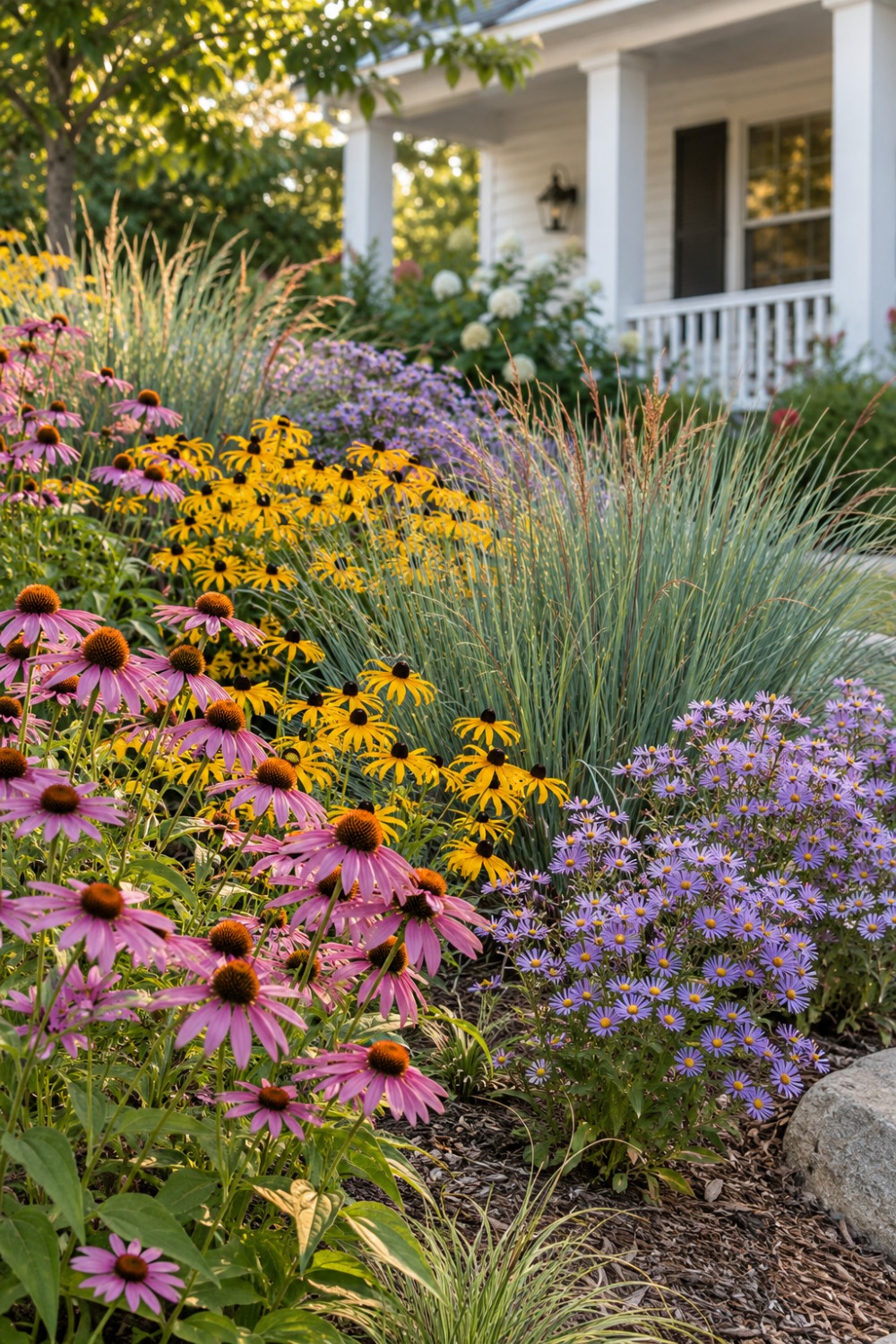
Native perennials are adapted to your local climate and soil, so once established they need less water, feeding and fuss.
In much of the U.S., purple coneflower, black-eyed Susan, little bluestem and asters are tough, reliable choices for sun.
Natives also feed local pollinators and birds. Your local extension service or native plant society can suggest the best plants for your area.
How to do it:
- Check which natives suit your sun, soil and region.
- Plant in groups of five or more for impact.
- Water regularly for the first season, then only in drought.
4. Water With Drip Lines Under the Mulch
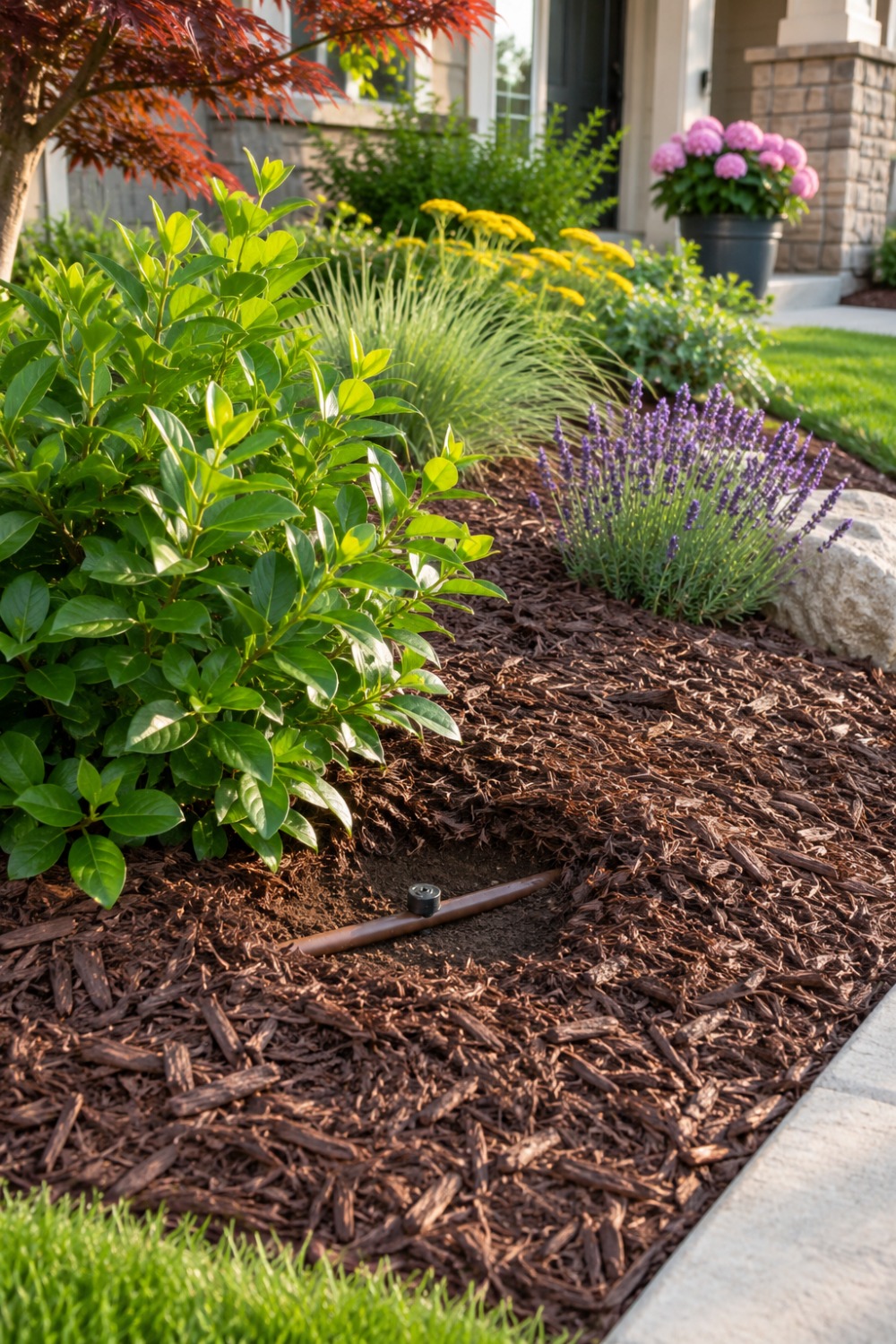
Hand watering a front yard every few days in summer adds up to hours.
Drip irrigation delivers water straight to the roots with almost no waste, and hiding the lines under mulch keeps them out of sight.
Connect it to a timer, ideally one with a rain sensor, and it runs itself.
How to do it:
- Lay drip tubing along each row of plants.
- Cover it with 2 to 3 inches of mulch.
- Set a timer to water early in the morning, deeply but less often.
5. Plant Densely So Plants Crowd Out Weeds
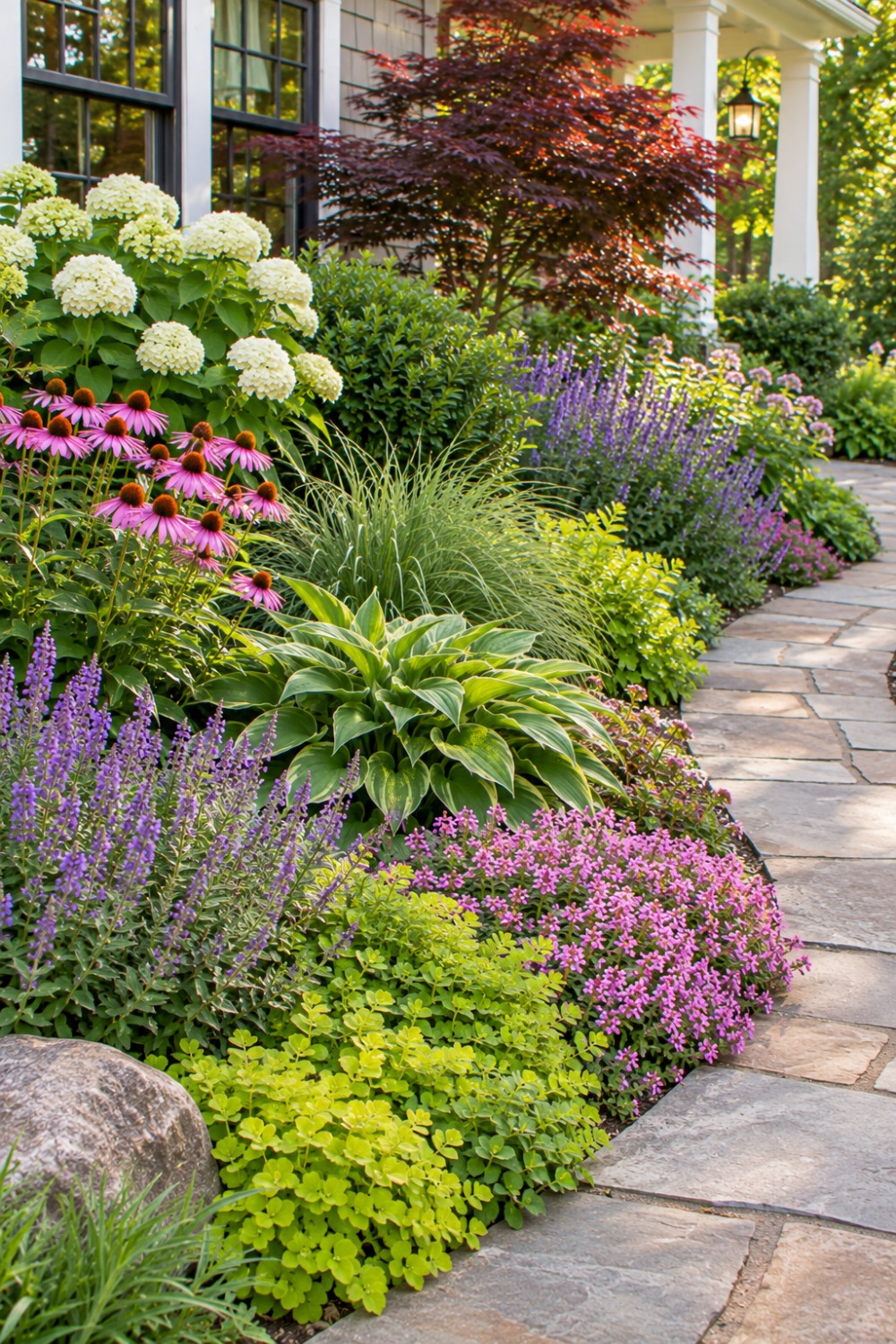
Bare soil is an open invitation for weeds.
When plants and ground covers fill the bed, weeds struggle for light and space, and you’ll spend far less time pulling them.
Use spreading ground covers between shrubs and perennials as a living mulch.
How to do it:
- Space perennials so they’ll knit together within two years.
- Plant low ground covers in the gaps between larger plants.
- Mulch bare spots until the plants fill in.
6. Pick Flowers That Don’t Need Deadheading
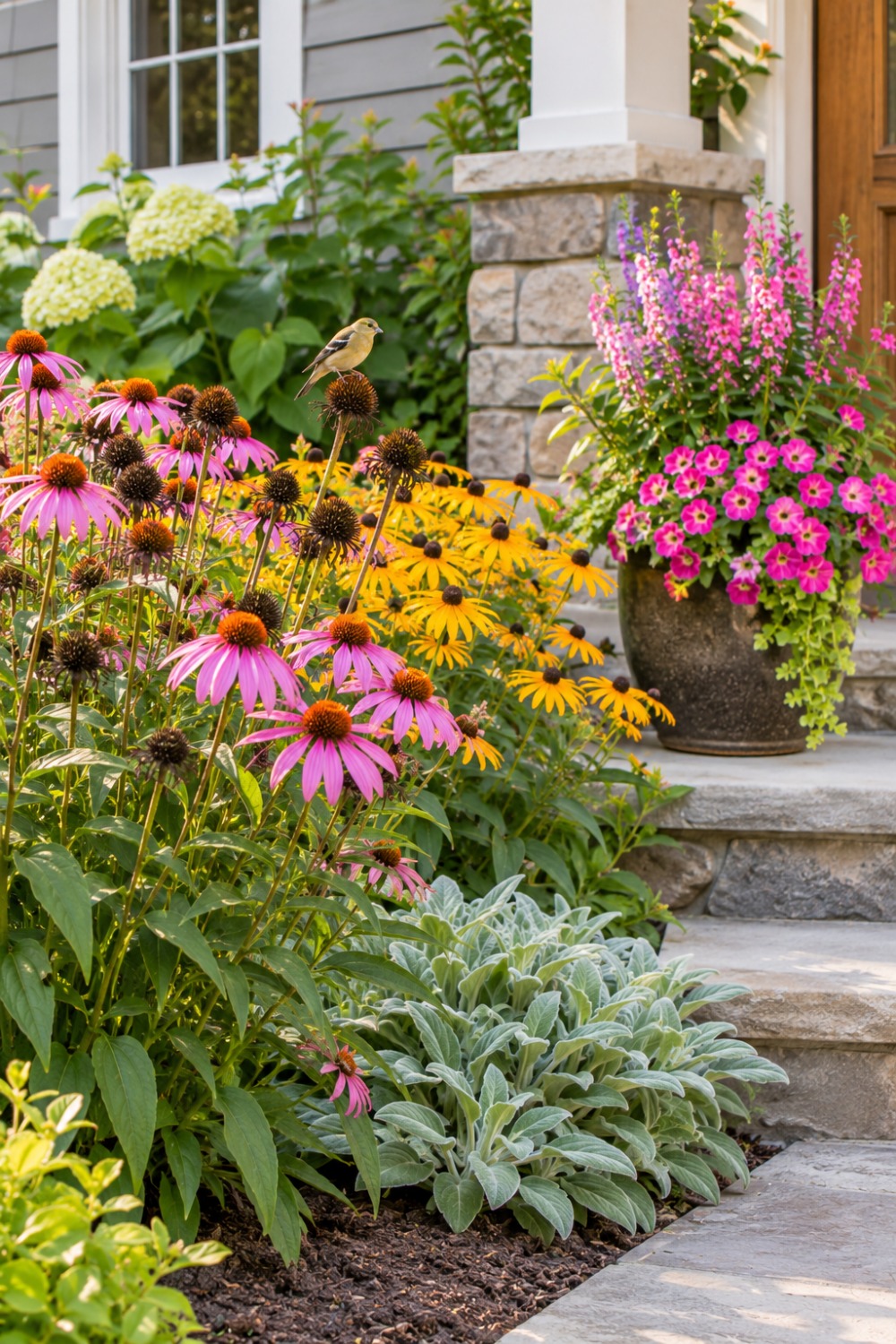
Some flowers look messy unless you snip off every faded bloom. Others drop spent flowers on their own or turn them into attractive seed heads.
Coneflowers and black-eyed Susans can be left alone, and their seeds feed finches in fall.
For annual color by the door, angelonia, wax begonias and calibrachoa bloom all summer without deadheading.
How to do it:
- Check plant tags for words like “self-cleaning” or “no deadheading needed”.
- Use perennials with attractive seed heads in the main beds.
- Save fussy flowers for one or two pots you’ll pass every day.
7. Repeat a Few Tough Plants Instead of Many Different Ones
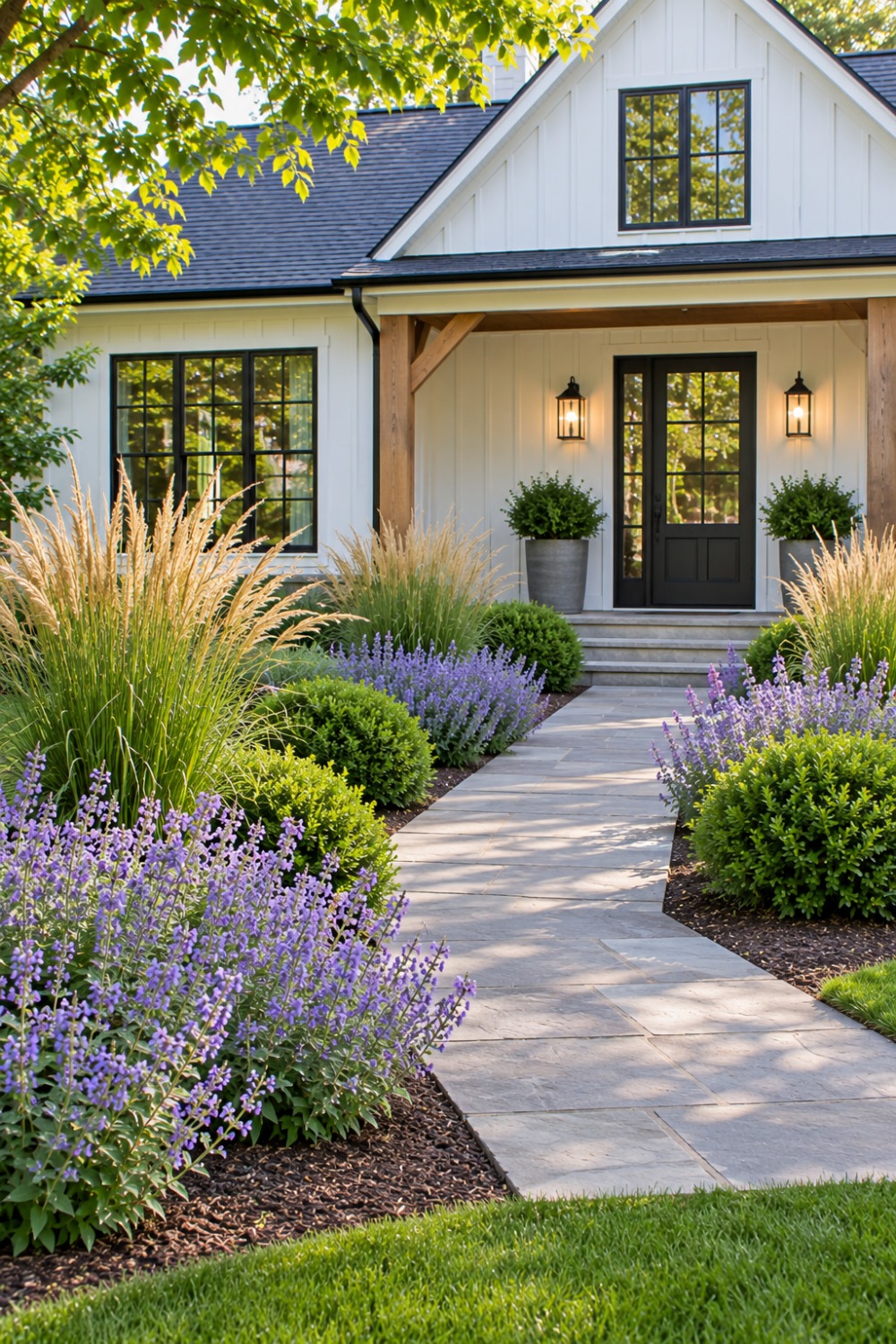
A front yard with 20 different plants needs 20 different kinds of care.
Choose three to five proven performers and repeat them throughout the yard.
It’s easier to maintain, cheaper to buy in quantity and looks more cohesive from the street.
How to do it:
- Note which plants already thrive in your yard with little help.
- Pick one shrub, one perennial, one grass and one ground cover.
- Repeat them in drifts across every bed.
8. Group Plants by Their Water Needs
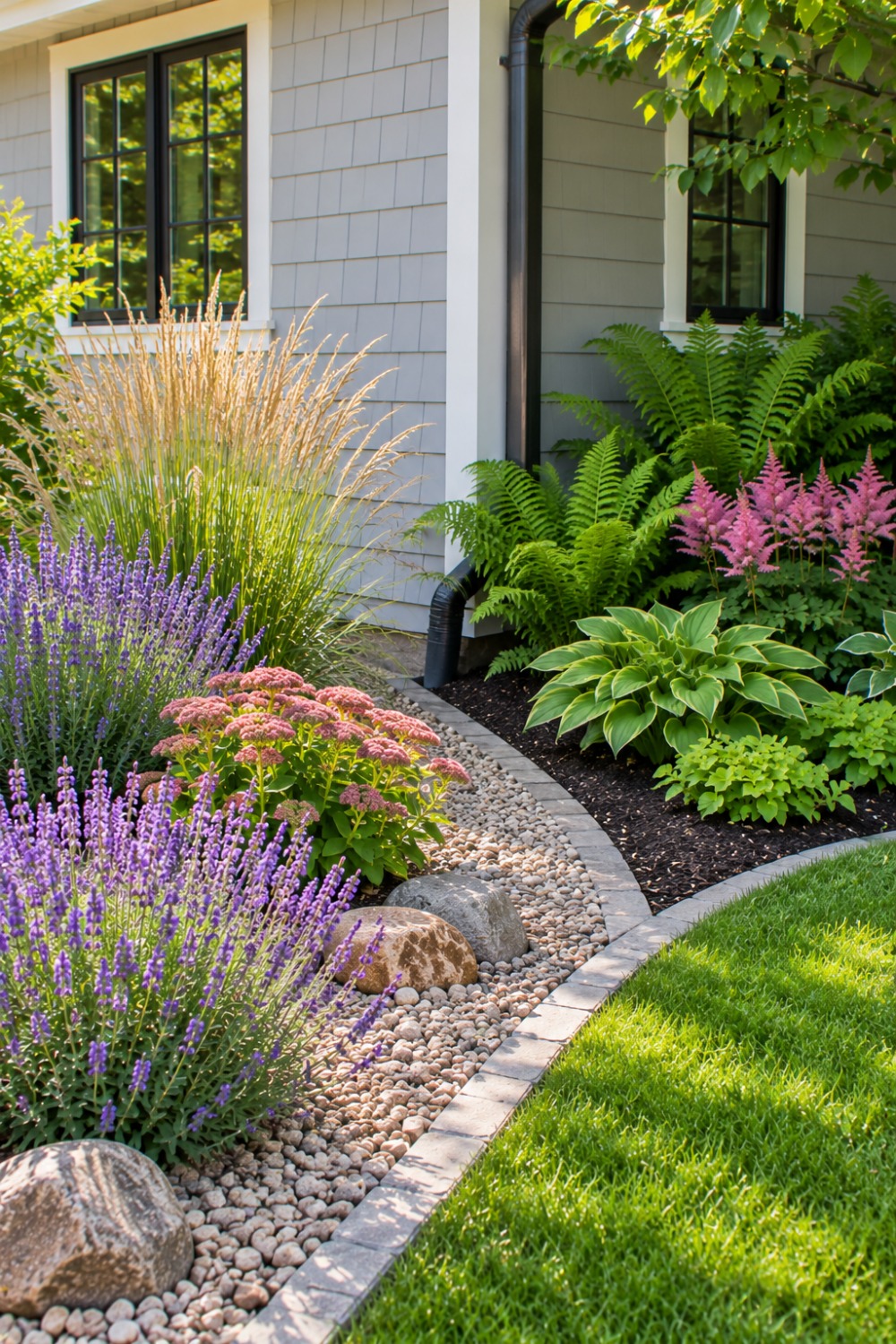
Mixing thirsty and drought-tolerant plants in one bed means you either overwater some or underwater others.
Grouping plants with similar needs, sometimes called hydrozoning, lets you water each area only as much as it needs.
Put drought-tolerant plants in the hottest, driest spots and save thirstier ones for shady areas or near downspouts.
How to do it:
- Map the sunny, shady, dry and damp areas of your yard.
- Group plants with matching needs in each zone.
- Set separate drip zones or watering schedules for each group.
9. Let Grasses and Seed Heads Stand Through Winter
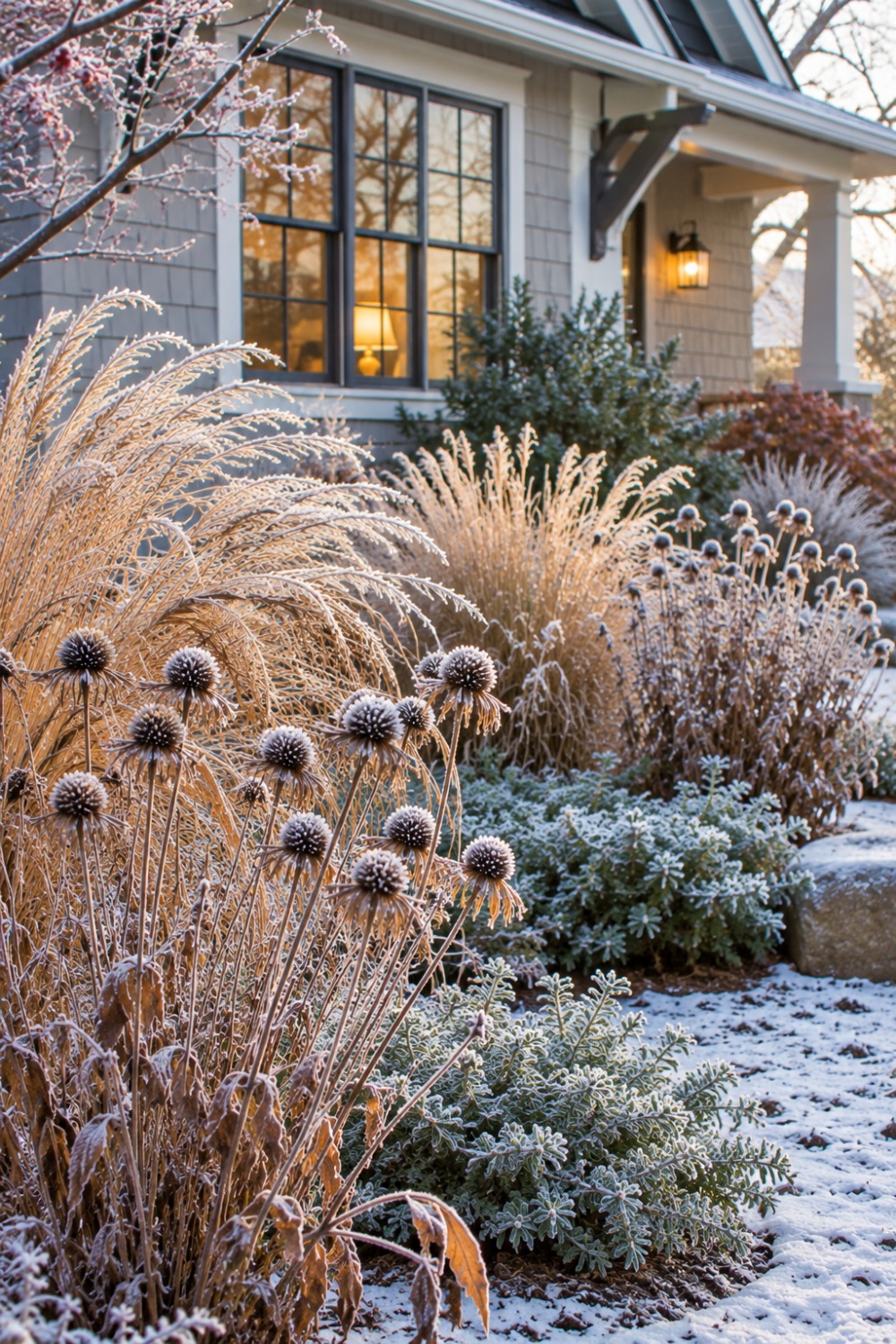
Instead of a big fall cleanup, leave ornamental grasses and sturdy perennials standing through winter.
They catch frost and snow beautifully, give birds food and shelter and protect plant crowns from cold.
Then do one quick cutback in late winter before new growth appears.
How to do it:
- Skip the fall cutback for grasses and seed-heading perennials.
- Remove only anything that collapses or looks messy.
- Cut everything back to a few inches in late winter.
10. Choose a Tree That Doesn’t Drop a Mess
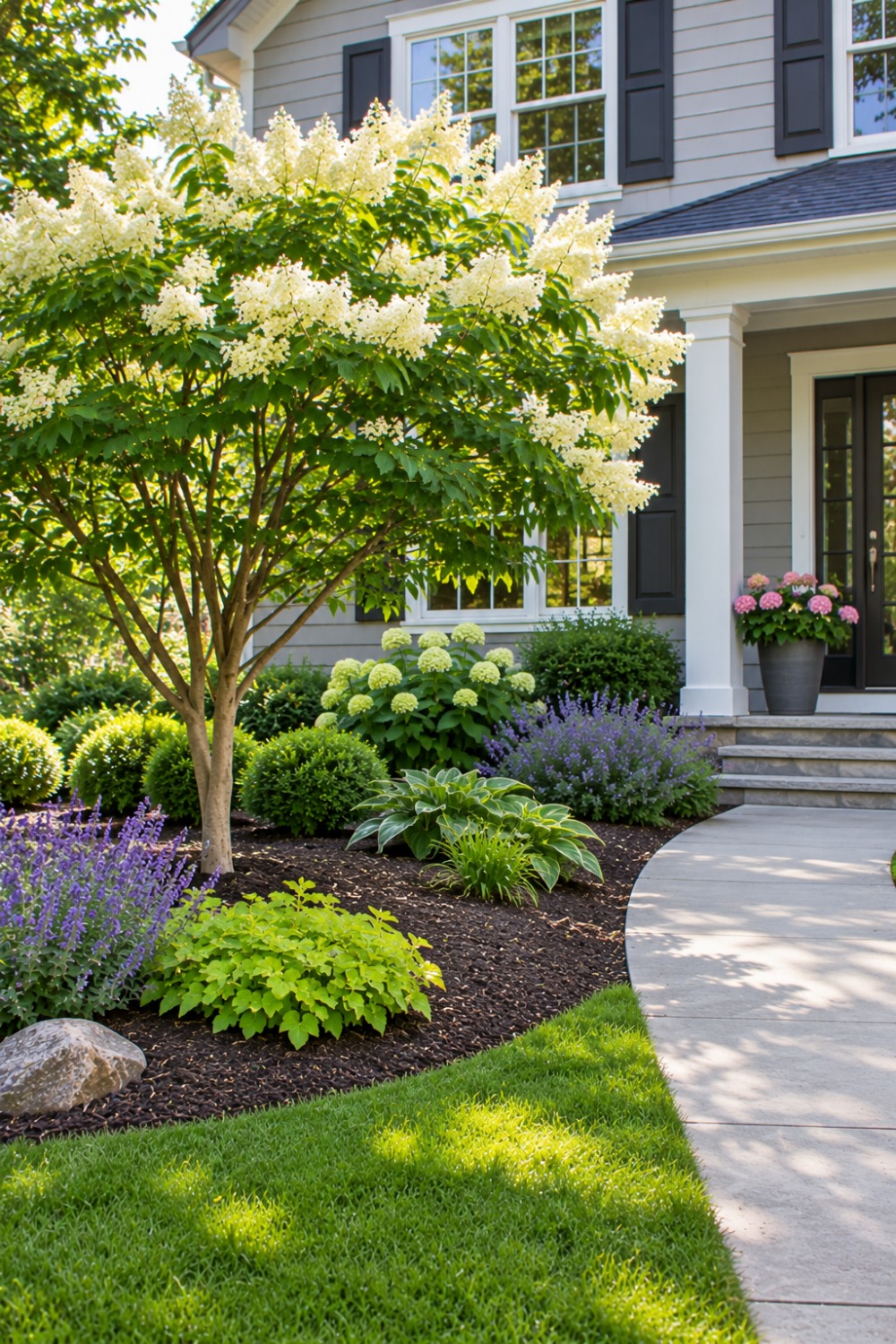
A front yard tree that drops fruit, spiky pods or sticky sap near the walk creates a cleanup job every year.
Avoid sweetgums, mulberries and female ginkgo trees near paths and driveways.
Tidier choices include Japanese tree lilac (Syringa reticulata), American hornbeam (Carpinus caroliniana) and seedless or fruitless varieties of popular trees.
How to do it:
- Check whether a tree drops fruit, pods or seeds before you buy it.
- Choose a tree sized for your yard at maturity.
- Plant it away from gutters and the front walk.
11. Plant Deer-Resistant Plants If Deer Visit
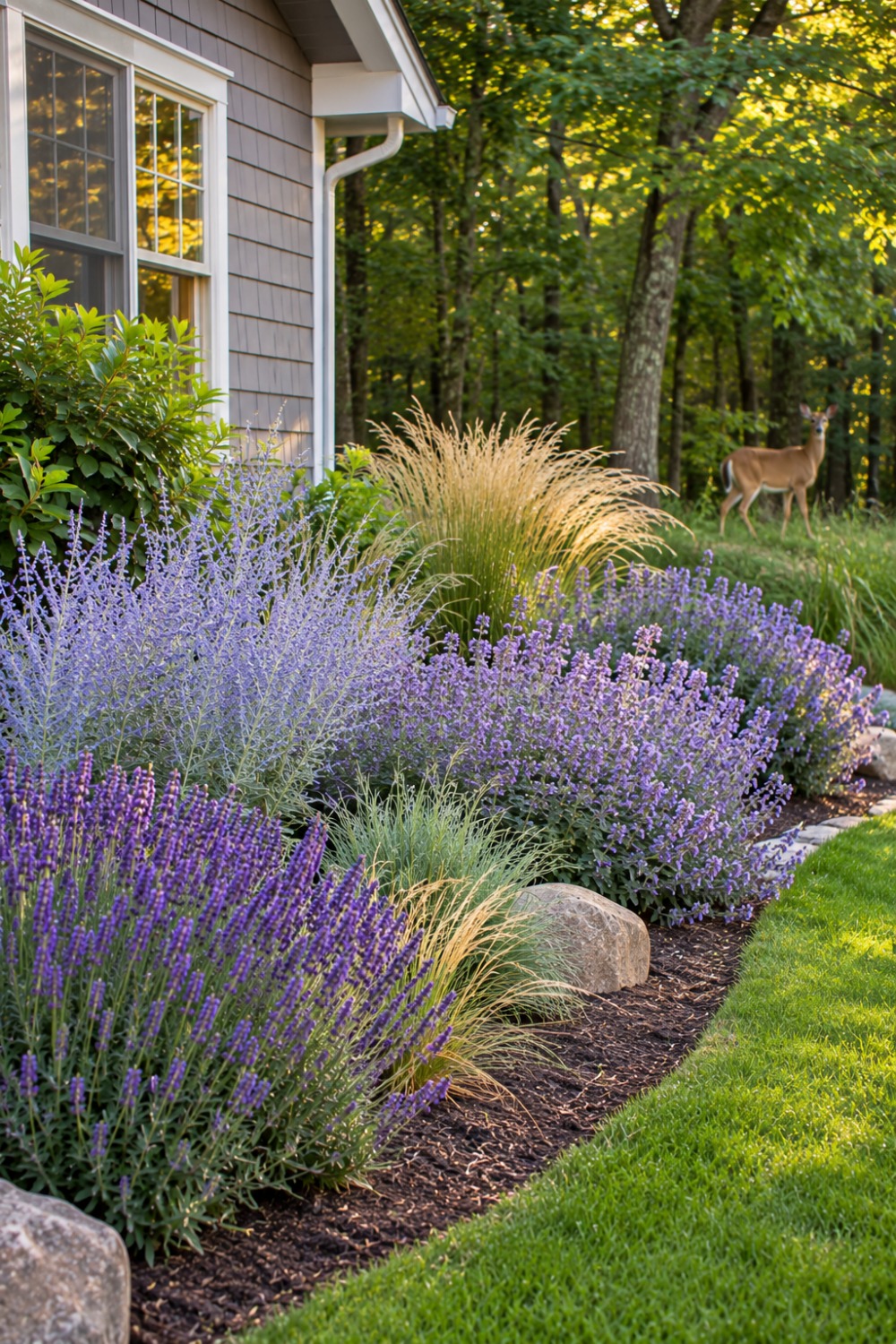
If deer roam your neighborhood, you can lose hours to sprays, fencing and replanting.
Plants deer usually avoid include lavender, catmint, Russian sage (Salvia yangii), daffodils, boxwood and most ornamental grasses.
No plant is completely deer-proof, but choosing ones they dislike makes a big difference.
How to do it:
- Ask neighbors or a local nursery which plants deer leave alone in your area.
- Use aromatic and fuzzy-leaved plants along the edges deer reach first.
- Avoid deer favorites like hostas and tulips in unprotected beds.
12. Cover a Steep Bank With Spreading Shrubs
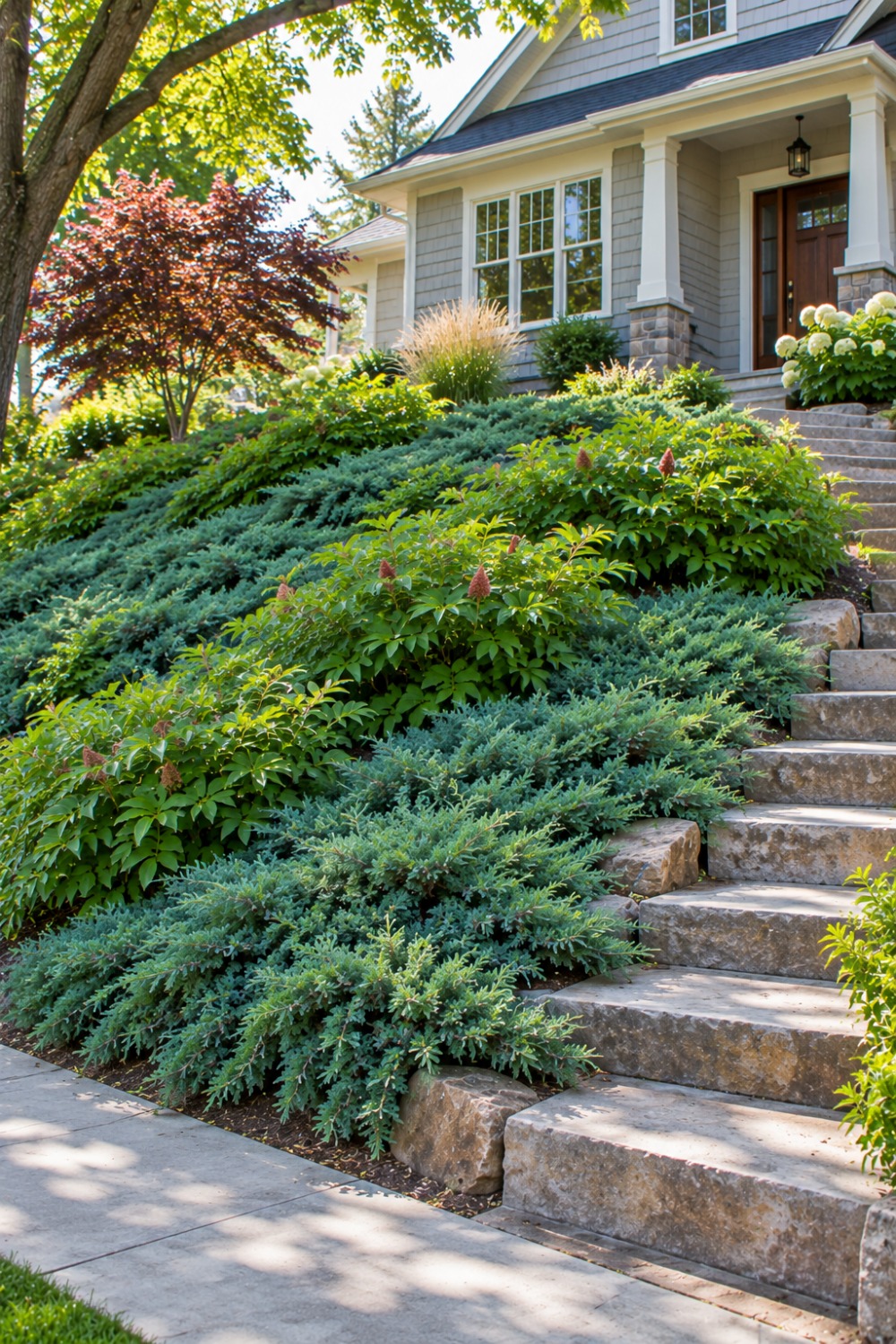
Mowing a steep front bank is hard work and can be unsafe.
Low, spreading shrubs cover the slope, hold soil in place and need almost no care once they knit together.
Creeping juniper, fragrant sumac ‘Gro-Low’ (Rhus aromatica) and bearberry (Arctostaphylos uva-ursi) all work well in sun.
How to do it:
- Remove the grass and lay biodegradable erosion netting on steep slopes.
- Plant through the netting in staggered rows.
- Mulch and water until the plants spread.
13. Choose Hardscape That Never Needs Sealing or Painting
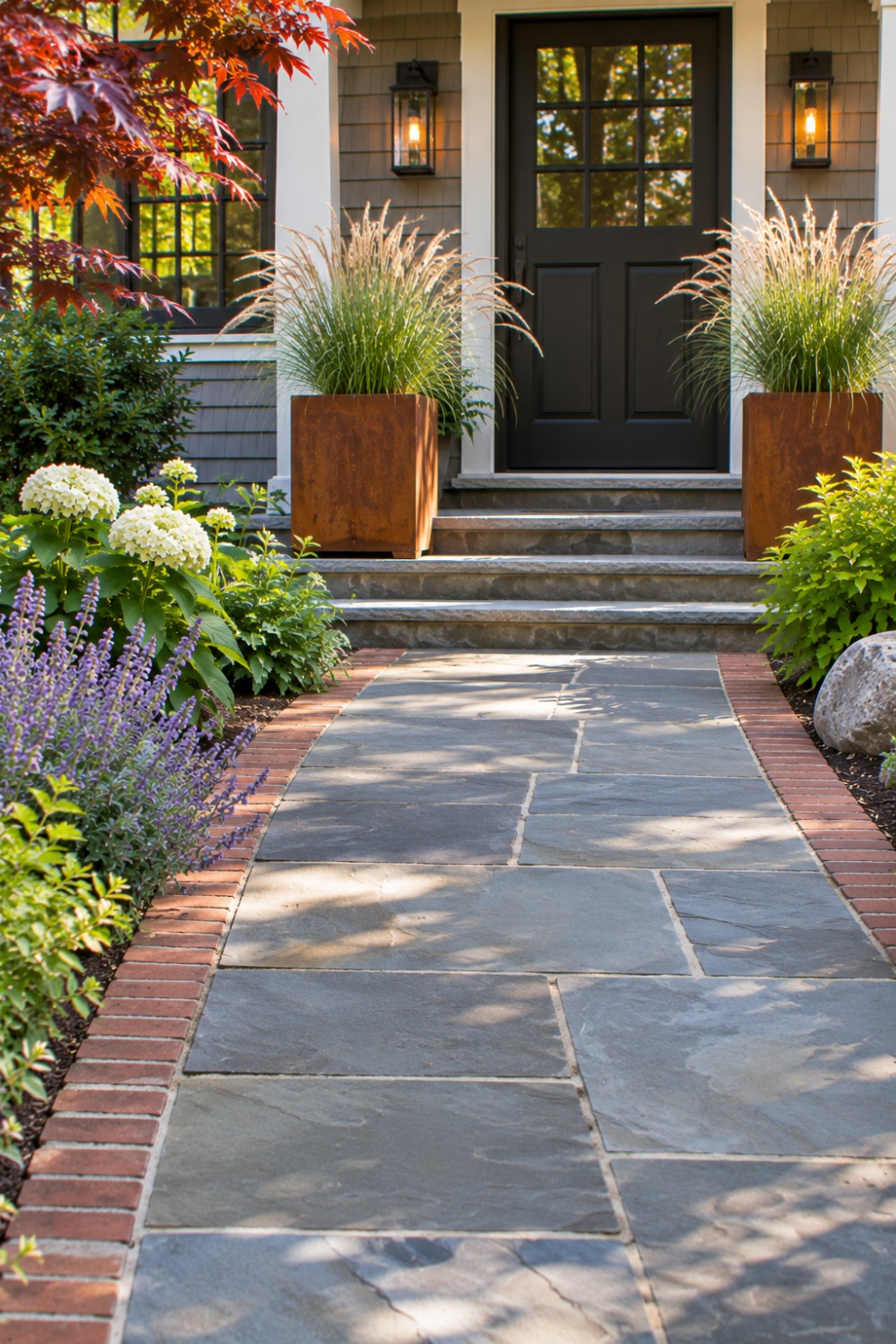
Painted fences, stained wood edging and timber planters all need regular upkeep.
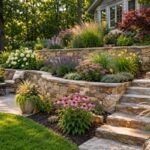
Natural stone, brick, concrete and weathering steel look better as they age and need almost no attention.
Use them for paths, edging, steps and planters, and save wood for features you love enough to maintain.
How to do it:
- List every painted or stained surface in your front yard.
- Replace the worst ones with stone, brick or metal as they wear out.
- Choose finishes that suit your home’s color and style.
14. Plant Shade Ground Covers Under Trees Instead of Grass
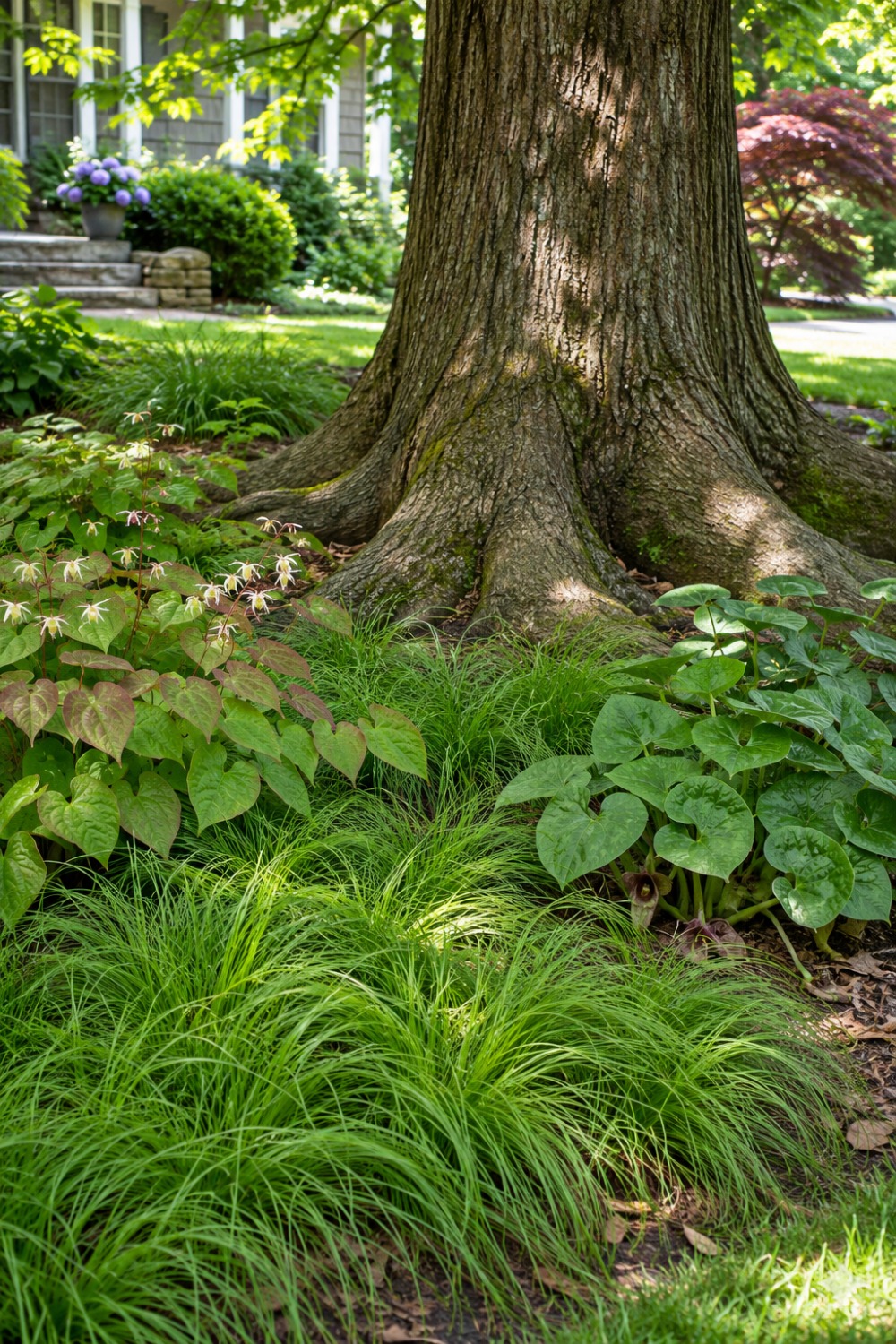
Grass struggles under trees, and patchy shade lawns need constant reseeding.
Shade-tolerant ground covers grow happily there and never need mowing.
Pennsylvania sedge (Carex pensylvanica), barrenwort (Epimedium), wild ginger (Asarum canadense) and Allegheny spurge (Pachysandra procumbens) are good choices. Skip English ivy, vinca and Japanese pachysandra, which are invasive in many areas.
How to do it:
- Remove the struggling grass, taking care not to damage tree roots.
- Add a thin layer of compost, not deep soil, over the roots.
- Plant small plugs and mulch lightly until they spread.
15. Draw Bed Lines Your Mower Can Follow
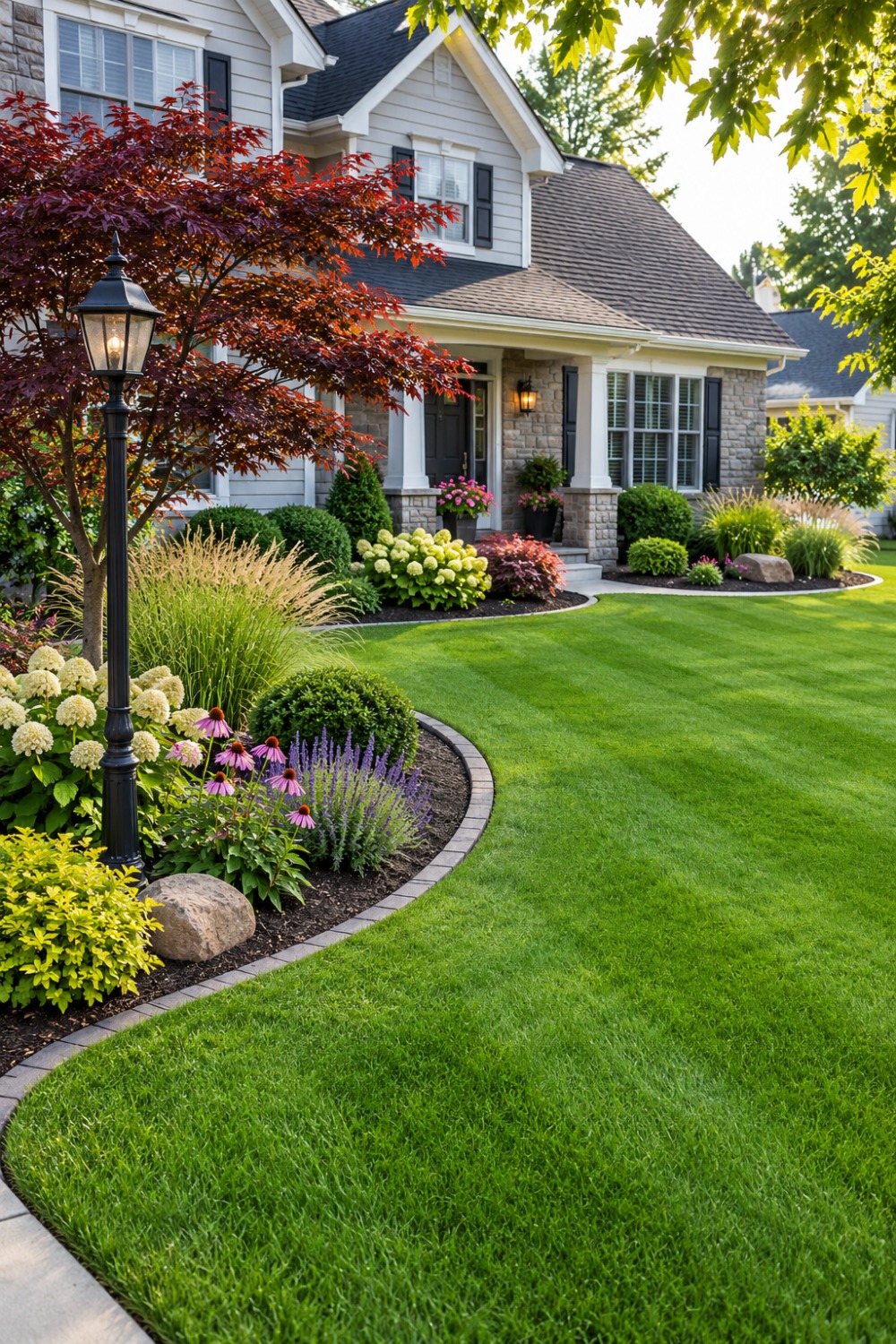
Tight corners, small island beds and lawn around posts all mean extra trimming.
Smooth, gentle curves and straight lines let you mow in one pass without stopping to trim.
Put trees, lampposts and mailboxes inside beds instead of leaving them in the lawn.
How to do it:
- Walk your mower along the bed edges and note where you have to stop or reverse.
- Smooth out tight curves and merge small islands into larger beds.
- Move posts and trees into beds or add a planted circle around them.
For more front yard ideas on a budget, see our cheap simple front yard landscaping ideas.
Frequently Asked Questions
What is the lowest maintenance front yard landscaping?
A front yard with a small, simple lawn or no lawn, compact shrubs sized for the space, native perennials, dense ground covers and drip irrigation needs the least ongoing work. Add stone or brick hardscape that doesn’t need painting.
What plants need the least maintenance in a front yard?
Dwarf evergreen shrubs, ornamental grasses and tough native perennials such as coneflower and black-eyed Susan need little care in many regions. Your local nursery or extension service can suggest the best ones for your climate.
Is a front yard without grass really low maintenance?
It can be, if the beds are densely planted and mulched. Bare gravel or mulch with a few plants often needs regular weeding. Planting densely is what keeps the work down.
How do I keep weeds down in front yard beds?
Plant densely, fill gaps with ground covers, keep 2 to 3 inches of mulch on any bare soil and pull weeds while they’re small. Drip irrigation also helps by watering only the plants you want.
Final Thoughts: Let Smart Choices Do the Work
A low maintenance front yard starts with decisions, not tools.
Choose plants that fit their space at maturity, so you’re not fighting them with shears every year.
Simplify the lawn into one easy shape, and turn the awkward bits into dense, well-planted beds.
Repeat a handful of tough, local plants instead of collecting dozens of different ones.
Let drip irrigation handle the watering, and let grasses and seed heads stand until one quick late-winter cleanup.
Use stone, brick and steel for hardscape, and smooth bed lines your mower can follow.
If you like the idea of rock and gravel for even less upkeep, our front yard landscaping ideas with rocks and small front yard landscaping ideas are good next reads.
Make one or two changes this season. Each one saves you time every year after.