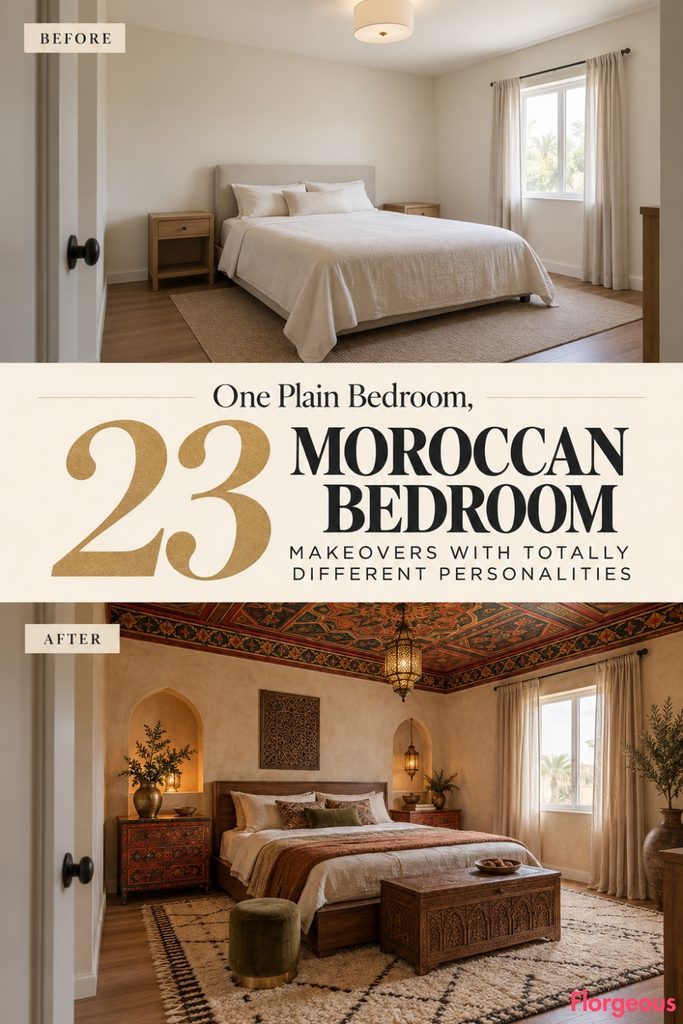
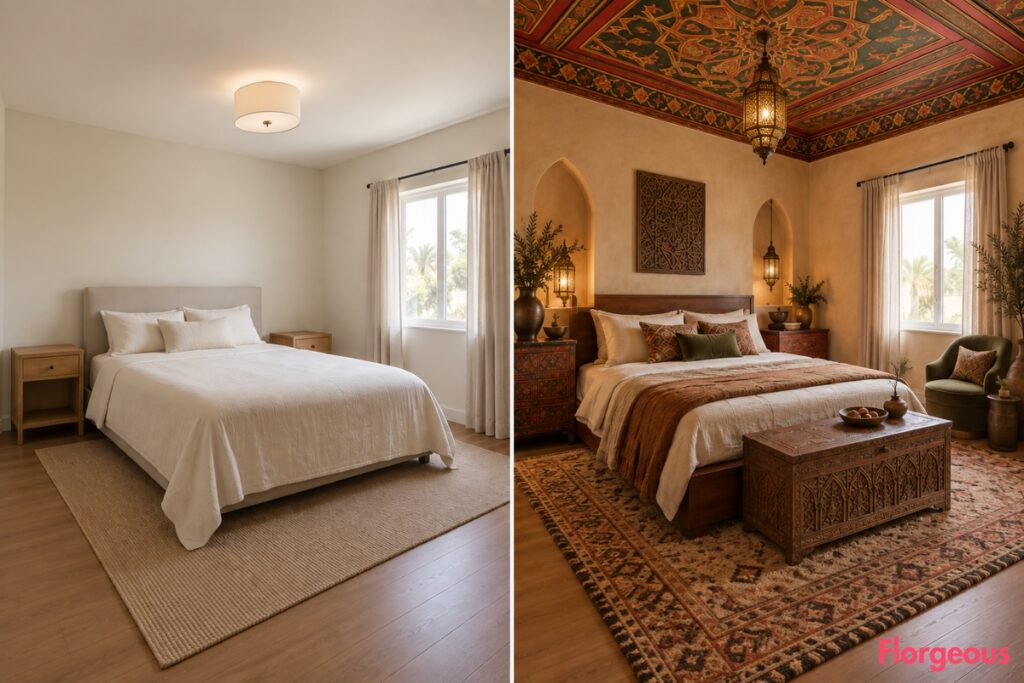
A builder-grade bedroom can be tidy and functional yet still feel completely anonymous. The starting room here is deliberately ordinary: warm off-white walls, a basic rectangular bed with cream bedding, two bare nightstands, short plain curtains, ordinary flooring, minimal styling, and a generic ceiling fixture.
That exact room becomes 23 very different spaces. Each makeover changes the furniture composition, palette, materials, focal point, decorative strategy, and atmosphere, not simply the color of the walls.
The result is a Moroccan Bedroom gallery that moves from refined woodwork and graphic metal to desert textures, urban polish, romantic embroidery, and contemporary sculptural spaces without repeating the same terracotta, arch, rug, and lantern formula.
1. Make a Jewel-Toned Room Around a Zouak Ceiling
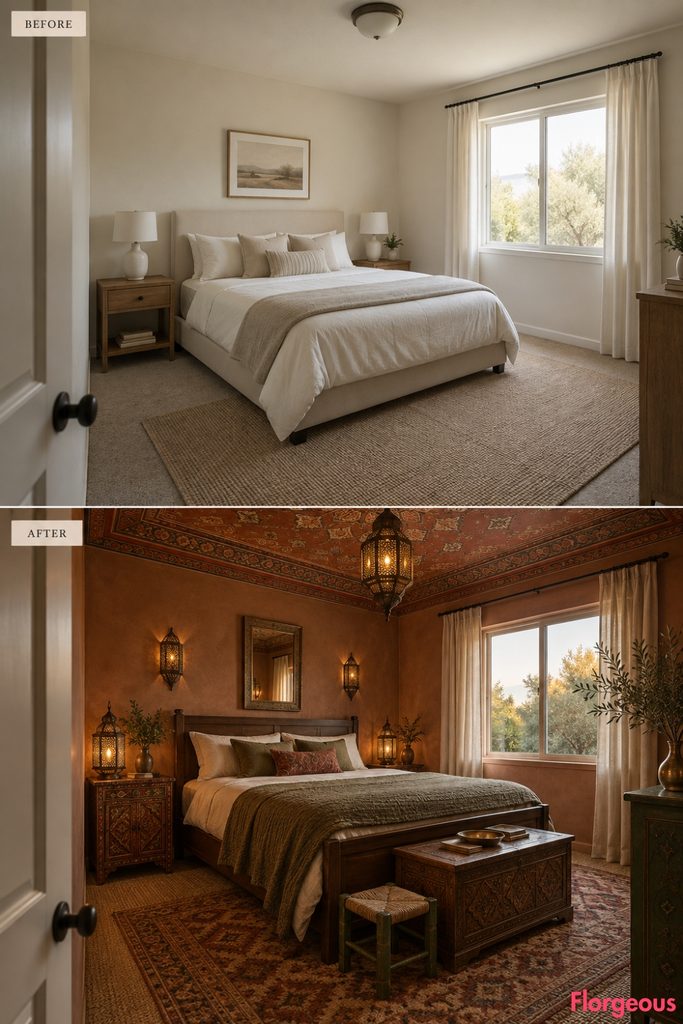
This direction should feel decorative, intimate, and crafted rather than rustic.
Before: The plain ceiling, basic bed, and empty nightstands give the room no hierarchy.
After: A hand-painted timber ceiling in garnet, deep green, ochre, and black sits above a low walnut bed. Add a lacquered bedside chest, a carved cedar blanket box, and a petite velvet stool in dark olive. Keep walls parchment and bedding relatively quiet.
2. Give the Room a Graphic Romantic Four-Poster
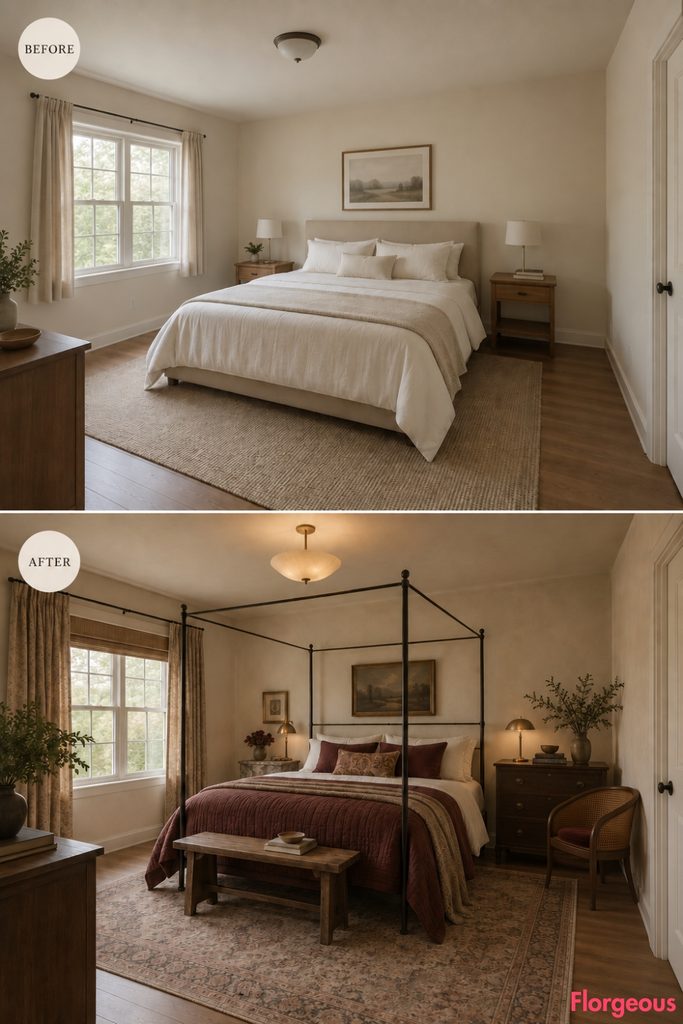
Here the personality comes from height, black iron, and softer textiles.
Before: Everything sits low, making the room feel flat and forgettable.
After: Position a tall black forged-iron four-poster rear-left. Use ivory plaster, a faded berry coverlet, one marble-topped pedestal, a small dark drawer chest, and a curved cane reading chair near the window. The contrast is strong but not ornate.
3. Create a Sun-Baked Room With a Full Bejmat Floor
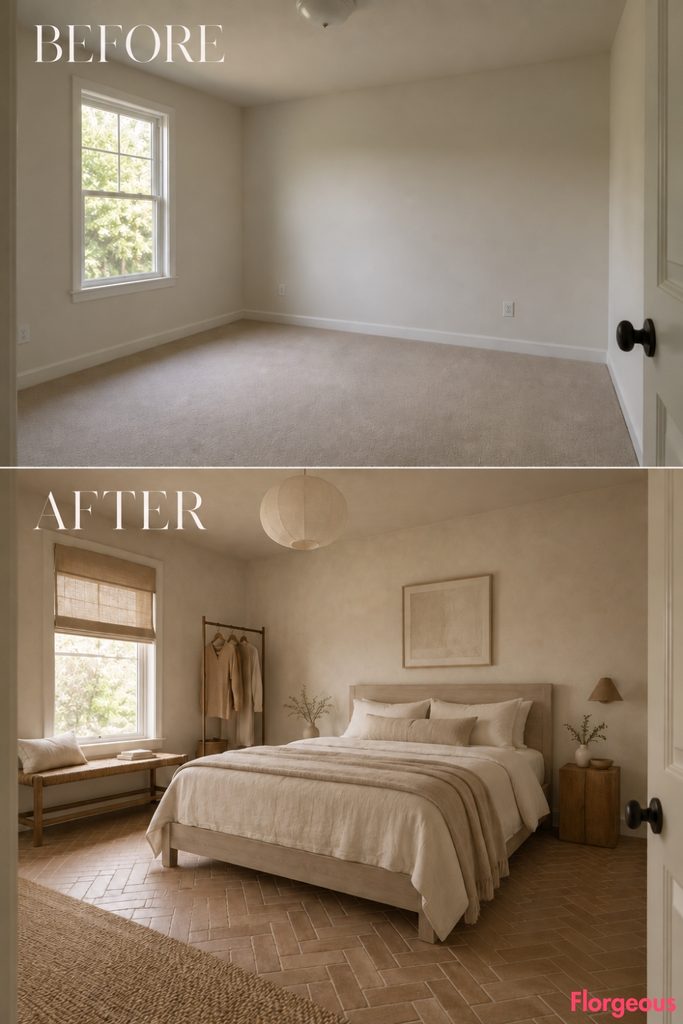
This version should feel earthy, dry, architectural, and relaxed.
Before: The ordinary floor disappears beneath generic furniture.
After: Cover the floor in clay bejmat laid in herringbone. Use a pale ash bed with exposed legs, a narrow rush bench beneath the window, one small timber bedside block, and a slim open clothes rail instead of a heavy wardrobe.
Designer Tip: Expose as much of a beautiful floor as possible.
4. Make Thuya Burl Feel Polished and Refined
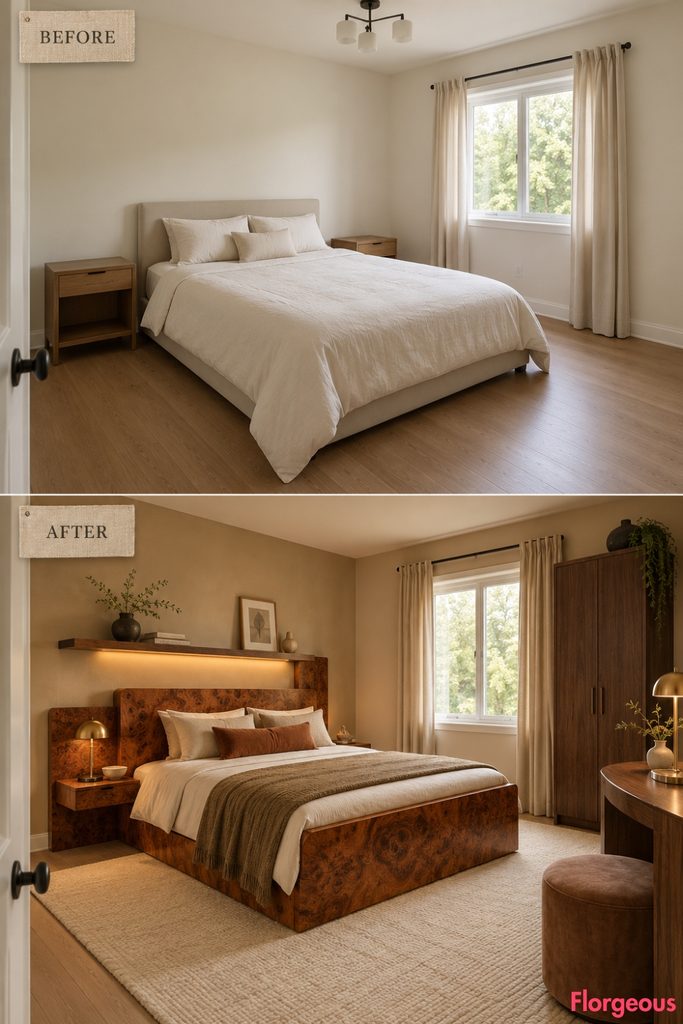
Rather than earthy Moroccan styling, this room leans warm, woody, and sophisticated.
Before: The standard bed and matching tables have no material character.
After: Use a low thuya-burl bed with an asymmetrical headboard shelf, a slim kidney-shaped dressing table on the opposite wall, a suede stool, and one tall plain walnut linen cabinet. The palette stays champagne, tobacco, and cream.
5. Go Moody With Tobacco Leather and Dark Wood
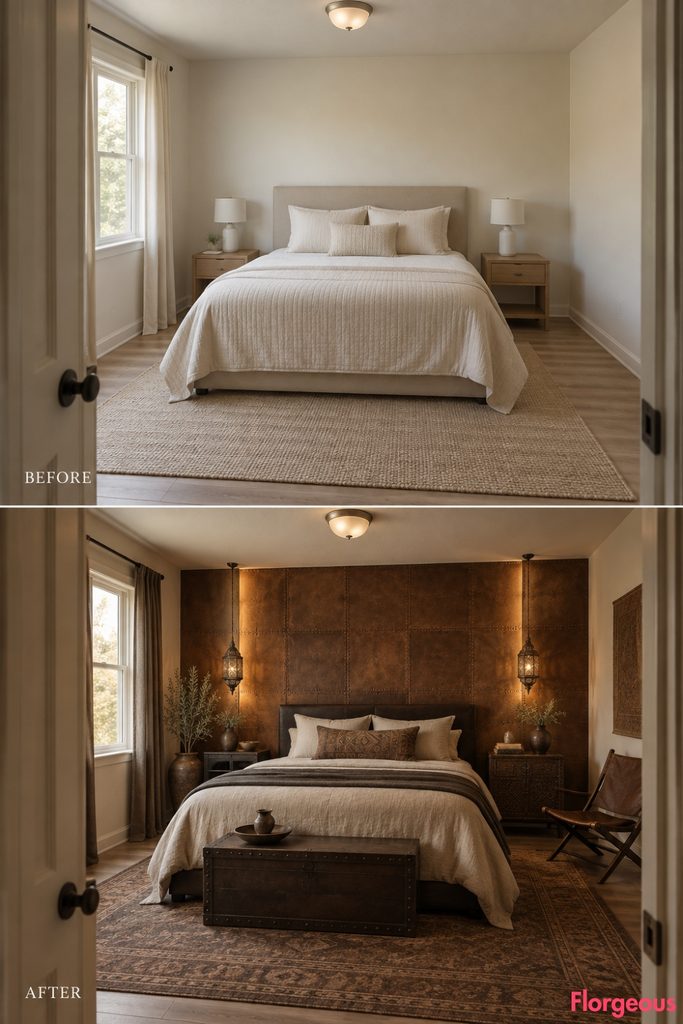
This makeover should feel enclosed, tactile, and quietly dramatic.
Before: Flat off-white drywall gives the bed wall no depth.
After: Large stitched tobacco-leather panels sit behind a near-black timber bed. Pair them with one leather-front drawer cabinet, a low campaign-style chest on the side wall, and a compact sling chair in aged brown leather. Use bone linen to stop the room becoming too dark.
6. Give the Bedroom a Cool Casablanca Dressing-Room Mood
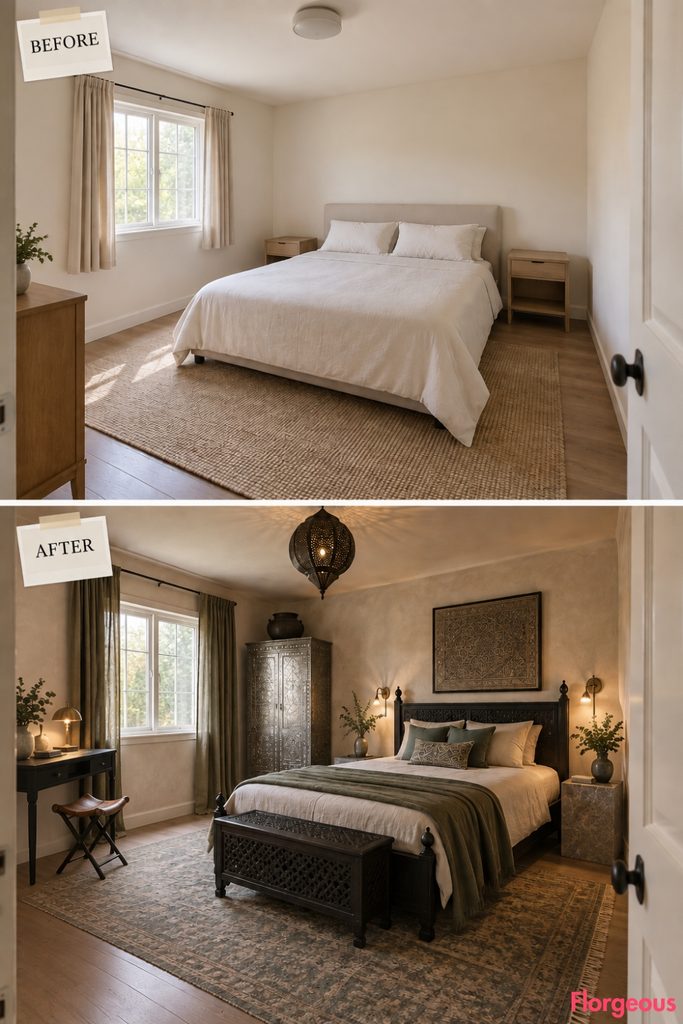
Silver, charcoal, stone, and clean furniture make this one feel urban rather than earthy.
Before: The room has no dressing zone and little contrast.
After: Shift an ebonized bed rear-left. Opposite it, place a tall silver-faced cabinet, a narrow black writing desk, and a saddle stool. A low gray-stone bedside plinth and muted eucalyptus bedding complete the cooler palette.
7. Turn the Room Into a Low Atlas Textile Cocoon
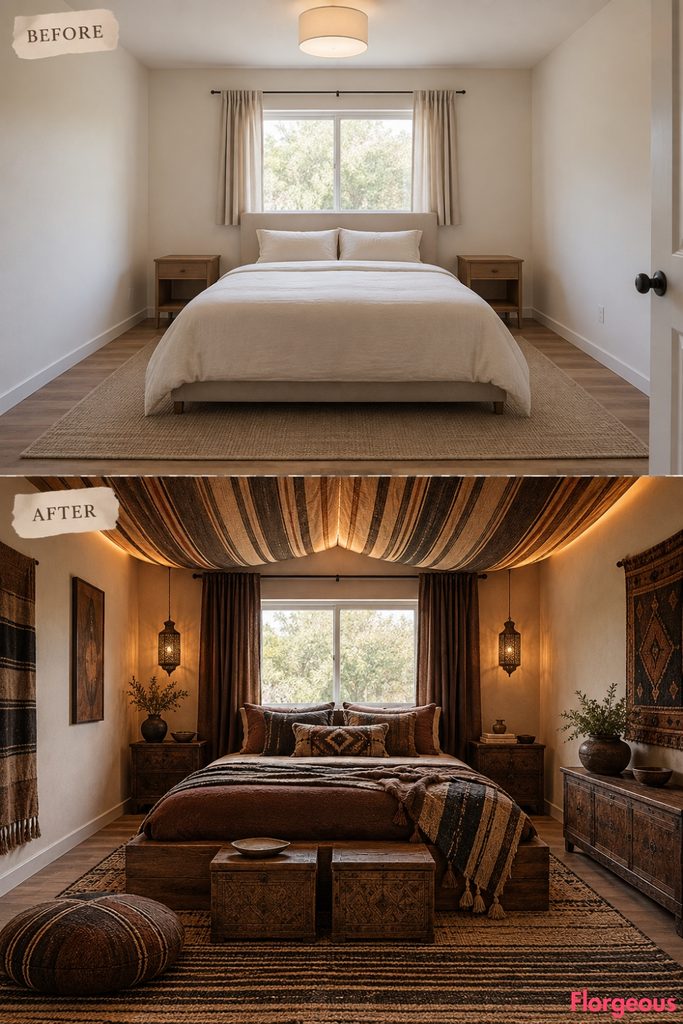
This room should feel low, warm, enveloping, and heavily textile-driven.
Before: The standard-height furniture and blank ceiling feel stiff.
After: Stretch tobacco, black, cream, and faded-red striped textiles loosely overhead. Put a mattress on a low cedar platform, use two squat storage boxes, a broad wool-covered floor cushion near the window, and a long low blanket cabinet.
Color Story: Keep hard furniture dark and simple so the woven pattern dominates.
8. Create a Precise Inlaid-Wood Bedroom
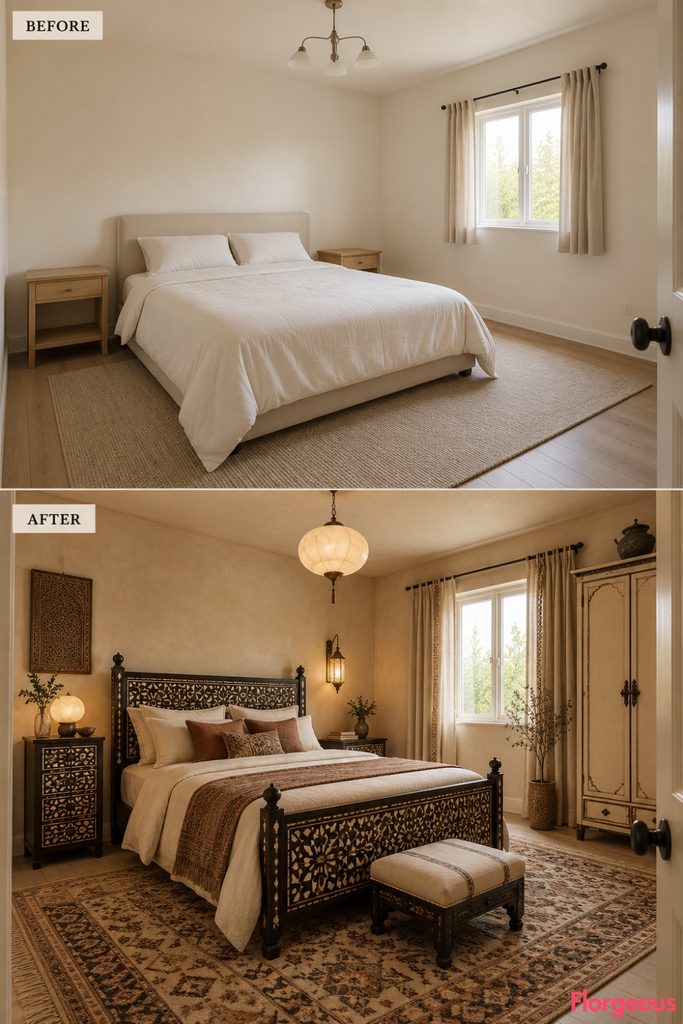
This interpretation feels formal, crafted, and controlled.
Before: The plain furniture lacks fine detail.
After: A dark bed with narrow geometric inlay becomes the anchor. Add a tall slender drawer pedestal, a small inlaid bedside cabinet, a cream-painted wardrobe with dark timber edging, and a neat upholstered dressing stool. Keep walls parchment and textiles crisp.
9. Make the Window Corner Feel Like a Quiet Old-House Retreat
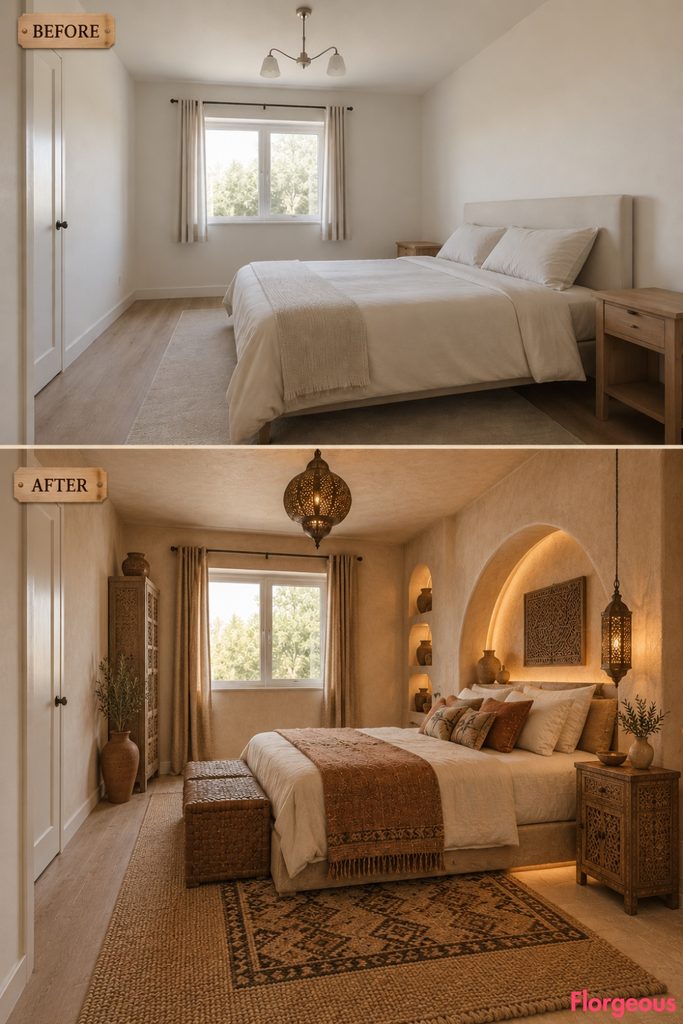
Stone, washed timber, and pale plaster create an almost monastic mood.
Before: The window corner is empty and the furniture clusters around the bed.
After: Put a simple washed-oak bed on the side wall. At the window, use a carved pale-stone washstand, round mirror, narrow linen cupboard, and low woven stool. A single small drawer table serves the bed.
10. Make Shadow and Pierced Metal the Design Language
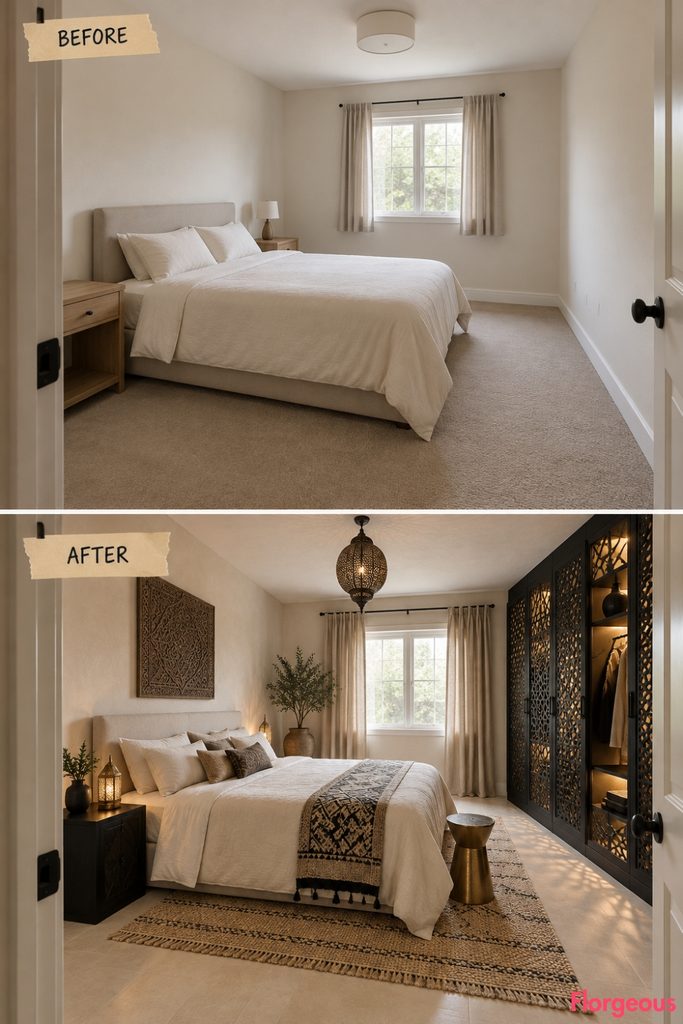
This room is darker, sharper, and more architectural.
Before: Generic storage does nothing visually.
After: A tall matte-black wardrobe with perforated metal doors runs along one side wall. Opposite it, place an ivory upholstered bed, a low black bedside cube, and a slim bronze dressing stool. Keep the floor pale so the shadow pattern remains legible.
11. Build a Soft Wool-Cocooned Bedroom
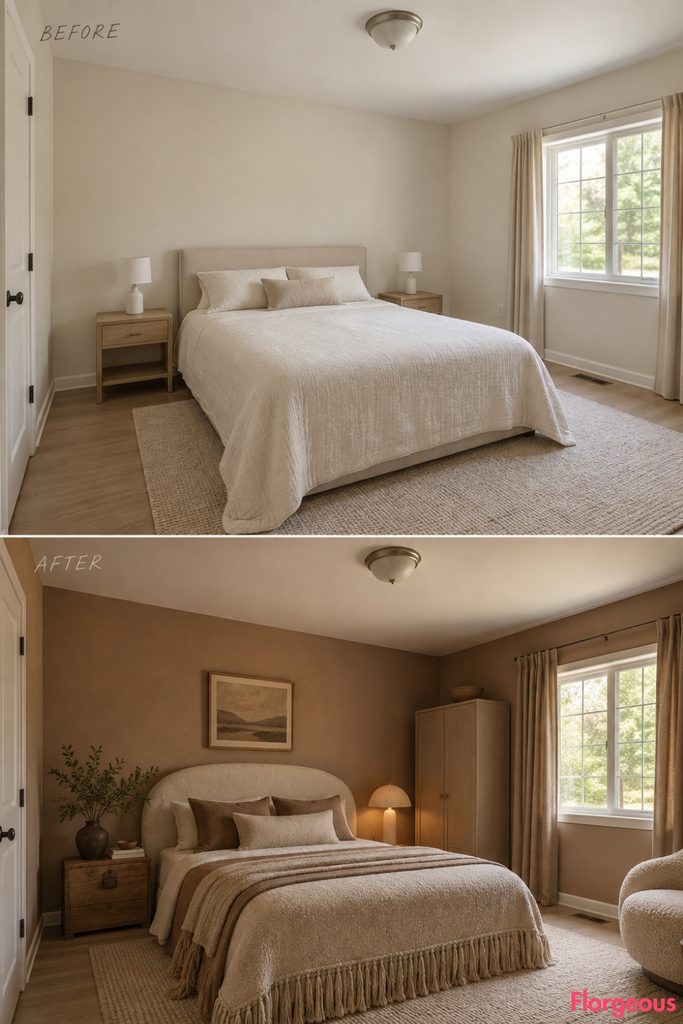
The mood here is tactile, muted, and almost cloudlike.
Before: The plain bed base feels hard and visually disconnected from the floor.
After: Use a rounded oatmeal upholstered bed with a dense cream-and-charcoal fringed wool base. Add a squat timber chest, a mushroom-colored wardrobe, and one enveloping low lounge chair upholstered in nubby wool. Walls stay dusty clay.
12. Make Mismatched Sculptural Chairs the Bedside Story
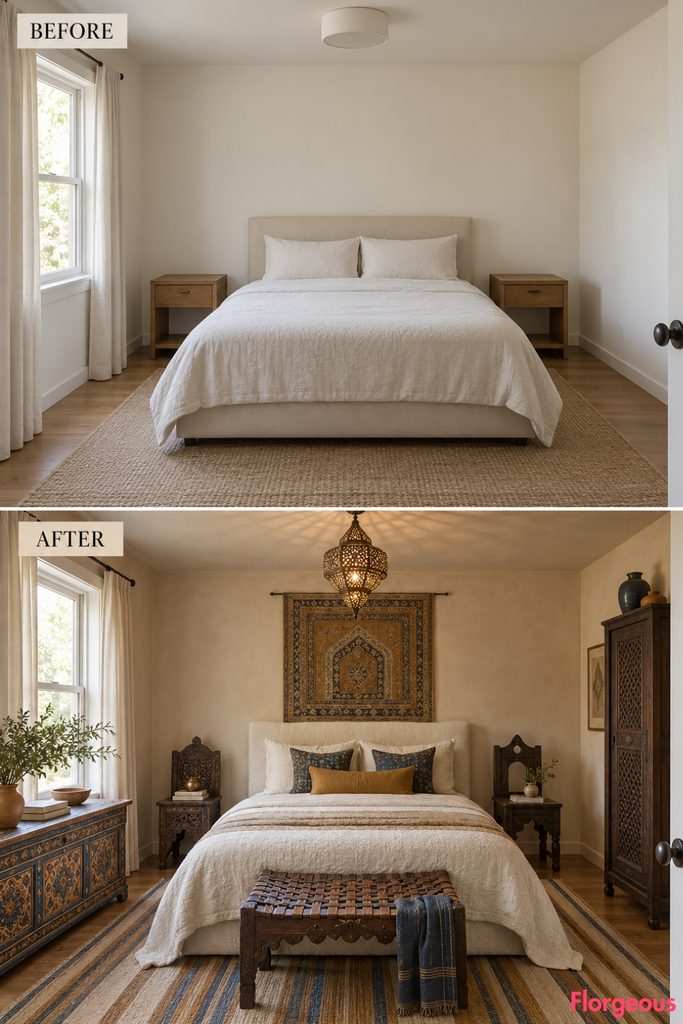
This version should feel collected, artistic, and slightly playful.
Before: Two identical nightstands make the bed wall formulaic.
After: Flank a cream bed with two different sculptural dark-wood chairs. Move storage to a wide painted chest beneath the window and add a narrow freestanding cupboard near the door. Ochre, muted blue, and black give the room a more graphic personality.
Small Space Tip: Moving storage away from the mattress can make a narrow bed zone feel lighter.
13. Treat the Bedroom Like a Desert Gallery
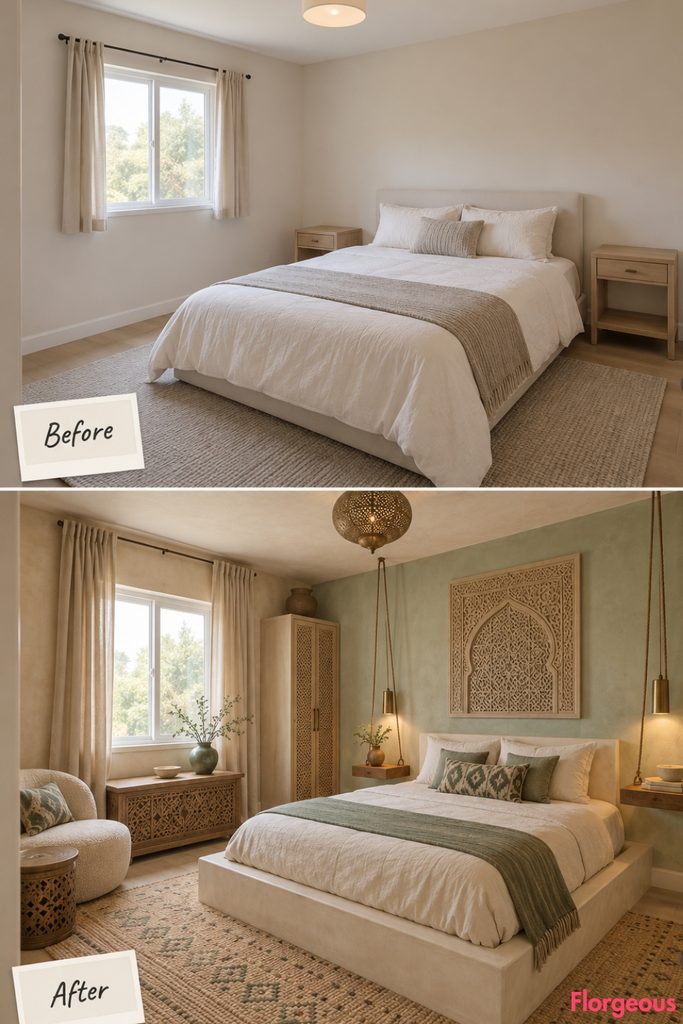
This one is spare, mineral, and sculptural rather than cozy.
Before: Equal bedside furniture and generic finishes create no hierarchy.
After: Put a charcoal bed slightly off-center with one tall fossil-stone monolith beside it. Across the room, use a pale oak wardrobe and a narrow saddle-leather bench. Leave large areas of wall and floor deliberately empty.
14. Create a Festive Bedroom Around Embroidered Bedding
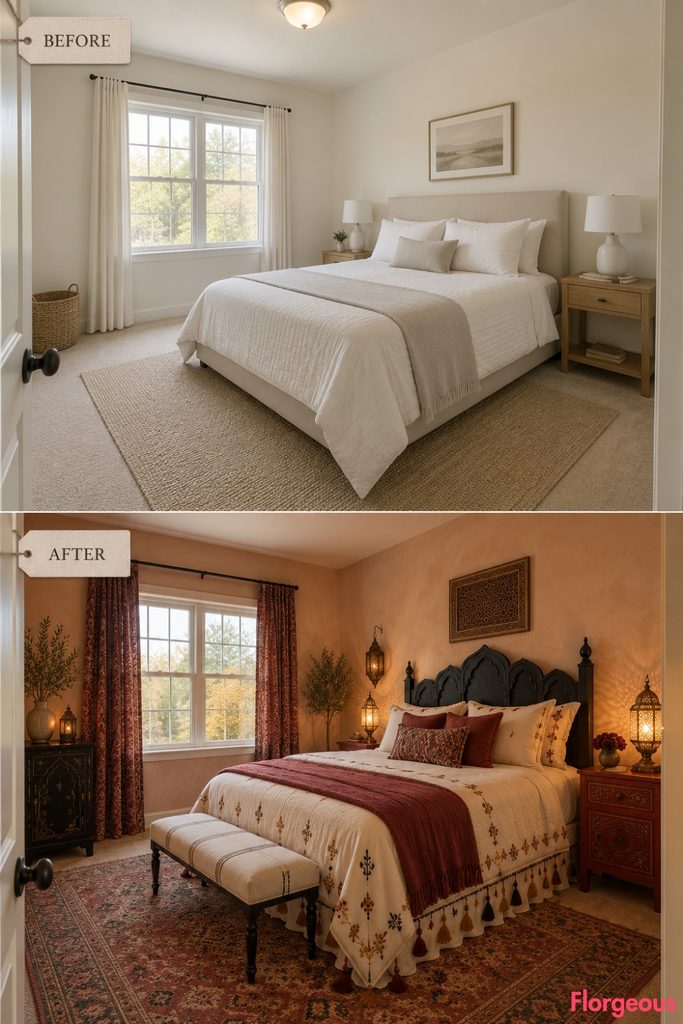
Unlike the quieter rooms, this direction feels decorative, warm, and romantic.
Before: Plain cream bedding gives the bed no personality.
After: Dress a dark painted bed with a cream valance densely embroidered in saffron, black, and faded raspberry. Add a small red-painted drawer table, a black lacquer cabinet, and a narrow upholstered dressing bench. Keep the walls pale peach rather than adding more pattern.
15. Make the Bedroom Airy With Suspended Bedside Trays
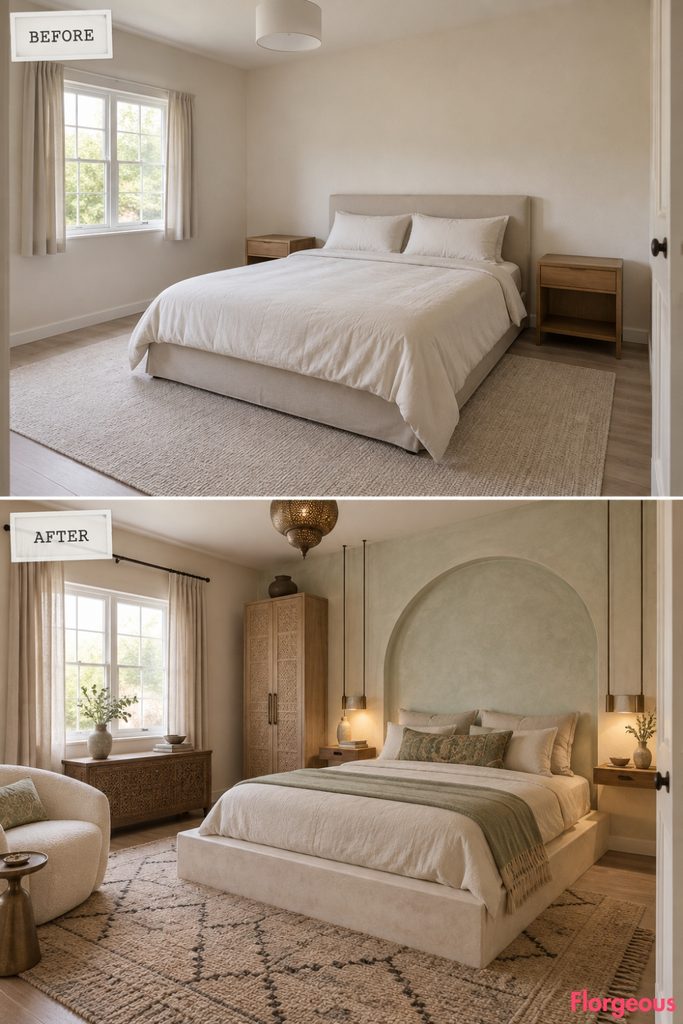
This is the lightest and most contemporary furniture composition.
Before: Floor-standing nightstands make both sides of the bed feel heavier.
After: Use a pale platform bed with two tiny suspended timber trays. Put a tall narrow wardrobe on the far wall, a low chest below the window, and one curved upholstered chair between them. Use chalk, pale mint, flax, and natural wood.
16. Create a Contemporary Moroccan Gallery With a Brass Mobile
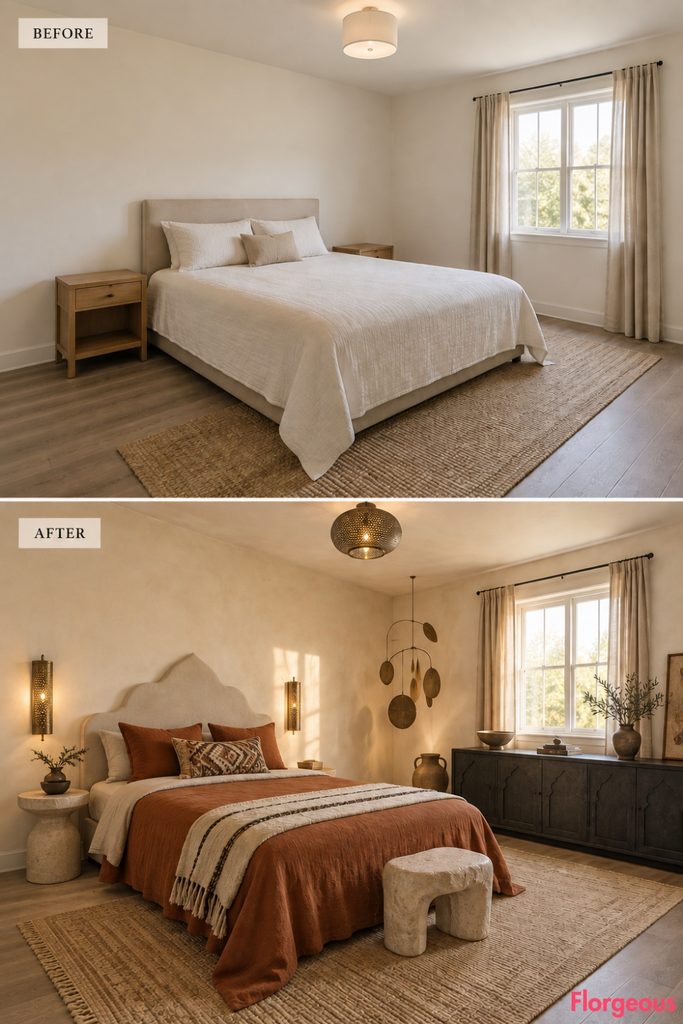
This room should feel sculptural, composed, and intentionally sparse.
Before: The unused corner looks accidental.
After: Shift a low cinnamon-upholstered bed toward the right. Suspend an aged-brass kinetic mobile in the open left corner, with a long charcoal storage credenza behind it and one sculptural stone stool near the bed. Pattern is almost entirely absent.
17. Make the Floor Border Graphic and Playful
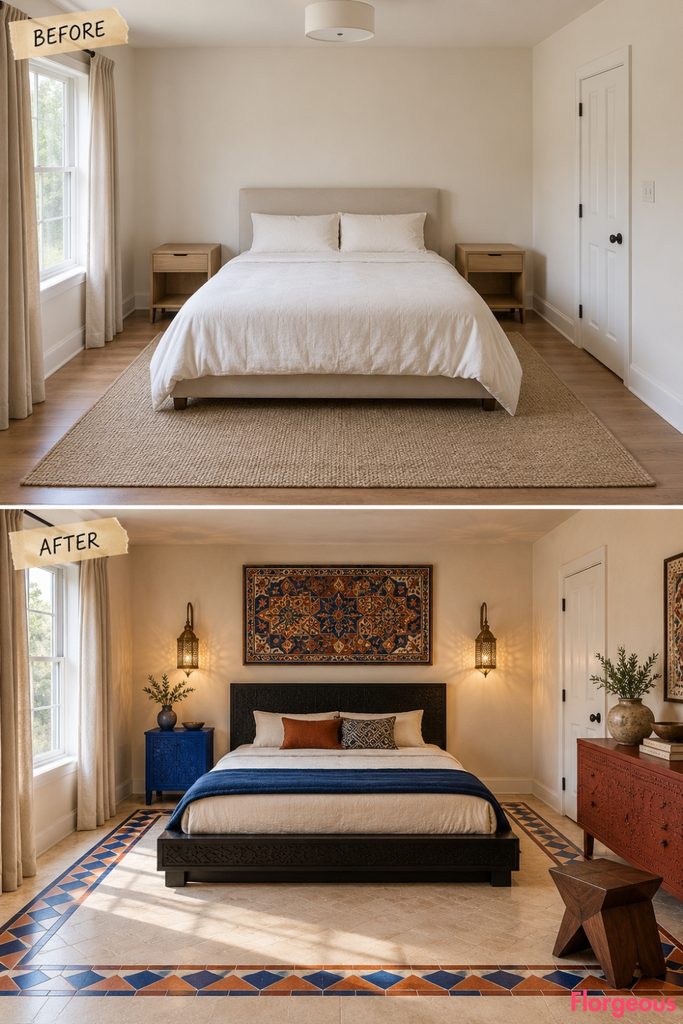
This direction uses crisp geometry and stronger color rather than soft earthy layering.
Before: Ordinary flooring has no relationship with the furniture.
After: Paint a broad cobalt, cream, rust, and black border around the floor perimeter. Pull a low black bed slightly forward, add a cobalt bedside cabinet, a rust-painted low dresser, and an angular timber stool near the window.
Budget Version: A removable vinyl border can create the same graphic effect.
18. Give the Room a Desert-Modern Tensioned Headframe
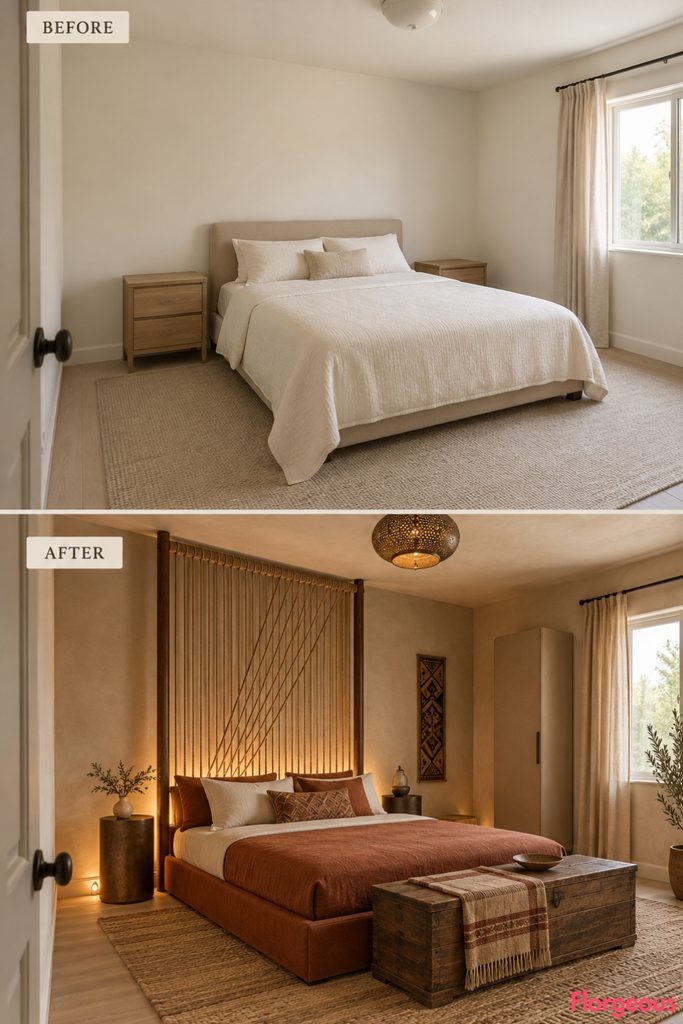
This makeover feels dry, structural, and handmade.
Before: The basic headboard makes the room look short and static.
After: A tall open timber frame with widely spaced tensioned cord rises behind a low rust-colored bed. Use a raw timber blanket chest, one cylindrical bedside table, and a tall plain storage tower placed away from the bed.
19. Make Plaster Furniture Feel Sculptural and Modular
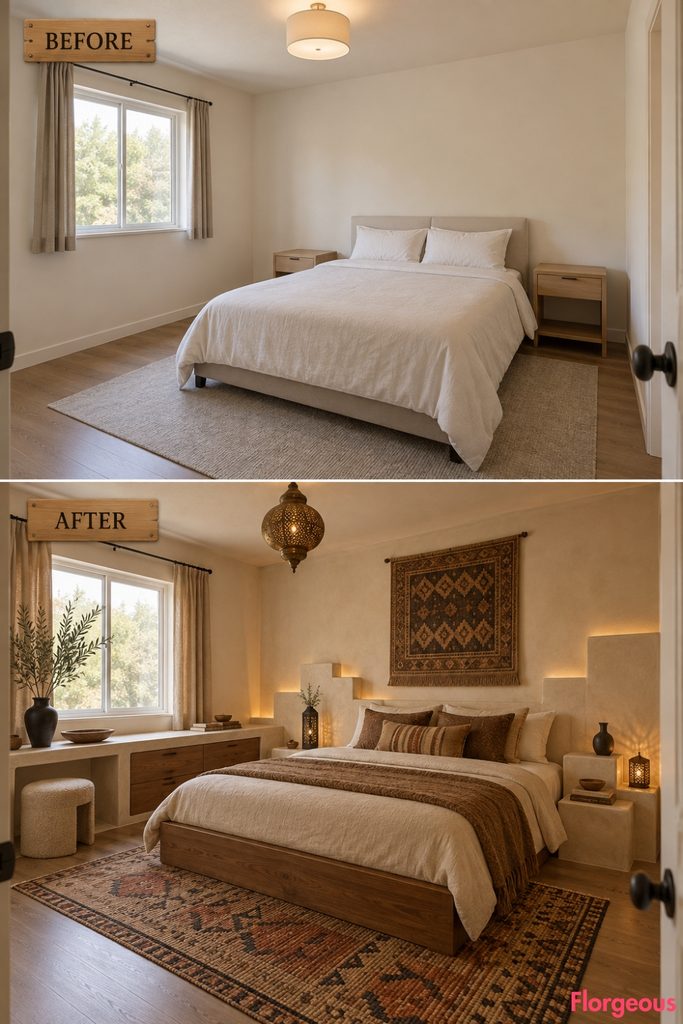
Here the whole room is shaped by chunky pale volumes.
Before: Matching nightstands create a conventional furniture line.
After: Put a simple oak bed beside three stepped plaster cubes. Across the room, use one long low plaster storage bench with timber drawer inserts and a small rounded dressing stool. Keep the palette chalk, sand, and tobacco.
20. Make a Saddle-Leather Chaise Set the Mood
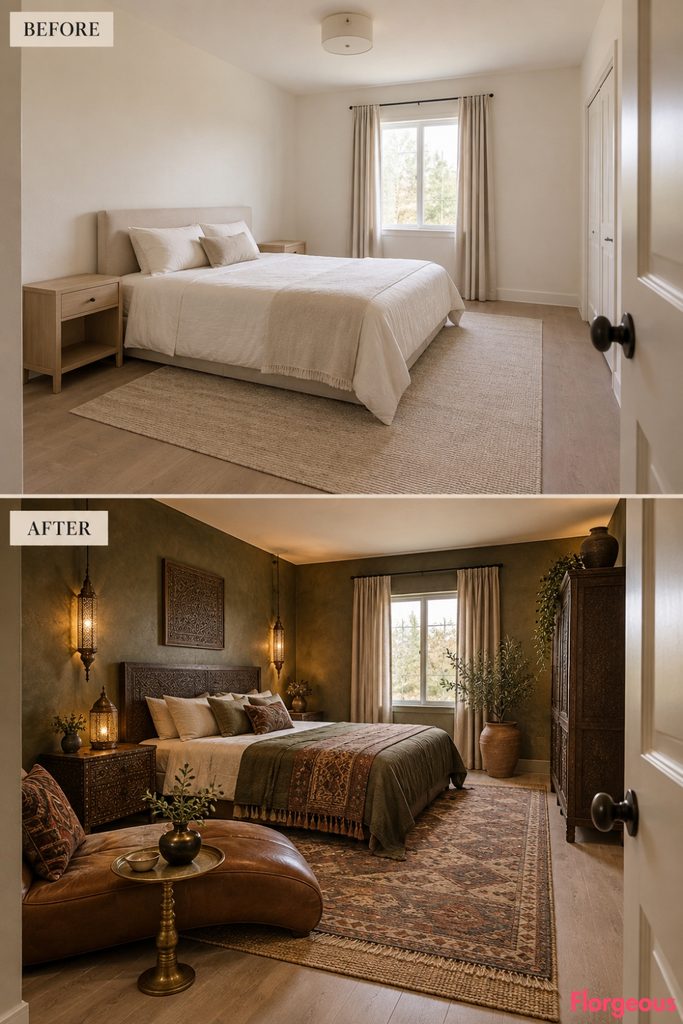
This room feels richer, clubbier, and more relaxed.
Before: There is nowhere to lounge, and the side wall contributes nothing.
After: Place a compact cognac saddle-leather chaise against the right wall with a small brass-topped table. Use a dark walnut bed rear-left, one low bedside chest, and a tall tobacco-colored cupboard in the far corner. Deep olive plaster strengthens the mood.
Common Mistake: Do not sacrifice the main doorway-to-bed route for lounge furniture.
21. Use a Painted Border to Create a Crisp Decorative Room
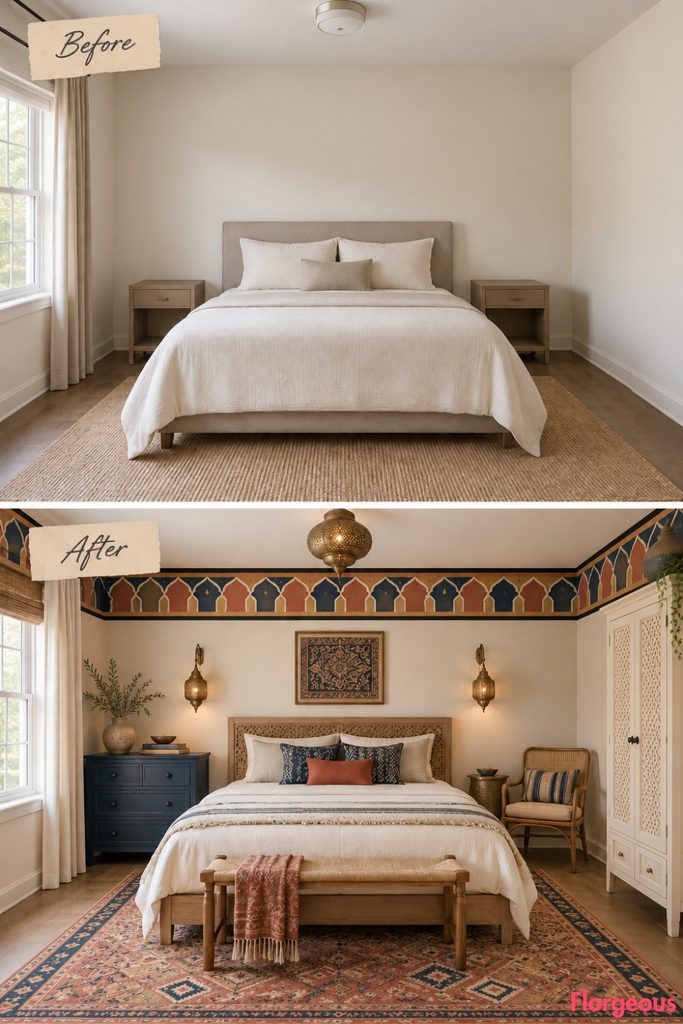
This design feels bright, graphic, and handcrafted rather than moody.
Before: Door casing, window trim, and furniture feel unrelated.
After: Run one continuous narrow border in indigo, faded coral, ochre, and black around the visible doorway, window, and upper wall line. Below it, use a pale timber bed, indigo-painted dresser, natural cane chair, and compact cream wardrobe.
22. Turn the Side Wall Into a Burnished Copper Dressing Room
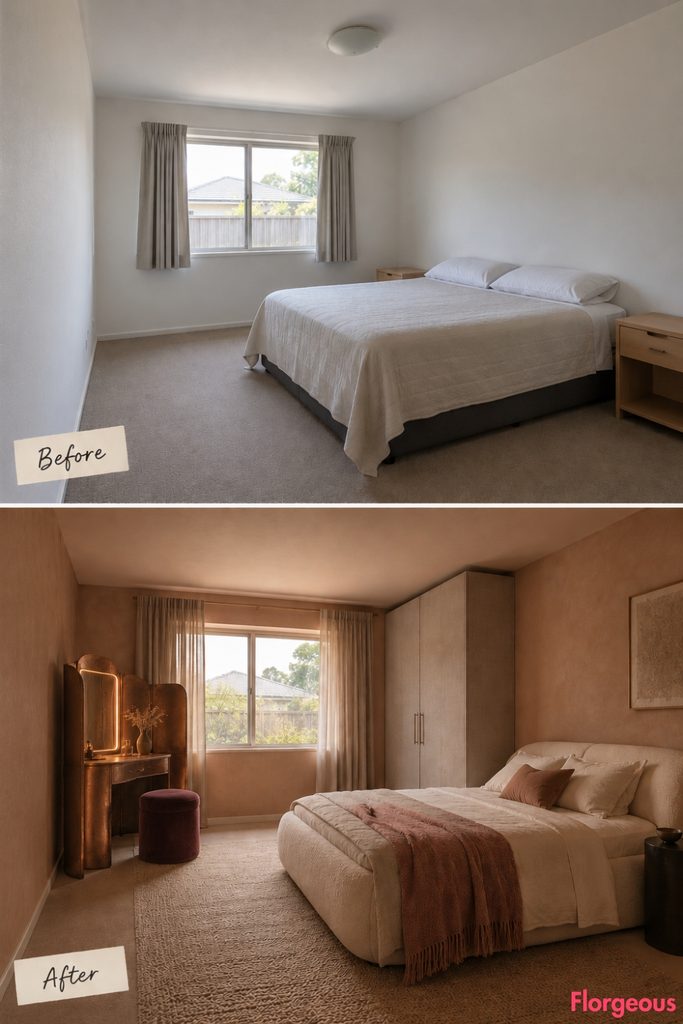
Here the bed becomes secondary to a richer, more glamorous dressing composition.
Before: The side wall is empty and has no practical purpose.
After: Place a curved cream bed deeper rear-right. Along the left wall, use a three-part aged-copper folding vanity with a plum velvet stool and tall narrow fabric-front wardrobe. A tiny dark bedside pedestal keeps the sleeping zone uncluttered.
23. Finish With a Grounded Timber-Dais Retreat
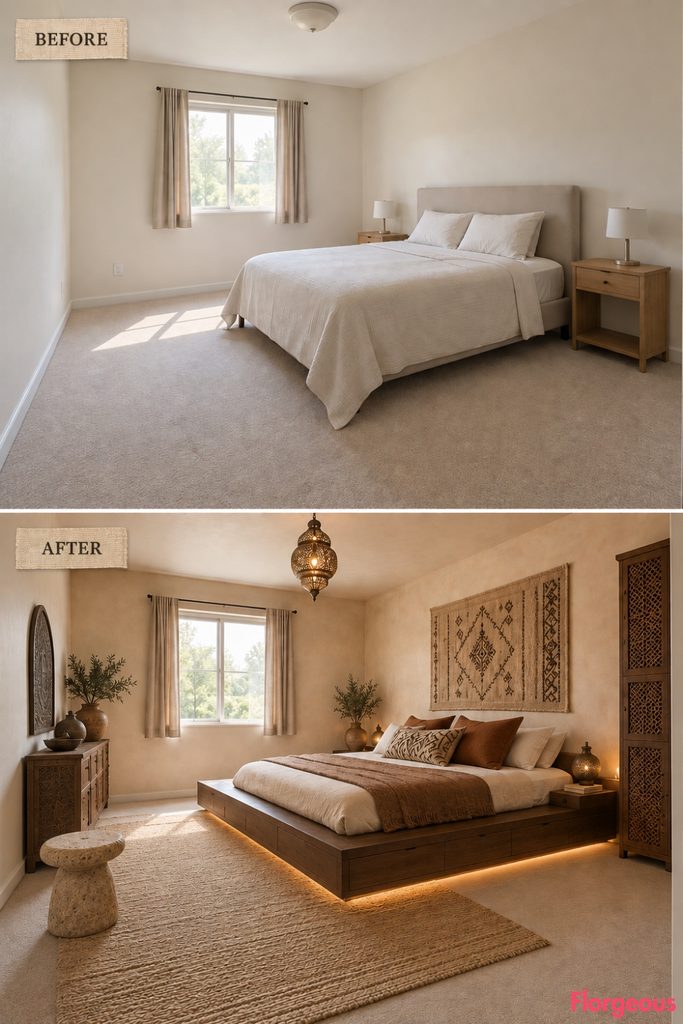
The final room is architectural, calm, and almost retreat-like.
Before: Everything occupies the same flat level, so there is no distinction between sleeping and circulation zones.
After: Raise the rear third of the room on a broad smoked-timber dais. Integrate a low mattress, one drawer block, and a narrow storage tower directly into the platform composition. On the lower floor, place only a compact stone dressing stool and leave the central approach completely open.
How to Choose a Moroccan Direction That Fits Your Bedroom
A strong Moroccan Bedroom does not need every recognizable motif in the same space. Pick the personality first. Decide whether you want the room to feel graphic, earthy, cocooning, urban, romantic, polished, sculptural, or quiet.
Then choose furniture that belongs to that mood. A textile-heavy Atlas room wants low, grounded pieces. A cool Casablanca scheme benefits from sharper lines and metal. A stone-focused room needs fewer objects, while a festive embroidered scheme can support stronger color and more decorative furniture.
Before buying accessories, plan the bed, storage, bedside function, and circulation. Once those elements make sense, choose one dominant material story and let the remaining pieces support it rather than compete with it.