

There’s something calming about smooth, rounded stone, like a little piece of a creek bed brought home.
River rock is tumbled by water for years, so its soft shapes and mixed colors look natural almost anywhere you put it.
The secret to using it well isn’t covering every bare patch. It’s choosing the right size for each job and giving the stones a clear purpose.
These 15 river rock landscaping ideas show you how to use it for drainage, paths, planting beds and small water features. For a wider look at stone, see our front yard landscaping ideas with rocks.
River Rock Sizes and Their Best Uses
| Size | Typical use | Good to know |
|---|---|---|
| Pea pebble (about 1/4 to 1/2 in) | Paths, paver joints, pot topping | Comfortable underfoot but shifts easily, so edge it well |
| Small (about 3/4 to 1 1/2 in) | Beds, borders, rain gardens | The most versatile all-round size |
| Medium (about 1 1/2 to 3 in) | Drainage areas, downspouts, slopes | Stays put in moving water |
| Large (about 3 to 5 in) | Creek-style accents, under decks | Heavy, so place it by hand |
| Cobbles (6 in and up) | Edges, focal points, mosaics | Use sparingly for a natural look |
1. Choose the Right River Rock Size for Each Job
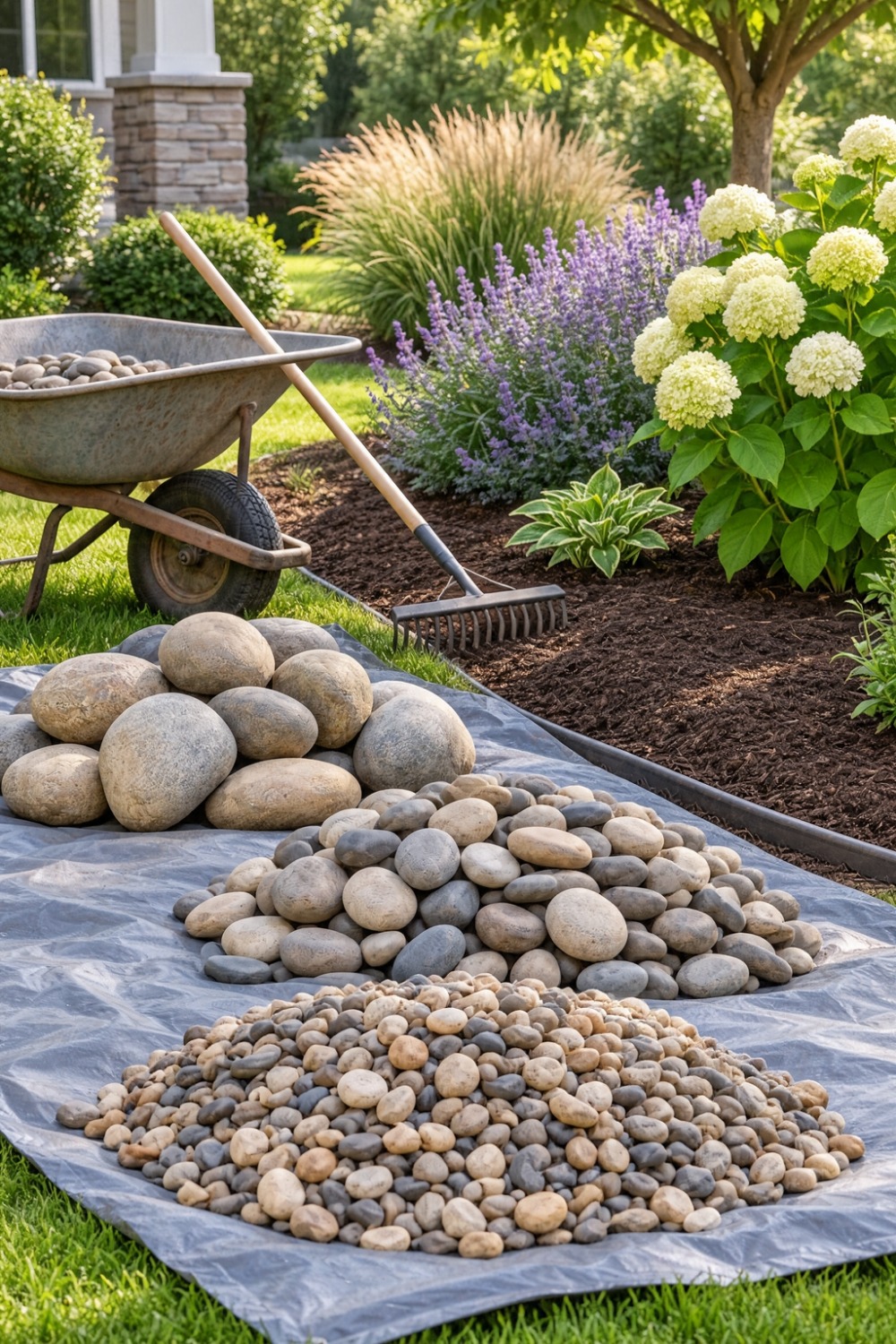
Before you buy a single bag, decide what each area needs the stone to do.
Small pebbles feel good underfoot on paths, while medium stones stay put where water runs, such as under a downspout.
Large cobbles are best as accents. Mixing two or three sizes in one bed looks the most natural, like a real streambed.
How to do it:
- List each area you want to cover and what it’s for: walking, drainage or decoration.
- Match a size to each area using the table above.
- Order a little extra, since stone settles and spreads once it’s down.
2. Replace Foundation Mulch With River Rock
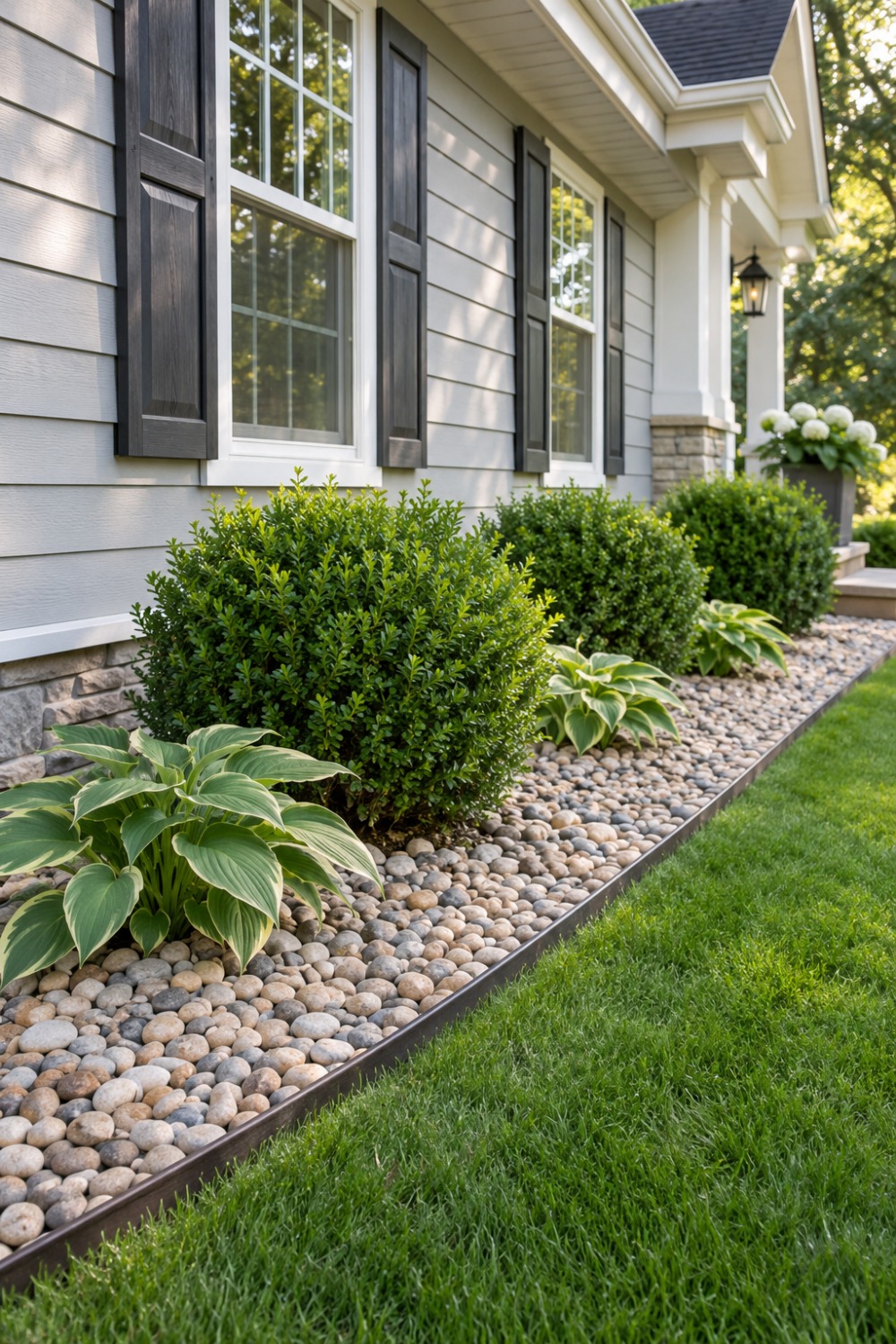
Wood mulch breaks down and needs topping up each year, but river rock stays put for a long time.
Along a foundation, stone also helps keep the area beside the walls drier and is less inviting to some insects than damp bark.
In hot, sunny spots, rock can heat up and reflect warmth onto plants, so choose tough shrubs there and keep thirstier plants in mulched beds.
How to do it:
- Slope the soil gently away from the house so water drains outward.
- Lay landscape fabric around existing plants, cutting generous openings at each stem.
- Spread 2 to 3 inches of small river rock and keep it a few inches back from shrub stems.
3. Plant a River Rock Rain Garden
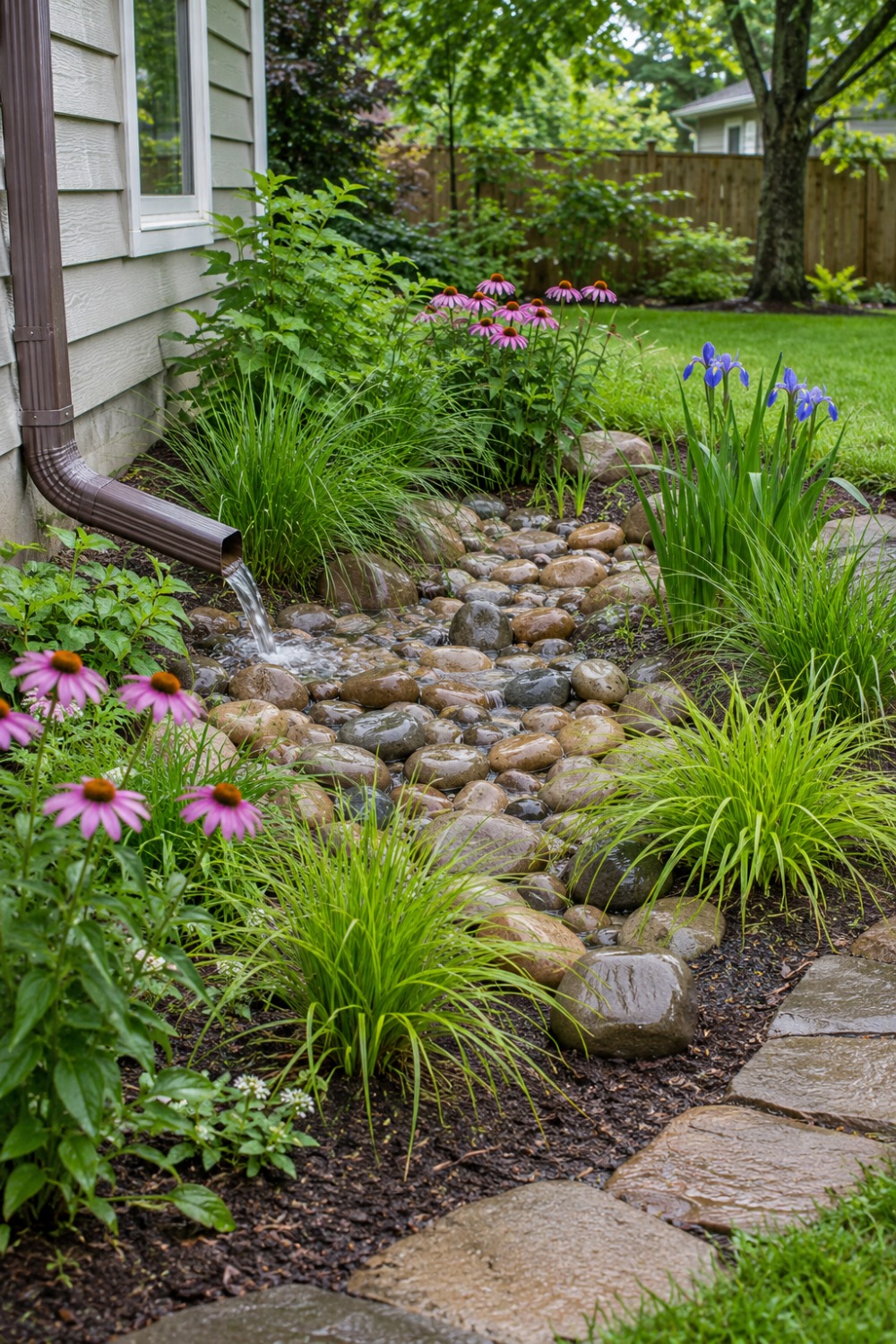
A rain garden is a shallow dip that catches runoff from your roof or driveway and lets it soak in slowly.
River rock lines the lowest part, where water collects, and stops soil from washing away during storms.
Plant the sides with tough natives that handle both wet spells and dry weeks, such as sedges, swamp milkweed, blue flag iris and coneflowers. A local extension office can suggest the best plants for your area.
How to do it:
- Pick a spot at least 10 feet from the house where water already flows.
- Dig a shallow basin, about 6 to 8 inches deep, with gently sloping sides.
- Line the inlet and the center with medium river rock, then plant the edges.
4. Lay a Pebble Mosaic Path
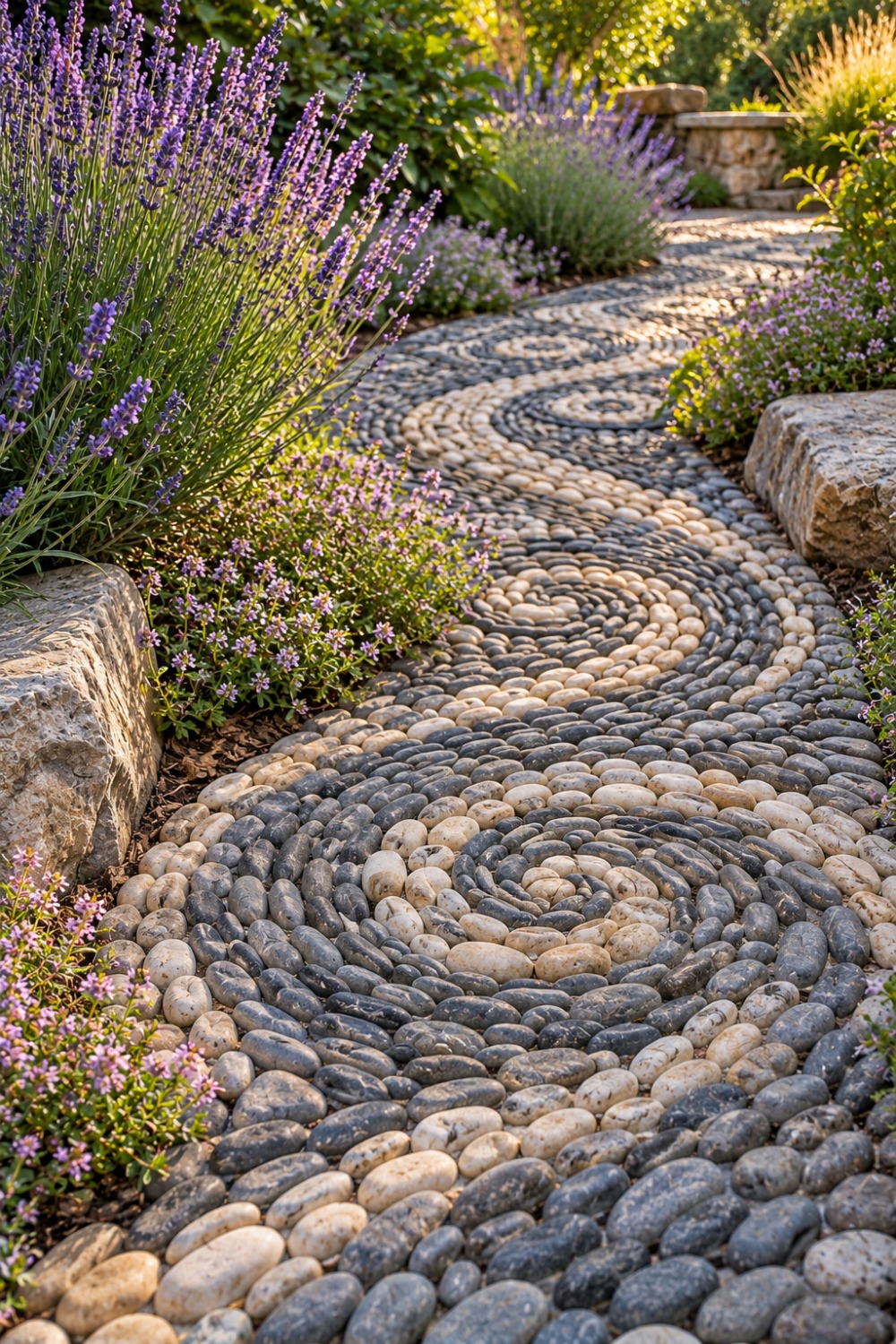
Pebble mosaics are an old craft found in many traditional gardens, and they turn a simple path into a work of art.
Long, flat stones are set on their edges, tightly packed, in waves, spirals or simple stripes of two colors.
Start small. A mosaic panel at a gate or the center of a path gives the wow factor without weeks of work.
How to do it:
- Sort pebbles by color and shape, keeping the flattest ones together.
- Set a mortar or stabilized sand bed inside a timber form.
- Press stones in on edge, tightly packed, then tamp level and let it cure.
5. Fill Paver Joints With Small River Pebbles
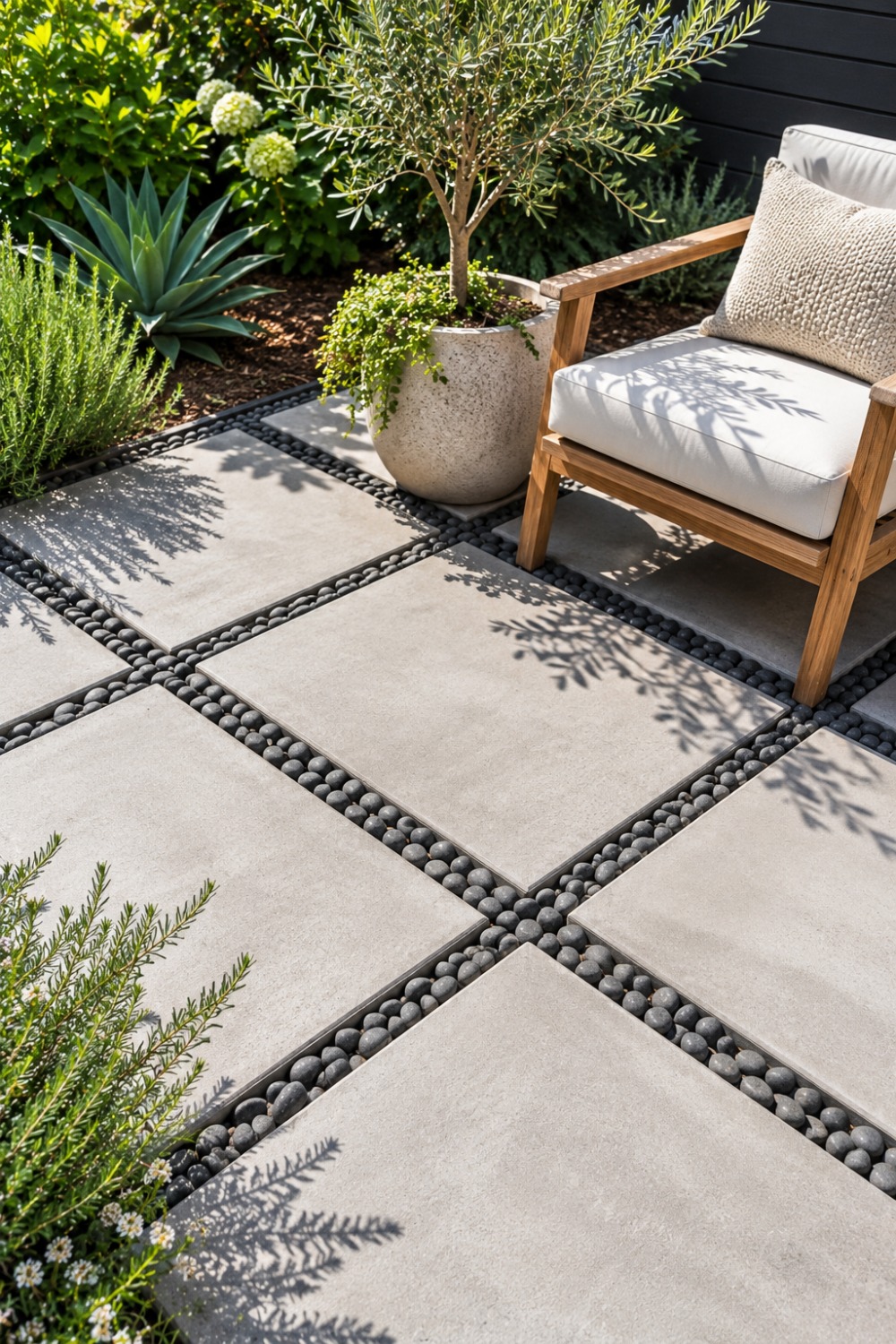
Wide joints filled with pebbles give a patio or walkway a crisp, modern grid.
Unlike mortar, the gaps let rain soak through, which reduces puddles and runoff.
Dark pebbles between pale pavers make the pattern pop, while matching colors give a softer, quieter look.
How to do it:
- Lay pavers on a compacted gravel base, leaving joints of 1 to 3 inches.
- Fill the joints with pea-sized river pebbles to just below the paver surface.
- Top up after heavy rain or the first few weeks of foot traffic.
6. Set a Rain Chain Into a River Rock Basin
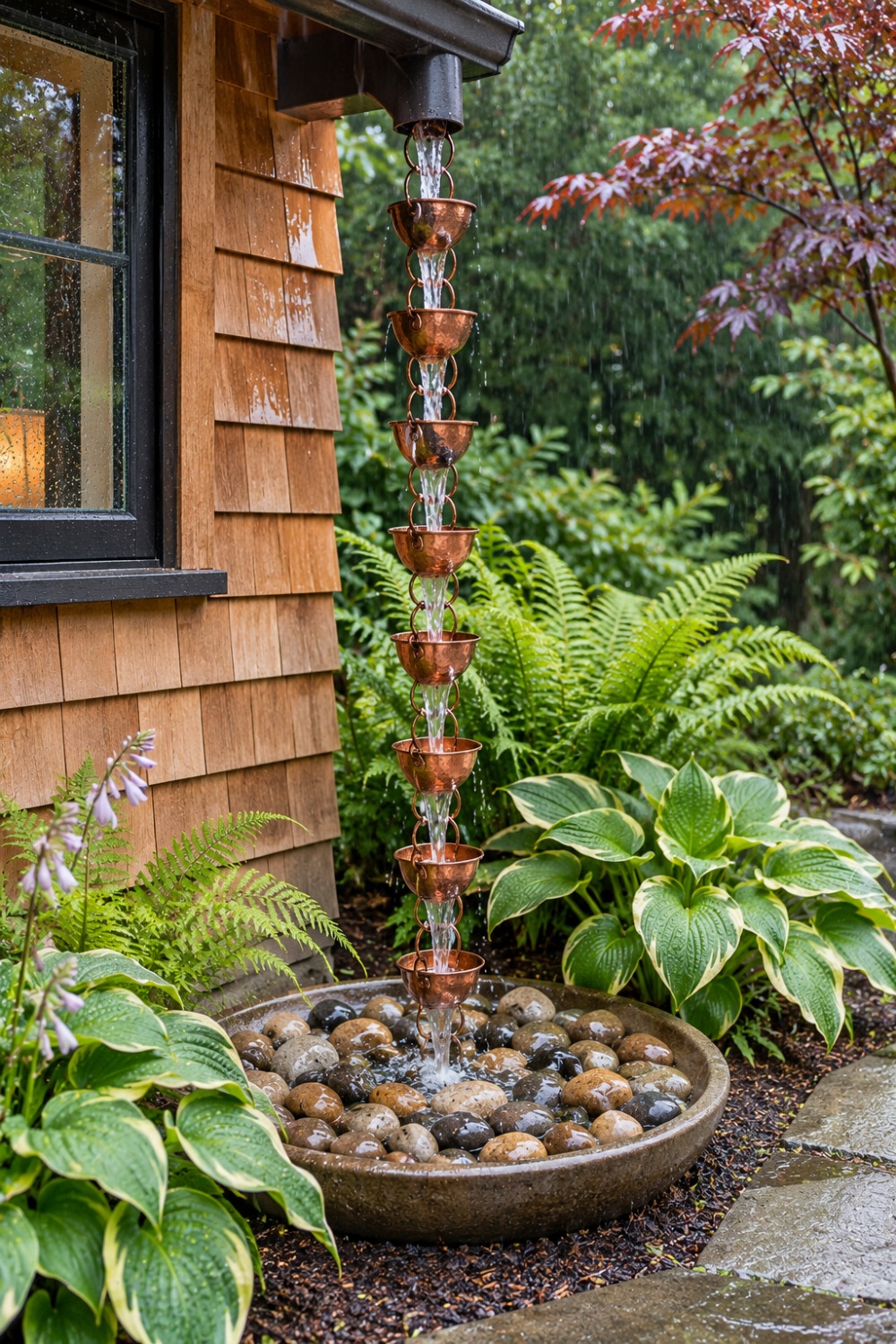
A rain chain guides water down from the gutter in a gentle, visible stream instead of a hidden pipe.
Where it meets the ground, a basin of river rock catches the splash and lets water spread out slowly.
It’s a small detail, but it turns a rainy day into something to watch from the window.
How to do it:
- Hang the rain chain from the gutter outlet using the bracket that comes with it.
- Dig a shallow basin about 2 feet wide beneath it and line it with fabric.
- Fill it with medium river rock and plant moisture-loving perennials around the rim.
7. Mix Two River Rock Colors for a Flowing Pattern
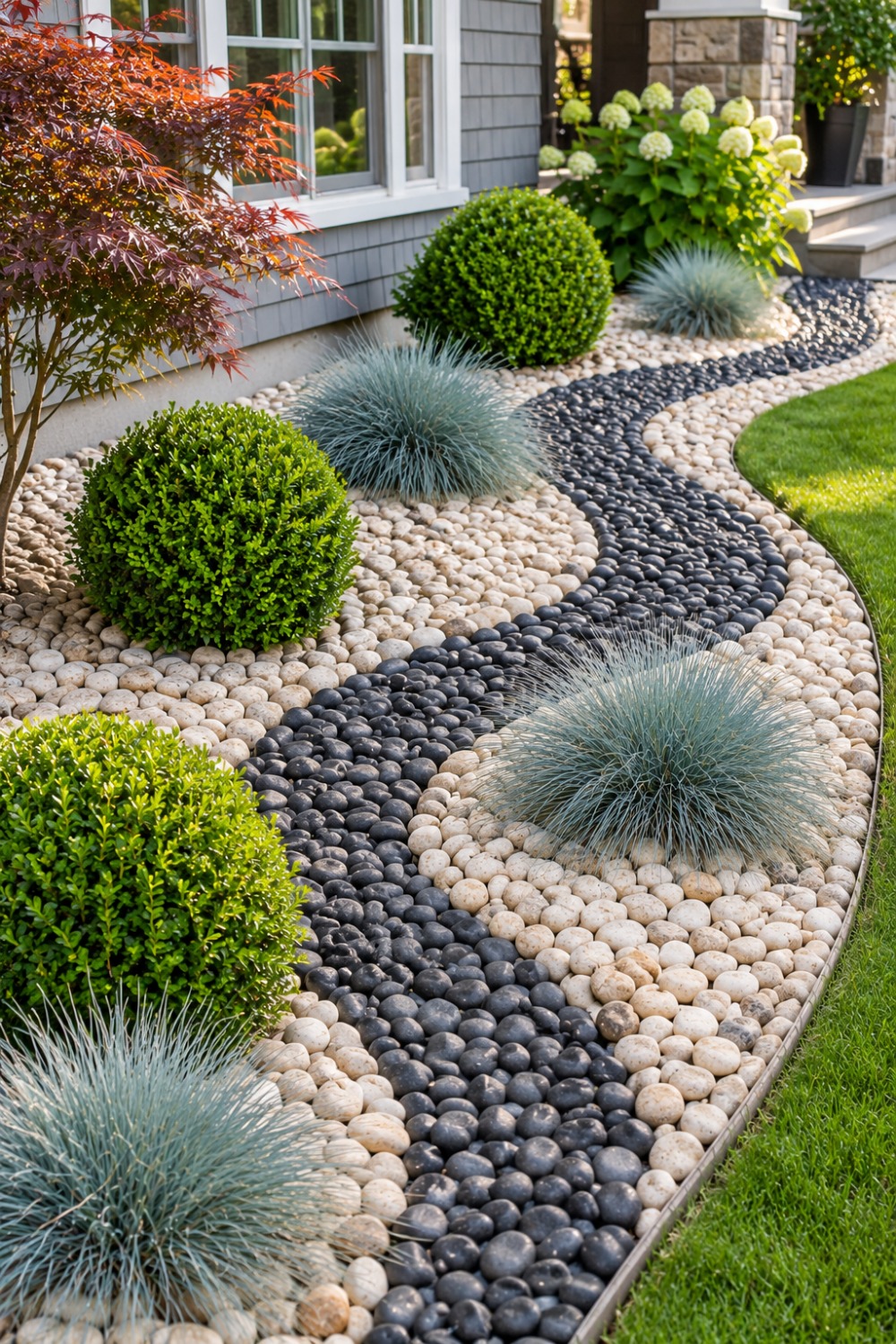
Two colors of river rock can create movement in a flat bed, like a stream winding through a meadow.
A darker ribbon running through a lighter background reads clearly from the street and guides the eye.
Keep it simple: two colors and one smooth curve look designed, while too many colors look busy.
How to do it:
- Mark a gentle curve with a garden hose or spray paint.
- Lay a thin metal or plastic divider along the line to keep the colors separate.
- Fill one side at a time, then remove the divider or leave it hidden just below the surface.
8. Build a Pondless Waterfall Over River Rock
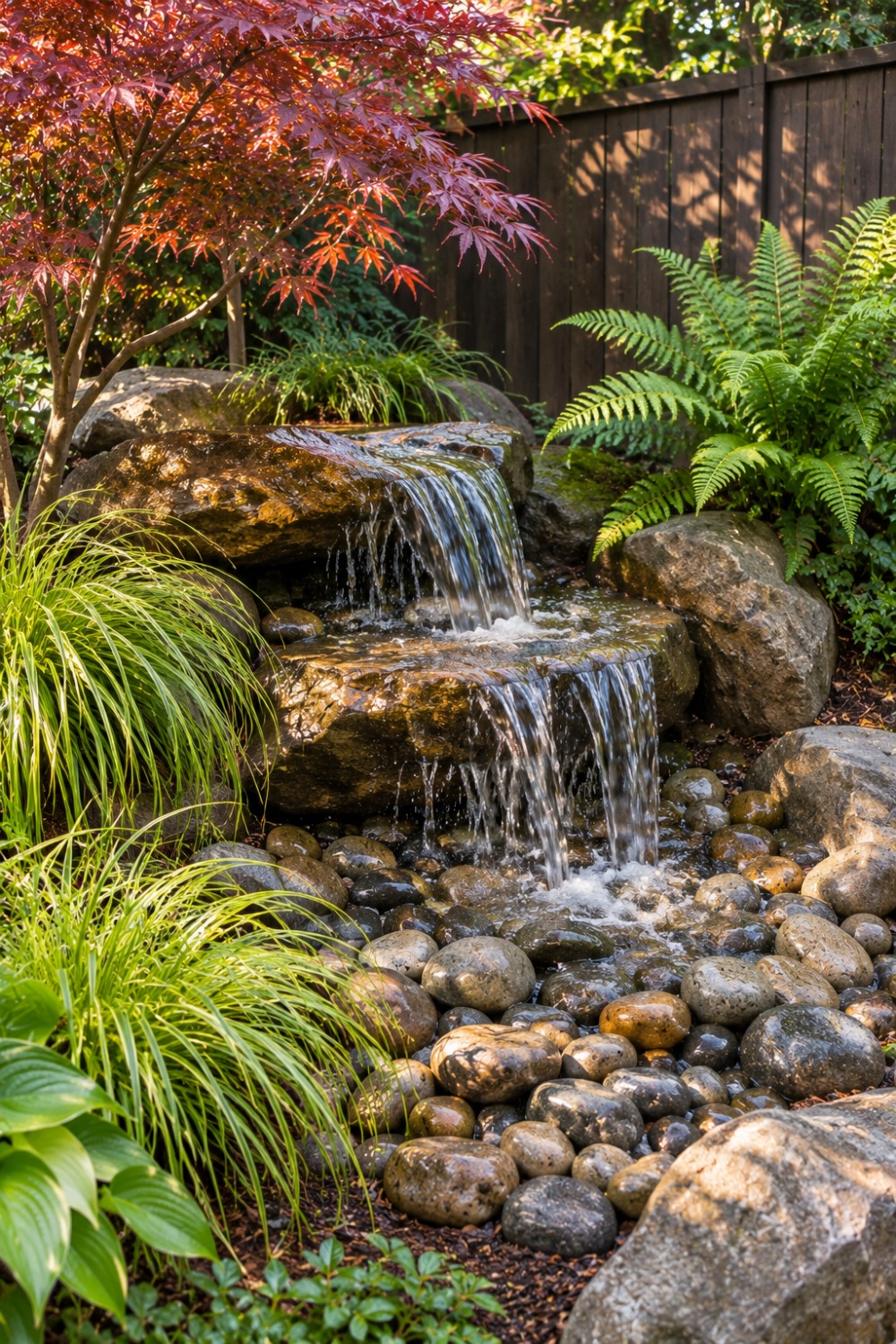
A pondless waterfall gives you the sound of moving water without an open pond to clean.
Water spills over stones and disappears into a hidden basin filled with river rock, where a pump sends it back up.
It’s safer around small children than open water and needs only occasional topping up.
How to do it:
- Dig a basin and line it, then set the reservoir and pump inside.
- Build the waterfall from flat stones, sloping the liner back to the basin.
- Fill the basin with river rock and hide the tubing under stones and plants.
9. Cover Hard-to-Mow Strips With River Rock
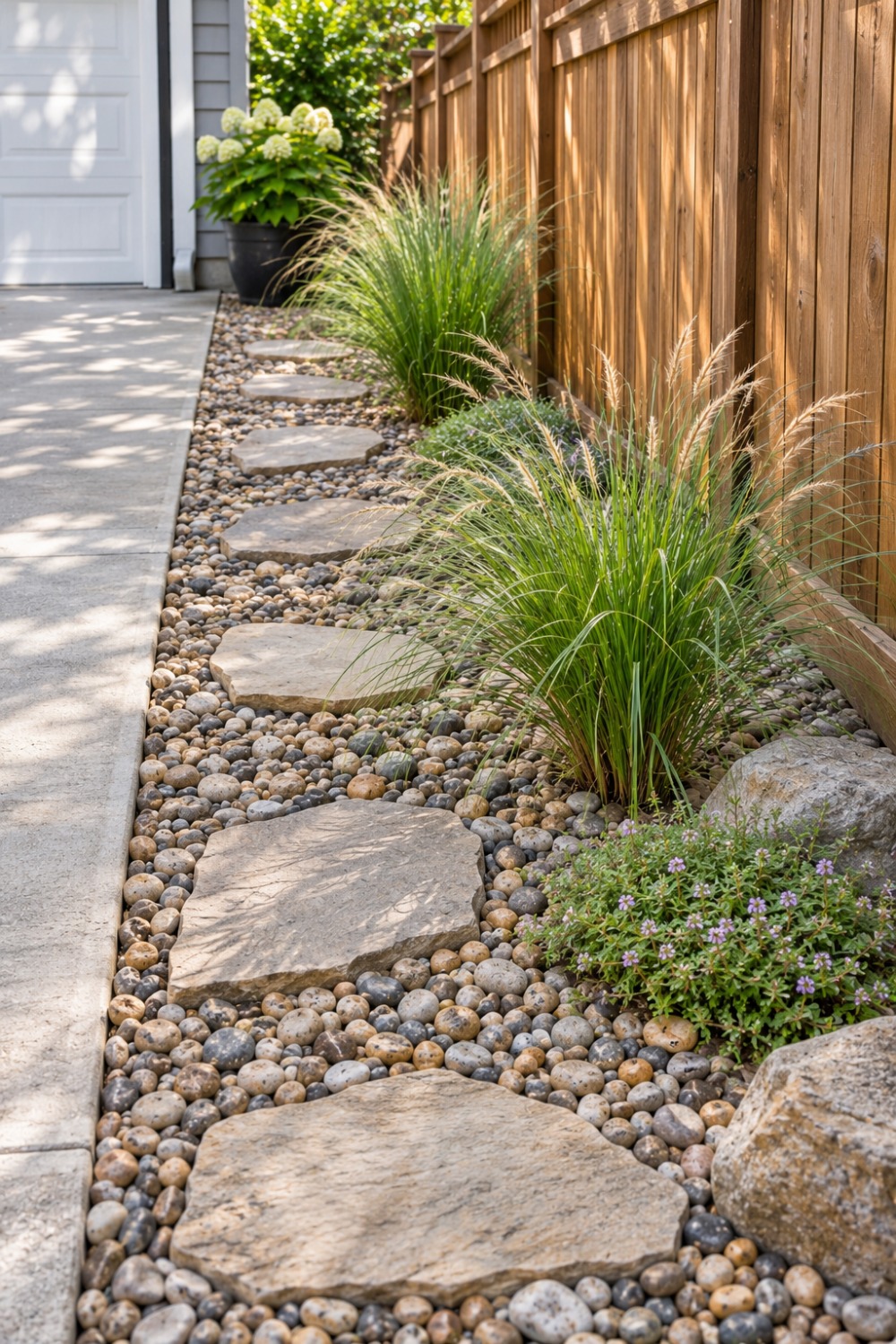
Narrow strips beside driveways, fences and air conditioners are a pain to mow and rarely look good as lawn.
Covering them with river rock gives you a clean, finished look that only needs an occasional weed pull.
A few tough plants, such as ornamental grasses or catmint, keep the strip from feeling bare.
How to do it:
- Remove the turf and level the soil.
- Lay heavy-duty landscape fabric and pin it down.
- Spread 2 to 3 inches of river rock and add stepping stones if you walk there.
10. Create a River Rock Island Bed in the Lawn
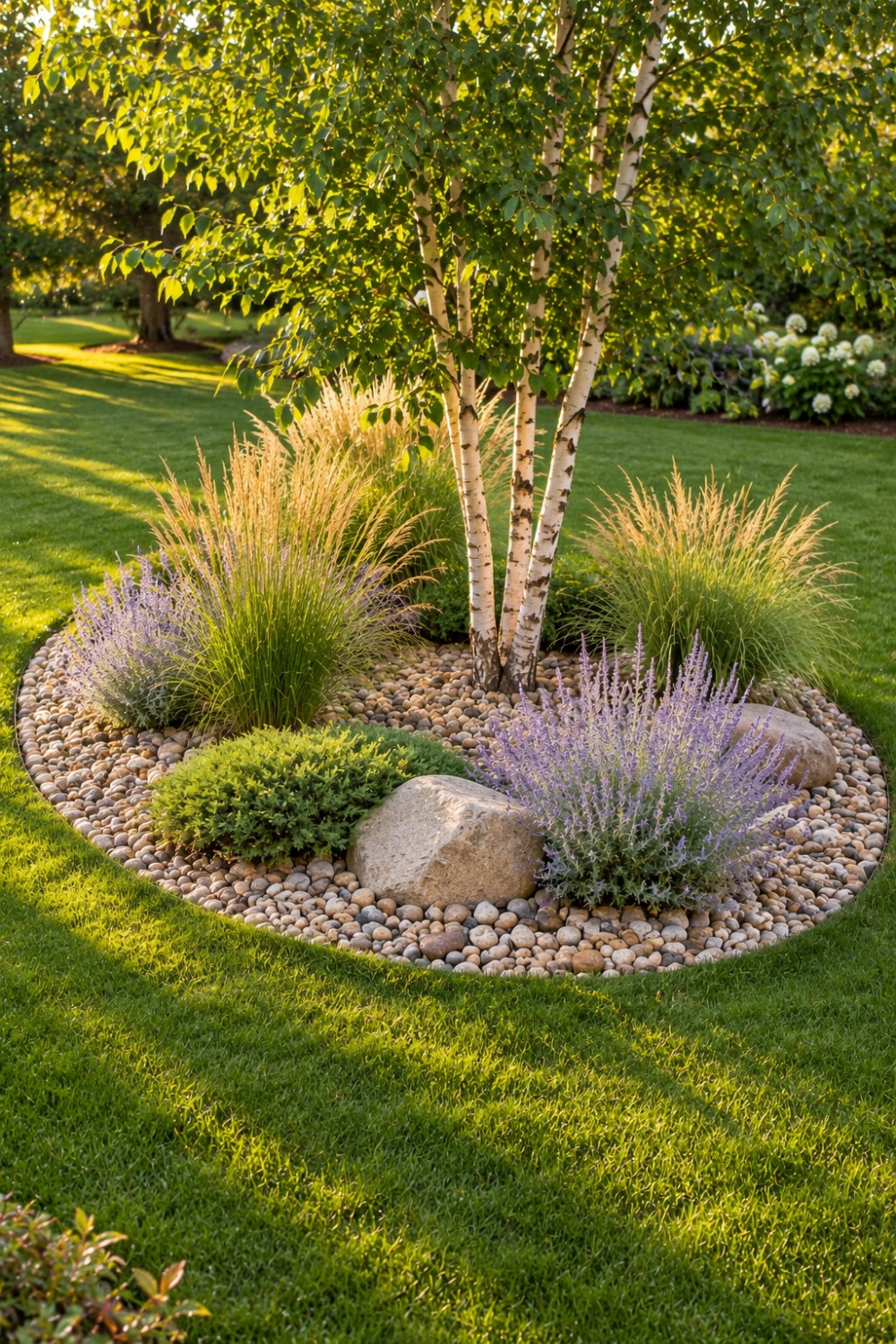
An island bed breaks up a big, plain lawn and gives the eye somewhere to land.
River rock makes a low-maintenance base, and a single small tree in the middle adds height and shade.
Fill around it with plants that look good in groups, such as grasses, Russian sage or coneflowers.
How to do it:
- Lay out an oval or kidney shape with a hose and view it from the house before you dig.
- Remove the turf, add a crisp edge and plant your tree and perennials.
- Lay fabric around the plants and finish with 2 to 3 inches of river rock.
11. Fill Gabion Planters With River Rock
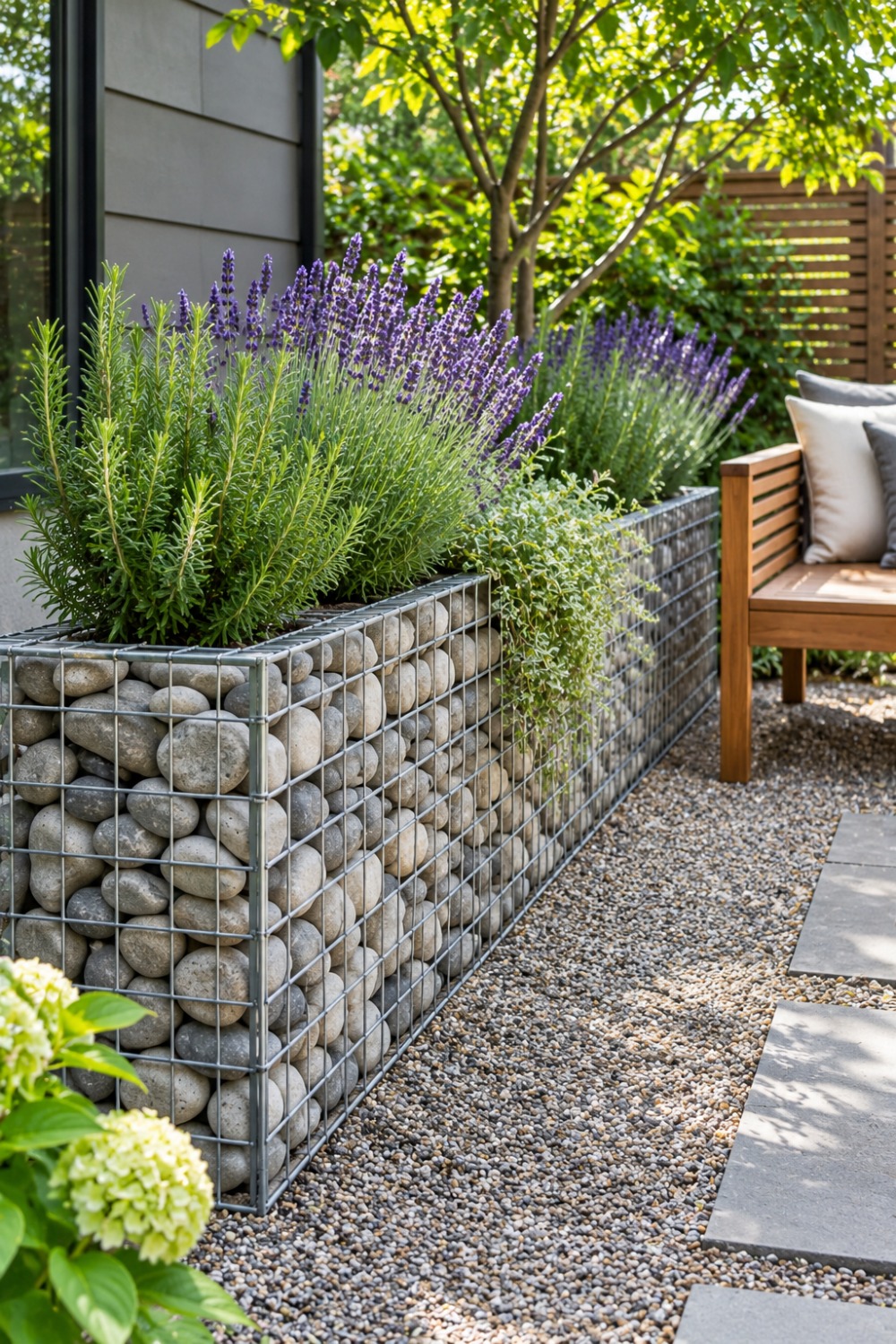
Gabions are wire cages filled with stone, and they make striking raised planters, low walls or seating.
Filled with rounded river rock, they look softer and more natural than ones packed with sharp quarry stone.
Line the center with fabric and fill it with soil so you can plant herbs, grasses or flowers on top.
How to do it:
- Set the gabion on a level, compacted base.
- Place the best-looking stones along the outer faces by hand, then fill the core.
- Line the top section with fabric, add soil and plant.
12. Use Large River Rock Under Decks and Steps
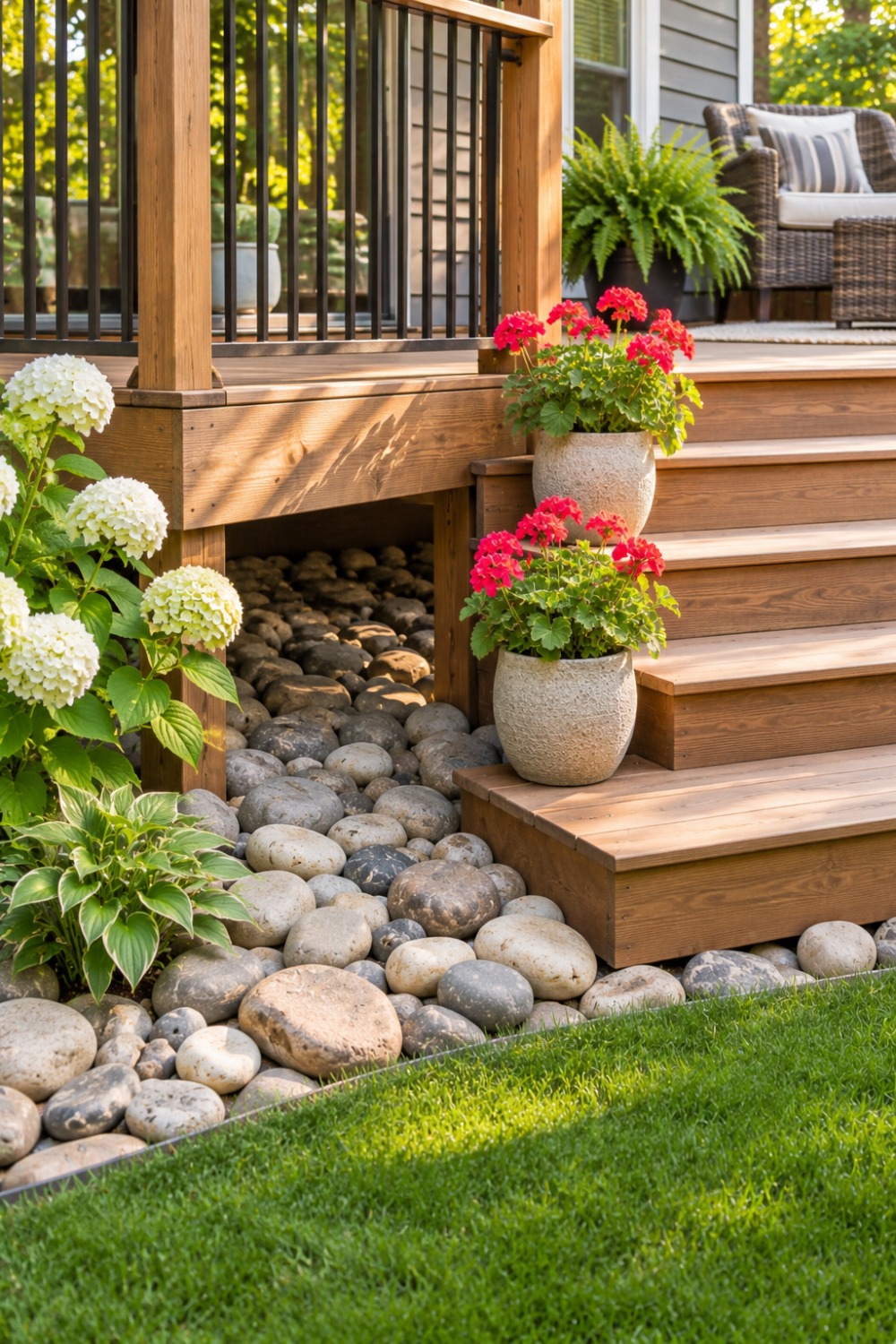
The dark, shaded space under a low deck often turns into a patch of bare dirt and weeds.
Large river rock fills it neatly, helps water drain and looks tidy from the yard.
It’s also handy around steps, where grass struggles and feet wear the ground bare.
How to do it:
- Rake the area smooth and remove any weeds.
- Lay landscape fabric right up to the deck posts.
- Spread large river rock, at least 3 inches deep, so the fabric doesn’t show.
13. Pair River Rock With Ornamental Grasses for Movement
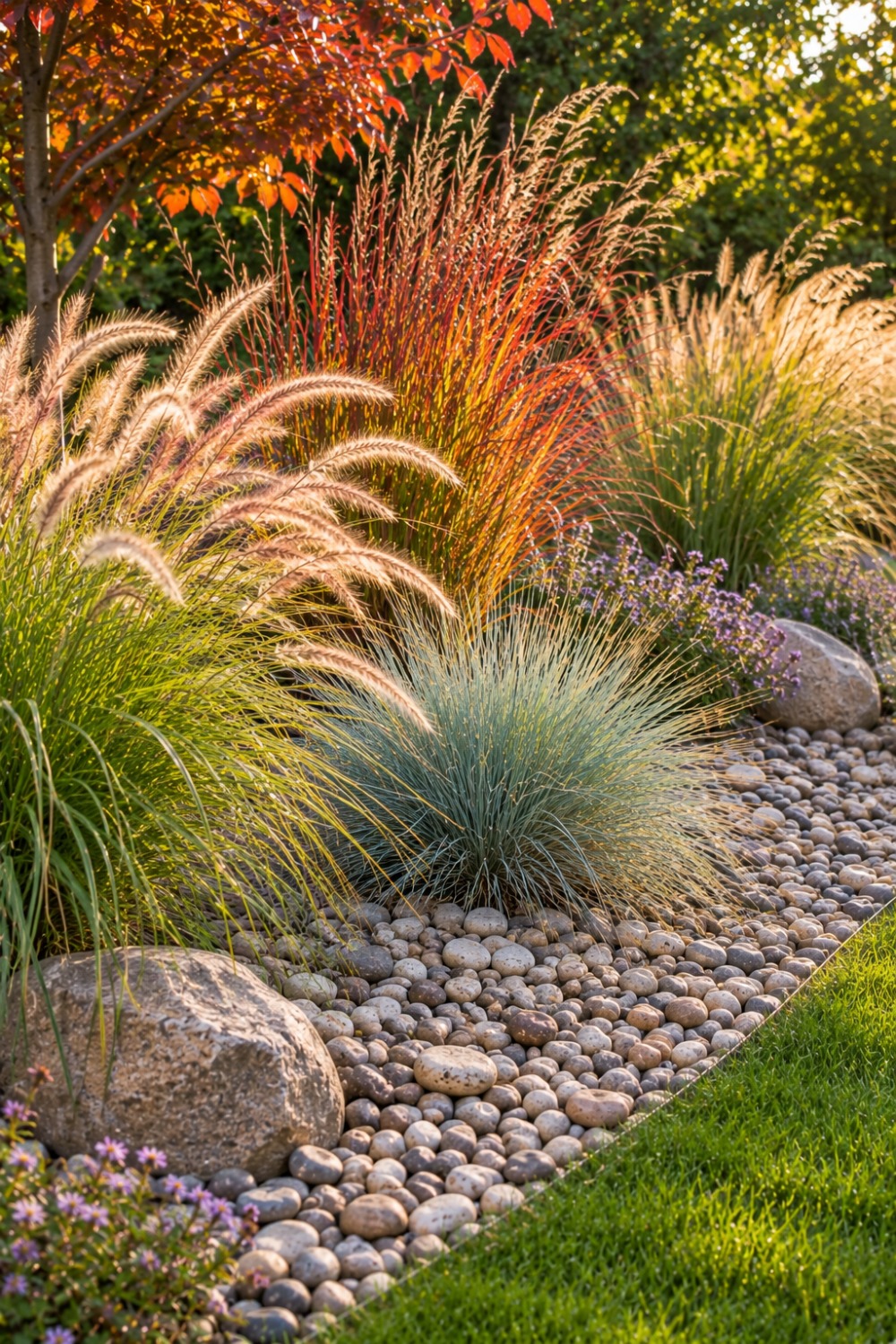
Rock is solid and still, while grasses sway in every breeze, so the two make a lovely contrast.
Low grasses like blue fescue suit small beds, while taller ones such as little bluestem or switchgrass work in larger spaces.
Many grasses are drought tolerant and look great into winter, so the bed stays interesting all year. Check that the grasses you pick aren’t invasive in your area.
How to do it:
- Plant grasses in groups of three or five, spacing them for their mature size.
- Spread river rock around them, keeping it a little away from the crowns.
- Cut grasses back in late winter or early spring before new growth starts.
14. Lay River Rock Paths Between Raised Vegetable Beds
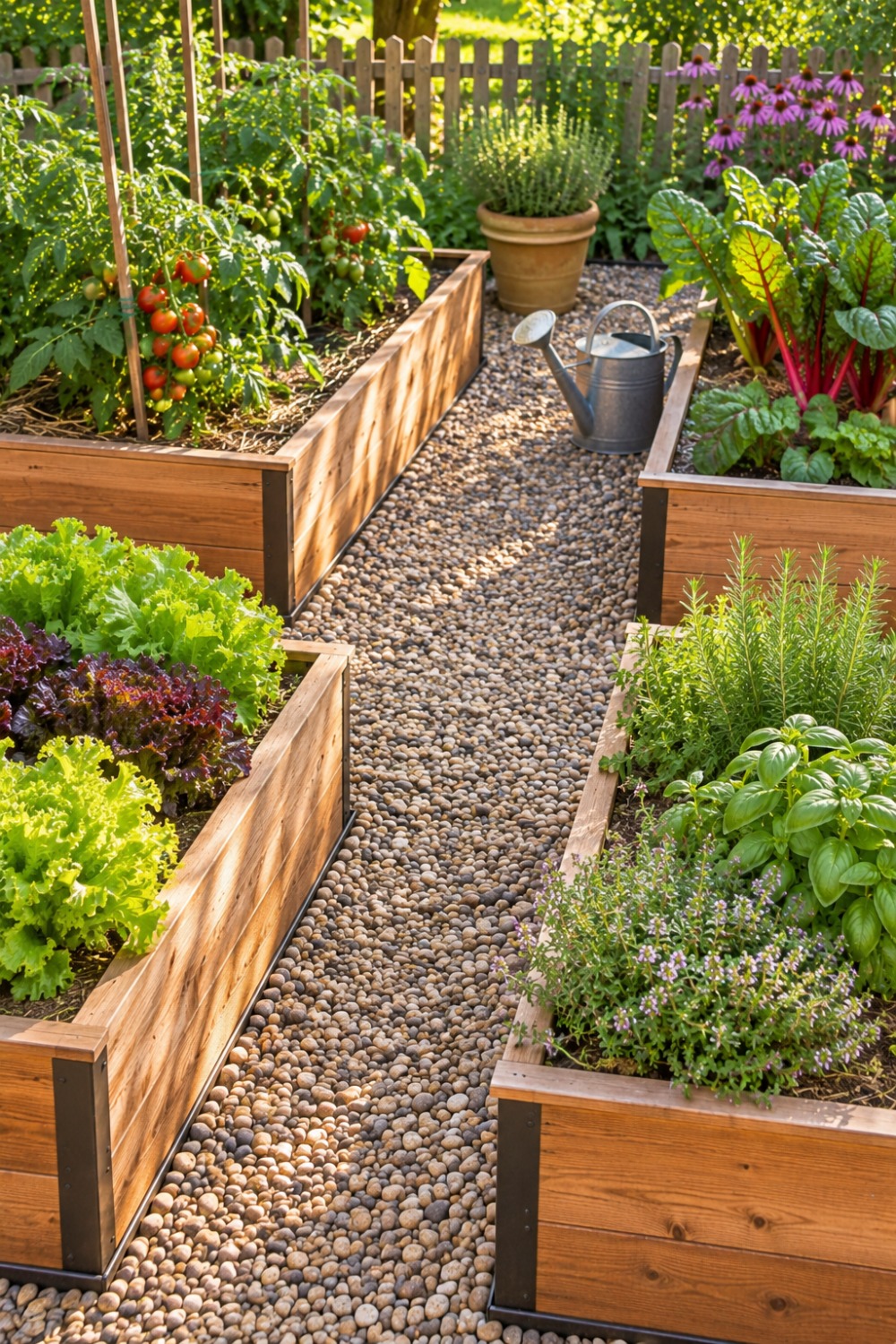
Paths between raised beds get muddy fast, but a layer of river rock keeps your feet clean after rain.
Small river rock drains well, so you can pick tomatoes the morning after a storm.
Light-colored stone also helps brighten the garden and makes the beds look crisp and organized.
How to do it:
- Make paths at least 2 feet wide, or 3 feet if you use a wheelbarrow.
- Lay heavy-duty fabric to block weeds coming up from below.
- Spread small river rock 2 inches deep and add edging to keep it in place.
15. Keep River Rock Clean With Simple Upkeep
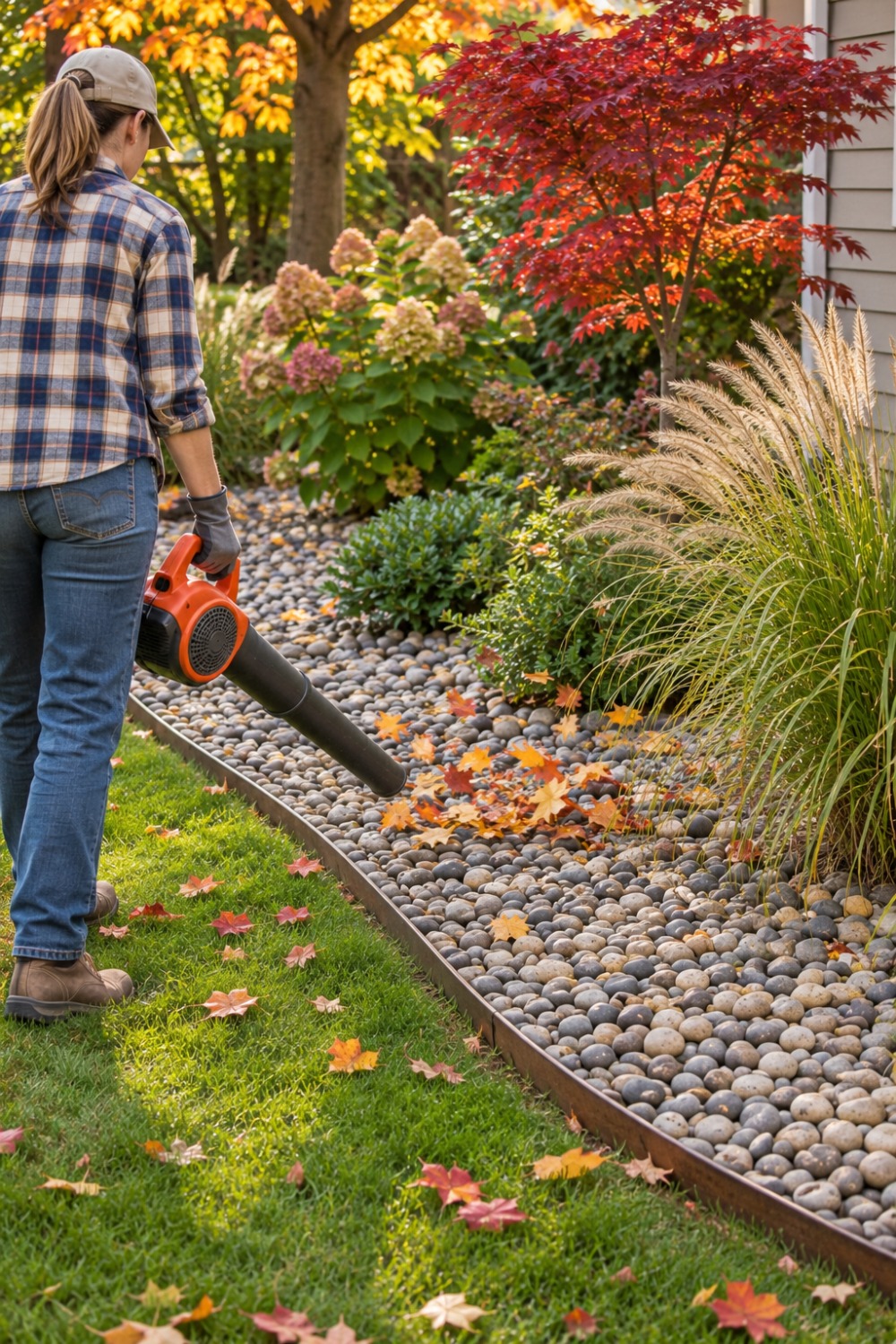
River rock is low maintenance, but not no maintenance.
Leaves and dust break down between the stones over time, creating soil where weeds can sprout.
A few minutes of care each season keeps it looking fresh for years.
How to do it:
- Blow or rake leaves off regularly in autumn before they rot.
- Pull weeds while they’re small, or spot-treat them with a weeding tool.
- Every few years, rinse the stones with a hose and top up any thin areas.
Frequently Asked Questions
Is river rock better than mulch?
Each has strengths. River rock lasts for years and works well in drainage areas, paths and around foundations, while organic mulch feeds the soil and keeps roots cooler, which most flower and vegetable beds prefer.
Do you need landscape fabric under river rock?
It’s a good idea in paths, strips and drainage areas because it stops stones sinking into the soil. In beds you plan to change often, you can skip it and simply spread the rock thicker.
How deep should river rock be?
About 2 inches for small stones and 3 inches for larger ones is usually enough to cover the ground and fabric without wasting stone.
Does river rock attract snakes or pests?
Rock itself doesn’t attract them, but large stones with deep gaps can offer shelter. Using smaller stones near the house and keeping beds tidy reduces hiding spots.
Final Thoughts: Let the Stones Tell the Story
River rock works best when every stone has a purpose.
Start with the problem areas: the soggy spot under the downspout, the bare strip by the driveway or the patch under the deck.
Then add one feature that brings real joy, such as a pebble mosaic, a rain chain basin or a small waterfall.
Choose one main color and one or two sizes, so the whole yard feels connected.
Soften the stone with plenty of plants. Grasses, sedges and flowering perennials keep rock beds from feeling hot or bare.
Keep up with leaves each autumn, and the stones will look fresh for years.
For more ideas for the rest of the yard, browse our backyard landscaping ideas.
Bit by bit, your yard will gain that calm, creek-bed charm that only natural stone can give.