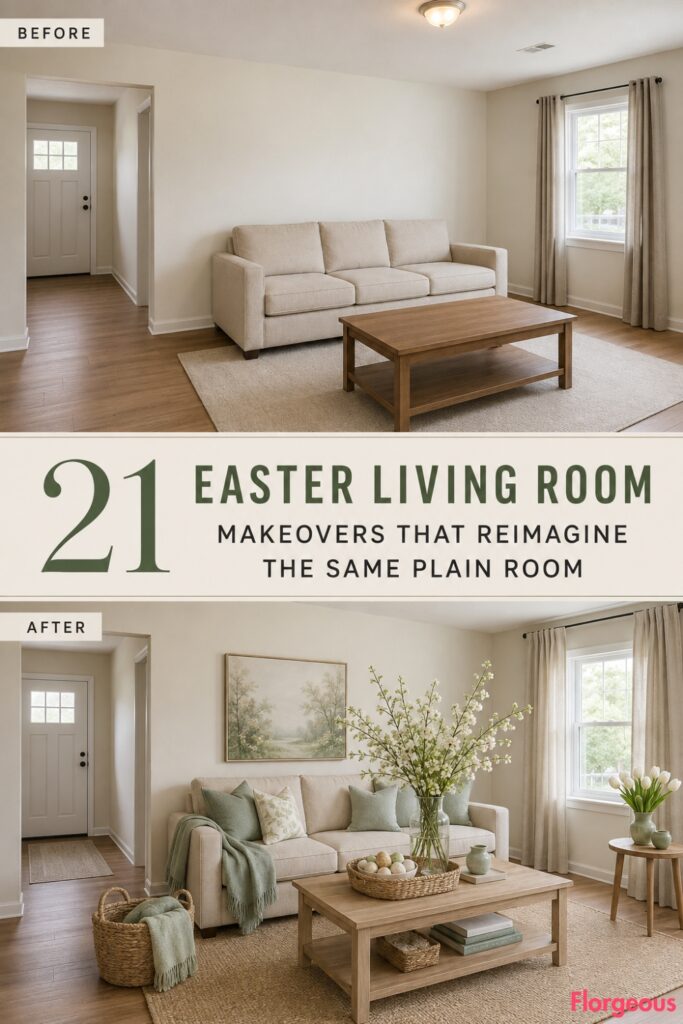
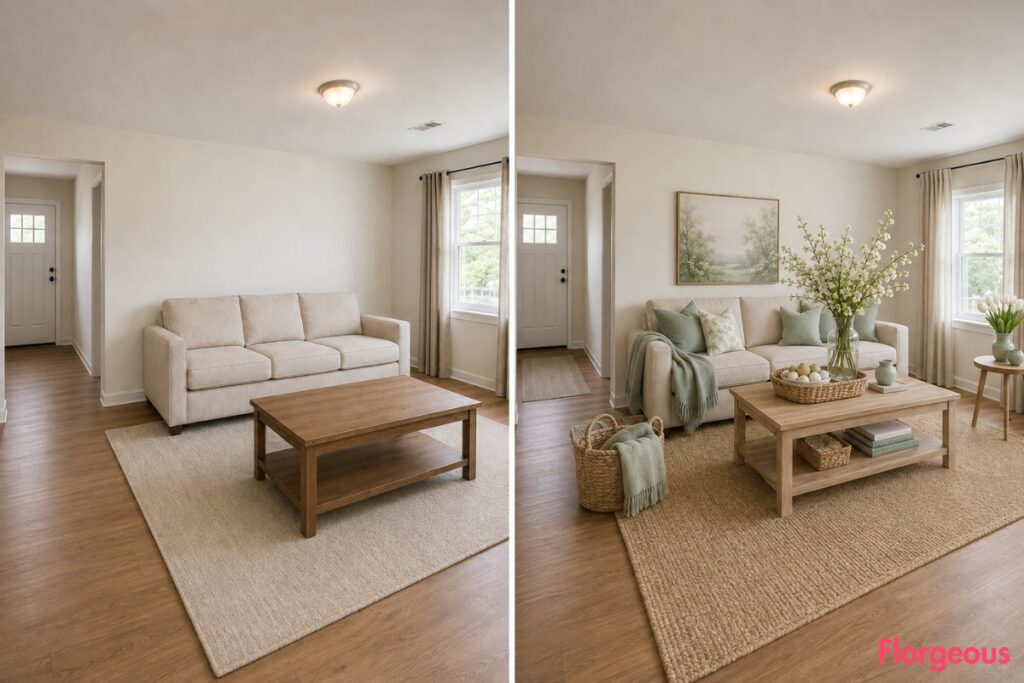
Our starting point could belong to almost any builder-grade home: warm off-white walls, a basic beige sofa, a bare rectangular coffee table, short curtains, a simple rug, flat ceiling lighting, and very little personality.
Instead of changing the architecture, we kept that room completely fixed and explored 21 very different Easter Living Room directions. The doorway, window, proportions, camera angle, floor footprint, and circulation never move. Only the decorating story changes.
Some makeovers lean botanical, others tailored, vintage, minimal, earthy, colorful, or dramatically moody. More importantly, each one uses a different design strategy, so this is not a gallery of identical rooms with differently colored tulips.
1. A Botanical Green Room Built Around One Wild Branch Arrangement
The first makeover barely needs literal Easter decorations.
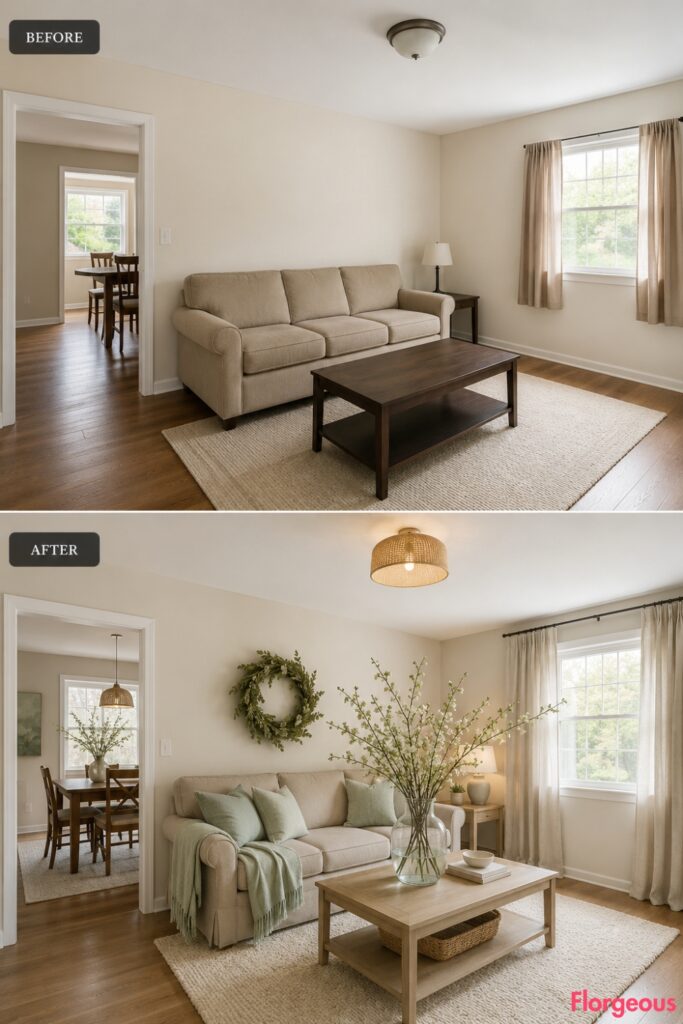
Before: Warm off-white walls, straight beige sofa, bare rectangular coffee table, neutral rug, short curtains, basic ceiling light, empty walls, minimal styling, and daylight.
After: Celadon linen cushions, a cream wool rug, pale oak table, full flax curtains, clear glass vessels, and one oversized arrangement of fresh budding branches create the seasonal focal point. A loose green wreath adds one quiet Easter cue.
Designer Tip: Concentrate greenery in one dramatic area instead of scattering tiny arrangements everywhere.
2. Butter Yellow, Daffodils, and the Fastest Way to Wake Up Beige
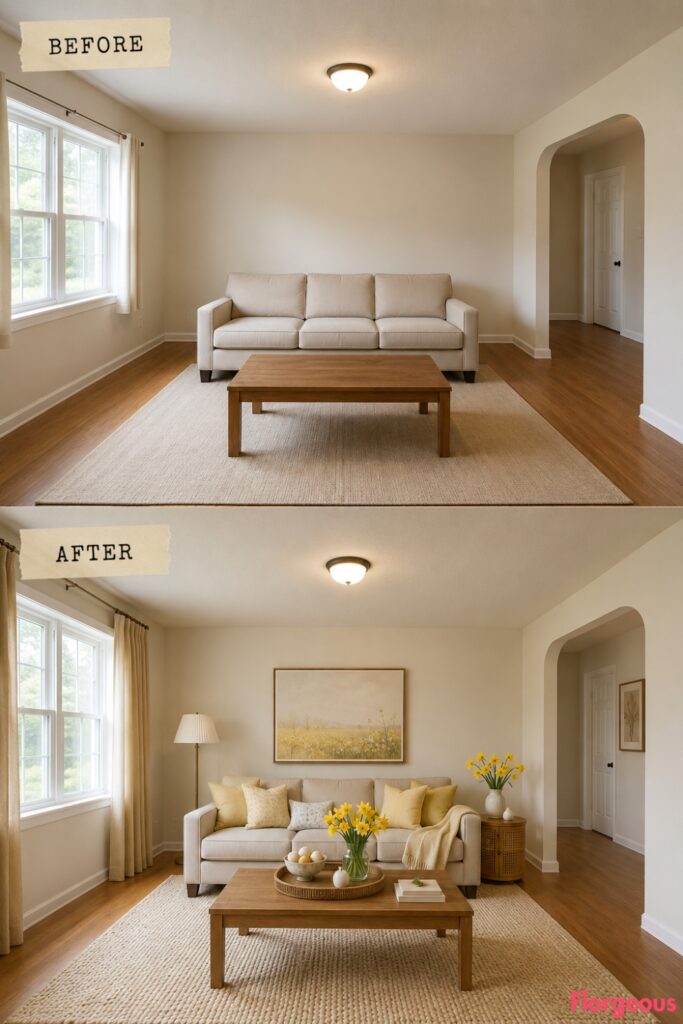
This version uses one optimistic spring color and lets it do the work.
Before: The exact unchanged builder-grade living room with warm off-white walls, beige sofa, bare table, neutral rug, short curtains, basic light, empty walls, and daylight.
After: Butter-yellow linen cushions, a fine cream stripe throw, honey-oak furniture, woven cane, wheat-toned curtains, and bowls of daffodils brighten the room without flooding it with pastel color.
A small ceramic dish of pale eggs is enough to establish the Easter connection.
3. Why Robin’s Egg Blue Feels Grown-Up With Walnut
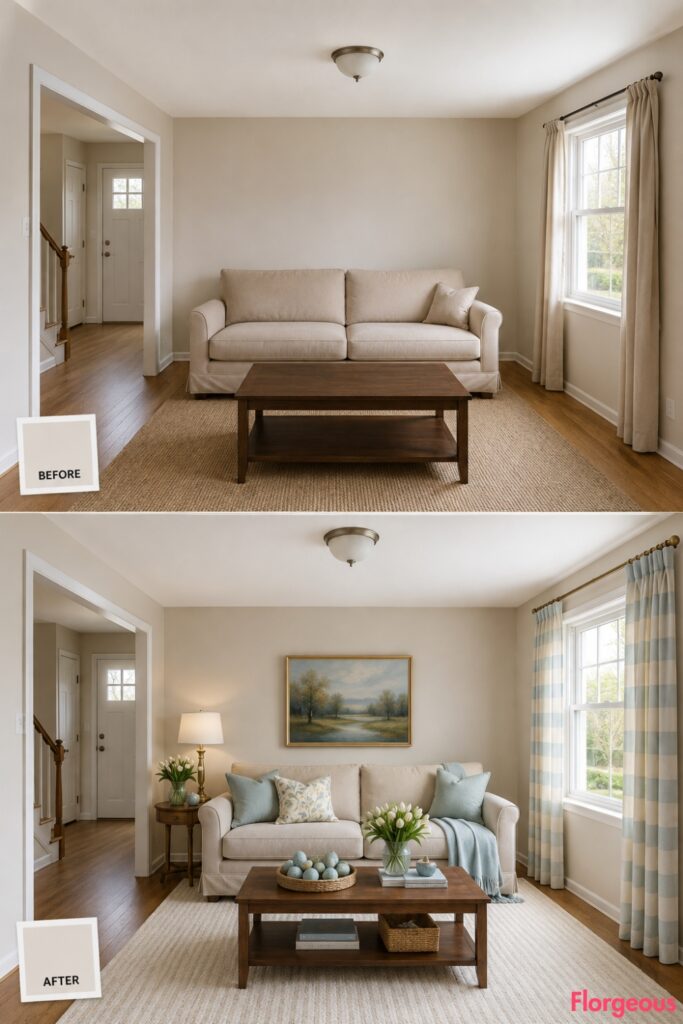
Pale blue becomes much more sophisticated when paired with dark, warm wood.
Before: The same plain beige and off-white living room remains completely unchanged.
After: Robin’s egg blue cushions, pale striped curtains, walnut side furniture, an ivory rug, aged brass lighting, and white tulips create a clean traditional palette. A shallow walnut bowl holds blue-gray and naturally speckled eggs.
Color Story: Walnut stops pale blue from feeling overly sweet.
4. Lavender Goes Moody With Hyacinths and Smoked Wood
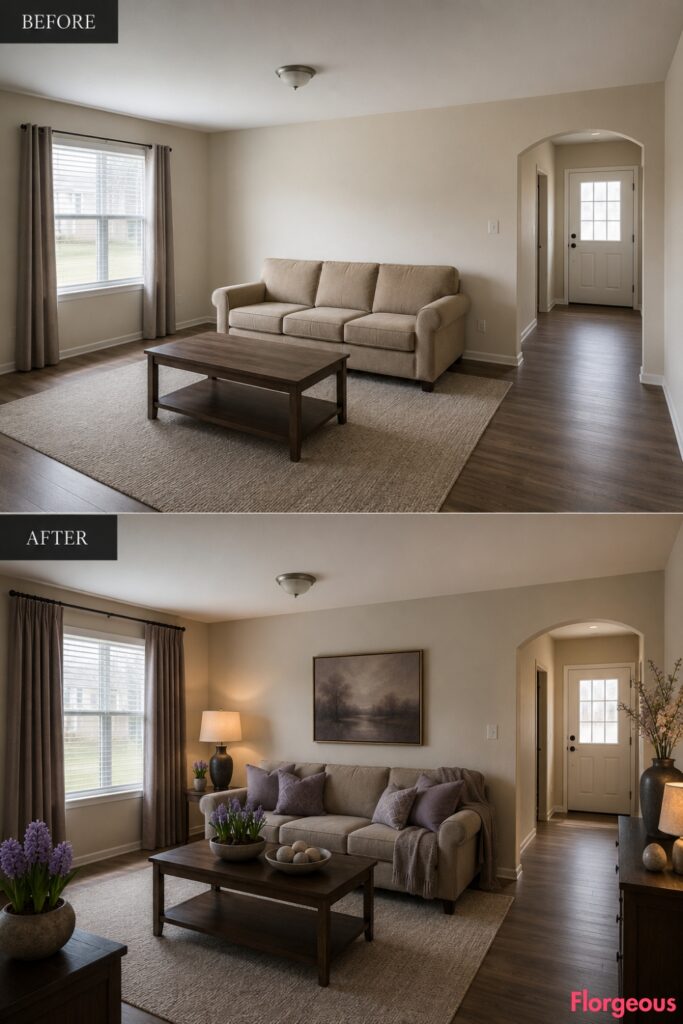
Lavender does not have to look sugary.
Before: Warm off-white walls, beige sofa, bare rectangular table, neutral rug, short curtains, basic ceiling light, empty walls, minimal styling, and daylight.
After: Gray-lavender wool, smoky lilac cushions, dark walnut, mushroom curtains, soft charcoal accents, and pots of purple hyacinths create a quieter interpretation of spring. Matte stone eggs sit almost unnoticed among the pottery.
Try this: Choose purple tones with gray or brown undertones rather than bright lilac.
5. From Flat Beige to Dusty Blush and Tulip-Filled
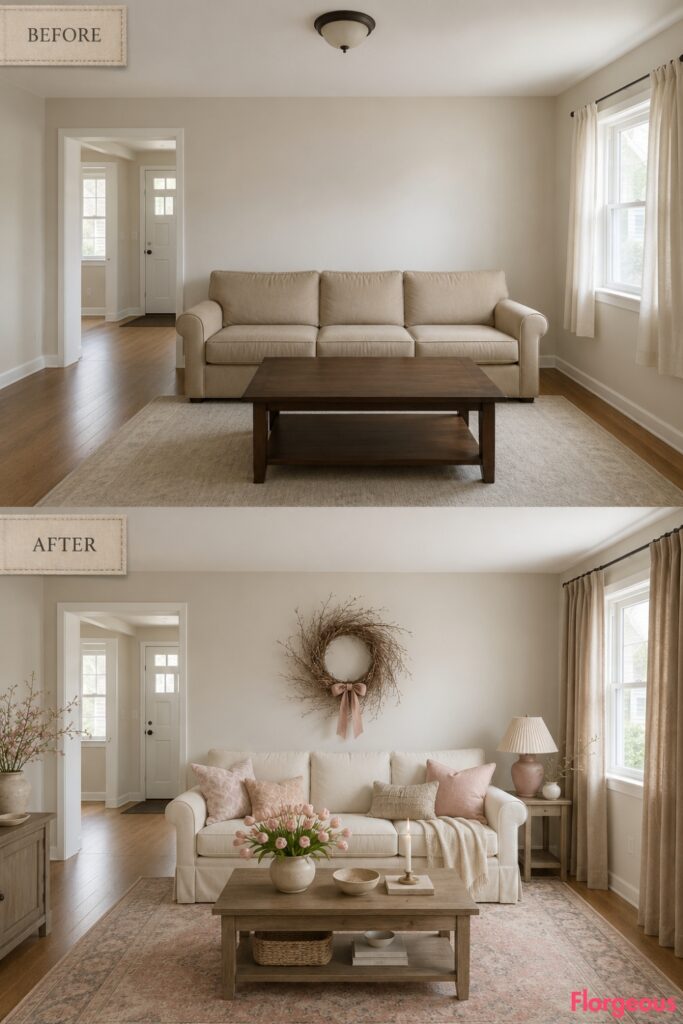
Here, pink appears through flowers and textile undertones rather than a room full of pastel accessories.
Before: The unchanged builder-grade room stays warm off-white, beige, minimally styled, and slightly unfinished.
After: Dusty blush tulips, oatmeal linen upholstery, a faded rose throw, chalky plaster-pink ceramics, mushroom curtains, and a soft vintage-style rug create a romantic room without obvious novelty decor.
A narrow blush ribbon on a twig wreath finishes the seasonal story.
6. The Scandinavian Easter Edit: Birch, Wool, and Paper Eggs
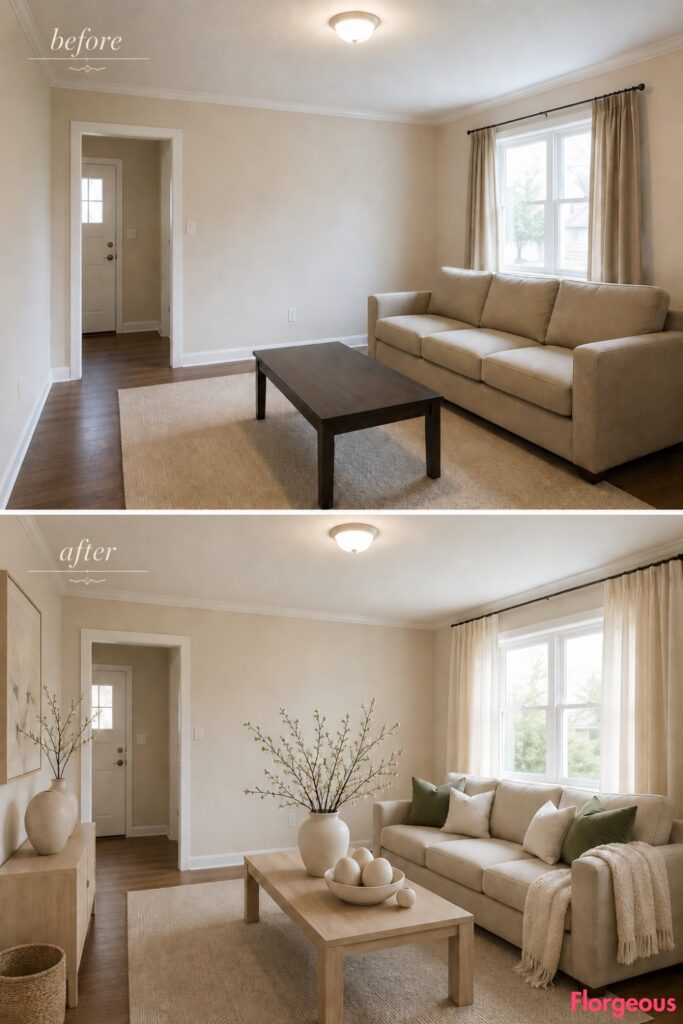
This room proves that Easter can be crisp and graphic rather than floral and romantic.
Before: The exact neutral builder-grade starting room remains intact.
After: Pale birch furniture, oatmeal wool, spruce-green cushions, ivory curtains, a chalky ceramic lamp, and sparse twig branches create a Scandinavian base. Oversized ivory paper eggs hang lightly from the branches.
Style Note: Fewer, larger paper ornaments look far more intentional than dozens of tiny decorations.
7. An English Cottage Spring, Without the Clutter
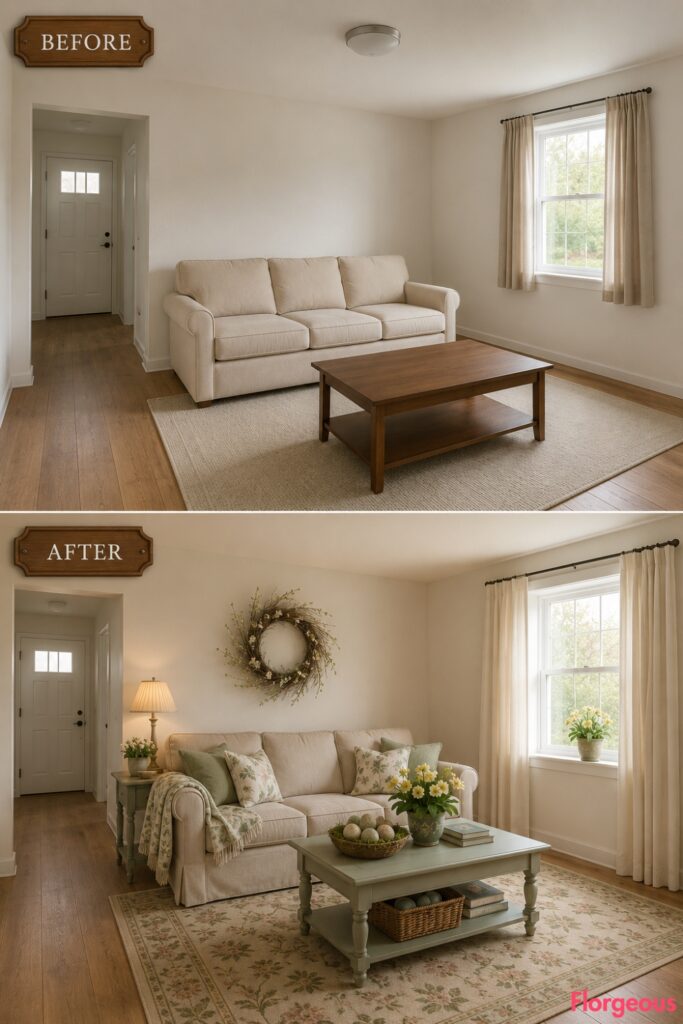
This transformation builds charm through pattern rather than through lots of seasonal objects.
Before: The established beige sofa, neutral walls, bare table, short curtains, neutral rug, and empty surfaces remain unchanged.
After: A tiny sage floral fabric, painted mushroom side table, faded botanical rug, pleated lampshade, relaxed ivory curtains, primroses, and a loose willow wreath create a collected cottage atmosphere.
The only eggs appear in one shallow pottery bowl.
8. Minimal Easter, Maximum Shape
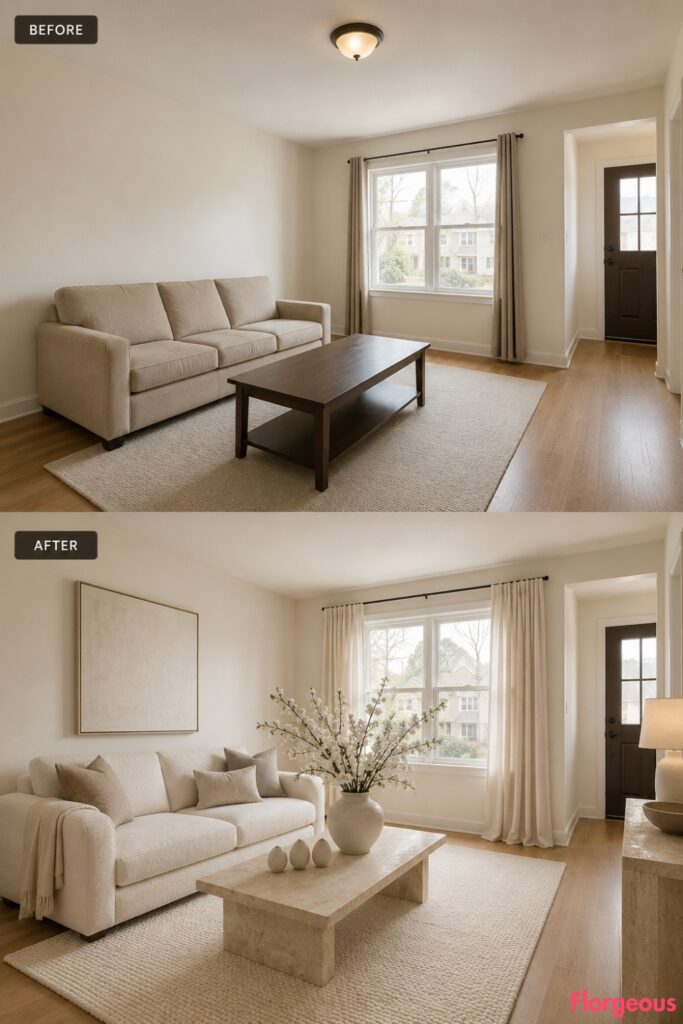
Instead of relying on flowers and pattern, this makeover is about sculptural form.
Before: The exact builder-grade room remains visually untouched.
After: A rounded travertine table, warm white boucle, pale ash, an ivory wool rug, full cream curtains, and an abstract arrangement of bare white flowering branches create a gallery-like room. Three oversized chalky ceramic eggs become sculptural objects rather than cute holiday decor.
9. What Happens When Linen and Basketry Do the Decorating
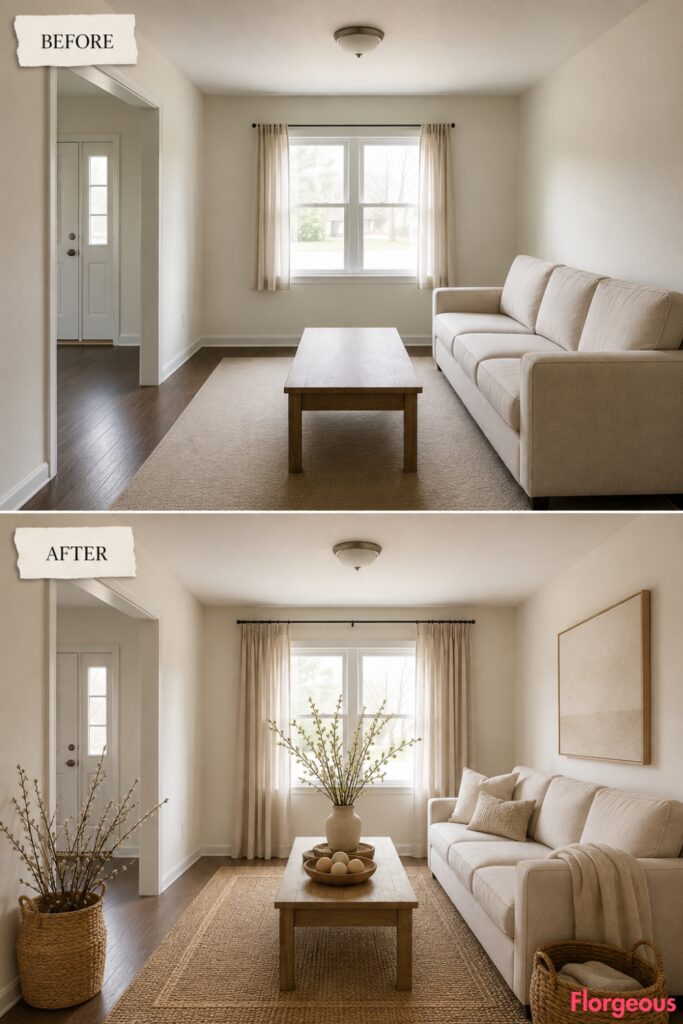
This is the natural-material Easter room, with almost no traditional pastel color.
Before: Warm off-white walls, beige sofa, bare table, neutral rug, short curtains, basic light, empty walls, and soft daylight remain unchanged.
After: Flax slipcovers, a jute-wool rug, raw oak, woven rush accents, full natural curtains, and large baskets make texture the focus. Willow stems rise from one basket while naturally toned eggs sit inside another.
Budget Version: Existing storage baskets can do double duty as seasonal decor.
10. A Collected Vintage Room With Amber Glass and Mottled Eggs
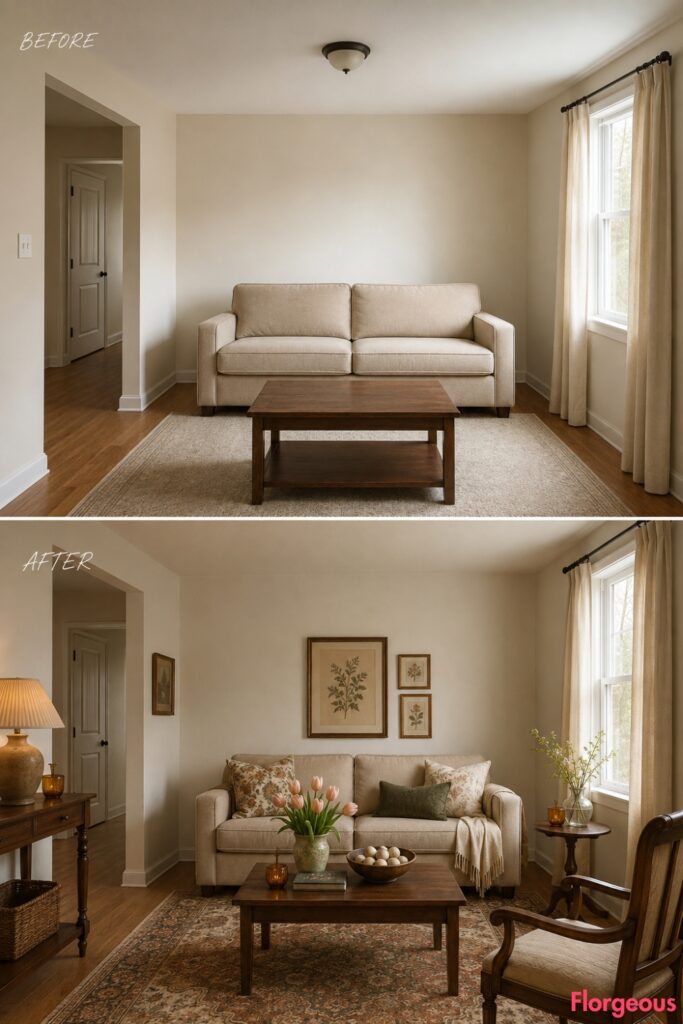
Vintage objects give this makeover depth that temporary seasonal decor rarely has.
Before: The same plain warm neutral room remains fixed.
After: Walnut furniture, an aged patterned rug, amber glass, cream stoneware, faded botanical artwork without text, tulips in mismatched vessels, and a carved wooden bowl of mottled eggs create an old-meets-new composition.
Most of these pieces could stay after Easter.
11. French Country Easter in Blue Ticking and Washed Oak
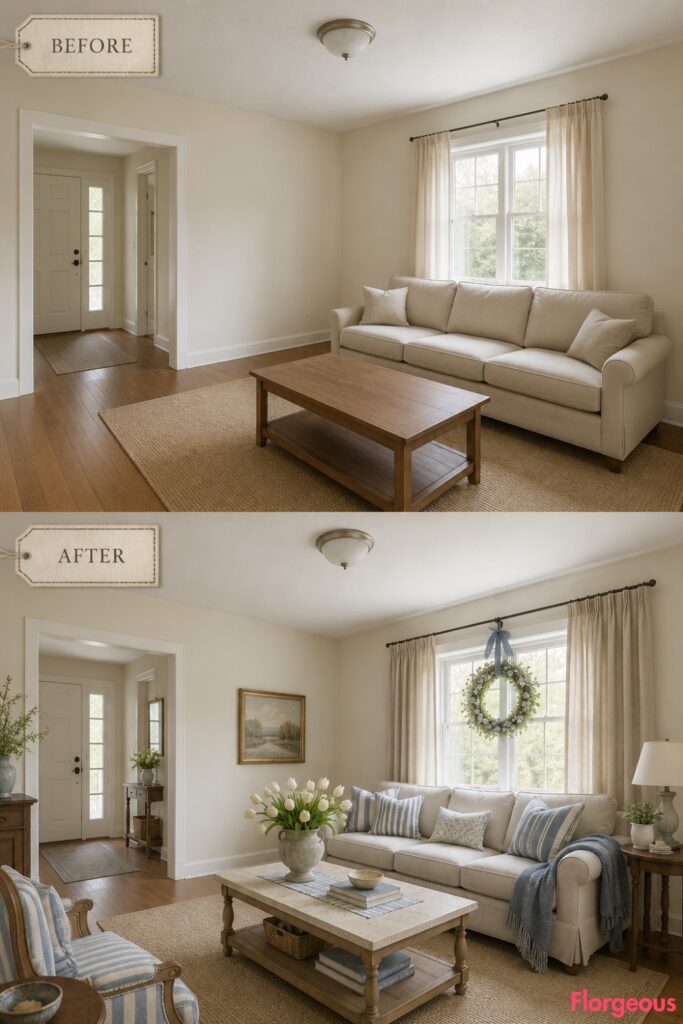
The mood here is tailored, pale, and gently traditional.
Before: The exact same beige, off-white builder-grade room remains unchanged.
After: Blue-and-cream ticking stripe, washed oak, limestone, flax curtains, a softly bordered rug, and white tulips in an aged ceramic urn reshape the room. A simple wreath tied with faded blue ribbon provides the only overt seasonal flourish.
12. Terracotta Easter? It Works Better Than You Might Expect
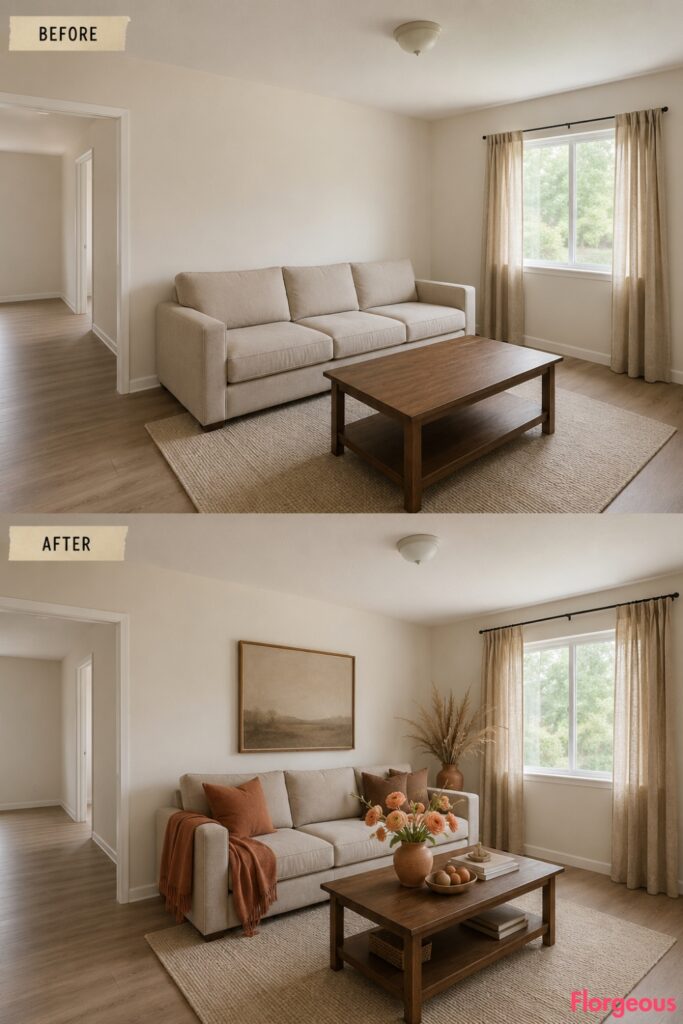
This makeover steps completely outside the usual Easter palette.
Before: Warm off-white walls, beige sofa, bare table, neutral rug, short curtains, basic light, empty walls, and daylight.
After: Terracotta cushions, tobacco wood, clay vessels, a sand rug, soft peach ranunculus, dried spring grasses, and chalky rust-toned eggs make the room earthy and warm.
The flowers keep the palette firmly rooted in spring.
13. Chocolate Brown Meets White Blossom
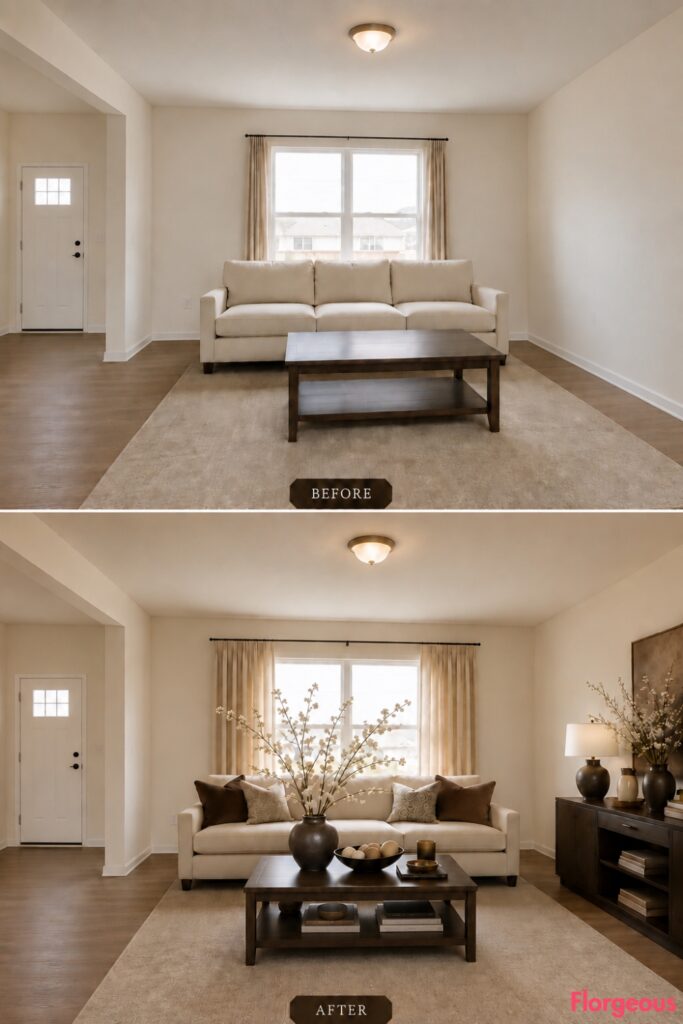
This is Easter decorating at its moodiest.
Before: The plain off-white and beige starting room stays exactly the same.
After: Espresso wood, chocolate cushions, creamy boucle, parchment curtains, pale limestone, smoky glass, and tall white blossom branches create a dramatic dark-light contrast. Cream eggs appear inside one deep brown ceramic bowl.
Why It Works: White flowers become far more striking against dark brown than against another pale pastel.
14. A Celadon Room Sharpened With Blackened Wood
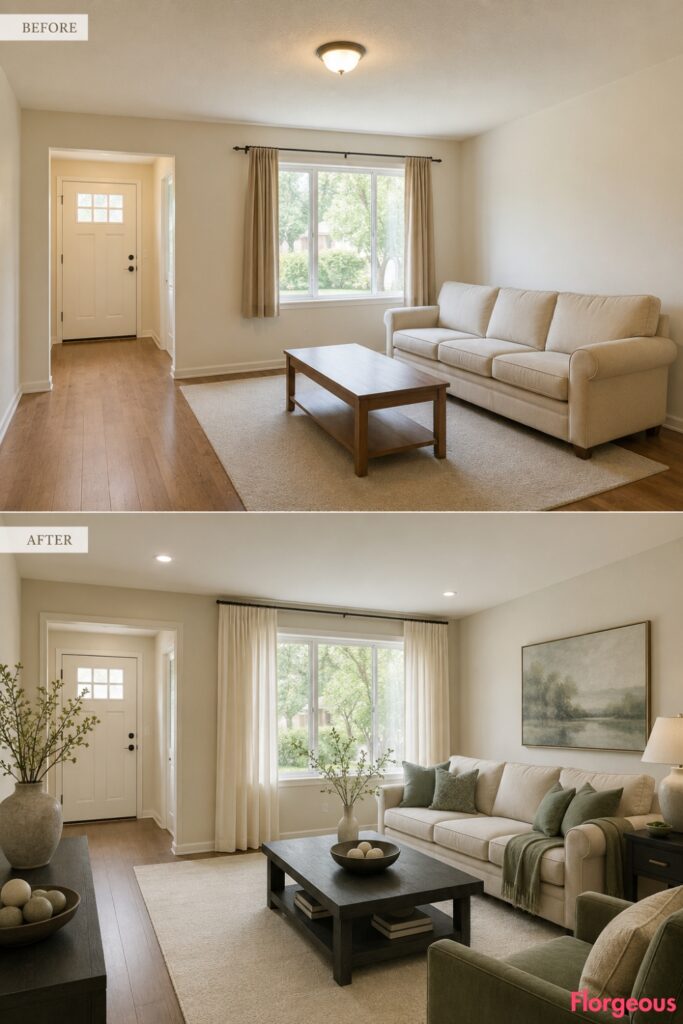
Soft spring green becomes unexpectedly modern beside dark linear furniture.
Before: The canonical warm off-white room remains unchanged.
After: Celadon cushions, blackened-oak side pieces, a pale stone table, ivory curtains, a cream-gray rug, slender pussy willow branches, and one charcoal ceramic bowl filled with pale eggs create a crisp contemporary composition.
Nothing else needs decorating.
15. Pistachio Gingham, Used Once and Used Well
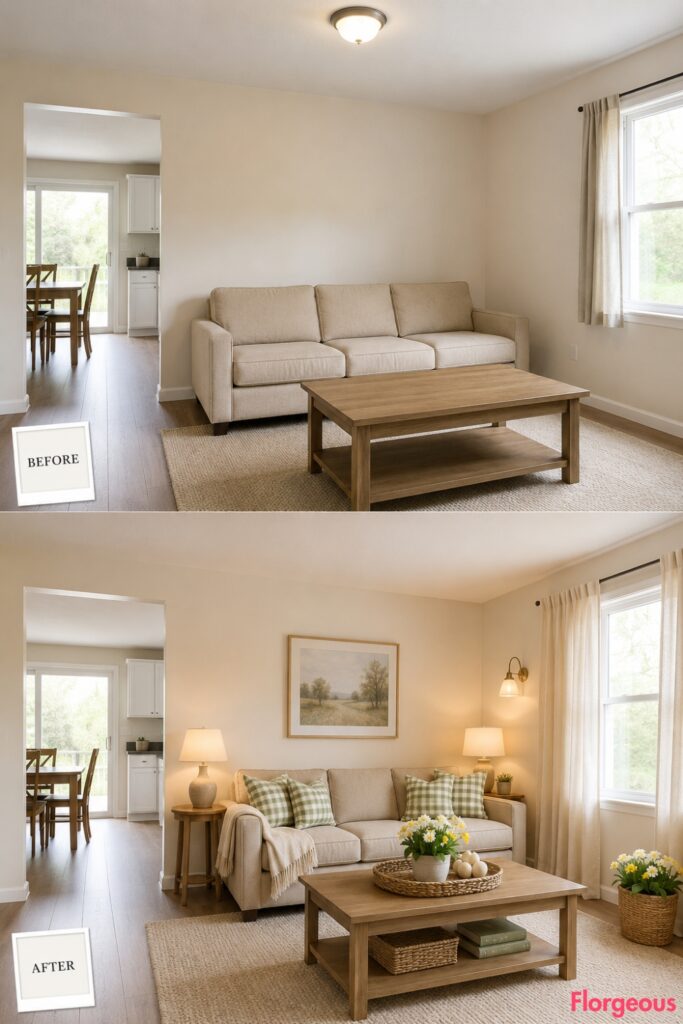
Gingham becomes much more refined when it occupies only one visual zone.
Before: The same plain beige sofa and builder-grade surroundings remain fixed.
After: Pistachio gingham appears only on two cushions. Warm oak, an oatmeal rug, cream curtains, potted primroses, a woven tray, and honey-colored lighting support it without adding competing patterns.
A few chalky eggs sit inside the tray.
Common Mistake: Do not repeat gingham on cushions, curtains, throws, and lampshades at once.
16. The Renter-Friendly Easter Living Room Reset
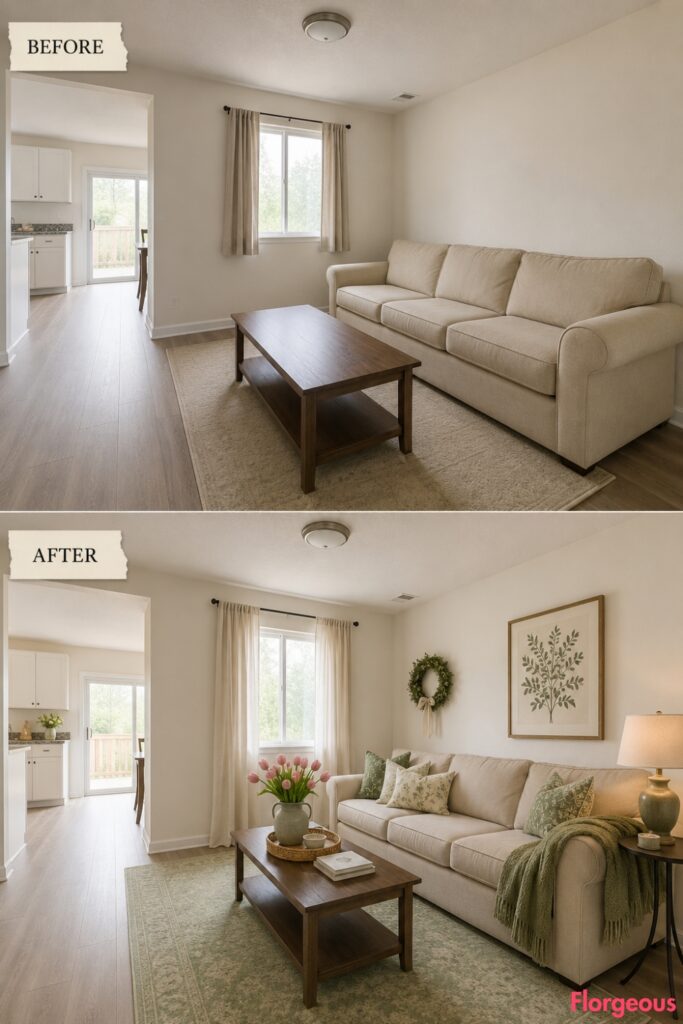
This transformation changes almost everything visually without making a permanent alteration.
Before: Warm off-white walls, beige sofa, bare table, neutral rug, short curtains, basic light, empty walls, and daylight.
After: Ready-made floor-length curtains, removable botanical artwork, washable sage rug, new cushion covers, plug-in lighting, thrifted ceramics, supermarket tulips, and a ribbon-refreshed wreath give the room a complete seasonal identity.
Budget Version: Change textiles and one large floral arrangement before buying decorative objects.
17. Small Room, Tall Branches: Easter Without Losing Floor Space
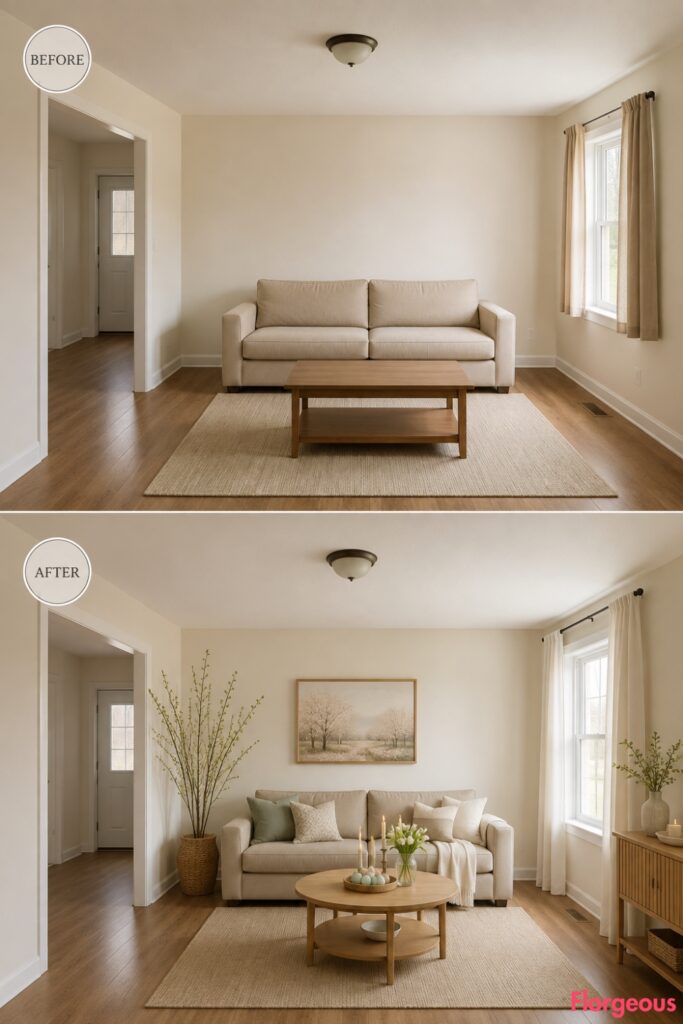
A compact living room benefits from going upward rather than outward.
Before: The exact same builder-grade room remains visually unchanged.
After: A slim round oak table, narrow side storage, full-height ivory curtains, a compact low-pile rug, and one tall basket of budding branches make the room feel lighter. A tiny tray gathers candles and eggs into one controlled zone.
Small Space Tip: Seasonal decor should never create a second obstacle course around the furniture.
18. After Dark: Olive, Plum, and Candlelight
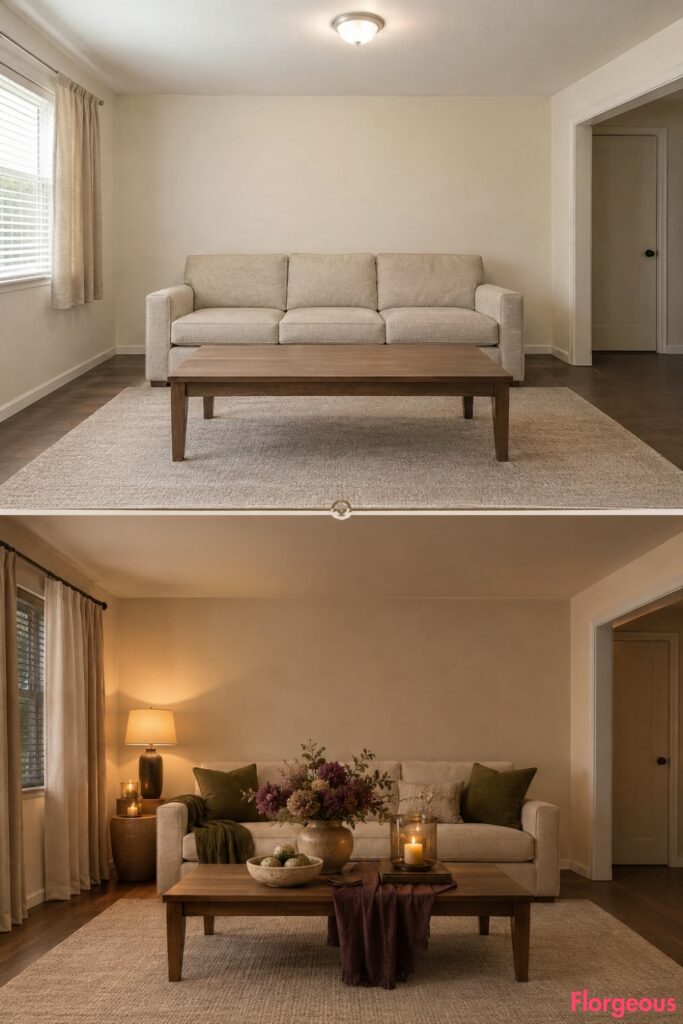
Instead of a sunny spring morning, this makeover imagines Easter entertaining in the evening.
Before: The established plain room is unchanged and shown in its usual natural daylight.
After: Deep olive textiles, muted plum flowers, walnut, parchment curtains, smoky glass, aubergine ribbon, shaded lamps, and small clusters of warm candles create a sophisticated after-dark atmosphere. Naturally speckled eggs sit in a low limestone bowl.
Use flameless candles close to fabrics or branches.
19. A Coral-and-Stripe Easter Brunch Room
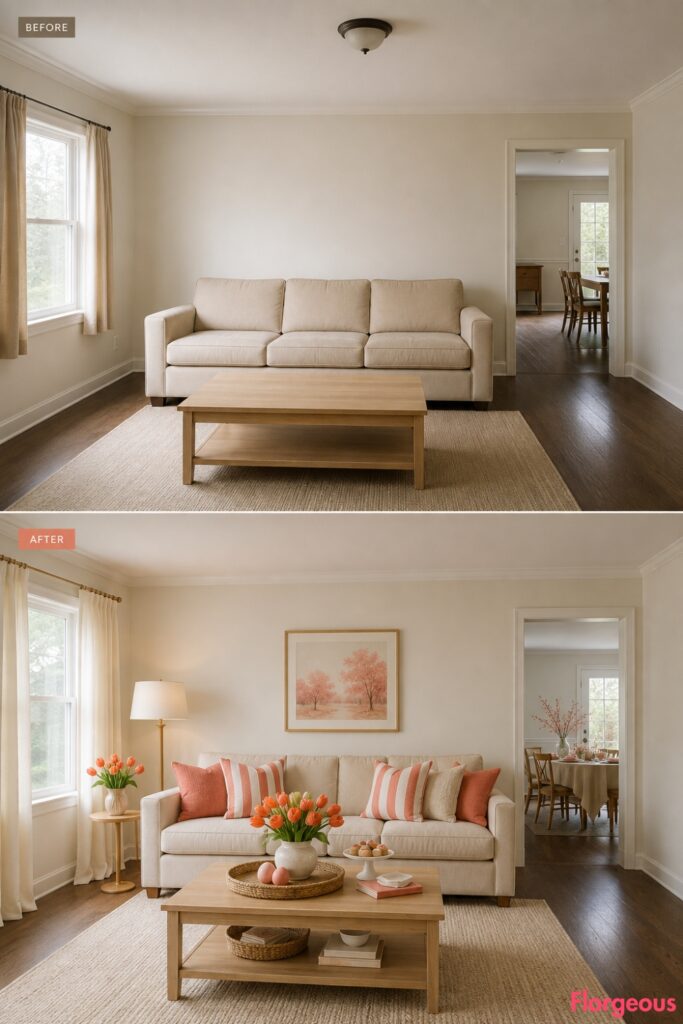
This look is brighter and more social than the other transformations.
Before: Warm off-white walls, beige sofa, bare rectangular table, neutral rug, short curtains, basic ceiling light, empty walls, and daylight.
After: Soft coral cushions, wide parchment-and-coral stripes, blond oak, cream curtains, pale woven flooring, apricot tulips, and a low coffee-table brunch arrangement create a cheerful entertaining room.
Keep food styling minimal so it still reads as a living room, not a dining setup.
20. Let Blue-and-White Ceramics Become the Seasonal Focal Point
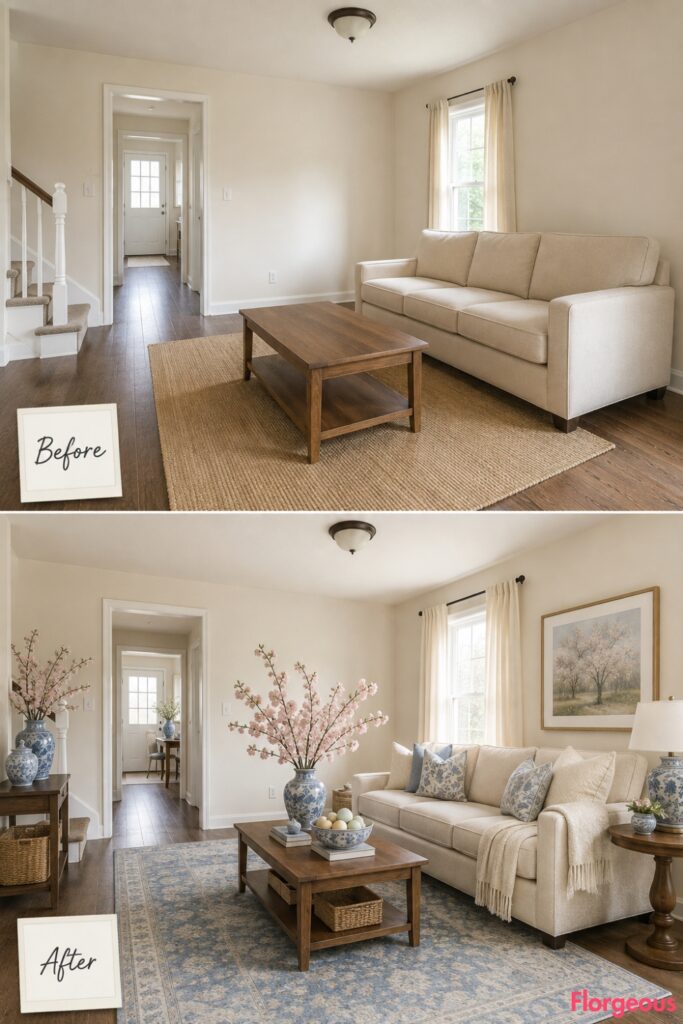
Here, the centerpiece is a collection rather than a flower color or textile pattern.
Before: The same neutral builder-grade starting room stays unchanged.
After: Cream upholstery, medium walnut, faded blue rug, ivory curtains, and a curated group of blue-and-white ceramics fill the console and coffee table. Cherry blossom stems rise from the largest vessel, while pale eggs sit inside a patterned bowl.
Designer Tip: Keep a ceramic collection grouped tightly so it reads as one focal point.
21. The Woodland Finale: Moss, Brass, Narcissus, and Quail Eggs
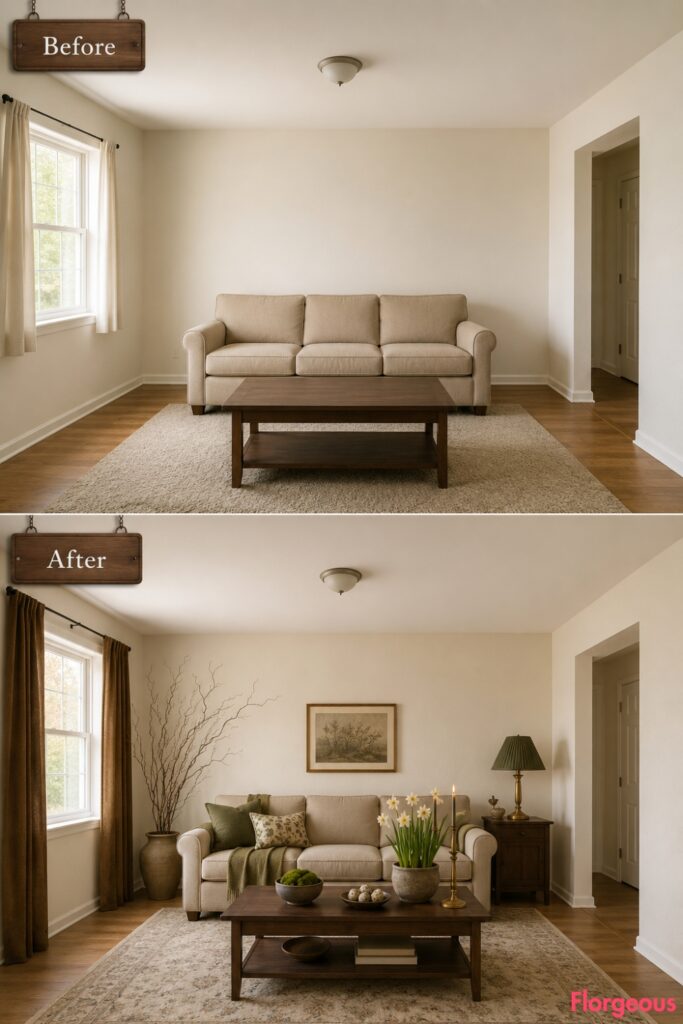
The final room trades conventional spring pastels for something deeper and more atmospheric.
Before: The canonical builder-grade living room remains completely unchanged.
After: Moss wool cushions, tobacco-toned curtains, dark walnut, aged brass lamps, a parchment rug, potted narcissus, twisted hazel branches, and naturally patterned quail eggs create a woodland-inspired Easter room.
It feels seasonal through nature rather than novelty.
How to Pick the Right Easter Direction for Your Room
The strongest Easter decorating usually begins with one decision, not a cart full of seasonal accessories. Decide whether your room will be led by color, flowers, texture, pattern, ceramics, natural materials, or lighting.
Then remove a few everyday objects before adding anything new. That small editing step gives branches, bulbs, textiles, and seasonal pieces enough breathing room to look intentional.
For your own Easter Living Room, also consider what can remain after the holiday. Linen curtains, a better rug, botanical artwork, ceramics, baskets, lamps, and spring-colored cushion covers can continue working well into May, while eggs, ribbons, and a few overtly seasonal details can simply be packed away.