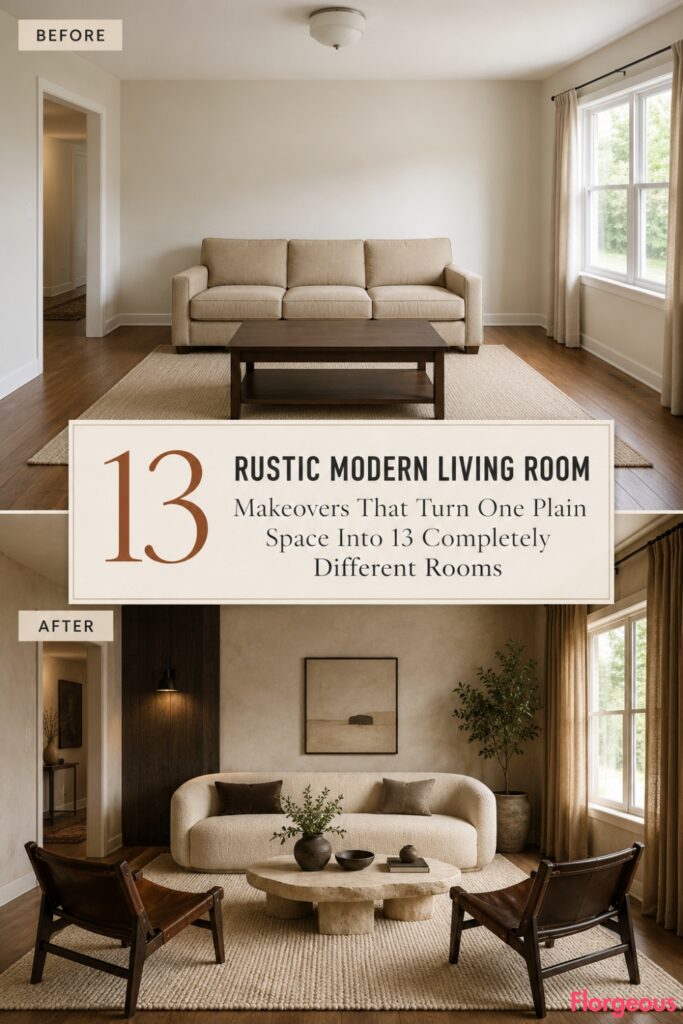
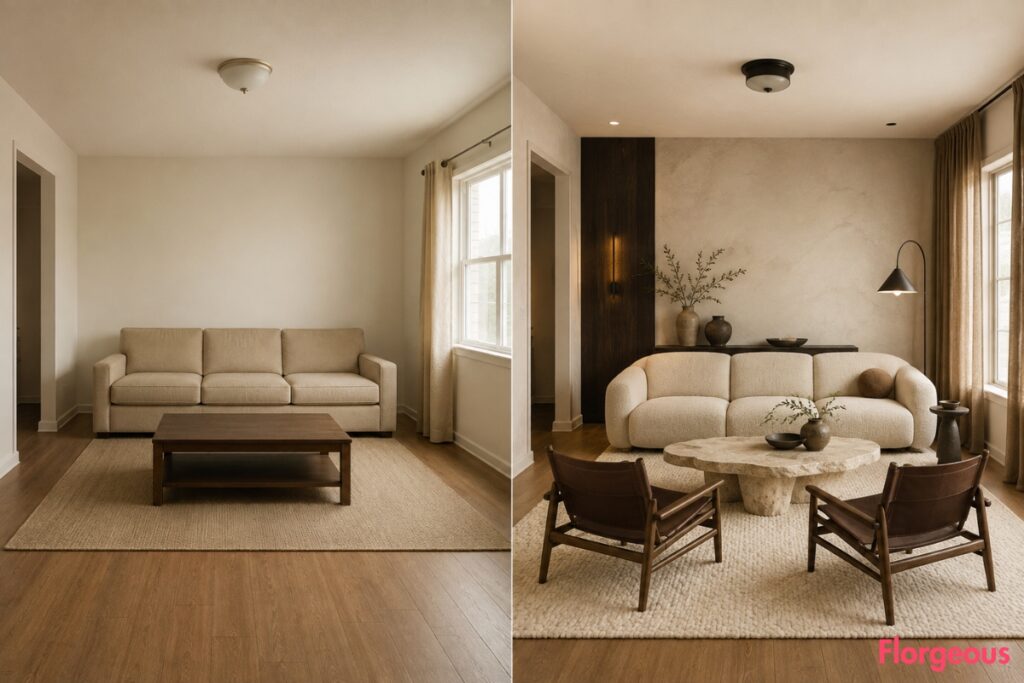
Our starting room is intentionally ordinary: warm off-white walls, a straight beige sofa, a bare rectangular coffee table, a simple neutral rug, short curtains, one basic ceiling light, and almost nothing on the walls. It is clean and usable, but there is no real focal point or sense of personality.
Instead of changing the architecture, we treated that same builder-grade shell as a blank canvas. These 13 Rustic Modern Living Room makeovers explore how dramatically the mood can shift through furniture placement, natural materials, lighting, color, and texture alone.
Some versions are pale and minimal, others dark and architectural. There is a fireplace-focused room, a concealed media room, a compact layout, a renter-friendly version, a family-focused design, and a luxurious interpretation. The doorway, window, ceiling height, floor footprint, camera position, and circulation remain locked throughout.
1. Wrap the Room in Chalky Plaster and Oversized White Oak
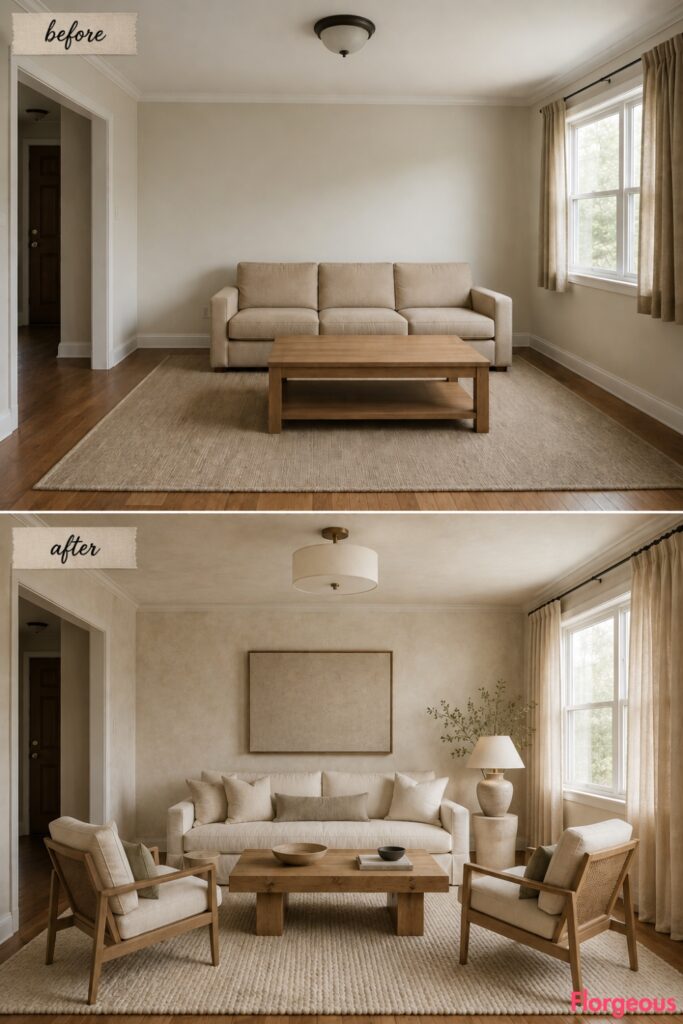
This is the softest introduction to rustic modern style, with texture doing more work than color.
Before: Warm off-white walls, straight beige sofa against the main wall, bare rectangular coffee table, simple neutral rug, short plain curtains, basic ceiling light, empty walls, minimal styling, soft natural daylight, and no focal point.
After: Chalky warm-white plaster replaces the flat paint. A broad ivory linen sofa remains the anchor, while two substantial white-oak lounge chairs face it across a thick rectangular oak table. A chunky wool rug, flax curtains, and one oversized ceramic lamp give the room weight without making it busy.
Designer Tip: Let one timber species dominate. Too many similar but slightly different woods can make a restrained room look accidental.
2. Let a Limestone Wall Become the Entire Focal Point
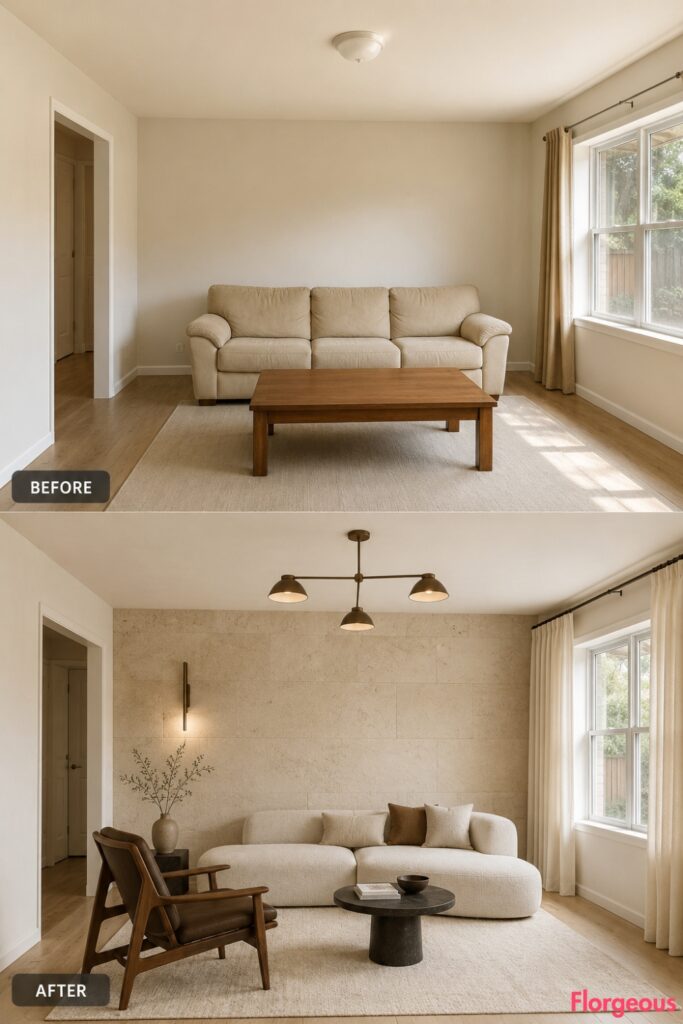
Rather than adding more furniture, this version gives one natural material architectural presence.
Before: The same locked plain builder-grade living room remains unchanged.
After: A broad honed limestone feature wall becomes the visual center. A low oatmeal sofa sits slightly off-center in front of it, while one sculptural walnut chair is positioned perpendicular near the opposite end. A small dark pedestal table replaces the traditional coffee table, leaving more floor visible.
The asymmetry keeps the room contemporary, while the stone supplies the rustic texture.
3. Float the Sofa in a Moody Walnut and Blackened-Metal Scheme
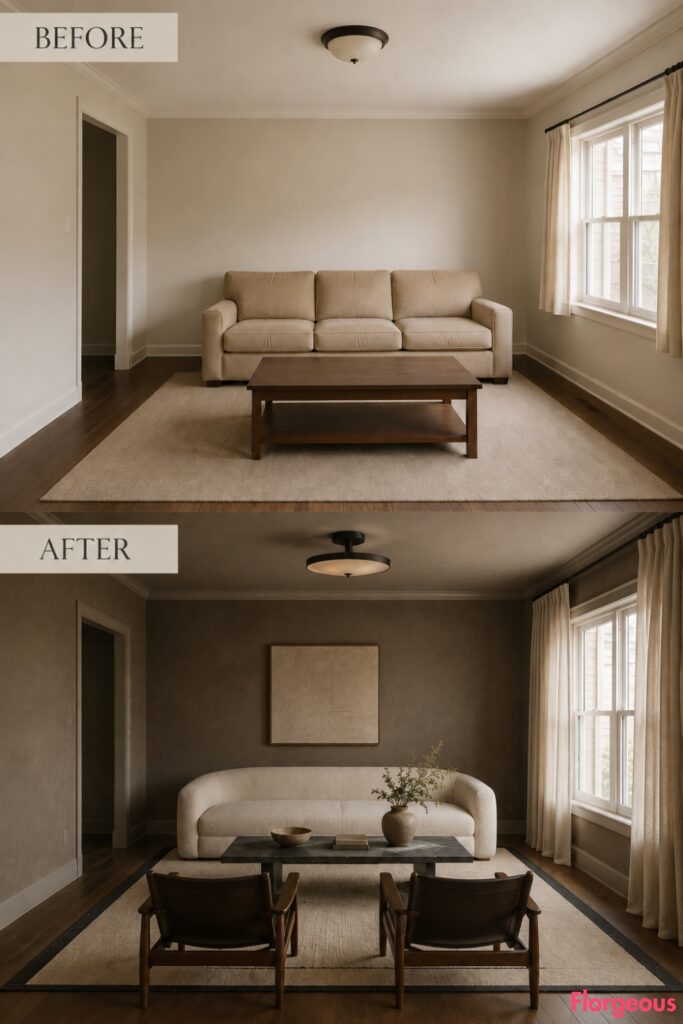
This layout deliberately pulls the seating away from the walls.
Before: The original plain room and all architectural details stay fixed.
After: Deep mushroom mineral paint gives the shell more depth. A clean-lined wool sofa floats toward the center, creating a narrow passage behind it. Two dark-walnut chairs face the sofa across an elongated soapstone table, while blackened-metal lighting adds sharper contemporary lines.
Color Story: Mushroom, walnut, charcoal, and parchment feel richer and softer than a strict black-and-white palette.
4. Turn Reclaimed Oak Into a Precise Architectural Feature
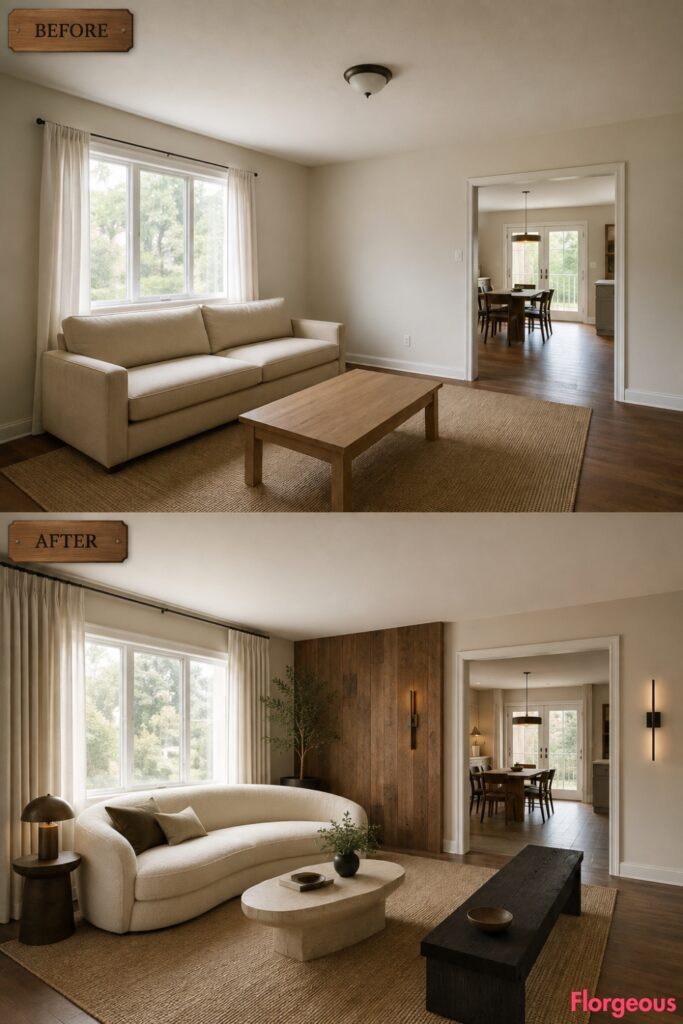
Reclaimed wood can look surprisingly modern when it is edited rather than scattered around the room.
Before: The locked builder-grade room remains simple and featureless.
After: Wide reclaimed-oak boards cover only one defined wall section. A curved cream sofa sits diagonally across the rear half of the room, with a low blackened-oak bench opposite and an asymmetrical pale-stone table between them.
The rough grain contrasts with smooth furniture silhouettes, preventing the room from drifting into cabin or farmhouse territory.
Common Mistake: Avoid repeating reclaimed wood on shelves, tables, ceiling details, and accessories. One strong application is enough.
5. Open the Floor With a Pale Scandinavian-Rustic Layout
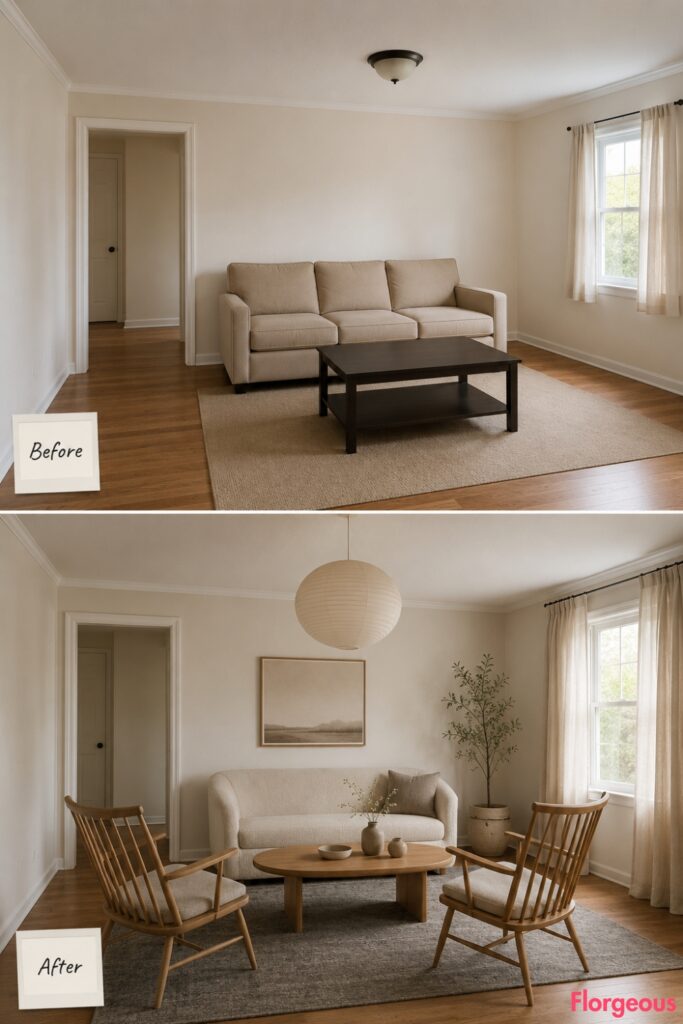
The biggest change here is scale.
Before: The original full-size beige sofa and rectangular coffee table make the simple room feel heavier.
After: A compact oatmeal settee replaces the sofa. Two pale-ash spindle lounge chairs face it at relaxed angles, while a slim oval table leaves generous space around the seating group. Soft gray wool, washed linen, and light timber keep the room airy.
Small Space Tip: The more floor you can see around individual furniture pieces, the larger a compact living room tends to feel.
6. Use Clay Walls and a Side-Positioned Leather Chaise
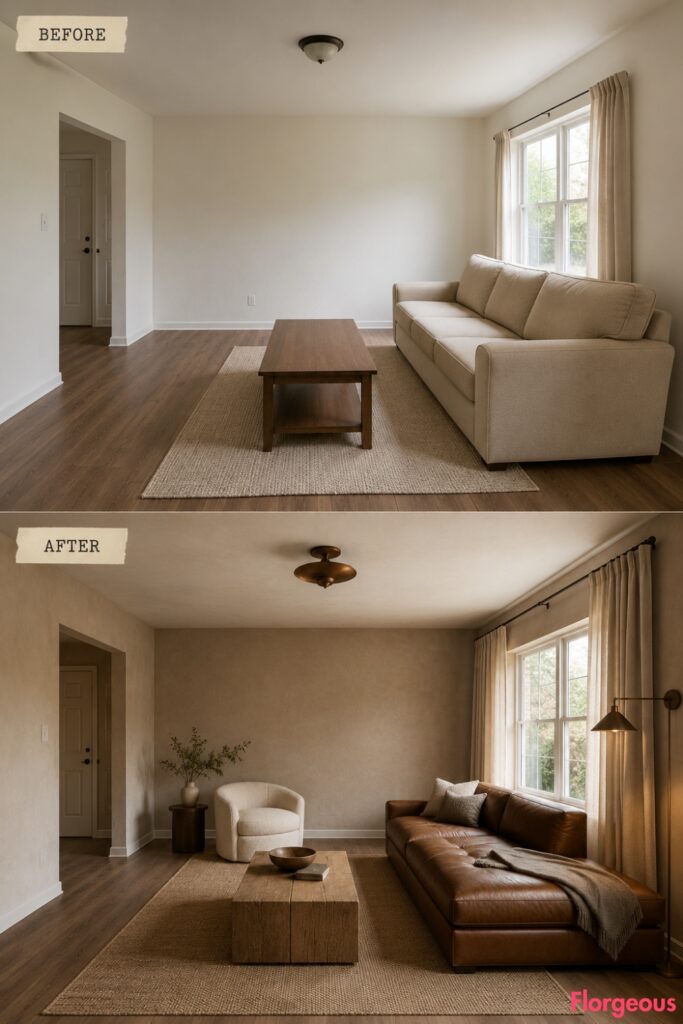
Instead of another sofa-and-chairs conversation group, this room stretches seating along one side.
Before: The same beige sofa room remains unchanged.
After: A long tobacco leather chaise follows the side wall, keeping the center unusually open. One oversized cream wool swivel chair occupies the far rear corner and turns toward the chaise. A rough oak block table, clay mineral walls, sand-colored rug, and parchment curtains create an earthy but disciplined palette.
Style Note: Leather has more impact when it appears once. Repeating it on stools, cushions, and accessories can make the room feel themed.
7. Reorganize the Entire Room Around a Quiet Stone Fireplace
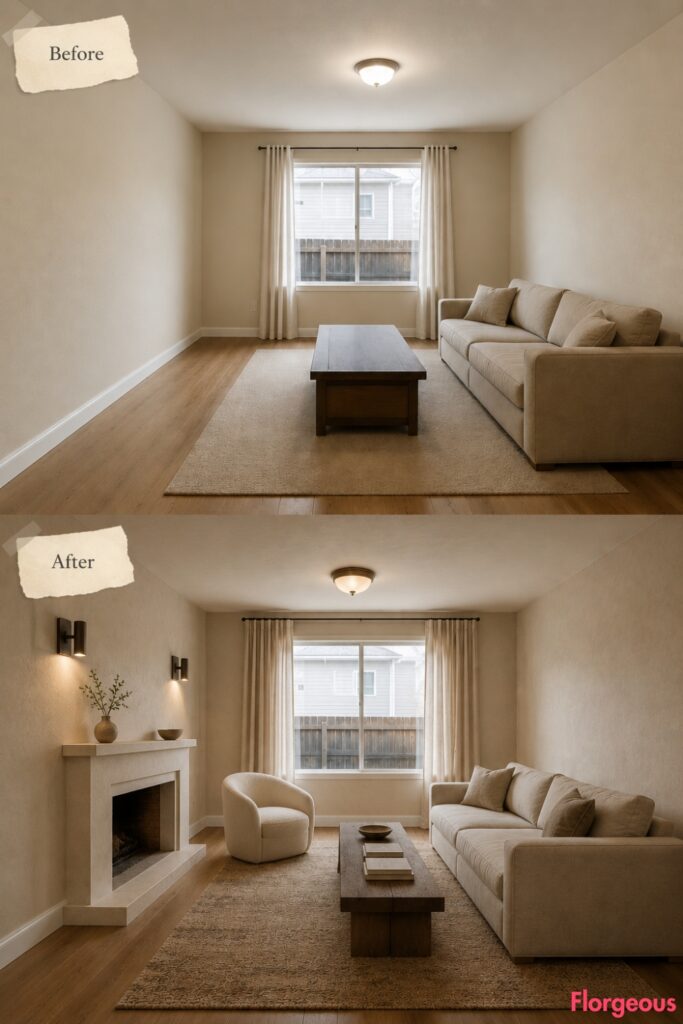
Here the focal point dictates the furniture plan.
Before: The original room has no visual destination.
After: A shallow plaster fireplace with a thick honed-limestone surround becomes the anchor. A compact linen sofa faces it directly. One low walnut bench sits perpendicular to the sofa, while a single wool lounge chair completes an open U-shaped arrangement without blocking the entry path.
Budget Version: A slim electric insert with mineral board and stone-look tile can create a similar architectural impression without a masonry rebuild.
8. Hide the Television Inside a Smoked-Oak Media Wall
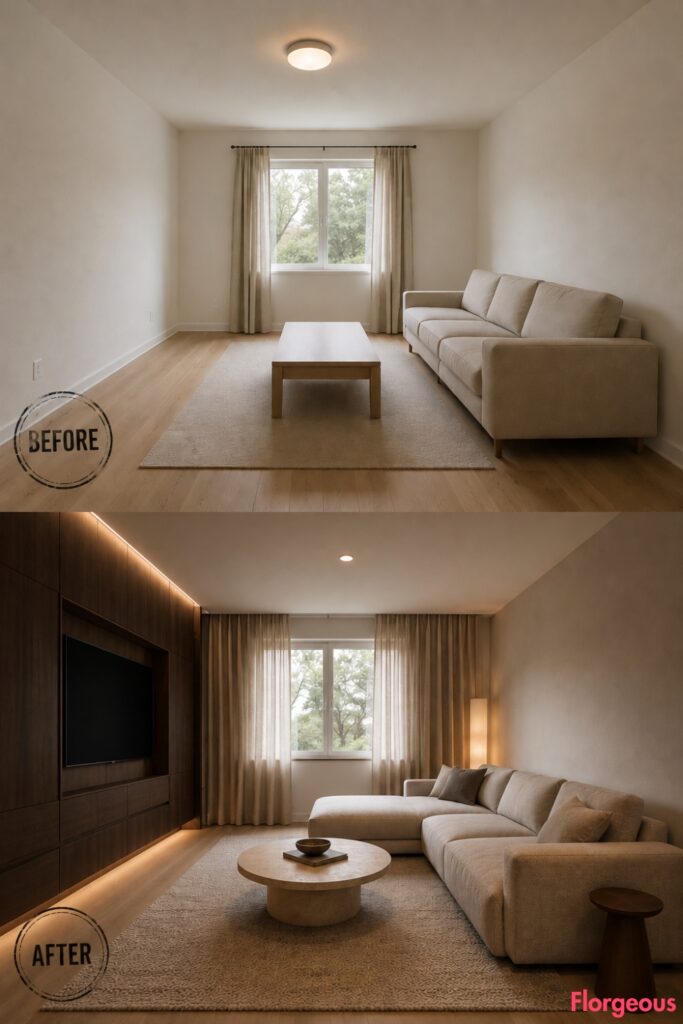
A media room can still feel tactile and residential.
Before: The unchanged room has no integrated storage or entertainment focus.
After: A low oatmeal sectional faces a smoked-oak wall containing a blank dark television screen and flush closed cabinetry. A rounded limestone table softens the straight lines, while concealed lighting washes gently across the timber.
Unlike the fireplace room, everything here is organized for viewing, storage, and relaxed everyday use.
9. Replace the Main Sofa With a Reading-Daybed Composition
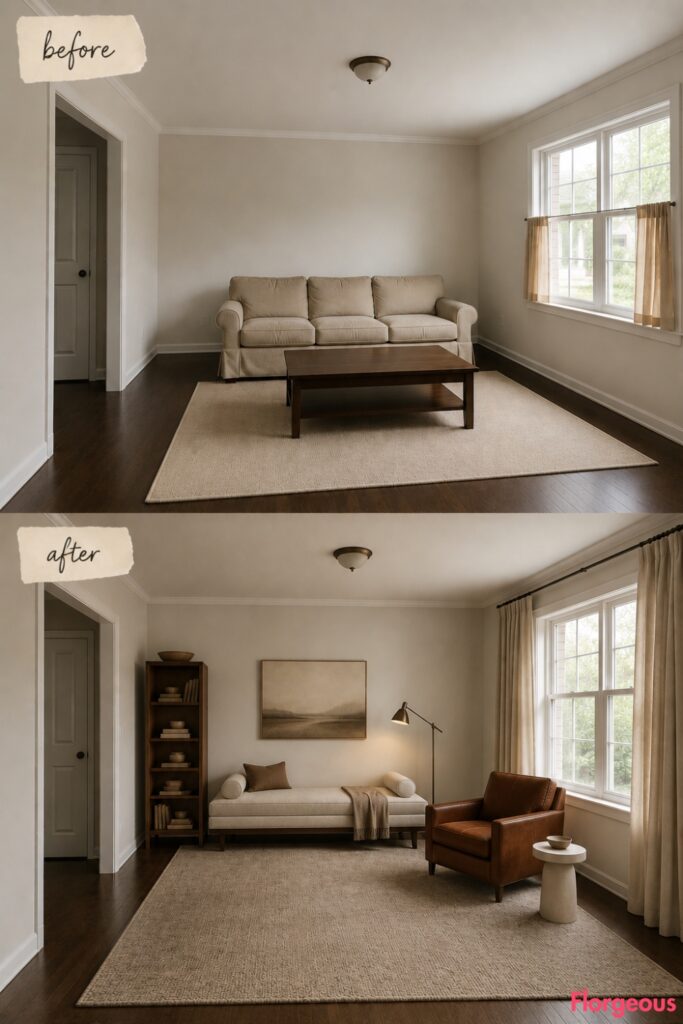
This is the most unconventional furniture plan in the gallery.
Before: The same straight beige sofa, rectangular table, and basic rug remain in place.
After: A long backless oatmeal daybed floats through the center of the room, allowing access from both sides. A deep cognac reading chair sits near the window without blocking it, paired with a small limestone pedestal and directional bronze floor lamp. A narrow walnut bookcase occupies a clear wall away from the doorway.
The room feels more like a relaxed reading salon than a standard sofa arrangement.
10. Build a Family Room Around an Upholstered Storage Island
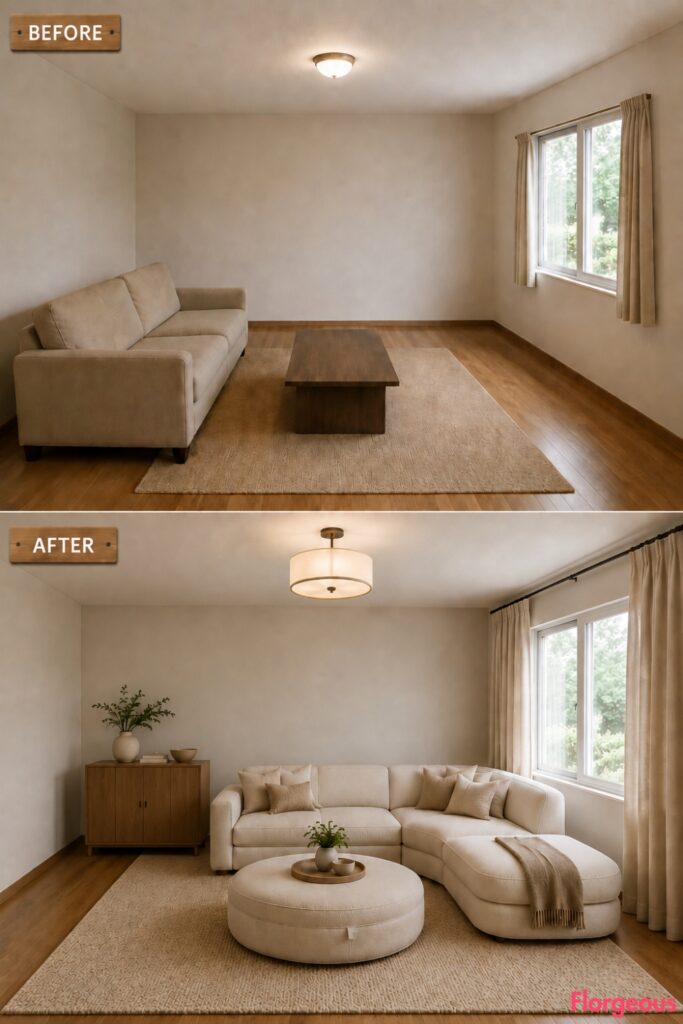
Instead of hiding practicality, this design makes storage part of the furniture plan.
Before: The original room offers little storage and several hard-edged pieces.
After: A rounded oatmeal modular sofa forms an open L in the rear half of the room. The center is occupied by an oversized oval upholstered storage ottoman rather than a hard table. A slim closed-oak cabinet sits safely away from the doorway, while washable textiles and rounded silhouettes make the space easier to live with.
11. Keep the Beige Sofa and Make the Room Completely Renter-Friendly
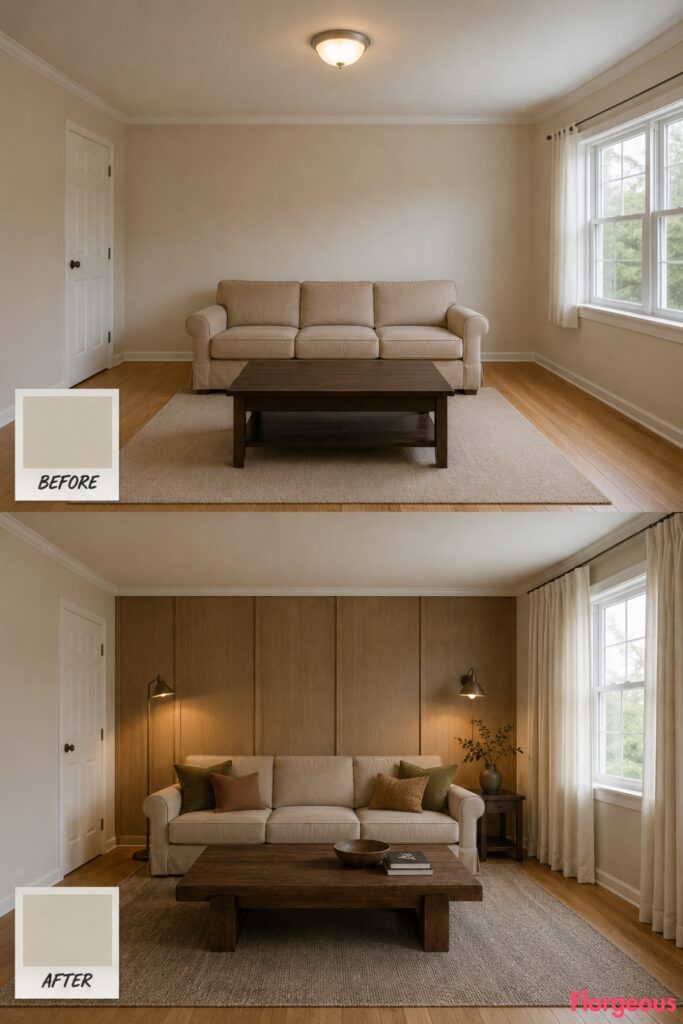
The least permanent makeover deliberately retains the largest existing piece.
Before: Beige sofa, plain walls, rectangular table, neutral rug, short curtains, and basic ceiling light remain unchanged.
After: The sofa stays. Removable warm-oak-effect panels create a narrow focal area, while a secondhand dark timber table, washable mushroom rug, high-hung ready-made curtains, clay and olive linen cushions, and plug-in bronze lights create the style without construction.
Budget Version: A single solid-wood vintage table usually looks more convincing than several inexpensive pieces with artificial distressing.
12. Make Rustic Materials Feel Formal With Travertine and Sculptural Walnut
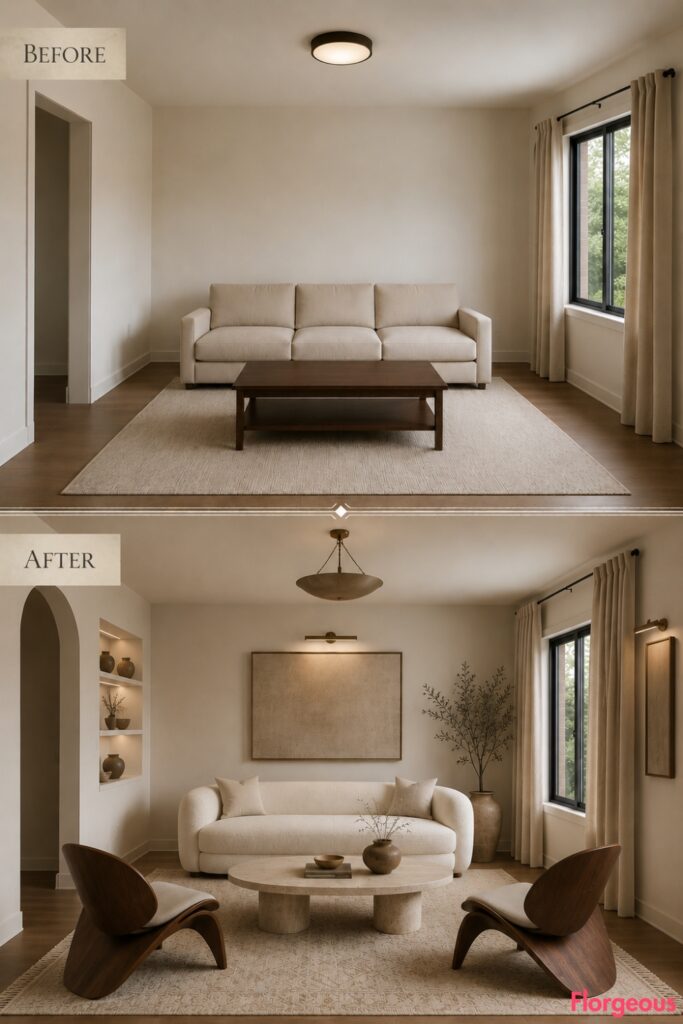
This is the most polished interpretation, but shine is deliberately kept to a minimum.
Before: The same ordinary builder-grade room provides the neutral baseline.
After: A tailored ivory wool-linen sofa is centered against the rear wall. Two dramatically curved walnut chairs face it as a formal pair. A broad oval honed-travertine table, hand-knotted parchment rug, ceiling-height drapery, and antique-bronze picture lights make craftsmanship the decorative element.
Designer Tip: Luxury rustic modern rooms often look richer with honed, brushed, woven, or matte finishes than with glossy surfaces.
13. End With a High-Contrast Charred-Oak Evening Room
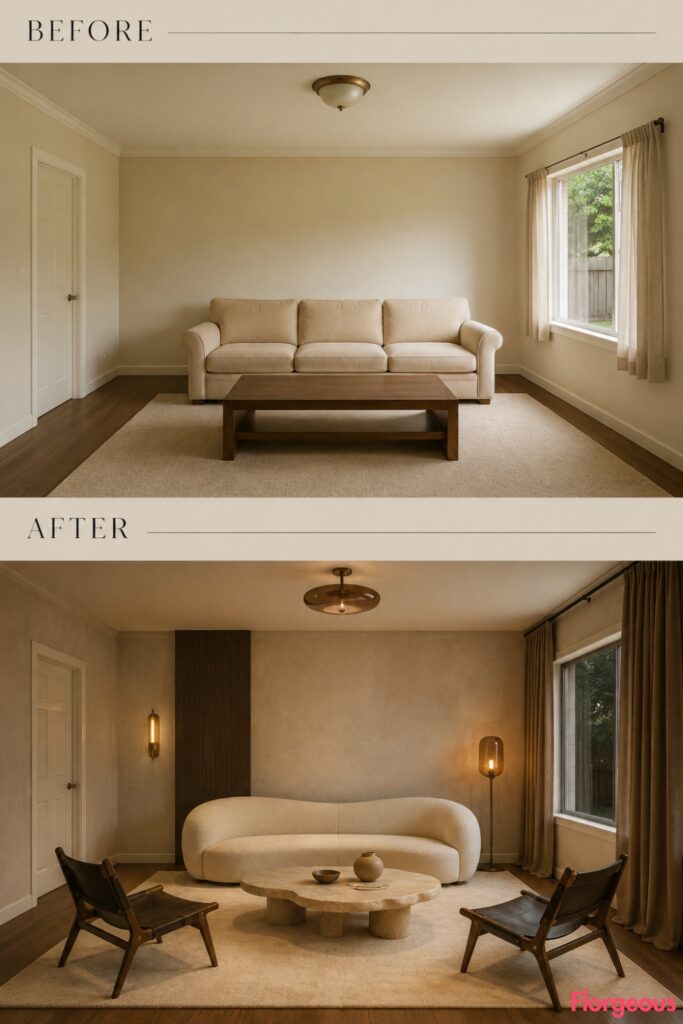
The final makeover deliberately pushes rustic modern style into darker territory.
Before: The identical neutral builder-grade room remains fully recognizable.
After: Pale hand-finished plaster is interrupted by one narrow charred-oak panel rather than an entire dark wall. A sculptural cream sofa floats slightly away from the rear wall. Two low sling chairs in dark timber face it across an irregular limestone table, while tobacco-colored curtains and amber glass lamps create a warm evening glow.
The pale upholstery, blackened timber, and rough limestone create enough contrast that very little additional decor is needed.
Choosing the Right Rustic Modern Look for Your Own Room
These makeovers work because rustic character comes from material quality, not themed accessories. Rough wood, plaster, limestone, wool, leather, and patinated metal feel most contemporary when they are paired with simpler furniture shapes and plenty of visual breathing room.
Start by deciding what you want to dominate your room: pale timber, dark walnut, stone, plaster, leather, or an architectural focal point. Then choose furniture placement before buying accessories. A beautiful oversized chair in the wrong circulation route will make even an expensive room feel unresolved.
For your own Rustic Modern Living Room, limit the material palette, test wood and stone samples together in actual daylight, and choose one focal feature strong enough that the rest of the room can stay quiet.