A split rail fence doesn’t hide anything, and that’s exactly its charm.
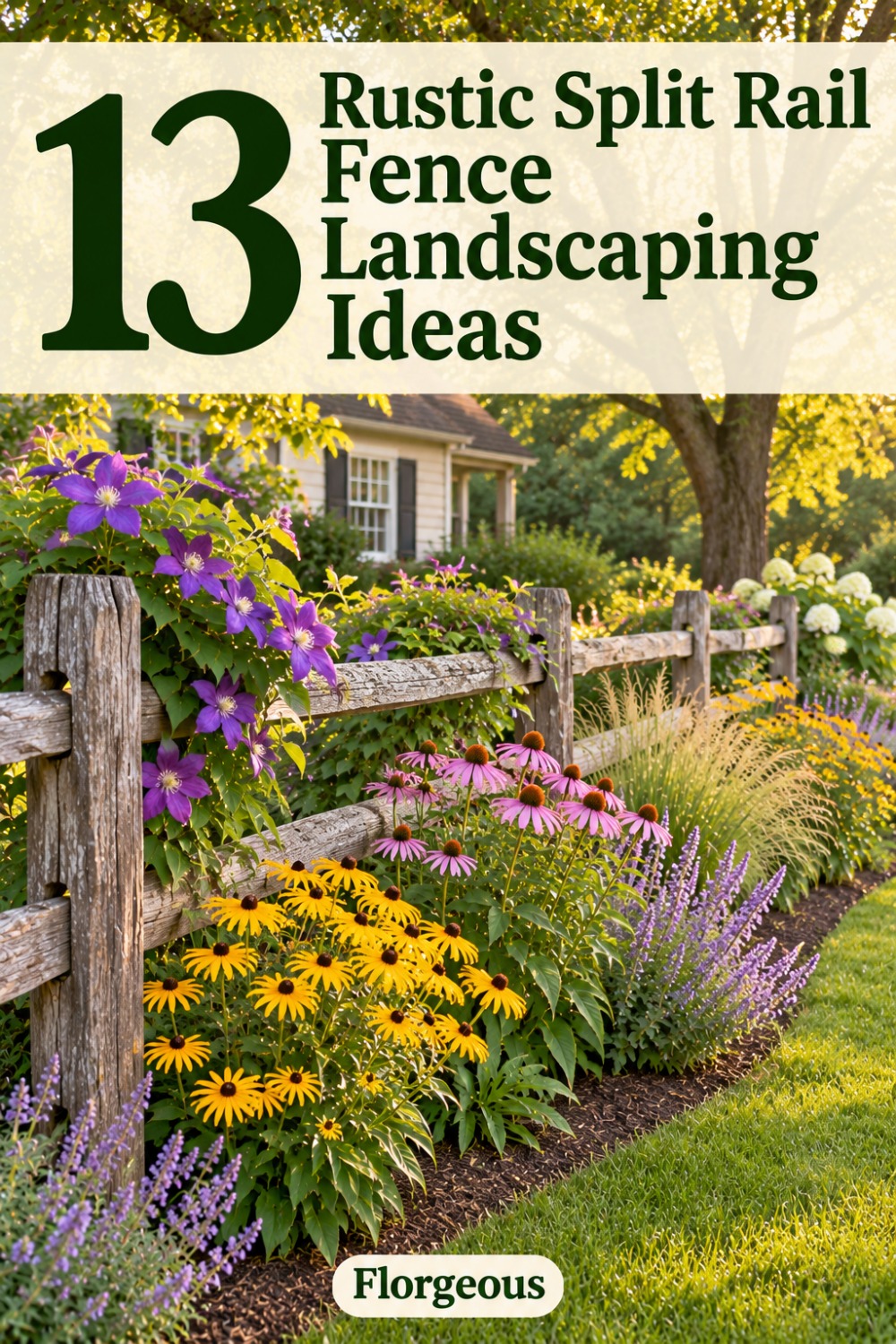
It marks a boundary, frames a view and gives a yard the relaxed feel of a country lane.
The secret to landscaping along a split rail fence isn’t covering it up. It’s planting so the rails look like they’ve always been part of the garden.
These 13 rustic split rail fence landscaping ideas will help you soften the posts, frame an entrance and fill the space around your fence with easy, natural planting.
Split Rail Fence Planting at a Glance
| Spot | Good plants | Look |
|---|---|---|
| Along the rails | Black-eyed Susan, coneflower, daylily, catmint, Russian sage | Cottage or prairie |
| On the rails | Clematis, native honeysuckle, climbing roses | Romantic and soft |
| Behind the fence | Hydrangea, ninebark, native grasses | Full and layered |
| Under the bottom rail | Gravel, mulch or low ground cover | Clean and mowable |
| At the posts | Low perennials, birdhouses, solar post caps | Detailed and finished |
| At an entrance | Paired beds, boulders, small trees | Welcoming |
1. Weave a Cottage Border Along the Rails
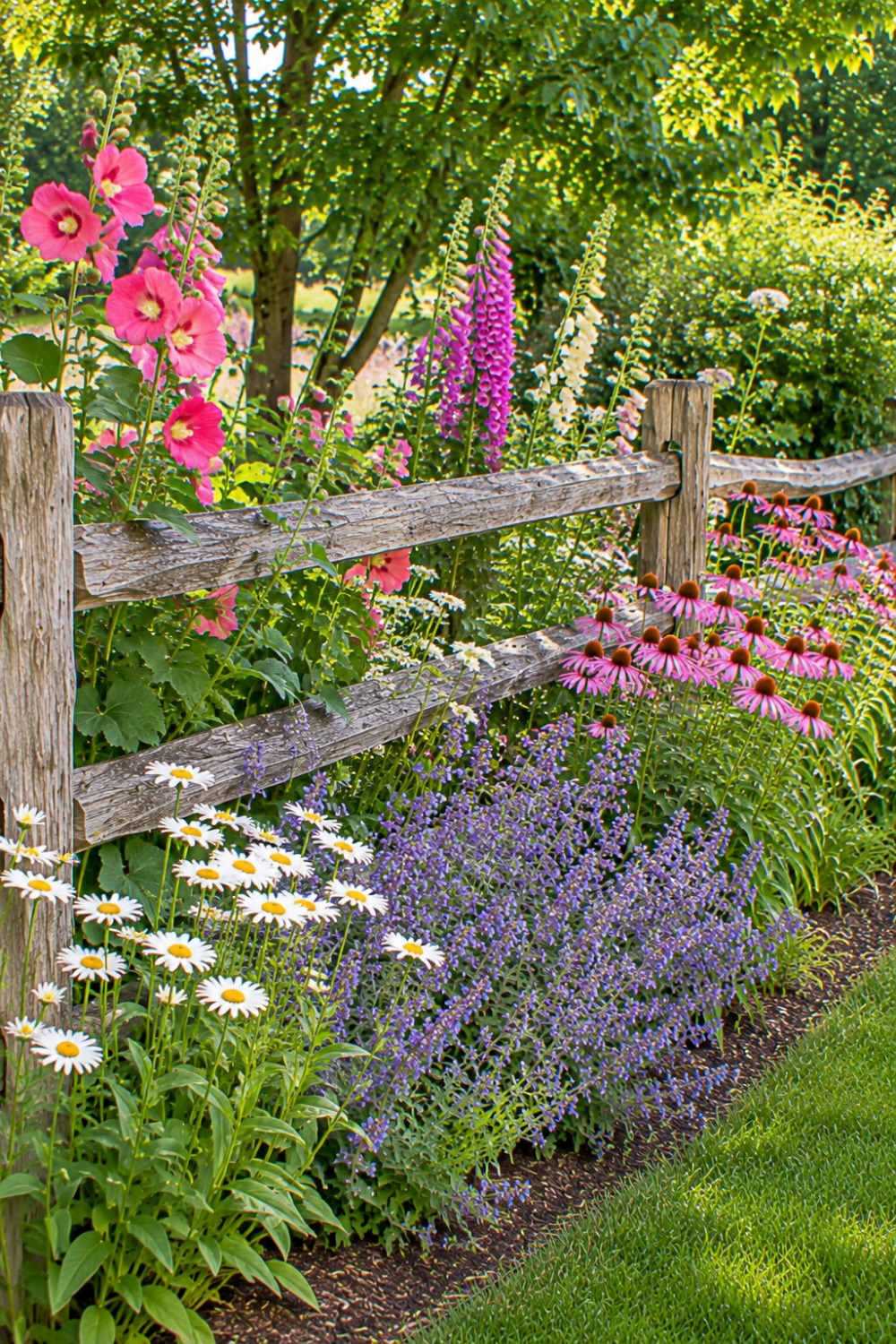
Split rail fences and cottage gardens belong together.
Let tall flowers grow up behind the rails and shorter ones spill through between them, so the fence looks woven into the planting.
Hollyhocks, Shasta daisies, catmint, foxglove and coneflowers are classic, easy choices for sun.
How to do it:
- Make a bed about 3 feet deep along one or both sides of the fence.
- Plant tall flowers behind the rails and mid-height ones in front.
- Let a few plants lean through the rails rather than staking everything.
2. Let Clematis Ramble Along the Top Rail
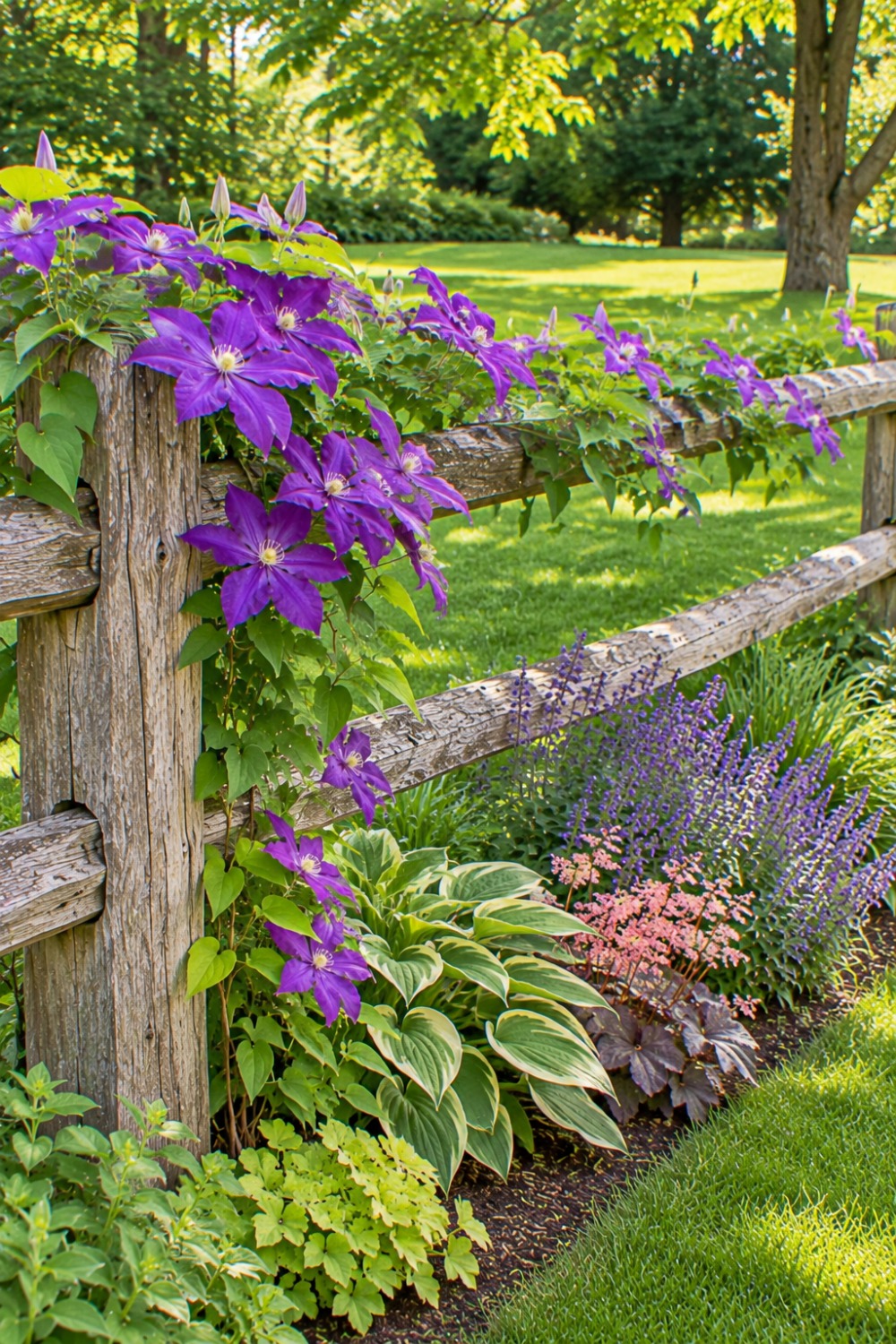
A flowering vine trained along the top rail softens the fence without hiding it.
Clematis is light enough not to strain the rails, and it flowers for weeks. Native coral honeysuckle (Lonicera sempervirens) is another good choice that hummingbirds love.
Clematis likes its roots shaded and its top in sun, so plant low perennials at its base. See our clematis companion plants for ideas.
How to do it:
- Plant the vine at the base of a post.
- Guide the stems up the post and along the top rail.
- Tie them loosely with soft garden twine until they hold on.
3. Plant a Native Meadow Behind the Fence
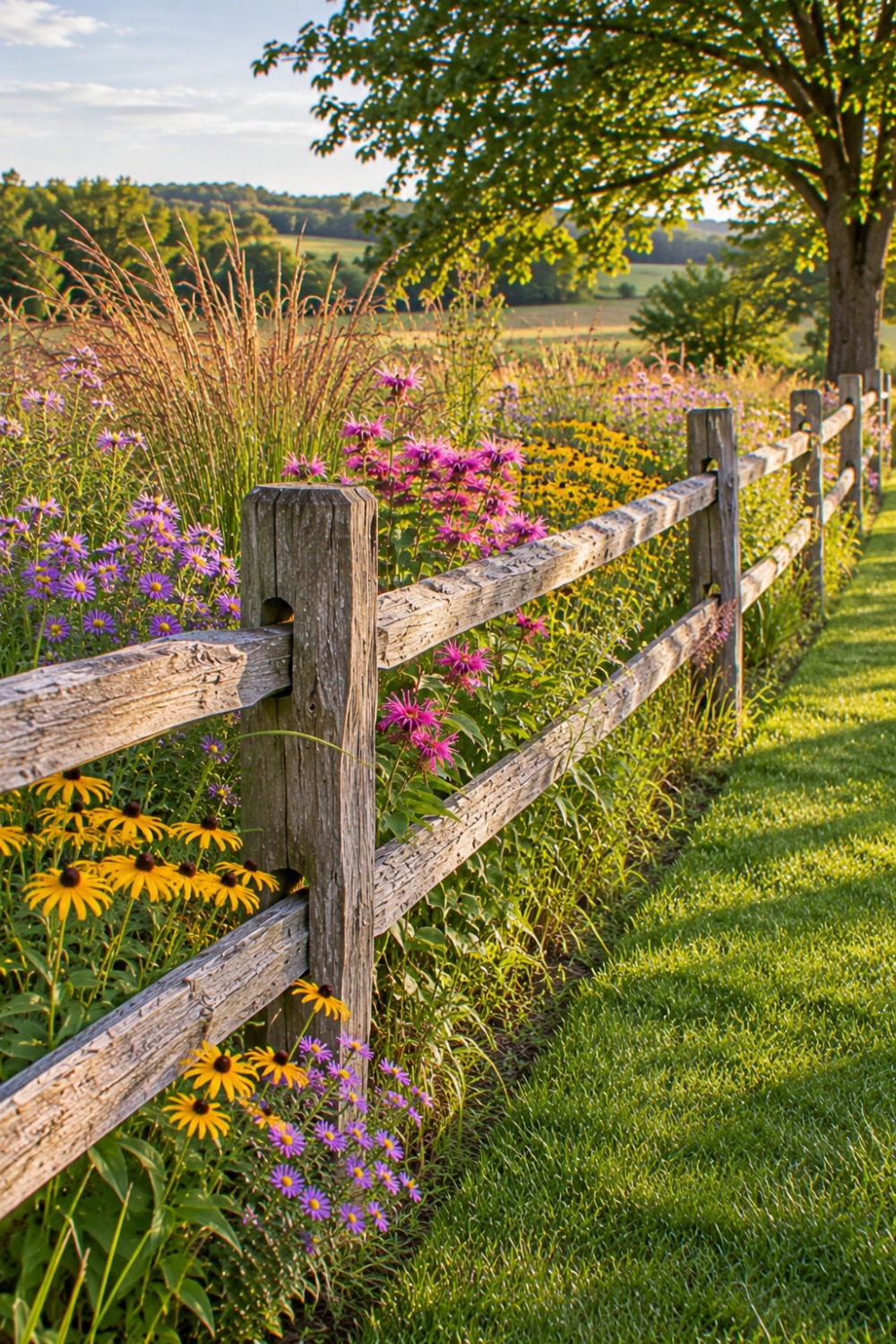
On a larger or rural property, a meadow behind the fence looks completely natural.
Native grasses like little bluestem and wildflowers like black-eyed Susan, bee balm and asters bloom from summer to fall and feed pollinators.
Keep a mown strip in front of the fence so the meadow looks intentional.
How to do it:
- Clear the area and sow or plug a regional native seed mix.
- Mow a 2- to 3-foot strip in front of the fence.
- Cut the meadow once a year in late winter.
4. Frame the Driveway Entrance With Split Rail Wings
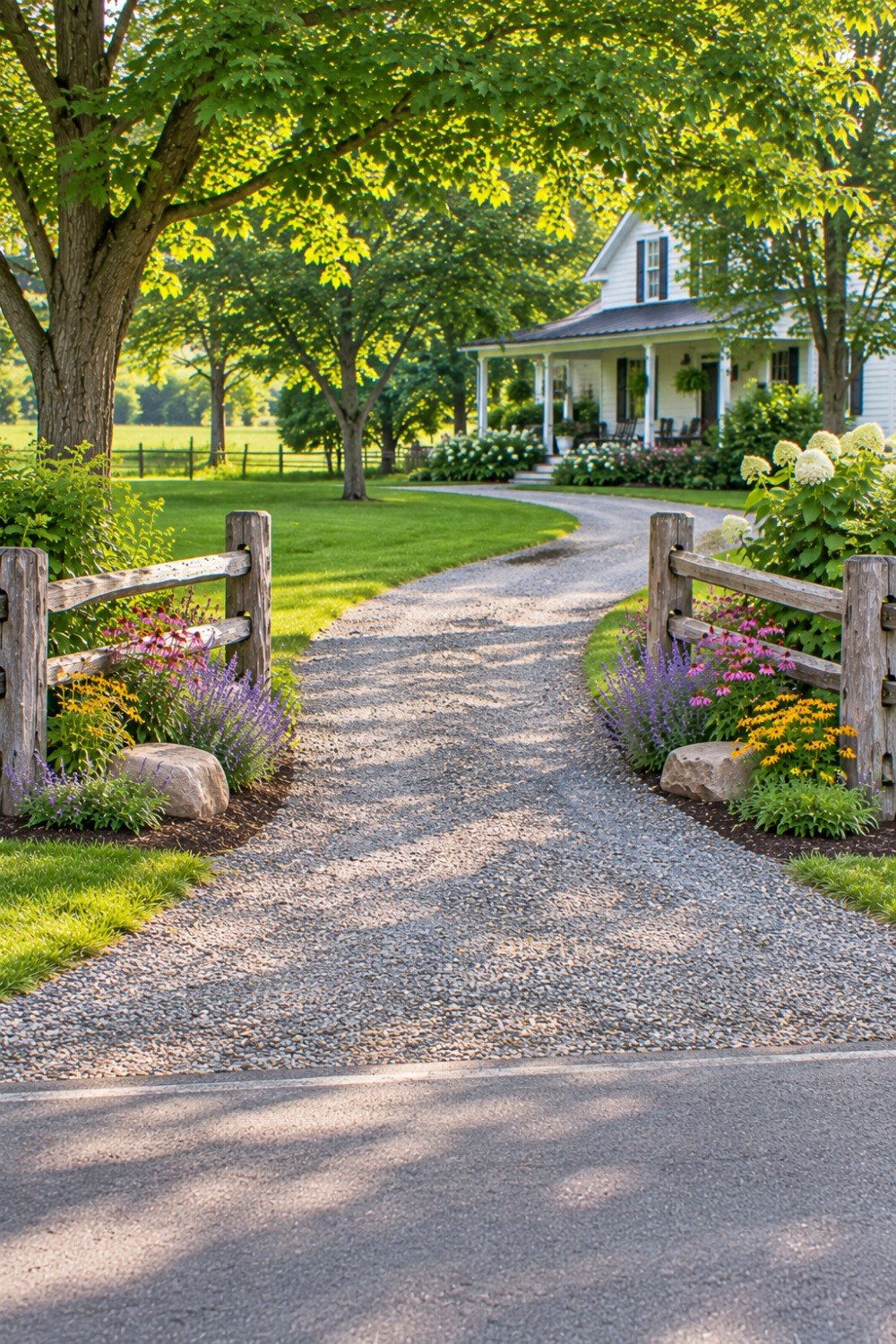
Short sections of split rail fence on each side of a driveway entrance make a welcoming, rustic gateway.
Each “wing” only needs to be one to three sections long.
Plant a bed at the base of each with perennials or a small shrub, and add a boulder or two for weight. Keep it low near the road so drivers can see.
How to do it:
- Set back the fence wings from the road edge and keep them mirror images.
- Plant a matching bed at the base of each.
- Choose low plants nearest the road for clear sightlines.
5. Use a Short Fence Section as a Garden Backdrop
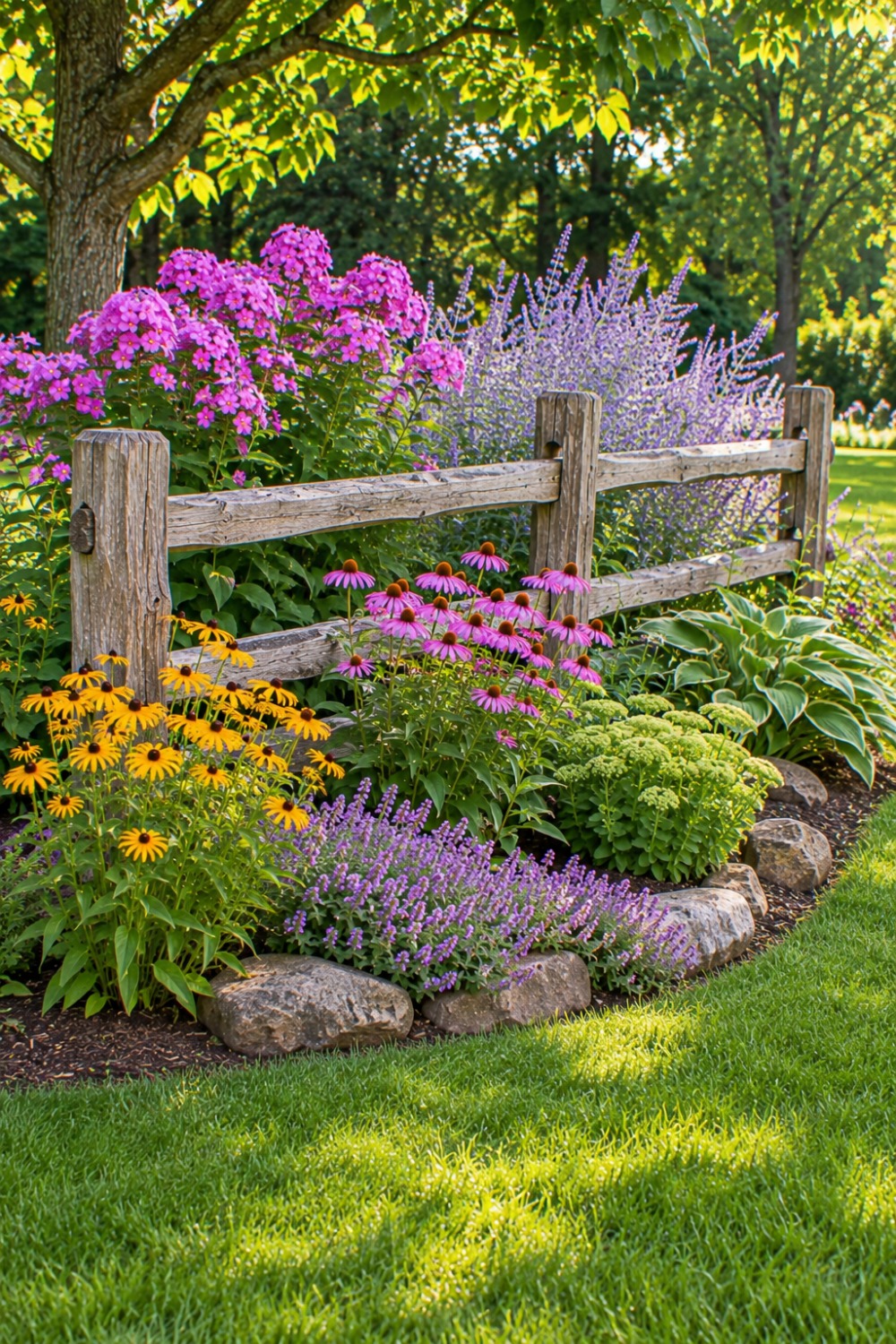
You don’t need a full fence to enjoy the look.
One or two freestanding sections set behind a flower bed give it structure and a rustic backdrop.
It’s an easy way to turn an island bed or corner planting into a focal point.
How to do it:
- Set two or three posts at the back of the bed.
- Slot in the rails.
- Plant tall flowers or a small shrub behind and flowers in front.
6. Add Wire Mesh to Keep Pets In and Rabbits Out
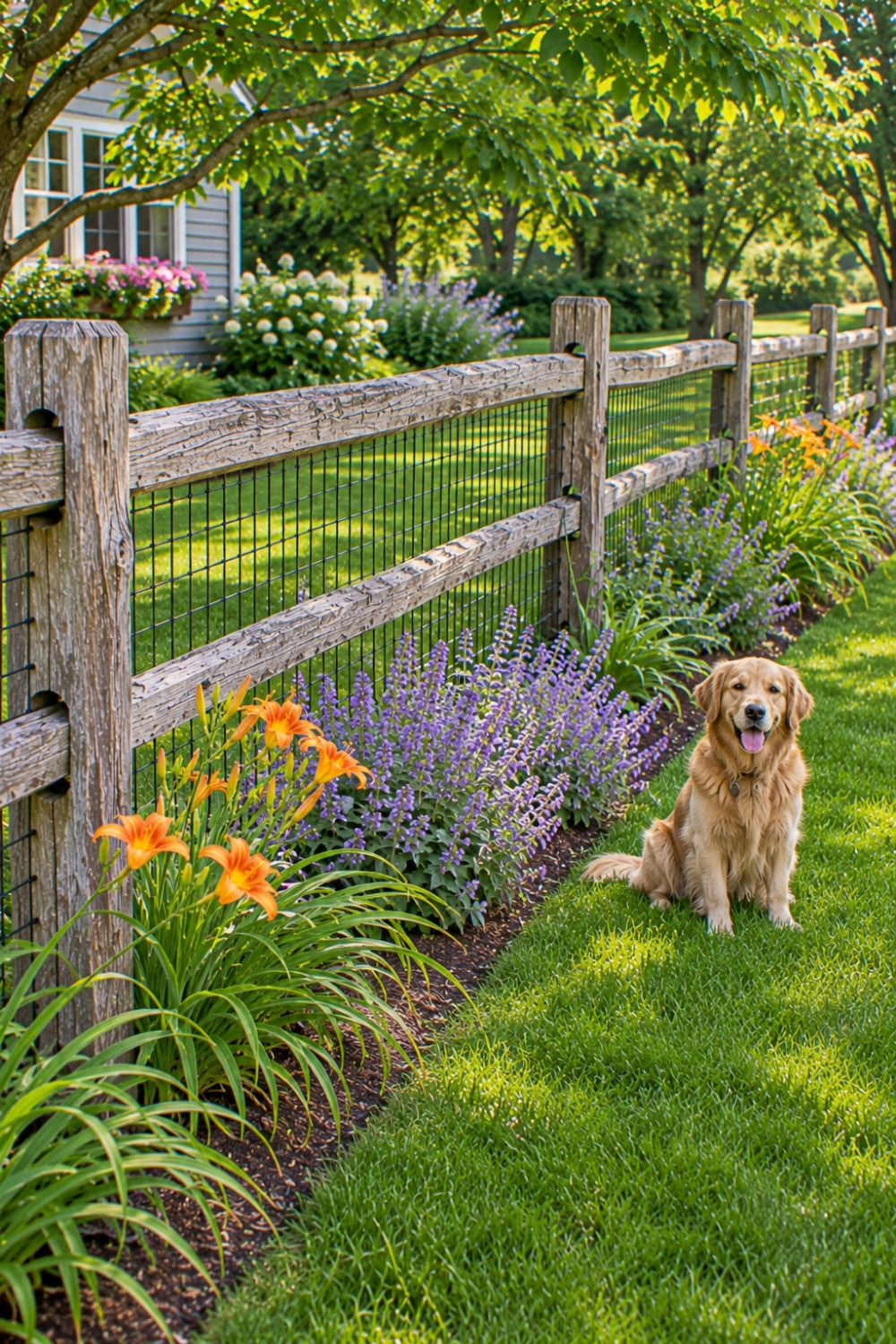
Split rail fences are open, so dogs slip through and rabbits wander in.
Lining the inside with welded wire mesh keeps pets in and pests out while keeping the rustic look.
Black-coated mesh almost disappears from a distance, especially once plants grow in front of it.
How to do it:
- Choose black or green vinyl-coated welded wire.
- Staple it to the inside of the posts and rails.
- Bury the bottom few inches if you need to stop digging animals.
7. Mass One Tough Flower Along the Whole Run
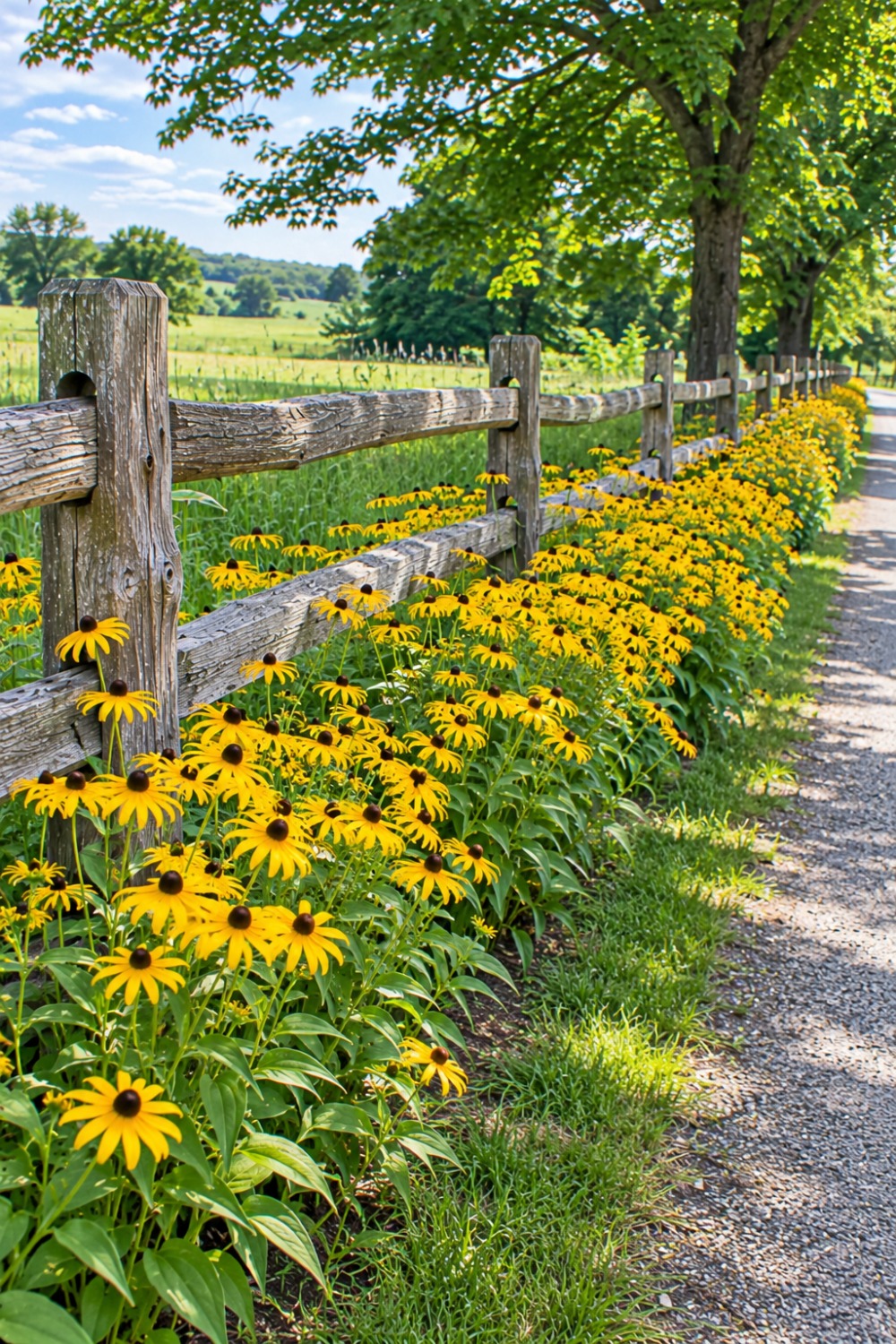
On a long fence, a single plant repeated all the way along looks bold and simple.
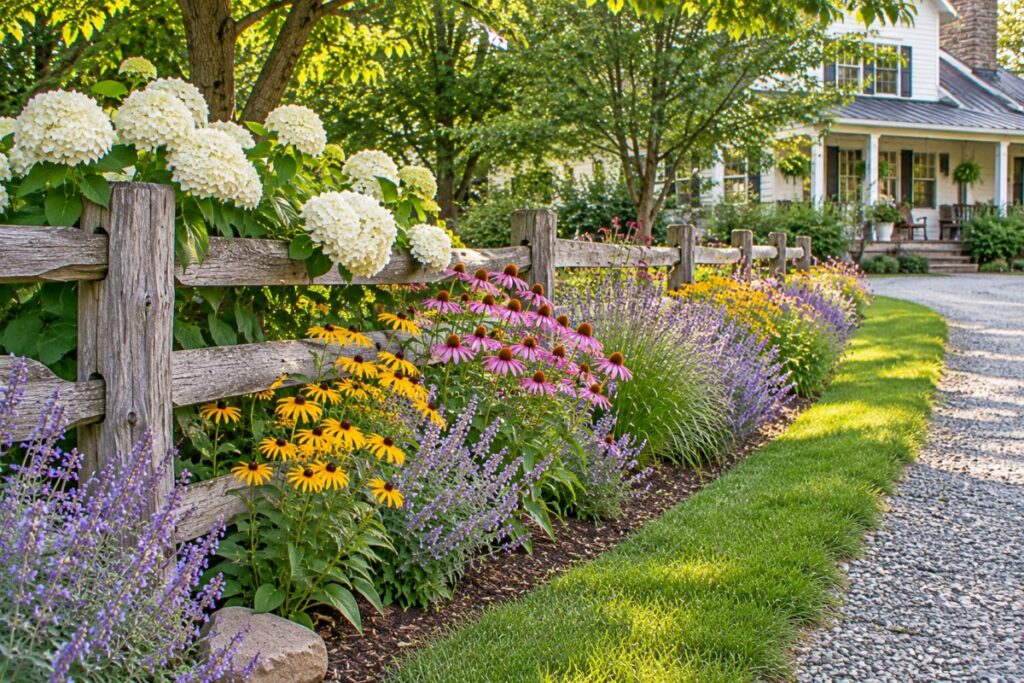
Black-eyed Susan, daylilies, Russian sage (Salvia yangii) or purple coneflower in a continuous band look stunning from the road.
It’s also one of the easiest borders to care for, since everything needs the same treatment.
How to do it:
- Pick one tough, sun-loving perennial that thrives in your area.
- Plant it in a continuous band along the fence.
- Divide clumps every few years to fill any gaps.
8. Keep a Clean Strip Under the Bottom Rail
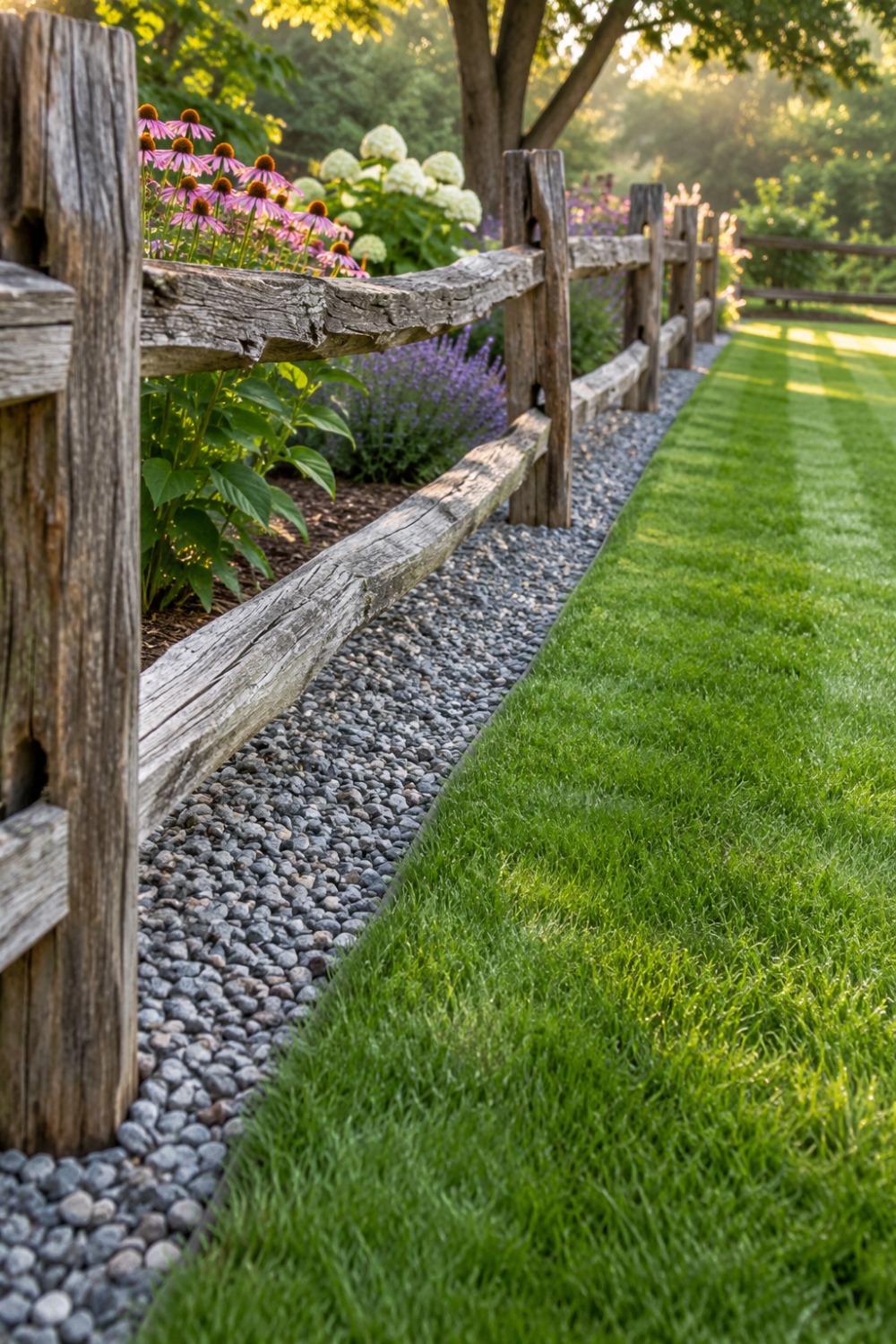
Grass growing tight against fence posts means endless trimming.
A narrow strip of gravel, mulch or low ground cover under the bottom rail gives a clean line and lets you mow right along it.
It also keeps string trimmers away from the posts, which helps the wood last longer.
How to do it:
- Remove the grass in a strip 12 to 18 inches wide along the fence.
- Lay landscape fabric if using gravel.
- Fill with gravel or mulch, or plant a low ground cover.
9. Plant Hydrangeas Behind the Rails for Summer Blooms
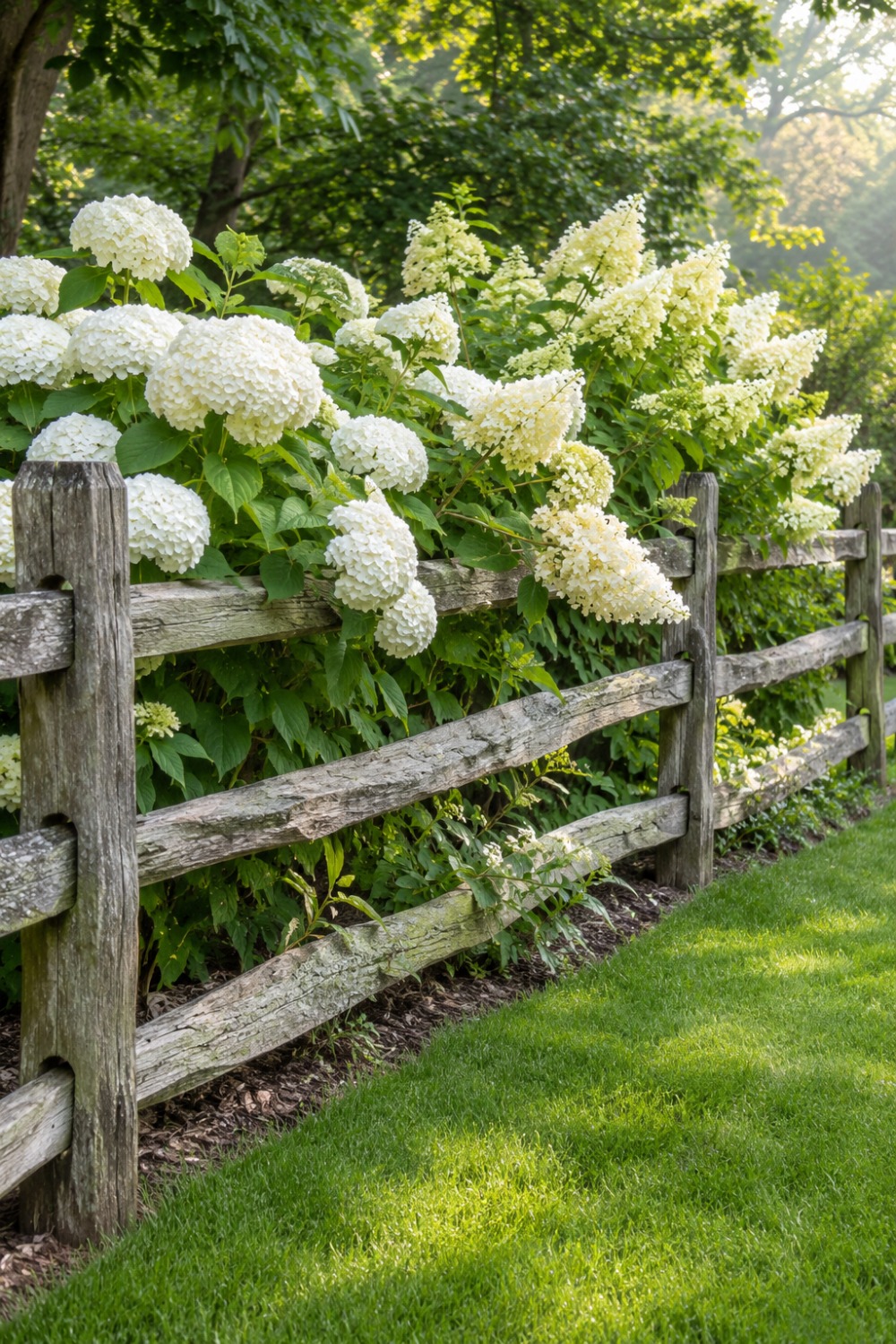
Big, old-fashioned hydrangea flowers against gray split rails is a classic country look.
Smooth hydrangea ‘Annabelle’ and panicle hydrangeas are hardy, reliable and bloom on new wood, so a late frost won’t cost you the flowers.
Plant them a couple of feet behind the fence so the blooms lean over the top rail.
How to do it:
- Choose a spot with morning sun and some afternoon shade in hot areas.
- Plant hydrangeas 2 to 3 feet behind the fence.
- Water deeply in dry spells and mulch the roots.
10. Pair the Fence With a Fieldstone Border
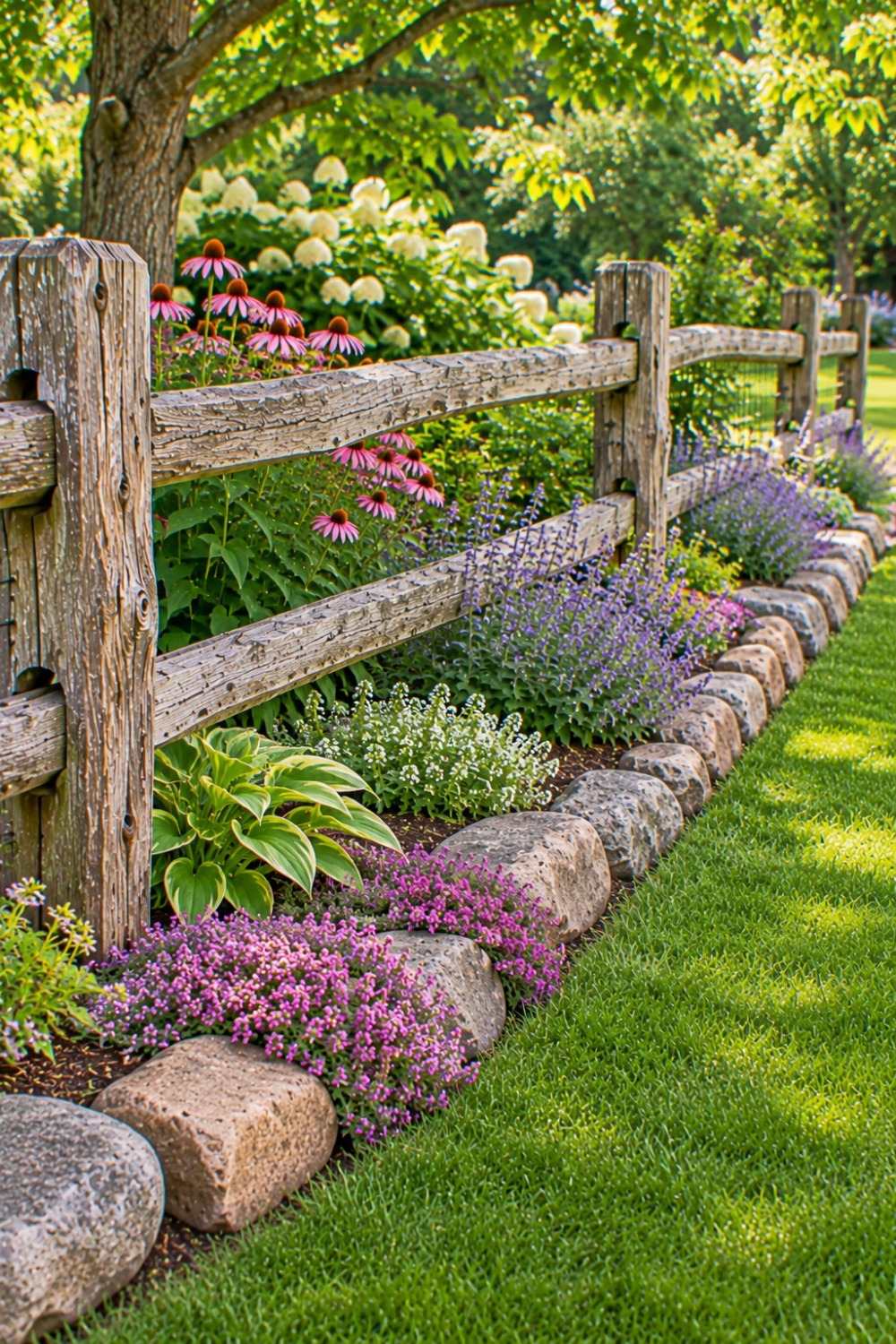
Natural fieldstone and split rail are a perfect rustic match.
A loose edge of rounded stones along the base of the fence defines the bed and adds texture.
If you have stone on your property, this is free. Otherwise, many landscape suppliers sell fieldstone by the ton.
How to do it:
- Lay stones in a single row along the front of the bed.
- Set each stone a little into the soil so it doesn’t roll.
- Plant low perennials or creeping thyme between them.
For more ways to use stone, see our front yard landscaping ideas with rocks.
11. Dress the Fence for Fall With Mums and Pumpkins
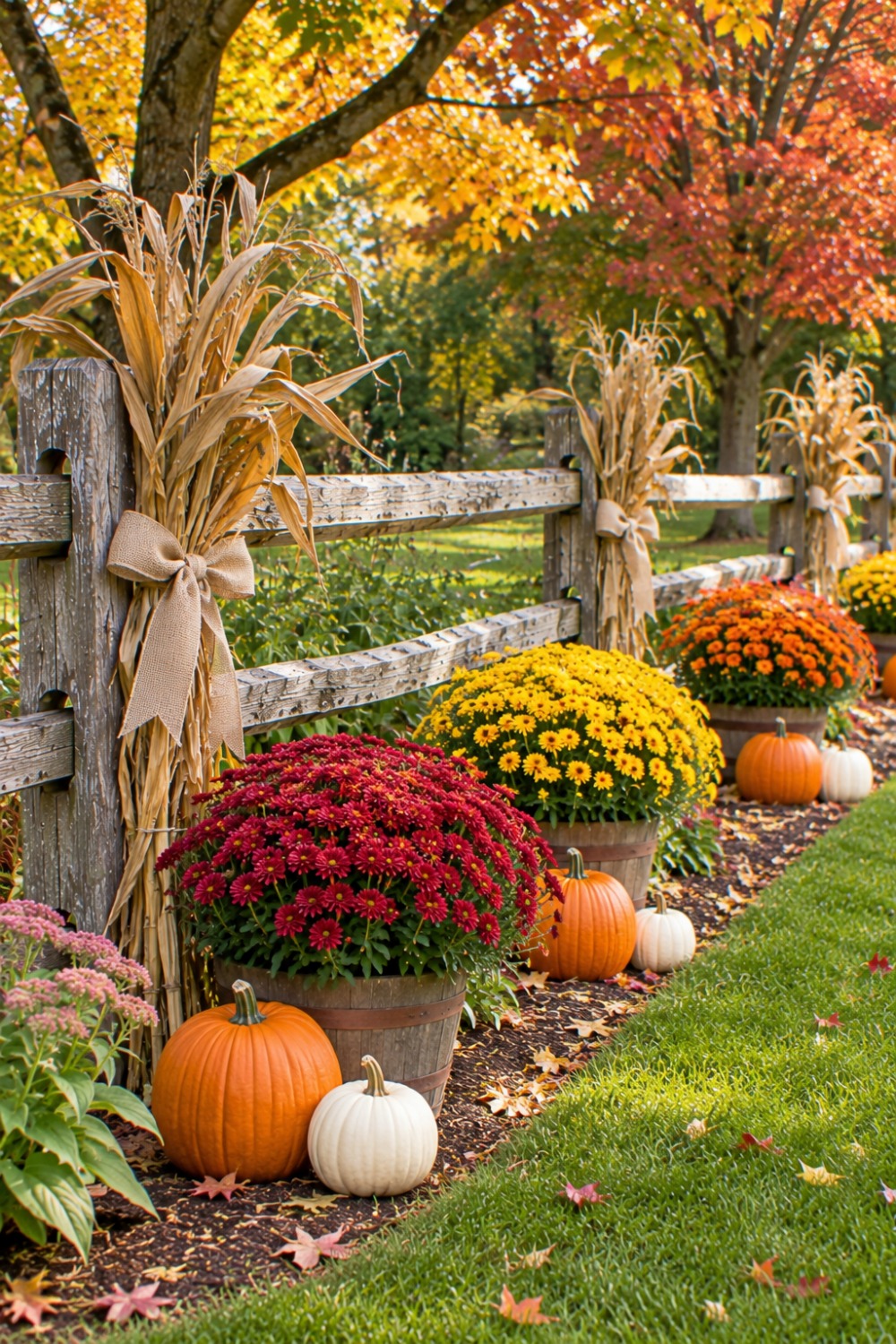
A split rail fence makes a ready-made backdrop for seasonal displays.
In fall, tie corn stalks to the posts, line the base with pots of mums and set pumpkins and gourds on the ground or the bottom rail.
It’s an easy way to change the look of the yard each season without replanting.
How to do it:
- Tie bundles of corn stalks to a few posts with twine.
- Group potted mums in bronze, gold and burgundy along the base.
- Add pumpkins in different sizes and clear it all away after the season.
12. Hang Birdhouses on the Posts Above a Bird-Friendly Bed
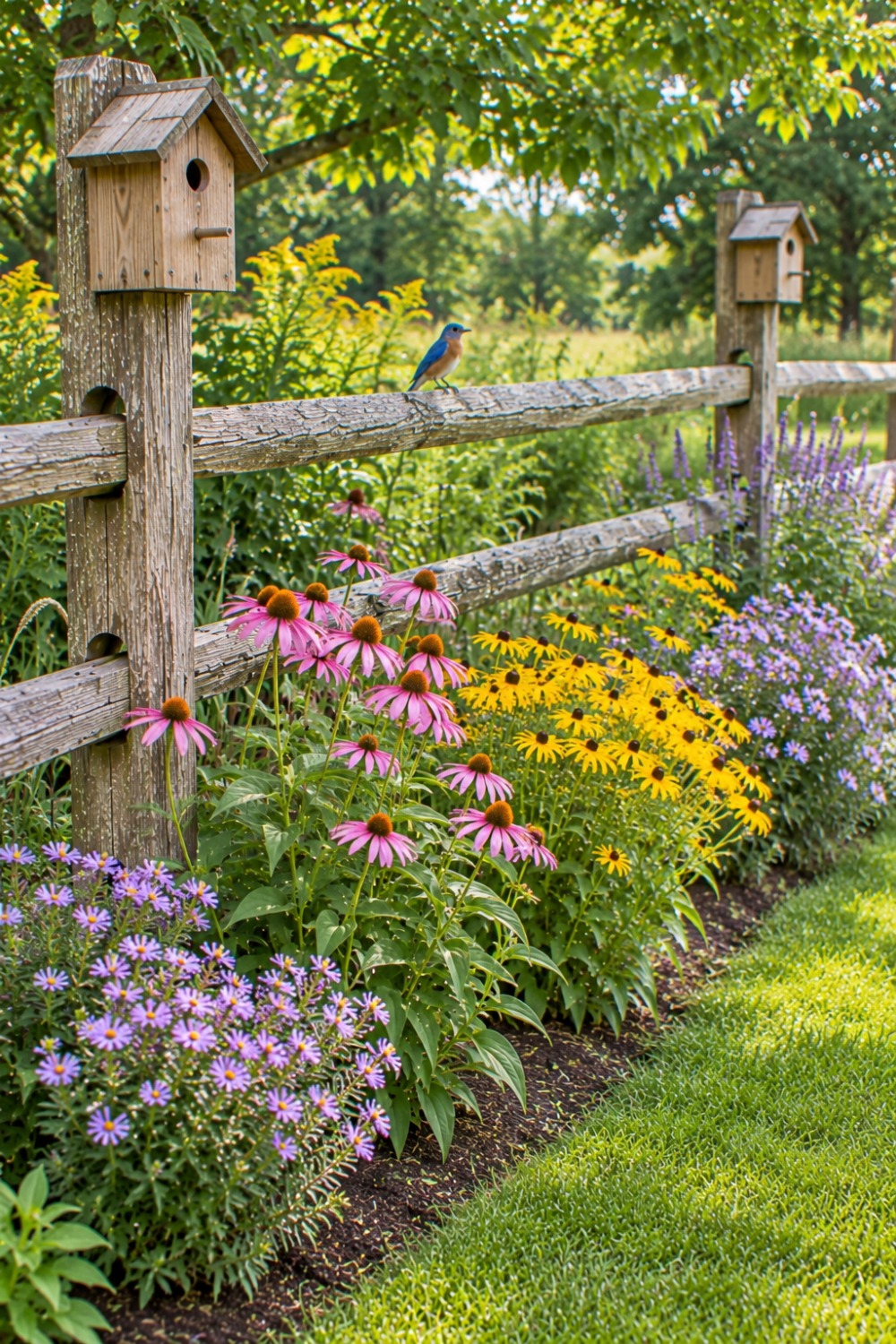
Fence posts are a natural spot for birdhouses, and the open rails give birds plenty of perches.
Mount a few simple wooden birdhouses on posts and plant seed-producing flowers below, such as coneflowers, black-eyed Susans and asters.
Leave the seed heads standing into winter so finches and other birds can feed.
How to do it:
- Mount birdhouses on posts at least 5 feet high, facing away from prevailing winds.
- Space them apart so birds don’t compete.
- Plant seed-producing perennials along the fence below.
13. Let the Wood Weather to Silver Gray
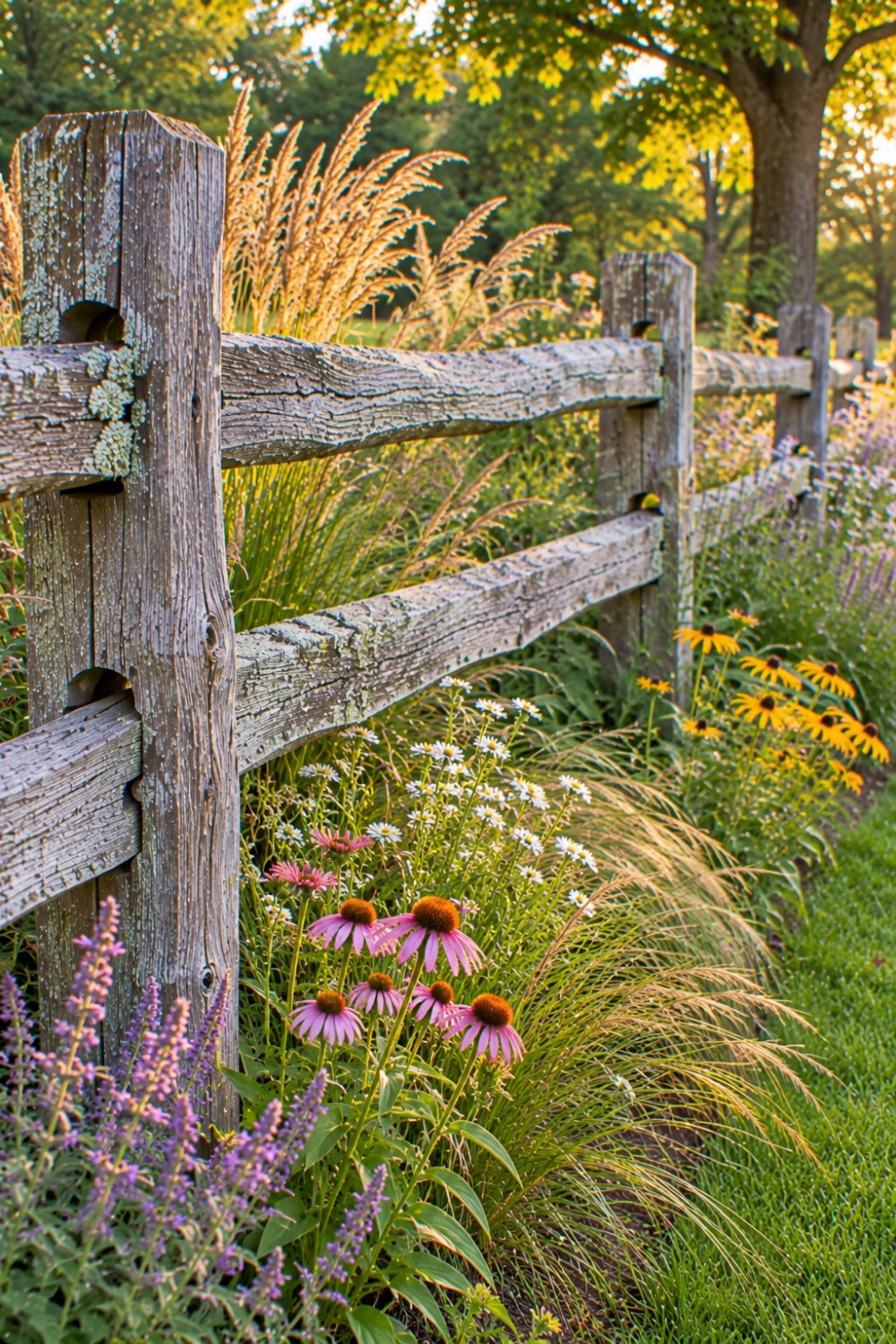
Part of a split rail fence’s charm is how it ages.
Cedar, locust and chestnut rails weather naturally to a soft silver gray that blends into any planting.
Skip paint and stain. Just replace any rotten rail as needed, and keep soil, mulch and plants from piling against the posts.
How to do it:
- Choose naturally rot-resistant wood such as cedar or locust.
- Leave it unfinished to weather on its own.
- Check posts each spring and replace damaged rails.
Frequently Asked Questions
What do you plant along a split rail fence?
Sun-loving perennials such as black-eyed Susan, coneflower, daylily, catmint and Russian sage work well. Add climbing vines like clematis on the rails and shrubs like hydrangea behind them for a fuller look.
How do you make a split rail fence look nice?
Plant along it so it feels part of the garden, keep a clean strip under the bottom rail and add a few details like vines, fieldstone or birdhouses. Let the wood weather naturally.
How do you keep dogs in with a split rail fence?
Attach black or green welded wire mesh to the inside of the posts and rails. It’s nearly invisible from a distance and keeps the rustic look.
What is the best wood for a rustic split rail fence?
Cedar and black locust are naturally rot-resistant and weather to an attractive gray. Pressure-treated pine is cheaper but has a less traditional look.
Final Thoughts: Let the Fence and the Flowers Grow Together
A rustic split rail fence looks best when it feels part of the landscape.
Start with a simple bed along the fence, and let plants grow through and over the rails.
Choose one strong look: a cottage border, a native meadow, a single band of flowers or hydrangeas leaning over the top rail.
Add a vine or two for softness, and finish the base with a clean strip of gravel, mulch or ground cover.
Use short sections of fence to frame a driveway entrance or give a flower bed a backdrop.
Let the wood weather naturally, and enjoy how it changes with the seasons.
If your fence runs along the front of the property, our mailbox landscaping ideas pair well with a rustic fence line.
Start with one section of fence this season. Once the plants fill in, you’ll want to plant the whole run.