You step outside with your coffee and there’s the neighbor’s kitchen window, looking straight at you.
A tall solid fence would fix it, but it can feel like living in a box, and many towns limit fence heights anyway.
The secret to good privacy landscaping isn’t planting the tallest thing you can find along the property line. It’s blocking the exact view that bothers you, as close to where you sit as possible.
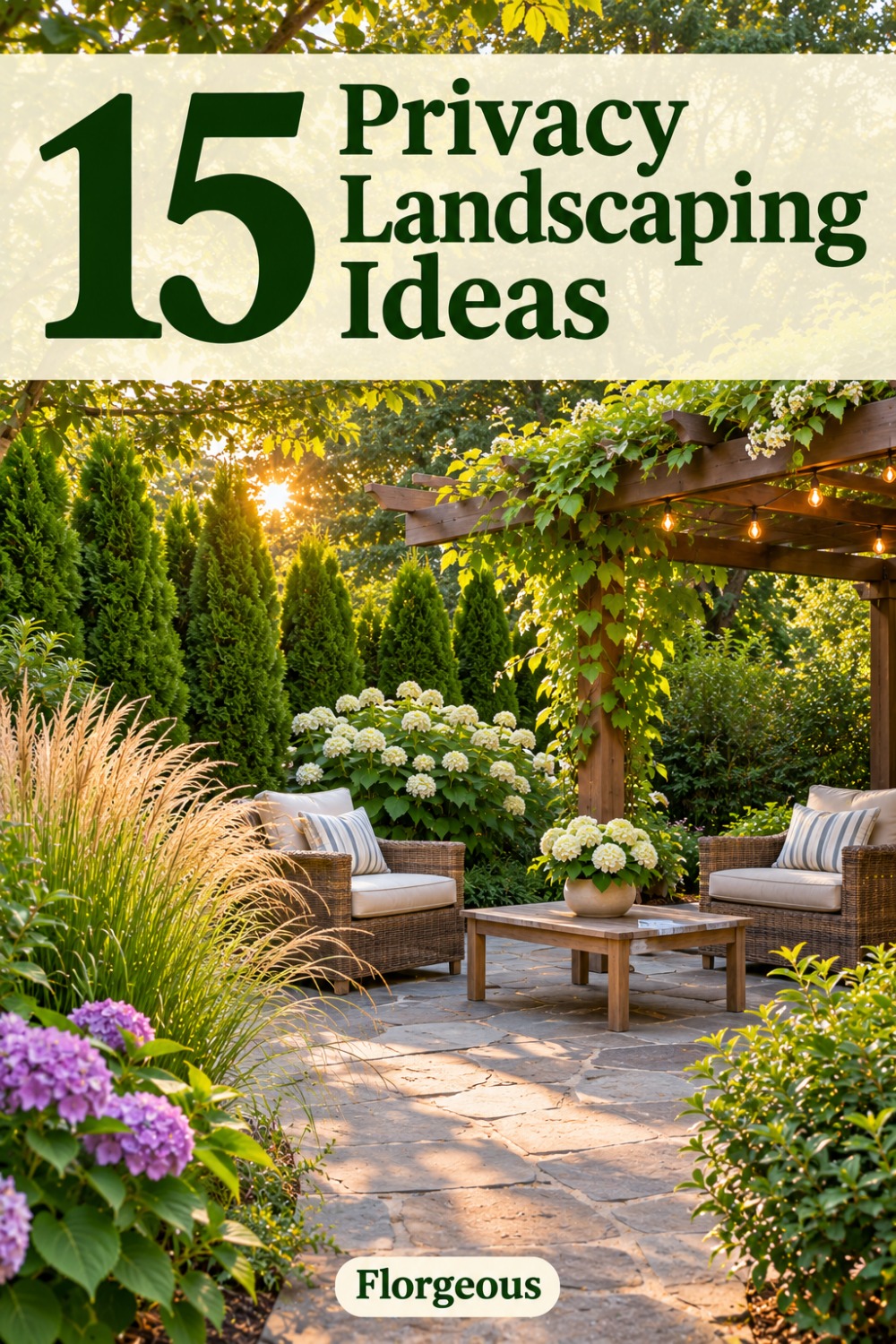
These 15 privacy landscaping ideas will help you screen neighbors, streets and upstairs windows with layered plants, smart placement and a few simple structures.
Privacy Plants by Job
| Job | Good choices | Notes |
|---|---|---|
| Year-round screen | American holly, eastern red cedar, ‘Green Giant’ arborvitae, Nellie Stevens holly | Check mature width before spacing |
| Informal flowering screen | Arrowwood viburnum, ninebark, lilac, rose of Sharon (sterile cultivars) | Loses some density in winter if deciduous |
| Fast summer screen | Switchgrass, big bluestem, sunflowers | Dies back in winter |
| Small yards | Stilt hornbeam, columnar evergreens, vines on trellis | Narrow footprint |
| Overhead | Vine-covered pergola, small trees | Blocks views from upstairs windows |
| Shade | Inkberry holly, yew, Pieris, oakleaf hydrangea | Pieris and yew are toxic to pets if eaten |
1. Pinpoint the View You Actually Need to Block
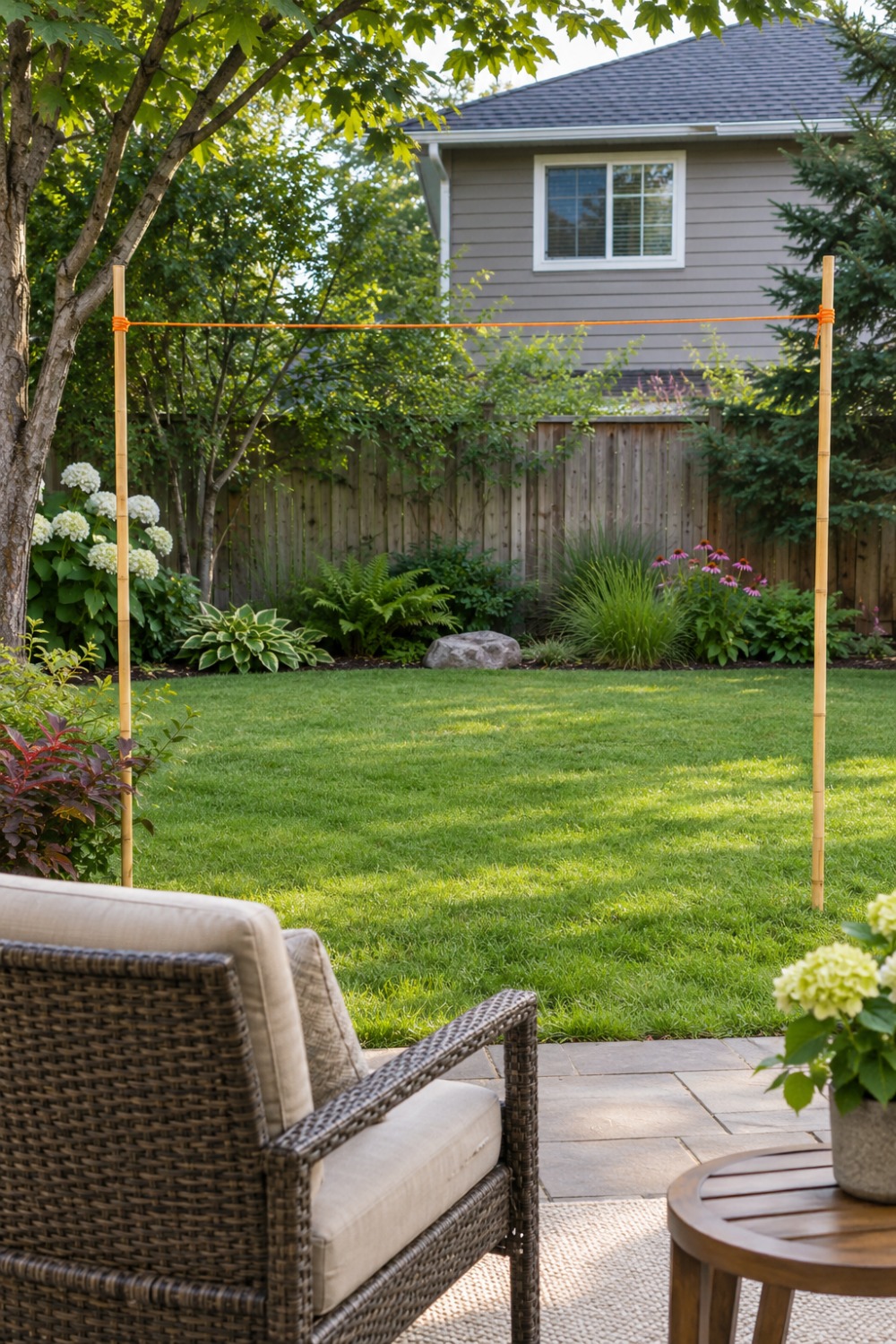
Most privacy problems come from one or two specific views, not the whole boundary.
Sit where you relax, eat or soak in the tub, and notice exactly which windows, doors or paths can see you.
Mark those sightlines with stakes or string. Now you know where screening matters most and how tall it needs to be.
How to do it:
- Sit in each of your main seats and look around at eye level.
- Mark the problem views with tall stakes.
- Plan screening only where those lines cross your yard.
2. Place the Screen Near Your Seat, Not the Property Line
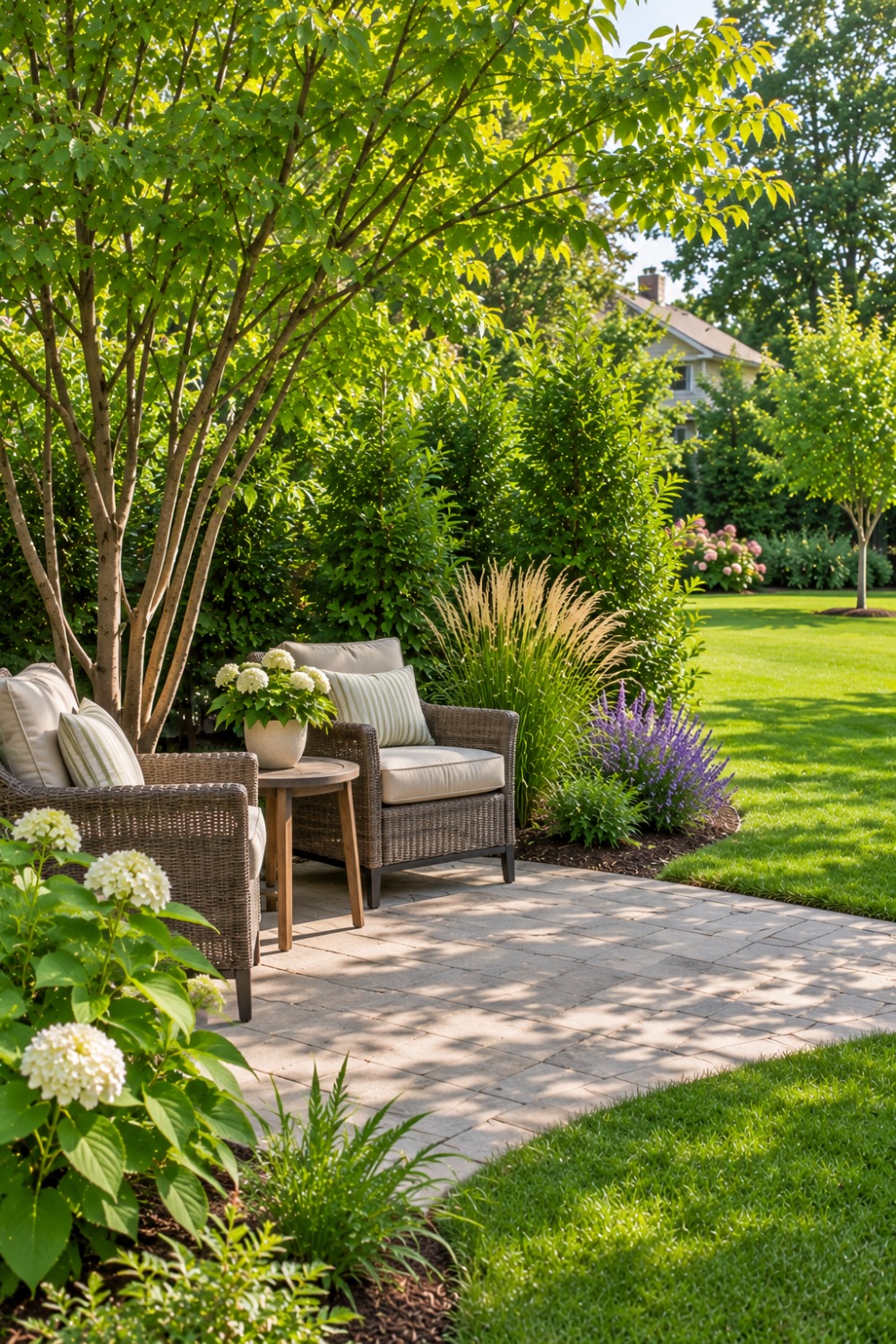
A screen close to you blocks a much wider view than the same screen far away.
A 6-foot shrub beside your patio can hide a whole second-story window that a 15-foot hedge at the fence might not.
It’s also cheaper, quicker and leaves the rest of your yard open.
How to do it:
- Stand at your seat and hold up your hand at arm’s length to see how much it hides.
- Plant a small tree, tall shrubs or a planted screen a few feet from the seat.
- Leave the rest of the boundary open or lightly planted.
3. Stagger Evergreens in a Double Row
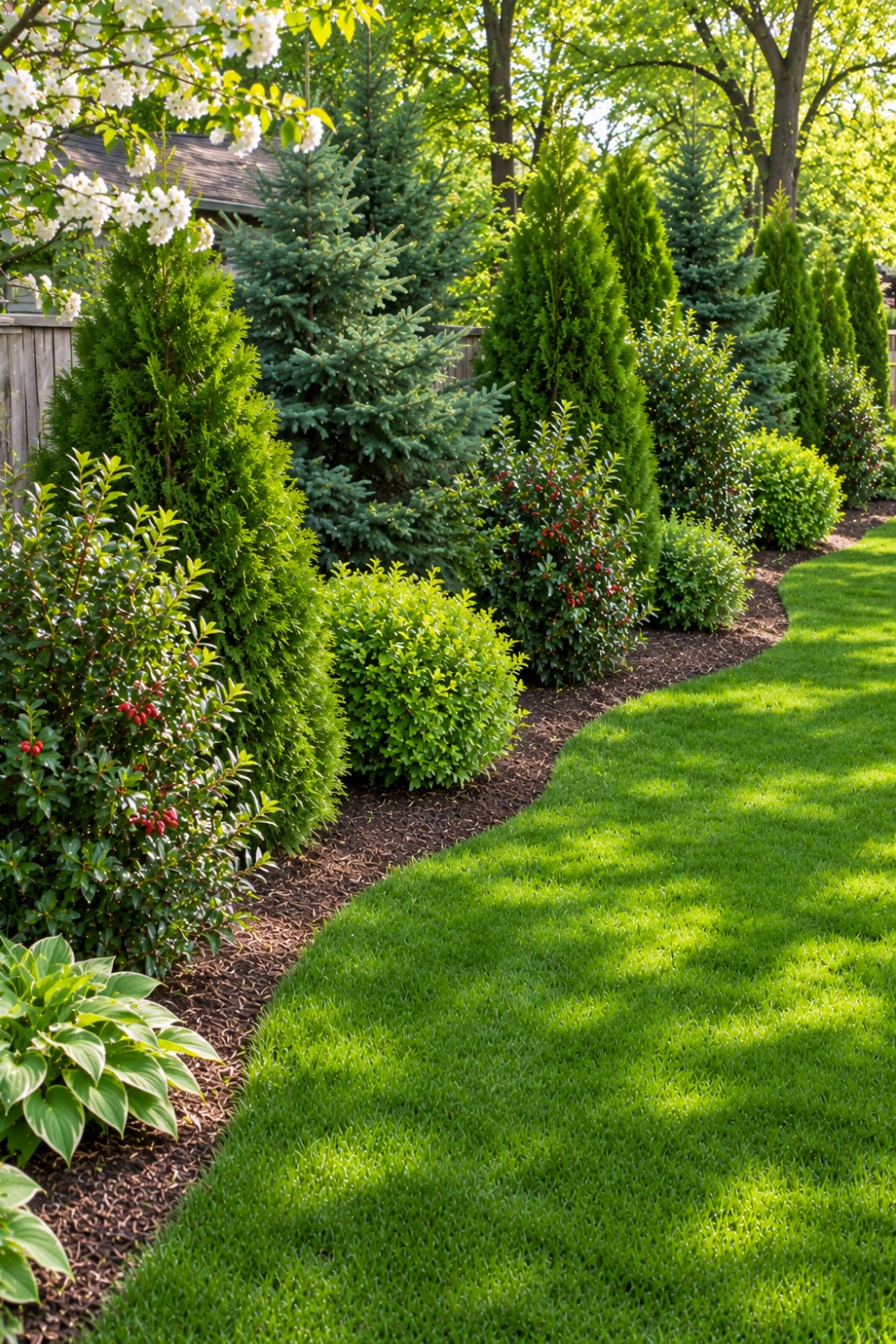
A single straight row of evergreens leaves gaps, and if one dies, the whole line looks broken.
Planting two rows in a zigzag pattern fills in faster, looks more natural and hides the loss of any one plant.
Mixing two or three kinds of evergreen also protects you from one pest wiping out the whole screen.
How to do it:
- Mark two lines a few feet apart along the area to screen.
- Plant in a zigzag, spacing plants based on their mature width.
- Use at least two evergreen species.
4. Mix Evergreens and Flowering Shrubs in an Informal Screen
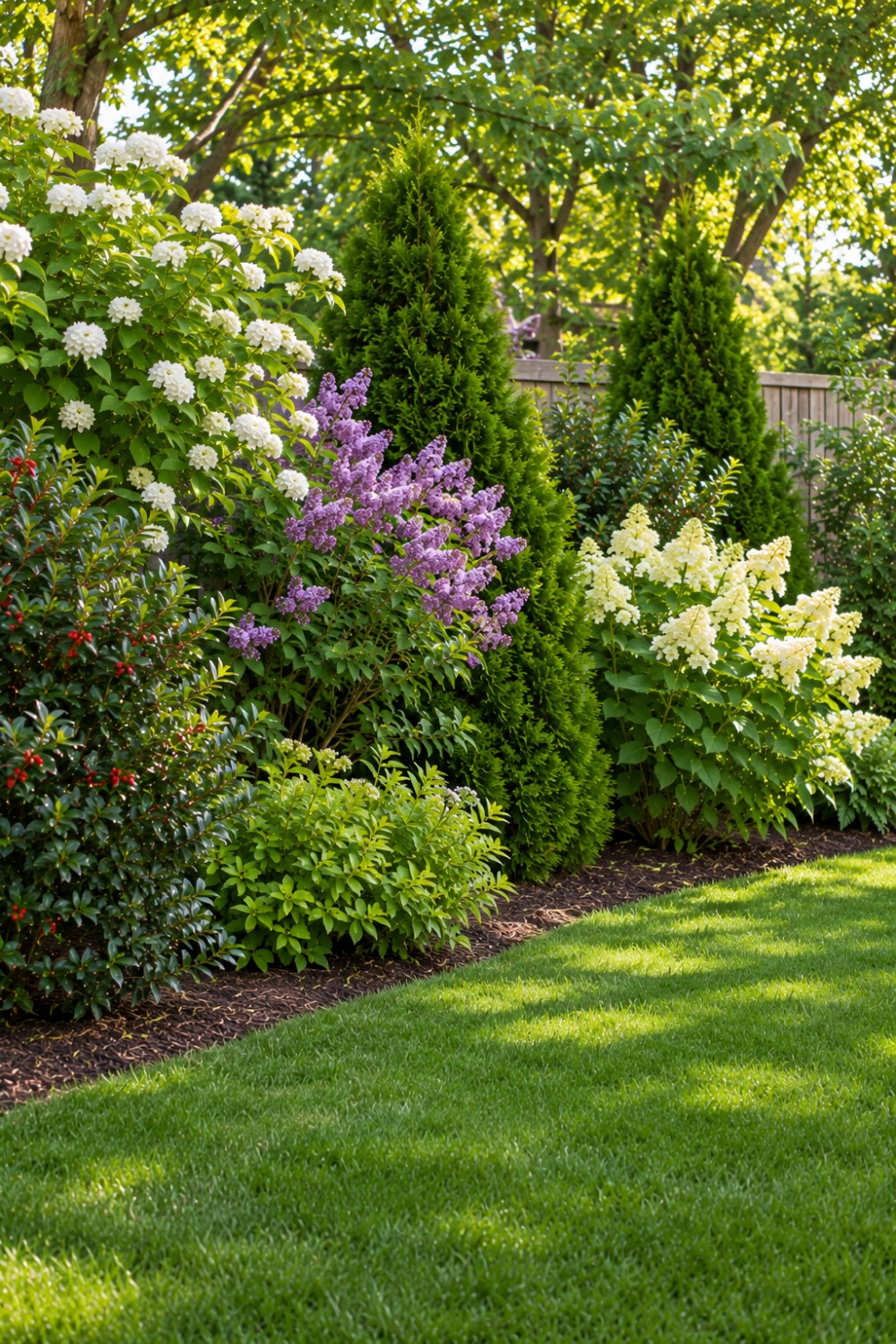
A screen doesn’t have to be a wall of green.
Mixing evergreens with flowering shrubs gives privacy all year and color in spring and summer.
Use evergreens such as holly or arborvitae as the backbone, and fill between them with viburnum, ninebark, lilac or panicle hydrangea.
How to do it:
- Place evergreens where you need year-round cover.
- Fill the gaps with flowering shrubs.
- Let the screen grow naturally and prune lightly once a year.
5. Choose Steady Growers Over Fast Fixes
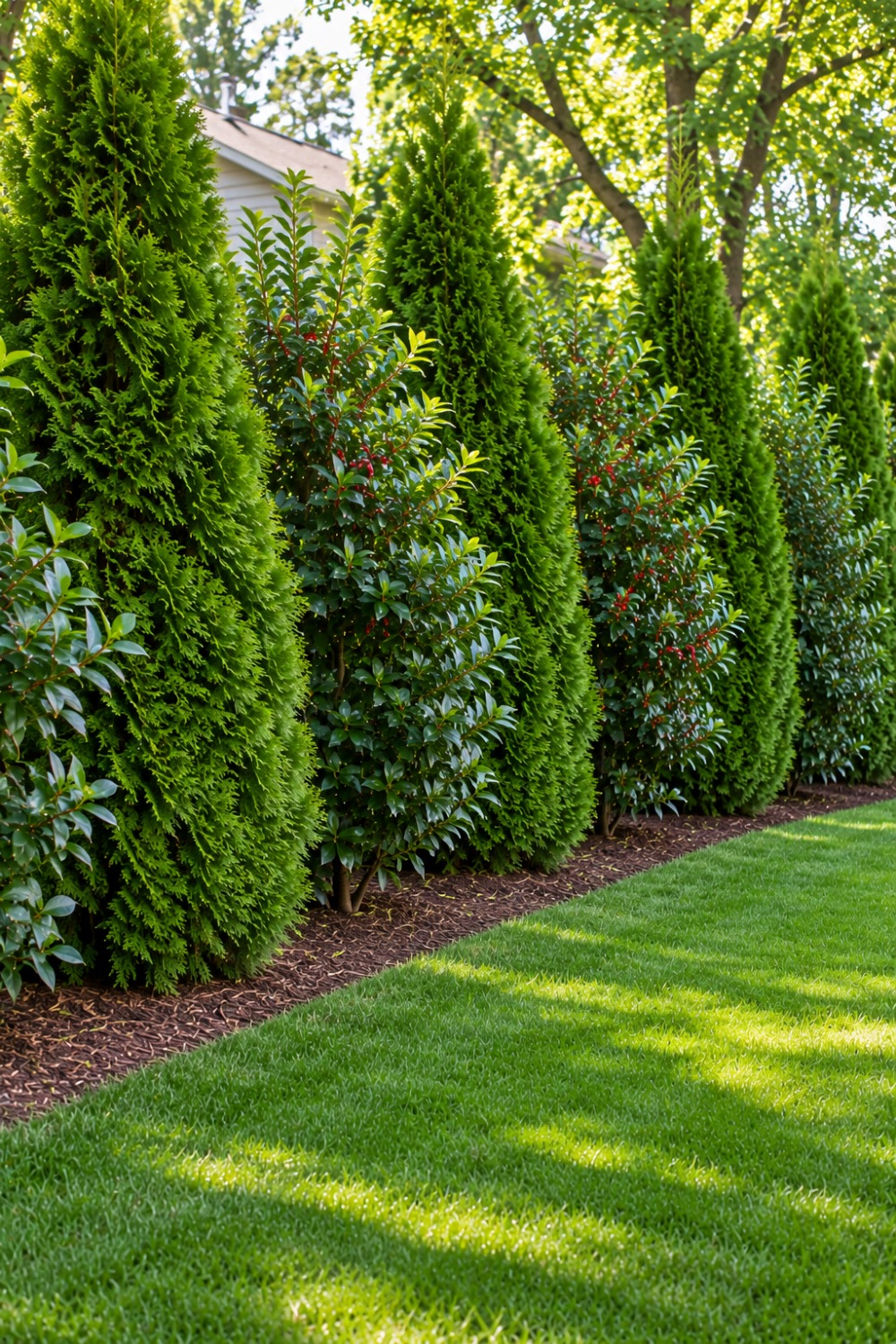
It’s tempting to plant the fastest-growing screen you can find.
But very fast growers like Leyland cypress often outgrow their space, need constant trimming and can suffer from disease in hot, humid climates. Running bamboo spreads aggressively and is very hard to remove.
Steady growers such as ‘Green Giant’ arborvitae, American holly and eastern red cedar (Juniperus virginiana) take a little longer but stay healthier.
How to do it:
- Check mature size and disease problems in your region.
- Buy slightly larger plants if you need cover sooner.
- Water deeply through the first two summers to speed up growth.
6. Add a Trellis Topper With Vines to an Existing Fence
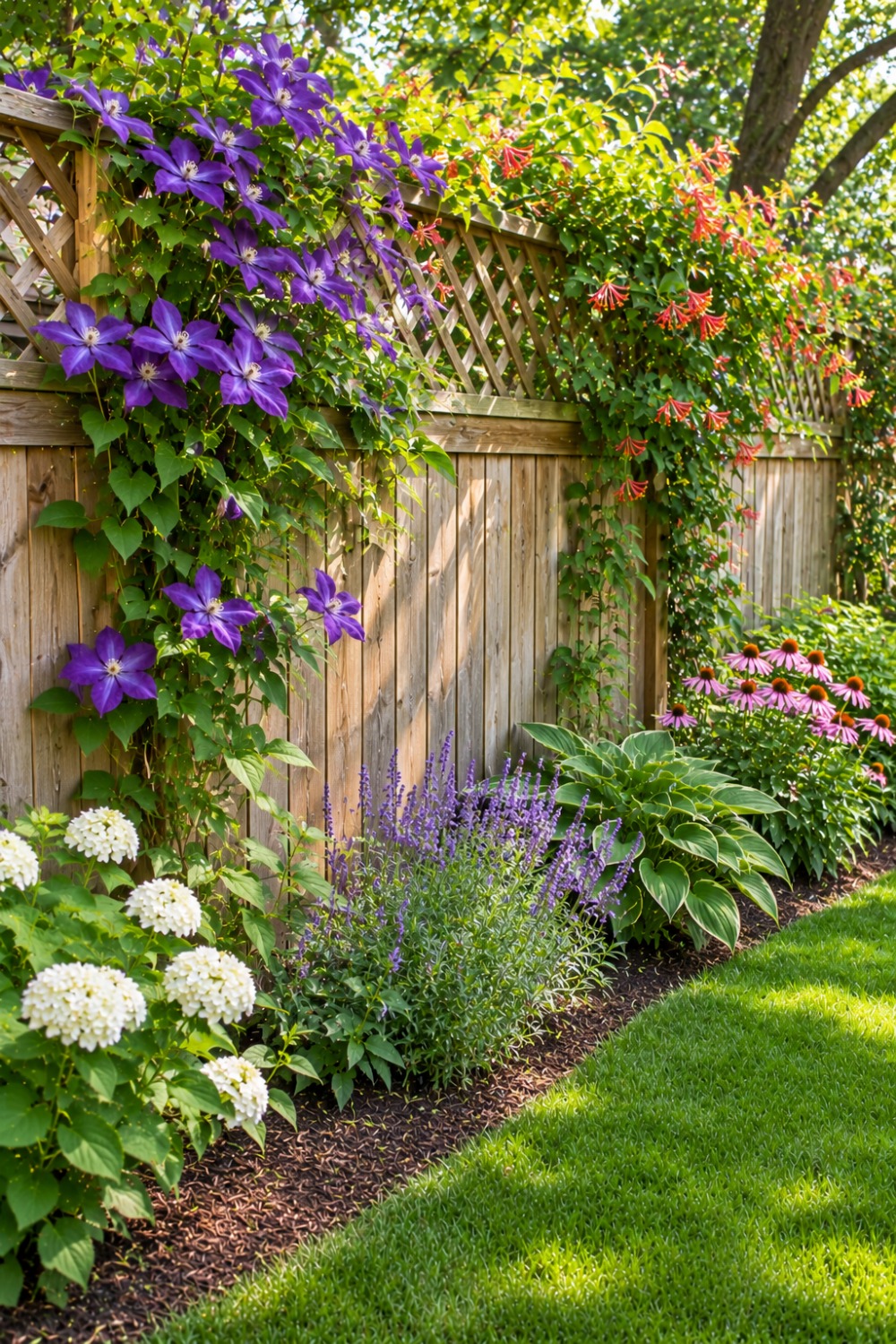
If your fence is just a little too low, a trellis extension can add the height you need.
Lattice or slatted toppers let light and air through, and vines soften them into a living screen.
Check local rules and any homeowners association limits on fence height first. Our privacy trellis ideas show more designs.
How to do it:
- Confirm the height you’re allowed to add.
- Fix a trellis topper securely to the existing fence posts.
- Plant clematis, climbing hydrangea or a native honeysuckle (Lonicera sempervirens) at the base.
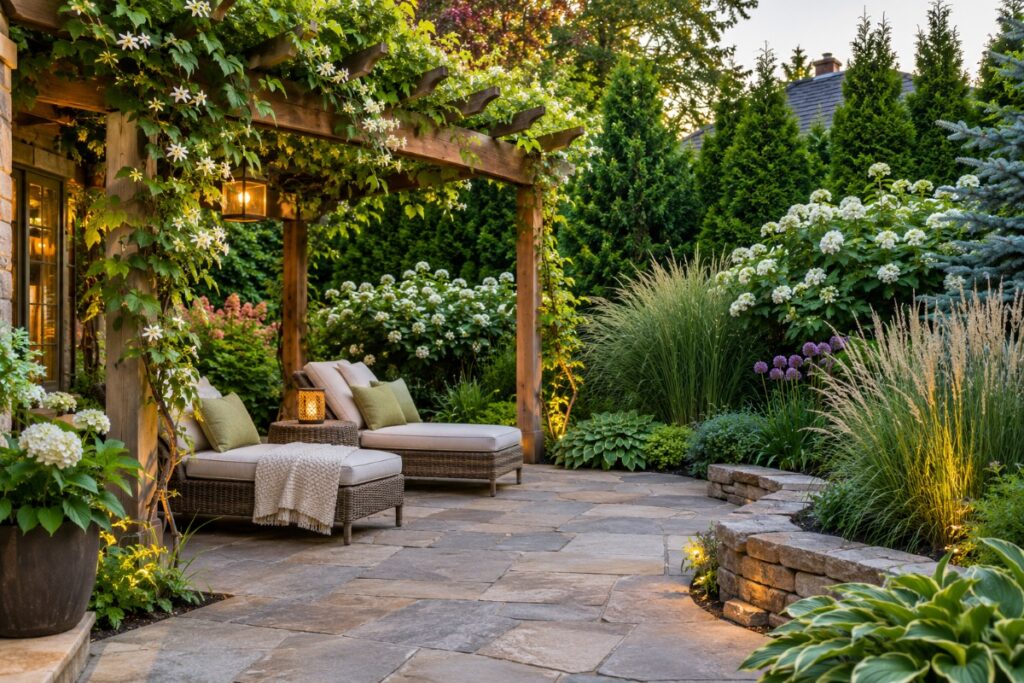
7. Shade Out Upstairs Views With a Vine-Covered Pergola
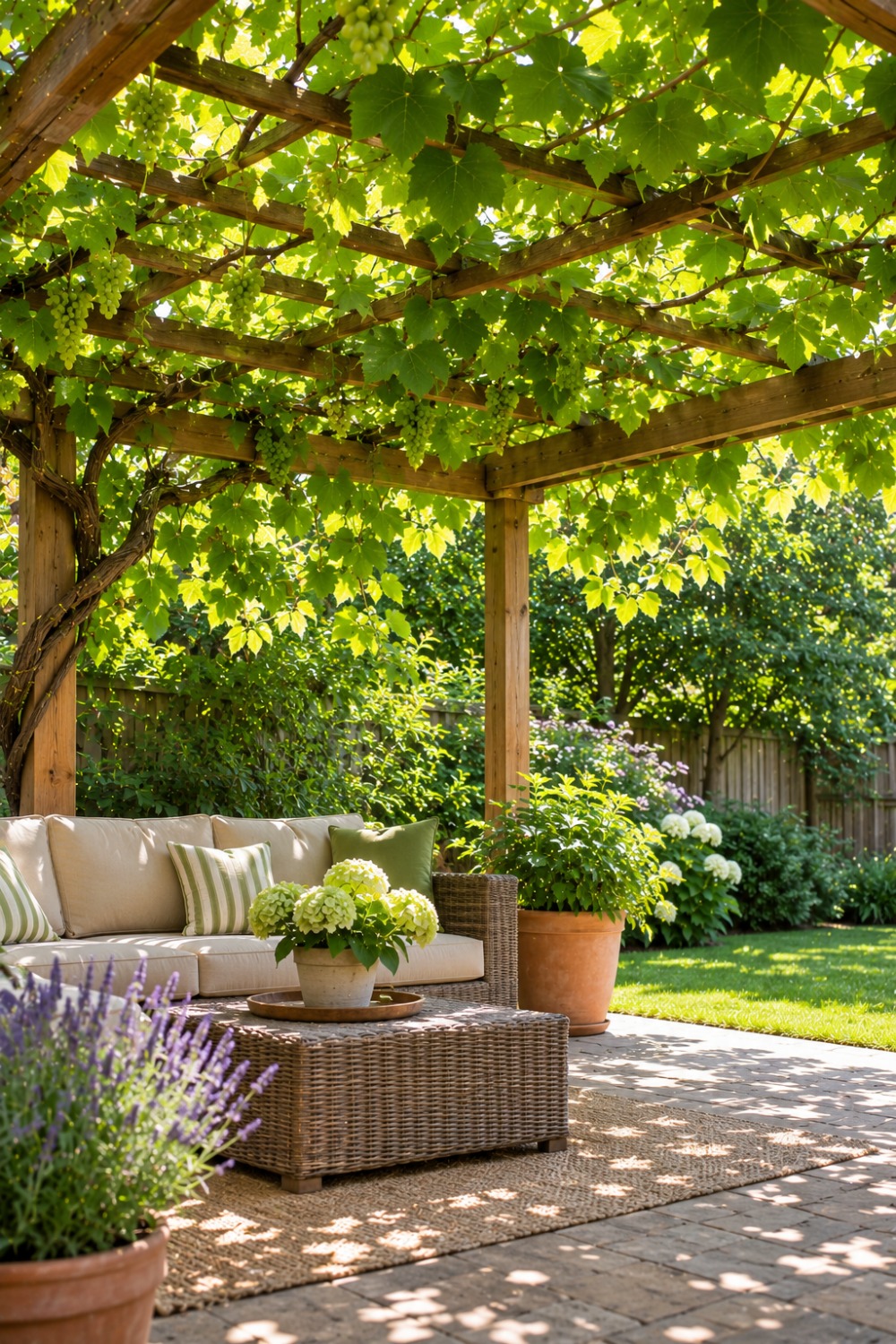
When neighbors look down from second-story windows, a hedge won’t help. You need cover overhead.
A pergola with a vine growing over the top blocks the view from above and adds shade at the same time.
Grape, hardy kiwi and climbing roses all work. For faster cover, add slatted panels to the top while the vine grows.
How to do it:
- Build the pergola over your main seating area.
- Plant a vine at one or two posts.
- Train the vine across the top with wires or slats.
8. Use Tall Native Grasses for a Summer Screen
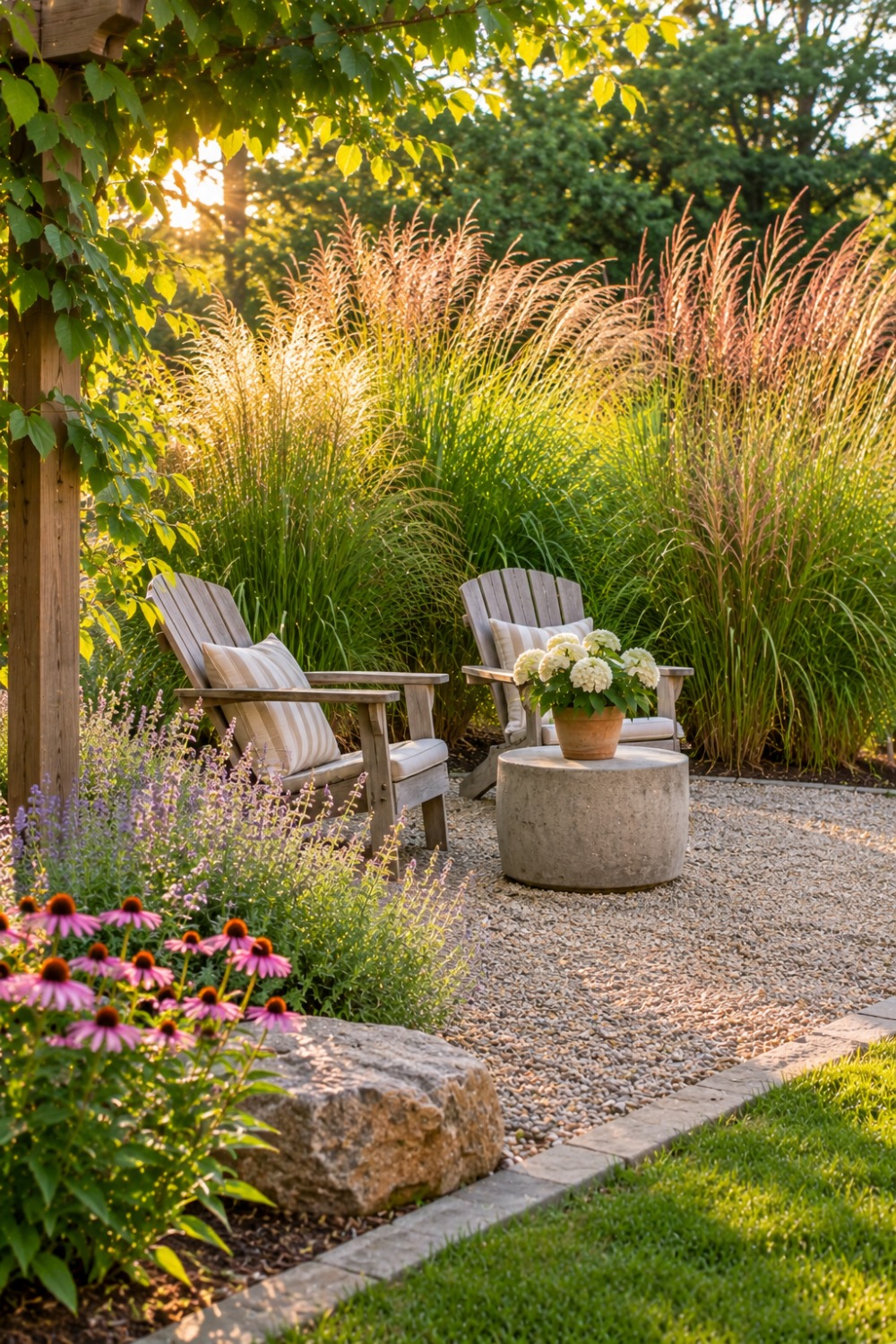
If you mainly use your yard in summer, tall grasses give quick, soft privacy.
Native switchgrass (Panicum virgatum) and big bluestem (Andropogon gerardii) can reach 5 to 7 feet by midsummer.
They sway in the breeze, catch evening light and cost far less than large evergreens. They do die back in winter, so leave them standing until late winter for some cover.
How to do it:
- Plant in a sunny bed in spring.
- Space plants 2 to 3 feet apart in a staggered row.
- Cut back to a few inches in late winter.
9. Lift the Screen on a Planted Berm
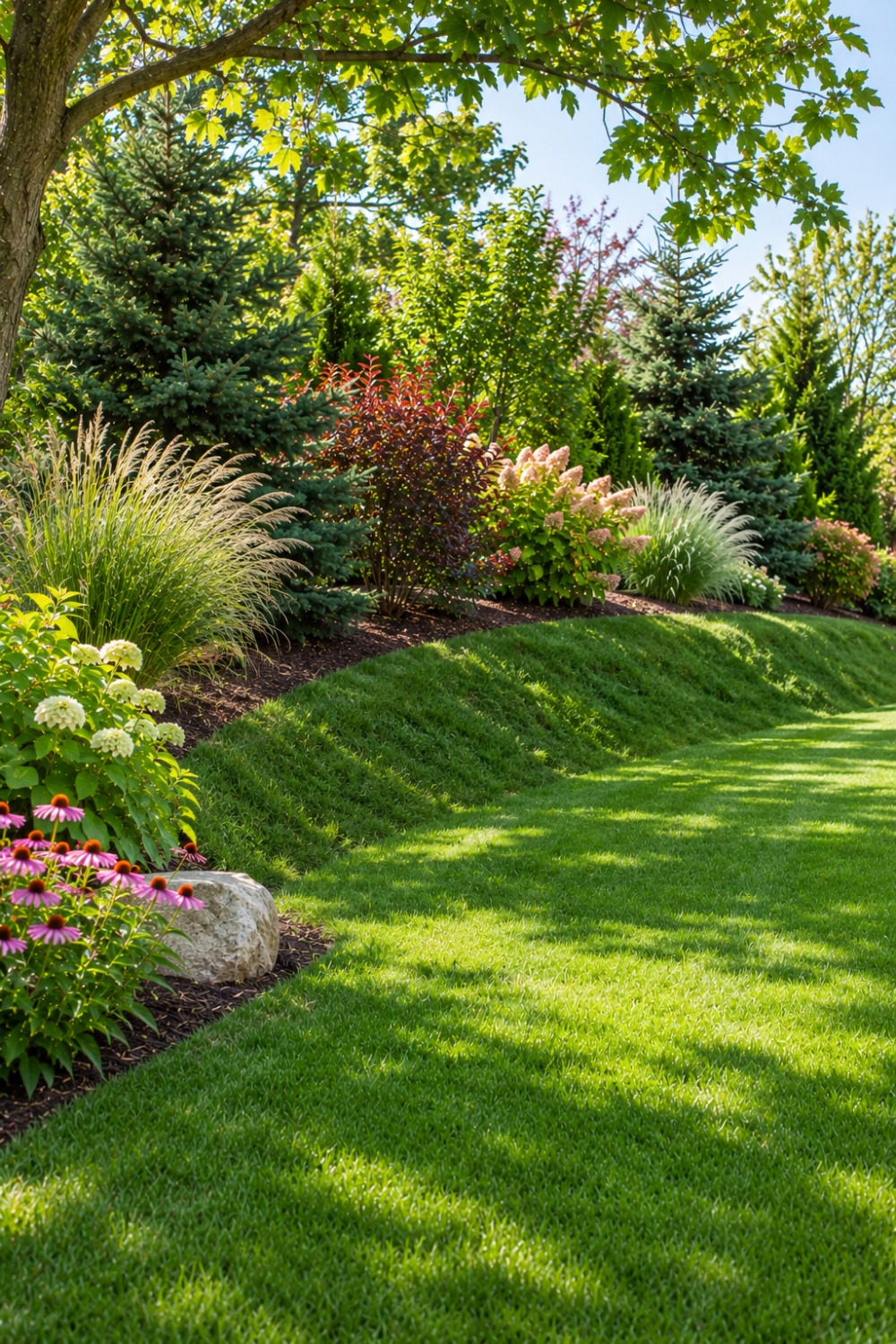
A berm is a low, gently sloped mound of soil. Planting on top of it gives your screen a head start in height.
Even a 2-foot berm with 6-foot shrubs on top creates an 8-foot screen.
Berms also help block road noise and break up a flat yard.
How to do it:
- Shape a berm with a gentle slope, about four to five times as wide as it is tall.
- Use good topsoil and compact it lightly.
- Plant shrubs and grasses across the top and sides, then mulch.
10. Mix Slatted Screens Into the Planting
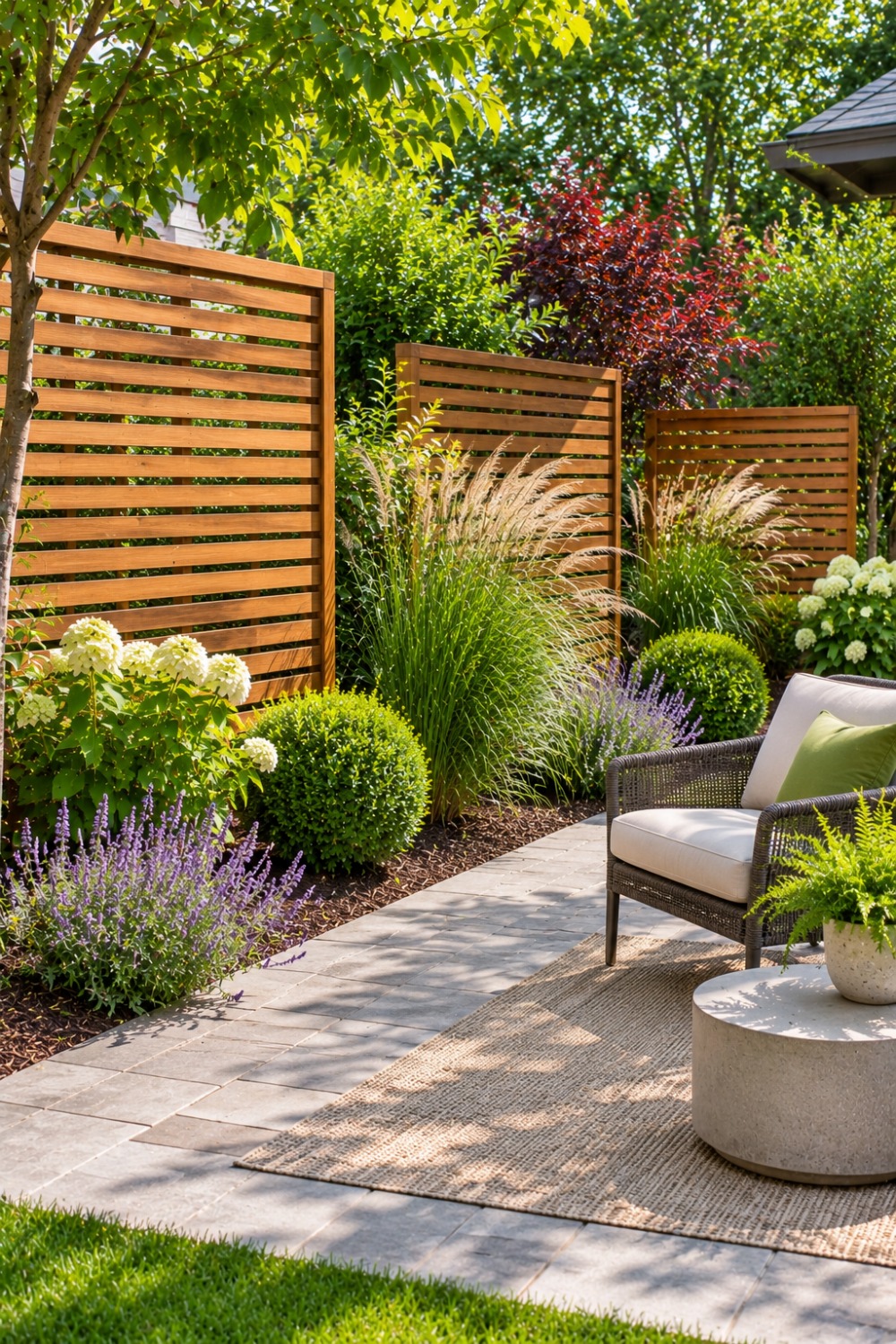
Freestanding slatted screens give instant privacy while young plants grow.
Set a few panels at staggered angles among the planting rather than in one straight line. It looks more like part of the garden.
Horizontal cedar slats suit modern homes, while woven willow panels feel cottage-style.
How to do it:
- Place panels where the most important sightlines cross.
- Set posts in concrete or metal post anchors.
- Plant grasses and shrubs in front to soften the base.
11. Plant a Native Hedge That Feeds the Birds
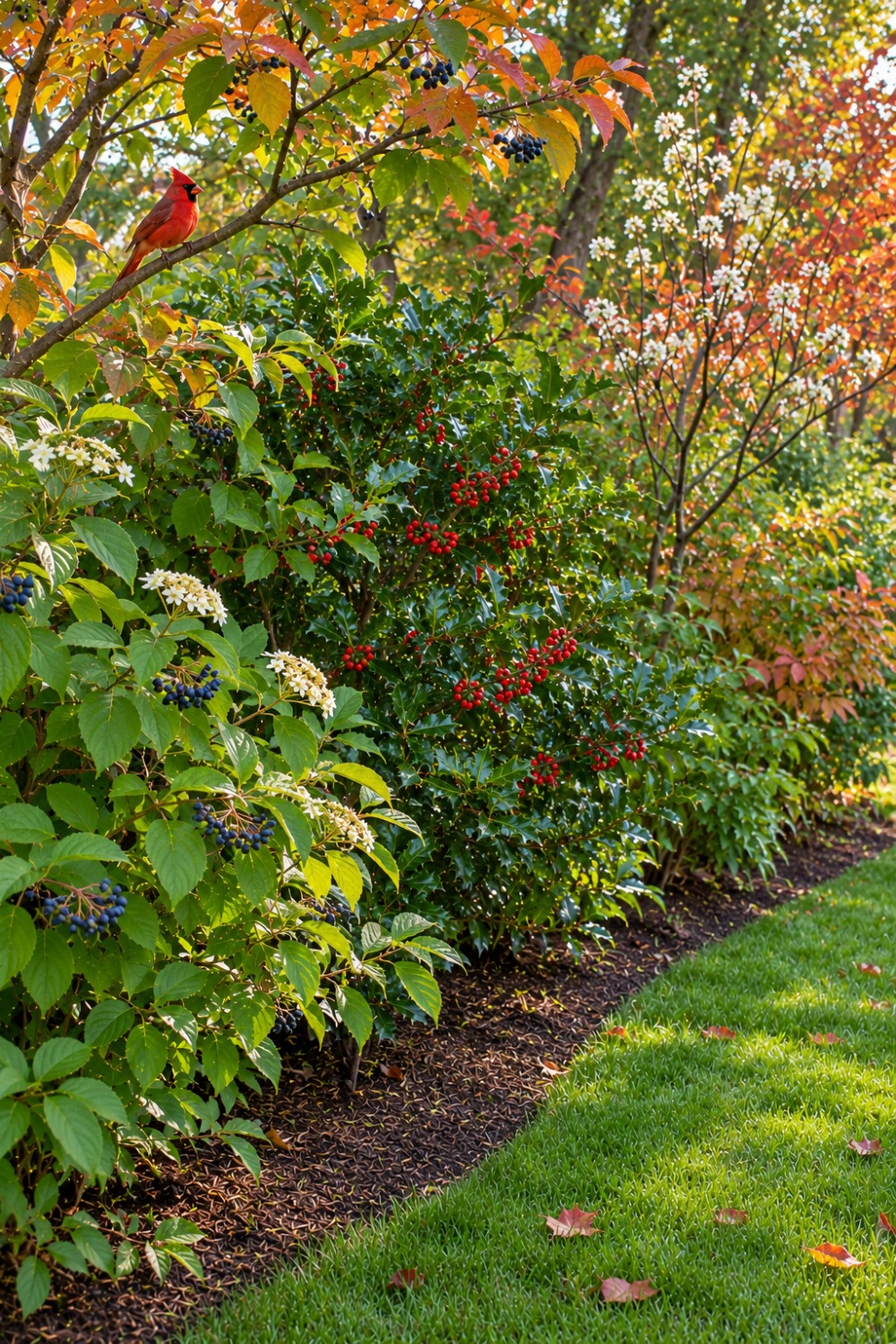
A privacy hedge can do double duty as wildlife habitat.
Native shrubs such as arrowwood viburnum (Viburnum dentatum), American holly, serviceberry and, in the South, wax myrtle (Morella cerifera) give berries, nesting spots and shelter for birds.
Planted as a mixed, informal hedge, they need little pruning.
How to do it:
- Ask a local native plant society which shrubs suit your area.
- Plant several species in a staggered row.
- Prune lightly after flowering or fruiting.
12. Use Stilt Hedges for Privacy in Small Yards
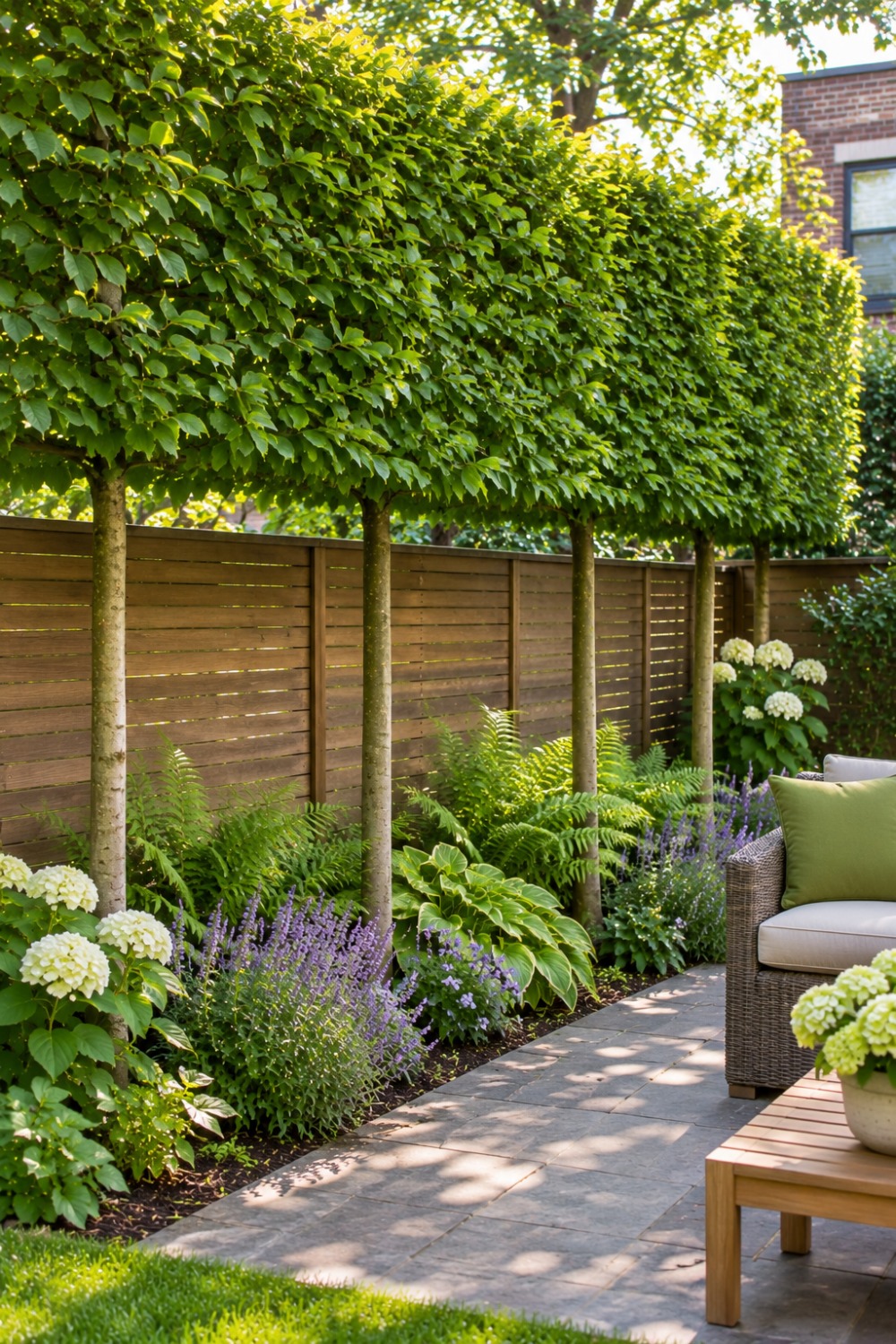
In a small yard, a big hedge eats up too much space.
A stilt hedge is a row of trees with bare trunks and a clipped block of foliage on top. It screens above the fence line while leaving room for planting underneath.
European hornbeam (Carpinus betulus) and littleleaf linden are common choices. You can buy them pre-trained.
How to do it:
- Plant pre-trained stilt trees along the fence line.
- Clip the top block once or twice a year.
- Plant low perennials and ground covers underneath.
13. Create Front Yard Privacy With Layers, Not a Wall
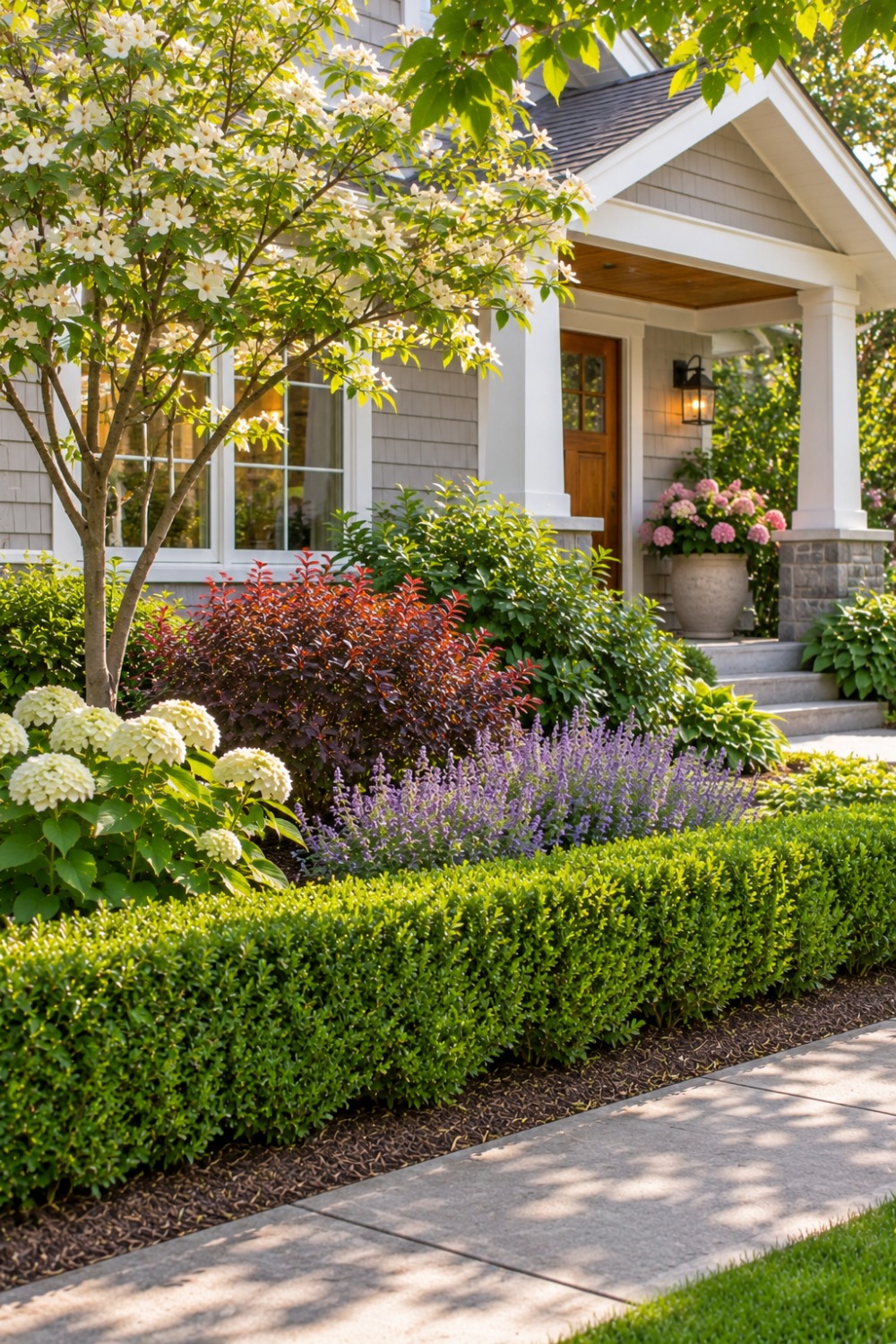
Front yard privacy works best when it still feels welcoming.
Instead of a tall wall, layer a low hedge along the sidewalk, a few small trees and medium shrubs closer to the house.
This blocks views into windows and the porch, while keeping the house visible and friendly from the street. Check local rules on front fence and hedge heights.
How to do it:
- Plant a low hedge or picket fence at the front edge.
- Add one or two small trees in front of key windows.
- Fill between with medium shrubs and perennials.
For more front yard design ideas, see our front yard landscaping ideas.
14. Enclose a Hot Tub With Evergreens and Grasses
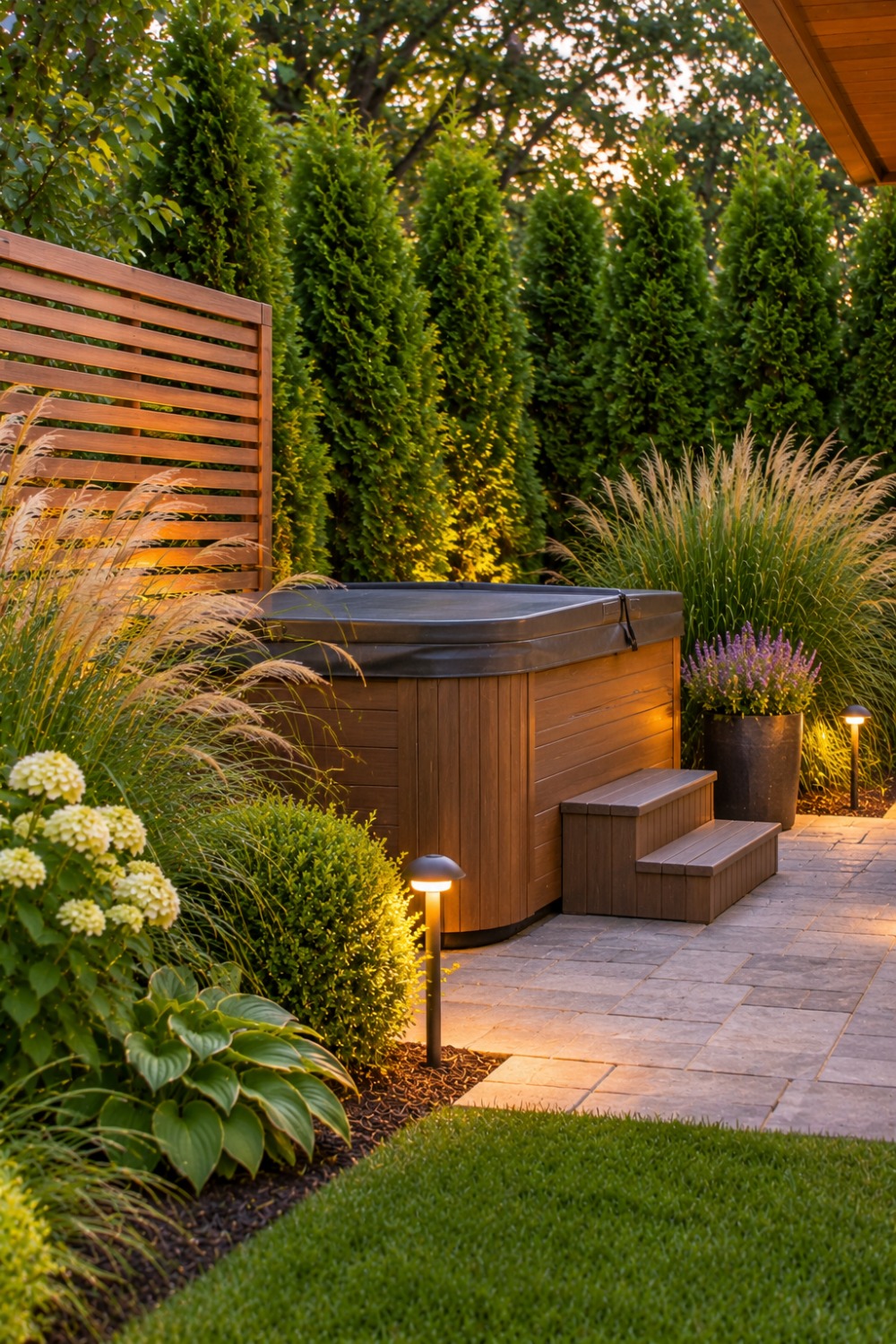
A hot tub is where privacy matters most.
Surround it on two or three sides with tall evergreens and ornamental grasses, leaving one side open to a view you like.
Keep plants that drop lots of leaves or needles away from the water to cut down on cleaning.
How to do it:
- Note which sides are overlooked.
- Plant evergreens on those sides and grasses in front for softness.
- Add a slatted screen if you need cover right away.
15. Screen Gaps Under Trees With Shade-Tolerant Shrubs
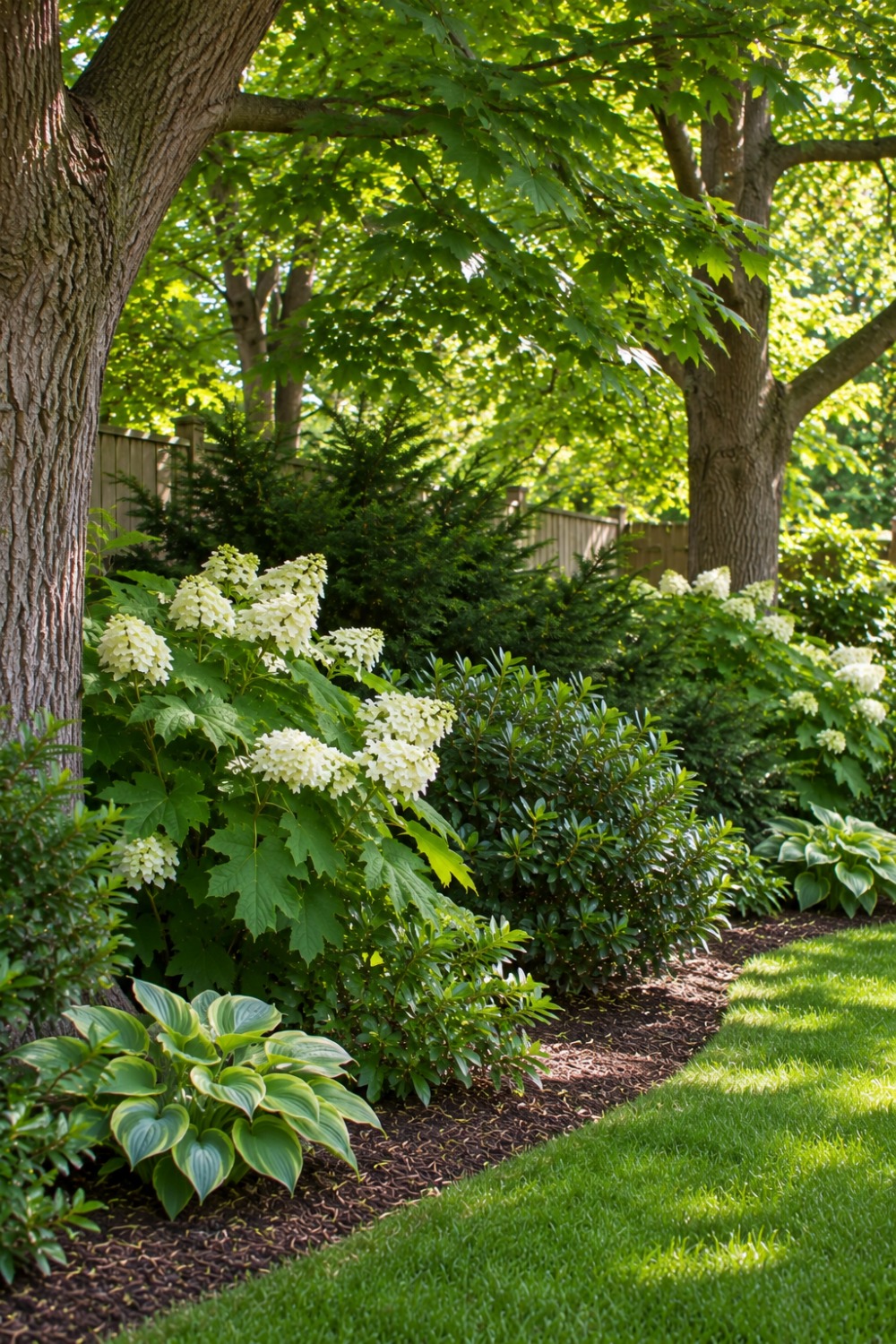
Big trees often leave a see-through gap between their lowest branches and the ground.
Shade-tolerant shrubs fill that gap and finish the screen.
Inkberry holly (Ilex glabra), yew, oakleaf hydrangea (Hydrangea quercifolia) and Pieris handle shade well. Yew and Pieris are toxic if eaten, so skip them where pets or children chew plants.
How to do it:
- Add compost to the planting area, since soil under trees is often dry.
- Plant small shrubs, which settle in more easily among tree roots.
- Water regularly for the first two years.
Frequently Asked Questions
What is the fastest way to get privacy in a backyard?
Freestanding slatted screens or a trellis with vines give privacy right away. For plants, tall native grasses fill in within one season, and larger evergreens give immediate partial cover.
What are the best plants for a privacy screen?
Evergreens such as American holly, ‘Green Giant’ arborvitae and eastern red cedar give year-round cover. Mix in flowering shrubs like viburnum or ninebark for color. Your local nursery can suggest what thrives in your area.
How far apart should I plant privacy trees?
Space them based on their mature width, not their size at planting. For a dense screen, plant so they’ll just touch at maturity, and use a staggered double row to fill in faster.
How can I get privacy without a fence?
Use layered plantings, small trees near your seating, a vine-covered pergola for overhead views, a planted berm or freestanding screens set among plants.
Final Thoughts: Block the View, Keep the Sky
Privacy landscaping works best when it’s targeted.
Start by finding the exact views you want to block from the places you actually sit.
Screen close to those seats first. It’s quicker and cheaper than planting the whole boundary.
Use layers: evergreens for year-round cover, flowering and native shrubs for color and wildlife, grasses for quick summer screening.
Add structure where plants can’t do the job alone, such as a pergola for upstairs views or a trellis topper on a low fence.
Choose steady, healthy growers over fast fixes, and give them two summers of good watering.
If you’re creating a backyard retreat, our backyard fire pit landscaping ideas pair well with a private seating corner.
Start with your favorite seat this season. Once that spot feels private, the whole yard will feel more like yours.