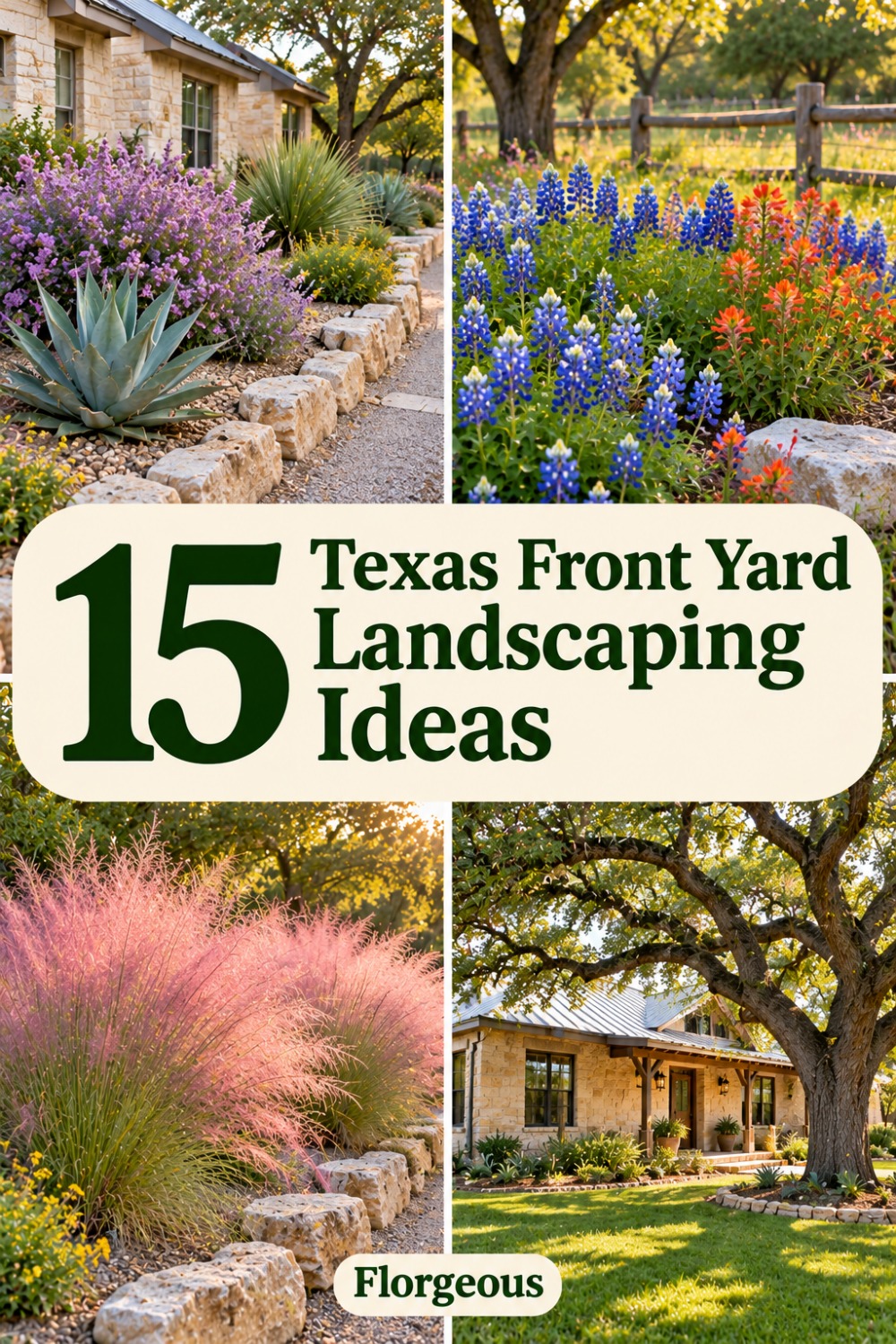
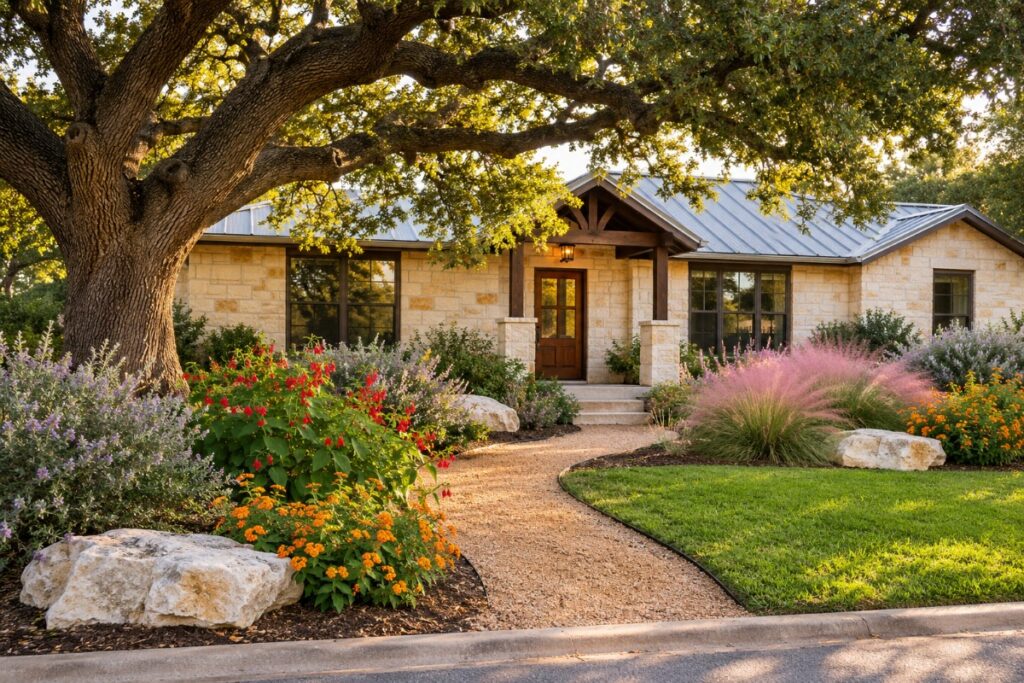
A Texas front yard has to look good through blazing summers, sudden downpours and the odd hard freeze.
That’s a lot to ask of plants that were bred for milder places.
The secret to a Texas front yard that stays good-looking isn’t more water. It’s choosing plants that already know how to handle Texas, and planting them at the right time.
These 15 Texas front yard landscaping ideas will help you build curb appeal that survives the heat, saves water and still feels welcoming.
Texas Front Yard Plants by Job
| Job | Good choices | Notes |
|---|---|---|
| Silver hedge | Texas sage (cenizo) | Full sun, sharp drainage; don’t overwater |
| Shade color | Turk’s cap | Red flowers, hummingbirds, part shade |
| Long bloom in sun | Lantana, autumn sage, flame acanthus | Very heat tolerant |
| Fall texture | Gulf muhly | Pink seed heads in autumn |
| Small tree | Texas redbud, desert willow, possumhaw | Suit smaller front yards |
| Shade tree | Live oak, cedar elm | Give them plenty of room |
| Spring wildflowers | Bluebonnet, Indian paintbrush | Sow in fall |
| Avoid | Mexican petunia (Ruellia simplex), Chinese tallow, nandina | Invasive in parts of Texas |
1. Plant for Your Part of Texas
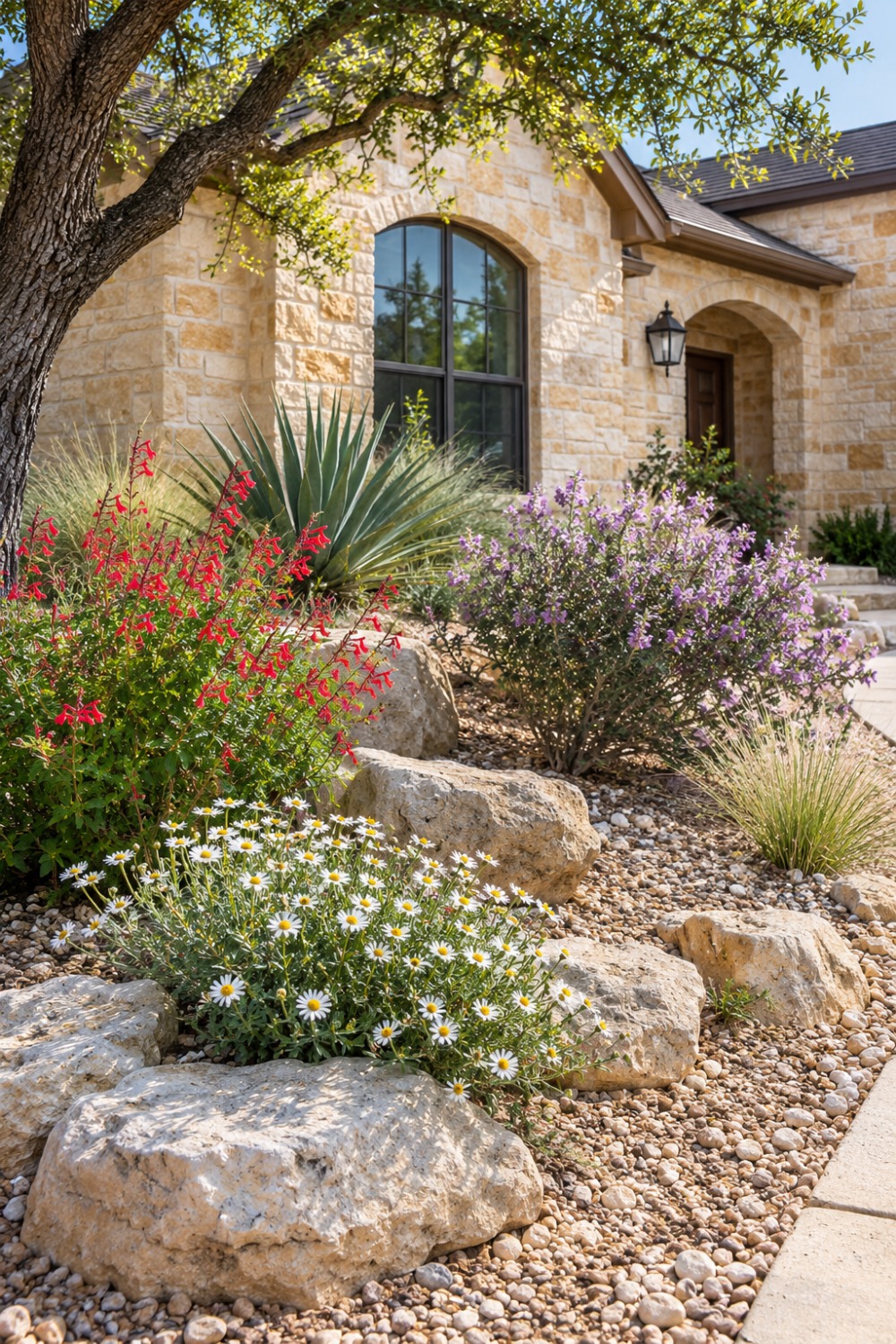
Texas is huge, and a plant that thrives in Houston humidity may struggle in El Paso, or the other way around.
Texas A&M AgriLife’s Earth-Kind Plant Selector lets you find plants suited to your region by zip code.
East Texas gets more rain and acidic soil, the Hill Country has thin soil over limestone, and West Texas is dry with alkaline soil.
How to do it:
- Look up your region in the Earth-Kind Plant Selector.
- Note your soil type, rainfall and how much sun the front yard gets.
- Choose plants rated for your region before buying anything.
2. Choose a Turfgrass That Fits Your Sun and Rainfall
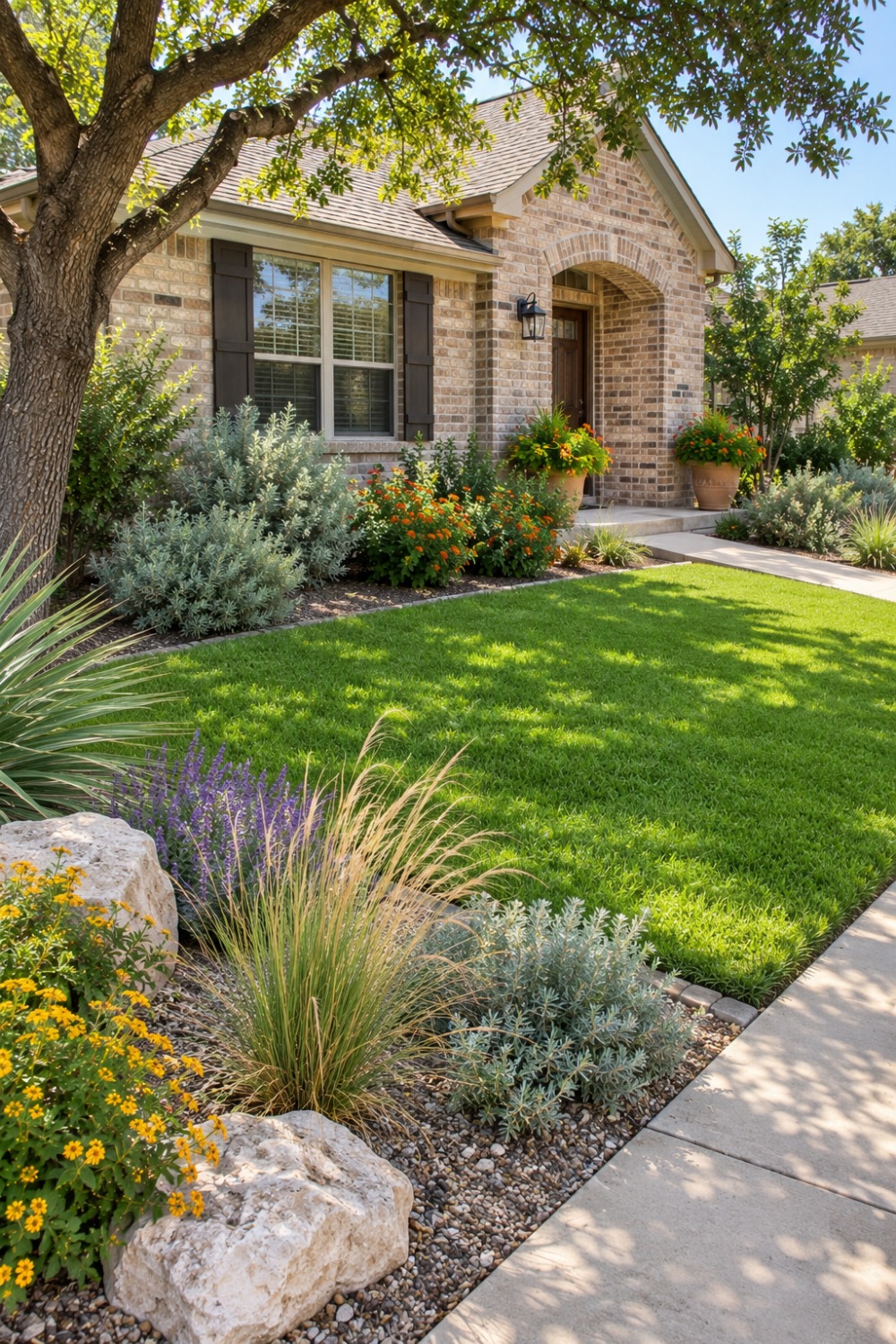
If you keep a lawn, the right grass makes all the difference.
St. Augustine handles shade and humidity but needs more water. Bermudagrass and zoysia take full sun and heat. Buffalograss, a native, uses the least water and suits sunny yards in Central and West Texas.
Whichever you choose, keep the lawn area modest and let beds do more of the work.
How to do it:
- Check how many hours of sun the lawn area gets.
- Pick a grass suited to that light and your region’s rainfall.
- Shrink the lawn to a simple shape and plant the rest.
3. Build a Hill Country Limestone Bed
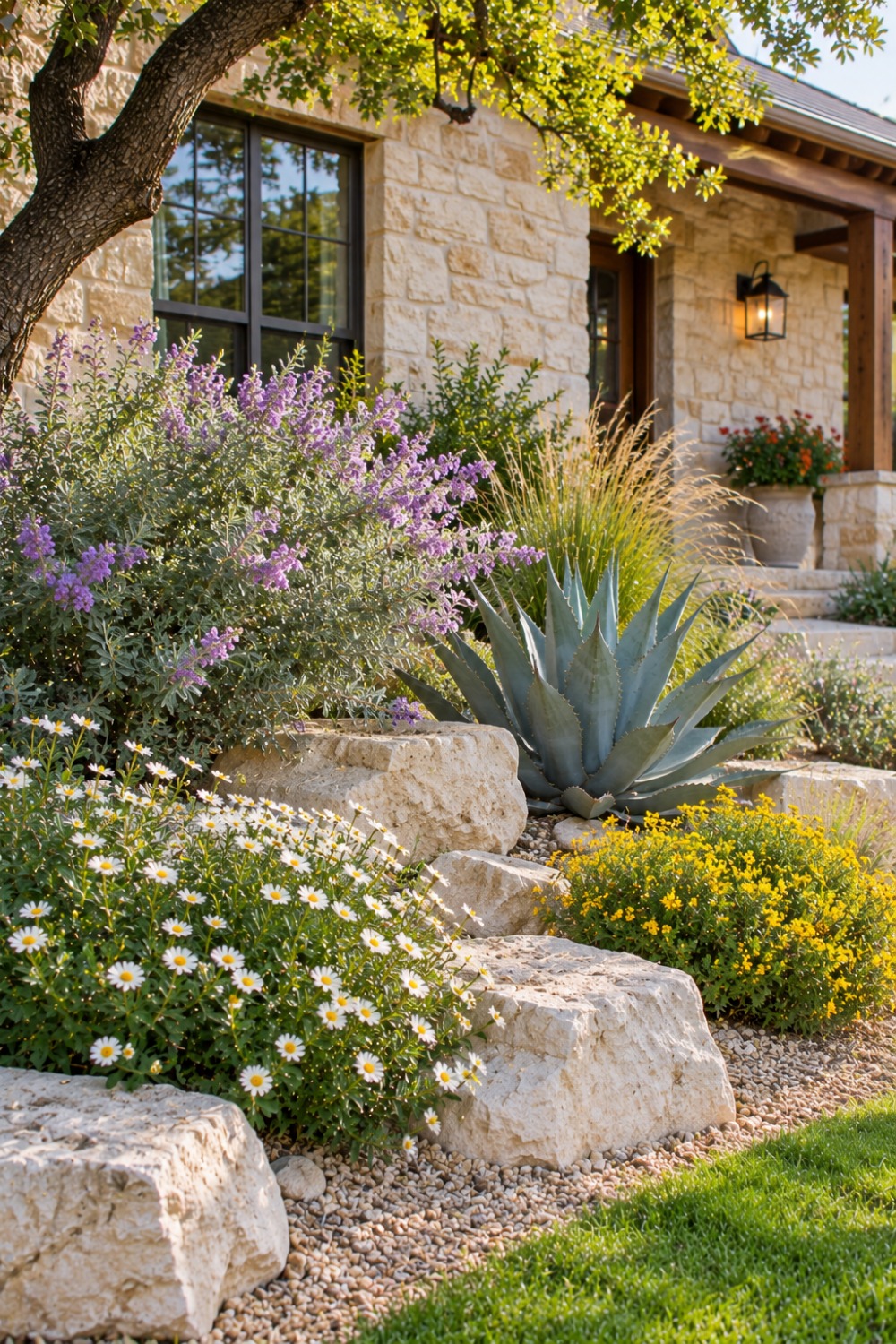
Pale limestone boulders instantly say “Texas” and suit the thin, rocky soils of the Hill Country.
Set a few large stones partly buried, then plant tough natives between them.
Blackfoot daisy (Melampodium leucanthum), damianita and Texas sage all love the sharp drainage around rocks.
How to do it:
- Bury each boulder about a third of its height so it looks natural.
- Group stones in odd numbers with one clearly larger.
- Plant drought-tolerant natives in the gaps and top with gravel mulch.
4. Anchor the Yard With a Live Oak or Cedar Elm
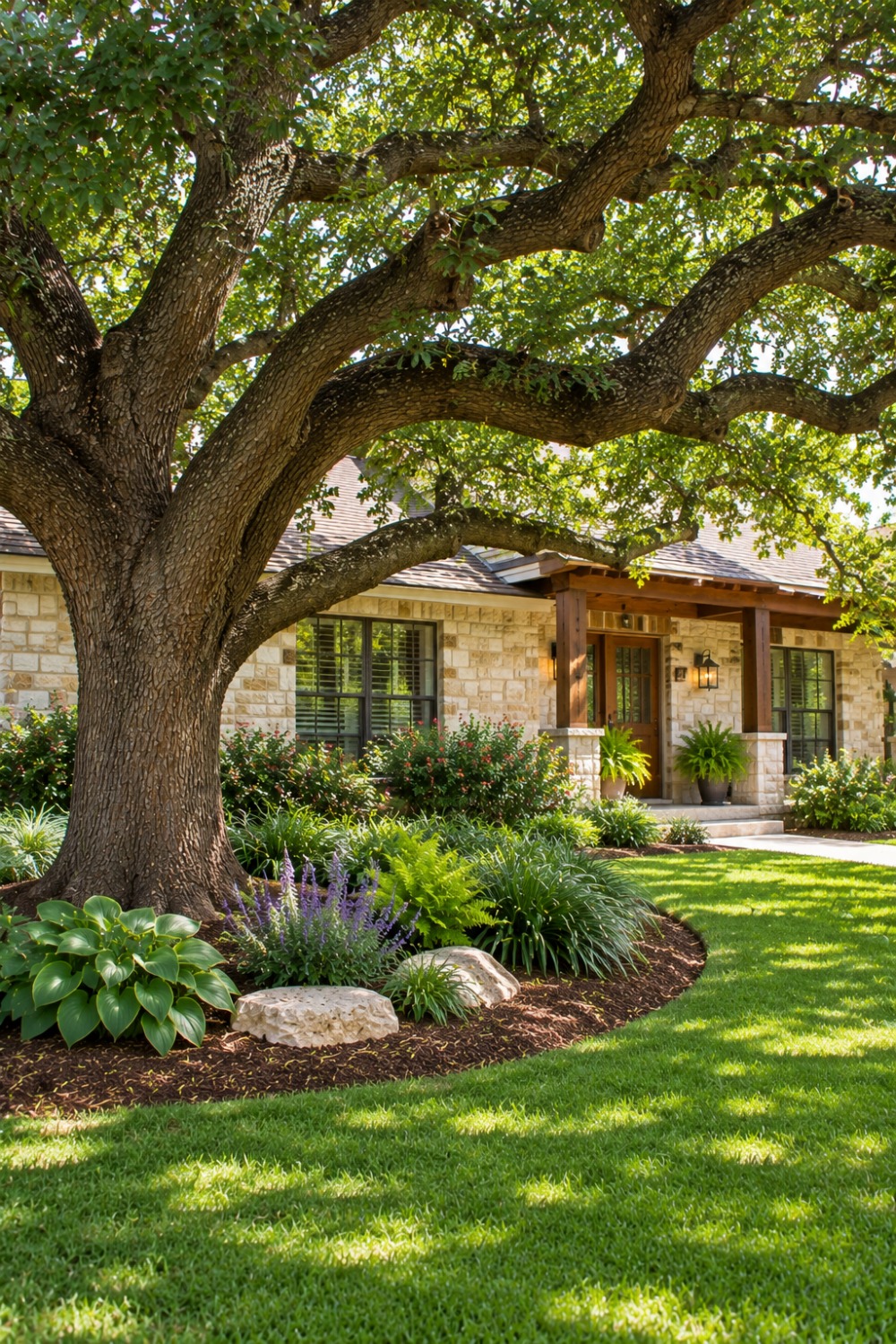
A big shade tree cools the front of the house and gives a Texas yard its classic look.
Live oak and cedar elm (Ulmus crassifolia) are tough, long-lived and well adapted to much of the state.
Give them room: plant well away from the foundation, driveway and power lines.
How to do it:
- Plant at least 20 feet from the house for large shade trees.
- Mulch a wide ring rather than planting grass under the canopy.
- Avoid pruning or wounding oaks from February through June, when oak wilt spreads most easily, and paint every fresh cut on an oak, whatever the season.
5. Grow a Silver Hedge of Texas Sage
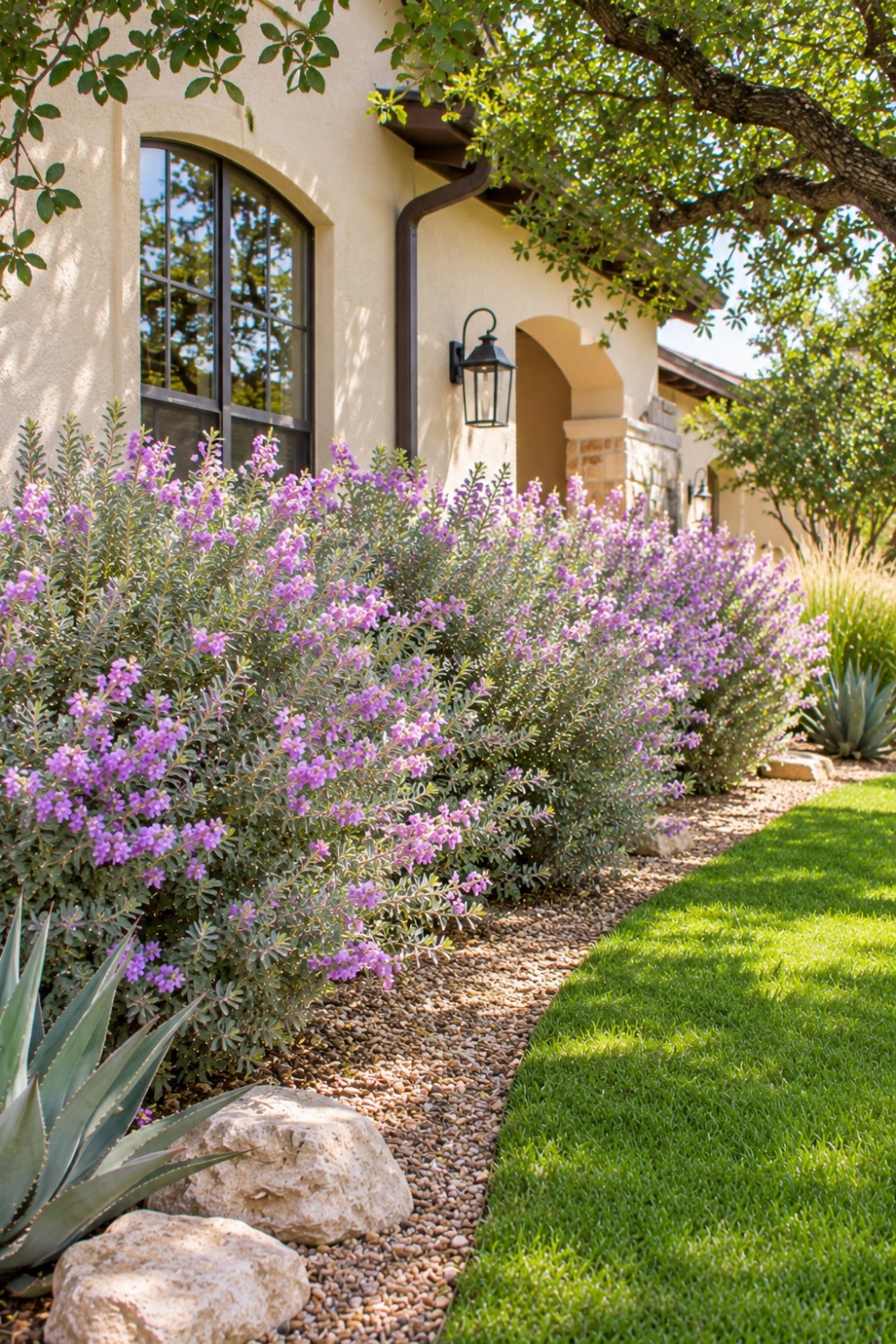
Texas sage, also called cenizo (Leucophyllum frutescens), has silvery leaves that glow in the sun and bursts of lavender-pink flowers after rain.
It’s extremely heat and drought tolerant once established.
The biggest risk is too much water and poor drainage, so keep it away from sprinklers.
How to do it:
- Plant in full sun with well-drained soil.
- Space plants for their mature width so they form an informal hedge.
- Water to establish, then only in long droughts.
Common mistake: shearing Texas sage into tight boxes. It flowers best when allowed to keep its natural shape.
6. Fill Beds With Texas Superstar Plants
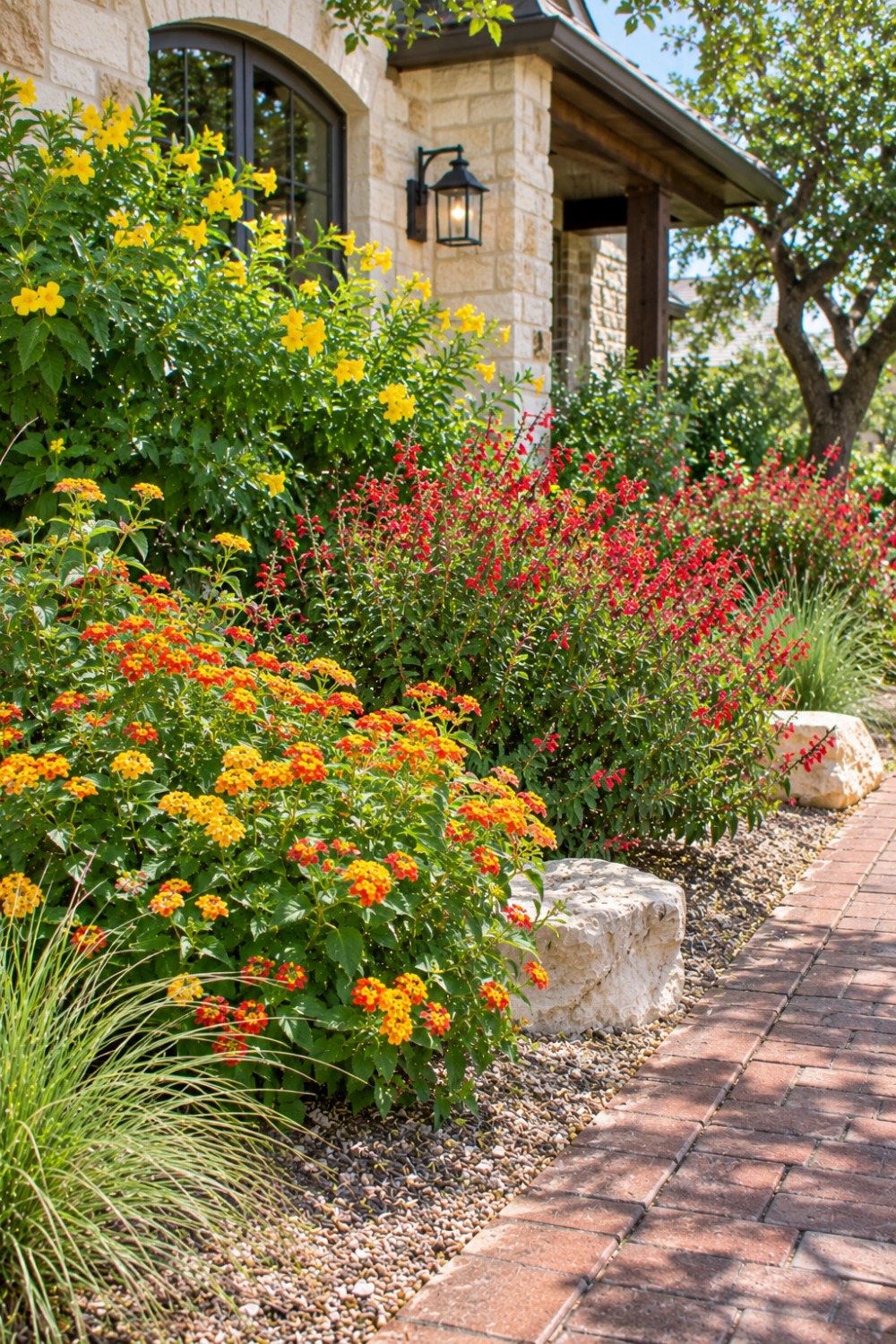
Texas Superstar plants are varieties tested by Texas A&M AgriLife that perform reliably across the state.
Many are tough, heat-loving bloomers, such as lantana, esperanza (Tecoma stans) and certain salvias.
Using them takes much of the guesswork out of plant shopping.
How to do it:
- Look for the Texas Superstar label at local nurseries.
- Choose a few that suit your sun and soil.
- Plant them in groups for bold color from the street.
7. Brighten Shade With Turk’s Cap
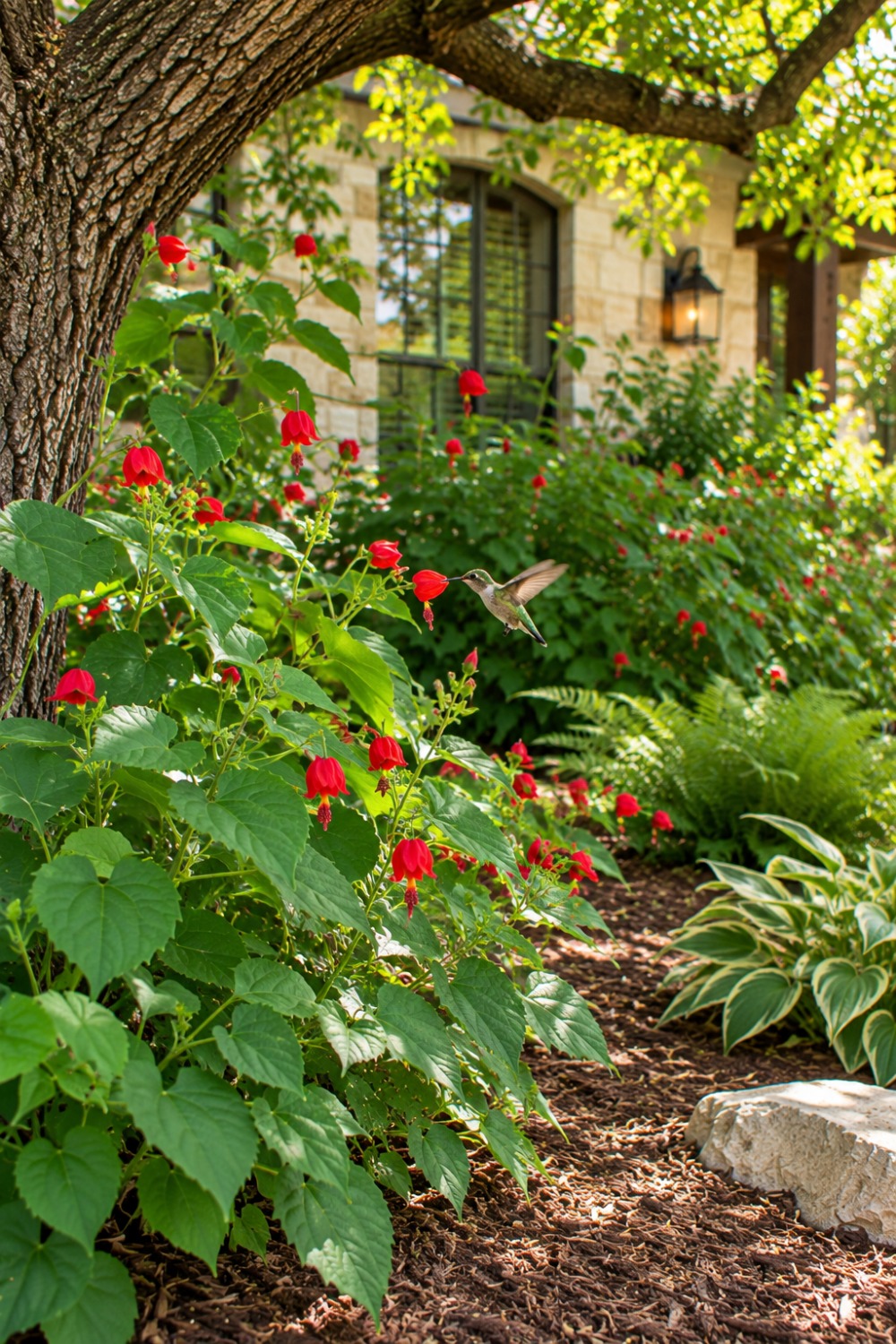
Shady Texas front yards often struggle for color in summer. Turk’s cap (Malvaviscus arboreus var. drummondii) is the answer.
Its small red flowers bloom from summer into fall and are a favorite of hummingbirds.
It grows in part shade to sun and tolerates a wide range of soils.
How to do it:
- Plant under high shade or on the east side of the house.
- Give it room, since it can spread into a broad clump.
- Cut it back hard in late winter to keep it tidy.
8. Sow Bluebonnets in Fall for a Spring Show
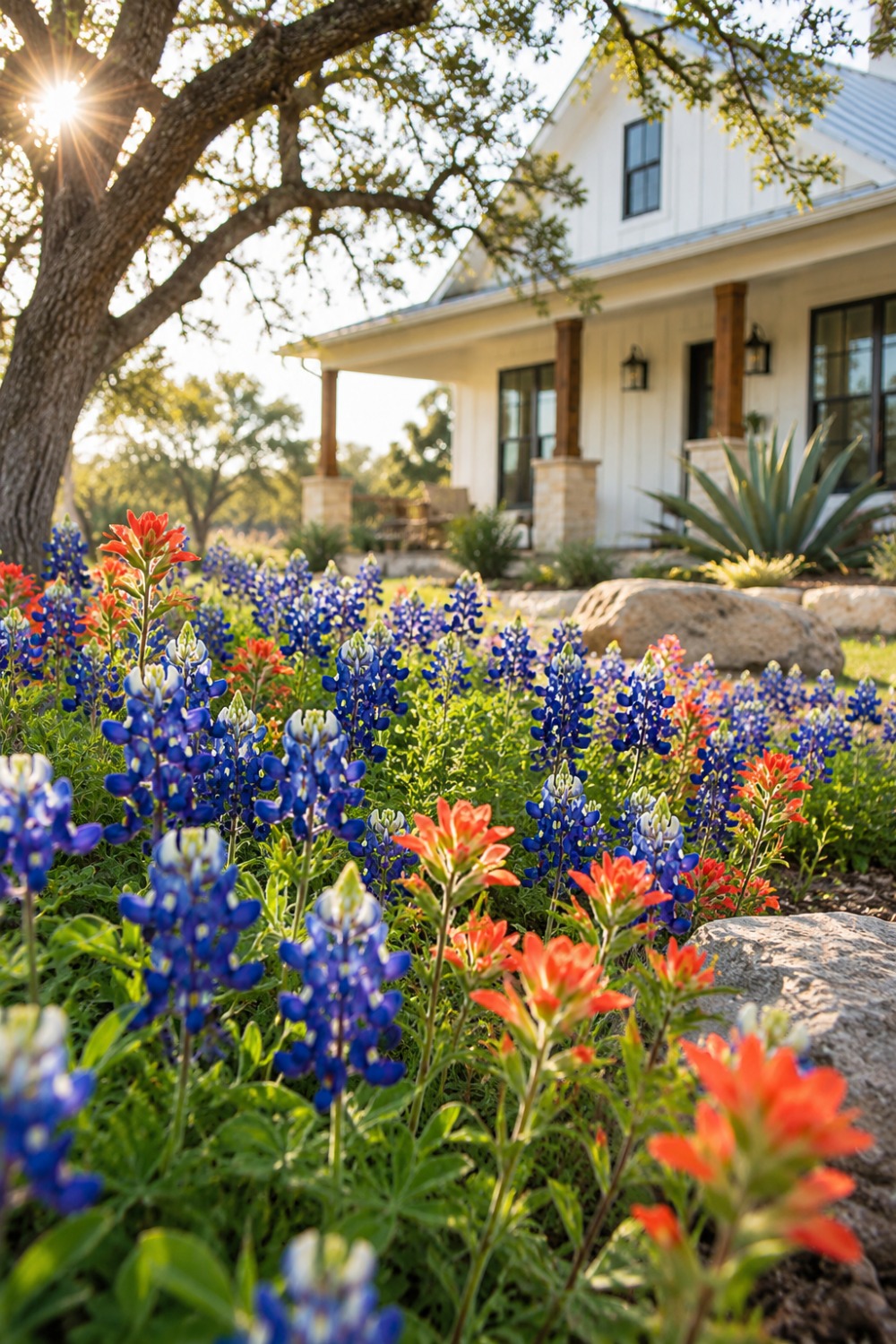
Nothing says spring in Texas like bluebonnets.
They’re annuals that grow from seed sown in fall, overwinter as small rosettes and flower in March and April.
Mix them with Indian paintbrush for a classic roadside look in a sunny front bed.
How to do it:
- Sow seed in a sunny, well-drained spot between September and November.
- Press seed into lightly raked soil and water gently.
- Let plants set seed before mowing or pulling them in late spring.
9. Add Gulf Muhly for Pink Fall Clouds
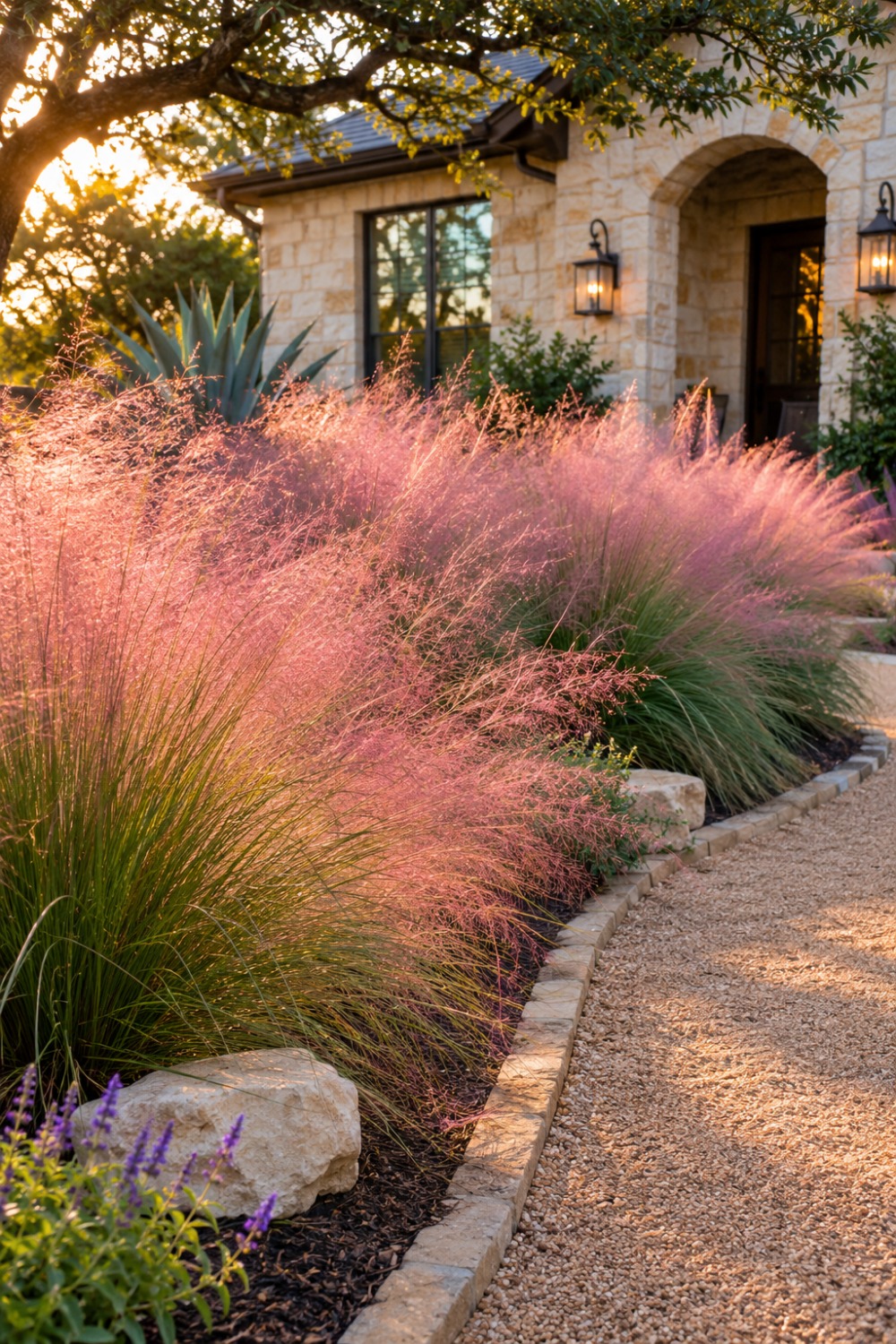
Gulf muhly (Muhlenbergia capillaris) is a native grass that turns into a cloud of pink in autumn.
It’s drought tolerant, needs little care and looks spectacular when backlit by low sun.
Plant it in groups along the front walk or the street edge.
How to do it:
- Plant in full sun with good drainage.
- Group at least five together for a soft drift.
- Cut back to a few inches in late winter.
10. Plant a Small Native Tree Near the Entry
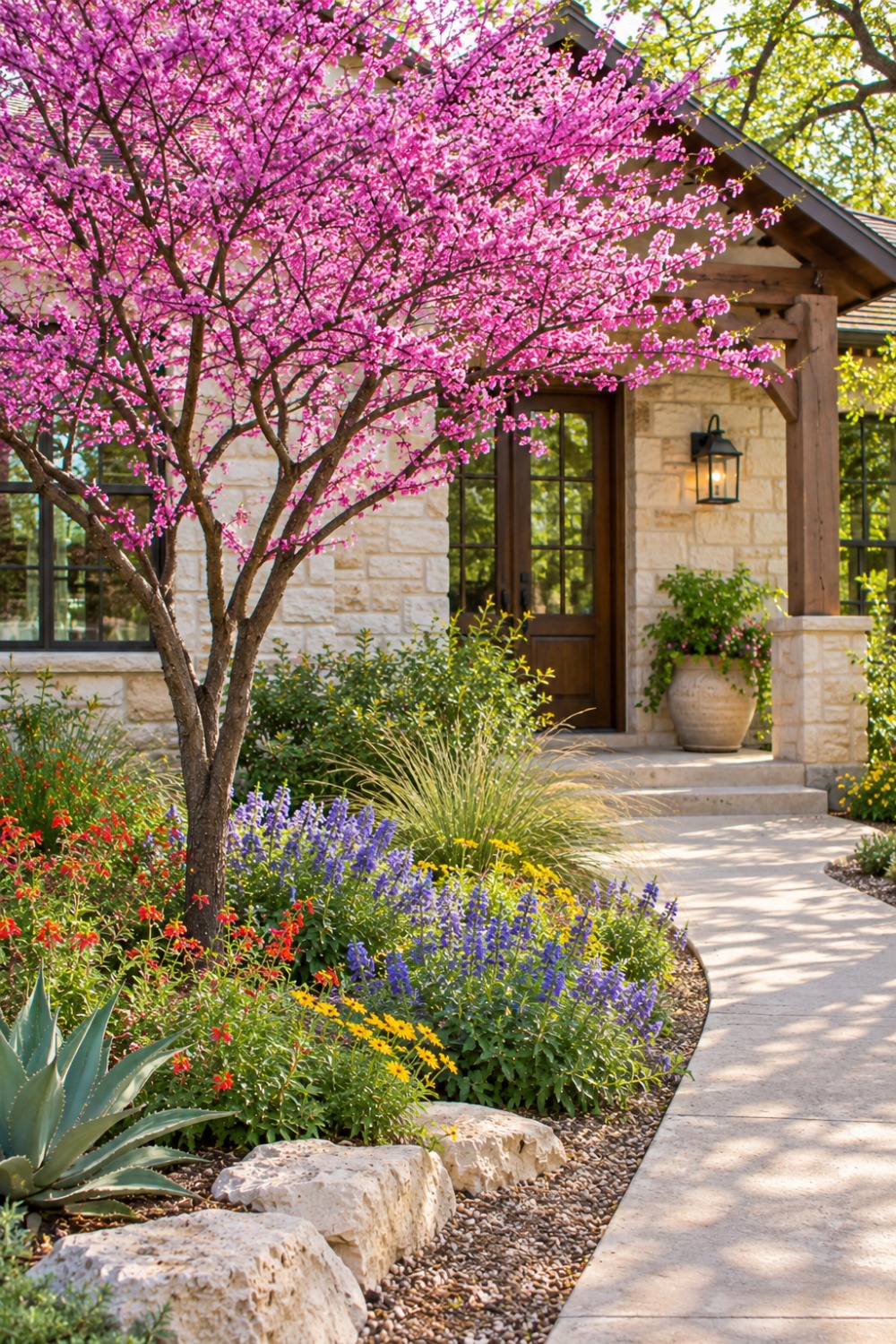
Smaller front yards need smaller trees.
Texas redbud (Cercis canadensis var. texensis), desert willow (Chilopsis linearis) and possumhaw holly (Ilex decidua) stay modest in size and offer spring flowers or winter berries.
They give the entry height without overwhelming the house.
How to do it:
- Choose a tree that matches your region and sun.
- Plant it at least 8 to 10 feet from the house.
- Mulch and water deeply through its first two summers.
11. Use Decomposed Granite for Paths and Seating
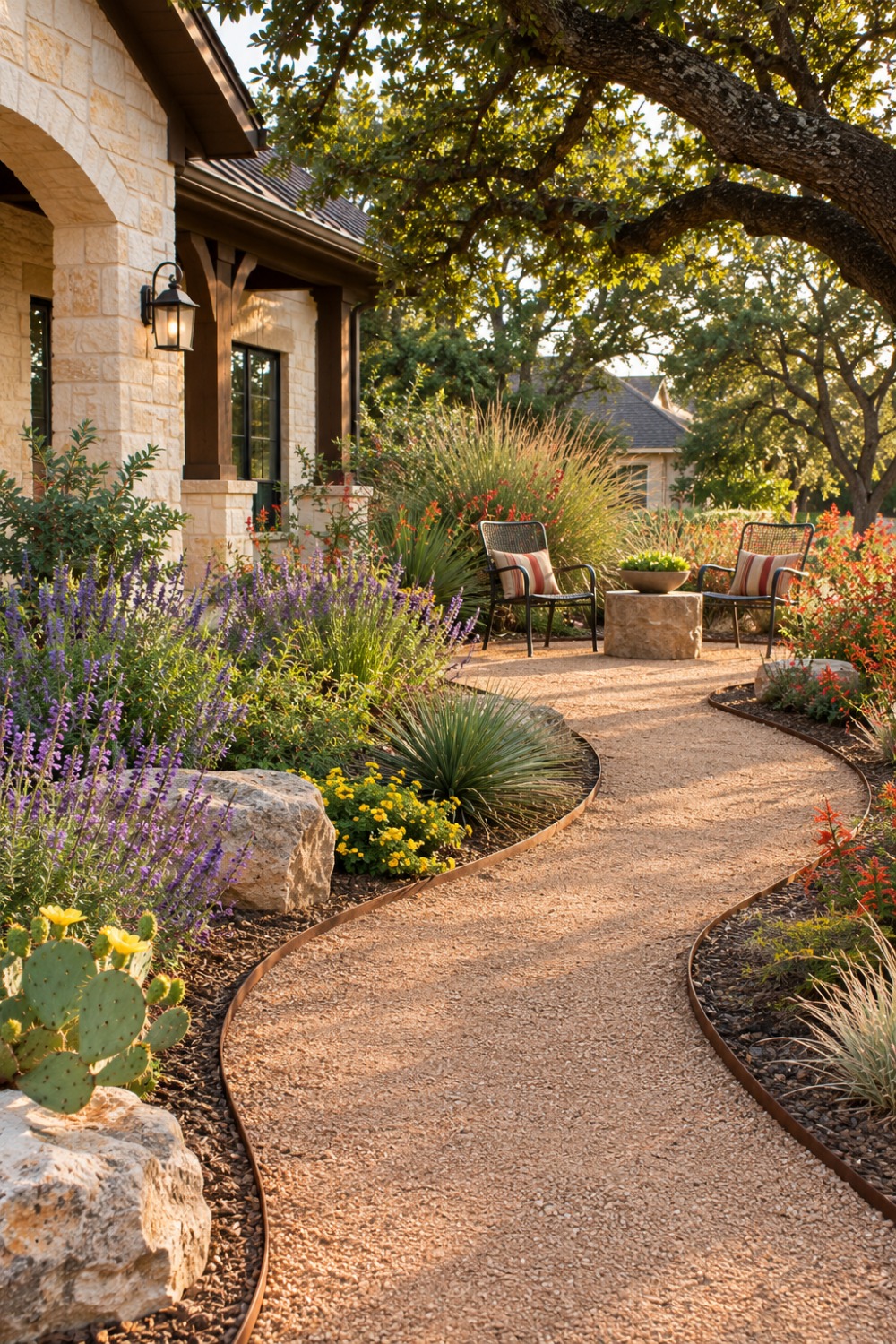
Decomposed granite is a natural Texas material that packs into a firm, warm-toned surface.
It’s ideal for paths, a small seating area or a replacement for patchy lawn in dry areas.
Stabilized decomposed granite holds up better on slopes and in heavy rain.
How to do it:
- Excavate about 3 to 4 inches and install steel or stone edging.
- Spread and compact decomposed granite in layers.
- Use stabilized material where water runs across the path.
12. Build a Dry Creek for Sudden Downpours
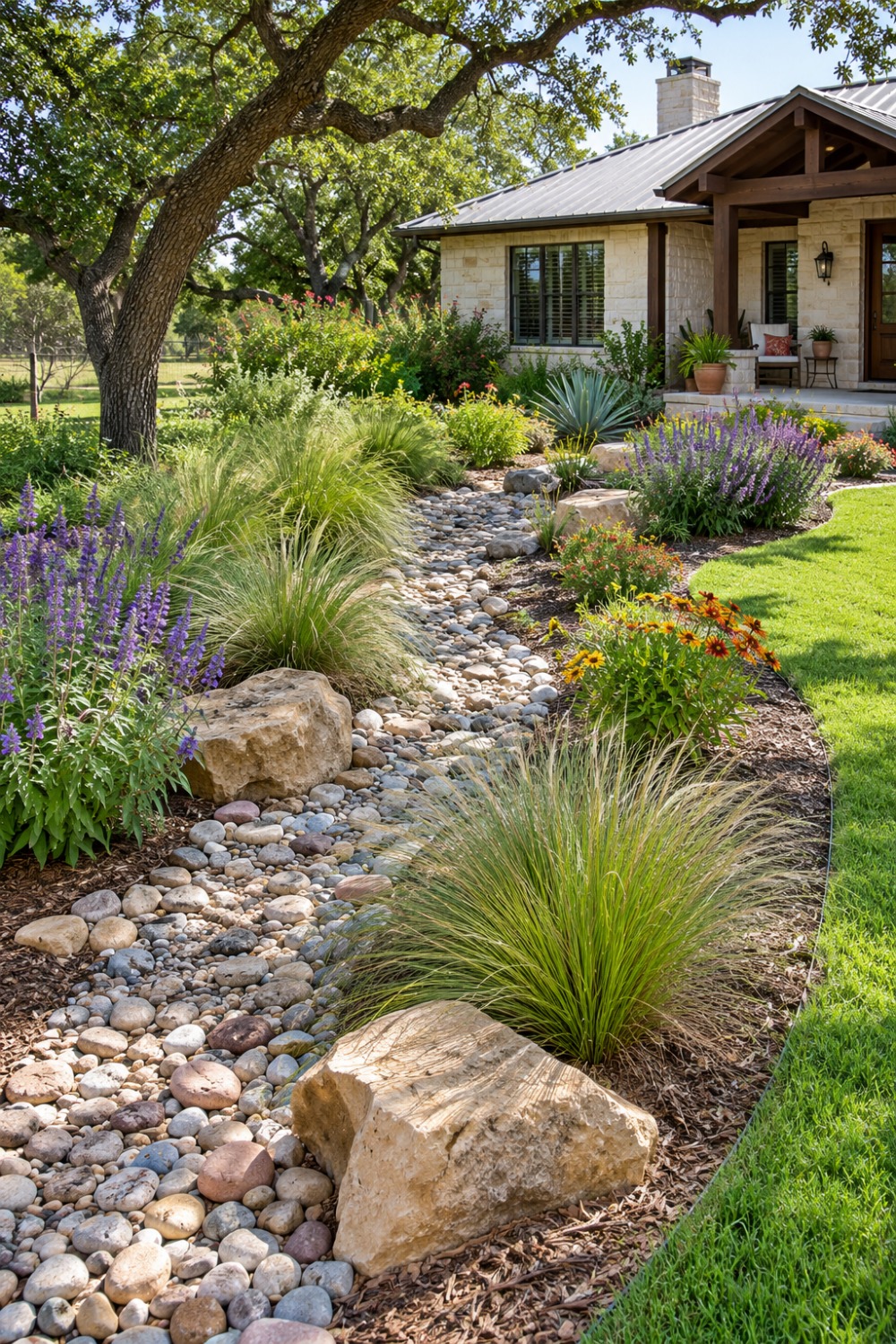
Texas storms can dump inches of rain in an hour.
A dry creek bed channels that water away from the house and looks attractive the rest of the year.
Line it with river rock and plant tough natives and grasses along its banks.
How to do it:
- Follow the natural flow of water across the yard.
- Dig a shallow, curving channel and line it with fabric and stone.
- Plant grasses and perennials along the edges to hold the soil.
For more ideas with stone, see our river rock landscaping ideas.
13. Mulch Thickly to Shade the Soil
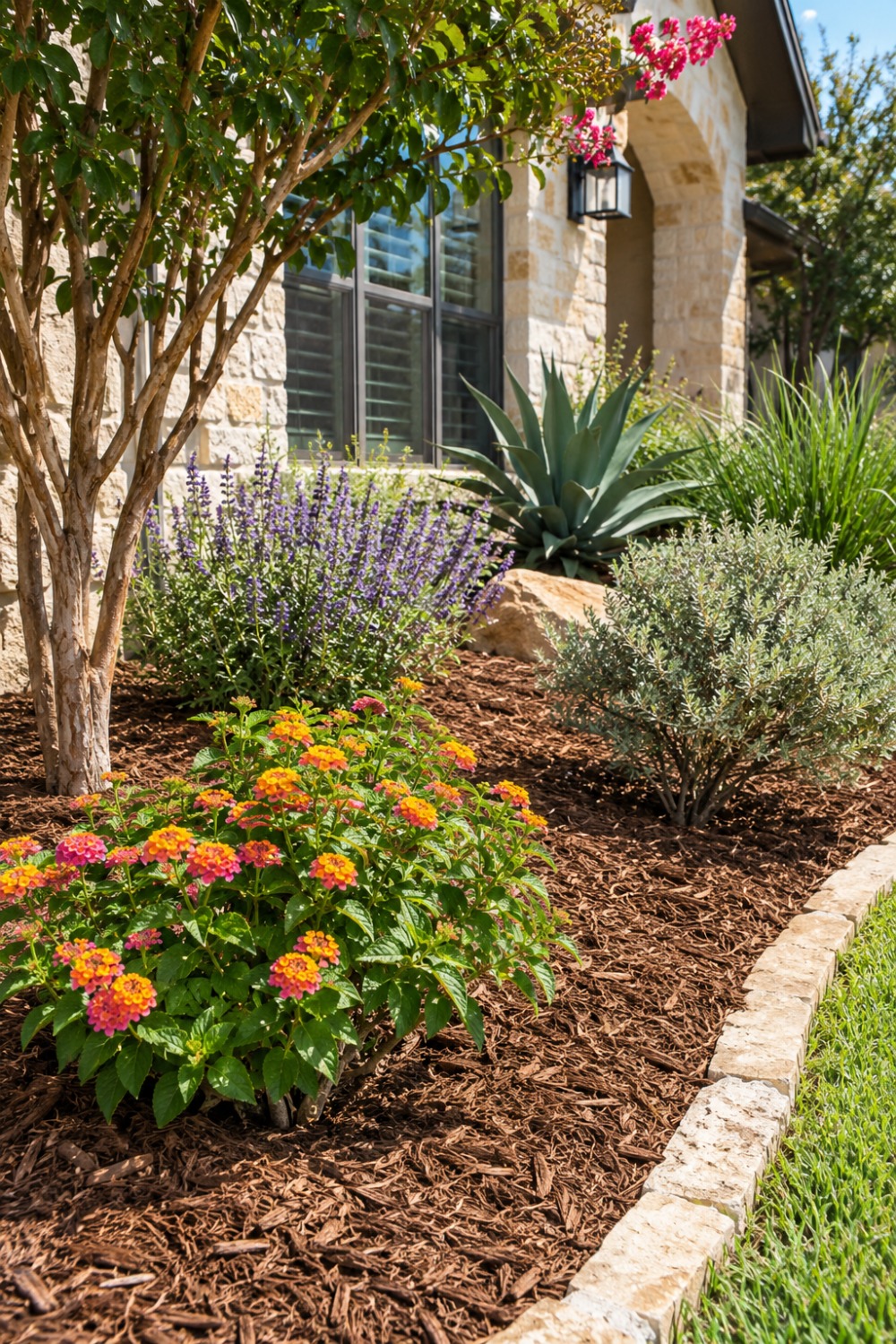
Bare soil bakes in a Texas summer, and plants suffer for it.
Texas A&M AgriLife’s Earth-Kind approach recommends adding compost to beds and covering the soil with mulch.
A thick layer keeps roots cooler, holds moisture and cuts weeds.
How to do it:
- Work compost into new beds before planting.
- Spread 3 inches of shredded wood or native mulch on the surface.
- Keep mulch a few inches away from trunks and stems.
14. Plant in Fall, Not in Summer
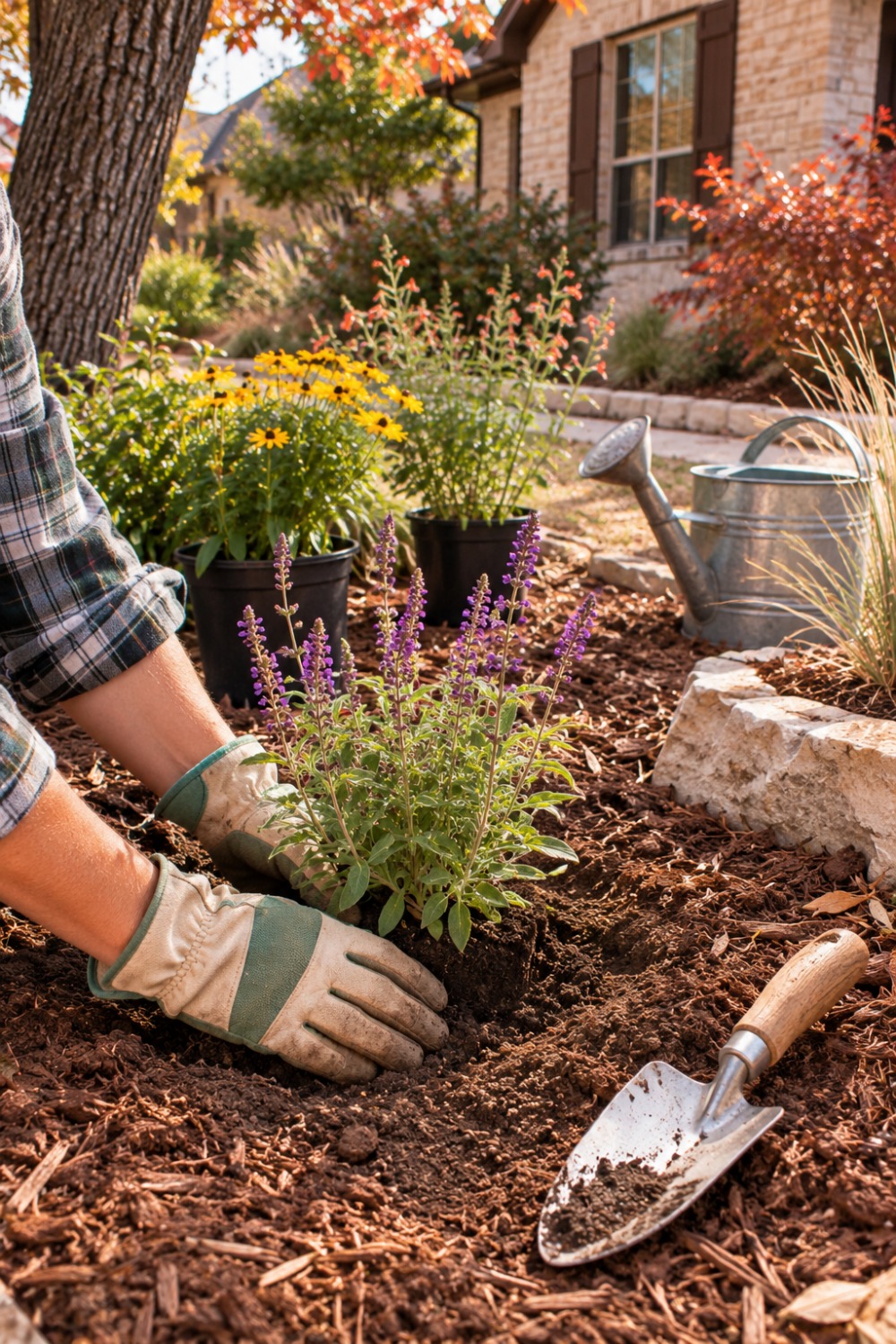
In most of Texas, fall is the best time to plant.
Roots keep growing through the mild winter, so plants are much better prepared for their first summer.
Summer planting is possible but needs far more watering and care.
How to do it:
- Plan your front yard over summer, then plant from October to early December.
- Water new plants deeply and regularly until they’re established.
- Save tender plants for spring after the last frost.
15. Know Your Rights to a Water-Wise Yard
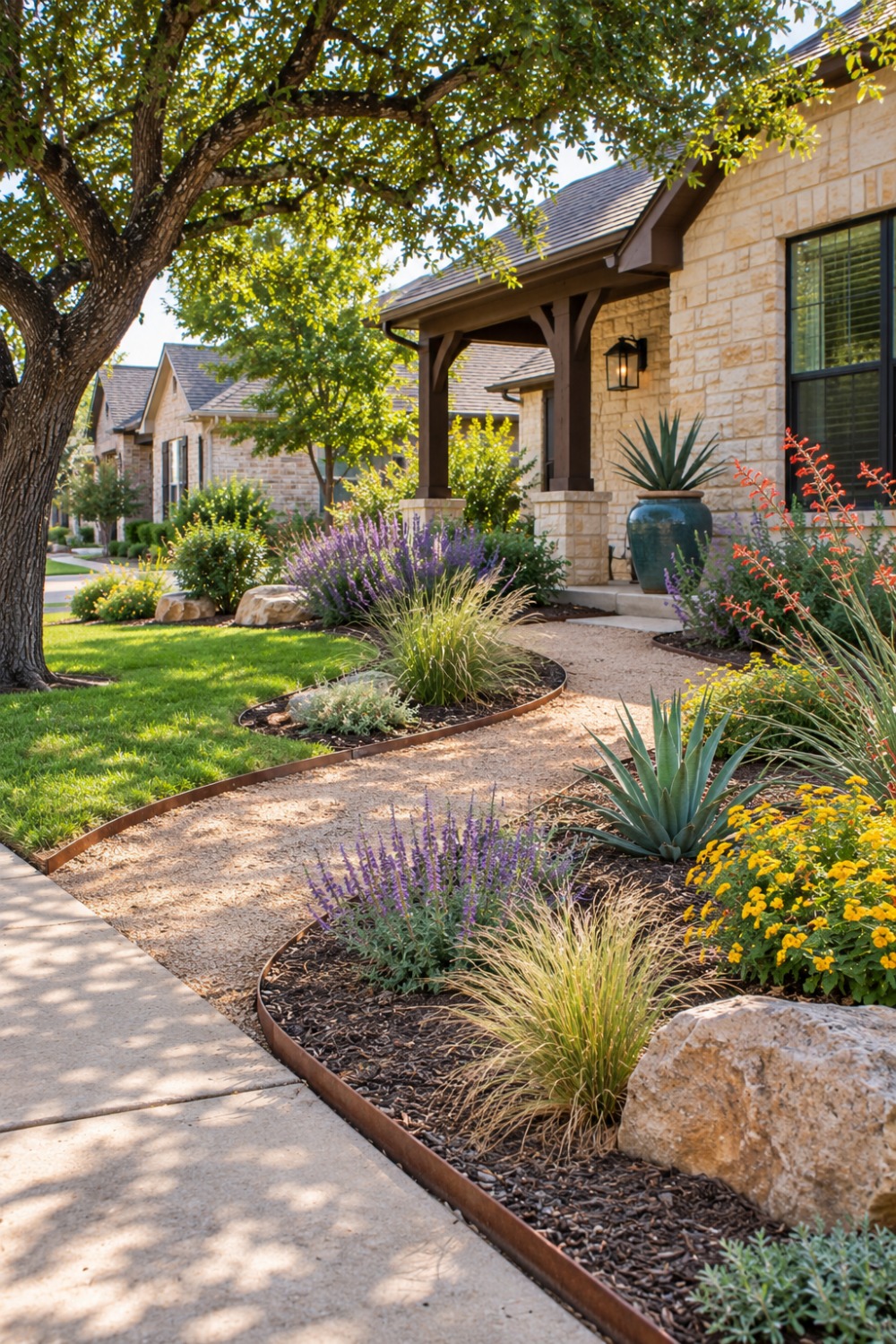
Some homeowners worry that their HOA won’t allow a drought-tolerant front yard.
Texas Property Code Section 202.007 protects homeowners’ right to use drought-resistant landscaping and water-conserving features, though HOAs can still require you to submit plans and follow approved designs.
A neat, well-planned design makes approval much easier.
How to do it:
- Read your HOA’s landscaping guidelines.
- Submit a clear plan showing plants, edging and paths.
- Keep beds tidy and defined so the yard looks intentional.
For more general ideas, see our front yard landscaping ideas.
Frequently Asked Questions
What are the best plants for a Texas front yard?
Texas sage, Turk’s cap, lantana, autumn sage, gulf muhly and Texas Superstar plants are reliable in much of the state. Use the Earth-Kind Plant Selector to check what suits your region.
When is the best time to plant in Texas?
Fall is usually best, from October to early December. Plants establish roots over winter and handle their first summer much better.
What grass is best for a Texas front yard?
St. Augustine suits shade and humid areas, Bermudagrass and zoysia handle full sun, and native buffalograss uses the least water in sunny Central and West Texas yards.
Can my HOA stop me from having a drought-tolerant yard?
Texas Property Code Section 202.007 protects the use of drought-resistant landscaping, but HOAs can still require approval of your plans. Submit a clear design to make approval easier.
Final Thoughts: Plant Like a Texan
The best Texas front yards work with the climate instead of fighting it.
Start by finding your region and choosing plants that are proven there.
Keep the lawn modest and suited to your sun, and let tough natives and adapted plants fill the beds.
Add a strong Texas element, such as a limestone bed, a live oak or a drift of gulf muhly.
Plan for both drought and downpours with mulch, decomposed granite and a dry creek.
Plant in fall, water deeply while plants establish, then let them do the work.
If you’re keeping costs down, our cheap simple front yard landscaping ideas are a good place to start.
Start with one bed this fall. By next summer, it’ll show you exactly what thrives in your yard.