
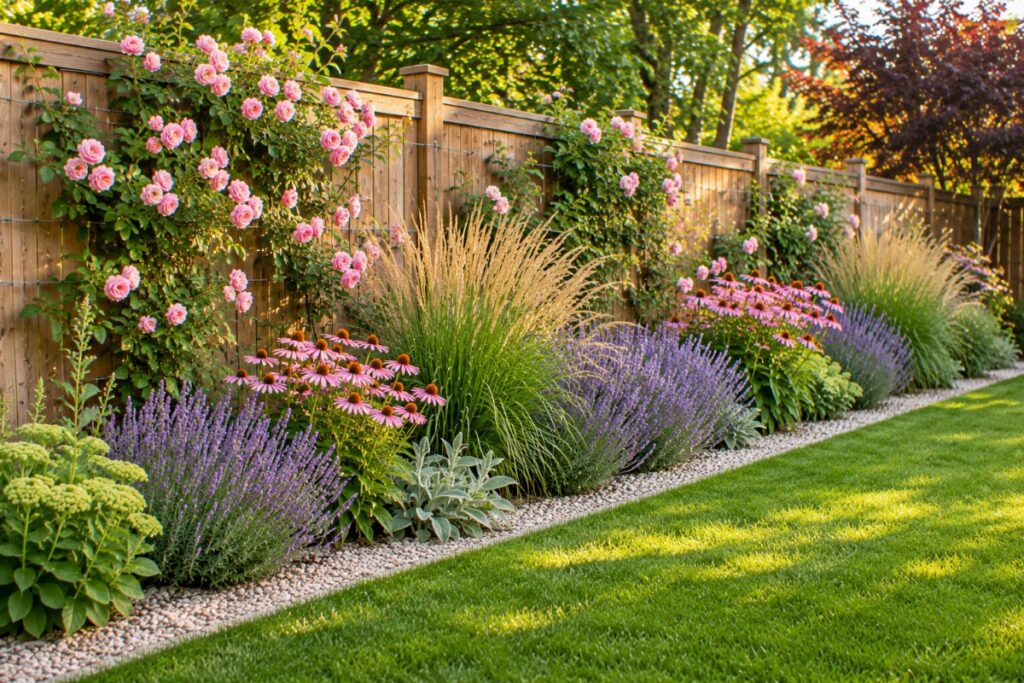
A long, bare fence can make even a lovely backyard feel like a box.
Hard straight lines, blank boards and a messy strip of grass where the mower can’t quite reach.
The secret to fence line landscaping isn’t hiding the fence completely. It’s softening it with layers of plants, so the boundary fades into the garden.
These 13 simple fence line landscaping ideas are easy to start in a weekend and grow better every year. For more ways to use your outdoor space, see our backyard landscaping ideas.
Fence Line Plants by Job
| Job | Plant ideas | Light |
|---|---|---|
| Cover the fence | Clematis, climbing roses, star jasmine (warm climates) | Sun to part shade |
| Add height and privacy | Arborvitae, columnar hornbeam, tall grasses | Sun to part shade |
| Fill a narrow border | Catmint, salvia, coneflowers, daylilies | Full sun |
| Brighten a shady fence | Hostas, ferns, hydrangeas, heuchera | Part to full shade |
| Grow food | Espalier apples or pears, beans, cucumbers | Full sun |
1. Plant a Narrow Border of Mixed Perennials
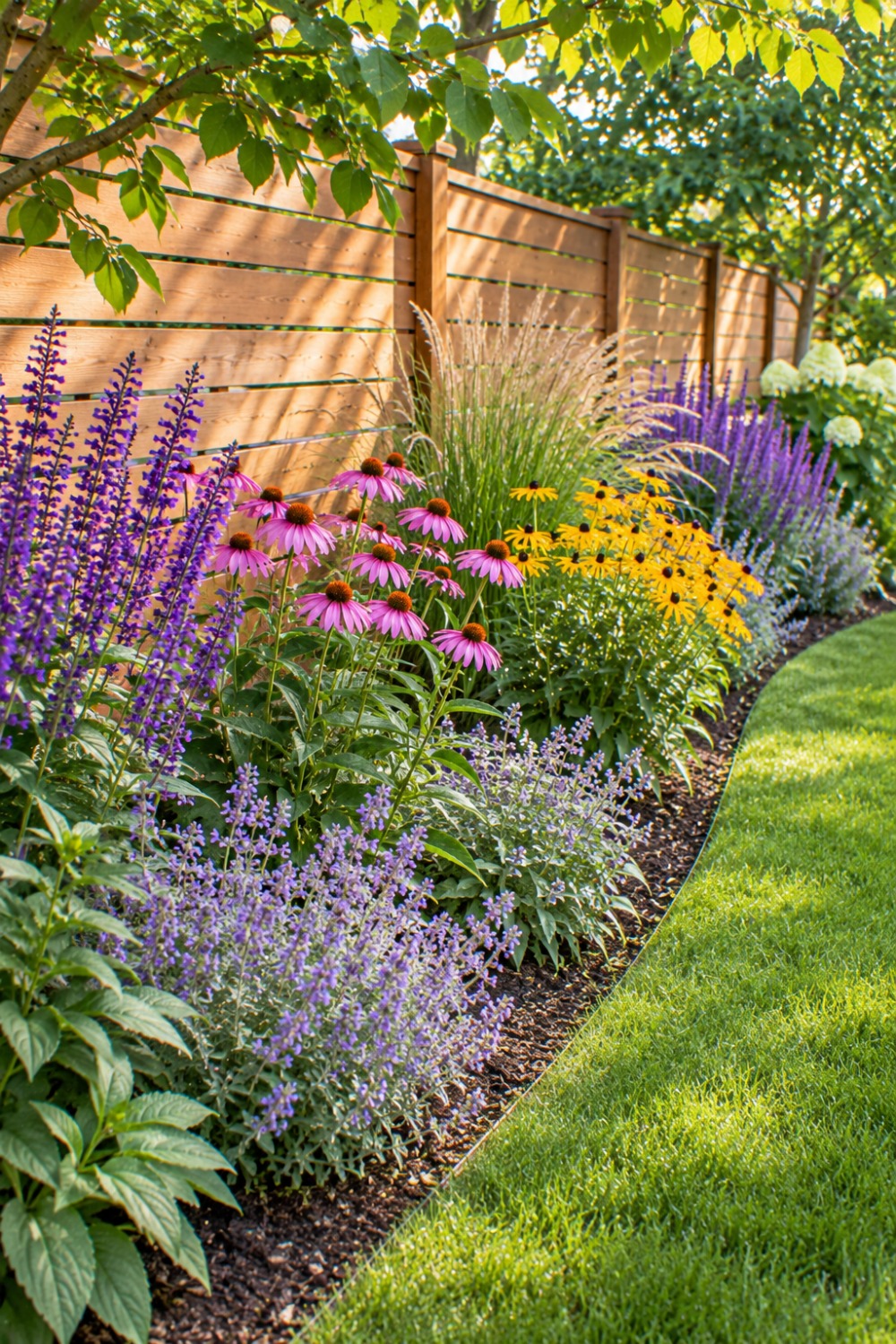
You don’t need a deep garden bed to soften a fence.
A border just 2 to 3 feet wide, filled with tough perennials, adds color and hides the bottom of the fence boards.
Plant taller flowers at the back and shorter ones in front, so everything can be seen.
How to do it:
- Mark a border 2 to 3 feet deep along the fence and remove the grass.
- Mix compost into the soil.
- Plant in groups of three and repeat them along the length for rhythm.
2. Grow Climbing Vines on Wires or Trellis Panels
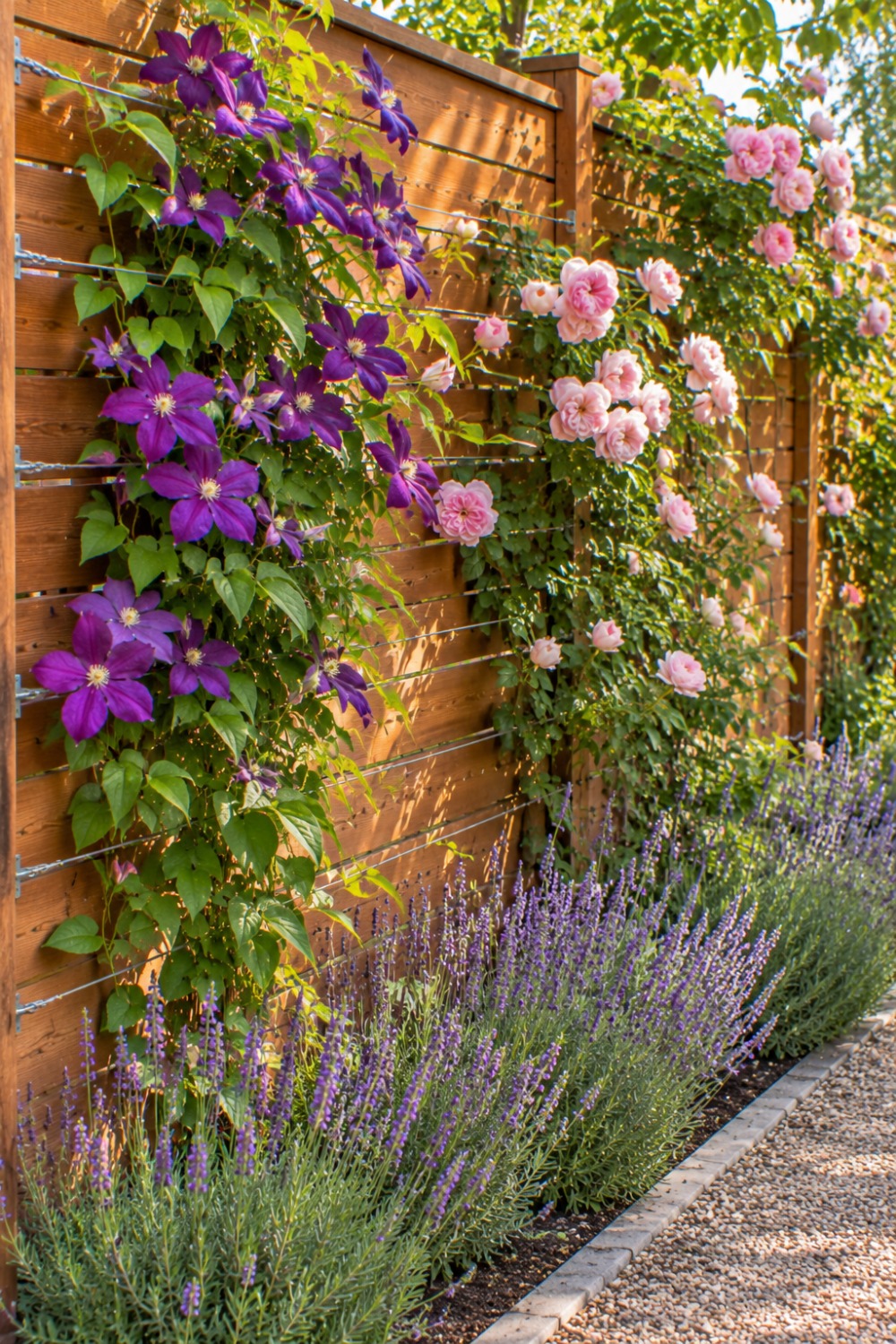
Climbing plants cover a fence with leaves and flowers while taking up almost no ground space.
Clematis and climbing roses are classic choices, and star jasmine is lovely in warm climates.
Run wires or trellis panels a few inches off the fence, so air can flow and the boards stay dry. Avoid aggressive vines that can damage fences or spread into neighbors’ yards.
How to do it:
- Fix horizontal wires or trellis panels about 2 to 4 inches from the fence.
- Plant vines about a foot away from the fence base.
- Tie in new stems as they grow.
3. Line the Fence With Tall Ornamental Grasses
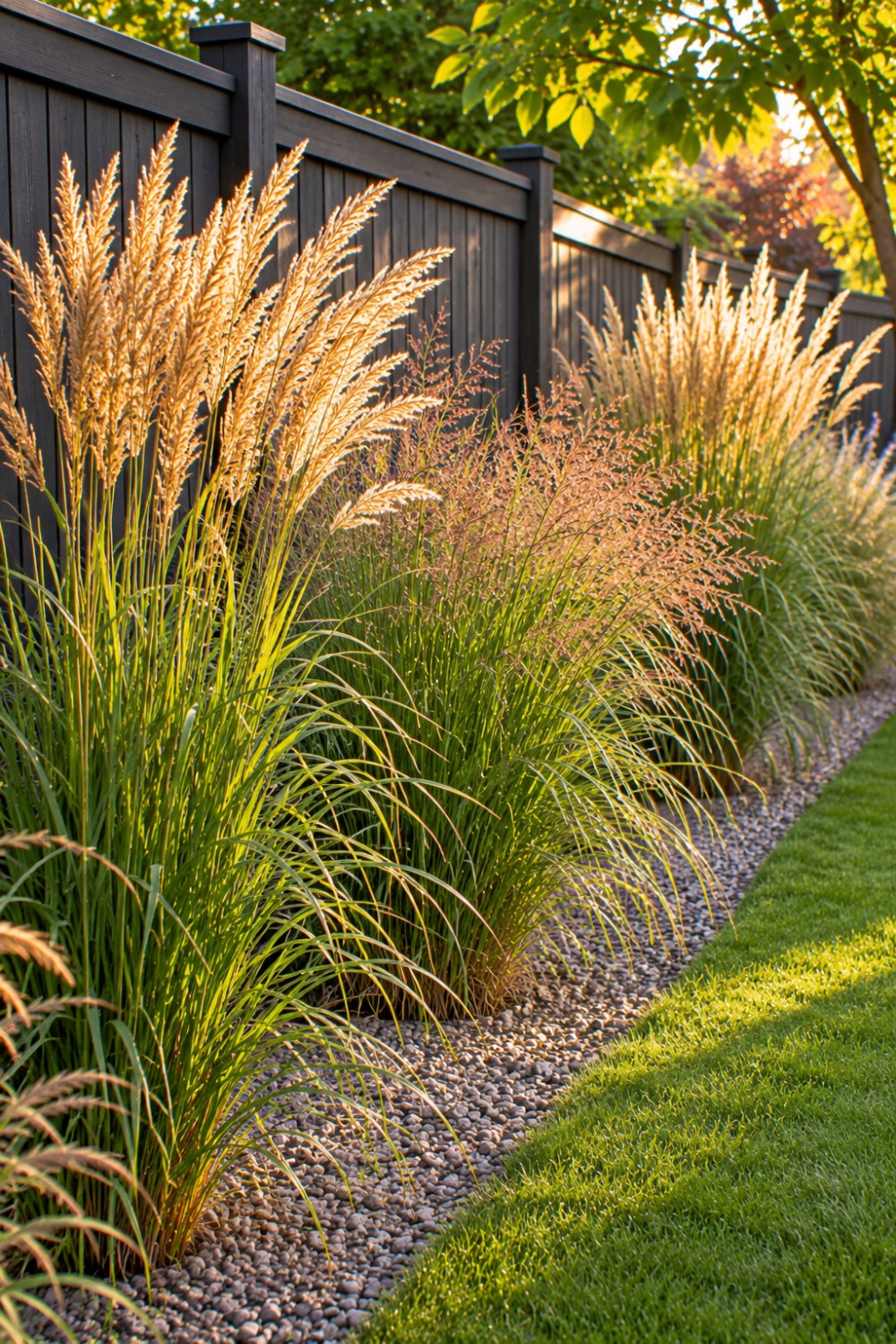
Tall grasses make a soft, moving screen that hides a fence without looking heavy.
Feather reed grass and switchgrass grow tall and upright, and their plumes catch the light beautifully.
They need little care beyond a yearly cutback in late winter. Check that the grasses you choose aren’t invasive in your region.
How to do it:
- Plant grasses in a single row or a staggered double row.
- Space them for their mature width.
- Cut them back in late winter before new growth starts.
4. Espalier Fruit Trees Flat Against the Fence
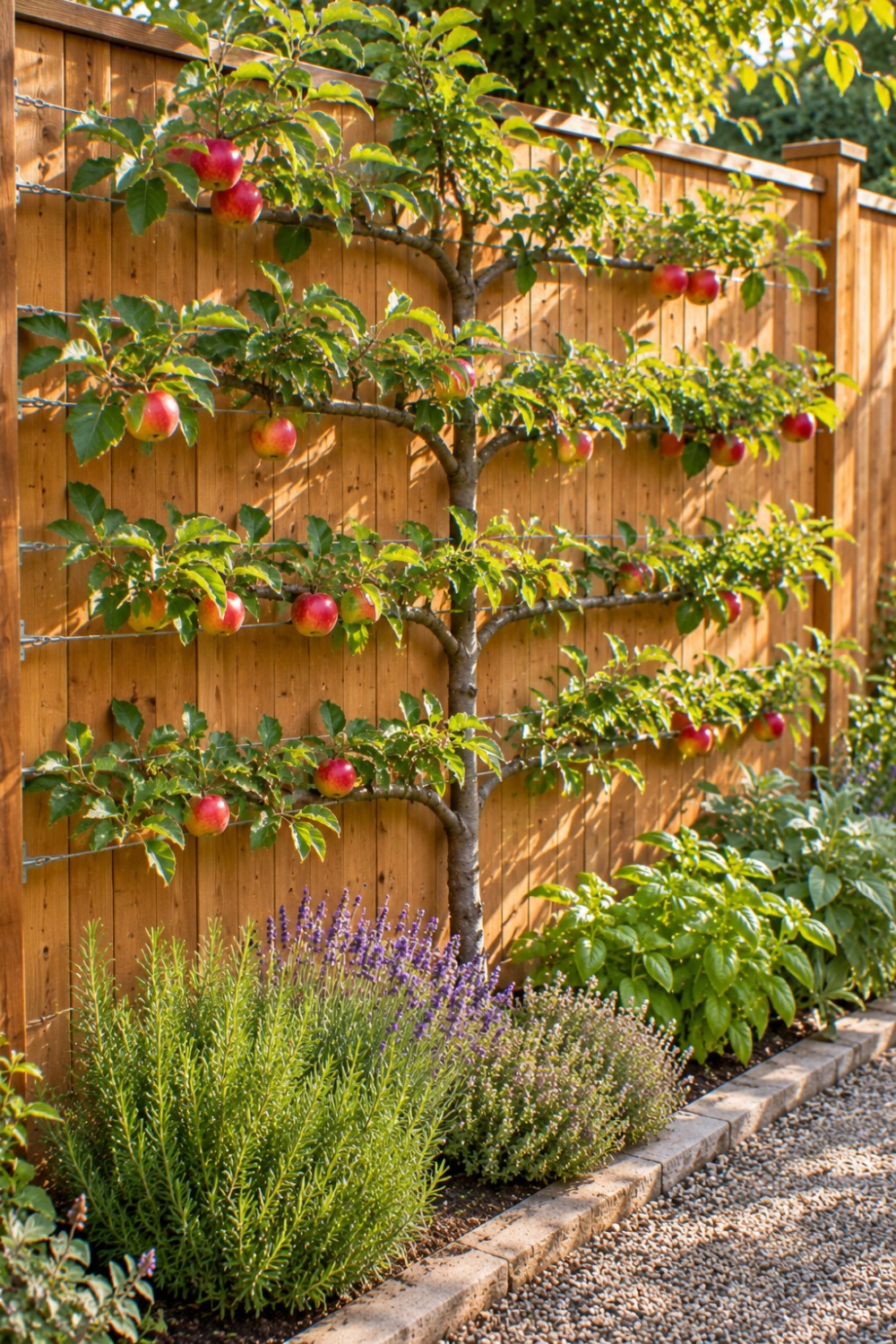
Espalier is the old art of training a tree to grow flat against a wall or fence.
Apples and pears are the classic choices, giving you fruit and a living work of art in a narrow strip.
It takes a few years of pruning, but the result is one of the most charming fence features you can grow.
How to do it:
- Install sturdy horizontal wires about 18 inches apart.
- Plant a young tree and tie the side branches along the wires.
- Prune in summer to keep the shape and encourage fruit.
5. Hang Planters and Window Boxes on the Fence
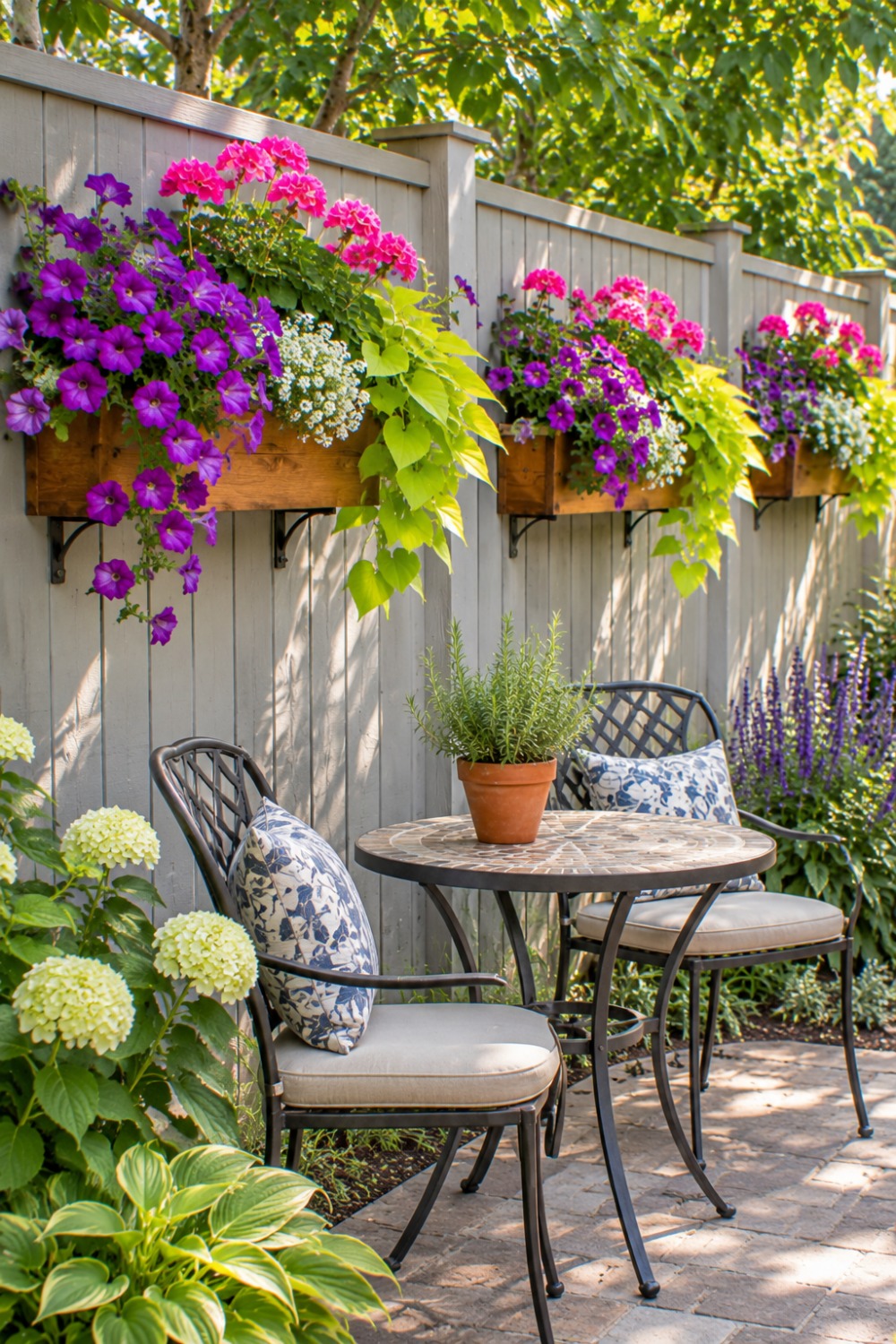
When there’s no room to plant at ground level, go vertical.
Window boxes and hanging planters bring flowers right up to eye level and break up long stretches of fence.
They’re perfect for small yards, renters and patios with paved ground.
How to do it:
- Use strong brackets fixed into fence posts or rails.
- Choose planters with drainage holes and fill them with potting mix.
- Water often in summer, since small containers dry out quickly.
6. Hide a Chain Link Fence With Evergreen Shrubs
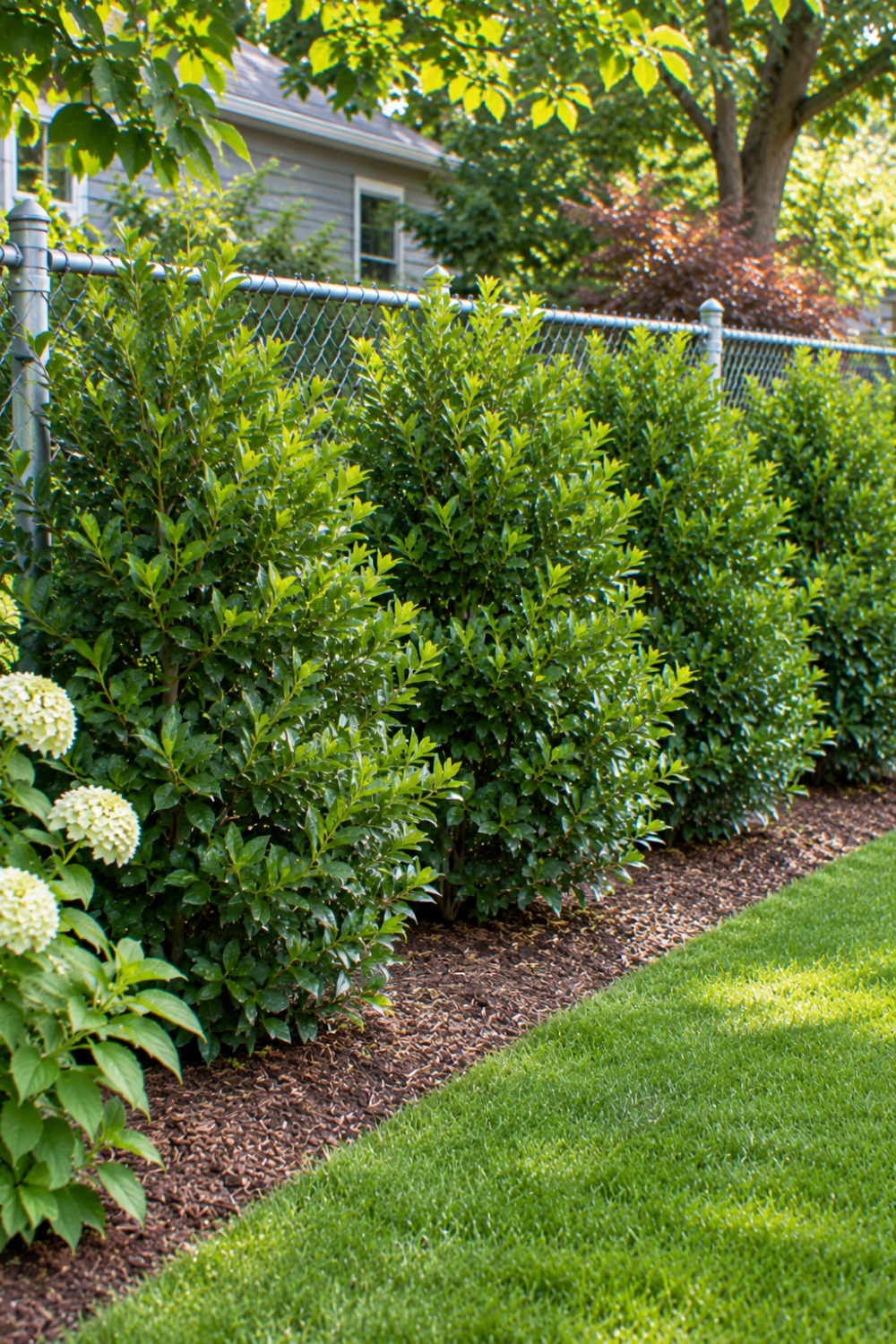
Chain link fences are practical but rarely pretty.
A row of dense evergreen shrubs in front hides the wire all year and adds privacy.
Choose shrubs that suit your space when fully grown, so you’re not constantly cutting them back.
How to do it:
- Pick shrubs suited to your climate and the fence’s height.
- Plant them far enough from the fence to reach full width.
- Water well during the first two summers.
7. Lay a Gravel Strip to End Mowing Struggles
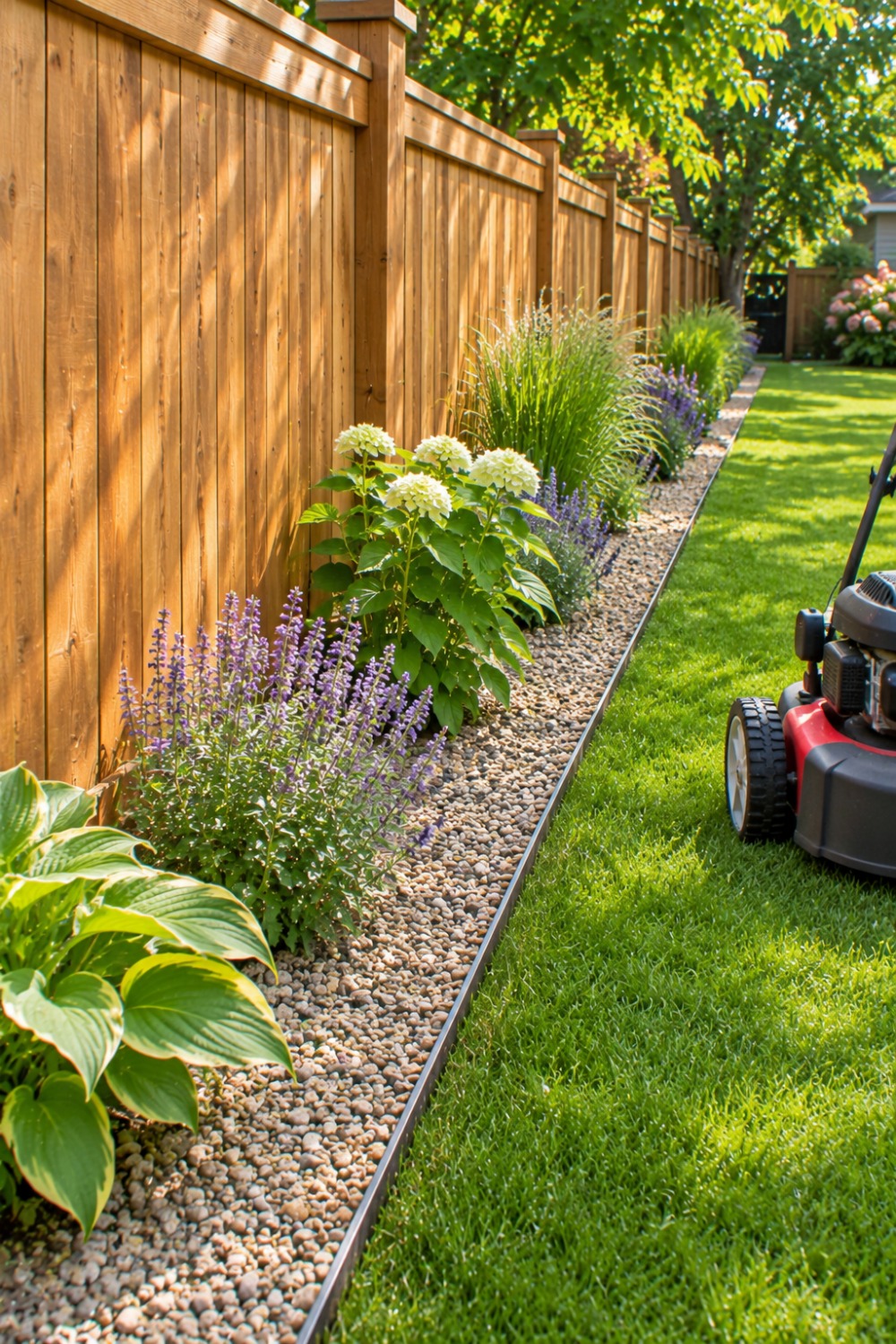
The narrow strip of grass along a fence is a pain to mow and trim.
A gravel strip at the base gives the mower a clean edge and keeps string trimmers away from fence boards.
It also stops soil from splashing onto the fence and helps prevent rot.
How to do it:
- Remove a strip of turf about 12 inches wide.
- Lay landscape fabric and install edging on the lawn side.
- Fill with pea gravel about 2 inches deep.
8. Plant a Row of Columnar Trees for Privacy
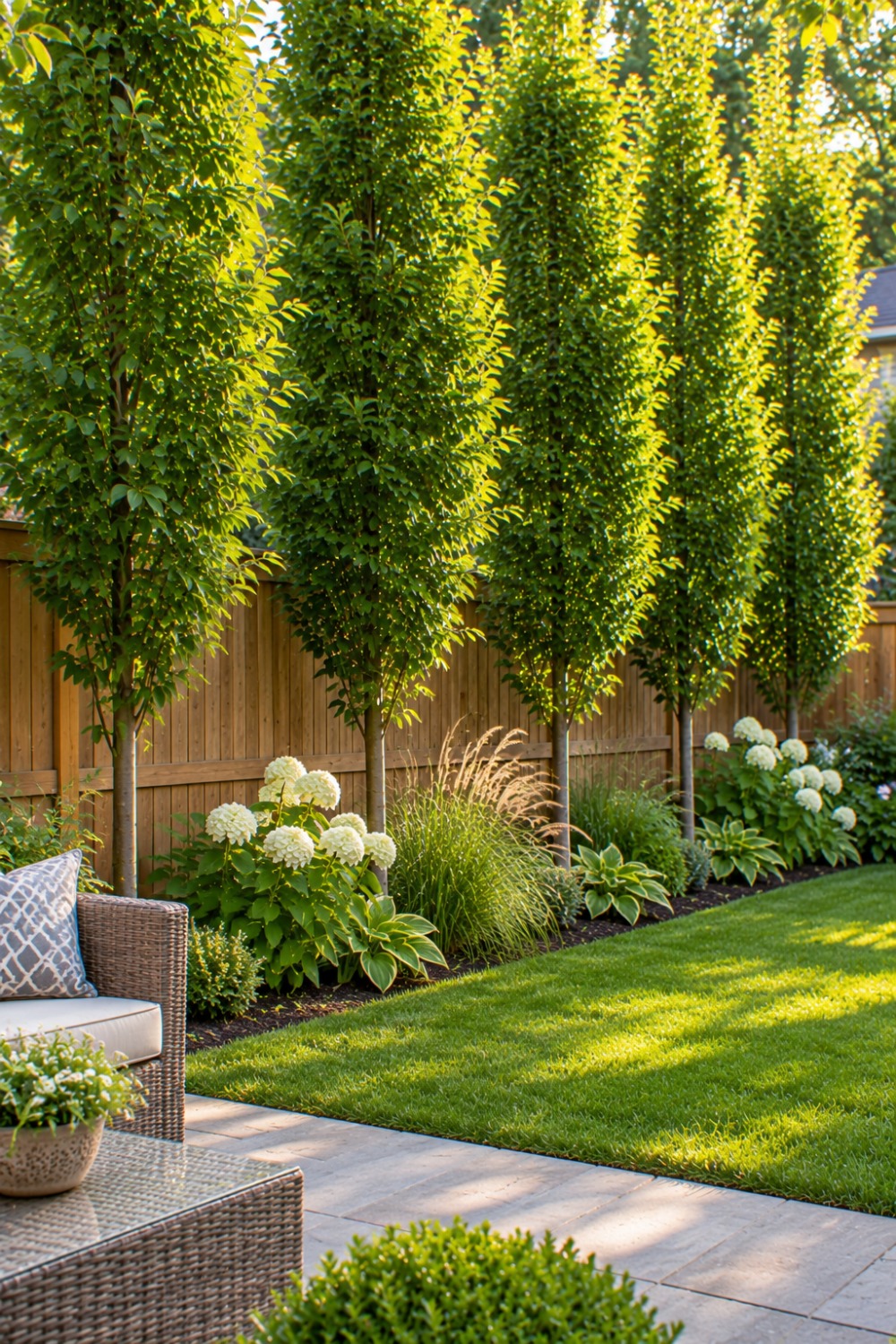
When your fence isn’t quite tall enough, narrow trees add privacy above it.
Columnar varieties grow tall but stay slim, so they fit in narrow borders without shading the whole yard.
Hornbeam, arborvitae and columnar oaks are popular choices in many regions.
How to do it:
- Check the tree’s mature height and width before buying.
- Space trees so their canopies will just touch.
- Plant far enough from the fence to protect the foundation and footings.
9. Grow Vegetables and Herbs Along a Sunny Fence
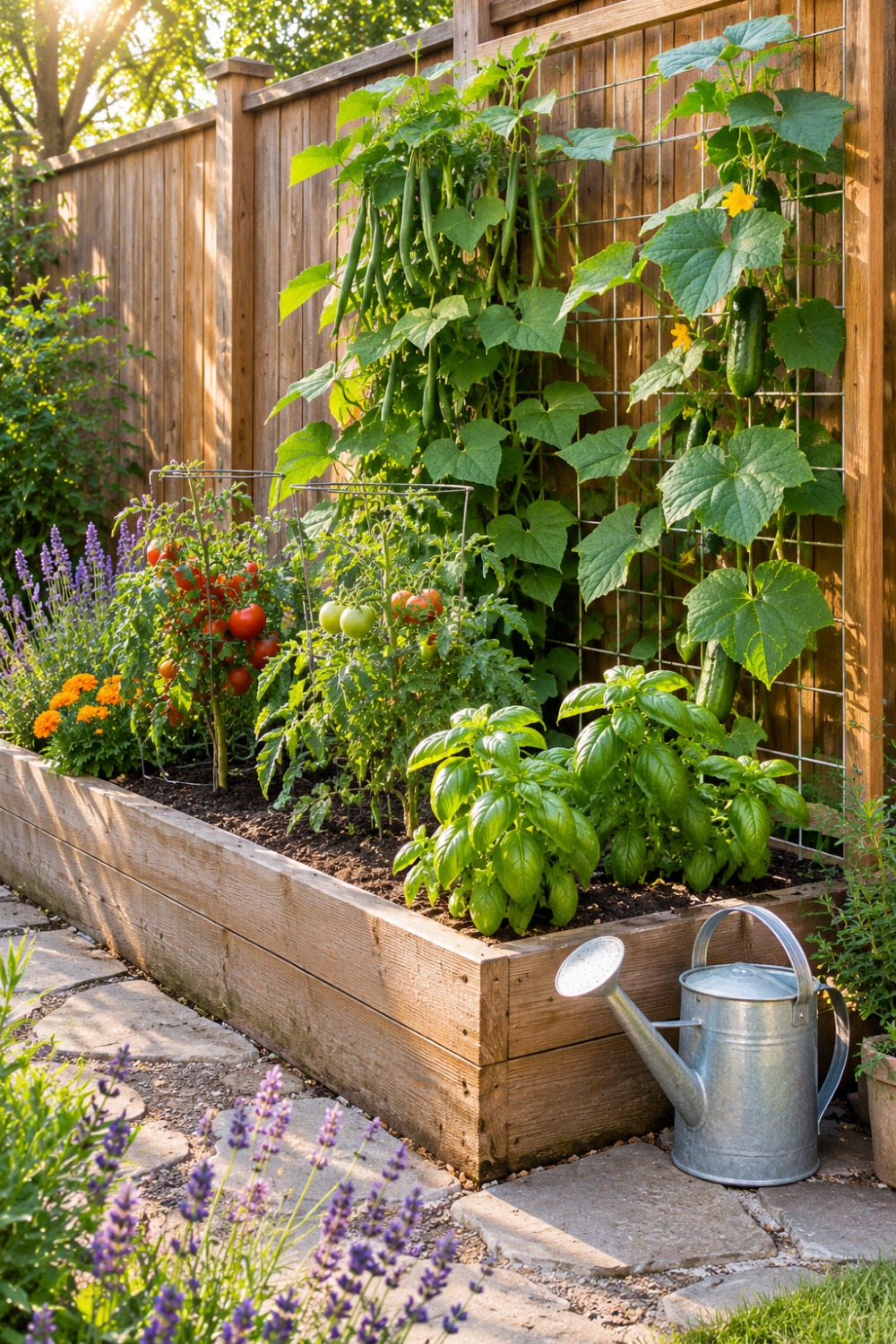
A sunny fence is perfect for growing food.
Climbing crops like beans, peas and cucumbers can scramble up a trellis panel, while herbs and lettuces fill the front.
The fence also shelters plants from wind and holds warmth, helping crops ripen.
How to do it:
- Choose a fence that gets at least six hours of sun.
- Build a raised bed or improve the soil with compost.
- Add a trellis panel for climbers and plant low crops in front.
10. Fill a Shady Fence With Hostas and Ferns
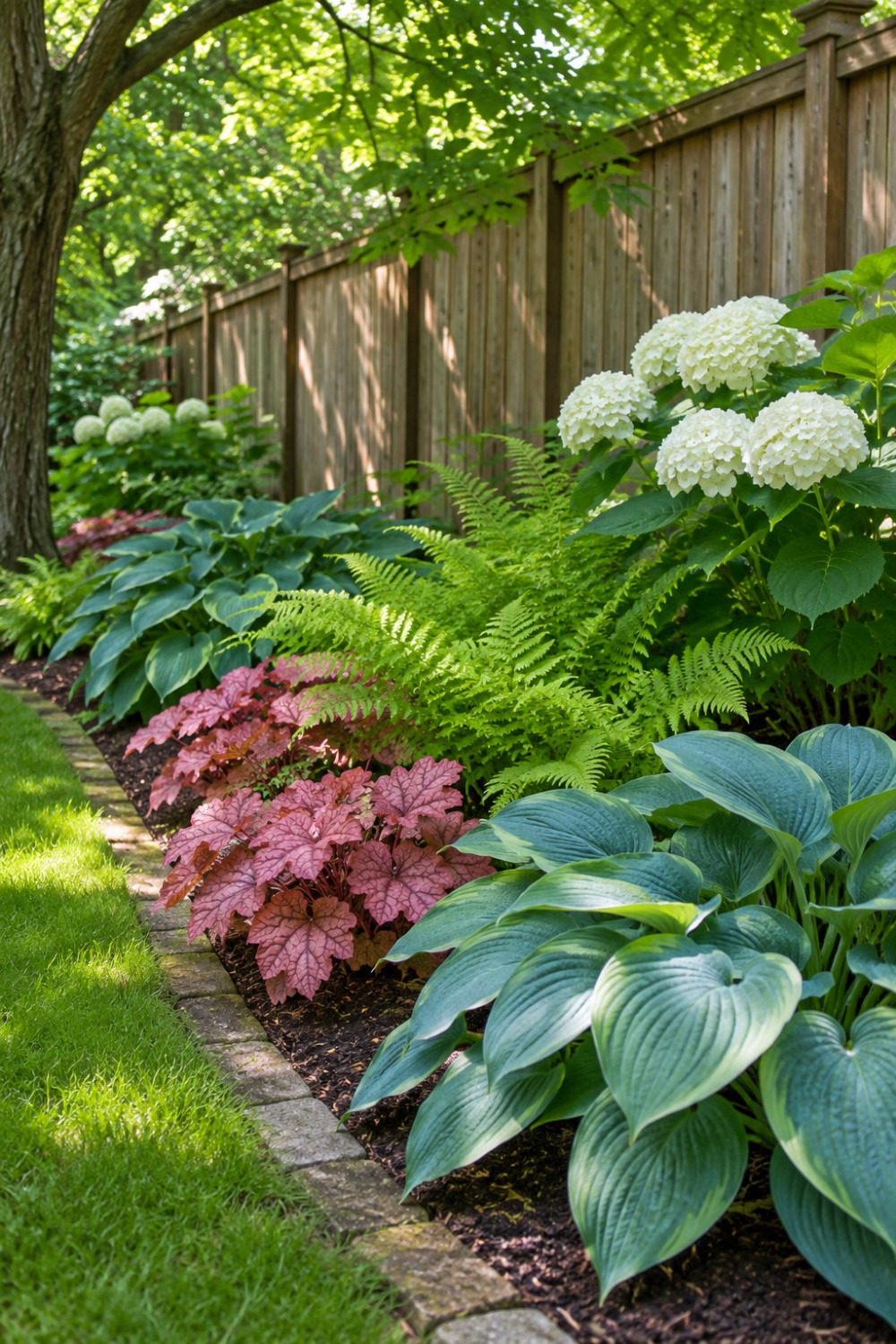
North-facing fences or those under trees can still look lush.
Hostas, ferns, heuchera and hydrangeas love shade and bring texture and soft color.
Mix leaf sizes and colors so the border looks full even without many flowers.
How to do it:
- Improve the soil with compost to hold moisture.
- Plant larger shrubs at the back and smaller plants in front.
- Mulch well and water during dry spells.
11. Add String Lights Along the Top of the Fence
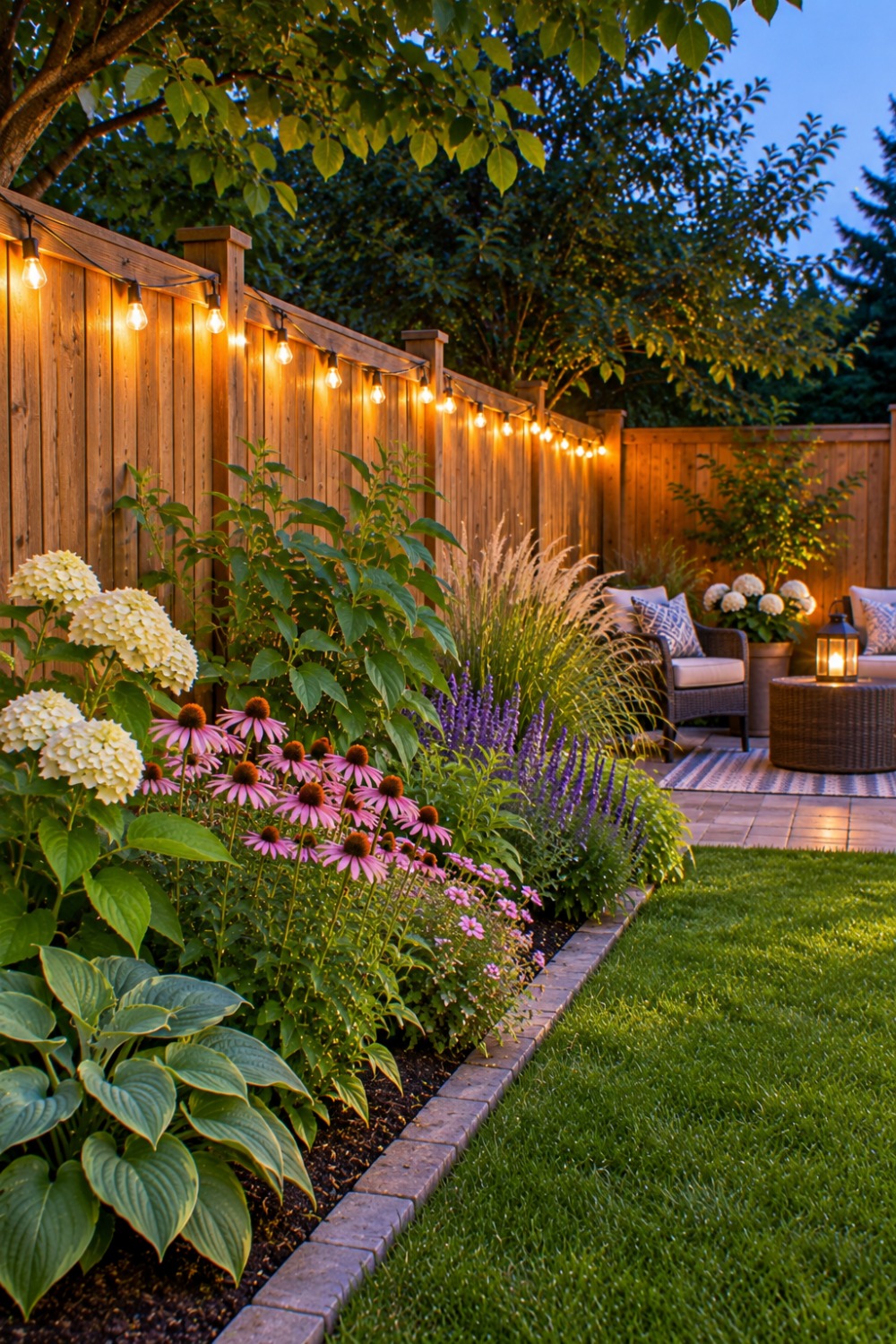
Lighting turns a fence line into a cozy backdrop for evenings outdoors.
String lights along the top rail add a warm glow, while small spotlights can wash plants with light.
Solar options are easy to install and need no wiring.
How to do it:
- Fix hooks or clips along the top of the fence.
- Run lights with a gentle drape for a relaxed look.
- Use a timer or solar lights so they come on at dusk.
12. Paint the Fence a Dark Color to Make Plants Pop
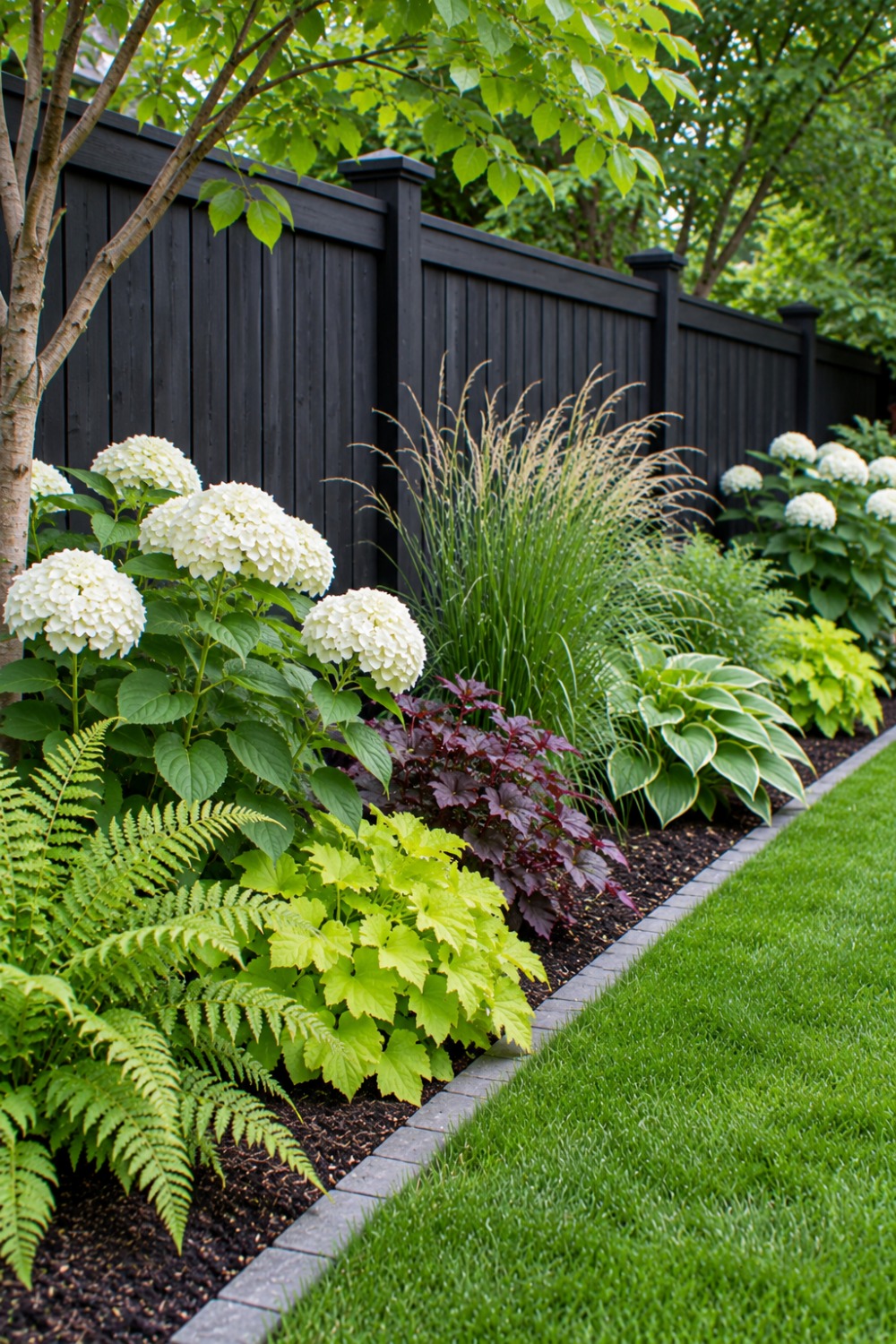
Painting a fence in a dark color makes it recede, so the plants in front seem to glow.
Charcoal, deep green and black all work well, especially in small yards.
It’s a simple weekend job that changes the whole feel of a garden.
How to do it:
- Clean the fence and let it dry.
- Use an exterior paint or stain made for wood.
- Paint before planting, or gently tie plants back while you work.
13. Repeat One Plant for a Clean, Simple Look
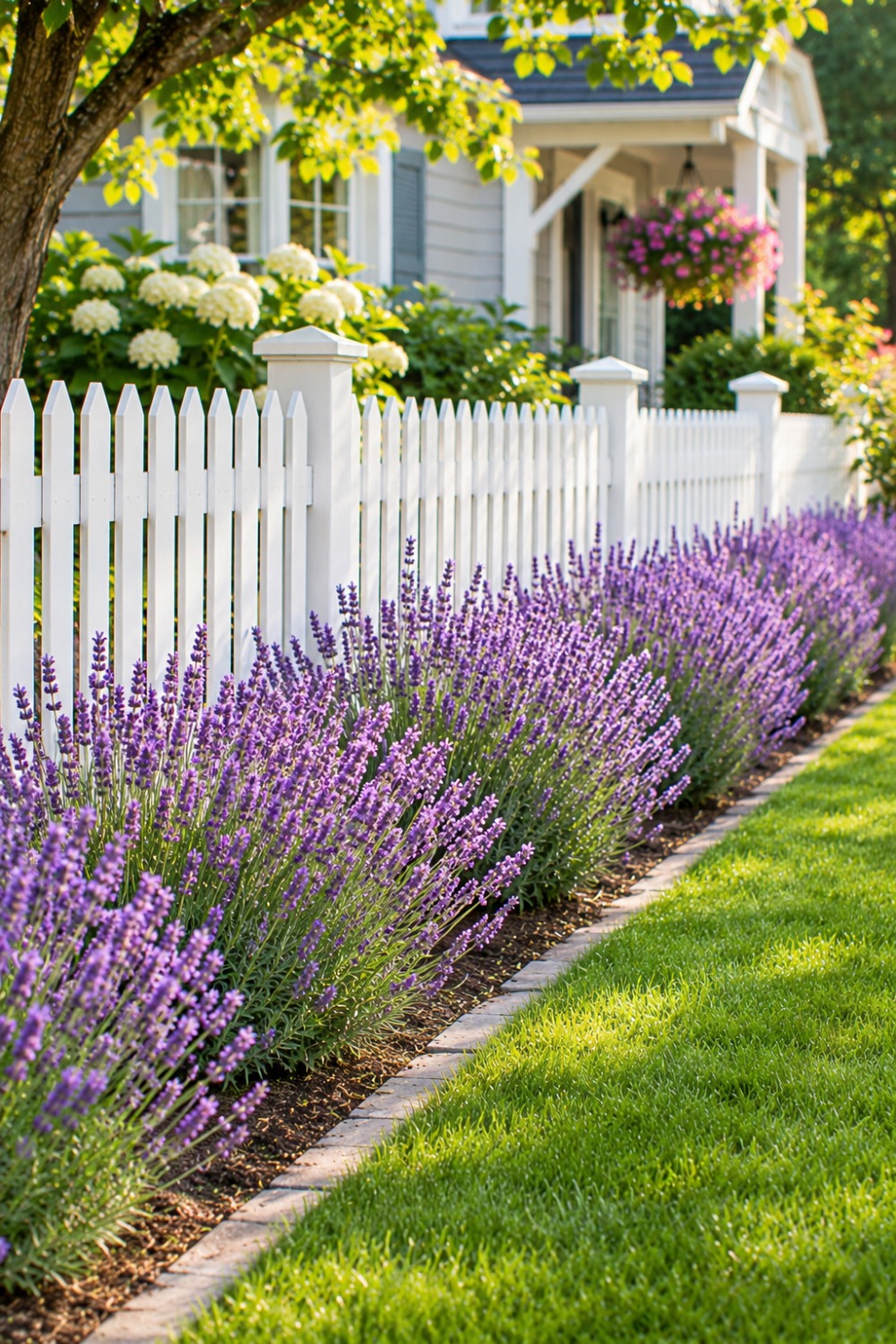
Sometimes the simplest idea is the most striking.
Planting a single type along the whole fence, such as lavender, boxwood or ornamental grass, creates a calm, unified line.
It’s easy to maintain and suits both modern and traditional homes.
How to do it:
- Choose one plant that suits your light and climate.
- Space plants evenly along the fence.
- Trim them all at the same time to keep the line tidy.
Frequently Asked Questions
What should I plant along a fence line?
It depends on the job. Climbing vines cover the fence, shrubs and columnar trees add privacy, perennials add color, and grasses add soft movement.
How far from a fence should I plant?
Leave at least a foot for most perennials and shrubs, and more for trees, so air can circulate and you can reach the fence for repairs.
What grows fast along a fence for privacy?
Tall ornamental grasses and fast-growing evergreen shrubs fill in quickly. Avoid invasive fast-growers such as some bamboos and vines, which can spread into neighbors’ yards.
Can I grow plants on my neighbor’s side of the fence?
Only with their permission. Keep plants on your own side and check local rules on property lines and shared fences.
Final Thoughts: Soften the Edges, Grow the Garden
A fence line is often the biggest blank space in a yard, which makes it a great place to start.
Begin with the simplest fixes: a gravel strip at the base and a narrow border of tough perennials.
Then add height where you need it, with vines on wires, tall grasses or a row of slim trees.
Think about light first. Sunny fences suit flowers and vegetables, while shady fences are perfect for hostas and ferns.
Leave a little space between plants and the fence for air and repairs, and always keep plants on your side of the boundary.
Finish with a little lighting, and your fence will become part of the garden instead of the edge of it.
For more front garden inspiration, explore our small front yard landscaping ideas.
Step by step, those bare boards will disappear into green.