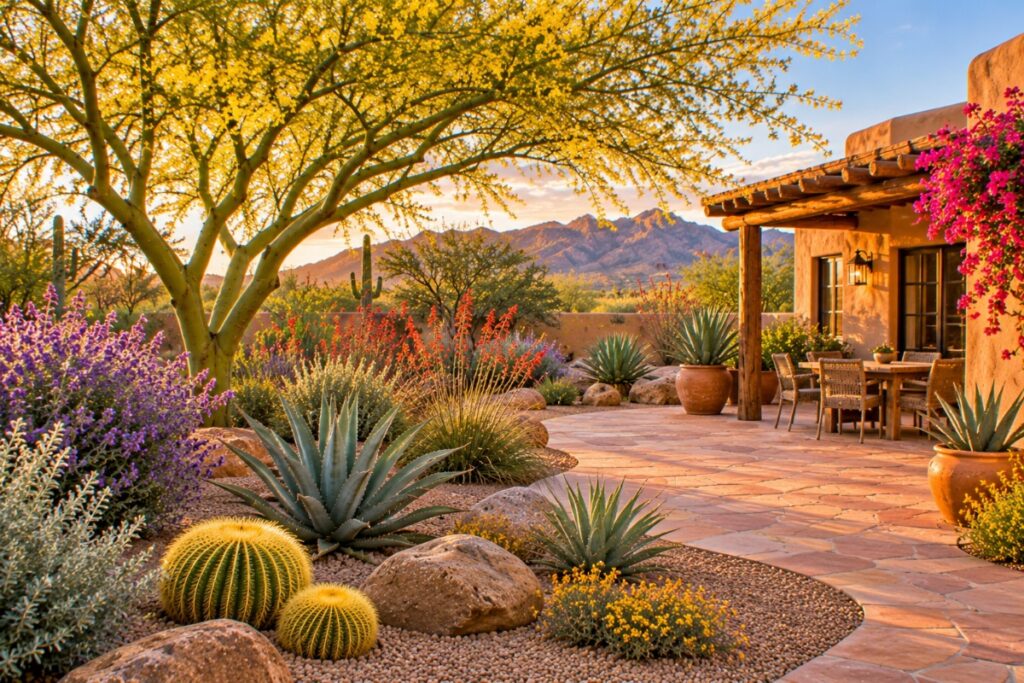
Picture a warm evening on the patio, the sky turning pink, an agave glowing in the last light and a hummingbird darting past a flowering desert willow.
A desert yard can be every bit as lush and lively as a green one. It just follows different rules.
The secret to desert landscaping isn’t covering everything in gravel. It’s choosing plants that love the heat, catching every drop of rain and creating shade where you need it most.
These 17 desert landscaping ideas will help you build a yard that thrives in the sun and uses far less water. For more stone-based designs, see our front yard landscaping ideas with rocks.
Desert Plants Worth Knowing
| Plant | Type | Highlight |
|---|---|---|
| Palo verde (Parkinsonia) | Tree | Green bark and bright yellow spring flowers |
| Desert willow (Chilopsis linearis) | Tree | Orchid-like summer blooms loved by hummingbirds |
| Agave | Succulent | Bold sculptural rosettes |
| Red yucca (Hesperaloe parviflora) | Perennial | Tall coral flower spikes for months |
| Texas sage (Leucophyllum) | Shrub | Silver leaves and purple flowers after rain |
| Desert marigold (Baileya multiradiata) | Wildflower | Cheerful yellow daisies most of the year |
1. Start With Native Desert Plants
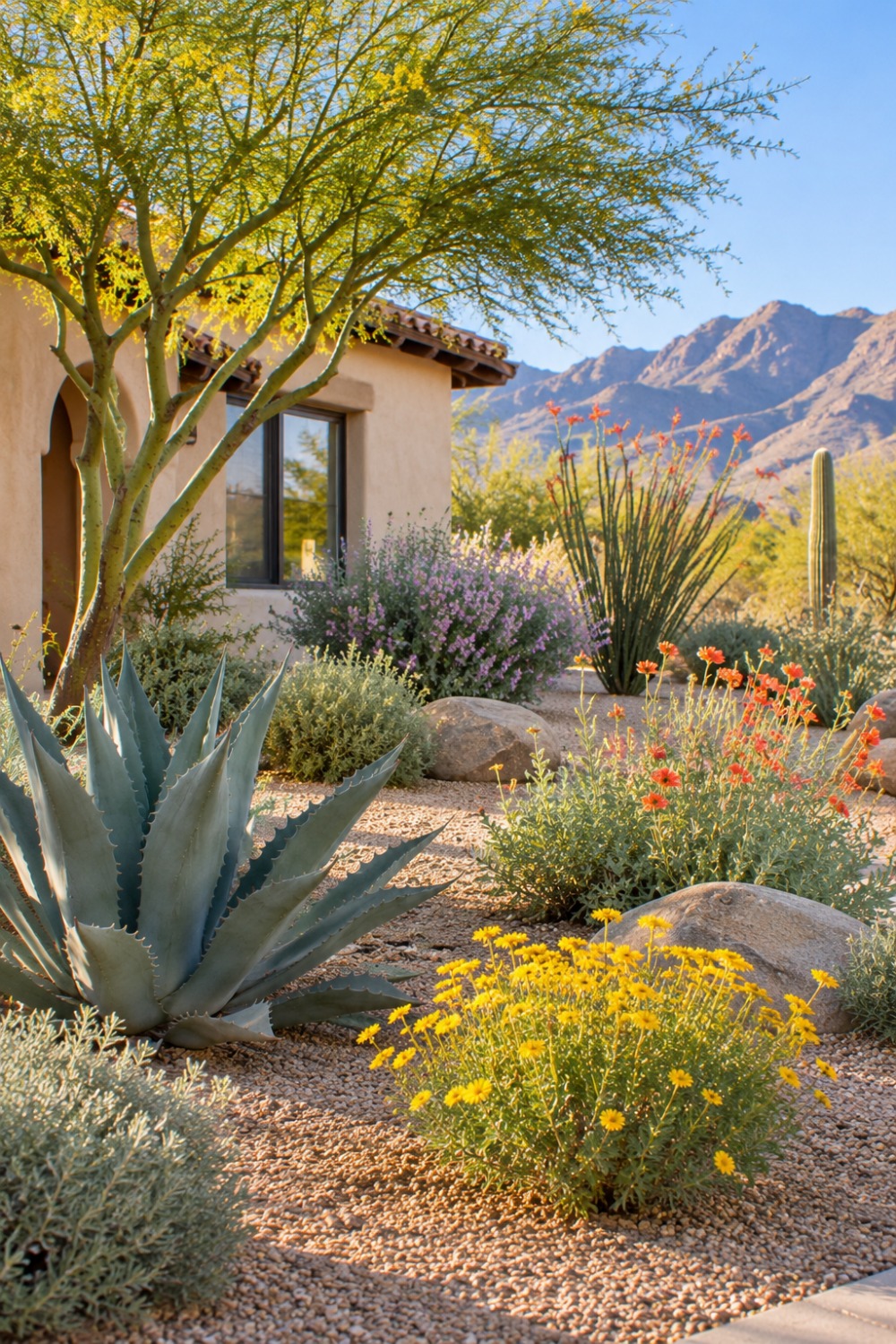
Plants native to your desert region are already adapted to the heat, the soil and the rainfall.
Once established, many need little extra water and attract local birds, bees and butterflies.
Desert regions differ a lot in cold and rainfall, so ask a local native plant nursery or extension office which plants suit your area.
How to do it:
- Make a list of native plants for your region and elevation.
- Choose a mix of trees, shrubs, succulents and flowers.
- Plant in autumn when possible, so roots grow through the cooler months.
2. Plant a Desert Shade Tree Like Palo Verde
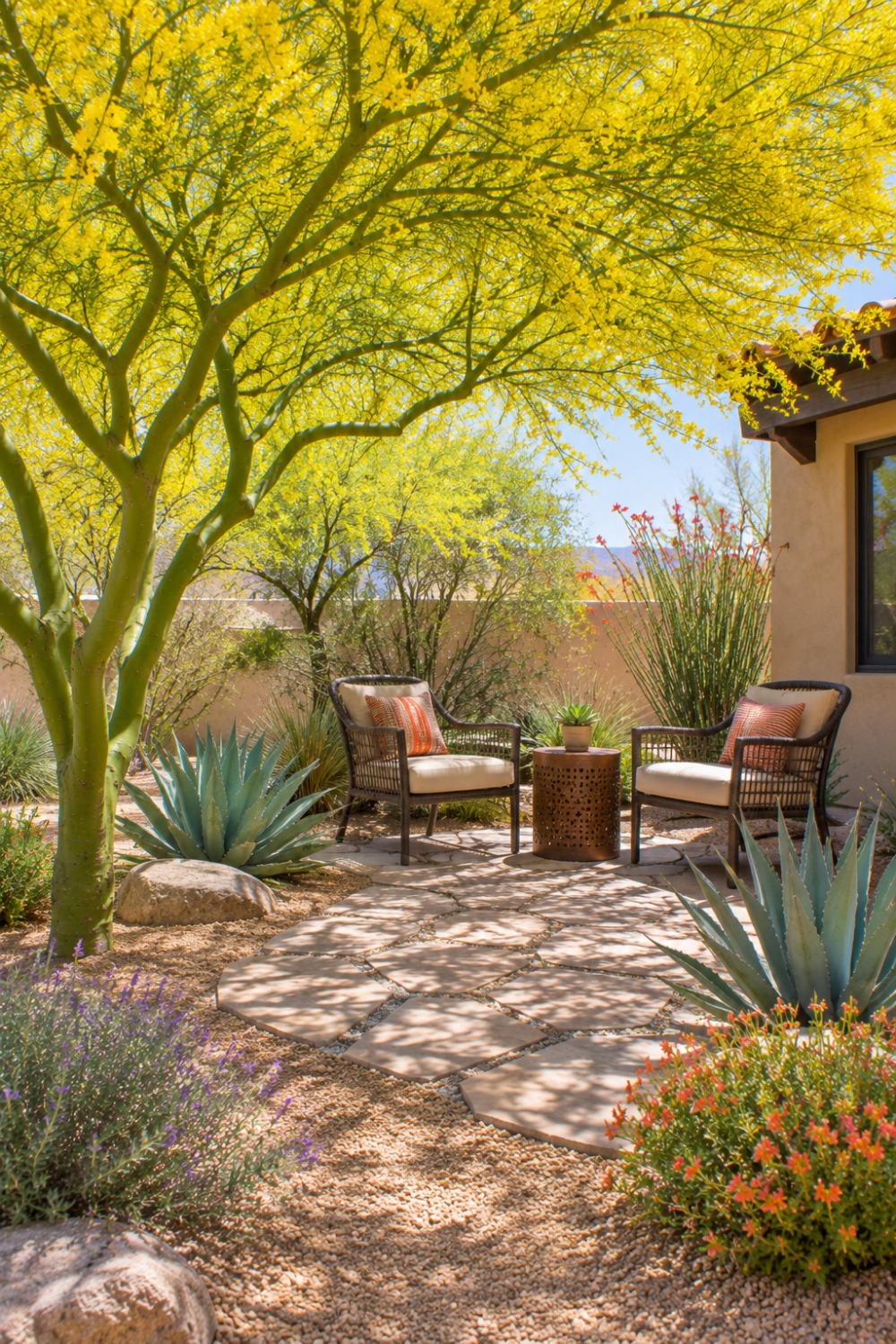
Shade is the most valuable thing in a desert yard.
A well-placed tree cools the ground, the house and anyone sitting beneath it.
Palo verde, desert willow and native mesquite give light, filtered shade and handle the heat with little water once established.
How to do it:
- Plant on the west or south side of a patio or house for the best afternoon shade.
- Water deeply but infrequently to encourage deep roots.
- Keep trees well away from foundations and pools.
3. Cover the Ground With Decomposed Granite
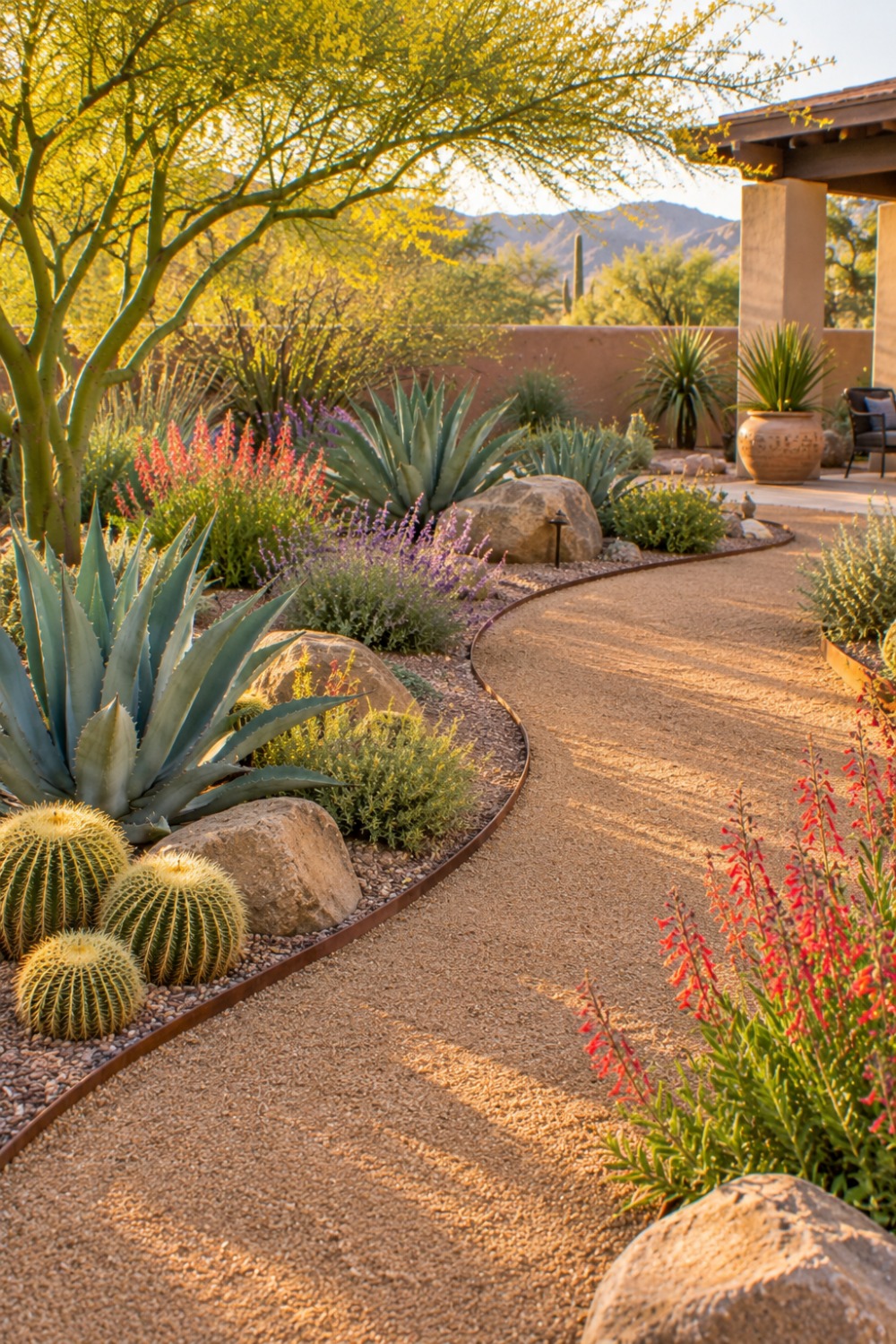
Decomposed granite, often called DG, is fine crushed rock that packs down into a soft, natural surface.
It looks like desert ground, reflects less heat than pale gravel and lets rain soak through.
Choose a color that matches your local soil or house for a seamless look.
How to do it:
- Lay 2 to 3 inches of DG over leveled ground.
- Water lightly and compact it with a tamper or roller.
- Use steel or stone edging to keep it in place.
4. Build Basins and Swales to Catch the Rain
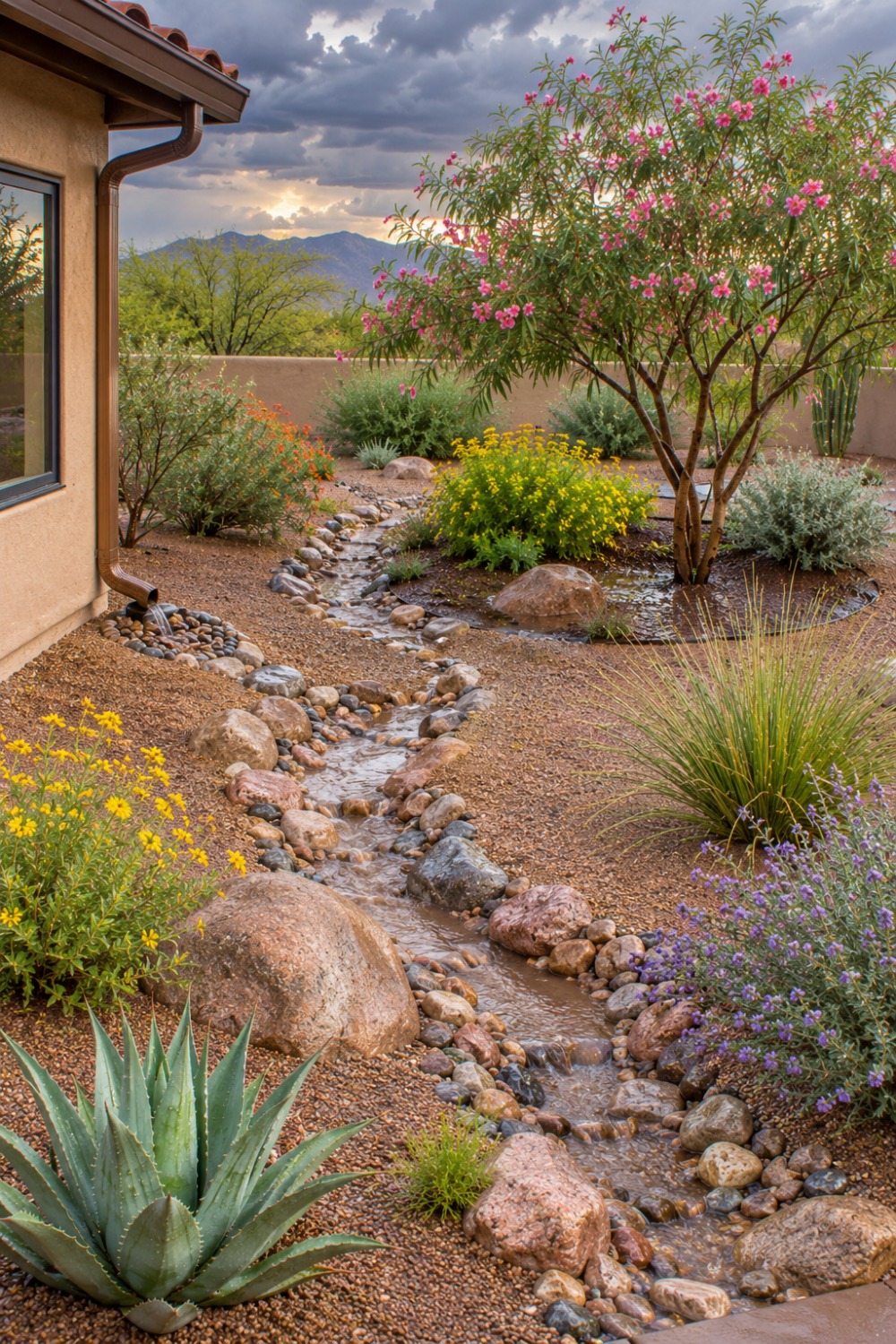
In the desert, every drop of rain matters.
Shallow basins around trees and gently curving swales guide runoff from roofs and paths straight to your plants.
After a summer storm, you’ll see the plants in those basins grow faster and stay greener.
How to do it:
- Watch where water flows during rain.
- Dig shallow basins around trees and connect them with gentle swales.
- Line steeper sections with rock so the soil doesn’t wash away.
5. Group Plants by Water Needs
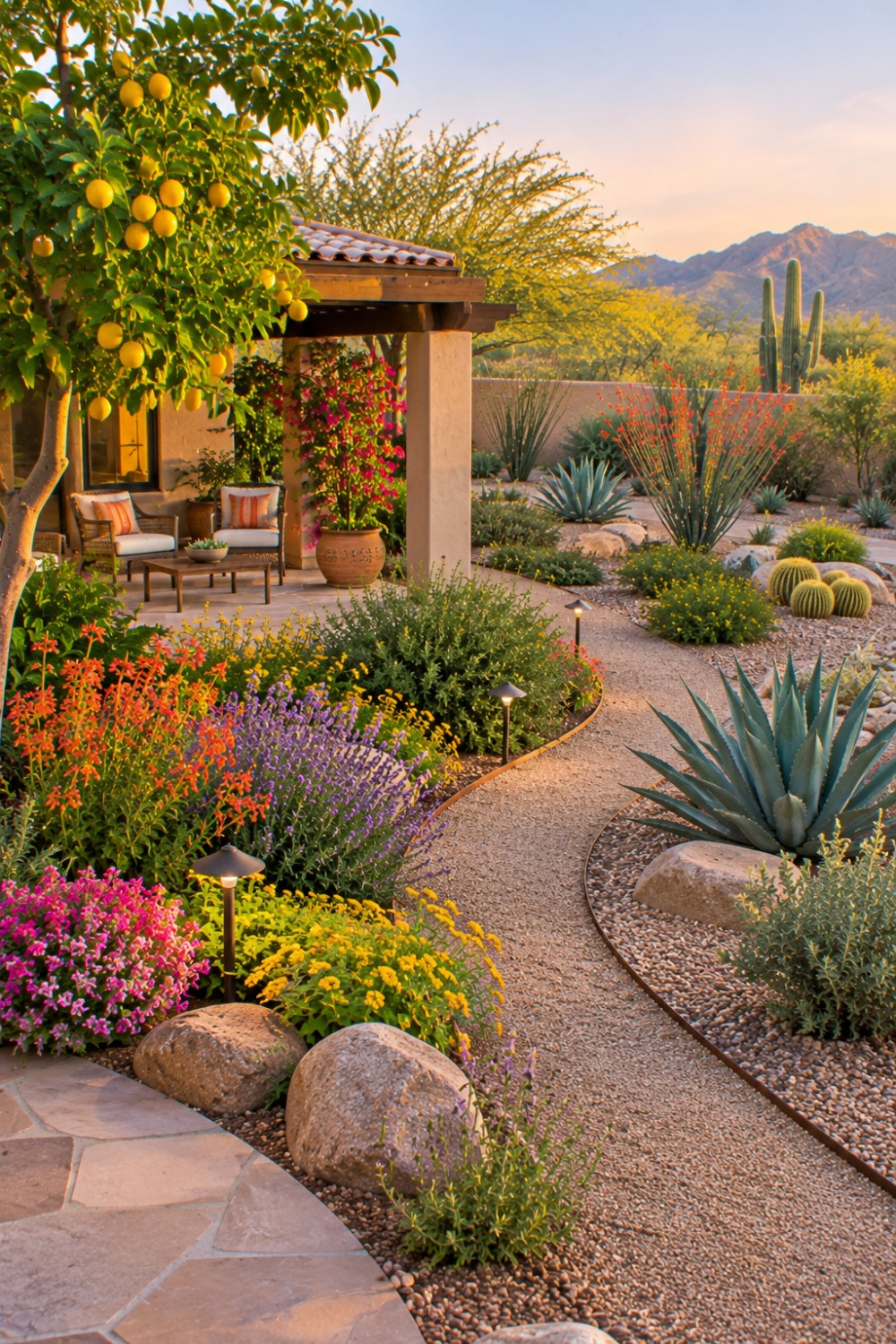
Garden designers call it hydrozoning: putting plants with similar water needs together.
Keep the few thirstier plants close to the house and patio, where you’ll enjoy them most.
Further out, use the toughest desert plants that need little or no extra water once established.
How to do it:
- Sort your plant list into low, moderate and higher water needs.
- Place higher-water plants near the house and lowest-water plants on the edges.
- Run each zone on its own irrigation line.
6. Install Drip Irrigation on a Timer
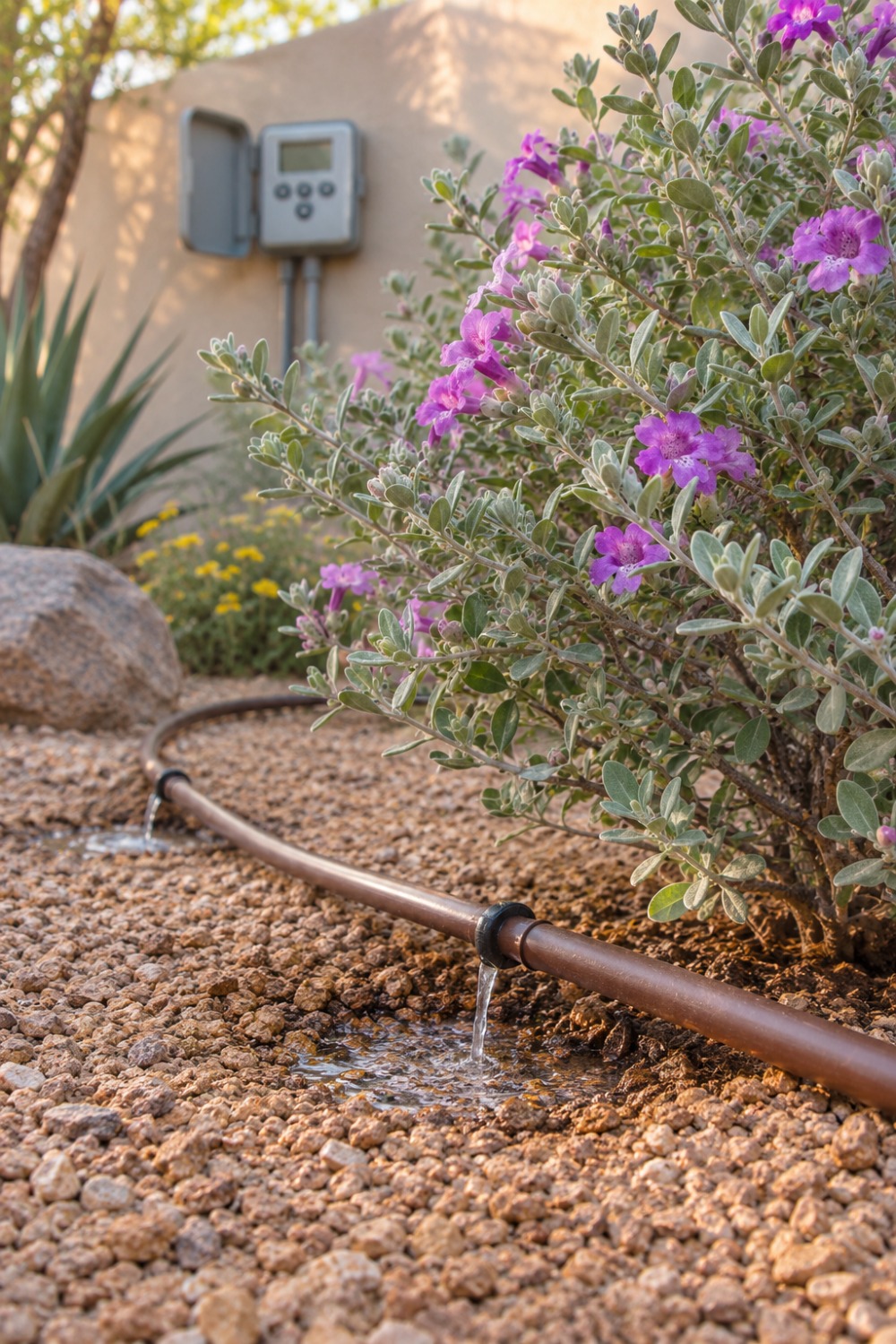
Drip irrigation delivers water slowly and directly to the roots, so less is lost to evaporation and runoff.
A simple timer means plants get water at the coolest time of day, even when you’re away.
As plants mature, you can water less often and move emitters out toward the drip line.
How to do it:
- Lay drip tubing along each planting zone.
- Add emitters at the base of each plant, with more for larger plants.
- Set the timer to water deeply in the early morning, and adjust by season.
7. Make Agaves and Yuccas Your Sculptural Anchors
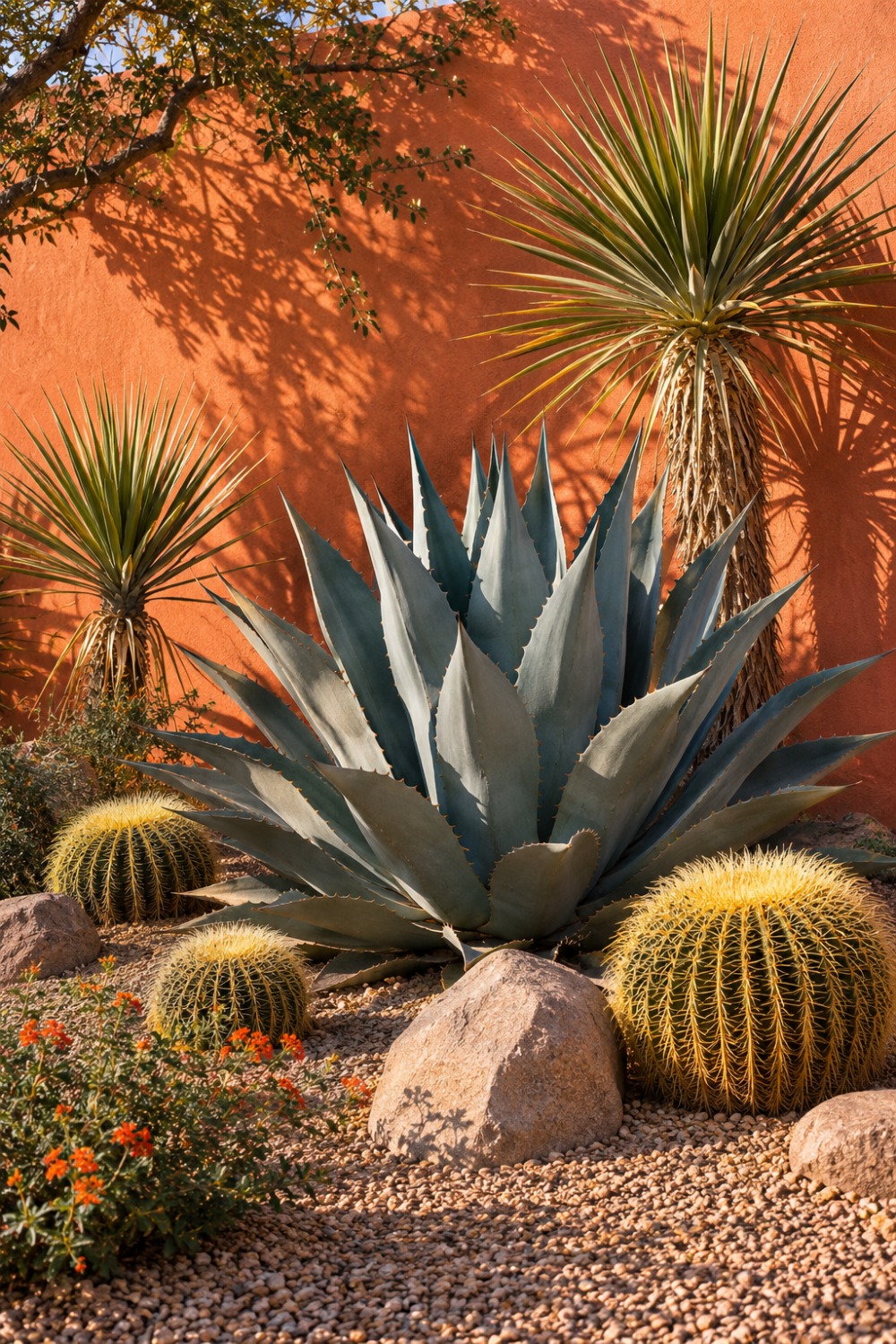
Agaves and yuccas give a desert garden its bold, architectural look.
Their strong rosette shapes act like living sculpture and look striking against plain walls or gravel.
Many have sharp spines, so plant them well back from paths, gates and play areas.
How to do it:
- Choose a size that fits the space when fully grown, since some agaves get very large.
- Plant in well-drained soil, slightly raised if your soil is heavy.
- Space them so each rosette stands out on its own.
8. Plant a Cactus Garden With Varied Shapes
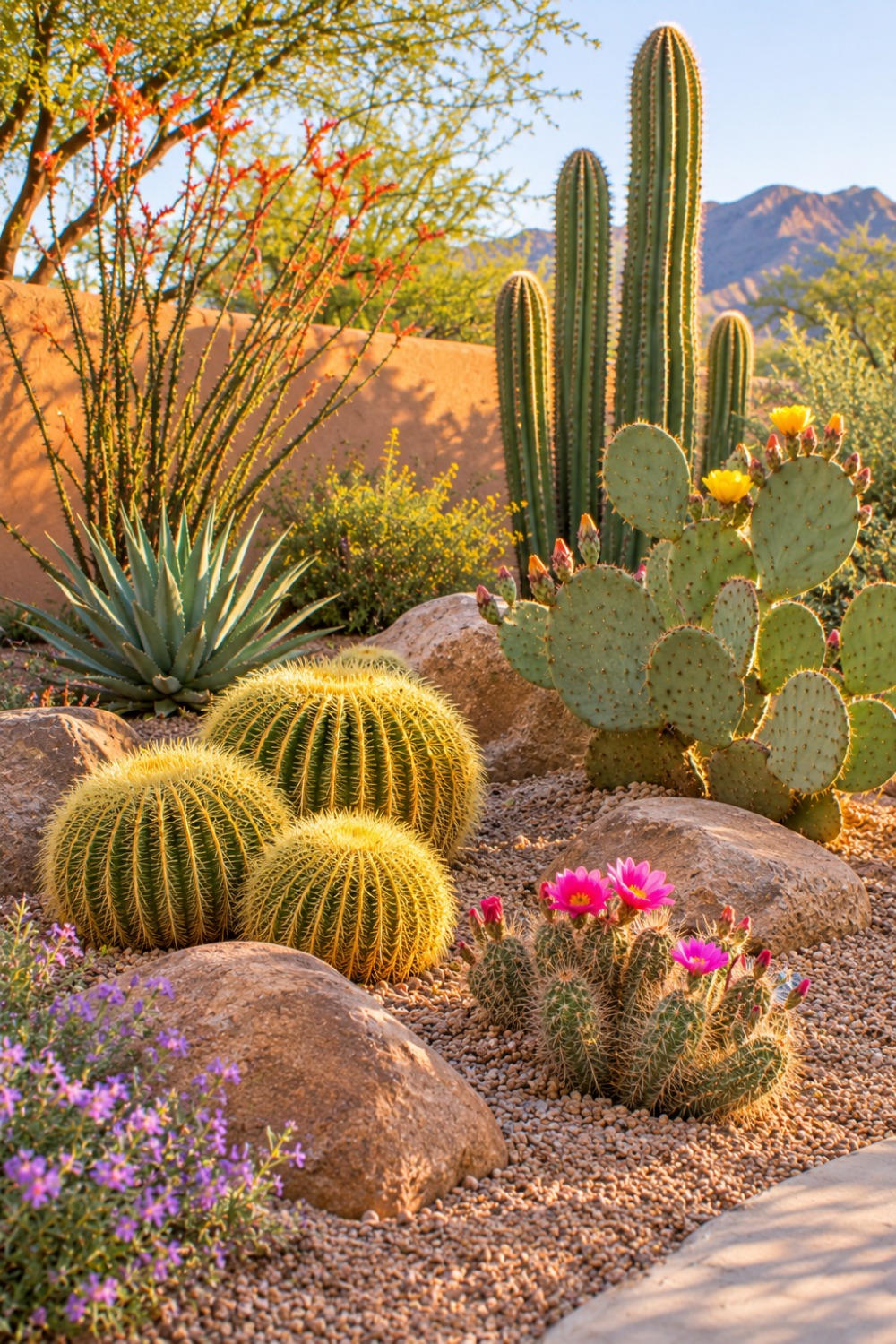
A cactus garden is all about contrast in shape: round barrels, tall columns and flat paddles.
Grouping different forms together creates a garden that looks interesting even without flowers.
When they do bloom, many cacti put on a spectacular show of bright flowers in spring.
How to do it:
- Arrange plants in pots on the ground first to test the layout.
- Handle cacti with thick gloves or folded newspaper.
- Plant in fast-draining soil and wait a week before watering.
9. Add Desert Wildflowers for Spring Color
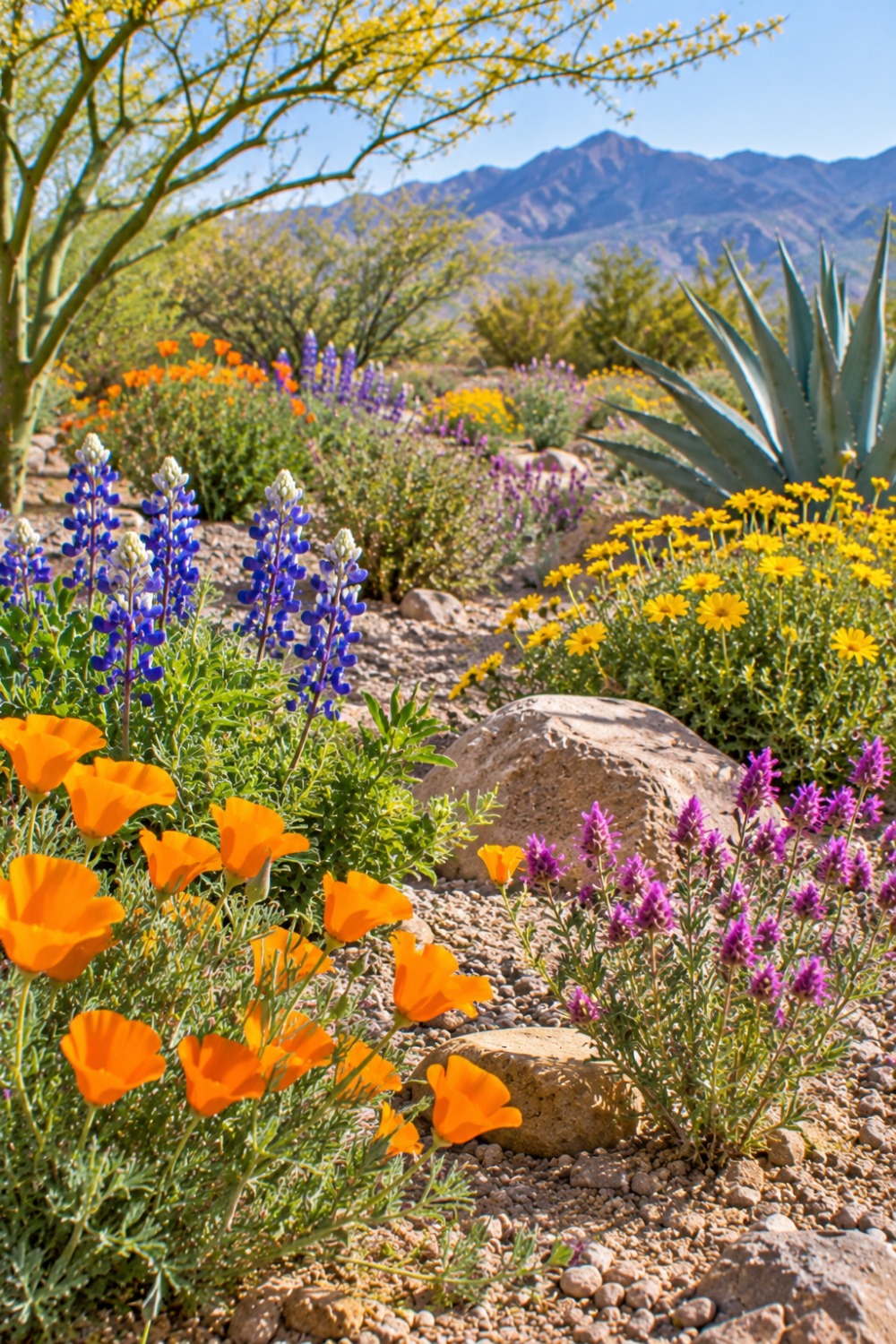
After winter rain, the desert bursts into a carpet of wildflowers.
Sow native wildflower seed in autumn to enjoy that same show in your own yard.
Desert marigold, poppies, lupines and globe mallow bring color in spring, and many reseed for next year.
How to do it:
- Scatter seeds on bare soil in autumn before the winter rains.
- Rake lightly to press them into the soil.
- Water gently if rain doesn’t come, then let them reseed.
10. Use Texas Sage and Desert Shrubs for Structure
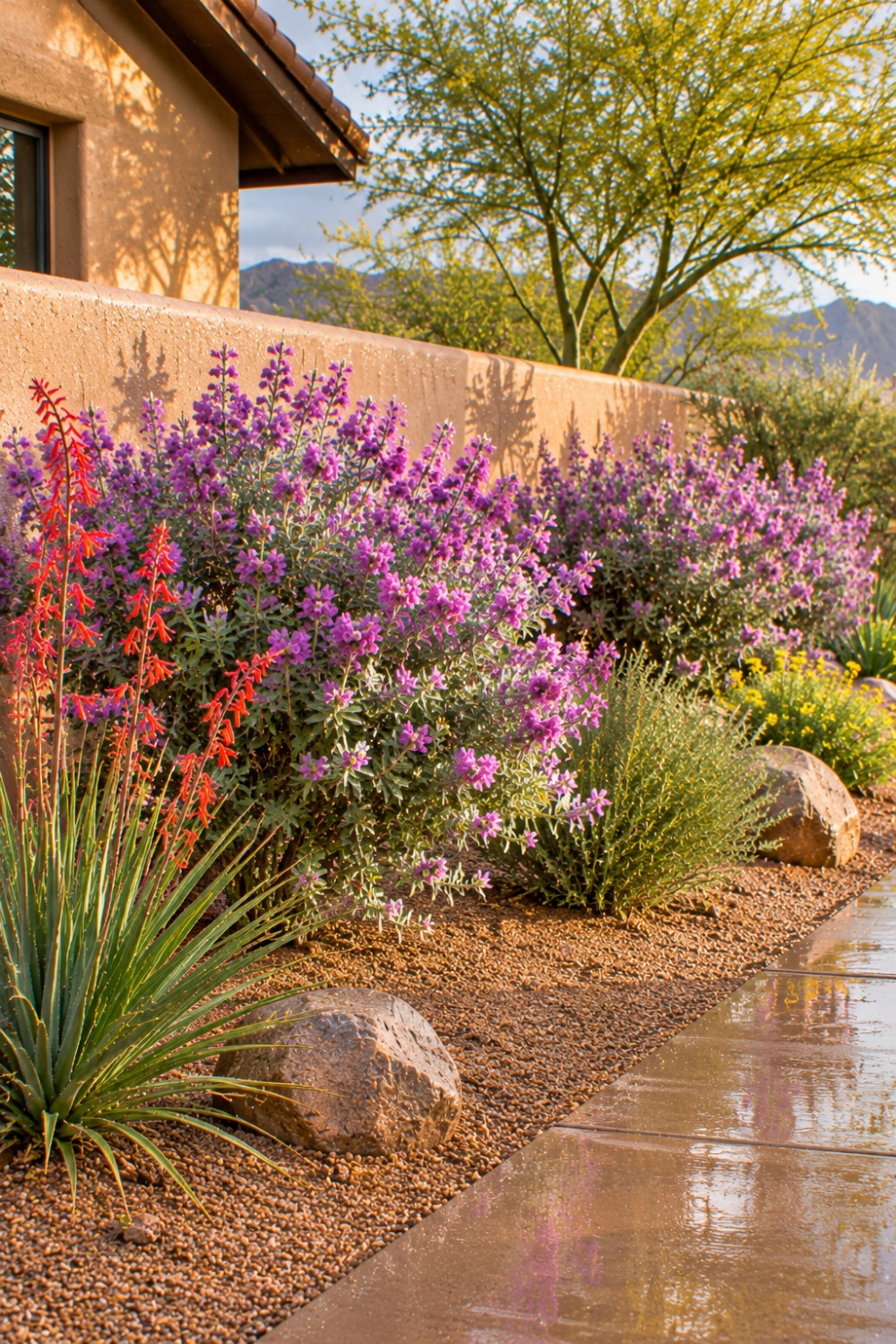
Shrubs give a desert garden its framework and soften walls and fences.
Texas sage, brittlebush and desert ruellia are tough, low-water and bloom generously.
Texas sage is known for bursting into purple flower after summer rains.
How to do it:
- Space shrubs for their mature size so they keep their natural shape.
- Water deeply during the first summer.
- Avoid shearing them into tight balls, which reduces flowers.
11. Build a Shaded Patio With a Ramada
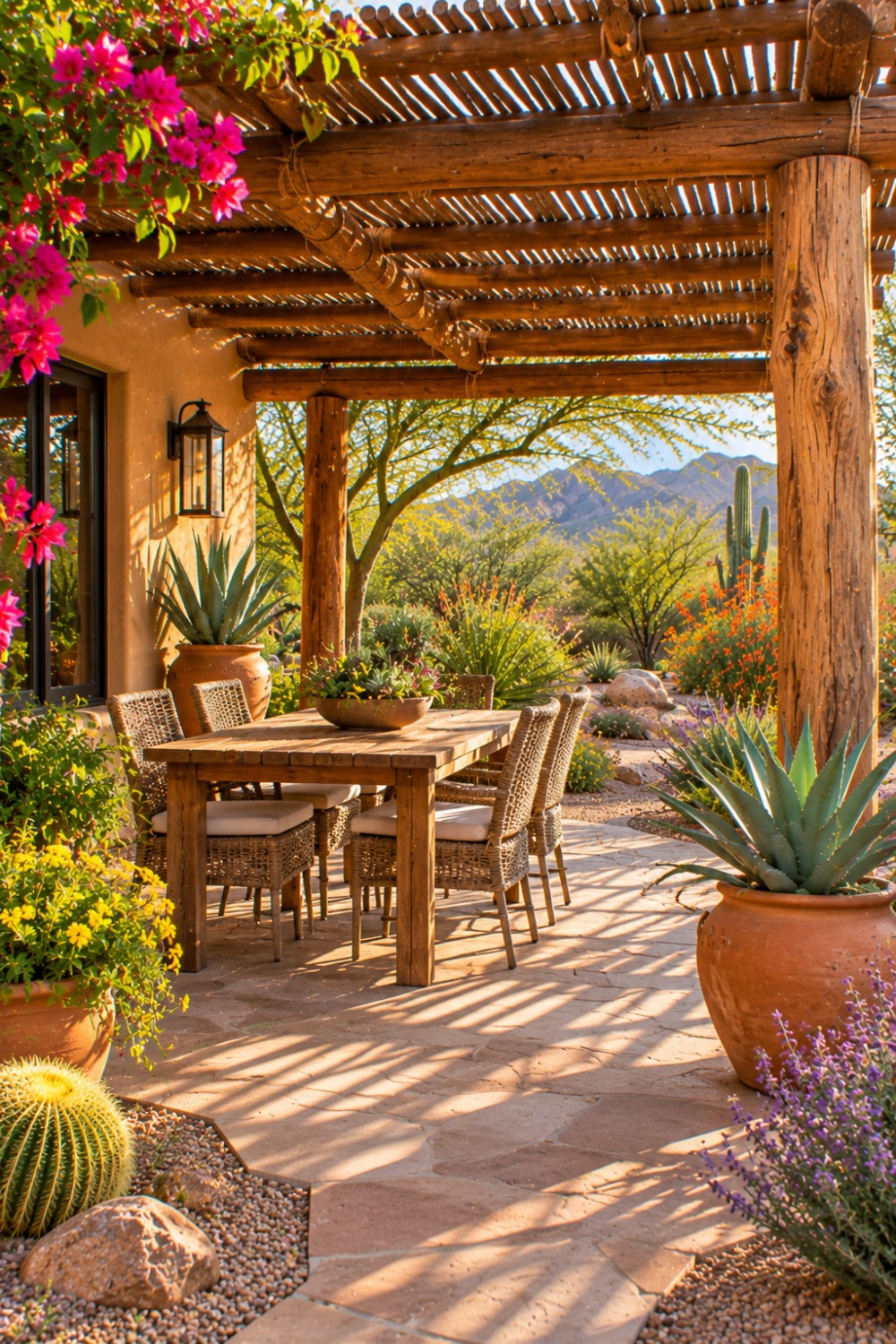
A ramada is a simple open shade structure common in desert regions, and it makes outdoor living possible in the heat.
A slatted roof casts striped shade while letting breezes through.
Add a shade sail, outdoor curtains or a vine on one side for even more cooling.
How to do it:
- Place it where you’ll use it most, ideally with afternoon shade.
- Build it from timber or steel, with slats spaced for the shade you want.
- Check local permit rules before building larger structures.
12. Grow a Living Ocotillo Fence
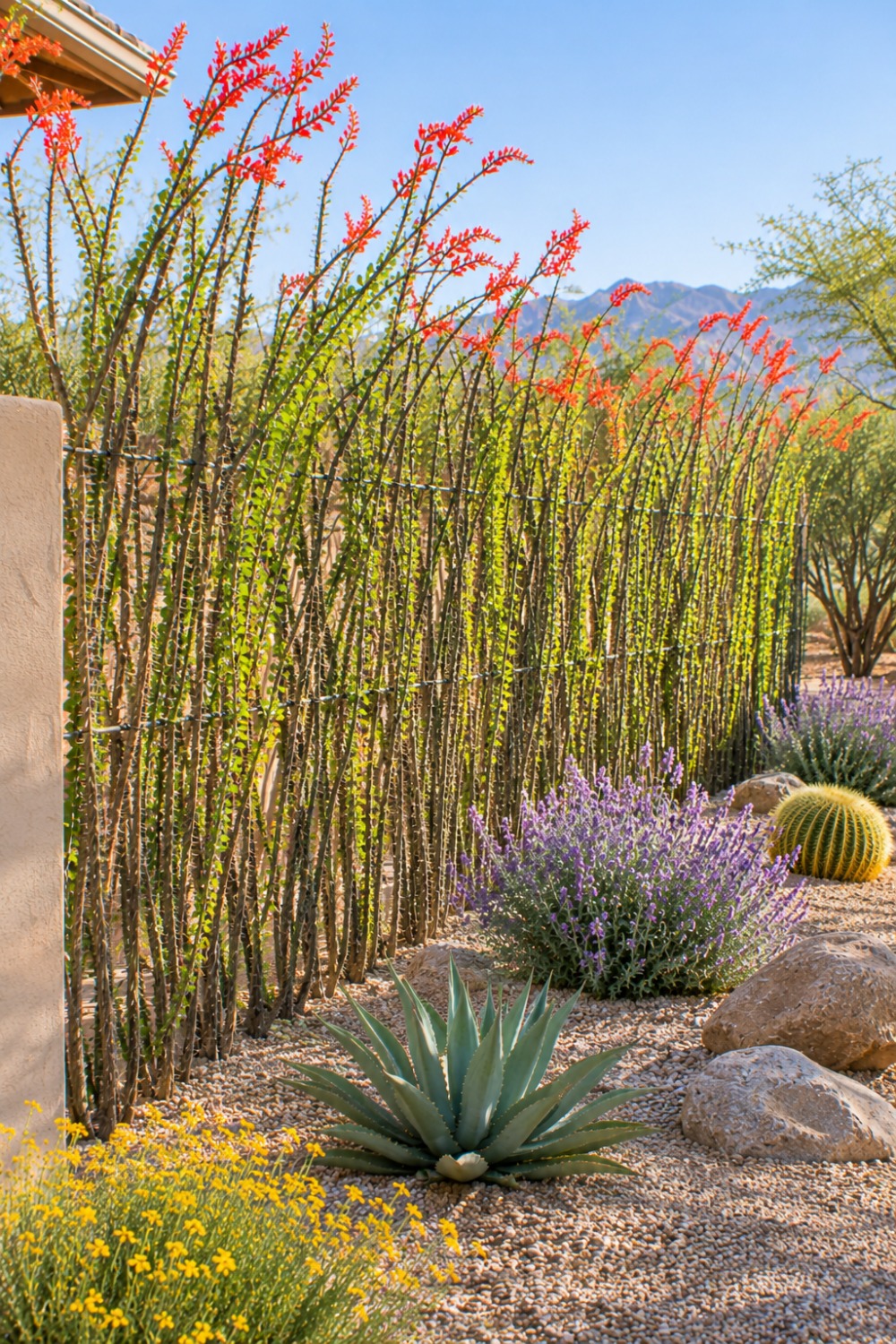
Ocotillo fences are a traditional desert feature made from tall, slender canes set side by side.
The canes often take root and sprout leaves and red flowers after rain, turning the fence into a living screen.
In many areas ocotillo is protected, so buy only from nurseries that sell legally harvested or permitted material.
How to do it:
- Set a sturdy frame of posts and wire.
- Plant canes upright in a trench, tightly side by side, and wire them to the frame.
- Water occasionally in the first year to help them root.
13. Add Warm Earth-Toned Hardscape
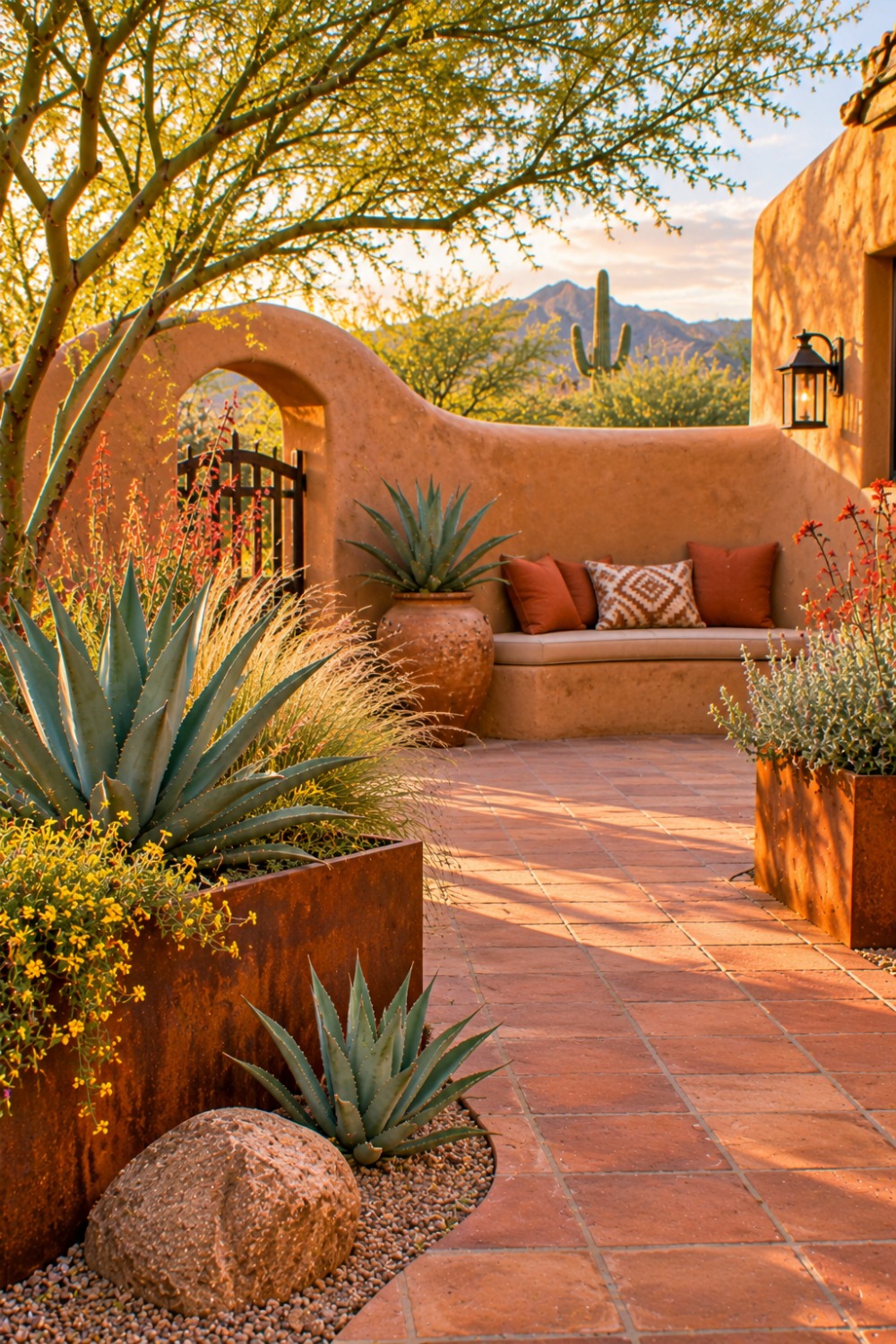
Earthy materials help a desert garden feel at home in the landscape.
Adobe-style walls, terracotta pavers, flagstone and rusted Corten steel all echo the colors of the desert.
Darker colors absorb heat, so use them where shade falls and lighter tones in full sun.
How to do it:
- Choose two or three materials that match your house and soil.
- Use them consistently for walls, paths and planters.
- Leave gaps between pavers for rain to soak in where possible.
14. Create a Small Courtyard Fountain
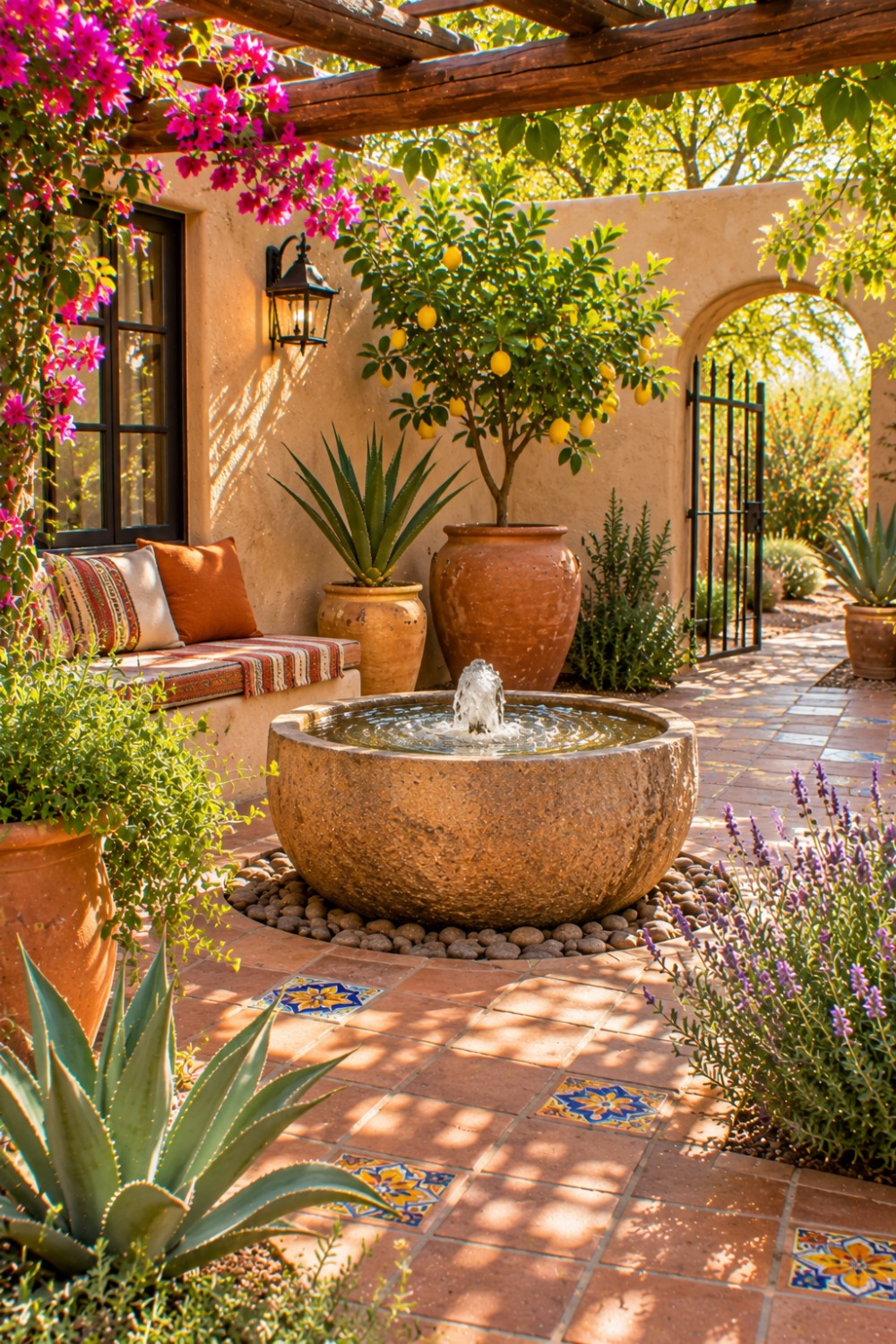
The sound of water feels especially refreshing in a hot, dry garden.
A small recirculating fountain gives you that sound while using very little water.
Place it in shade to reduce evaporation, and birds will soon visit to drink.
How to do it:
- Choose a small bowl or wall fountain with a recirculating pump.
- Set it in a shady spot near seating.
- Top it up regularly and clean it monthly.
15. Attract Hummingbirds With Desert Flowers
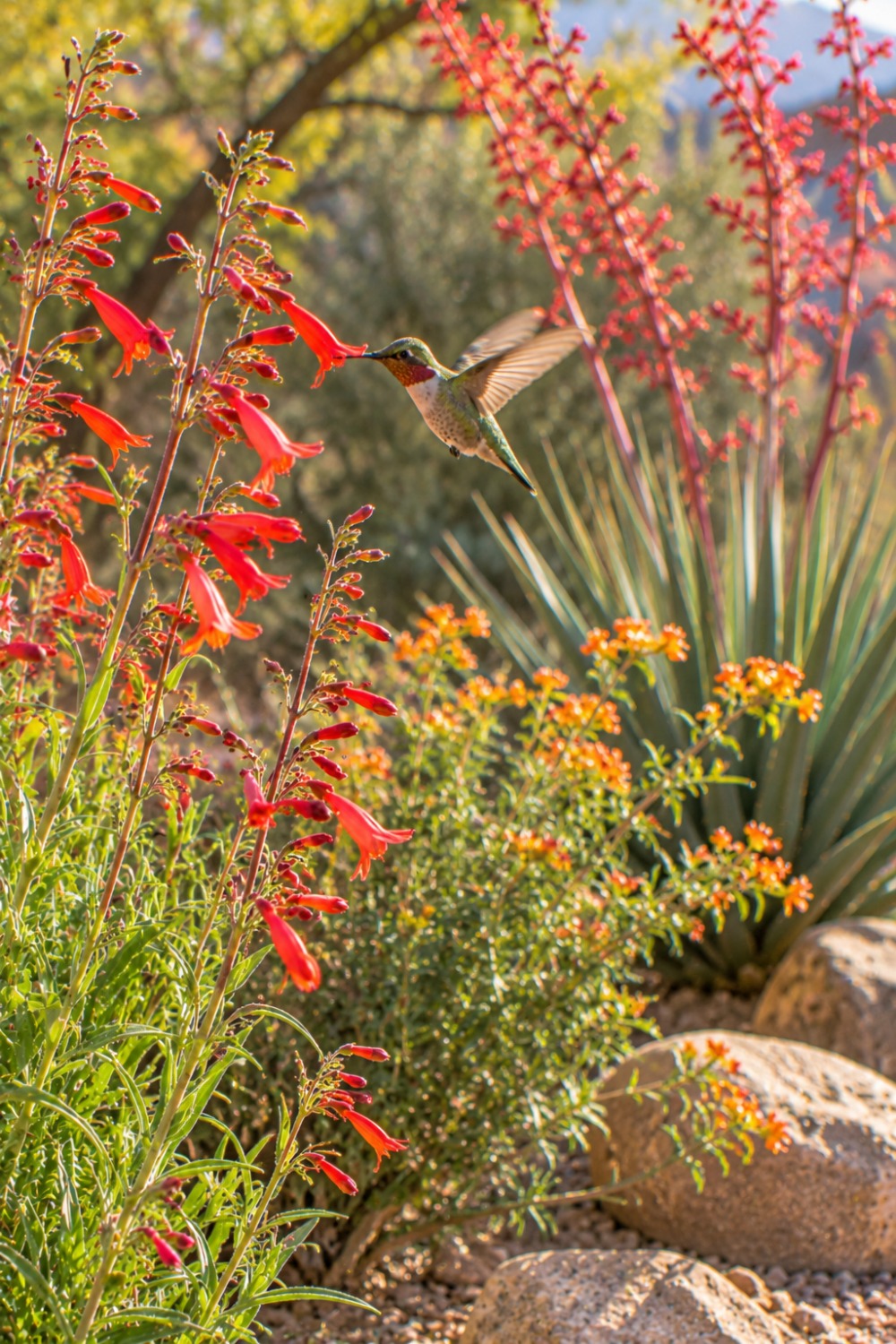
Many desert plants have tubular red, orange and pink flowers that hummingbirds love.
Penstemons, red yucca, desert honeysuckle and chuparosa bloom at different times, feeding them for months.
Plant them where you can watch from a window or patio.
How to do it:
- Choose a mix of plants that bloom in spring, summer and autumn.
- Plant them in groups so they’re easy for birds to find.
- Add a shallow water dish nearby.
16. Fill Gaps With Low Desert Ground Covers
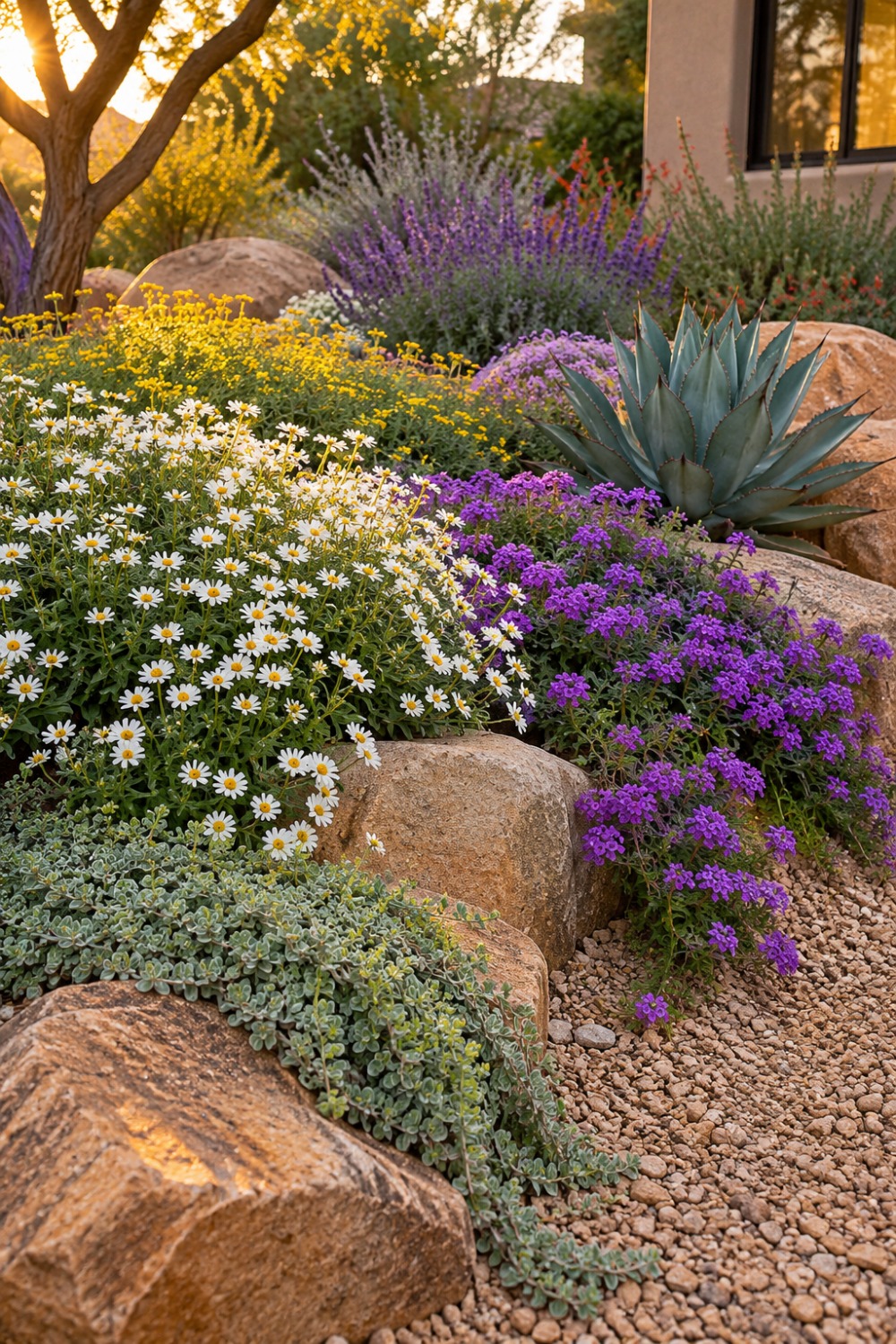
Low ground covers soften the gravel and make a desert garden look fuller.
Blackfoot daisy, trailing verbena, damianita and native creeping plants form colorful mats that need little water.
They also shade the soil, which keeps roots cooler and reduces weeds.
How to do it:
- Plant in spring or autumn, spacing them so they’ll touch when mature.
- Water regularly until they spread.
- Trim lightly after flowering to keep them neat.
17. Light the Garden for Warm Desert Nights
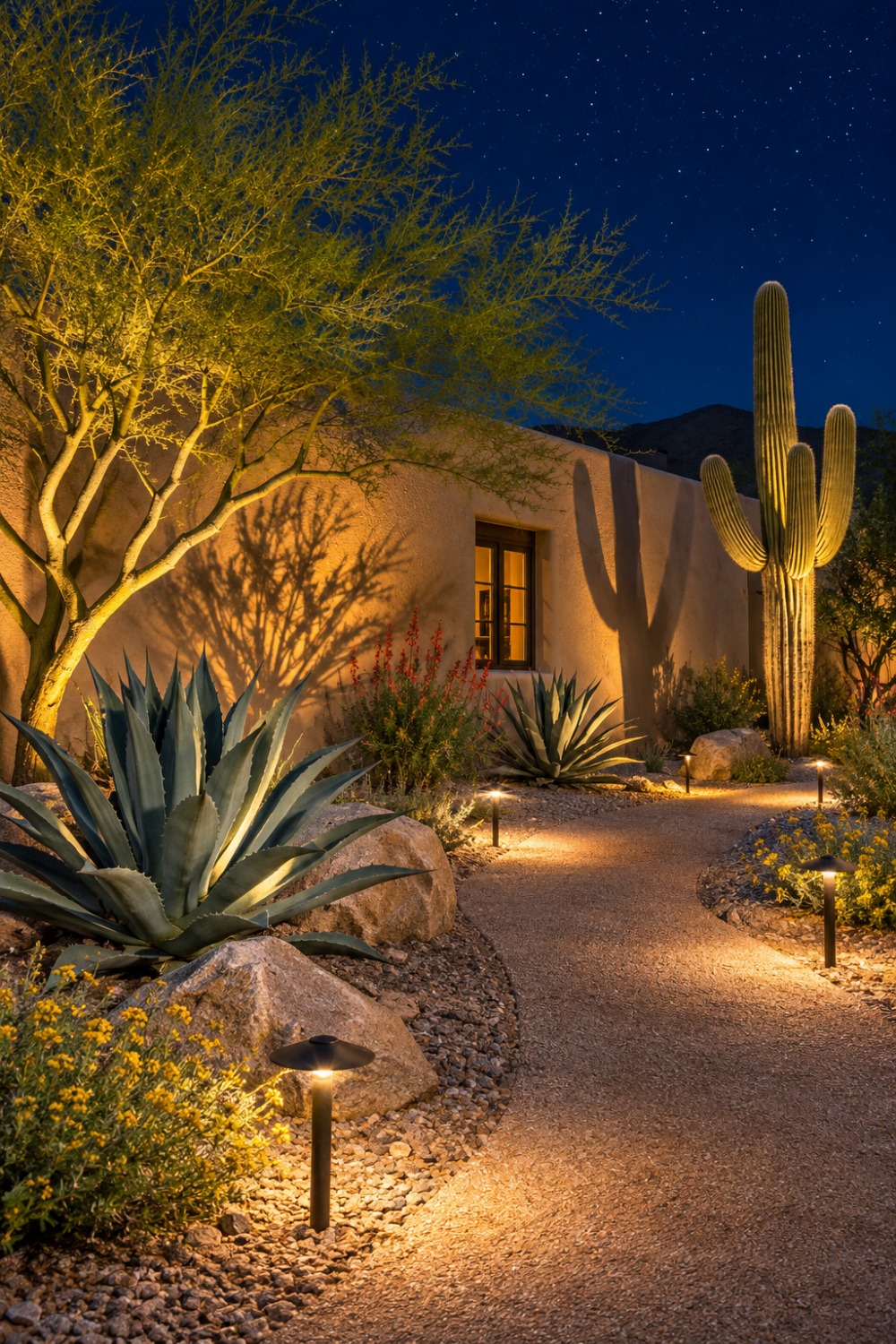
Desert evenings are often the nicest time to be outdoors.
Soft uplighting on agaves, cacti and trees creates dramatic shadows and makes the garden feel magical at night.
Use warm, low lights pointed downward or onto plants, so you can still see the stars.
How to do it:
- Choose two or three key plants to light.
- Place lights low and angle them to avoid glare.
- Use warm white bulbs and a timer to save energy.
Frequently Asked Questions
What is the difference between desert landscaping and xeriscaping?
Xeriscaping is a water-saving approach that can work in any climate, while desert landscaping uses plants and materials suited to hot, dry desert regions. Desert landscapes are often xeriscapes, but not every xeriscape looks like a desert.
What are the easiest plants for desert landscaping?
Tough, low-water choices include red yucca, Texas sage, desert marigold, agaves, prickly pear and blackfoot daisy. A local nursery can confirm what suits your area.
How often should you water a desert garden?
New plants need regular water for their first year or two. After that, many native desert plants need only occasional deep watering, especially in the hottest months.
Is gravel or decomposed granite better for desert landscaping?
Both work. Decomposed granite packs down into a smooth, natural surface for paths and patios, while gravel drains quickly and suits planting beds.
Final Thoughts: Let the Desert Set the Rules
The most beautiful desert gardens work with the climate, not against it.
Start with shade. One well-placed tree or ramada can change how you use your whole yard.
Then shape the ground to catch rain, and group your plants by how much water they need.
Choose a few bold anchor plants, such as agaves or yuccas, and fill around them with shrubs, ground covers and wildflowers.
Use earthy materials that echo the desert’s colors, and add a small water feature or soft lighting for comfort.
Water new plants well and be patient. Desert gardens fill in steadily over two or three years.
For more ideas for outdoor living spaces, explore our backyard fire pit landscaping ideas.
Before long, your yard will feel like a natural part of the desert, glowing in the evening light.